


What Is a Hydration Pack: Benefits & How to Choose

A hydration pack is a specialized backpack or vest with a built-in water reservoir and drinking tube that lets you drink hands-free while you move. Most standard models use 1.5 to 3 liter bladders, and that category makes up 57% of sales, which tells you this isn’t niche gear anymore, it’s the default choice for a lot of active people.
You’ve probably run into the problem already. You stop on a trail to dig out a bottle, or you’re walking all day in a crowded park and suddenly realize everyone’s thirsty at once. A hydration pack solves that by turning water from something you have to manage into something that stays available all day.
The End of Juggling Water Bottles
The biggest benefit of a hydration pack is simple. You don’t have to stop every time you want a drink.
That matters on a steep hike, on a bike commute, and in less obvious places too. Families use them for long days at amusement parks. Travelers use them for city walking days when carrying multiple bottles gets annoying fast. Van-lifers use them when they want more water capacity without filling every spare pocket with rigid bottles.
A hydration pack is a specialized backpack with an integrated reservoir, tube, and bite valve that gives you hands-free access to water while you’re moving. It replaced the old routine of pulling over, reaching behind you, or carrying a bottle in your hand for hours.
Its popularity reflects how practical that setup is. The global hydration backpack market was valued at USD 487.2 million in 2024 and is projected to reach USD 1,505.4 million by 2035, while sports end-users like hikers and cyclists are projected to account for over 54% of demand in 2026, according to hydration backpack market projections from Metatech Insights.
Where the convenience shows up
What works in real life isn’t always what looks best on a gear wall.
- On trails: A sip-anytime setup helps people drink steadily instead of waiting until they’re already thirsty.
- On bikes: You keep both hands where they belong.
- With kids: One adult can carry a bigger shared water supply instead of managing several loose bottles.
- During travel days: A pack can handle the bulk water job while smaller drinkware handles quick refills and everyday carry.
Practical rule: If you’ll be moving continuously and want water without breaking rhythm, a hydration pack usually beats a bottle.
That doesn’t make bottles obsolete. It means packs shine when access matters more than simplicity.
How a Hydration Pack Works
A hydration pack is a wearable water system. It has three main parts: the reservoir, the tube, and the bite valve.

A hydration pack is a personal water fountain that rides on your back. Water sits in the bladder, the tube routes it to your shoulder or chest, and the bite valve opens when you bite and suck. Release the valve, and it seals back up.
A typical hydration pack features a 2 to 3 liter reservoir made from durable TPU, connected to a 1020mm tube with a bite valve. Pack bodies often use high-denier nylon such as 420D, and that construction can withstand over 10,000 abrasion cycles, as described in technical hydration pack specs and material benchmarks.
The three parts that matter
Reservoir
This is the flexible bladder that holds your water inside the pack. In most good systems, it sits close to your back so the load stays stable instead of swinging around.
Drinking tube
The tube connects the bladder to your mouth. Routing matters. A tube that flops around gets annoying, catches on straps, and makes the whole system feel cheaper than it is.
Bite valve
This small part controls flow. Better valves open easily, seal cleanly, and don’t dribble down your shirt after every sip.
A good hydration pack disappears when you wear it. If you’re constantly adjusting the hose, fighting leaks, or feeling slosh, the design is working against you.
What quality looks like
The details tell you whether a pack is built for real use.
- TPU reservoir material: More durable and usually better for taste than bargain plastics.
- High-denier fabric: Useful when the pack will scrape against rock, dirt, or rough travel surfaces.
- Secure hose routing: Small feature, big comfort gain.
- Reliable valve design: You want easy drinking, not accidental leaks.
The system itself is simple. The difference between a good experience and a bad one usually comes down to build quality, fit, and cleaning access.
Hydration Packs Versus Water Bottles
This isn’t a fight with one winner. It’s a trade-off.
Hydration packs are better at access and capacity. Water bottles are better at simplicity and maintenance. It is often beneficial to stop thinking in either-or terms and match the tool to the day.
Side-by-side trade-offs
| Factor | Hydration pack | Water bottle |
|---|---|---|
| Drinking while moving | Excellent. Hands-free access is the whole point. | Fine if it’s easy to reach. Awkward if it’s buried in a bag. |
| Bulk water carry | Better for longer outings and shared family carry. | Better for shorter outings or easy refill environments. |
| Weight distribution | Usually more comfortable when loaded because water sits close to your back. | Can feel uneven if you carry one bottle by hand or stuff several into side pockets. |
| Refilling | Slower, especially when the bladder is buried inside gear. | Fast and straightforward. |
| Cleaning | More involved because of the hose and valve. | Usually easier, especially with wide-mouth designs. |
| Travel packability | Good for activity-specific carry. Less ideal when you want a tiny empty footprint. | Great if you use collapsible bottles that flatten when empty. |
When a pack wins
A hydration pack is the better call when you’ll be active for hours, want both hands free, and don’t want to think about water every half hour. That includes hiking, running, mountain biking, ski days, long urban walking days, and crowded family outings.
When a bottle wins
A bottle makes more sense for gym sessions, airports, road trips, office use, and quick walks where the simplicity matters more than bulk capacity. It also wins when you need something easy to clean after use.
The smarter answer for most people
For real life, a hybrid setup works best. Use the pack for the bulk water job. Use a compact bottle for quick refills, daily carry, or situations where you don’t want to deal with tubing and a bladder.
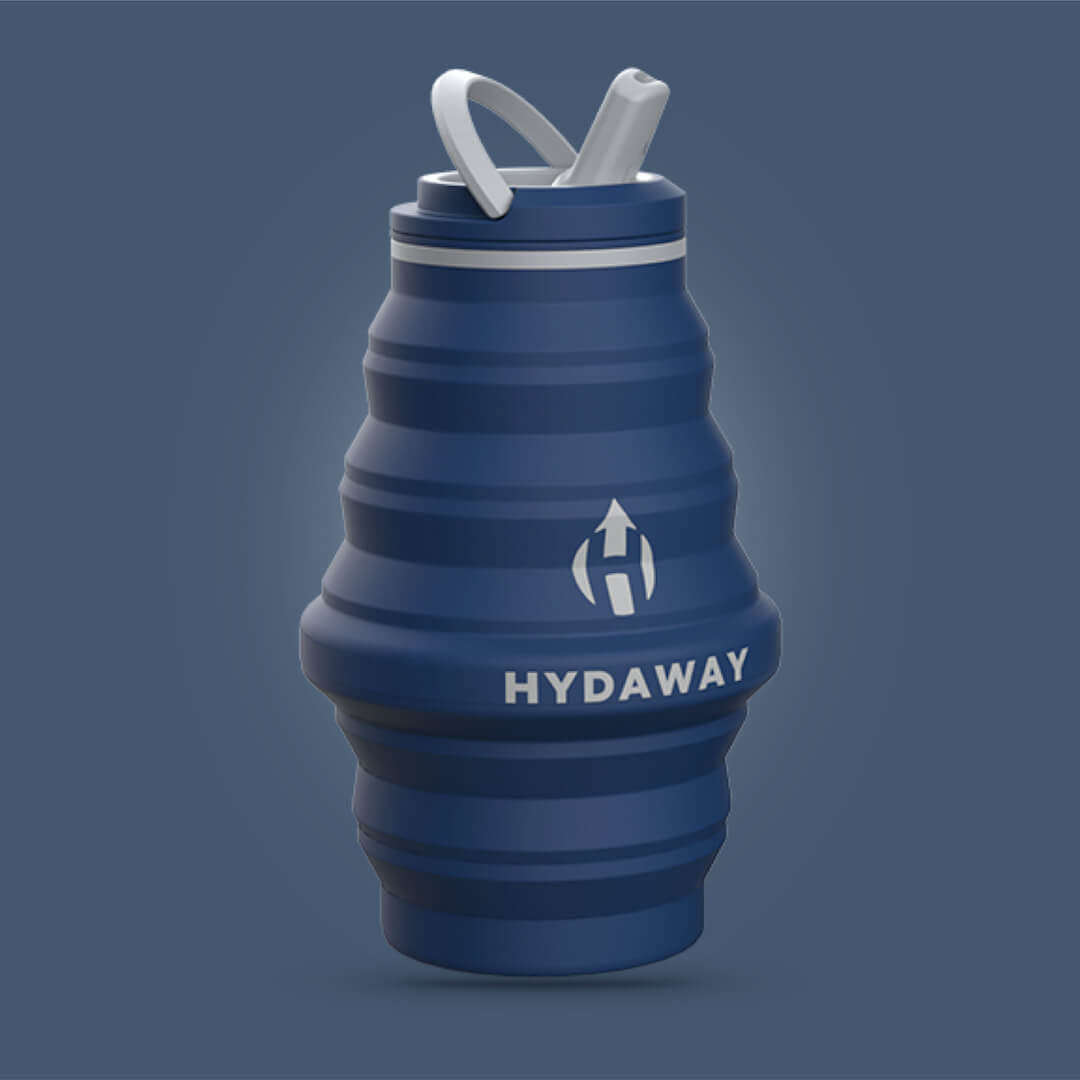
That’s especially useful for travel. A larger hydration setup handles the long outing, while a collapsible bottle covers the hotel, airport, rental car, or coffee-shop workday without taking up much space when empty.
Who Uses Hydration Packs Today
Hydration packs started with a practical hack, not a boardroom concept. In 1989, cyclist Michael Eidson built the first modern version using a medical IV bag in a sock. CamelBak commercialized the concept in 1993, and the M.U.L.E. launched in 1996. Today, standard packs with 1.5 to 3L bladders account for 57% of sales, according to CamelBak’s hydration reservoir innovation timeline.

That history matters because it explains why hydration packs feel so natural now. They solved a real problem from the beginning. Once you use one in the right setting, the appeal is obvious.
Not just for trail runners anymore
People still associate hydration packs with mountain biking and long runs. Those users are still core to the category. But the audience is broader now.
- Hikers and trekkers use them to drink steadily without stopping.
- Cyclists and commuters use them because grabbing a bottle mid-ride isn’t always safe or convenient.
- Theme park families use them to carry shared water all day instead of buying disposable bottles repeatedly.
- Travelers use them for day trips where they’ll be walking for hours.
- Van-lifers and overlanders use the reservoir as part of a larger mobile water setup.
Modern use looks more flexible
A lot of people don’t need a dedicated sport-only setup. They need gear that can cross over between outdoor days, travel days, and ordinary life.
That’s why the best approach is often a system. A hydration pack handles movement and bulk carry. A smaller bottle handles moments when you don’t want to wear a pack or need something easier to refill and clean. For winter-specific examples, HYDAWAY’s guide to ski hydration packs and cold-weather carry shows how use cases keep expanding beyond the old trail-only stereotype.
The modern user isn’t asking, “Am I a serious enough athlete for a hydration pack?” They’re asking, “Will this make my day easier?” That’s the better question.
How to Choose the Right Hydration Pack
The right hydration pack isn’t the one with the longest feature list. It’s the one that fits your outing, your body, and your tolerance for maintenance.

Start with capacity
The standard category is often considered the sweet spot. Packs with 1.5 to 3 liter bladders dominate for a reason. They’re large enough for common day use without turning the pack into dead weight when full.
If your outings are shorter and refill access is easy, stay on the smaller side. If you’re out longer, carrying for a group, or spending time in heat, more capacity earns its place.
Fit matters more than people expect
A hydration pack can have excellent materials and still feel terrible if the fit is wrong.
Look for:
- Close body contact: Water should stay stable, not bounce.
- Useful strap adjustment: You want the pack snug, not restrictive.
- The right format: A vest-style setup often works well for running. A backpack-style setup often feels better for hiking, travel, and mixed use.
- Room for your actual gear: Water is only part of the load. Think jacket, snacks, phone, layers, and keys.
Materials and features worth paying for
Modern bladders use multi-layer laminates with a 0.2 to 0.5mm wall thickness to balance flexibility and puncture resistance. Features like insulated back panels can lower core temperature rise by 2 to 3°C in hot weather, while quick-disconnect tubes and wide fill ports make refilling and maintenance easier, as outlined in modern hydration bladder design details from Mazama Designs.
That translates into a short buying checklist.
Features that help in the field
- Wide fill opening: Easier to fill at a sink and much easier to clean.
- Quick-disconnect hose: Helpful when you need to remove the bladder without rerouting everything.
- Insulated back panel or hose: Worth it if you’re often out in heat or changing weather.
- Taste-neutral materials: You notice this every sip.
If you want a broader view of what to look for in different activity setups, HYDAWAY’s article on the outdoor hydration pack decision process is a useful companion.
A quick visual walkthrough helps if you’re comparing styles and features in real time.
What doesn’t work well
Bargain packs often fail in predictable ways. The bladder tastes plasticky. The hose routing is sloppy. The valve leaks. The pack shifts once you start moving.
Those aren’t minor issues. They turn hydration into friction, and friction is why gear gets left at home.
Keeping Your Pack Clean and Ready for Adventure
Cleaning is the part most brands downplay. It’s also the part that determines whether you’ll keep using the pack.
A common but overlooked issue is long-term hygiene. Up to 40% of casual users abandon hydration packs due to cleaning difficulties, and biofilm can build up in hoses if they aren’t disassembled and cleaned weekly, according to this overview of hydration pack hygiene concerns.

Why packs get gross
The problem isn’t just the bladder. It’s the whole closed system.
Hoses trap moisture. Bite valves stay damp. If you use anything besides plain water, residue sticks around longer. If you travel, toss the pack in a car, or leave it packed for days, you create the perfect conditions for smells and buildup.
Field note: The fastest way to ruin a hydration pack experience is to treat cleaning like an optional chore.
A maintenance routine that actually works
You don’t need a complicated ritual. You need consistency.
- After each use: Empty the bladder completely and rinse it well with clean water.
- Take the system apart: Remove the hose and bite valve so hidden moisture doesn’t stay trapped.
- Let everything dry fully: This part matters most. Don’t seal damp parts back into the pack.
- Deep clean when needed: If you notice odor, film, or residue, clean before the next outing, not later.
When a simpler option makes sense
Hydration packs are excellent for movement. They’re not always the easiest answer for daily use, hotel stays, or quick refill situations. That’s where a simpler bottle setup earns its place, especially when you want wide-mouth access and easier cleaning.
If pack hygiene is your main hesitation, HYDAWAY’s guide to hydration pack cleaner options and maintenance routines is worth reading before you buy.
Hydrate Smarter Not Harder
What is a hydration pack, really? It’s a hands-free water system that makes movement easier, especially when stopping for a bottle keeps breaking your rhythm.
The smarter way to think about it is as part of a broader hydration setup. A pack handles bulk water and on-the-go sipping. A compact bottle handles travel, fast refills, everyday carry, and the moments when you want less gear and easier cleanup. That combination works better than forcing one product to do everything.
Choose the setup that matches how you move through your day. If your gear makes hydration simpler, you’ll use it more. And when you use reusables that travel well, clean easily, and stay out of the landfill, your adventures get lighter in more ways than one.
If you want to build a more flexible hydration system for travel, trail days, commuting, and everyday life, take a look at HYDAWAY. Their collapsible bottles, packable gear, and easy-to-clean reusable essentials are built for people who want to carry less, stay ready, and cut down on single-use waste without giving up convenience.