


The Ultimate Guide to Ski Hydration Packs for 2026

Think you don’t get thirsty in the cold? It’s a common misconception, and a dangerous one at that. Believing you’re immune to dehydration on the slopes can lead to fatigue, gnarly headaches, and a much higher risk of injury. Staying hydrated isn't just a suggestion—it's mission-critical for your performance and safety, and it’s the secret to turning a good ski day into a great one.
Why Hydration on the Slopes Is Mission Critical
It’s easy to think of thirst as a hot-weather problem, but your body actually loses water just as fast—if not faster—while you're skiing. The combination of high altitude, cold temperatures, and incredibly dry air means you’re losing significant moisture with every single breath. Add in the physical work of skiing, and you have the perfect recipe for dehydration.
Think of your body on the mountain like a high-performance engine. Even in freezing conditions, it needs a constant supply of coolant (water) to keep from overheating and to maintain peak output. Without it, the whole system starts to lag.
The Dangers of Minor Dehydration
Even a little bit of dehydration can have a huge impact on your day. A mere 2% drop in body water is enough to cause a noticeable dip in your focus, energy, and coordination. This isn’t just about feeling a bit sluggish; it has real-world consequences on the snow.
Ever wonder why you made that sloppy turn on your last run? It might not just be tired legs. It could be your brain struggling to make quick decisions because it's running low on fluids. For example, a moment of hesitation in a crowded merge zone or a slow reaction to an icy patch could be the difference between a smooth run and a nasty fall. If you really want to dig into the science, you can see how top athletes master their performance with a smart hydration plan to stay at their absolute best.
Staying hydrated isn't just about quenching thirst; it's a performance strategy. Better hydration means more energy for that final black diamond run, sharper focus to navigate crowded slopes, and a stronger, safer body from first chair to last call.
From Survival to Performance
This is where a dedicated ski hydration pack completely changes the game. It turns hydration from a chore into a simple, effortless habit. Instead of fumbling with a frozen water bottle or shelling out for overpriced drinks at the lodge, you have instant access to water whenever you need it.
Just picture it: skiing from bell to bell without that all-too-familiar afternoon slump or nagging headache. You'll have more stamina, feel stronger on your skis, and make smarter choices, especially when fatigue starts to set in. That’s why a good hydration system is an essential piece of gear, not just a nice-to-have luxury.
Anatomy of the Perfect Ski Hydration Pack
Let's be real: not all hydration packs are created equal. Grabbing your summer hiking pack for a bluebird day on the slopes is a classic rookie mistake—and a recipe for a frozen, useless tube of ice. A proper ski hydration pack is a totally different beast, built from the ground up to keep your water flowing in freezing temps.
Getting to know the key features is the first step in finding a reliable partner for your winter adventures, one that won't leave you high and dry (literally).
Insulation Is Everything
The single most important feature is head-to-toe insulation. Think of it as a personal thermos you wear on your back. This isn’t just a nice-to-have feature; it’s the whole point.
A true ski pack needs an insulated sleeve for the water reservoir itself. But just as crucial is a fully insulated sleeve for the drinking hose, usually tucked into a zippered pocket on the shoulder strap. If you don't have both, your water supply is almost guaranteed to freeze solid.
Matching Reservoir Size to Your Day
Next up is capacity. How much water do you actually need? Reservoir sizes are measured in liters, and bigger isn't always better. Hauling extra weight you don't need is just plain tiring.
- 1.5L to 2.0L Reservoirs: This is the sweet spot for resort skiing. It’s plenty of water for a full day of lapping lifts, especially since you can easily top it off at the base lodge during your lunch break. For a practical example, imagine skiing at Vail or Park City; you can easily refill at one of the many on-mountain lodges, so a lighter pack makes your day more enjoyable.
- 2.5L to 3.0L Reservoirs: When you're heading into the backcountry, this is the standard. Out there, you're entirely on your own. A 3L bladder ensures you have enough water for a long, high-exertion day of skinning up and skiing down, miles from the nearest tap.
This chart breaks down exactly why staying hydrated on the mountain is such a unique challenge.

As you can see, the combination of high altitude and cold, dry air conspires to drain your body of fluids fast, leading to dehydration if you're not constantly sipping.
Smart Design for Seamless Skiing
Beyond keeping your water from turning into an ice block, the pack's design is what makes it truly work on the mountain. A good ski hydration pack should always have a low-profile, slim shape. This is key for keeping your center of gravity stable, preventing the pack from swinging around and throwing you off balance mid-turn. A slender design also stops it from getting snagged on the chairlift—a seriously annoying (and dangerous) problem with bulky packs.
Another detail that makes a world of difference is a glove-friendly bite valve. Just imagine fumbling with a tiny, stiff valve while wearing bulky ski mittens. It's a pain. The best packs have big, easy-to-use bite valves, often with a simple on/off switch you can flick without ever exposing your hands to the cold.
To make shopping a bit easier, we've put together a quick checklist of what to look for.
Ski Hydration Pack Feature Checklist
Use this checklist to evaluate key features when choosing your next ski hydration pack.
| Feature | What to Look For | Why It Matters for Skiing |
|---|---|---|
| Total Insulation | Insulated reservoir sleeve and an insulated hose/zippered strap. | Prevents your water source and drinking tube from freezing solid. Non-negotiable. |
| Reservoir Size | 1.5L-2.0L for resort; 2.5L-3.0L for backcountry. | Matches water supply to your day's needs without adding unnecessary weight. |
| Pack Profile | Slim, low-profile, body-hugging shape. | Maintains your center of gravity for better balance and prevents snagging on chairlifts. |
| Bite Valve Design | Large, soft-bite valve with an easy-to-use shutoff lever. | Allows for easy, one-handed operation without taking off your gloves or mittens. |
| Avalanche Tool Pocket | A dedicated, quick-access pocket for a shovel and probe. | Essential for backcountry safety, keeping life-saving tools organized and instantly available. |
Ultimately, a well-designed ski hydration pack should feel like an extension of your body, not a clumsy accessory. Its features work together to give you instant access to water without interrupting your flow down the mountain.
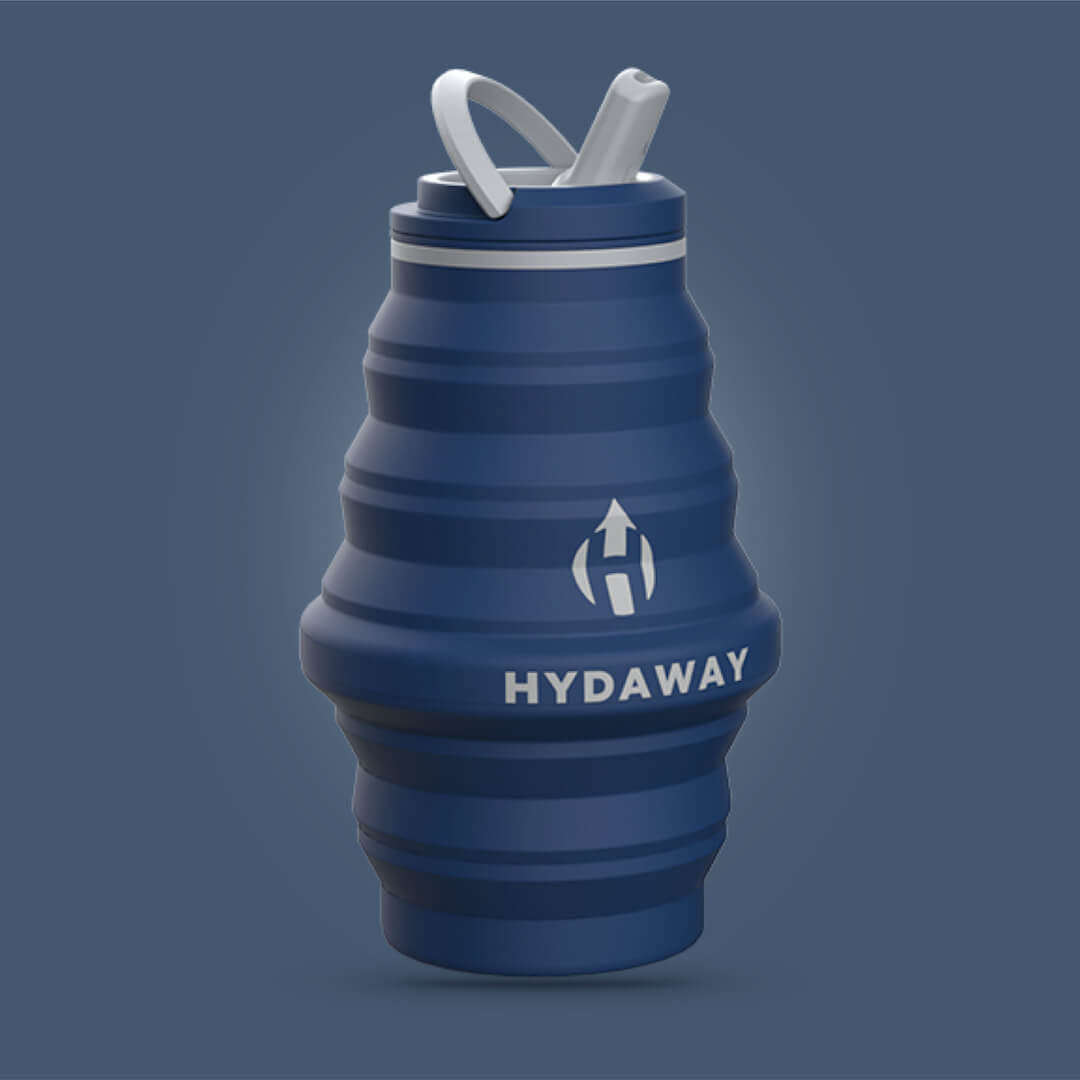
While a dedicated pack is your go-to on the slopes, your hydration strategy can be even smarter. Before you even click into your bindings, a HYDAWAY 25oz collapsible bottle is perfect for hydrating on the drive up the mountain. Once you arrive, it collapses flat and disappears into a pocket. You can then refill it at the lodge for lunch or for that crucial après-ski rehydration session, saving you money and cutting down on single-use plastic waste.
How to Keep Your Hydration Pack from Freezing
We’ve all been there. You’re on the lift after a killer run, reach for a much-needed sip of water, and… nothing. Just a solid block of ice. There's almost nothing more frustrating on a cold day than having your hydration pack freeze up on you.
A frozen hose instantly turns your most important piece of gear into dead weight. But don’t worry, with a few simple tricks, you can make sure your water is always flowing, even when the mercury plummets.

The single best trick in the book is laughably simple: after every single sip, blow the water back into the hose. This quick puff of air pushes all the water out of the exposed tube and bite valve and sends it back into the safety of the insulated reservoir. No water in the tube means nothing to freeze. Seriously, make it a habit.
Getting Ahead of the Freeze
The best defense is a good offense. By taking a few steps before you even click into your bindings, you can pretty much guarantee your pack won't turn into an ice block.
- Start with Warm Water: This is a game-changer. Fill your reservoir with warm (not boiling!) water in the morning. This gives you a massive head start against the cold, as it'll take way longer for the liquid to drop to freezing temperatures.
- Tuck Your Bite Valve: When you’re on the lift or taking a break, tuck the bite valve and the end of the hose inside your jacket, right up against your body. Your own body heat is the perfect little heater to keep it from icing over.
- Insulation is Key: As we mentioned, never head out in winter without a proper ski hydration pack that has a fully insulated hose sleeve. This is your first and most important line of defense.
A frozen hydration pack isn't just an inconvenience—it's a gear failure. It undermines your performance and your safety on the mountain. The whole point is to make staying hydrated so easy you don't even have to think about it, no matter how chilly it gets.
What to Do If Your Hose Freezes Anyway
Sometimes, the cold just wins. If you find your line is iced up despite your best efforts, don't panic. The fix is usually just a little body heat and a few minutes of patience.
First, figure out where the blockage is. It's almost always in the exposed bite valve or the last few inches of the tube. Unzip your jacket and stuff the entire frozen end of the hose directly against your base layer. Your body will work its magic, and in about 5 to 10 minutes, the ice plug should thaw out.
Once you can draw water again, take a big sip and then immediately blow all the water back into the reservoir to keep it from refreezing. And for those days when you're craving something warm, supplementing your setup with one of the best insulated water bottles can be a fantastic way to stay toasty.
Packing Smart for Resort and Backcountry Days

A great day on the mountain doesn’t just happen when you click into your bindings. It starts at home, with how you pack your bag. What you need for a day of lapping groomers at the resort is a world away from what you’ll carry for a tour beyond the boundary ropes. Dialing in your ski hydration pack for the mission ahead is the first step to a safer, and way more fun, day on the snow.
When you’re sticking to the resort, the game is all about minimalism. You’ve got ski patrol, cozy lodges, and overpriced chili just a lift ride away, so you can afford to pack light. The goal is to carry just enough to stay hydrated and comfortable without feeling like you’re hauling a ton of bricks up the chairlift.
Gearing Up for the Resort
For resort days, a small pack with a 1.5 to 2-liter reservoir is your best friend. That’s plenty of water to keep you going for hours, and the pack itself is so low-profile you’ll barely notice it’s there. A streamlined setup means more agility on your skis and no awkward snags getting on the lift.
Here’s a quick checklist for your resort-day pack:
- Hydration: A full 1.5-2L reservoir.
- The Must-Haves: Wallet, phone, and car keys.
- Fuel: An energy bar or two for a quick boost on the lift.
- Sun Protection: A small tube of sunscreen is non-negotiable at high altitudes.
This simple kit keeps you self-sufficient and on the slopes, not stuck in the lodge. And for the drive home or that all-important après-ski rehydration session, a HYDAWAY collapsible bottle is a game-changer. It flattens down to nothing, so you can stash it in a jacket pocket or your car and save a few bucks on bottled water.
Preparing for the Backcountry
Stepping into the backcountry is a completely different ballgame. Your mindset has to shift from minimalism to complete self-reliance. Out there, you are the rescue team. Your pack is no longer just for convenience; it’s your survival kit, which means you’ll need a bigger pack (30-40 liters) and a 3-liter reservoir for a full day of hard work.
In the backcountry, your pack isn’t just carrying your gear—it's carrying your lifeline. Organization isn't about convenience; it's about speed when seconds matter.
Your avalanche safety tools are the most critical pieces of gear you’ll carry, and they need their own dedicated, easy-to-reach pocket. You need to be able to get to your shovel and probe in an instant, not after frantically digging through spare layers and snacks. For a deeper dive into organizing your gear, check out our guide on how to pack a backpack efficiently.
Your essential backcountry loadout should always include:
- Avalanche Gear: Beacon (worn on your body), shovel, and probe (in an external tool pocket).
- Extra Layers: A puffy jacket and a dry pair of gloves can be lifesavers.
- Navigation: A map and compass, or a GPS/phone with offline maps.
- First-Aid Kit: A compact kit tailored for mountain injuries.
- Repair Kit: Multi-tool, ski straps, and anything else for a quick field repair.
Integrating HYDAWAY for Smarter Ski Hydration
Let’s be real, your hydration plan for a ski day doesn’t just happen on the chairlift. A great day on the snow is a full-day affair, from that early morning coffee on the drive up the canyon to clinking glasses at après-ski. While your ski pack is the hero on the slopes, a truly smart system covers you from start to finish. This is exactly where HYDAWAY’s packable gear fits into the picture.
Think about the whole day. That drive to catch the first chair is the perfect time to start hydrating, but who wants a bulky water bottle rolling around the car? This is where a collapsible bottle changes the game entirely.
Beyond the Pack From Morning to Night
Our 25oz Collapsible Bottle is the perfect sidekick for your on-mountain pack. Use it to sip water on your way to the resort. When you get there, it squishes down to just over an inch thick, ready to be stashed in a jacket pocket or glove compartment.
Then, when you head into the lodge for a lunch break, just pop it back open and refill at the water fountain. That simple move saves you from dropping $5 or more on a single-use plastic water bottle every time—a cost that really stings after a few ski days. And after your last run, it’s ready for that all-important rehydration session, helping you feel good for another day on the hill.
Your ski hydration pack does the heavy lifting on the mountain, but your HYDAWAY gear handles everything else. It’s the perfect system for pre-hydrating, refueling at the lodge, and recovering afterward.
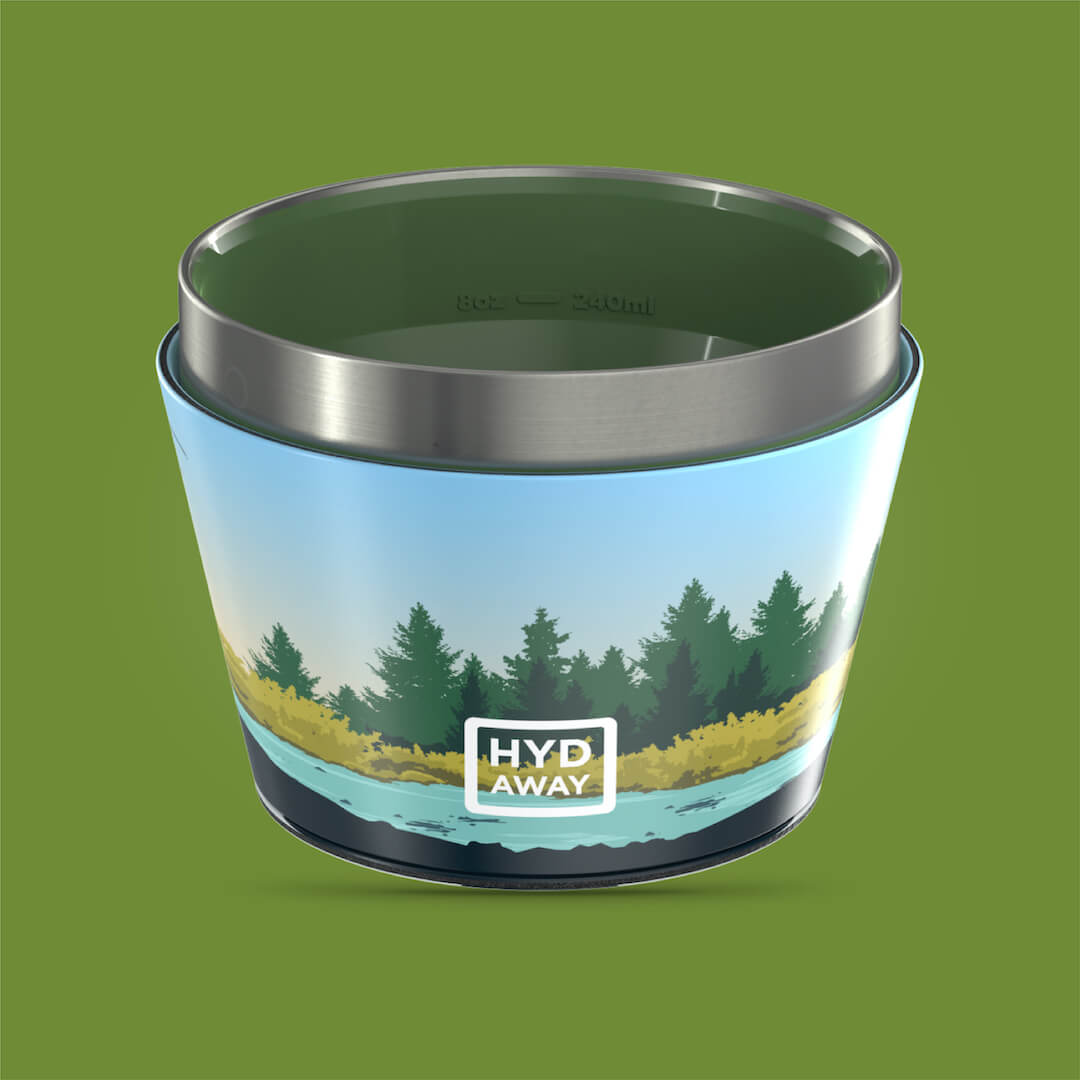
This mindset works for your morning coffee ritual, too. An insulated HYDAWAY Tumbler will keep your coffee or tea piping hot for hours. You can finish it on the drive and arrive at the base ready to click into your bindings, all without adding another paper cup to the landfill.
And for those ski trips that involve airports and checked bags? The benefits are huge. Luggage space is always a precious commodity. Because HYDAWAY bottles and drinkware collapse, they take up hardly any room, leaving more space for your actual ski gear.
By pairing the on-slope workhorse of a ski pack with the off-slope convenience of HYDAWAY, you create a complete system that saves money, reduces waste, and covers your entire adventure.
Keeping Your Gear Clean and Ready to Go
Nothing ruins the memory of a great day on the slopes faster than a funky-tasting swig from your hydration pack. If you don't give it a quick post-ski clean, you might be in for a surprise. But proper maintenance is super simple, and it’s the key to making sure your water tastes fresh and your gear lasts for many seasons to come.
Think of it less as a chore and more as the final, satisfying step of a successful ski day. The whole point is to stop mildew and bacteria from setting up shop, which they love to do in dark, damp places like a sealed-up hydration bladder. A few simple habits will keep your ski hydration packs hygienic and ready for the next powder day.
The Post-Ski Cleaning Ritual
Even if you only used water, a quick rinse is a good idea. Just fill the reservoir with some warm water, give it a good, vigorous shake, and drain it out. But the real secret to keeping things fresh? Thorough drying. Any moisture left behind can turn into a breeding ground for grime.
- Prop It Open: If your pack came with a reservoir hanger, use it! If not, get creative. A simple kitchen whisk or even a rolled-up paper towel works perfectly to hold the bladder open so air can circulate.
- Hang It High: Hang the reservoir upside down in a spot with good airflow until it’s completely bone-dry. Don't forget the drinking tube—make sure every last drop of water has dripped out.
A dry reservoir is a clean reservoir. Nailing this one simple habit is the single most effective way to prevent that funky mildew taste and guarantee your water is crisp and clean every time you hit the slopes.
Deep Cleaning for a Fresh Start
If you've been using sports drinks or you notice a bit of a stale taste, it's time for a deep clean. You can grab specialized cleaning tablets, or just go with a natural solution of warm water and a little squeeze of lemon juice.
For a more detailed walkthrough, our guide on using a hydration bladder cleaning kit gives you all the step-by-step instructions you'll need.
Once your pack is clean and totally dry, store it with the rest of your ski gear. That way, you'll always be ready to grab it and go the moment the snow starts falling.
Got Questions About Ski Hydration Packs? We’ve Got Answers.
Even with all the right gear, a few questions always pop up once you hit the snow. That’s totally normal. We've heard them all, so let's tackle some of the most common ones to help you get your hydration system completely dialed in.
Can I Just Use My Summer Hiking Pack for Skiing?
We get this one a lot. While you technically can, you’re almost guaranteed to have a frustrating day with a frozen hose. Summer hiking packs just don't have the insulated reservoirs and dedicated hose sleeves you need to keep water from turning to ice in freezing temperatures. Take a standard pack out on a 20°F (-6°C) day, and you’ll be lucky if it doesn’t freeze solid within an hour.
Beyond the freezing issue, ski-specific packs have a much slimmer, body-hugging profile. This is huge for maintaining your balance through turns. It also helps you avoid the dreaded—and surprisingly common—chairlift snag that happens with bulkier hiking packs.
It might seem like a small detail, but insulation is the make-or-break feature. Using the right tool for the job means your water actually stays water.
How Do I Choose Between a 2 Liter or 3 Liter Pack?
The perfect size really comes down to where you'll be skiing. Think of it this way:
- For resort skiing, a 1.5 to 2-liter pack is your sweet spot. You can always pop into the lodge for a refill, so this gives you plenty of water for lapping the lifts without weighing you down.
- For backcountry touring, a 3-liter reservoir is the undisputed standard. When you're hours from the nearest faucet and burning serious energy on the skin track, you have to be completely self-sufficient. A 3-liter pack ensures you’re covered for a full day of adventure.
It's all about matching your capacity to your access to refills. Less is more when you're at the resort, but in the backcountry, more is essential.
No matter which pack you choose for the slopes, complement your full-day strategy with HYDAWAY. Use our collapsible bottles and tumblers for the drive up, for coffee at the lodge, and for that crucial après-ski recovery drink. Check out the full collection of packable gear at myhydaway.com.