


Travel Mesh Bags: Your Packing Efficiency Solution

You've probably had this happen at the worst possible moment. You're at airport security, or standing in a hotel room after a long travel day, and the one item you need is buried under everything else, wet socks, charging cables, snacks, toiletries, and that shirt you meant to keep clean. Travel mesh bags solve that kind of chaos by keeping gear visible, breathable, and separated without adding much weight or bulk.
They're not just small sacks with holes. The useful ones turn a messy carry-on into a modular system, which matters whether you're packing clean clothes, damp swimwear, electronics cords, or beach gear that keeps collecting sand. If you've ever wanted a cleaner way to travel, or a way to keep the wet stuff from taking over the dry stuff, mesh is the simple tool that earns space in your bag. For a beach-specific packing system, ultimate beach wagon packing is a useful companion read because it shows the same logic applied to gear that needs to stay organized under pressure.

Why Travel Mesh Bags Solve Real Packing Problems
A good packing system fails fast when one item is damp, dirty, or impossible to find. That's why travel mesh bags stay relevant even in a world full of rigid packing cubes and overbuilt organizers. They let you see what's inside before you unzip, they let air move through the load, and they keep a trip from turning into a pile of mixed-up clothing and accessories.
The daily problems they handle best
Mesh earns its place on trips where separation matters more than compression. Wet swimwear can breathe instead of stewing in a sealed pouch, dirty laundry can stay apart from clean layers, and cable clutter stops swallowing headphones and chargers. If you're living out of a carry-on, that visibility saves time every day.
They also work well for snacks and small food items during long travel days. You can toss in granola bars, fruit, or reusable utensils and still find them fast when you're tired, delayed, or rushing between transfers. That's the value, not the material itself, but the way the material supports a more modular packing style.
Practical rule: use mesh whenever airflow, quick identification, or light separation matters more than privacy or compression.
Mesh also makes sense for people trying to travel lighter with fewer disposable bags. Instead of packing a pile of plastic sacks for laundry, produce, or damp gear, one durable organizer can take over a lot of those jobs. That's especially handy for road trips, hostel stays, gym stops, and beach days where your bag gets opened again and again.
The limitation is obvious too, which is why mesh is useful rather than universal. If the contents are messy, sandy, or private, mesh can expose the problem instead of solving it. But for travelers who care about speed, breathability, and easy access, it solves more real-life friction than most generic stuff sacks ever do.
Understanding Mesh Bag Materials and Construction
At a hostel sink, on a humid train platform, or after a beach day when your kit is still damp, the fabric choice inside a mesh bag decides whether it helps or just looks organized. The material matters as much as the mesh pattern itself. In the travel-bag market, nylon is projected to lead material share at 38.2% in 2026, while the broader mesh bag market is forecast to rise from USD 4.0 billion in 2026 to USD 6.5 billion by 2036, a 5.0% CAGR, with Agriculture & Produce expected to account for 46.1% of application demand and India identified as the fastest-growing country at 5.8% CAGR in the forecast period (Future Market Insights). That growth does not make every bag worth carrying, but it does show mesh has moved well beyond a niche accessory.
Nylon, polyester, and the weight trade-off
Nylon ripstop mesh in the 70 to 120 g/m² range is usually the better choice when tear resistance matters most. Polyester mesh in the 80 to 150 g/m² range fits better when UV and moisture stability matter more than absolute strength (Szoneier). In practice, nylon usually feels tougher under abrasion, while polyester is often the safer pick for hot, humid, or sun-heavy travel.
That trade-off matters because mesh is supposed to breathe, but it still has to survive real use. If you stuff a bag with sandals, toiletries, laundry, and cables over and over, the weaker fabric gives first at the stress points, usually before the mesh itself looks worn out.
Mesh density changes performance too. Fine gauze with over 1,000 holes per square inch behaves very differently from a looser weave, and you can feel that difference in how the bag holds shape, drains moisture, and keeps small items contained (Pack Hacker). The lighter and airier the fabric, the more you have to think about what you put inside it.
Closure style changes the experience as well. Drawstrings are fast and simple, zippers are cleaner for repeated access, and roll-top designs make more sense when protection matters more than speed. PU coatings can add roughly 3,000 to 5,000 mm of water resistance, but they also add about 20 to 30 g/m² of weight, so extra protection comes with a packability penalty (Szoneier).
A mesh bag that looks ultralight on the shelf can feel bulky once coating, stitching, and hardware are added. The right choice depends on whether you're packing for airflow, rough handling, or weather exposure.
Independent product measurements show how wide the spread can be. Sea to Summit's mesh sacks go from 2.5 L at 1.1 oz up to 30 L at 3.4 oz, and the brand offers nine different sizes from XXS through XXL (Pack Hacker). Sea to Summit's garment mesh bags also show how weight can stay low even as volume rises, with sizes from 4 L to 11 L and weights from 1.9 oz to 3.68 oz.
Mesh Bags vs Solid Packing Cubes When Each Wins
The question isn't whether mesh is good. It's whether mesh is better than a closed cube for the specific thing you're packing. In some cases, the answer is yes. In others, a solid-sided cube is the smarter move because it protects contents, stacks better, and hides what shouldn't be on display.

Where mesh wins
Mesh works best when the contents need to dry, breathe, or be identified quickly. That makes it a strong pick for damp gym clothes, swimwear, laundry between hotel stops, and beach gear full of sand. It also helps with separation inside a bag because you can spot what's inside without opening every pouch.
The same logic applies to travel after active days. If you finish a hike and need to isolate damp layers before they sour the rest of your kit, mesh is doing a job a solid cube can't do as well. The airflow matters more than the structure.
Where solid cubes still win
Solid packing cubes are better when compression matters most. They're also the better option for privacy-sensitive items, anything that sheds lint or sand, and anything you don't want exposed to the room or the airport conveyor belt. If odors are the main issue, sealing the contents away beats ventilating them.
That trade-off gets sharper in dry or cold climates, where ventilation matters less and containment matters more. A solid cube can also be easier to stack in a suitcase, especially when you're trying to make square corners out of an awkward carry-on.
Simple decision test: if the item needs to dry, use mesh. If it needs to disappear, compress, or stay private, use a solid cube.
For travelers who want an example of a more enclosed organizer, a custom leather toiletry bag is the kind of product that fits the “contain and protect” side of the equation rather than the breathable side. Packing logic should match the trip, not the trend.
If you're already working through a broader system, how to pack efficiently for travel is a useful reference point because mesh only pays off when it's part of a larger layout. The point isn't to replace every cube, it's to use the right organizer for each category.
Choosing the Right Size for Your Travel Style
Sizing is where most buyers make avoidable mistakes. They shop by the words small, medium, and large, then wonder why the bag won't hold what they wanted or why it takes up more room than expected. Mesh bags make more sense when you size by volume and use case instead of by label alone.
Match the bag to the load
Sea to Summit's mesh sack line is a clean example of how volume changes the job. The range goes from XXS at 2.5 L and 1.1 oz to XXL at 30 L and 3.4 oz, with intermediate sizes like 6.5 L, 9 L, 15 L, and 20 L in between (Pack Hacker). That progression tells the story, because one bag might be right for socks and another for shirts, while both would be a bad choice for bulkier layers.
Independent sizing guidance gives practical dimensions too. A 15 x 19 in bag suits small items that need to stay together, 18 x 24 in works for hanging or grouping similar items, 20 x 30 in is the standard all-purpose size, and 24 x 36 in is used for commercial laundry or large storage, with one example listing a 26 lb capacity for the biggest size (vancharlioutdoor.com).
A simple packing framework
For a week-long trip, a 6.5 L bag can handle socks, a 9 L bag can hold shirts, and a 15 L bag can separate pants or bulkier layers. For a day hike, a 4 L bag can carry snacks, and a 6.5 L bag can hold a light jacket or other mid-layer. That's more useful than buying a random three-pack and hoping the sizes work out.
- Week travel: use one small bag for underwear, one medium bag for tops, and one larger bag for trousers or a sweater.
- Day use: keep snacks in a compact mesh pouch and a light layer in a slightly larger one.
- Active trips: separate wet swimwear, dirty socks, and clean clothes instead of mixing them in one open sack.
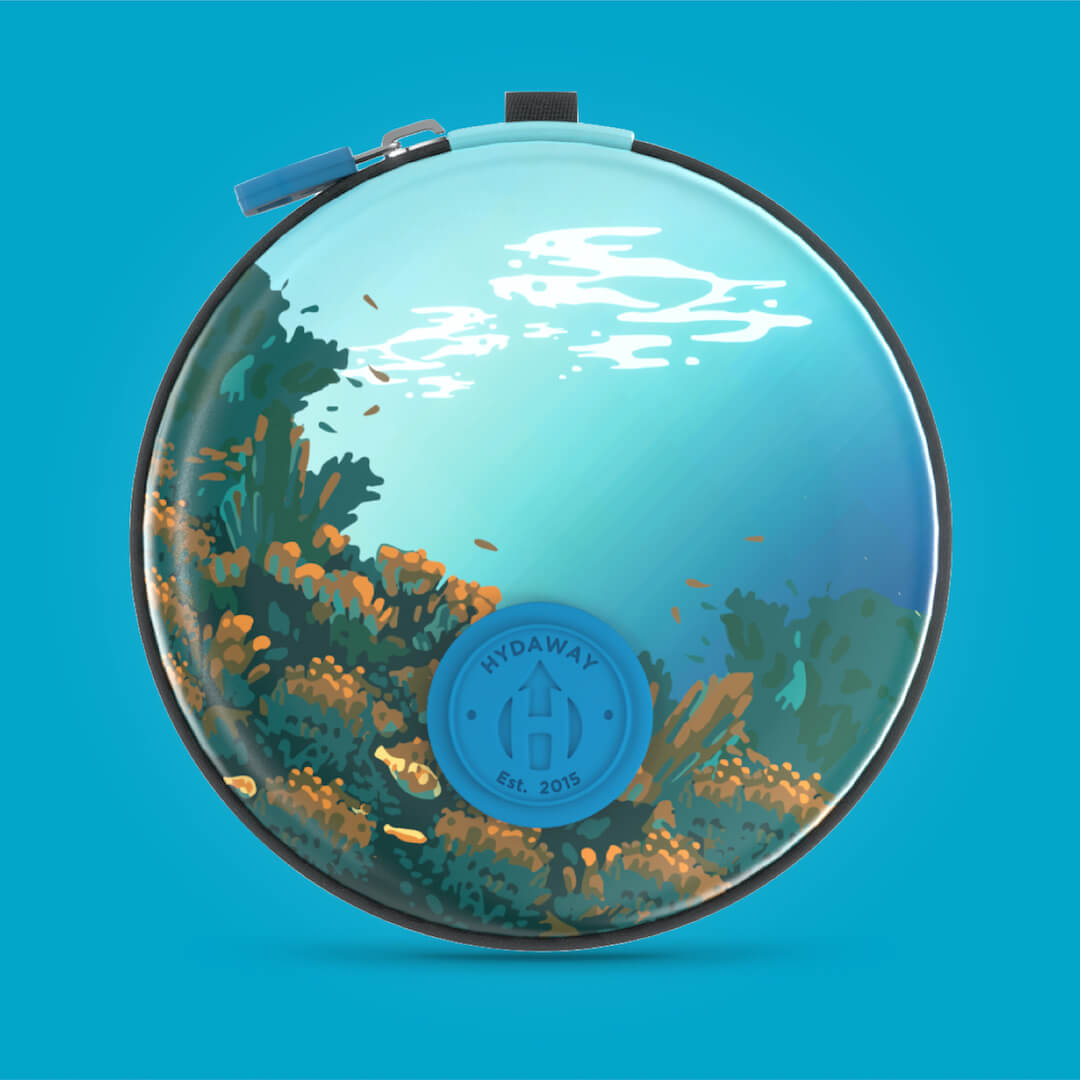
Overloading is where mesh stops looking smart. A bag that's too full starts to sag, stretch, and lose its structure, which makes it harder to stack, hang, or pack efficiently. That's also why products like HYDAWAY's Travel Case matter in the same ecosystem, because a molded, structured pouch can protect a collapsible bottle while a medium mesh bag keeps spare clothes or accessories visible and separated.
Durability and Longevity What Actually Fails First
Cheap mesh bags usually don't fail in one dramatic moment. They start small, with corners stretching, seams fraying, or zippers hanging up when the bag is full. If you assume mesh automatically means light and easy, you'll eventually find out that a bag can be breathable and still be badly built.

The weak points to inspect first
The first failure point is usually the mesh panel at a stress zone. Corners, handles, and places where the bag bends under load take the most abuse, so those areas need reinforcement. If the weave looks loose or the fabric feels flimsy under tension, the bag will probably give up early.
The second point is the zipper. A good zipper matters more than people expect, because the bag is only as useful as the closure that keeps it usable day after day. The third is stitching, especially where seams absorb repeated weight and washing.
What lasts longer is usually easy to spot. Look for reinforced corners, double-stitched seams, and a closure that doesn't feel delicate when you tug on it. If the product description names the denier or calls out a stronger zipper system, that usually tells you more than a glossy product photo.
Don't buy a mesh bag just because it looks minimal. Buy one because the fabric, stitching, and closure can survive how you actually travel.
Maintenance matters too. Don't overload it, wash it gently when needed, and let it air dry instead of machine drying it. Store it uncompressed when you're not using it so the mesh doesn't stay creased or stressed, and check the seams before they become a tear.
The broader pattern shows up in gear testing too. Discussions of ventilated packs emphasize that the load-bearing structure, not mesh alone, determines whether a design sags under pressure, which is why the same logic applies to organizers and travel pouches as well. A lightweight bag is only a good buy if it stays in shape long enough to justify the purchase, and real-world test coverage consistently points buyers back to the same issue, build quality beats surface-level features.
Sustainable Travel Mesh Bags in Your Eco-Conscious Kit
Mesh bags fit neatly into a reusable travel routine because they replace a lot of disposable throwaway packaging. Instead of using plastic sacks for produce, laundry, snacks, or damp gear, one washable organizer can do the same work trip after trip. That makes them a practical companion to a lighter, more intentional travel kit.
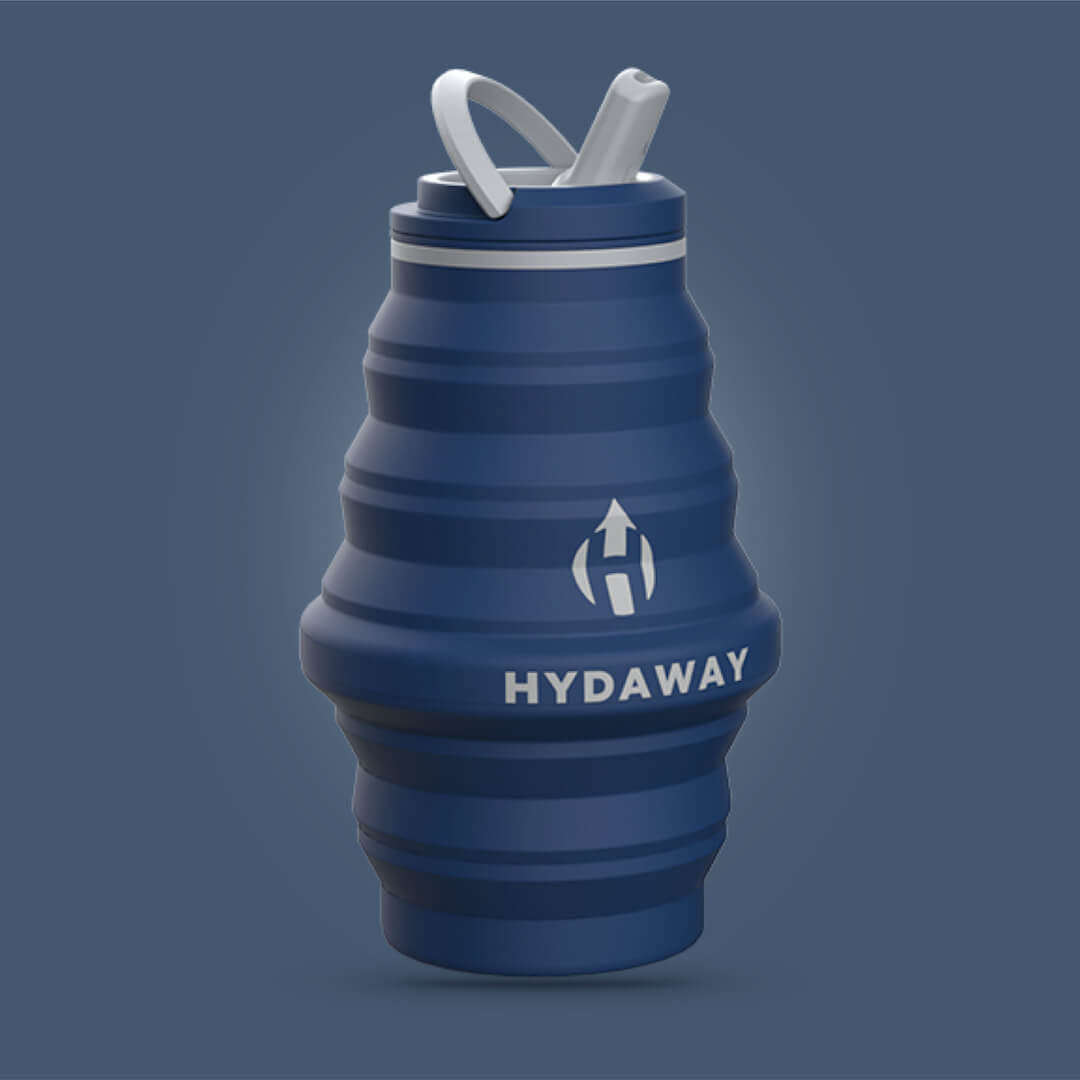
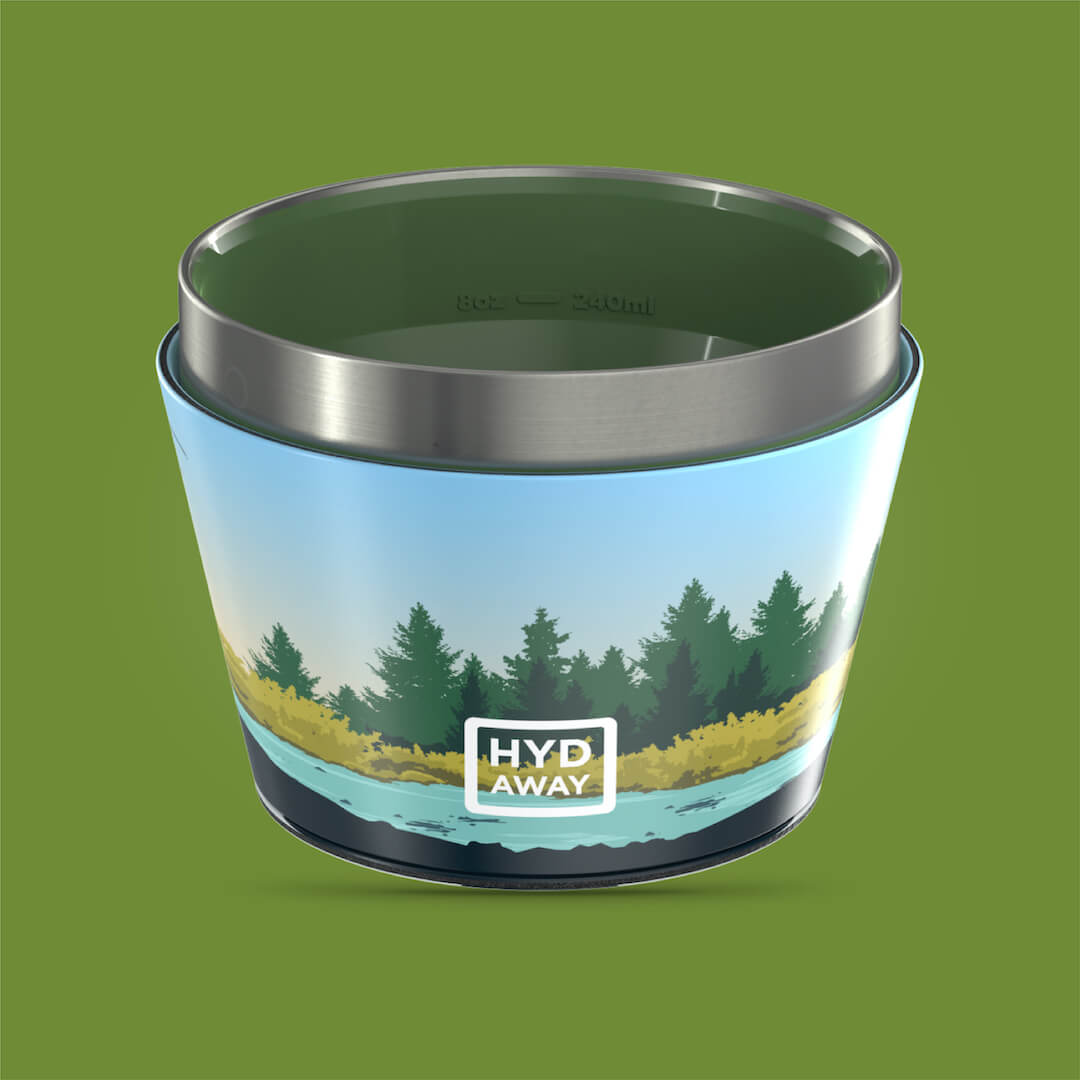
HYDAWAY's broader product line fits into that same logic, especially the collapsible bottles, tumblers, and bowls that are designed to save space while replacing single-use items. A mesh bag can hold a bottle, utensil set, or snack stash together without making the kit bulky, and sustainable travel accessories is a natural extension of that approach.
Recycled nylon options are worth looking for if you want the material choice to match the reuse mindset. Biodegradable alternatives exist in the broader market too, but the more important filter is whether the brand is transparent about sourcing, repairs, and care. A bag that lasts longer is often the better sustainability choice than a supposedly greener one that falls apart early.
For travel, the use cases are easy. Mesh works for farmers market produce during longer stays, for separating recyclables from trash on road trips, and for storing damp hiking clothes without grabbing a plastic bag from the hotel drawer. It also helps keep reusable utensils and straws together so they're used instead of forgotten at the bottom of a tote.
Care extends the life of both the bag and the system around it. Rinse out salt and sand, let the fabric dry fully, and repair small issues before they spread. Sustainability in travel gear isn't about buying more, it's about choosing pieces that stay in rotation.
If you want a packing system that keeps your bottle, drinkware, and travel kit compact without wasting space, take a look at HYDAWAY. Its collapsible gear pairs naturally with mesh organizers, so you can separate wet, clean, and reusable items without adding bulk.