

Performance Hydration: Essential Guidelines for Athletes

2% body mass loss is enough to reduce strength by about 2%, power by about 3%, and high-intensity endurance by about 10%. That's why performance hydration isn't about chasing thirst, it's about staying out of the zone where output starts slipping.
Still treating hydration like a wellness habit, something measured in glasses per day or a vague urge to drink more? In the field, that advice breaks fast. On a hot climb, a long run, an airport day, or a travel-heavy workweek, performance hydration is a measurable system of intake, loss, and replacement, and the small misses add up quickly.
Why 2 Percent Dehydration Changes Everything
The biggest mistake is assuming dehydration only matters when you feel obviously thirsty. By the time that feeling is loud, performance can already be declining. Sports medicine has long used 2% body mass loss as the practical threshold where dehydration starts to impair exercise output across multiple modes, not just in one niche setting.
A major review summarized earlier work showing that hypohydration attenuates strength by about 2%, power by about 3%, and high-intensity endurance by about 10%. The National Athletic Trainers' Association also reports that prolonged aerobic performance was consistently reduced when hypohydration reached or exceeded 2% body mass loss sports medicine review. That's a real ceiling, not a motivational slogan.

The useful way to think about hydration
Your body normally sits in a very narrow fluid range, roughly 1% hyperhydration to 3% hypohydration sports medicine review. That tiny band is the whole game. If you're hiking in heat, pacing a marathon, riding all day, or spending long hours in transit, the difference between “fine” and “down a notch” can be a small fluid deficit.
Practical rule: If the day is long enough to include multiple decisions, multiple miles, or multiple train changes, hydration is already a performance variable, not an afterthought.
That matters for more than athletes. Commuters, hikers, travelers, and digital nomads all deal with the same biology, even if the activity looks different. A modest under-drinking pattern during a long day can show up as slower reactions, lower output, heavier fatigue, and poorer recovery afterward.
The smartest shift is mental. Stop treating hydration as a feeling and start treating it as a number you can manage. Once you do that, the question changes from “Am I thirsty?” to “How much did I lose, how much did I replace, and am I staying near baseline?”
The Science Behind Optimal Hydration Targets
The safest operating target is simple. Start exercise in a euhydrated state and keep body-mass loss at 2% or less during activity, because larger deficits are tied to higher cardiovascular strain, poorer thermoregulation, and worse aerobic performance hydration status guidance. That's the anchor point I use with athletes and with anyone doing long, hot, or demanding travel days.
The National Athletic Trainers' Association says optimal hydration for athletes is typically maintained within about +1% to -1% of baseline body water, and early hypohydration signs often begin around a 2% body-mass deficit hydration status guidance. In plain language, you do not need to be badly dried out before performance starts to suffer. You only need to drift a little.
What to measure instead of guessing
The best system doesn't rely on one number. It uses a few simple checks together:
- First-morning urine color, which gives a quick practical read on whether you're starting the day close to normal.
- Urine specific gravity, when you have access to it, because it adds another layer of objective data.
- Body mass changes, especially before and after training or long outdoor time.
- Thirst, which still matters, but works better as one signal among several.
That combined approach is more useful than generic “drink more” advice. A runner, a hiker, and a commuter can all be underhydrated for different reasons, so the fix has to match the situation. The point isn't to micromanage every sip. It's to keep losses from pushing you past the threshold where output falls off.
If you want to connect this to a broader fatigue system, the monitoring logic pairs well with prevent overtraining with HRV, because hydration status and recovery status often rise and fall together in real training blocks.
Pre, During, and Post Exercise Hydration Timing
Timing changes everything. The wrong bottle at the wrong time won't rescue a poorly prepared session, and it won't repair losses after the fact. The cleanest pre-exercise benchmark comes from ACSM guidance quoted by the American Physiological Society, which recommends beginning to hydrate about 4 hours before exercise and consuming 5 to 7 mL per kilogram of body weight pre-exercise hydration guidance.
For a 70 kg person, that works out to roughly 350 to 490 mL before training pre-exercise hydration guidance. That's a real-world amount, not a vague wellness tip. It gives runners, hikers, and commuters a concrete way to start the day closer to baseline.

During exercise and after the stop
During activity, the Korey Stringer Institute recommends about 200 to 300 mL every 15 minutes hydration guidance. That range gives structure to longer training blocks, hill hikes, and travel workouts where you can plan bottle checks instead of waiting for trouble.
After exercise, rehydration should happen within 2 hours, and fluid replacement should be about 150% of body-mass loss hydration guidance. The same source gives a useful conversion, 2.2 pounds of body weight lost equals 1 liter of fluid loss hydration guidance. So a 5 pound drop means about 2.27 liters of replacement fluid.
If you finish a hard effort and the scale says you're down, don't treat it like a cosmetic detail. Treat it like a repair job.
For runners, the practical takeaway is straightforward. A travel bottle in your pack, a refill plan at a trailhead, and a post-session bottle at the car matter more than almost any branding claim. That's also where a packable system helps. If you want a running-specific reference point, how to stay hydrated while running is worth a look because it fits the realities of moving fast, sweating hard, and carrying less.
Electrolytes and Carbohydrates for Sustained Performance
Plain water does fine for short, easy efforts. It falls short when the session stretches longer, gets hotter, or pushes intensity up. That's where planned drinking beats improvisation, especially when performance matters more than just getting through the hour.
The Gatorade Sports Science Institute recommends planned drinking for exercise lasting more than 90 minutes, high-intensity work, high sweat rates, and any case where performance is a priority planned drinking guidance. In endurance settings, the classic replacement range is about 600 to 1200 mL per hour with carbohydrate and sodium planned drinking guidance.
What to add, and when
For sessions longer than about an hour at moderate to hard intensity, sodium commonly falls around 0.5 to 0.7 g/L, or roughly 200 mg per 8 oz planned drinking guidance. Athletes should also typically consume 30 to 60 g of carbohydrate per hour during extended exercise lasting over an hour endurance fueling review.
That combination is why sports drinks often outperform plain water in longer efforts. The ACSM roundtable found carbohydrate-electrolyte beverages improve performance versus the same volume of water during prolonged exercise and high-intensity intermittent exercise endurance fueling review. If you're doing a long ride, a fastpacking day, or a marathon-style effort, the body needs fuel and fluid together, not in separate silos.
For shorter sessions, you don't need to force a heavy electrolyte strategy. That's the trade-off people miss. Aggressive fueling can be unnecessary, and sometimes just inconvenient, when the workout is brief or low sweat. Use the duration and climate to decide, not habit.
Cognitive Performance and Personalized Hydration Strategies
Hydration isn't only about muscles and sweat. It affects visual attention, short-term memory, and mood, which is why the topic matters just as much for travelers, drivers, digital nomads, and event-goers as it does for runners cognition and hydration review. When the day involves navigation, baggage, traffic, or back-to-back decisions, mental clarity is part of performance.
A more useful view is that hydration can support cognition, but the evidence doesn't justify every aggressive drinking rule people repeat online. The literature includes methodological caution that performance effects of hypohydration are often smaller or more context-dependent than standard advice implies, especially outside long, hot, high-intensity efforts cognition and hydration review. That's the nuance most guides skip.
Personalization beats generic advice
Individualized planning is the answer. Climate, body size, exercise duration, sweat rate, and sodium losses all change what you need, which is why simple markers matter so much. Pre- and post-body mass, urine color, and sweat-rate estimation are easy to use and far more useful than a single universal rule.
For example, a one-hour gym session in mild weather doesn't need the same plan as a hot urban walking day, a summit push, or a full travel day with delayed meals. In the longer or hotter cases, targeted electrolytes make more sense, especially when sweat losses are high or the effort crosses the 60 to 120 minute mark mentioned in applied guidance individualized hydration research.

The everyday version is simple. Keep a bottle visible, track whether your energy and focus stay steady, and adjust your intake based on the day you're having. If you want a broader fatigue lens alongside hydration, the article on prevent overtraining with HRV fits well with this approach because poor recovery and poor hydration often show up together.
Hydration Strategies for Travel, Ultra, and Endurance Adventures
Travel breaks routines. Ultra days stretch the body for hours. Adventure trips add heat, limited refill points, and a pack that's already too full. That's why hydration in the world needs a different shape than hydration in a clean training plan.
On a recent travel-heavy stretch, the pattern was the same every time. Airport coffee crowds out water, a hot walk to the hotel drains you more than expected, and by late afternoon the body feels flat before the work even starts. That's where planning wins, because the best bottle is the one you'll carry, refill, and use without thinking.
For long hikes and backcountry days, the logic is simple. Know where refill points are, know how much you're likely to drink, and choose gear that doesn't punish you for carrying it. If you're building a route plan, long-distance hiking hydration is a useful companion read because it matches the way distance feels on foot.
The same principle applies to ride days and long fueling windows. A solid cycling snacks guide helps with the food side of the equation, and food matters because hydration and fueling work together when the miles stack up.
Gear, refills, and body awareness
One practical way to keep the system moving is to size your bottle to the day. Small bottles are easier to carry, while larger bottles reduce refill frequency. In hot climates, that trade-off becomes more important, because you don't want to rely on luck and convenience stations alone.
If you're traveling light, a collapsible bottle or compact drinkware system makes it easier to keep water on hand without giving up pack space. That matters on train platforms, in vans, at theme parks, and on summit approaches where every ounce of bulk gets annoying fast. It also helps on ordinary days, because consistent carry usually beats occasional overcorrection.
If you also care about what's on your wrist while you're out there, find comfortable Luxe straps at Nothing But when you want a watch setup that stays usable on hot, sweaty, or travel-heavy days.
Portable Hydration Gear That Keeps You Performing
All the planning in the world doesn't matter if the gear stays at home because it's awkward. The simplest performance hydration plan is the one that fits in a day bag, clips into a commute, or slides into a carry-on without making you think twice.

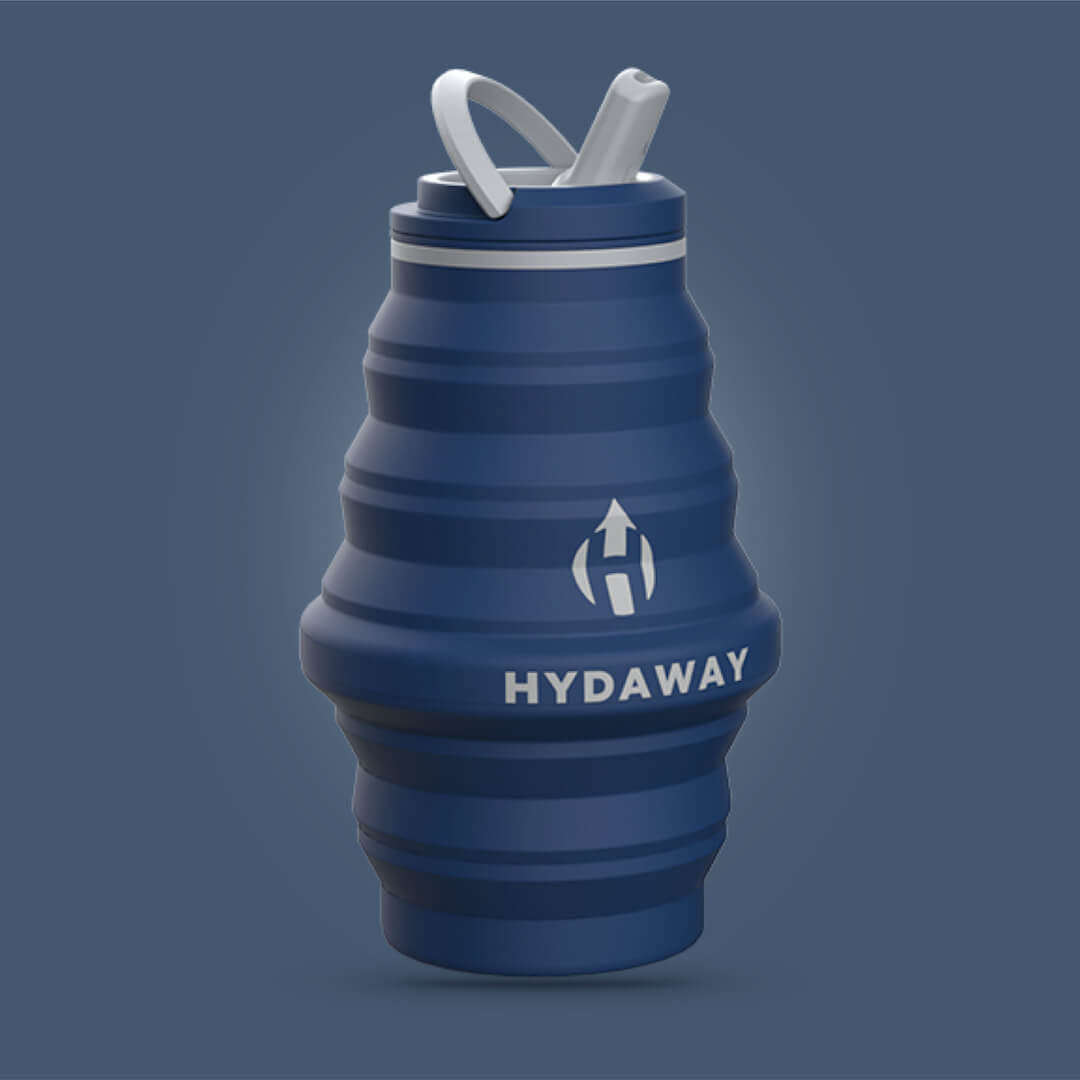
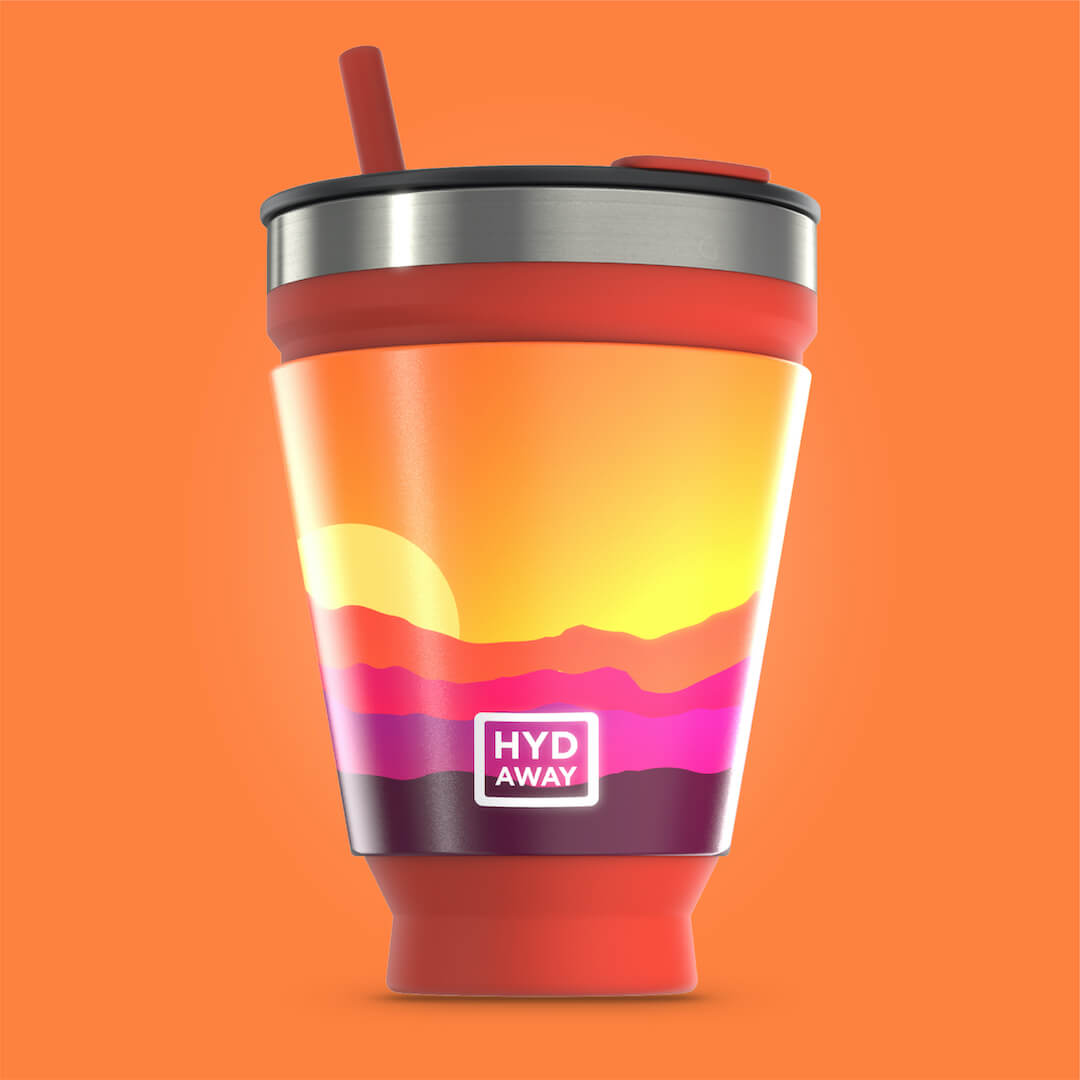
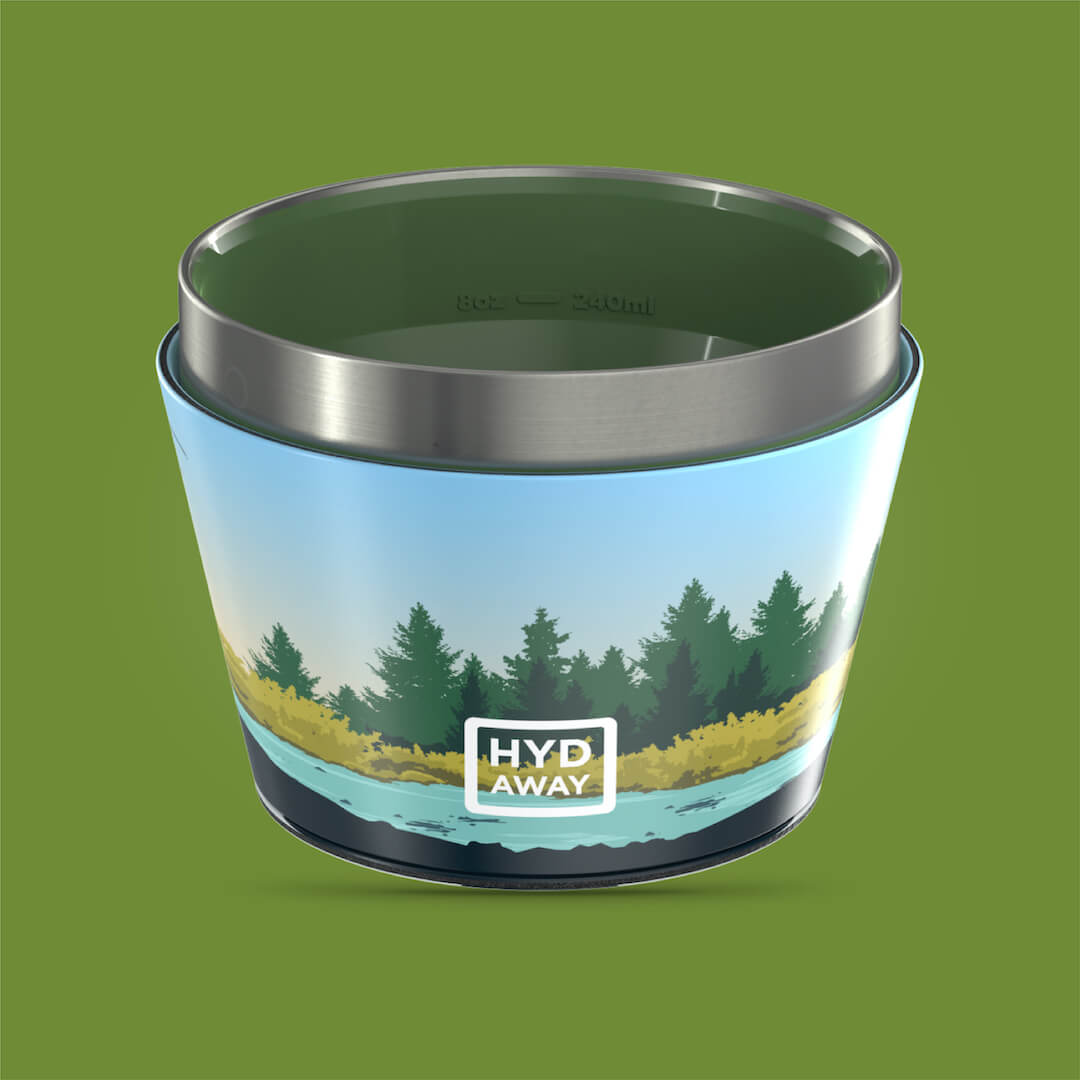
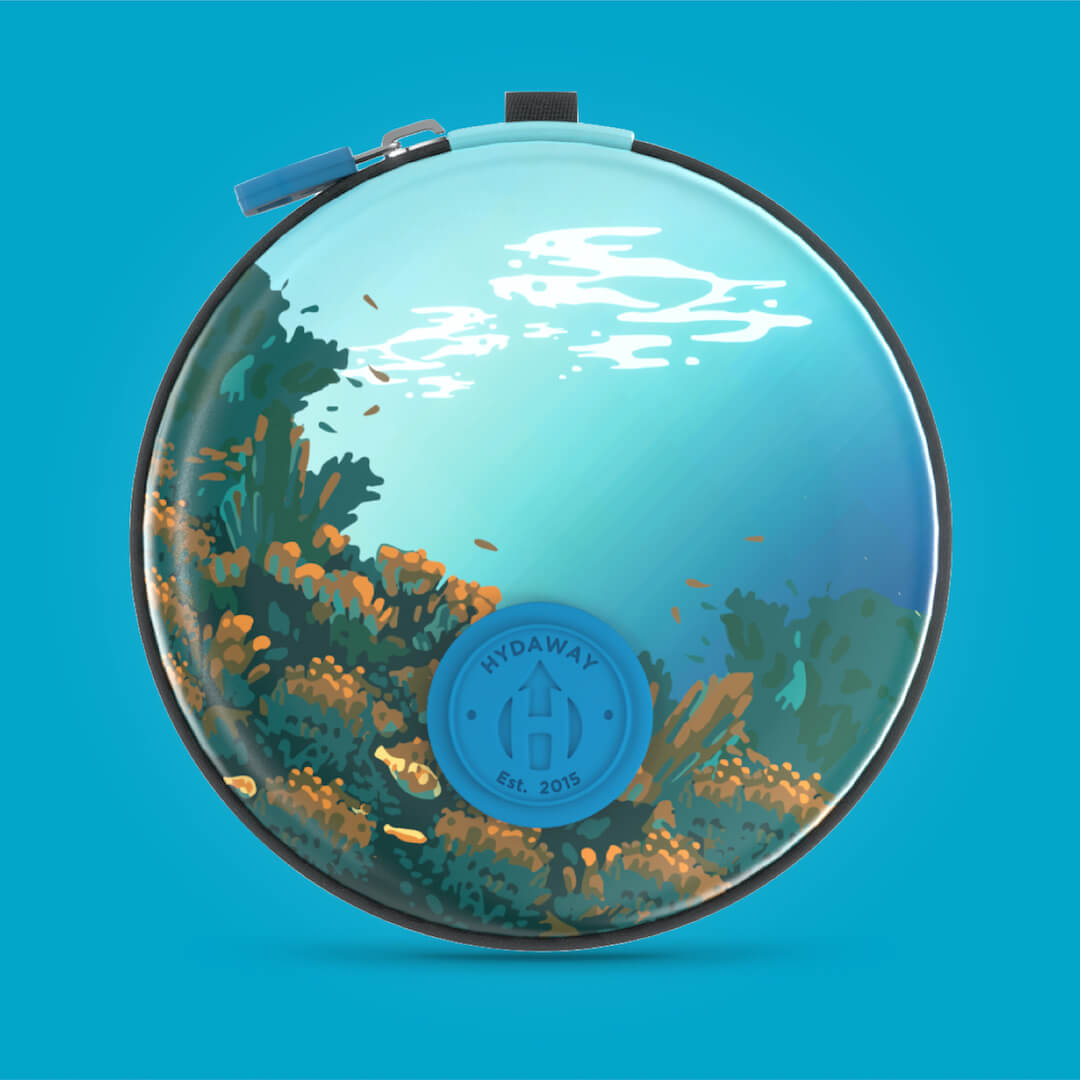
HYDAWAY's collapsible bottles come in 17 oz and 25 oz sizes, and they fold flat when empty so they take up less room in transit. The same packable approach shows up in insulated drink tumblers and pints, plus collapsible backpacks and travel cases that make hydration easier to bring along instead of leaving behind.
How packable gear fits real life
That matters in a few very ordinary scenarios. A commuter can keep one bottle in a work bag. A campervan traveler can stack bottles and cases without burning cabinet space. A hiker can fit a bottle into a pocket or side pouch and refill at the next water stop.
The practical value isn't novelty. It's consistency. If the bottle is easy to pack, easier to clean, and simple to reuse, you're more likely to drink before you're already behind. HYDAWAY also fits the sustainability side of the conversation, because durable reusables reduce dependence on single-use plastic while keeping the hydration system portable.
Every item in the line is described as durable, easy to clean, dishwasher safe, and verified free of BPA, phthalates, and other pollutants. That combination makes sense for people who want fewer compromises on the road and less clutter at home.
The right bottle doesn't make the science better. It makes the science usable on Tuesday, on the trail, and in an airport line.
For people who build their days around movement, that's the win. A bottle that folds flat after use and expands when needed supports the same goal as a good hydration plan, staying ready without carrying more than necessary. If you need a travel-oriented setup, the outdoor hydration pack pairs naturally with that approach.
Putting It All Together Into Your Daily Hydration Plan
The practical version of performance hydration is a checklist, not a philosophy. Start in a euhydrated state, keep body-mass loss at 2% or less, hydrate about 4 hours before exercise when possible, and use pre- and post-activity body weight to see what the day cost you hydration status guidance pre-exercise hydration guidance.
For longer efforts, especially in heat or when performance matters, planned drinking with sodium and carbohydrates is the better default planned drinking guidance endurance fueling review. For travel days and mental work, don't ignore cognition. Hydration affects focus and mood, not just pace and power cognition and hydration review.
The easiest place to start is with one change. Carry a bottle you'll use, weigh yourself before and after your longest session, and keep a simple note of what you drank, what the weather was, and how you felt the next day. That gives you a personal hydration map instead of a generic rule.
If you want a compact way to make that habit stick, HYDAWAY makes collapsible bottles and travel-ready drinkware that fit commuting, training, hiking, and travel without taking much space. Visit HYDAWAY and choose a setup that makes it easier to drink on time, carry less, and keep your performance hydration plan consistent.