


Discover the mountain biking water bottle: Your Ultimate Guide

Every mountain biker eventually faces this classic dilemma: the minimalist freedom of a water bottle versus the all-day assurance of a hydration pack. There's no single right answer here. The best choice really comes down to your ride, your bike, and your personal style on the trail.
Think of it like packing for a trip. You wouldn't lug a giant suitcase for an overnight business trip, right? And you definitely wouldn't try to cram a week's worth of gear into a tiny duffel for an international expedition. It's the same logic. For example, if you're hitting your local trails for a quick after-work session, a single bottle is perfect. But if you're planning a full-day epic in Moab, you'll need a lot more capacity.
Choosing Your Hydration Setup: Bottle or Pack?
For those fast, after-work loops or punchy races that last 90 minutes or less, a water bottle is often king. It keeps the weight off your back, which lowers your center of gravity and lets you really throw the bike around. You can feel that extra agility when you're whipping through tight corners or navigating a technical descent. Plus, a lot of riders just prefer that unencumbered, pack-free feeling, especially in the growing discipline of "downcountry" riding where lightweight efficiency is paramount.
When a Hydration Pack Makes More Sense
But as your rides get longer and more remote, the script totally flips.
For an all-day epic deep in the backcountry where water sources are non-existent, a hydration pack becomes your best friend. Imagine you're tackling the Whole Enchilada trail in Utah; you'll need the two or three liters of water a pack can carry, along with your tools, snacks, and an extra layer, all in one organized place. It's also a practical solution for many modern full-suspension bikes, whose complex frames and shock placements don't always leave much room for a bottle cage.
This simple decision tree is a great starting point for figuring out what you need based on how long you'll be out.

The takeaway is simple: ride duration is the biggest factor. Shorter rides favor bottles, while longer adventures pretty much demand the capacity of a pack.
To make the choice even clearer, here’s a quick breakdown of how they stack up.
Quick Comparison: Water Bottle vs. Hydration Pack for MTB
| Feature | Water Bottle | Hydration Pack |
|---|---|---|
| Best For | Short rides (<90 mins), races, familiar trails | Long rides (>90 mins), backcountry, remote areas |
| Capacity | Limited (typically 20-26 oz) | High (2-3 liters or more) |
| Weight | Lightweight, keeps weight low on the bike frame | Heavier, carries weight on your back |
| Agility | High; unencumbered feeling, lower center of gravity | Lower; can feel bulky and shift on technical terrain |
| Storage | None; just water | Ample room for tools, food, layers, and gear |
| Ease of Use | Requires reaching down to drink | Hands-free drinking via a hose |
Ultimately, the best setup is the one that fits how you ride.
The Modern Hybrid Approach
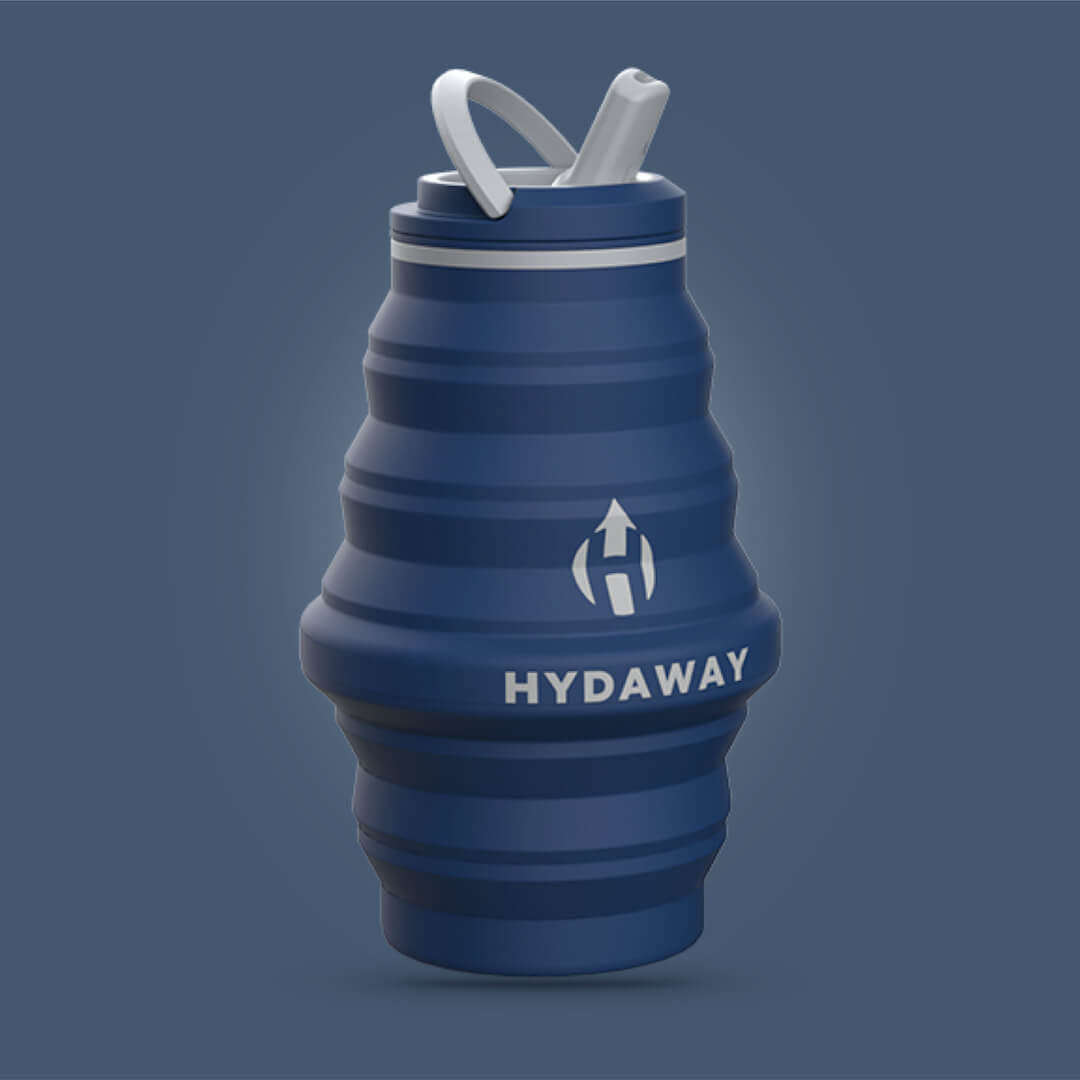
Here's the good news: you don't have to be locked into one system. A hybrid strategy can give you the best of both worlds. For instance, you can start a ride with a standard bottle in your cage and toss a collapsed HYDAWAY bottle into a jersey pocket or hip pack.
Once your main bottle is empty, you just expand the HYDAWAY for an extra 25oz of water on demand. This lets you turn what started as a 90-minute ride into a 3-hour adventure if you're feeling good, without ever needing to go back to the car.
This gives you double the hydration capacity without the bulk and back-sweat of a full pack. It's the perfect solve for those "in-between" rides that might just go a little longer than planned. While water is priority one, kitting out your bike can make a huge difference, too. For more ideas, check out this guide to the best electric bike accessories to round out your setup.
Let’s be honest: not every water bottle is cut out for the trail. Your average gym bottle just won't survive the jarring reality of a rocky descent or a dusty climb. A real mountain biking water bottle is a purpose-built piece of gear, designed from the ground up to make hydrating on the fly seamless and safe. When you're picking one out, you need to look past the cool colors and logos and focus on the nitty-gritty details that actually matter when you're miles from anywhere.

The material is everything. It’s the foundation of how your bottle performs. While traditional BPA-free plastics are light and easy on the wallet, they have a nasty habit of holding onto the ghost of last week's sports drink. This is where newer materials like the food-grade silicone we use in HYDAWAY bottles really shine—they’re completely taste-neutral and ridiculously durable. This means your water will taste like water, not like the lingering flavor of that berry electrolyte mix you used two rides ago.
Material and Capacity Considerations
Choosing a bottle is really a balancing act between two things: how much it holds and what it’s made of. For most rides, a bottle somewhere in the 20-26oz (that’s about 600-750ml) range is the sweet spot. It’s big enough to keep you going but fits neatly into a standard bottle cage without feeling like you've strapped a boat anchor to your frame.
This size isn't just popular with bikers; it's a trend across the entire sports world. In fact, the 600ml-650ml segment is estimated to contribute the highest market share of 37.7% in 2024 because it nails that perfect balance of capacity and portability. The whole market is growing, which just goes to show how critical the right bottle is for any athlete.
Valve Design and Trail Functionality
How you get the water out of the bottle is just as important as what's inside. The valve can literally make or break your hydration game when you're gasping for air on a tough climb.
- High-Flow Bite Valves: These have become the gold standard for a reason. A quick squeeze and a gentle bite are all it takes for a solid gulp of water. They're perfect for those split-second moments when you're breathing hard and need a drink now.
- Traditional Push-Pull Spouts: They’re simple, sure, but they require way more effort. You have to yank it open with your teeth or a free hand, which is awkward and distracting when you should be focused on the singletrack ahead.
- Dirt Caps and Covers: This is non-negotiable. If you ride on dirt, you need a cap. A simple cover protects the mouthpiece from mud, dust, and whatever else your front wheel decides to kick up. It’s a tiny detail that keeps your sips clean and grit-free.
The shape of the bottle matters, too. A well-designed MTB bottle has a specific groove around the top that locks into the little tab on your bottle cage. That grip is what keeps your bottle from launching into the bushes on a rough section. For a deep dive into different bottle styles, check out our guide on the best water bottles for biking.
The best trail bottle is one you don't have to think about. It should deliver water effortlessly when you need it and stay put when you don't. A high-flow valve and a secure fit are the two most critical features for a smooth ride.
Smart Ways to Mount and Carry Your Bottle
A water bottle is only as good as the system holding it. Out on rough singletrack, a loose bottle is just a missile waiting to launch into the bushes at the worst possible moment. Figuring out the right way to mount and carry your water is absolutely fundamental to a good ride, and your options go way beyond the standard frame cage.

The classic bottle cage, bolted right onto your frame's down tube or seat tube, is the solution most of us know. But the cramped geometry of modern full-suspension bikes often makes a top-loading cage a real pain to use.
This is where side-load cages are a game-changer. They let you pull the bottle out from the side, a much more natural motion when a shock or frame linkage is hogging all the space. Material matters, too; while feather-light carbon cages look cool, reinforced plastics often provide a much more secure grip, keeping your bottle locked in place on those jarring descents.
Exploring Alternative Mounting Solutions
But what if your frame doesn't have standard mounts at all? You're not out of luck. The market for creative mounting solutions has absolutely exploded, reflecting a huge demand for adaptable gear. In fact, the global mountain bike water bottle cage market was valued at $2.5 billion in 2023 and is only expected to grow. You can find more insights on the growth of the bike accessory market here.
This demand has led to some seriously clever options:
- Strap-On Cages: These versatile mounts use high-traction straps to attach securely just about anywhere—your frame tubes, fork legs, or even under your saddle.
- Handlebar Mounts: These systems place your bottle right between your handlebars for incredibly easy access, though they can add a bit of weight to your steering.
Carrying Water Off the Bike
Sometimes, the best place for your water isn't on the bike at all. Carrying your hydration off-body is a great alternative, especially for riders who want to keep their bike frame looking clean and feeling light. A minimalist hip pack is a fantastic choice, letting you carry a bottle, phone, and a few tools without the sweaty back that comes with a full hydration pack.
For a truly lightweight setup, a simple jersey pocket works perfectly. This is where a product like the HYDAWAY collapsible bottle really shines. You can start your ride with a standard bottle in your cage and stash a full, collapsed HYDAWAY in your back pocket. It's an ideal "plan B"— if you decide to add an extra loop to your ride, you have a second bottle ready to go, taking up almost no space until you need it.
This hybrid approach gives you double the water capacity without committing to a bulky pack. Once your main bottle is empty, you can swap in the HYDAWAY, effectively extending your ride time and range on demand.
Whether you stick with a traditional cage or adopt a hybrid strategy, the goal is always the same: secure, accessible hydration that lets you focus on the trail ahead.
How HYDAWAY Collapsible Bottles Change the Game
What if you could carry a full-size mountain biking water bottle that performs perfectly on the trail, then practically disappears into your pack when it’s empty? This isn’t some far-off concept; it’s the simple genius of a collapsible bottle.
Riders have always been stuck with a rigid choice: deal with the limited capacity of a single bottle or commit to the bulk and sweat of a full hydration pack. HYDAWAY gives you a third, much more flexible option that fits your life on and off the bike.
This hybrid approach solves one of the most common hydration headaches on the trail. You can start a longer ride with your trusty rigid bottle in its cage for quick sips. Tucked away in a jersey pocket or hip pack is a full 25oz HYDAWAY bottle, collapsed down to just over an inch thick. You won't even know it's there.
Once your first bottle runs dry, everything changes. You just expand the HYDAWAY, pop it into your bottle cage, and you’re instantly set for the next leg of your ride. This means you can confidently tackle that extra climb or explore a new trail without worrying about running out of water. This strategy effectively doubles your water capacity on demand, letting you push further without being weighed down by a backpack.
Built for the Trail, Not Just the Gym
A bottle that folds might sound a bit delicate, but the reality is just the opposite. HYDAWAY bottles are made from a tough, food-grade silicone that’s designed to handle the abuse of real mountain biking. They can be dropped on rocks, squeezed in a crash, and jammed into a full pack without cracking or leaking.
The real advantage is adapting to the unpredictable nature of a ride. A collapsible bottle gives you the option to carry more water only when you need it, turning a potential ride-ender into just another climb.
This durability goes hand-in-hand with a truly leakproof design. The watertight seal means that whether it's bouncing around in your cage or squished in your pack next to your phone, your water stays exactly where you want it. This peace of mind lets you focus on your line, not on whether your gear is getting soaked.
Smart Design for a Modern Rider
Beyond pure trail performance, these bottles solve the practical annoyances of regular use. The wide-mouth design makes them incredibly easy to clean—a huge plus after a weekend of sticky sports drinks. And unlike so many plastic bottles that hold onto flavors, the silicone construction resists tastes and odors. Today’s water won’t taste like last week’s electrolyte mix.
This reusability is a huge part of a more sustainable way to stay hydrated on the trail. By choosing one durable, long-lasting bottle, you’re drastically cutting down on single-use plastics. For more ideas on how a collapsible bottle can fit into your outdoor life, check out our guide on using a collapsible water bottle for hiking.
For any mountain biker, the key benefits are crystal clear:
- Space-Saving Packability: Carry a full-size spare bottle that takes up a fraction of the space.
- On-Demand Capacity: Double your water supply mid-ride without having to start with a heavy pack.
- Trail-Tough Durability: Made from resilient silicone that handles the drops, impacts, and general chaos of mountain biking.
- Guaranteed Leakproof: A secure seal keeps your gear dry and your water contained, no questions asked.
It’s a smart, practical, and sustainable solution for staying hydrated on any trail you want to tackle.
Building Your Personal Hydration Strategy
Showing up to the trail with the right amount of water shouldn't be a guessing game. A smart hydration strategy is just as crucial as a well-tuned bike, but it doesn't have to be complicated. The trick is to start with a solid baseline and then tweak it based on the specific demands of your ride.

A great rule of thumb to start with is one full mountain biking water bottle (about 20-25oz) per hour of riding. This gives you a simple, effective starting point for pretty much any trail day. But that's just the beginning of your calculation.
Adjusting for Key Variables
Think of that one-bottle-per-hour rule as your foundation. Now, it’s time to build on it by factoring in the trail conditions and how hard you're planning to push.
- Heat and Humidity: Ripping trails in the July sun in Texas is a whole different beast than a cool October morning in Vermont. For every 10-degree increase in temperature above 70°F (21°C), you should probably add half a bottle per hour to your plan.
- Climbing and Intensity: A sufferfest with 3,000 feet of climbing will drain you much faster than a flat, flowy trail. If your ride is climb-heavy or you’re gunning for a race pace, tack on another half bottle per hour.
Dehydration doesn't just make you thirsty; it tanks your performance, messes with your concentration, and can seriously impact your safety on the trail. A simple plan keeps a tough ride from turning into a dangerous one.
Beyond Water: When to Add Electrolytes
On longer or hotter rides, water alone just won't cut it. As you sweat, you’re losing essential minerals called electrolytes—like sodium and potassium—that are absolutely vital for muscle function. Lose too many, and you’re setting yourself up for cramps and serious fatigue.
If your ride is pushing past 90 minutes or it's especially hot out, swap one of your water bottles for a sports drink loaded with electrolytes. It's a simple change that helps replenish what you're sweating out, keeping your muscles firing on all cylinders.
Real-World Hydration Scenarios
Let's put this framework into practice for a few classic mountain bike rides:
- The Post-Work Rip (1 Hour): This is your quick, intense loop to blow off steam. One standard 25oz bottle is perfect. You can leave the house with it full and be confident it's all you need.
- The Saturday Epic (3 Hours): You're planning a longer adventure with some real climbing. Start with two bottles on your frame (if you have the mounts) or one on the frame and a full, collapsed HYDAWAY bottle in your pack. This gives you the third bottle you'll need without hogging all the space.
- The Backcountry Adventure (5+ Hours): For those all-day epics where you might pass a stream, a hydration pack is often the way to go. But you can supplement it with a filter-ready HYDAWAY bottle. This allows you to easily scoop, purify, and carry extra water, ensuring you never run dry no matter how far you roam.
Keeping Your Gear Clean for Every Ride
Let's be real—a funky-tasting water bottle is more than just unpleasant. It can quickly become a science experiment, breeding bacteria and mold that you definitely don't want to be sipping on mid-climb. Keeping your hydration gear clean is one of the simplest, yet most overlooked, parts of being ready to hit the trail.
Think of your bottle just like any other piece of high-performance gear. You wouldn't let mud and grit cake up on your drivetrain for weeks on end, and the same logic applies here. A quick rinse after every ride is your best first defense, especially if you're using sugary sports drinks.
But a simple rinse won't cut it forever. Over time, a thin, invisible layer of gunk called biofilm can build up. That's why a more thorough, deep clean once a week is a non-negotiable.
Your Weekly Deep-Clean Ritual
The good news? You don't need a hazmat suit or harsh chemicals. The best cleaning tools are probably already sitting in your kitchen pantry. This simple routine will knock out any lingering funk or grime.
- Take It All Apart: Seriously, every single piece. Unscrew the cap, pull out the bite valve if it's removable, and separate any other components. This is the only way to get into all the nooks and crannies where gross stuff loves to hide.
- Soak and Scrub: Fill your bottle with warm water and either a tablespoon of baking soda or a few drops of basic dish soap. Let it sit for about 15 minutes to loosen things up, then get in there with a bottle brush and give the inside a good scrub.
- Focus on the Small Parts: The cap and bite valve are notorious for collecting grime. Use a small brush—a dedicated valve brush is great, but an old toothbrush works in a pinch—to clean out the threads, mouthpiece, and any moving parts.
- Rinse and Air Dry: This last step is critical. Rinse every part with fresh water, then lay everything out to air dry completely before putting it back together. Trapped moisture is a breeding ground for bacteria.
If you're looking for an even easier "set it and forget it" method, there are some great tools out there. We break down one of the most popular options in our guide on using bottle cleaning tablets.
The HYDAWAY Advantage
This whole cleaning chore becomes a lot less of a drag when your gear is designed for it. The HYDAWAY collapsible bottle, for instance, has a super wide-mouth opening that makes it easy to get a brush inside for a proper scrub.
Even better, it’s 100% dishwasher safe. After a muddy ride, you can just collapse it, pop it in the top rack of your dishwasher, and it comes out perfectly clean and sanitized for your next adventure. Zero fuss, zero funk.
A clean bottle is a safe bottle. Taking five minutes for a weekly deep clean doesn't just make your water taste better—it protects your health, ensuring you're only drinking what you put inside.
And one last thing: don't forget the bottle cage itself! A quick wipe-down keeps it from getting grimy, and it's a good time to check the bolts. Two loose bolts are all it takes for your cage to start rattling or, worse, launch your bottle into the bushes on a rocky section. A quick turn with an Allen key keeps everything locked down.
Got Questions? We've Got Answers
Even the most dialed-in setup can leave you with a few questions. Here are some of the most common things we hear from riders figuring out their hydration.
Will a Standard Water Bottle Fall Out on Rough Trails?
It absolutely can, and usually at the worst possible moment. This is exactly why a high-retention cage designed for the abuse of mountain biking is a non-negotiable piece of kit.
Look for cages marketed specifically for MTB that really clamp down on the bottle. Side-loading cages are a game-changer for full-suspension frames where space is tight, and they often provide a more secure grip. Also, check that your bottle has a nice, deep groove that really locks into the cage's tab—that’s your best defense against gravity on a chunky descent.
Can I Put Sports Drinks in My HYDAWAY Bottle?
Go for it. HYDAWAY collapsible bottles are made from a tough, food-grade silicone that’s awesome at resisting those lingering tastes or smells from electrolyte mixes.
Plus, they’re 100% dishwasher safe, so cleaning out any sugary residue after a ride is a total breeze. No more funky aftertastes on your next ride. This means you can use it for your electrolyte mix on Saturday and pure water on Sunday without any flavor ghosting.
How Do I Carry Enough Water for Long Rides Without a Pack?
For those big epic rides, it’s all about a hybrid strategy. If your frame is blessed with two bottle mounts, use them both! A popular setup is running a main bottle on your frame and stashing a full, collapsed HYDAWAY bottle in a jersey pocket or hip pack.
This gives you a full second bottle's worth of water that takes up virtually no space until you need a refill. It's the perfect way to extend your range without the bulk, allowing you to ride with the freedom of just a bottle but the capacity of a small pack.
For those truly backcountry adventures where you might be crossing streams, pairing a lightweight water filter with a collapsible bottle is an amazing ultralight trick. You get a nearly endless supply of water without the weight penalty.
Is an Insulated Bottle Worth It for Mountain Biking?
On a hot day? One hundred percent. There’s nothing quite like a sip of cool water to boost your morale (and performance) on a sweltering climb.
While they are a bit heavier and might hold a little less water than a standard bottle of the same size, the pure bliss of cold water when you're sweating it out is a trade-off most riders are happy to make.
Ready to build a smarter, more flexible hydration strategy for any trail? HYDAWAY makes collapsible, durable, and easy-to-clean bottles that give you capacity when you need it, and disappear when you don’t. Explore the collection at myhydaway.com and find out how you can carry less and do more.