


Best Water Bottles for Biking For Road, MTB, and Commuting

What makes the best water bottles for biking? It really comes down to matching the bottle to your ride. A feather-light plastic bidon is perfect for road racing, a tough insulated bottle is a lifesaver for mountain biking, and a packable, collapsible bottle is a game-changer for commuting and travel. The right choice is all about balancing capacity, material, and valve design with how and where you ride.
Finding Your Perfect Hydration Partner on Two Wheels
Picking a water bottle seems simple enough, but for any cyclist, it’s a decision that can make or break a ride. The "best" bottle isn't a one-size-fits-all answer. It’s a choice that’s deeply personal and shaped by your journey—whether you’re zipping through city streets, grinding up a rugged mountain trail, or putting in serious miles on the open road.
This guide goes beyond surface-level reviews. We're here to give you a strategic way to think about your choice, focusing on that subtle dance between material, capacity, valve design, and portability. These are the details that determine how easily you can grab a drink on the move, which has a real impact on your performance and fun. Of course, having the right gear is only half the battle; check out these essential hydration tips for athletes to really dial in your performance.
The Evolution of Cycling Hydration
As cycling has become more specialized, so has its gear. The classic lightweight bidon is still the go-to for racers counting every gram, while insulated steel flasks have become a must-have for those long, hot summer adventures.
The right hydration setup is more than just carrying water; it's about seamless integration into your ride. A bottle that’s difficult to grab, leaks in your bag, or doesn’t fit your cage can disrupt your flow and focus.
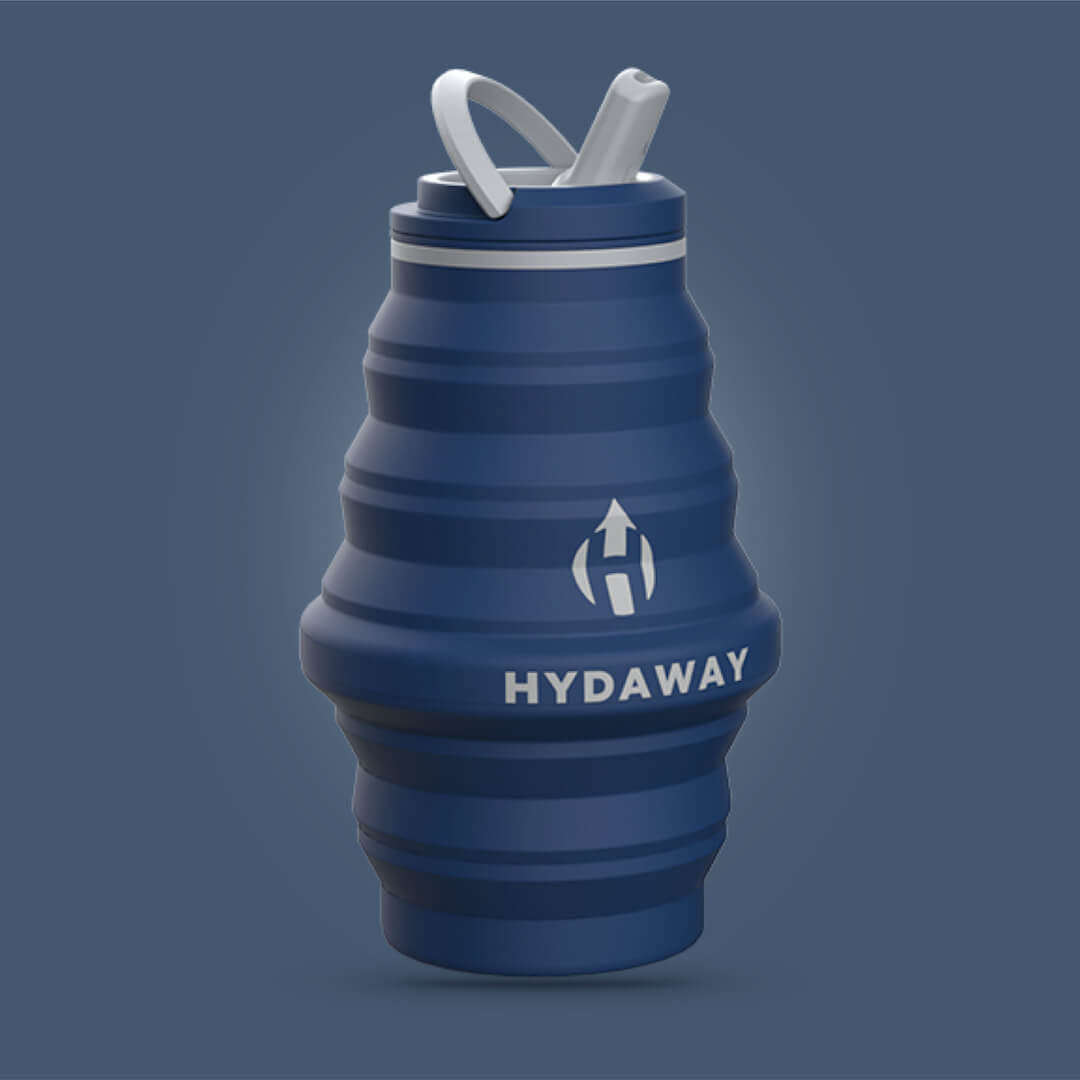
This evolution has also opened the door for ultra-packable collapsible bottles. For a practical example, think of a modern bike commuter. They need a bottle for their ride to work, but once they arrive, they don’t want to carry a bulky, empty container around the office. A HYDAWAY collapsible bottle perfectly solves this. You finish your water, squash the 25oz bottle into a slim disc, and tuck it away in your backpack. It’s this kind of convenience that addresses the real-world needs of cyclists whose lives extend beyond the bike lane.
| Bottle Type | Best For | Key Advantage | Primary Drawback |
|---|---|---|---|
| Classic Plastic | Road racing, training | Lightweight & easy to squeeze | Can retain flavors |
| Insulated Metal | Long summer/winter rides | Excellent temperature control | Heavier & non-squeezable |
| Collapsible Silicone | Commuting, travel, bikepacking | Unmatched portability | Not as rigid in the cage |
Throughout this guide, we'll dive deeper into these comparisons, helping you find that perfect bottle for whatever cycling adventure you have planned.
A Cyclist's Guide to Water Bottle Materials and Types
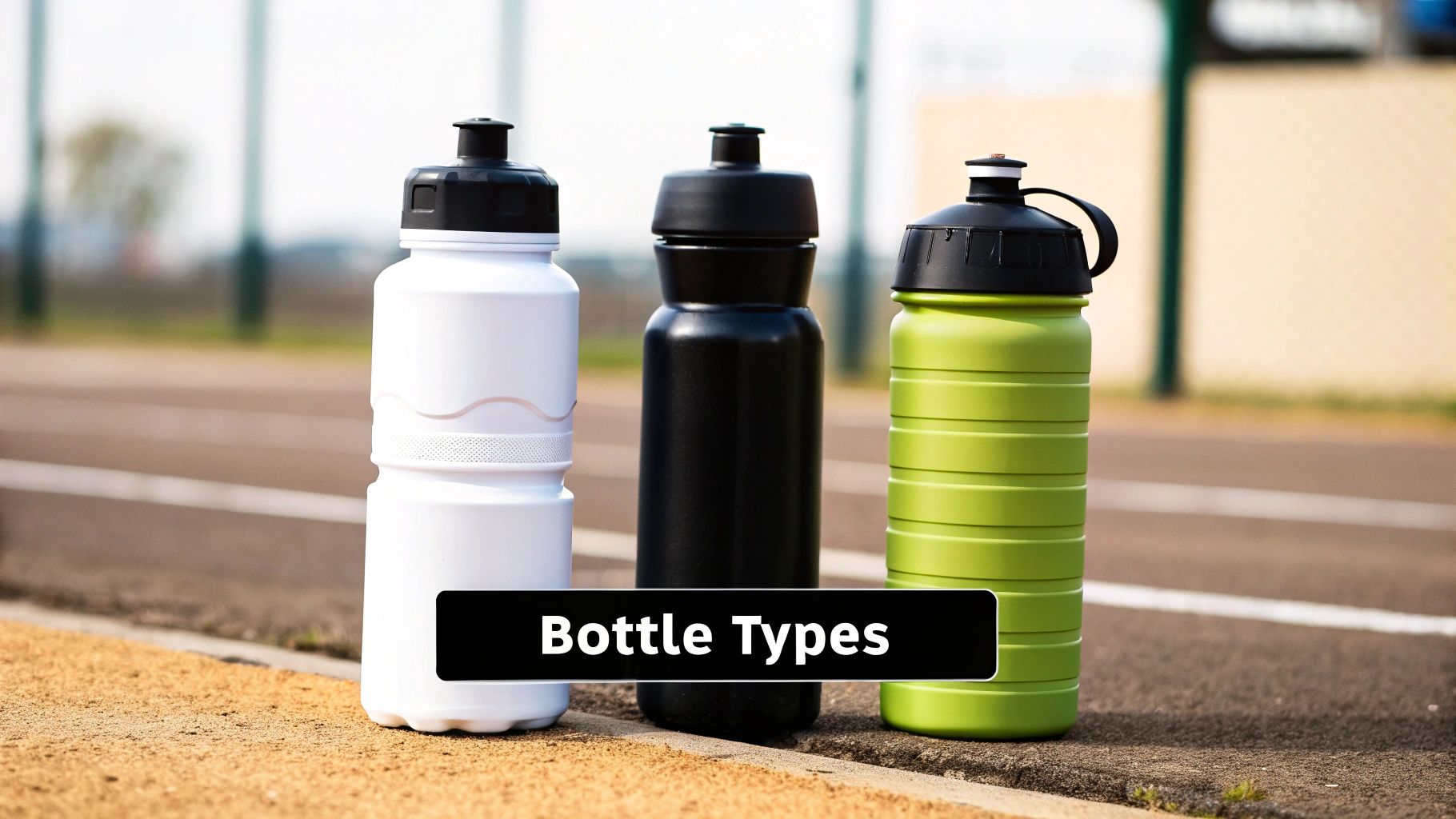
Before you can pick the perfect bottle, you have to start with the basics: what’s it made of? The material is your first big decision, and it influences just about everything—weight, durability, how your water tastes, and whether your drink stays cold.
Getting a handle on the real-world differences between plastic, metal, and silicone is the key to finding the right hydration partner for the way you ride.
The Classic Plastic Bidon
Hop into any group ride or watch a pro race, and you'll see a sea of classic plastic bidons. There's a good reason for that. They are incredibly lightweight, affordable, and you can squeeze them for a quick blast of water when you're breathing hard. For a competitive roadie or anyone counting grams, it’s a no-brainer.
But they’re not perfect. Some cheaper plastics can leave a funky taste in your water, and they have zero insulation. That means your ice-cold drink will be lukewarm before you know it on a hot day. Thankfully, the push for healthier options has made BPA-free plastics the standard. If you want to dive deeper, we have a whole guide on the best BPA-free water bottles.
Insulated Metal Bottles for All-Weather Rides
For cyclists who don’t let the weather dictate their ride—think long summer scorchers or frosty winter mornings—an insulated metal bottle is a game-changer. Usually built from stainless steel, these double-walled workhorses are masters of temperature control. They’ll keep your drink chilled for hours in the heat or stop it from turning into a popsicle in the cold.
They're also tough as nails and can handle drops that would send a plastic bottle to the recycling bin. The main trade-off? Weight. Metal bottles are a good bit heavier, and you can’t squeeze them. You have to sip or pour, which makes them better suited for touring, gravel grinding, or mountain biking, where durability and temperature control are more important than a quick, high-flow squirt.
The global cycling water bottle market is absolutely booming, projected to hit $10.22 billion by 2025. This isn't just because more people are riding; it's because riders are demanding better gear with features like insulation and safer, non-toxic materials.
Collapsible Silicone: The Modern Solution
Then there's the new kid on the block: collapsible silicone. This is where a brand like HYDAWAY really comes into its own. Made from flexible, food-grade silicone, these bottles offer a level of practicality and portability that rigid bottles just can't touch.
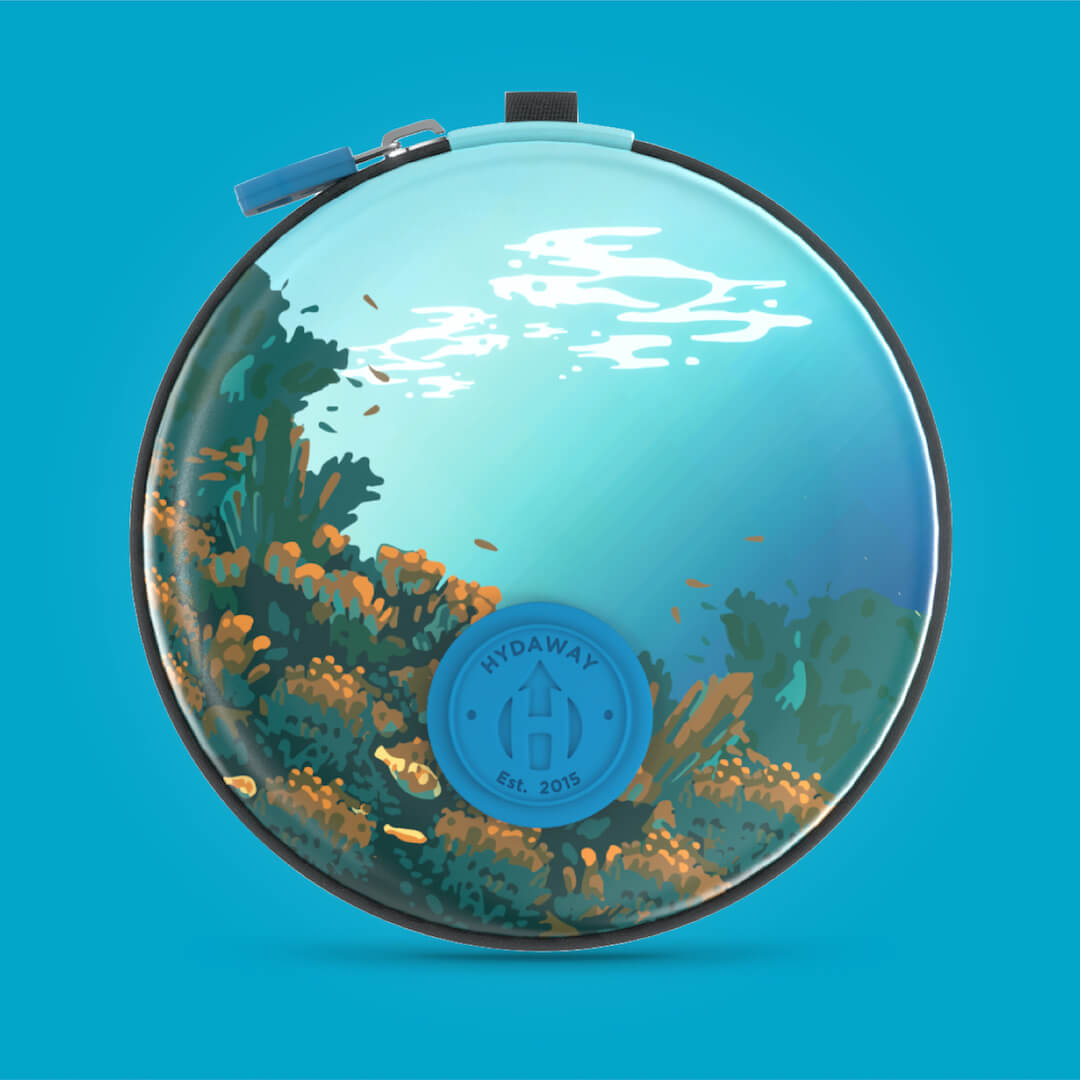
Picture this: you're a bike commuter. You ride to the office with a full 25oz HYDAWAY bottle in your cage. Once you get there and finish it off, you don't have to lug a bulky, empty bottle around all day. You just collapse it down to a slim, one-inch disc that disappears in your bag.
This space-saving magic is also a huge win for bikepackers and adventure cyclists who fly to their destinations. Pack it completely flat in your luggage, and it’s ready to go when you land. It's the perfect bottle for anyone whose cycling life blends into their everyday life.
Comparing Core Cycling Water Bottle Types
To make it even clearer, here’s a quick breakdown of how these materials stack up for different types of riding.
| Bottle Type | Primary Material | Best For | Key Advantage | Main Drawback |
|---|---|---|---|---|
| Classic Plastic | BPA-Free Plastic | Racing, Training | Lightweight & Squeezable | Can affect taste; no insulation |
| Insulated Metal | Stainless Steel | Long rides, MTB | Excellent temperature control | Heavy & non-squeezable |
| Collapsible Silicone | Food-Grade Silicone | Commuting, Travel | Unmatched portability & space-saving | Less rigid than plastic or metal |
So, what's the verdict? The best material is the one that fits how you ride. Are you all about speed and low weight? Do you need all-day temperature control for epic adventures? Or is packability for a multi-faceted lifestyle your top priority? Answering that will point you straight to your ideal bottle.
Diving Deep: The Critical Features of Top Bike Bottles
Choosing the right water bottle for your bike is about more than just the material. To find the one that truly works for you, you need to get into the weeds—the little details that make a huge difference with every sip. Let’s break down the critical features like capacity, valve design, and portability to see how they stack up in the real world.
Material and Durability Under Pressure
Your bottle's material dictates not only its lifespan but also whether your water tastes like, well, water. Traditional BPA-free plastic bottles are the undisputed lightweight champs, but a nasty spill on rocky singletrack can easily crack them. Stainless steel bottles, on the other hand, are absolute tanks but can dent, and their rigid nature means you can't squeeze them for a quick blast of water.
This is where food-grade silicone, the stuff we use in HYDAWAY bottles, finds its sweet spot. It’s completely shatterproof, so you can drop it on pavement or trail without a second thought. Better yet, it’s taste- and odor-neutral, keeping your water pure and refreshing, even after it’s been sitting in the sun for hours.
Capacity and Cage Fit
How much you carry and how securely it sits in your bike's cage are two of the most fundamental questions. The two most common sizes you'll see are 21oz (around 620ml) and 25oz (around 750ml).
- Standard 21oz Bottles: These are perfect for shorter rides, race day, or if you have a smaller bike frame where space is tight. They fit universally in just about any standard bottle cage.
- Larger 25oz Bottles: A must-have for long-haul road cycling, all-day gravel adventures, or just brutal summer days when you need all the hydration you can get. Just be warned, they can be a tight squeeze on smaller frames and might require a side-loading cage.
Speaking of which, a side-loading cage is a brilliant fix for full-suspension mountain bikes or any frame with limited space. It lets you pull the bottle out sideways instead of straight up, which can be a real game-changer.
Valve Design and Flow Rate
The nozzle is where the magic happens—it’s the gatekeeper between you and your water. A valve’s design directly controls how quickly and easily you can get a drink when you’re on the move.
For racers, a high-flow nozzle is non-negotiable. You need a big gulp of water in seconds without fumbling or breaking your rhythm. These are common on squeezable plastic bottles.
But for bikepacking or commuting, a secure, totally leak-proof cap is way more important. Nothing ruins a day like finding your bottle has emptied itself all over the gear in your frame bag. This is where screw-on caps with bomber seals, like the ones on HYDAWAY bottle, offer serious peace of mind. They aren’t built for high-speed squirts, but they guarantee your water stays put.
This push for specialized features is igniting the market. The bicycle water bottle industry is on track to more than double, growing from $1.2 billion in 2024 to $2.5 billion by 2033 at a blistering 8.8% CAGR. Innovations in insulation and filtration are leading the charge, with 72% of cyclists now opting for sustainable, reusable bottles.
Insulation Performance
On a hot summer ride, there's nothing better than an ice-cold sip of water. How long that water stays cold varies wildly between bottle types, and you can feel the difference after just an hour in the sun.
| Bottle Type | Insulation Method | Cold Retention (Example) | Best Use Case |
|---|---|---|---|
| Plastic Bidon | None | Loses its chill in under an hour | Cool-weather training, racing |
| Insulated Plastic | Double-wall with foam liner | Stays cool for 2-4 hours | Warm-weather road rides |
| Insulated Steel | Double-wall vacuum seal | Keeps drinks cold for 12-24 hours | All-day epics, extreme heat |
| Silicone (HYDAWAY) | None (but heat resistant) | Similar to standard plastic | When packability is the priority |
While a HYDAWAY bottle isn't insulated, its food-grade silicone is heat-resistant. This means you can fill it with warm tea (just not boiling!) for a chilly morning commute without worrying about damaging it.
Portability and Storage
So what happens when your bottle is empty? For most riders, it just sits in the cage. But if you're a commuter, traveler, or bikepacker, an empty bottle is just dead weight—a bulky item taking up precious space in your pack.
This is where a collapsible bottle changes everything. A rigid 25oz bottle occupies the same volume whether it's full or empty. A HYDAWAY 25oz bottle, however, squishes down to a slim one-inch disc.
Think about these real-world scenarios:
- The Bike Commuter: Ride to the office with a full bottle. Once you're there, collapse it and slip it into your laptop bag. It's gone until you need it for the ride home.
- The Adventure Cyclist: Flying to a bucket-list destination like Moab or the Alps? Toss two collapsed HYDAWAY bottles in your luggage. They take up virtually no space, and you're ready to ride the moment you land.
- The Bikepacker: Keep a standard bottle in your main cage and a collapsed HYDAWAY in your frame bag. It’s a high-capacity backup for long stretches between water stops, without the constant space penalty.
This unique portability makes HYDAWAY an incredibly smart choice for any cyclist whose adventures don't end when the ride does.
Matching the Right Bottle to Your Riding Style
Finding the "best" water bottle for your bike isn't just about cool features; it’s about finding the right tool for the job. The perfect bottle for a blistering road race would be a terrible choice for a gritty, multi-day bikepacking trip. It all comes down to matching the bottle's design to how you actually ride.
This is critical because different cycling disciplines demand completely different things. A sleek, aero bottle that saves a few watts is gold for a roadie, but totally useless to a mountain biker who just needs something that won't fly out of the cage when they barrel through a rock garden. Let’s look at what four distinct types of riders really need.
The Road Cyclist: Aerodynamics and Quick Sips
For road cyclists, every little detail matters. Rides are often long, fast, and packed into tight pelotons where fumbling for a drink can be a real hazard. The priorities here are crystal clear: lightweight construction, an aerodynamic profile, and a high-flow valve for grabbing a quick drink without breaking rhythm.
This is why the classic 21oz or 25oz plastic bidon is the undisputed king of the road. It’s feather-light, fits snugly in any standard cage, and you can squeeze it for a quick, forceful spray of water with minimal effort. When you’re trying to hold a wheel at high speed, there's no time to unscrew a cap or mess with a complicated lid.
The Mountain Biker: Durability and Secure Grip
Mountain biking is a rough-and-tumble sport, plain and simple. Your gear has to stand up to dust, mud, and the occasional crash. The ideal bottle for a mountain biker needs to be tough, easy to grab with muddy gloves, and have a cap that keeps the trail grit out of your water.
Durability is everything here. While standard plastic bottles work, many riders go for tougher models with textured grips for a more secure hold. A high-flow nozzle is still a plus, but it’s often paired with a protective mud cap to keep the mouthpiece from getting caked in dirt. And for anyone on a full-suspension bike with a crowded frame, a side-loading cage is practically a must-have for getting your bottle in and out.
This little guide can help you figure out which cage and bottle setup will work best with your bike's frame.
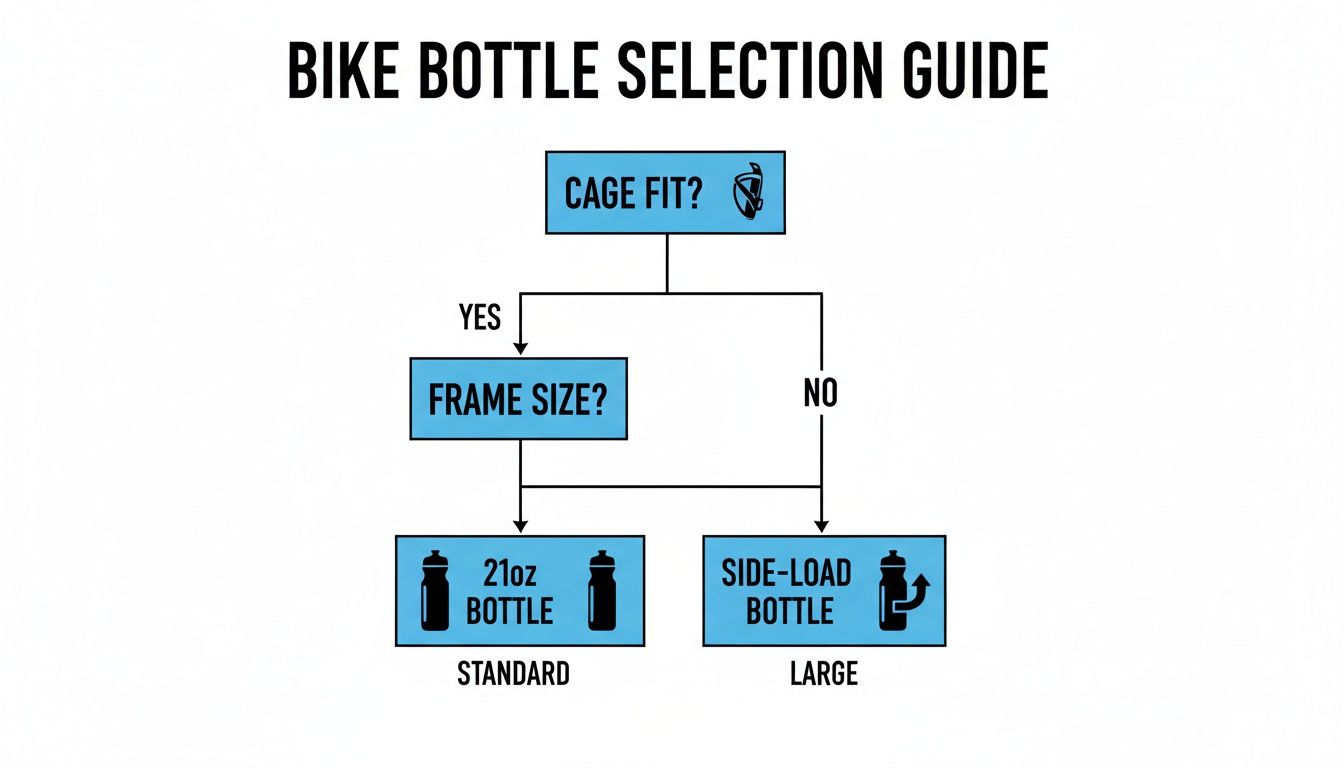
As you can see, your frame size and cage type really dictate whether a standard or large bottle makes the most sense.
The Urban Commuter: Leak-Proof Portability
The daily commuter has a totally unique set of needs that blend on-bike function with off-bike practicality. A bottle has to be absolutely leak-proof so it can be tossed into a backpack next to a laptop, and it shouldn't be a pain to carry around the office or into a coffee shop.
This is where a traditional bike bottle just doesn’t cut it. That simple push-pull valve isn't designed to survive the jostle of a bag. The real solution is a bottle with a secure, screw-on lid that guarantees you won't arrive at work with a soggy backpack. A HYDAWAY bottle, with its watertight screw-on cap and ability to collapse and disappear into a bag, is a perfect real-world example of a bottle designed for a commuter's life.
Over 50% of the US population—that’s more than 165 million people—gets active with sports like cycling. This is driving a projected market growth of USD 959.7 million from 2024-2029. With urban bike lanes expanding by 30% in major cities, the demand for versatile, durable, and secure bottles has shot up. You can dig into the full report on the sports bottle market to learn more.
The Bikepacker and Adventure Cyclist: Packability and Capacity
For those who ride way off the beaten path, hydration isn't just about performance—it's about survival. Bikepackers and adventure cyclists need maximum water capacity, rugged construction, and, maybe most importantly, smart packability. Every square inch of space in a frame bag is precious real estate.
While a big rigid bottle in the main cage is non-negotiable, you often need a backup for long stretches between water sources. An empty, bulky bottle is just a huge waste of space. This is exactly where a HYDAWAY collapsible bottle becomes a game-changer.
Think about it: you're riding with a standard 25oz bottle in your cage. Tucked away in your frame bag is a collapsed HYDAWAY bottle, taking up no more space than a cookie. When you reach a stream or a small town, you can fill it up and instantly double your water supply for the next leg of your journey. Once it's empty, it collapses right back down, disappearing until you need it again. That kind of dual functionality is an incredible advantage for any adventure cyclist.
Why HYDAWAY Is a Game Changer for Modern Cyclists
Let's be clear: traditional plastic and metal bottles have their place on a bike. But a cyclist's life doesn't stop when the ride ends. That's exactly where HYDAWAY’s unique collapsible design shifts from a neat idea to an indispensable piece of kit, solving problems that rigid bottles just can't touch.
HYDAWAY isn’t trying to take the place of your featherlight race bidon. Instead, it offers a ridiculously smart, packable solution for every other part of your cycling life. The magic is simple but potent: a full-capacity bottle that shrinks down to almost nothing when it's empty. For a lot of riders, this space-saving trick is a genuine game changer that makes life a whole lot easier before, during, and after a ride.
The Ultimate Travel Companion
Any adventure cyclist who flies to events or epic destinations knows the pain of packing bulky, empty water bottles. A couple of standard 25oz bottles can steal a surprising amount of room in your luggage—space you'd much rather use for other critical gear.
This is where HYDAWAY shines. You can toss two or three collapsed bottles into your bike bag or suitcase, where they lie completely flat, taking up virtually no room. Once you land, they pop open into full-size, reliable hydration partners for your ride. It’s a dead-simple solution for any fly-to-ride cyclist who puts a premium on efficiency.
A HYDAWAY bottle transforms from a full-capacity hydration vessel to a slim, one-inch disc in seconds. This unique portability bridges the gap between on-bike performance and off-bike convenience, making it one of the best water bottles for biking in travel and commuting scenarios.
Streamlining the Daily Commute
The urban commuter has a totally different set of needs than a road racer. After you get to the office, the last thing you want is a clunky, empty bottle taking up precious real estate on your desk or rattling around in your bag all day.
With a HYDAWAY, your post-ride routine is seamless. Just finish your water, collapse the bottle, and tuck it away in a drawer or backpack. It’s out of sight and out of mind until you need it for the ride home. This is the kind of discreet portability that makes bike commuting so much more practical. Plus, the leak-proof, screw-on cap gives you total peace of mind when it’s tossed in a bag next to your laptop.
Versatility for Every Adventure
HYDAWAY’s design proves its worth in countless other situations, adapting to the fluid needs of an active life.
- Family Outings: Pack a few extra collapsed bottles for a family bike ride. They give you backup hydration without forcing you to lug around bulky, empty containers on the way home.
- Bikepacking Efficiency: Keep a standard bottle in your main cage and a collapsed HYDAWAY in a frame bag. It’s a high-capacity, low-profile backup for those long stretches between water sources.
- Minimalist Training: On shorter training rides where one bottle is enough, you can still carry a collapsed HYDAWAY in a jersey pocket for emergencies without any real space penalty.
Made from tough, BPA-free silicone and available in 17oz and 25oz sizes, these bottles are built for cyclists who value smart design, minimalism, and travel-readiness. To see more on how this tech is shaking things up, check out our guide to the Hydrapak collapsible water bottle.
Smart Tips for Bottle Care and Mounting
Getting the most out of your hydration setup is about more than just which bottle you choose. It's also about smart care and finding a mounting system that won't let you down. Proper maintenance keeps your water tasting fresh, and the right cage prevents your bottle from launching into orbit the second you hit a bumpy patch of road.
A clean bottle is a happy bottle. Regular washing stops mold and bacteria from building up, which is especially important if you’re a fan of sugary sports drinks. While most plastic and metal bottles need a good ol' fashioned scrub with a bottle brush, your choice of material can make this chore a whole lot easier.
Take HYDAWAY's lineup, for example. Every bottle is made from food-grade silicone that's completely top-rack dishwasher safe. Upkeep is as simple as it gets—just collapse it, toss it in the dishwasher, and you're good to go. No weird, lingering flavors and no special cleaning tools required.
Choosing the Right Bottle Cage
Think of your bottle cage as the critical link between your bike and your bottle. A cage that doesn't fit well can lead to annoying rattles, scratched-up bottles, or—worst of all—ejecting your water source in the middle of a ride. The best fit really comes down to your frame and how you ride.
As a general rule, carbon and plastic cages tend to grip bottles more securely than metal ones, making them a solid choice for rougher terrain like you'd find on gravel or mountain bike trails.
One thing you'll hear over and over in cycling forums is that the "perfect" fit is all about personal preference. Some riders want that cage to have a death grip for maximum security on choppy roads, while others prefer a looser fit for quick, easy access on smooth pavement.
Here are a few of the most common types you’ll see:
- Standard Cages: The classic, do-it-all option you'll find on most road and hybrid bikes. They just work.
- Side-Loading Cages: These are a real lifesaver for small frames or full-suspension mountain bikes where there's not much room to pull a bottle straight up. As the name suggests, they let you slide the bottle out from the side.
- Aero Cages: Built to slice through the wind, these are a favorite among time trialists and competitive road cyclists trying to shave off every possible second.
Alternative Hydration Strategies
Sometimes, the standard frame mounts just aren't enough, or maybe they're not even an option. This is where you get to be creative, especially if you're into bikepacking or commuting. You can find mounts that place a bottle right on your handlebars for super easy access.
Another go-to strategy is to use a frame bag. A HYDAWAY bottle is perfect for this kind of setup. You can start your ride with it full and tucked inside the bag. Once it's empty, it collapses down flat, freeing up a ton of space for other gear without adding any bulk. It's a clever, flexible approach for just about any adventure you can dream up.
Got Questions? We've Got Answers.
Even after sorting through all the options, you might still have a few nagging questions. Let's tackle some of the most common things cyclists wonder about when it comes to their water bottles.
How Often Should I Clean My Cycling Water Bottle?
Think of it this way: a quick rinse with water is non-negotiable after every single ride. But for a real, deep clean to keep mold and gunk at bay, you'll want to wash it with hot, soapy water at least once a week.
If you're a fan of sugary sports drinks, don't wait. Clean it as soon as you get home. To make life easier, look for bottles that can handle the dishwasher. All HYDAWAY bottles are top-rack safe, which is a lifesaver after a long day in the saddle.
Can I Put Hot Drinks in My Bike Water Bottle?
It all comes down to the material. Your standard plastic bottle is strictly for cold liquids—heat can cause them to warp or even leach chemicals. On the other hand, insulated stainless steel bottles are fantastic for both hot and cold drinks.
What about silicone? A bottle like HYDAWAY is heat-resistant enough to handle warm liquids, but it's not insulated. That means the outside will feel hot, so be careful. When in doubt, always check what the manufacturer recommends before pouring in your tea or coffee.
Your hydration plan should be as unique as your ride. Things like intensity, weather, and how much you sweat all matter. A good rule of thumb is to sip consistently—aim for about 6-8 ounces every 20 minutes—to keep your energy steady.
What Is the Best Water Bottle for a Small Bike Frame?
This is a classic puzzle for riders with smaller frames. You've got a couple of solid options. The first is to go with a smaller bottle, like a 17oz/500ml model. The second, and often better, solution is to use a side-loading water bottle cage. These let you pull the bottle out from the side instead of yanking it straight up, which is a game-changer when clearance is tight.
Here's another pro tip: supplement your on-bike water with a backup you can stash away. A collapsed HYDAWAY bottle is perfect for this—tuck it into a jersey pocket or frame bag. It gives you that extra capacity without hogging precious real estate on your frame.
Ready to add some serious convenience to your cycling adventures? The HYDAWAY collapsible bottle is the perfect partner for commuters, bike tourers, and anyone who wants gear that packs down small. Check out the full collection and find your perfect fit at https://myhydaway.com.