


Camping Tableware Set Guide for 2026 Travelers

You're standing in the driveway with a tote of plates, a mug stack, a few bowls, maybe a spoon drawer you raided from the kitchen, and everything still has to fit beside the stove, the water jug, the sleeping bags, and the snacks. That's the problem with a camping tableware set. It isn't just dinnerware, it's part of a storage system that has to live inside a backpack, a van cabinet, or a kitchen drawer without turning camp setup into a daily puzzle.
The category is bigger than it used to be, too. The global folding camp-tableware set market was estimated at USD 1.23 billion in 2024 and is projected to reach USD 2.38 billion by 2033, a forecast signal that compact dining gear has moved well beyond niche status (Growth Market Reports). North America accounted for about 34% of global value in 2024, equal to roughly USD 418 million (Growth Market Reports). Those numbers don't tell you which set to buy, but they do tell you why compact, reusable, and space-aware gear keeps showing up in more camp kitchens.
Why Your Camping Tableware Set Is Really a Storage Decision
The first mistake many make is shopping for a set the way they shop for household dinnerware. They look at color, shape, or whether the plates feel “outdoorsy,” then discover at home that the set doesn't nest well, clanks in the cabinet, or steals space from the cookware they use.
A better question is simple. Where will this kit live between trips? If it has to disappear into a backpack, then every extra inch matters. If it lives in a van drawer, then a little more mass is fine if the pieces stack cleanly. If it lives in a kitchen bin at home, you can afford a sturdier set, as long as it's easy to grab when departure day gets chaotic.
The three constraints that decide everything
Transport mode comes first. A hiker and a family loading the car are solving different problems, even if both need four bowls and four plates. Trip length matters next, because a one-night picnic kit can be more disposable-feeling than a weeklong travel system. Storage space is the final filter, because the best set is the one you can keep packed and ready instead of rebuilding from scratch before every outing.
Practical rule: if the set can't live where your other camp gear lives, you probably won't use it often enough to justify buying it.
That's why both a featherweight polymer kit and a heavier enamel kit can be the right answer. One traveler is trying to shave volume and weight. Another is trying to create a rigid, reusable family dining setup that feels closer to home. The storage decision comes first, the material choice comes second, and the style choice comes last.
What a Camping Tableware Set Actually Includes

A camping tableware set is usually a small storage system disguised as dinnerware. The point is not only to own plates and bowls, but to keep a repeatable eating kit packed together so it is easy to grab, stack, and put away. In that sense, the unit is a place setting, because each person gets the same basic pieces and the set is built to live together in one drawer, bin, or backpack pocket.
A common version is a 16-piece kit for four people, with a plate, a bowl, a cup, and utensils for each person. That layout is easy to picture because it mirrors a family meal, a campsite breakfast, or a simple van dinner without turning the gear list into a pile of loose parts. Retail sets may stretch that pattern in different ways. Coghlan's 4-Person Tableware Set is sold as a 24-piece set with 4 bowls, 5-inch appetizer plates, and BPA-free plastic construction with dishwasher-safe care, which shows how some brands add a little more service without changing the basic four-person structure (Target). Kampa's Ebony Cobble 12-Piece Melamine Set keeps the same four-place idea with 4 dinner plates, 4 side plates, and 4 bowls, so the difference is less about who eats and more about how the kit occupies storage space (Norwich Camping).
What “four place settings” really means
For a lot of campers, four users is the standard unit because it fits a couple with kids, a small group of friends, or a family picnic. A common European format is a 16-piece kit for four people, and that size works well for car camping, RV trips, and cabin weekends because the group is small and the storage plan stays simple (Campingmensch). If you only travel with one or two people, a four-person set can still make sense if it nests cleanly and does not waste cabinet space. If your group is larger, it is often easier to add another compact kit than to buy one oversized bundle that becomes awkward to store.
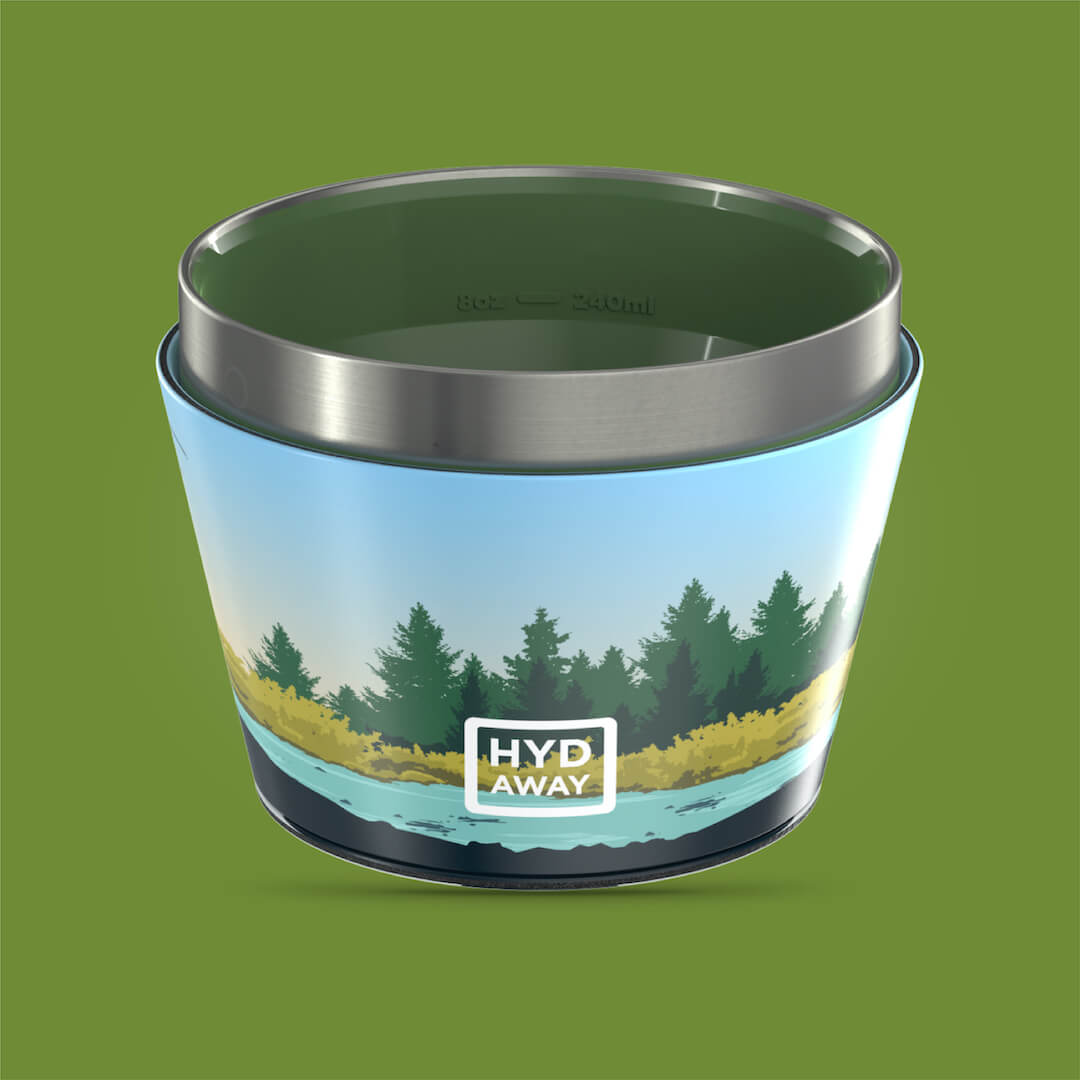
That storage-first view matters even more once the kit has to share space with the rest of your gear. HYDAWAY's camp plates and bowls show the same idea in a more compact form, where dinnerware is designed to collapse instead of occupying a whole shelf. The same packing logic shows up in handy travel items to pack, because tableware has to fit beside clothing, cookware, and food, not claim its own separate zone.
The checklist that saves you from overbuying
- Count the eaters first: a four-person kit fits many real trip setups.
- Check the service pieces: plates, bowls, cups, and sometimes utensils are the core parts.
- Decide whether you need extras: some bundles add side plates, appetizer plates, or extra utensils.
- Think in covers, not loose pieces: that is how camping brands usually package the set.
Materials Compared and What Each One Really Does
The material choice tells you how the set will behave before you ever open the box. That is why product pages matter, because the differences show up in heat, stiffness, cleanability, and how much the kit asks from your cabinet, drawer, or pack.
| Material | Weight per piece | Heat tolerance | Best for |
|---|---|---|---|
| Polypropylene / food-grade polymer | Very light in ultralight kits, with some cups and bowls around 1.2 to 1.4 oz per component in collapsible systems (REI) | Better for everyday camp meals than hot, heavy-duty use | Backpacking, travel kits, flat-pack storage |
| Melamine | Heavier than ultralight polymer, with a family set weighing 3.24 kg in one four-person example | Rated from -10°C to +70°C for 2 hours in that example | Family camping, RVs, picnic use |
| Stainless steel | Higher mass, with a family set reaching 3 lb 14 oz for 16 pieces in one example (REI) | Strong for hot food and rough handling | Car camping, basecamp, durability-first trips |
| Enamel | Substantial, rigid, and household-like, with a 12-piece four-person set built around cups, bowls, and plates (GRÄWE) | Suited to reusable service, not extreme thermal use | Car camping, cabin trips, traditional table feel |
Polypropylene and other food-grade polymers win when the bag or drawer matters more than the hand feel. A flat-pack set can compress to about 10 × 9 × 1 inches while still giving you three place-setting pieces at only 13.7 oz total, which creates a very different storage outcome than a rigid nested kit. That thin profile is the point. You are buying space back, and space is what keeps a backpack, van cabinet, or kitchen drawer usable.
Melamine solves a different problem. It feels closer to household tableware, which makes family meals feel more settled, but it also takes up more room and adds more weight than a compressible polymer kit. That tradeoff makes sense in a bin, a trailer, or an RV cabinet where a little extra bulk is easier to live with than fragile-feeling camp dishes.
Stainless steel moves in the opposite direction. It is stiffer, more abrasion-resistant, and better when repeated rough handling matters, but the density is real, and the pack load rises with it. The tradeoff is thermal and mechanical confidence, not convenience. Enamel sits in the middle emotionally, because it feels familiar and durable, but it still asks for more space and more tolerance for clinking than a compressible polymer kit. It behaves more like a small household dinner set than a packable field system.
If you want the easiest product-page read, look for the words dishwasher safe, top-rack only, BPA-free, melamine, or stainless steel, then ask what that means for your storage bin, not just the campfire.
Packability, Weight, and What Every Ounce Really Costs
A light camping tableware set only feels light in the right storage system. In a backpack, that means it has to slide into the leftover spaces between a stove, food, and sleep gear. In a van cabinet or kitchen drawer, it means the set has to sit flat, stack cleanly, and stay easy to reach without turning the whole compartment into a pile of loose pieces. Packed size matters because storage space is part of the cost.
A flat-pack polypropylene set that folds to about 10 × 9 × 1 inches is built for those thin gaps, not just for a low number on a scale (REI). It behaves like a folder you can tuck into a side pocket, which is useful when the rest of your kit is already full. A nested stainless-steel family set stays compact in shape, but a 16-piece system weighing 3 lb 14 oz asks for a different kind of storage commitment (REI). One version saves shelf depth. The other gives you more stiffness and resistance to rough handling, but it does that by asking for more room and more carried weight.
What packed size changes in real life
For a backpacker, the issue is simple. Every ounce rides next to food, water, clothing, and sleep gear, so even a small change in tableware can affect how the whole pack settles on your shoulders. A set that is thin and light can disappear into the pack layout; a thicker one can force you to rearrange other items just to make the lid close.
Van-lifers see a different problem. A drawer that opens cleanly matters more than shaving the last few grams, because the kit lives with pots, fuel, and food in the same cabinet system. A hard nesting set can make that space easier to keep organized, since it holds its shape and is less likely to get crushed when the vehicle is moving. Car campers have the most freedom of all, because a heavier set can stay in a bin or tote without affecting the way they travel on foot.
Useful shortcut: if the set has to travel in a pack, choose the smallest and lightest setup that still covers a full meal. If it lives in a vehicle, durability and easy storage can matter more than weight.
Families often end up splitting the job. A rigid set works well for shared meals at camp, where cups, bowls, and plates need to stay together and survive repeated use. A collapsible set can stay in a day bag for hikes, beach picnics, or theme-park lunches, where space matters more than table feel. That kind of split keeps the base camp kit from doing double duty as an all-day carry system.

Matching a Set to How You Actually Travel
The clearest way to choose a camping tableware set is to treat it as a storage decision first. The kit has to fit the way you move, then the way you eat. A backpack, a van cabinet, and a kitchen drawer each ask for a different shape, different weight, and a different kind of durability.
A backpack punishes bulk quickly. If the set takes up too much packed space, it starts competing with food, water, and shelter before you even leave the trailhead. A van or overlanding rig gives you more room to think in layers, which means a set can be heavier if it stacks cleanly and stays put. Short-trip campers and families usually sit between those two extremes, where ease of use matters more than trimming every gram.
Backpackers and fast hikers
If your tableware has to ride on your back, keep the system small and flat. Polymer or collapsible pieces usually make more sense than a rigid service set because they let the rest of your pack stay organized around them. A flat plate or bowl can slide beside a cook pot, and a separate utensil kit keeps one broken piece from forcing you to replace the whole setup.
That matters because pack storage works like a puzzle box. Every item has to fit without creating dead space, and hard corners can be harder to hide than people expect. A light set is not just about weight on a scale, it is about whether the kit disappears into the pack instead of taking over a pocket you need for something else.
Van-lifers and overlanders
A vehicle changes the rules. The storage system becomes the drawer, cabinet, or bin, so the main question is how well the set nests and how little it shifts while you drive. A kit that stacks neatly and holds its shape is easier to keep sorted with cookware, fuel, and food, especially when everything shares the same small space.
Stainless steel and melamine make more sense here because the storage burden moves off your body and into the vehicle. Extra mass is less of a problem when the set is riding in a cabinet instead of on a hike. What matters more is whether the pieces stay easy to find, easy to rinse, and easy to put back without turning the drawer into a jumble.
Families and short-trip campers
A family kit often needs to behave like a small household system, not a minimalist trail setup. The Coghlan's 4-Person Tableware Set works as a practical example because it is built as a service-size bundle, includes four bowls, and is dishwasher safe. That makes it a reasonable choice for short trips where the set will live in a bin, get used often, and come home dirty without much ceremony.
This kind of kit fits a car-camping routine better than a long carry. It gives you enough coverage for shared meals without forcing you to piece together mismatched plates and cups from the kitchen at home. The tradeoff is simple. You give up a little portability in exchange for a setup that is easier to hand out, collect, and store when camp is over.
Digital nomads and day-trip travelers
If your gear moves between apartments, coworking spaces, and weekend escapes, the best set is the one you can stash without thinking about it. A compact kit that slips into a tote or daypack works better than a bulky bundle that needs its own shelf. The goal is low friction, which means quick cleanup, easy packing, and no awkward pieces that only fit one way.
That logic is why a collapsible option can be useful even outside the trail. HYDAWAY's eco-friendly camping dinnerware shows how a reusable set earns space in a real storage system, not just on a product page. If a kit can disappear into a drawer or bag and still come back ready for the next meal, it is doing the job you need.
Sustainability Claims That Actually Hold Up on the Trail
A lot of reusable dinnerware talks about replacing single-use plastic, which is a fair goal. The missing part is whether the reusable piece itself holds up after greasy meals, hot liquids, and repeated packing. A set that stains, warps, or becomes unpleasant to use after a few outings doesn't solve the problem, it just delays it.
The three questions worth asking are basic. What's it made of? How do you clean it? What happens at the end of its life? Those questions matter because the sustainability test is durability plus maintenance, not marketing language alone. A material that sounds eco-friendly but fights you in the sink or the dishwasher usually loses its appeal fast.
HYDAWAY's eco-friendly camping dinnerware fits into this conversation because collapsible gear only earns a place in your kit if it keeps being useful after repeated trips. That's the standard to apply to any reusable set, whether it's polymer, melamine, stainless steel, or enamel.
What to watch for before you trust the label
- Cleaning fit: If it's dishwasher safe, check whether that means top rack only or full-cycle use.
- Food behavior: Greasy meals and hot liquids reveal stain and warp issues fast.
- Storage behavior: A sustainable set that takes over a drawer stops being practical.
- Longevity clues: Rigid edges, coating quality, and material thickness usually tell you more than a slogan.
The bigger point is simple. Disposable gear is easy once. Reusable gear only works when it's easy the tenth time too.
Cleaning, Storage, and Making a Set Last for Years
Camp cleanup gets easier when the kit is designed to pack cleanly from the start. The reason nesting and collapsible storage matter isn't just space. It's that a loose pile of cups and bowls turns into a dirty-vs-clean guessing game, and that's how reusable gear gets neglected.
At camp, rinse first if you can. If sand or grit clings to the surface, a light sand-rub with water helps before the final wash. Then air-dry the set before you pack it, because storing damp tableware is how odors and stale food smells get trapped in bins.
| When | Step | Why it matters |
|---|---|---|
| At campsite | Rinse | Keeps food from drying onto the surface |
| At campsite | Sand-rub | Helps remove grit before packing |
| At campsite | Air-dry | Prevents trapped moisture and odor |
| At home | Check dishwasher instructions | Protects coatings and lids |
| At home | Store nested or collapsed | Saves space and keeps the set ready |
At home, separate the dishwasher-safe pieces from anything that needs hand washing, and keep lids and seals dry before storage. If you use a set with collapsible parts, make sure the hinge or fold line is clean before it goes back in the bin. That's a small habit, but it prevents the sticky buildup that makes people stop using reusable gear altogether.
For a deeper look at the basics, washing dishes while camping pairs well with a home routine that keeps your kit ready. The storage mindset shows up in other gear too, and how to prep a bike for storage is a useful reminder that anything meant for repeat use lasts longer when it's cleaned and parked properly.

Building Your Own Kit and Where HYDAWAY Fits In
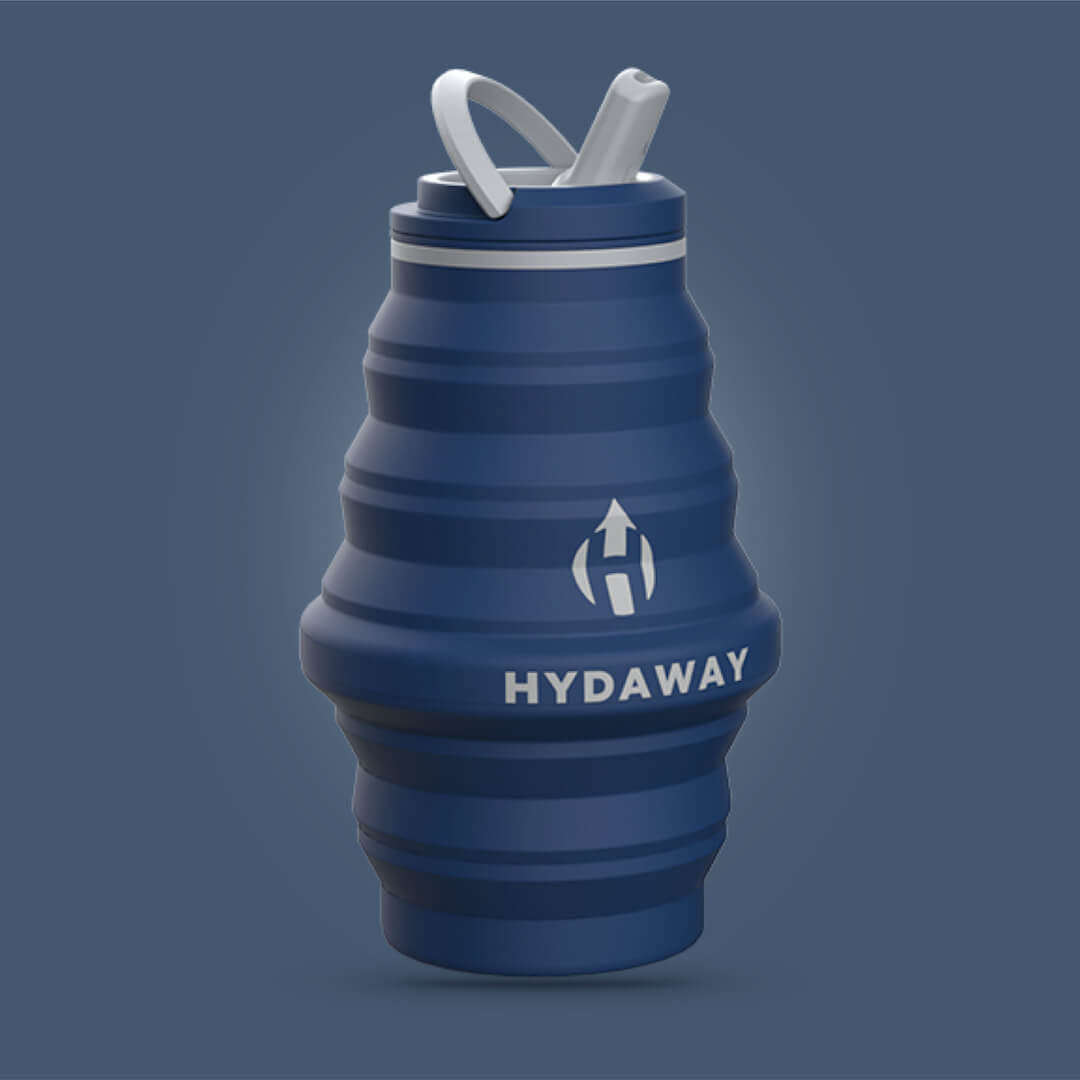
The cleanest way to build a camping tableware set is to choose the base system first, then add pieces that solve a storage problem you have. If you travel on foot or live out of a daypack, a flat-pack or collapsible system keeps the kit thin, and HYDAWAY's collapsible bowl, tumbler, and pack-flat bottle can slot in as the space-saving layer beside it. If you travel by van or car, those same pieces work as the snack, coffee, and kid-meal add-ons that don't need another cabinet shelf.
That's where the brand fits naturally in a real travel setup. HYDAWAY makes collapsible dinnerware and drinkware that folds flat, then expands for use, which is useful when your kitchen space is borrowed from the rest of the car or apartment. The point isn't to replace every hard-sided item. It's to make the carry system smaller where it can be smaller.
For global trip planning, it helps to think beyond the dinner table too. If your travel life includes crossing borders, prepaid data for global travel can keep your route, campsite, and reservation details reachable without adding another thing to manage.

A practical shortlist is easy to build from here. Choose your material, pick your service count, and decide whether your system needs one collapsible complement or a full nesting set. If you want compact dinnerware and drinkware that fit the same storage-first logic, visit HYDAWAY and compare how collapsible pieces could slot into your camp kitchen before your next trip.