


Water Bottle vs Tumbler: A Guide for Modern Travel

You're packing for a weekend flight, trying to keep one bag under the seat, and the hydration problem shows up fast. A stainless bottle eats side-pocket space. A big tumbler rides nicely in the car, but it's awkward once you're walking a city all day. And if you've got kids, hiking gear, or camera gear in the same bag, every inch matters.
That's why the usual water bottle vs tumbler debate feels incomplete for modern travel. Most comparisons stop at portability versus insulation. The more useful question is different. If your bag space is limited, should you keep carrying fixed-volume drinkware at all?
For travelers, commuters, van-lifers, and theme-park families, packability often matters just as much as leak resistance or temperature control. Existing comparison content rarely addresses that tradeoff directly, even though that's the main decision for anyone trying to carry less and still stay hydrated, as noted in this discussion of packability in drinkware choices. The smartest setup often isn't just bottle or tumbler. It's choosing the right format for the way your day unfolds.
Beyond the Basics of Staying Hydrated
A lot of people buy drinkware for the best-case moment. They picture cold water on a hot trail, or coffee that stays hot through a long morning drive. That's reasonable, but travel rarely works like a product photo.
Real trips involve transitions. You drink on the plane, then stow the container. You refill after security, then clip it to a daypack. You finish it before a museum, a shuttle, or a ride line, and now you're carrying a bulky empty container for hours.
The Missing Question
The classic water bottle vs tumbler comparison usually asks which one is more portable and which one insulates better. That's useful, but incomplete. For anyone moving through airports, train stations, trailheads, city streets, campgrounds, or amusement parks, the harder question is this: what happens when the drinkware is empty?
That's where fixed-volume gear starts to show its limits. A rigid bottle still takes up the same amount of room when it's empty. A tumbler still needs a dedicated spot. If you're trying to travel light, that matters.
Practical rule: Don't choose hydration gear only for the drinking part. Choose it for the carrying part too.
Why Travelers Feel This More
Adventure travelers notice this first because their loadout changes all day. In the morning, a full container is useful. By afternoon, the same container might just be dead weight. Families feel it too. One extra bottle isn't a big deal. Four or five become a storage problem.
The sustainability side matters as well. Reusable drinkware is supposed to help you avoid disposable options, but people stick with reusables when they're easy to live with. Space-saving designs solve a convenience problem that often gets ignored. If a container fits your day better, you're more likely to keep it with you and use it.
Defining the Classic Hydration Contenders
A traveler rushing from a morning ferry to an uphill trail usually learns this fast. Different drinkware solves different problems, and the wrong one gets annoying by lunch.
Water bottles and tumblers overlap, but their design logic is different. A bottle is usually built for secure carry and quick access while moving. A tumbler is usually built for comfortable sipping and better temperature control over time. That distinction still matters, even now that many brands blur the line with handles, straws, and hybrid lids.
One broad industry overview of tumbler and bottle differences ties that shift to the larger move away from disposable plastic and toward reusable drinkware. In practice, I see the same thing on the road. People are not just buying a container. They are choosing a carry style.

What a Water Bottle Is Meant to Do
A traditional water bottle is built for movement. The usual formula is a narrower body, a lid that seals more securely, and a shape that fits side pockets, bottle cages, and clipped carry setups more easily than a tumbler.
That makes bottles a strong fit for hikes, airport days, guided tours, and long walks through hot cities. If I am carrying water in a crowded bus station or stuffing gear into a half-full daypack, I trust a bottle more than an open-sip design. The trade-off is obvious once it is empty. The volume stays the same, which is why fixed-shape hydration is only part of the story for travelers trying to save space.
What a Tumbler Is Meant to Do
A tumbler starts from a different priority. It is closer to a travel cup, often wider, easier to drink from, and better suited to coffee, tea, or iced drinks you sip over an hour or two. For road trips, campsite mornings, and desk time, that comfort matters a lot.
Many travelers also prefer tumblers because wide openings are easier to fill with ice and often easier to clean. If you want a closer look at how insulated models hold up in daily use, this guide to dishwasher-safe insulated tumblers covers the practical differences well.
The weakness is carry security. Tumblers can work fine in a car cup holder or in hand, but they are usually less confidence-inspiring once they are rolling around in a tote or packed beside a camera layer. I especially notice that on steep walks and uneven paths, including days spent planning your Madeira levada adventures, where stable carry matters more than easy sipping.
Seen through a travel lens, the old bottle-versus-tumbler debate is really a comparison between two fixed-volume tools. Each does one job well. Neither solves the space problem once the drink is gone.
Comparing Key Features for Adventure Travel
For travel, broad labels don't help much. You need to know how each option behaves in a bag, on a trail, in a rental car, or during a long walking day.
| Feature | Traditional Water Bottle | Insulated Tumbler | HYDAWAY Collapsible Bottle |
|---|---|---|---|
| Insulation | Often strong for cold drinks in stainless versions | Often strong for hot or cold drinks | Not the main strength |
| Portability | Good when full, still bulky when empty | Fine in hand or cup holder, bulky in bags | Strong when empty because it packs down |
| Leak resistance | Usually better for active carry | Often less secure for rough carry | Depends on use case and lid setup |
| Cleaning | Narrow bottles can take more effort | Wide openings are often easier | Flexible design needs regular rinse and dry habits |
| Best fit | Hiking, commuting, travel days | Coffee, desk use, road trips | Space-limited travel, day trips, backup carry |

Insulation
If your top priority is drink temperature, tumblers usually win for comfort and versatility. They're often built around double-wall or vacuum insulation and work especially well for coffee, tea, iced coffee, and cold drinks you sip gradually.
Water bottles can also insulate well, but they usually shine more with all-day cold hydration than with an easy sipping experience. A bottle is what I reach for when I'm moving for hours and don't want to think about spills.
A collapsible bottle takes a different position. It's not trying to out-insulate a tumbler. It's trying to eliminate bulk when insulation isn't the main need.
Portability
Mechanical design is where the water bottle vs tumbler difference becomes obvious. Water bottles are typically taller and narrower with screw-top or flip-top lids, while tumblers are usually wider and shorter with sip-through or straw-style lids that favor easier access over fully sealed carry, as described in this design-focused comparison from Bulletin Bottle.
That means bottles tend to travel better in backpacks and active settings. Tumblers work well from hand to cup holder to desk, but less well tossed loosely in gear.
A collapsible option changes the portability question entirely. It may not be as rigid or as premium-feeling as metal drinkware, but once empty it stops competing with your jacket, snacks, camera cube, or souvenirs for space.
On a long travel day, the best container isn't always the one that carries best when full. It's often the one that disappears when empty.
Durability and Leak Resistance
Rigid stainless bottles usually tolerate travel abuse well. They can dent, but they're built for movement. Tumblers vary more because the weak point is often the lid. A tumbler body may be sturdy, yet the sip opening can still make it a poor choice inside a packed bag.
For hiking or transit, leak resistance matters more than table stability. That's why bottles usually outperform tumblers when the container will spend time sideways in a backpack.
Collapsible bottles introduce a different tradeoff. They're less about surviving a drop onto rock and more about flexibility, low packed volume, and convenience. For many travelers, that's a worthwhile exchange.
Cleaning and Daily Use
Cleaning sounds boring until you're washing gear in a hotel sink. Tumblers often have an edge because wider openings make them easier to scrub and air out. Some insulated options also fit nicely into a home routine, especially if you prefer dishwasher-safe insulated tumblers for everyday use.
Traditional bottles can be fussier, especially narrow-neck designs. They're secure, but not always pleasant to clean on the road.
Flexible bottles need good habits. Rinse them promptly, let them dry thoroughly, and don't treat them like an afterthought at the bottom of a bag.
Capacity and Refill Strategy
Travelers often overfocus on total volume. Bigger isn't always better. If refill points are frequent, carrying less can be more comfortable and more practical. That's especially true for urban travel, theme parks, and many day hikes.
When you're planning your Madeira levada adventures, for example, route style matters. Some walks reward carrying a secure bottle with enough cold water for long stretches. Others are more comfortable with a lighter setup and deliberate refill planning. Your container should match the day, not just your general identity as a “bottle person” or “tumbler person.”
The Collapsible Advantage A Traveler's Secret Weapon
Most rigid drinkware asks you to commit to its shape all day. That's the hidden tax. Even after you finish your drink, the bottle or tumbler still occupies the same chunk of space in your pack.

Why Packability Changes the Decision
Packability isn't just about saving room. It changes what you're willing to carry in the first place. A collapsible bottle makes sense as a just-in-case item for flights, city wandering, festivals, day tours, and family outings because it doesn't punish you when it's not in use.
That's a major difference from fixed-volume drinkware. A rigid bottle is a commitment. A collapsible one can be a backup, a refill vessel, or your primary daytime bottle depending on the plan.
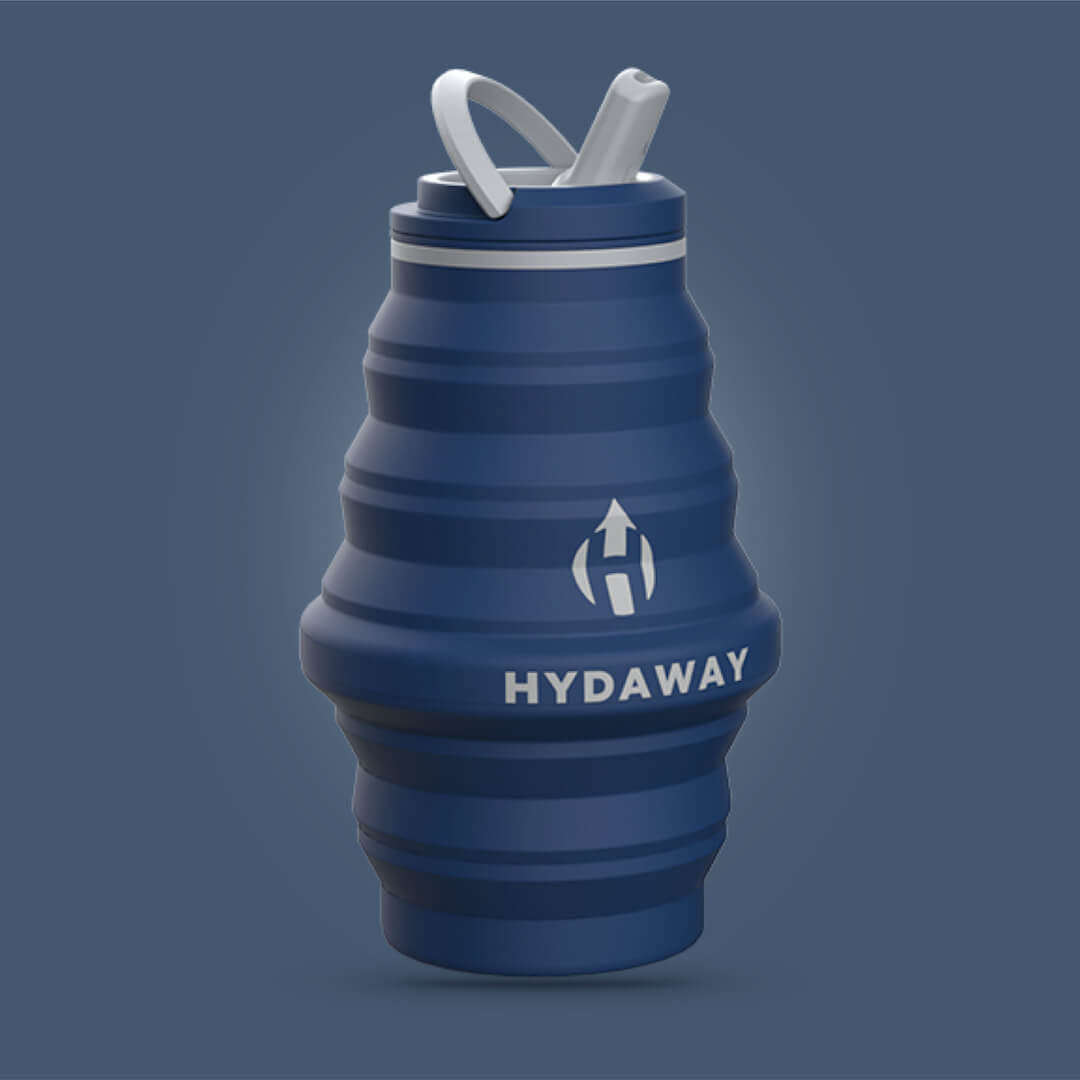
The HYDAWAY 17oz and 25oz collapsible bottles fit this use case well because they're built around the space-saving problem rather than trying to mimic a traditional metal bottle. If you want a deeper look at how that format works in practice, HYDAWAY has a useful guide to the best collapsible water bottle for travel.
Field insight: For airport days and city travel, a container you can stash fast is often more useful than one that promises maximum insulation.
The Benefit Isn't Just Space
Packable hydration supports better travel habits. You can carry an empty bottle through tight spaces, fill it when you need it, and stash it again without reorganizing your whole bag. That's useful on hikes, but it's even more noticeable in places where you transition constantly, like train stations, museums, beach towns, and amusement parks.
This short video shows the idea well in action.
Families feel this advantage immediately. So do digital nomads working from cafés, co-working spaces, and buses. Less rigid bulk means fewer moments where hydration gear becomes the annoying item you have to carry instead of the useful one you're glad you brought.
Choosing Your Hydration for Real-World Scenarios
The right answer changes with the day. That's why broad declarations like “tumblers are better” or “always carry a bottle” usually fall apart in actual use.

Hiking a Mountain Trail
Choose a traditional water bottle.
This is the clearest win in the whole water bottle vs tumbler conversation. For hiking, you want a container that seals securely, rides well in side pockets, and handles rough movement. Thermal performance also leans bottle here. Many tumblers use double-wall or vacuum insulation, but open-sip lids can reduce retention. Stainless-steel water bottles are often described as providing stronger cold-drink retention and can keep beverages chilled for up to 24 hours in some category benchmarks, making them more suitable for travel or hiking, according to this thermal comparison of tumblers and water bottles.
If I'm heading uphill for hours, I don't want a straw lid sloshing in a pack.
Morning Coffee in the Van
Choose an insulated tumbler.
Van mornings are slower. You're not usually scrambling over rocks. You're sitting outside, driving to the next stop, or working at a small table. That's where a tumbler earns its keep. It's better for comfortable sipping, better for hot drinks, and usually nicer to drink from than a narrow bottle opening.
For this scenario, the lower carry security is rarely a deal-breaker because the setting is controlled. The drinking experience matters more.
The Daily Urban Commute
Choose based on your rhythm.
If you leave home with cold water and move through trains, offices, and errands, a bottle is often the safer choice. If your morning starts with coffee and your cup spends most of its time in your hand, your car, or on a desk, a tumbler makes more sense.
If your commute includes switching bags, stopping at the gym, or minimizing clutter, a space-saving option can be the smarter call. That's especially true if you like carrying a lightweight backup rather than one rigid container all day. Travelers looking at broader reusable carry setups often find ideas in guides on reusable travel bottles for everyday movement.
A Family Day at a Theme Park
Choose a collapsible bottle.
Packability stops being merely a nice feature and becomes a real advantage. Theme parks create constant transitions. You drink while waiting in line, then need both hands. You refill, then stuff things into a stroller. By midday, everyone's carrying layers, snacks, souvenirs, and chargers.
A rigid bottle for each person adds bulk fast. A tumbler is even more awkward once rides and bags enter the picture. A collapsible bottle is easier to stash when empty and easier to justify bringing for each family member.
For theme parks and city sightseeing, convenience after the refill matters just as much as the refill itself.
Making a Practical Hydration Choice for Your Life
The right hydration setup shows its value at the awkward moments. Airport security, a full daypack, a cramped train seat, a stroller packed with snacks, or a hotel room with no good place to dry bulky gear. Those are the moments that expose the difference between fixed-volume drinkware and options that disappear when you are done using them.
A practical choice starts with one question: what creates friction in your day? For some travelers, it is lukewarm coffee. For others, it is a rigid bottle knocking around in a half-full bag for six hours after the last refill. That is why bottle versus tumbler is only part of the decision. Packability often decides what gets carried.
Ask These Questions First
- Do you need your drink to hold temperature for hours? Start with insulated drinkware.
- Do you carry it inside a backpack or tote? Choose a bottle with a secure, bag-friendly lid.
- Do empty containers annoy you more than full ones? Put packability near the top of your list.
- Do your days shift from desk time to transit to walking? Build around two use cases instead of forcing one container to do every job.
What a Smart Setup Looks Like
For many people, the most useful answer is a small rotation, not a single hero product.
Keep a tumbler where comfort matters most. Desk, car, campsite table, hotel room. Use a bottle when leak resistance and one-handed packing matter more. Add a collapsible bottle if your day regularly includes long stretches when the container is empty but still taking up space.
That buying pattern is already common. As noted earlier, the insulated drinkware market continues to grow because people are not looking for one universal vessel. They are buying different formats for different jobs.
My rule after years of travel is simple: choose the container you will still be happy carrying after the drink is gone. That is where space-saving gear earns its place. It does the hydration job, then gets out of the way.
You do not need lifelong loyalty to bottles or tumblers. You need a setup that fits how you move.
Answering Your Travel Hydration Questions
Are collapsible bottles durable enough for real travel
Yes, for the use they're designed for. A collapsible silicone bottle isn't trying to behave like a heavy steel flask. It's meant to save space, handle repeated packing and unpacking, and make hydration easier when rigid gear is inconvenient. For rugged travel, the key is matching the tool to the trip and using the lid correctly.
HYDAWAY also offers a 1-year guarantee, which helps address the understandable concern that flexible gear might be too delicate for frequent use.
Should I use a tumbler for hiking
Usually no. A tumbler is better for slower sipping in controlled settings. Hiking puts more stress on lids, packs, and movement. A secure water bottle is usually the better fit on trail days.
Are tumblers or bottles better for hot drinks
Tumblers usually feel better for hot drinks because they're built for sipping. That's why they're common for coffee, tea, and camp mornings. Bottles can carry hot drinks, but they're often less pleasant to drink from casually.
How do I clean a collapsible bottle on the road
Keep it simple:
- Rinse early: Don't let residue sit all day if you've used anything besides plain water.
- Air dry fully: Flexible drinkware needs drying time, especially around folds and seals.
- Use a quick sink routine: Warm water and a basic soap rinse work well during travel.
- Deep clean at home: Dishwasher-safe gear makes this easier when you're back from the trip.
Is one container enough for every situation
Usually not. Most frequent travelers end up with at least two roles. One vessel for insulation or secure carry. Another for space-saving flexibility. Once you accept that, the buying decision gets easier.
If your trips involve tight bags, changing plans, and long days away from a base, a space-saving hydration setup is worth considering. Explore HYDAWAY if you want collapsible bottles, tumblers, and compact adventure gear built around carrying less without giving up reusability.