


Expert Guide to Stainless Steel Dog Water Bottles

A dog never picks the perfect time to need water. It happens when you're halfway down a dusty trail, stuck in a traffic backup with the sun pouring through the windshield, or standing in a long line at an outdoor attraction while your dog starts panting harder than usual.
That's when gear stops being a nice idea and becomes a real decision. A flimsy bottle that warms up fast, leaks into your pack, or needs a separate bowl usually turns into a hassle. A well-made stainless steel dog water bottle solves a simple problem well. It gives your dog drinkable water on the go in one piece of gear you'll keep using.
Keeping Your Adventurous Dog Hydrated on the Go
On a short walk, almost any container can seem good enough. On a hot sidewalk, a trail with no shade, or a long day in and out of the car, the weak points show up fast. Warm water gets ignored. Loose lids drip. Separate bowls get left behind.
Stainless steel dog water bottles emerged to solve that exact travel problem: giving dogs drinkable water on the go without carrying a separate bowl, using a format built around convenience, leak control, and repeat use, as described in the AKC Shop product listing for the KONG H2O Stainless Steel Dog Water Bottle. That practical origin still matters because most owners aren't shopping for novelty. They're trying to make dog hydration easier in motion.
A good setup changes your routine in small but important ways. You stop rationing water because serving it is easier. You offer drinks more often because you're not fumbling with caps and bowls. You waste less because many travel-style designs make it easier to control the pour.
Practical rule: If your dog is traveling with you, their water system should work one-handed, stay sealed in transit, and be easy to rinse at the end of the day.
If your dog seems a little off on a warm outing, it helps to know the basics. These quick checks for dog dehydration are worth reviewing before your next trip.
For day hikes, I'd treat dog water the same way I treat my own essentials. It needs to be packed before snacks, not after them. HYDAWAY's guide to what to bring on a day hike is a useful reminder that hydration gear has to earn its place by being easy to carry and easy to use.
Why Stainless Steel Is the Superior Choice for Your Dog
The material decides whether a bottle stays useful after repeated trips, repeated wash cycles, and repeated abuse in a backpack or car footwell. For dog gear, that matters more than color, shape, or branding.
A bottle's performance hinges on its materials. High-quality products use 18/8 or 304 food-grade stainless steel for the body, paired with BPA-free polypropylene or silicone for the drinking components and lid, as noted in the Dog Mate insulated stainless steel travel flask listing. In real use, that combination tends to hold up better than all-plastic designs because the steel body handles impact and wear, while the polymer or silicone top provides the drinking interface.

What works better in the field
Plastic is light and often cheaper up front. The trade-off is long-term wear. Once a plastic bottle gets scratched up, chewed at the lip, or warped by hard use, it's harder to trust and less pleasant to clean.
Stainless steel has a few practical advantages that show up fast:
- Better structural durability. A steel bottle body usually handles drops, vehicle storage, and rough packing better than thinner plastic.
- More neutral water taste. Non-reactive steel is less likely to leave water tasting off after a long day in the heat.
- Longer service life. When the body stays solid, you're usually only watching the lid, seal, and drinking surface for wear.
For home use, some owners pair travel gear with a stable stainless bowl. If you need one for camp, porch stops, or hotel rooms, a stylish anti-skid dog bowl is a practical companion to a travel bottle because it stays put better than a light portable dish.
Where stainless steel still has trade-offs
Stainless steel isn't magic. It's heavier than a bare plastic shell, and if the lid design is poor, the bottle will still leak. The best bottle body in the world can't save a bad cap.
That's why I never judge these by metal alone. I look at the entire system:
- The bottle body has to resist dents, rust, and taste transfer.
- The lid or bowl top has to be safe for mouth contact.
- The seal has to stay tight during movement.
- The shape has to make pouring and re-pouring realistic, not awkward.
If you're trying to cut down on disposable gear in general, HYDAWAY's article on an alternative to plastic fits the same mindset. Reusability only matters if the product is durable enough to become part of your routine.
Decoding Key Features of a Dog Water Bottle
Most product pages blur together. They all say portable, leak-proof, easy to use. The details that matter are more specific than that.
Start with the material system
Don't stop at “stainless steel” on the label. Check whether the body is listed as 18/8 or 304 food-grade stainless steel and whether the dog-facing parts use BPA-free polypropylene or silicone. The steel gives the bottle strength and corrosion resistance. The top assembly determines how easy it is for your dog to drink, how easy it is for you to clean, and how likely the bottle is to leak.
I pay close attention to the lid because that's where most frustrations start. A sturdy steel shell is great, but the top is doing the essential work.
Capacity changes how often you stop
Market examples commonly range from about 20 oz (600 ml) to 32 oz (950 ml), with 800 ml and 27 oz often landing in the middle for day trips and longer walks, according to the Ryoken Instinct stainless steel dog bottle listing. Bigger bottles reduce refill frequency, but they also add weight and bulk. That trade-off is obvious on long walks and even more obvious in airports and crowded urban settings.
A useful way to shop is to think in scenarios, not just size labels:
- Short neighborhood walks favor compact bottles that are easy to grab and clip.
- Day hikes reward a larger reservoir so you're not constantly budgeting sips.
- Road trips benefit from a bottle that fits a cup holder and can be handed forward or back without dribbling.
- Warm-weather outings make insulation more valuable because warm water often gets ignored.
Insulation and lid style matter more than branding
Double-wall vacuum insulation helps water stay cold for hours, while single-wall bottles are lighter and simpler. If your outings are brief, I'd rather save the weight. If you're in direct sun or keeping the bottle in a hot vehicle between stops, insulation earns its space.
Lid style is another make-or-break feature. Integrated trough lids are convenient because they eliminate the separate bowl. Bowl-style tops can work well for dogs that prefer lapping from an open surface. Roller-ball style systems belong to a different drinking format and prioritize controlled flow.
A good dog bottle doesn't just hold water. It lets your dog drink comfortably without turning every stop into a cleanup job.
Here's a quick reference I'd use when comparing products:
| Feature | What to Look For | Impact on Use |
|---|---|---|
| Material | 18/8 or 304 food-grade stainless steel body with BPA-free PP or silicone components | Better durability, rust resistance, and safer mouth-contact surfaces |
| Capacity | Match size to trip length and how often you can refill | Too small means constant refills; too large adds unnecessary carry weight |
| Insulation | Single-wall for lighter carry, double-wall for colder water longer | Affects temperature control, pack weight, and bulk |
| Lid design | Bowl-style or integrated drinking top that your dog can use easily | Changes speed of hydration and spill risk |
| Seal system | Tight threads, stable gasket, secure lock if present | Determines leak resistance in bags and vehicles |
| Bottle shape | Cup-holder friendly or easy to stash in a side pocket | Makes the bottle more likely to travel with you regularly |
| Cleanability | Wide access where possible, fewer hidden seams | Reduces maintenance hassle and hygiene issues |
How to Choose the Right Bottle for Your Lifestyle
The right bottle depends less on your dog's breed label and more on how you spend your days together. A bottle that's perfect for a van-lifer can feel annoying on a short city walk. A lightweight bottle that's ideal for the park can feel underbuilt on a long hot trail.
Existing guides often miss this part. They don't connect bottle size to real-world use, even though guidance referenced in the Chewy KONG H2O product page notes that a dog on a moderate hike may need 0.5 to 1 oz of water per pound of bodyweight per day, which makes bottle choice very different for a 40-lb dog on a 2-hour hike than for a dog on a short walk.

The backcountry hiker
Weight matters, but so does having enough water when there's nowhere to refill. For hiking, I'd look for a bottle with enough capacity for the route, a shape that rides well in a pack side pocket, and a lid that you can open and close quickly without stopping for long.
What usually works:
- A middle-to-larger capacity bottle for fewer refills
- Insulation if you hike in heat
- A secure top that won't seep in your pack
What usually doesn't:
- Tiny bottles that force you to ration
- Awkward integrated bowls that slosh when you try to pour back unused water
- Overbuilt designs that feel like carrying a thermos brick
The van-lifer and road tripper
This user cares about repeat use, cup-holder fit, and easy cleanup. The 2016 portable dog bottle patent described a travel-bottle-and-bowl combination designed to fit standard car beverage holders and allow unused water to return to the bottle, as shown in the U.S. patent publication for the travel mug and water bowl combination. That car-friendly thinking still makes sense.
For this lifestyle, I'd prioritize:
- Cup-holder compatibility
- A leak-resistant lid you trust on rough roads
- A bottle shape that stores cleanly near other daily-use gear
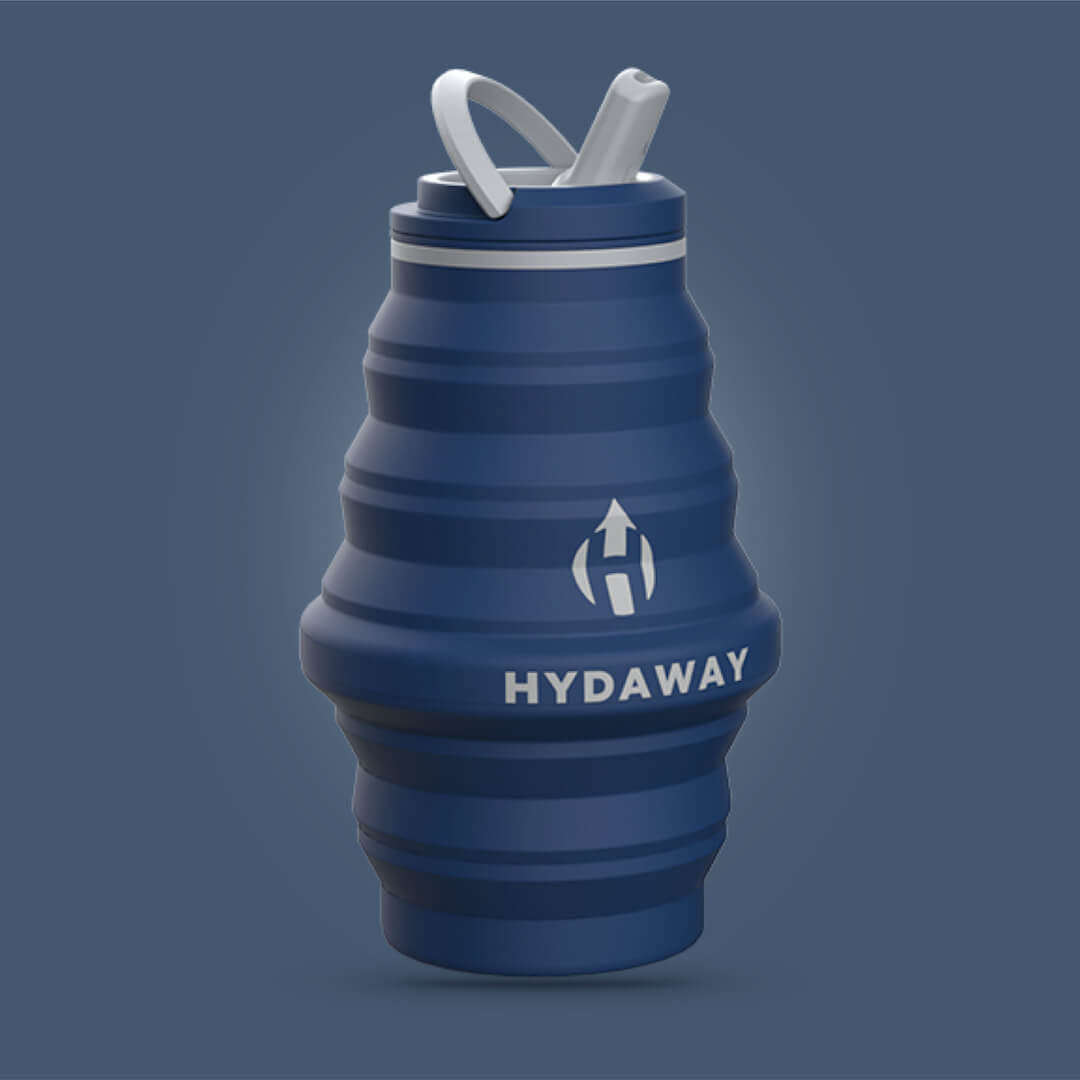
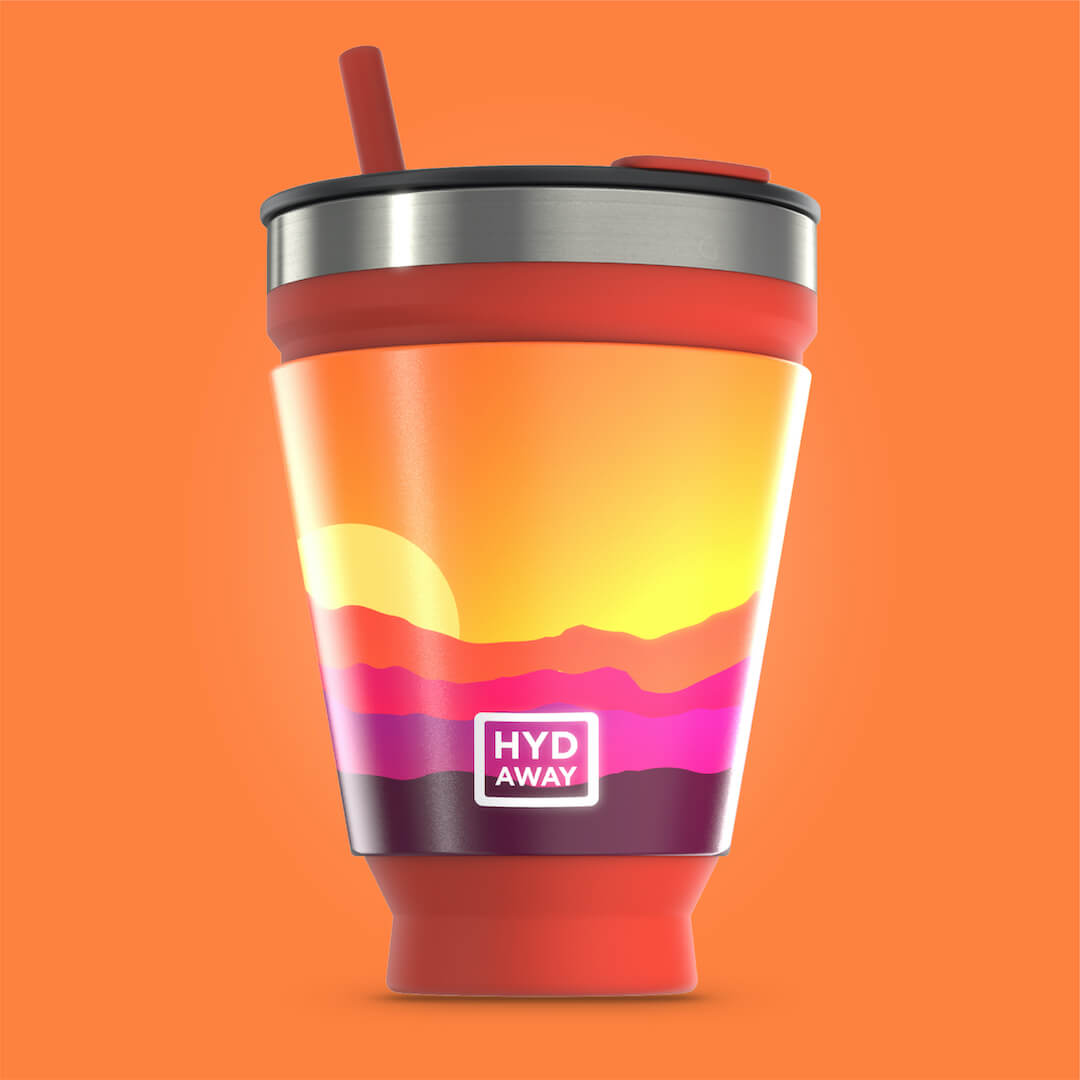
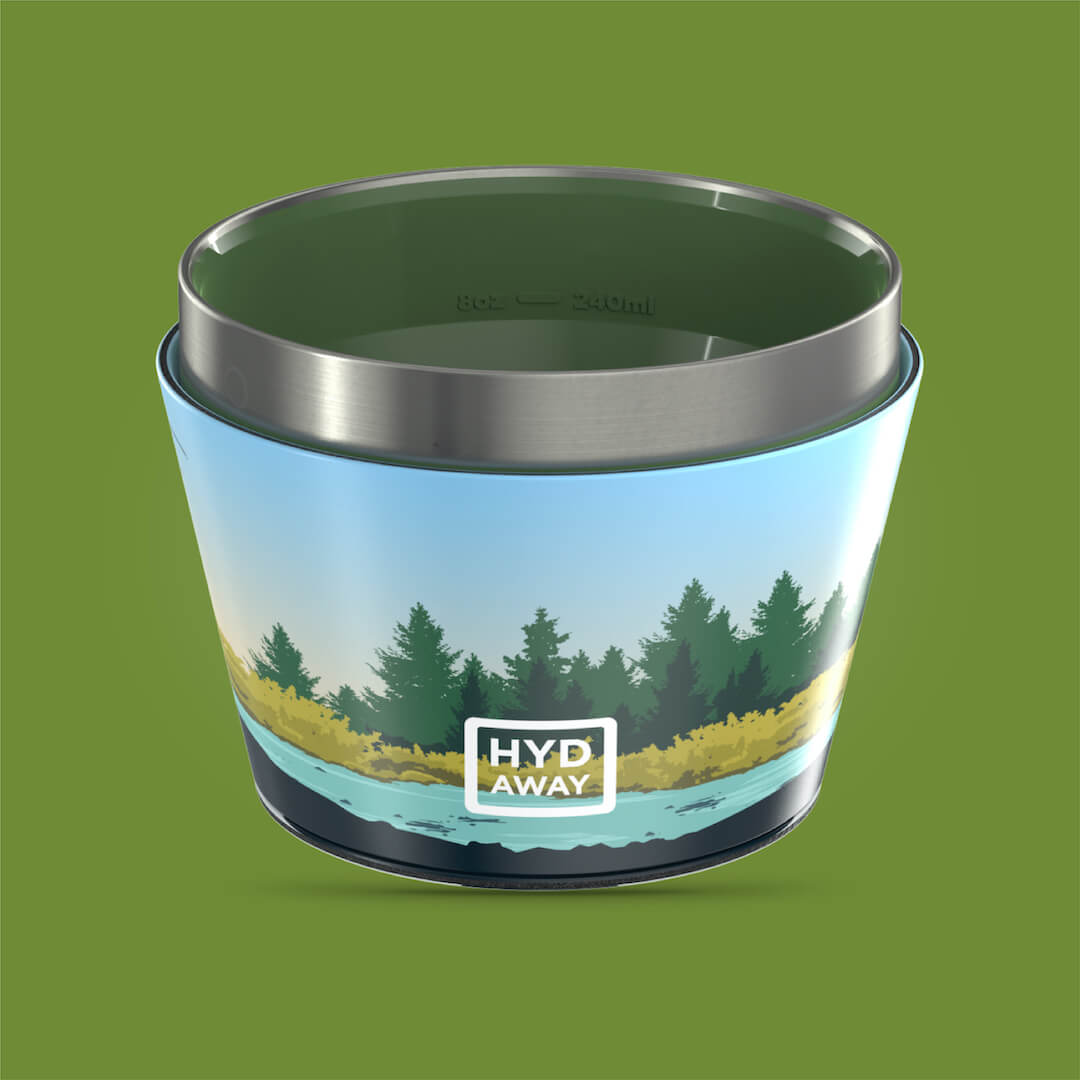
This is also where a mixed setup can make sense. Some travelers carry a rigid stainless bottle for the dog's main water and pair it with a separate collapsible bowl for flexibility. A HYDAWAY collapsible bowl fits that kind of use because it packs flat and gives you a separate drinking vessel when you don't want your dog drinking directly from the bottle top.
The theme park family or urban day-tripper
These outings involve lines, pavement heat, bags full of snacks, and constant transitions. You need simplicity more than technical specs.
Field note: For chaotic family days, the best bottle is the one another adult can use correctly without asking how the cap works.
For this group, the sweet spot is usually:
- Moderate capacity
- Fast one-handed operation
- A foolproof seal
- Minimal parts to drop or lose
If your routine involves strollers, backpacks, and public transit, a compact bottle with an integrated drinking top often wins over a larger bottle that's technically better on paper but annoying in motion.
Proper Cleaning and Maintenance for Your Dog Bottle
A dirty travel bottle can ruin a good piece of gear. The problem usually isn't the steel body. It's the lid, seam, gasket, folded drinking surface, or narrow neck that never quite dries.
Many product guides skip the hard part. In practice, narrow-neck bottles and bottles with more complex folded bowls can be difficult to scrub fully, which can raise mold risk over months of use in off-grid travel, as noted in the Stumptown Strays stainless steel water bottle page.
A simple cleaning rhythm that works
Daily maintenance should be easy enough that you'll do it.
- Empty leftover water daily instead of topping off stale water.
- Rinse bottle and lid separately if the design allows.
- Air dry fully before sealing it for storage.
Then give it a deeper clean on a regular basis, especially after dusty trips, beach days, or travel where the bottle sits warm for hours.
Where grime hides
The spots that need attention aren't always obvious:
- Under silicone seals
- Inside flip caps
- At the hinge of fold-out bowls
- In thread grooves where the lid meets the bottle
If a bottle can't be disassembled enough to let you reach those places, maintenance gets harder fast. That doesn't mean the bottle is useless. It means you need to be realistic about whether you'll keep up with it.
If you can't easily reach a seam with a brush, that seam will eventually collect residue.
A lot of travelers keep cleaning simple with bottle brushes and rinse routines, but if you want a lower-effort option for deeper cleaning, HYDAWAY's bottle cleaner tablets are worth considering for reusable drinkware generally because they fit a travel-friendly maintenance routine.
Know when parts are done
Steel bodies often outlast the top components. Replace or retire a lid if you notice:
- Persistent odor after cleaning
- Chew damage around the drinking edge
- A gasket that no longer seats cleanly
- Visible cracking, warping, or rough seams
The test is simple. If the bottle no longer seals reliably or no longer feels clean after proper washing, don't keep forcing it into service.
Travel Tips for Your Stainless Steel Dog Bottle
Travel exposes every weakness in a bottle. Airports test weight and packing. Road trips test leaks. Hot climates test insulation. Long days out test whether the bottle is easy enough to use that you'll offer water often.
For travelers, insulation is a constant trade-off. Double-wall vacuum insulation keeps water cold for hours but adds bulk and weight, which matters when you're hiking or trying to keep carry-on load down, as noted in the earlier section's cited market guidance.
This visual covers the basics well.

Smart habits on the move
A few habits make a bigger difference than is commonly expected:
- Empty before security if you're flying, then refill after you're through.
- Pack upright when possible so pressure doesn't sit against the drinking valve or bowl top.
- Rinse before refilling instead of just adding fresh water on top of old water all day.
- Pre-chill when you can because starting cold gives insulation a head start.
On road trips, I like a bottle that can live in a cup holder or door pocket without rolling around. If it needs a special spot every time, it becomes one more thing to manage when you stop at fuel stations, trailheads, or scenic pullouts.
A short demo can help if you're comparing how different portable dog bottle styles work in practice.
International and off-grid use
When you're traveling where water quality is inconsistent, your dog's bottle becomes part of your safety routine. Keep it clean, don't let water sit too long in the heat, and avoid sharing a dirty communal bowl when you can use your own system instead.
That's where stainless steel earns its keep. It travels well, rinses cleanly, and doesn't feel disposable after a few rough days.
Your Go-To Stainless Steel Dog Bottle Checklist
Shopping gets easier when you ignore marketing language and run through a short list. The best stainless steel dog water bottle is the one that fits your actual outings, not the one with the longest feature list.

Use this checklist before you buy:
- Confirm the bottle body material. Look for 18/8 or 304 food-grade stainless steel rather than a vague stainless claim.
- Inspect the lid system. The seal, threads, bowl top, and mouth-contact parts matter as much as the bottle body.
- Match capacity to your real routine. Think in terms of walk length, climate, refill access, and your dog's size.
- Choose insulation on purpose. If you need colder water for longer outings, accept the added bulk. If you need lighter carry, skip the extra wall.
- Check cleanability. Fewer hidden seams and easier disassembly usually mean better long-term hygiene.
- Think about how you travel. Cup-holder fit, backpack pocket fit, and upright storage all matter more than they seem in the store.
- Ensure your dog will use the drinking surface. A perfect lid on paper doesn't help if your dog hates the shape.
A good bottle should make hydration easier, not add one more task to the day. When you find one that stays sealed, pours cleanly, and cleans up without a fight, you'll use it more often. Your dog benefits from that every single trip.
If packability matters as much to you as durability, take a look at HYDAWAY. Their travel gear focuses on space-saving reusable hydration and meal solutions, which fits well for hikers, van-lifers, and everyday travelers who want gear that's easier to carry and easier to live with.