

Mountain Biking Downieville 2026: Your Ultimate Trail Guide

You're probably staring at a packed van bin, a half-full hip pack, and a bike that's ready for a long Sierra descent. The usual problem shows up fast. You need enough water, enough calories, and enough repair gear, but you don't want a bulky pack bouncing around while you ride.
That's the core challenge with mountain biking Downieville. The riding gets all the attention, and for good reason, but the trip goes smoother when you treat it like a shuttle-based backcountry mission instead of a casual trail lap. Space matters. Weight placement matters. What you leave behind matters just as much.
Answering the Call of the Downieville Downhill
Most riders hear about Downieville the same way. A friend mentions a huge Sierra descent. Someone at the trailhead says it's a must-do. Then you start looking into it and realize this isn't just another famous trail. It's one of those rides people build trips around.
What makes the place memorable starts with the contrast. Downieville has a population of 290 residents according to the 2020 United States Census (Downieville census profile on Wikipedia). That's a tiny town by any standard. Yet riders from far beyond the local region know the name immediately.
Why the place sticks with riders
You roll into town and it doesn't feel manufactured for tourism. It feels real. That matters. The finish has the kind of earned atmosphere that only comes from a trail town where people show up for the riding first.
The draw isn't just bragging rights. It's the style of day you get. Shuttle up, drop into the mountains, manage your speed for a long technical descent, then roll back into a small town that has seen generations of trail traffic in one form or another.
Downieville feels bigger on the bike than it does on a map.
That's why it lands on so many bucket lists. You get alpine access, forest singletrack, river-canyon energy, and a finish that doesn't feel detached from the terrain. Riders who spend a lot of time in vans or moving between trail zones tend to connect with places like this fast because the trip can stay simple.
Who enjoys it most
Downieville usually clicks for riders who want all of the following:
- A point-to-point feel: You're not grinding out a repetitive local loop.
- A destination ride: The trail and the town belong together.
- A gear-conscious day: Packing well changes the whole experience.
- A remote-trail mindset: You need self-sufficiency, not just fitness.
If you like polished bike park convenience, Downieville can feel rough around the edges. If you like big descents with real trail texture, that's exactly the point.
The Legendary Trails of Downieville Explained
The classic route is the one most riders mean when they talk about mountain biking Downieville. It's a 15.0-mile expert-level Black Diamond, mountain-bike-only descent that clambers 816 feet before dropping 4,915 feet from a max elevation of 7,106 feet, and it includes seven distinct trails including Sunshine Trail, Butcher Ranch, 3rd Divide, and First Divide (Trailforks route description for the classic Downieville Downhill).

That description tells you two important things right away. First, this isn't a pure coast-all-the-way-down ride. Second, the trail changes character enough that pacing matters.
How to think about the route
Don't treat the whole descent like one long sprint. Break it into phases and ride each one with a specific job in mind.
| Section | What it feels like | Best approach |
|---|---|---|
| Sunshine Trail | Early commitment and trail-speed calibration | Start controlled and let your eyes adjust before pushing |
| Butcher Ranch | Technical and demanding | Stay light on the bike and pick lines early |
| 3rd Divide | Fast rhythm mixed with punishment if you get sloppy | Carry speed only where you can still brake cleanly |
| First Divide | Late-ride fatigue meets consequence | Ride within yourself and finish tidy, not desperate |
The seven-trail reality
The route's seven-trail structure is part of what makes it special. The names matter because each piece has its own pace and demands. Riders who do best here aren't always the strongest. They're often the ones who stop over-riding the terrain after the first burst of adrenaline.
A practical way to ride it:
- Use the opening to settle in. Don't burn your hands and forearms too early.
- Respect the climbing bits. Short efforts still sting if you came unprepared.
- Reset mentally at transitions. New segment, new traction, new speed limit.
- Save margin for the end. Downieville punishes riders who treat the middle like the finish.
What works and what doesn't
What works is a patient first half and an active riding posture. Keep your weight mobile, brake before corners instead of in them, and scan farther ahead than you think you need to.
What doesn't work is chasing someone else's pace. This trail can make a good rider feel clumsy if they're trying to match a faster wheel through unfamiliar terrain.
Practical rule: If your hands are already pumped early, your braking strategy is wrong, not just your fitness.
Some riders also look for alternate trail experiences in the area after ticking off the classic route. That makes sense. But for a first trip, it's smarter to give the main descent your full attention and ride it well instead of stacking too much into one day.
Mastering Downieville Logistics and Access
Good Downieville days usually look boring on paper. That's a compliment. The smoother your morning goes, the more energy you save for the descent.
For the 2026 season, shuttle service has officially opened, with Downieville Outfitters and Big Boulder Adventures running departures on Fridays at 10AM, 12PM, 2PM, and 4PM; Saturdays at 9AM, 11AM, 1PM, and 3PM; and Sundays at 8AM, 10AM, 12PM, and 2PM (2026 shuttle schedule reported by The Mountain Messenger).
How to plan the day
The best shuttle strategy is simple. Book early, park once, and have your riding pack fully loaded before you check in. Don't assume you'll have calm prep time in the lot.
A solid rhythm looks like this:
- Book your shuttle before the weekend starts: Popular departure windows are easier to lose than to recover.
- Pack your food before bed: Morning trail-town scrambling usually leads to forgotten tools or too little water.
- Dress for the top, not the bottom: Sierra starts can feel different than the finish in town.
- Keep your post-ride setup waiting in the vehicle: Dry shirt, sandals, recovery food, and easy drink access.
Current-time planning trade-offs
Warm weather can open things up, but current conditions still matter more than optimism. If you're traveling in from another zone, check trail status close to your ride day and stay flexible.
Van-lifers tend to do best here when they think in layers of readiness. One bag for the shuttle. One bin for camp. One post-ride tote. That separation keeps you from digging through cookware, clothes, and charging cables while the shuttle clock is running.
Missed shuttle time hurts more than carrying a slightly heavier pack.
What minimalist riders get right
The riders who move efficiently in Downieville don't bring less carelessly. They bring less on purpose. Their ride kit is small because every item earned its spot.
That means no duplicate jackets, no giant lunch setup for the lift point, and no random “just in case” junk filling the bag. You want a setup that gets you to the top calm, not cluttered.
Essential Skills and Bike Tech for the Descent
Downieville is where optimistic gear choices get exposed. If your bike is undergunned, your brakes fade, or your suspension setup is vague, the trail will point that out quickly.
The route integrates four distinct singletrack segments, a fire road, and a paved road section, and riders are advised to use a full-suspension mountain bike with 140mm to 160mm of travel to handle the high-frequency impacts of the technical pine forest terrain (HydraPak's Downieville trail breakdown).

The bike setup that makes sense
A short-travel bike can survive Downieville. That doesn't mean it's the smart choice. A full-suspension bike with 140mm to 160mm of travel is the practical middle ground for this kind of descent because it gives you more control when the trail gets repetitive, rough, and fast.
What matters most:
- Suspension that stays composed: Support in mid-stroke helps more than a plush parking-lot bounce test.
- Brakes you trust: Long descents punish weak systems and lazy maintenance.
- Tires with real sidewall support: This isn't the place for fragile casings.
- Cockpit comfort: Hand fatigue often starts with poor lever angle and bad reach setup.
If you're still deciding what platform makes sense for bigger trail days in general, this guide to best value e mountain bikes is useful for comparing practical options and thinking through what kind of machine fits your terrain and budget.
The skills that actually matter
Fitness helps. Technique decides whether you enjoy the day.
You need to manage sustained braking without locking up, choose lines before you arrive at the obstacle, and keep your upper body relaxed when the trail starts firing repeated hits at you. Riders who tense up burn energy fast.
For hydration strategy tied to bike fit and bottle carry options, this breakdown of water bottles for mountain bikes is worth reviewing before the trip.
A useful self-check before you go:
| Skill | What success looks like | Warning sign |
|---|---|---|
| Braking control | Short, deliberate braking zones | Dragging brakes for long stretches |
| Line choice | Eyes up and decisions early | Last-second steering corrections |
| Cornering | Stable entry speed and clean exits | Washing speed in every turn |
| Body position | Heavy feet, light hands | Death-gripping the bars |
Video helps if you want to visualize pace and terrain before you commit.
Staying Safe on Remote Sierra Trails
The classic route asks for self-sufficiency. It's a 15-mile advanced-level descent with nearly 4,900 feet of elevation loss, and riders are advised to carry a tubeless tire plug kit and tire boot for flats (Bay Area Rides on the classic Downieville route).
That advice sounds basic until you need it far from town. Then it becomes the difference between a manageable delay and a long, ugly problem.
Your non-negotiable repair kit
Don't overthink this. Carry the gear that fixes common failures first.
- Tubeless tire plug kit: Fast fix for punctures that won't seal on their own.
- Tire boot: Useful when the casing damage is bigger than a plug can solve.
- Pump or inflation solution: A plug without air is only half a repair.
- Multi-tool: Small adjustments can stop a ride from unraveling.
- Food you will eat: Choose calories you can open and chew while tired.
Safety habits that matter more than fancy gear
Tell someone your plan before you head up. Keep your phone charged even if you expect weak service. Stop early if the bike starts talking back through odd noises, vague braking, or repeated rim strikes.
A controlled slowdown beats a heroic finish every time.
Water planning matters too, especially on remote rides where you can't assume easy refills. If you need a broader refresher on treatment methods and field judgment, this essential guide on camping water safety is a practical read.
For a broader checklist that translates well from hiking to remote bike days, HYDAWAY's article on what to bring on a day hike gives a solid framework for not forgetting the basics.
Trail behavior in a remote setting
Ride like help is not immediate. That means leaving enough margin for mistakes, especially late in the descent. It also means not bombing blind corners and not assuming other trail users or riders will move on your timeline.
The smart approach in Downieville is calm, deliberate, and boring in all the right ways.
The Ultimate Space-Saving Packing Checklist
At this juncture, most riders either dial in the day or make it harder than it needs to be. Existing guides often emphasize difficulty and flat risks but don't really solve the “space vs. volume” problem for riders who need to carry 2+ liters of water without a full hydration pack (Two Wheeled Wanderer on the Downieville packing gap).
That gap is real. You need enough carrying capacity for a long shuttle descent, but you don't want a giant pack for a ride that rewards movement and balance.

The carry-less philosophy
The goal isn't to go minimalist for style points. The goal is to remove bulk that makes the ride worse while keeping the items that solve real trail problems.
For riders who live out of vans, compact gear pays off twice. It helps on the trail, then it stops your vehicle from turning into a pile of bottles, food containers, and random camp clutter by the end of the weekend.
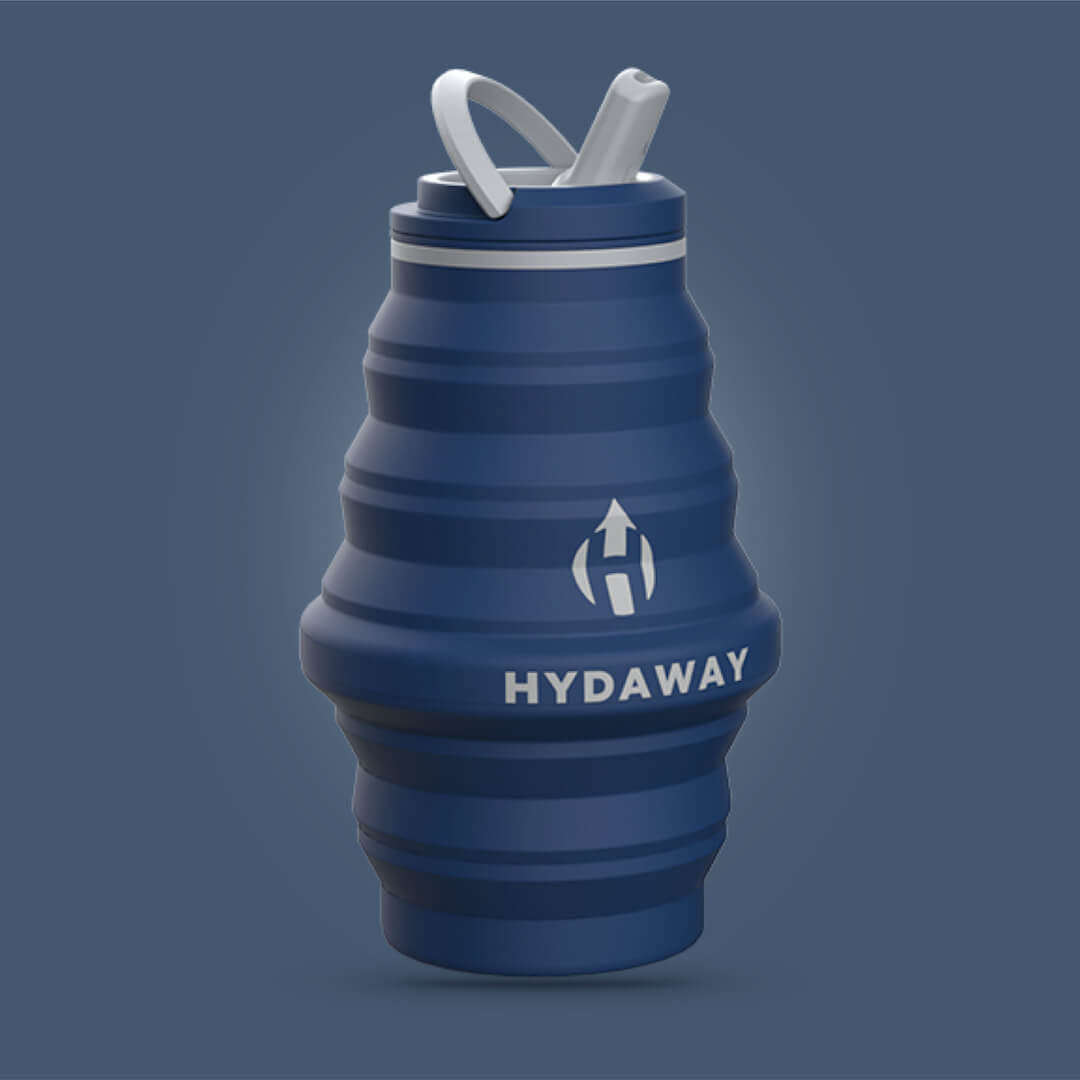
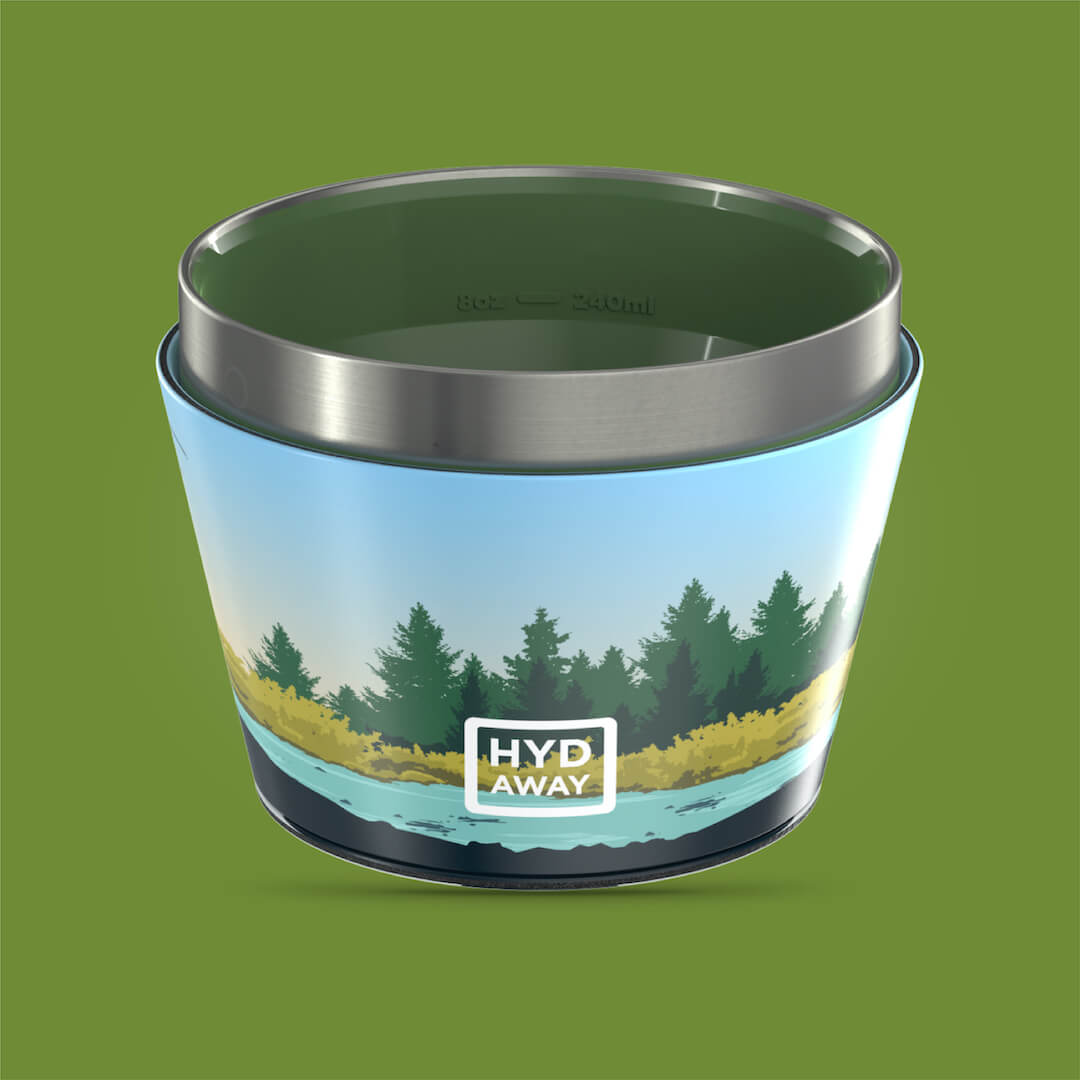
HYDAWAY gear fits this kind of trip well because it's designed around packability. A collapsible bottle makes more sense than a rigid spare when space is tight, and compact bowls or insulated food containers are easier to stash in a van drawer or ride bin than standard camp kitchen pieces.
On-bike day-pack checklist
Use a small backpack or a stable hip-pack-plus-frame-carry setup. Pack for movement, not for comfort-camping.
- Water that fits the ride: If you're not using a full hydration pack, collapsible bottle options are one of the cleanest solutions because they reduce bulk as you drink.
- Compact food: Soft snacks, bars, or easy-open items beat bulky lunch containers.
- Flat repair kit: Plug kit, boot, inflation, and tool.
- Light layer: Something that packs down small for shuttle mornings.
- Phone and ID: Keep them in a consistent pocket every ride.
Van-lifer basecamp checklist
Here, compact reusable gear shines most. You want quick access after the ride without filling half a cabinet.
- Post-ride hydration setup: A collapsible bottle or tumbler that can live in a door pocket.
- Simple meal kit: A compact bowl with lid works well for leftovers, oatmeal, ramen, or recovery food.
- Clean-change bag: Dry shirt, socks, sandals.
- Charging pouch: Battery, cable, headlamp.
- Mess control: Small towel and a dedicated bin for dirty riding gear.
The best packing system is the one that lets you find food, water, and dry clothes in under a minute after the ride.
If you're trying to tighten up your whole setup, this HYDAWAY guide on how to pack a backpack is a good companion read.
What doesn't belong in your setup
Skip the oversized cooler haul to the shuttle. Skip duplicate containers. Skip hard-sided kitchen items that waste dead space. And skip carrying a giant hydration backpack just because you don't have a better bottle strategy.
A tight setup feels better on the trail and makes camp life cleaner after the ride. That's the kind of efficiency that adds comfort.
Post-Ride Fuel and Lodging in Downieville
The best part of mountain biking Downieville might be the hour after you finish. You roll into town dusty, hands buzzing a little, and ready for food that doesn't come from a jersey pocket.
That's when the town's scale becomes part of the appeal. You're not diffusing into a giant resort grid. You're dropping into a small place where riders, travelers, and locals all seem to move at the same speed once the ride is over.

How to recover well
Start with the easy wins. Get out of your sweaty gear. Drink before you get too hungry to think straight. Then eat a real meal.
Riders who camp or sleep in vans usually have two good options. Eat in town and enjoy the social side of the trail scene, or keep a simple van meal ready so you can recover without a big production. Compact reusable food gear helps here because you can prep, store, and reheat with less clutter.
Where to stay if you want the full experience
Different styles work for different trips:
- Campgrounds: Best for riders who want the Sierra feel to continue after the ride.
- Van setups: Great if you're stringing together multiple trail stops and want full control over your schedule.
- Local inns or lodges: Easier if you want a shower, a bed, and less camp cleanup.
The best choice comes down to how much work you want after the ride. Some nights you want a riverside camp chair and a simple bowl of hot food. Other nights you want someone else handling the logistics.
Either way, Downieville rewards riders who leave enough space in the day to enjoy the finish instead of just surviving it.
If you want a cleaner, more efficient setup for shuttle days, van travel, and compact trail-town packing, HYDAWAY makes a lot of sense. Their collapsible bottles, drinkware, bowls, and portable accessories are built for the exact problem Downieville exposes: you need enough volume for the day, but you don't want bulky gear taking over your pack or your van.