

The 0.22 Micron Filter: A Traveler's Guide to Safe Water

You're probably here because you've got a trip coming up and water feels like the one variable you can't afford to guess on. Maybe it's a weekend hike, a long-haul flight into a country where you won't trust the hostel tap, or a family day out where buying bottled water all day gets old fast. A 0.22 micron filter sounds reassuring, but the name alone doesn't tell you when it's enough, when it isn't, or what kind of trip it best suits.
That's the area where understanding is often needed. Not the lab jargon. The practical question: if you scoop water from a stream, refill from an airport sink, or top off from a campsite spigot, what is this filter doing for you?
What Is a 0.22 Micron Filter Anyway
A micron is a very small unit of measurement. You don't need to memorize the math to use one safely. What matters is this: a 0.22 micron filter has extremely tiny pores, and those pores act like a physical barrier that lets water pass while stopping many larger contaminants.
For travelers, the practical takeaway is simple. This kind of filter is built to stop bacteria and other larger microscopic troublemakers, which is why people use it when they need cleaner water without boiling.
Why this exact size matters
The 0.22 micron rating didn't become popular by accident. A 0.22-micron filter is the globally recognized "Gold Standard" and legal threshold for true sterile filtration in pharmaceutical and laboratory settings because its pore size is validated to remove Brevundimonas diminuta, the industry-standard challenge organism, which is approximately 0.5 microns in diameter (reference).
That sounds very lab-coated and distant from travel, but the idea is useful outdoors too. If a filter can reliably stop a tiny test bacterium used for sterile filtration validation, you can understand why people trust this pore size for water where bacterial contamination is the main concern.

Think of it like a tiny sieve
A kitchen strainer catches pasta and lets water through. A 0.22 micron filter works on the same basic idea, just at a scale your eyes can't see.
Here's how that translates into travel use:
- Mountain stream water: A 0.22 micron filter can help when your main worry is bacterial contamination from animal activity upstream.
- Hostel sink water: It may help in places where the issue is localized bacterial risk, but it doesn't automatically make all tap water safe.
- Refill stations and public fountains: It can add a layer of protection if you're worried about microbial contamination, though taste and chemical issues are a separate question.
Practical rule: A 0.22 micron filter is best understood as a microbe barrier, not a magic water fixer.
What readers often get wrong
People often hear “sterile filtration” and assume “safe against everything.” That's where confusion starts. In travel, water safety isn't just about particle size. It can also involve viruses, chemicals, heavy metals, and toxins. A 0.22 micron filter handles one part of the problem very well. It doesn't handle every part.
That distinction matters more now than ever, because people are carrying compact gear into more places. Weekend hikers, van-lifers, digital nomads, and families doing refill-heavy travel all want one setup that does it all. This filter is a strong tool, but it's still just one tool.
The Science Behind Safe Water Filtration
A 0.22 micron filter works by sieving. Water gets pushed through a porous material, and anything larger than the pore rating gets held back. That's the same core principle whether you're dealing with a compact travel filter or a larger system.
According to this explanation of micron filter operation, micron filters sieve fluids through a porous medium such as polypropylene or ceramic membranes, retaining particles larger than the rated separation. The same source notes that finer filters reduce water pressure more, so designers have to balance capture efficiency with flow rate.
Why flow rate matters on the road
Travelers notice this right away. The finer the filtration, the more resistance you feel.
That's why one filter feels smooth at a campground faucet while another feels slow when you're squeezing water from a soft pouch after a long climb. The filter isn't failing. It's doing delicate physical work.
A few practical trade-offs matter:
- Faster flow: Feels better during quick refills in airports, rest stops, or busy campsites.
- More clog resistance: Helps when your water source has visible sediment.
- Durability: Matters if your gear gets crushed in a pack, bounced in a van drawer, or used daily for months.
Materials change the user experience
Not every filter membrane feels the same in use. Some are chosen for flow, some for chemical compatibility, some for toughness. Travelers don't need a materials science lecture, but they do benefit from knowing why one filter setup feels easier than another.
A hollow-fiber style filter often appeals to people who want lightweight, field-friendly gear. Other membrane materials are common in sterile or lab-style filtration where consistency matters most. In practice, your best choice depends on where you'll fill up, how often, and how dirty that source water usually is.
Physical filtration doesn't “wear off” the way a tablet dose does. But a filter can clog, crack, freeze, or get contaminated by poor handling.
How this compares with larger water systems
If you've looked into home purification, it helps to compare scales. A backpacking filter and a household reverse osmosis unit solve different problems, but both rely on pushing water through barriers that separate contaminants from usable water. If you want a plain-English comparison, this guide on how RO systems work is useful because it shows how pore size and pressure shape what gets removed.
For travel, the big lesson is that no filter exists in a vacuum. Water quality, source type, maintenance, and speed all matter. A 0.22 micron filter is trustworthy because it uses a physical process you can understand. Water goes in. A membrane blocks larger microbes. Cleaner water comes out. The catch is that “cleaner” still depends on what was in the water to begin with.
From the Lab to the Lakefront
The reason a 0.22 micron filter has such a strong reputation is that it comes from environments where contamination isn't a minor inconvenience. It's used in settings like pharmaceutical production, IV solution processing, and laboratory media preparation, where the wrong microbe means the entire batch is compromised. That kind of history gives the technology credibility.
But most readers don't need sterile media for a lab bench. They need a way to drink with more confidence when they're moving.
Three travel moments where it makes sense
A backpacker reaches a lake in late afternoon. The water looks clear, but clear water can still carry bacteria. They collect it, run it through a compact filter, and cook dinner without burning fuel on a full boil for every bottle.
A parent is spending the day at a theme park. Instead of buying bottle after bottle, they refill from a fountain and use a compact filtration setup for peace of mind and convenience. The savings aren't theoretical. You feel them by lunchtime.
A digital nomad checks into a budget guesthouse where the tap water tastes off and local advice is mixed. A portable filtration routine gives them one repeatable habit every day, instead of making a fresh judgment call every time they fill a bottle.
Where this helps most
The best use cases tend to look like this:
- Backcountry travel with relatively fresh surface water: Streams, springs, and lakes where bacterial contamination is the main concern.
- Domestic travel with uncertain refill points: Campgrounds, trailheads, public fountains, and roadside stops.
- Routine refill culture: Travelers who prefer carrying one bottle and topping off throughout the day instead of buying disposable plastic.
Where expectations need to stay realistic
A 0.22 micron filter is strong when the water problem matches the filter's strengths. It's less reassuring when the source may contain contamination that isn't solved by size exclusion alone.
That's why experienced travelers don't ask, “Is this filter good?” They ask, “Good for what source, in what place, during what trip?”
Good gear isn't the gear with the most impressive spec sheet. It's the gear that matches the actual water you're likely to face.
That mindset matters today because travel has become more mixed. One week you're hiking in the Cascades. The next you're working from a beach town abroad. Then you're road-tripping through desert campgrounds where every fill-up looks different. The same tool won't cover every water risk equally well.
The Critical Limits of a 0.22 Micron Filter
This is the safety section. A 0.22 micron filter is excellent at one job, but people get into trouble when they assume that means it handles every threat in water.
It doesn't.
The virus problem
The biggest misunderstanding is viral removal. According to this guide to 0.22 micron filter limits, most viruses range from 0.02 µm to 0.3 µm, meaning many, including SARS-CoV-2 at about 0.12 µm, can pass through 0.22 µm filters unimpeded. The same source states that while 99.999% of bacteria are blocked, this filter offers zero viral sterilization without pre-treatment or pairing with another method like UV.
That's the line you need to remember on international trips and in places with compromised sanitation infrastructure. If virus risk is part of the picture, a 0.22 micron filter alone isn't enough.
For a plain-language explainer on how viruses and bacteria differ, that distinction helps make the size gap easier to understand.

What else it won't solve
A 0.22 micron filter also won't reliably remove dissolved chemical contamination, heavy metals, or many waterborne toxins. If the water source is near agriculture, industry, mining, or algae bloom conditions, that should change your plan.
If you're trying to understand how coarse and fine filtration stack together in a broader system, HYDAWAY's article on a 10 micron filter in water filtration is a helpful comparison point because it shows how different pore sizes play different roles.
Real-world frustrations in the field
Even when the filter is the right tool, it still has practical limits:
- Sediment clogs it: Silty river water, glacial runoff, and muddy puddles can choke flow fast.
- Flow drops over time: A filter that started the trip feeling easy may require more force later.
- Handling mistakes matter: Dirty hands, contaminated bottle threads, and careless storage can undo good filtration habits.
A better safety habit
Use this mental checklist before you drink:
| Water question | If the answer is yes | What to do |
|---|---|---|
| Could this source carry bacteria? | Common in many outdoor sources | A 0.22 micron filter may be a good fit |
| Could this source carry viruses? | More likely where sanitation is questionable | Add UV or another virus-capable treatment |
| Does it smell chemical or industrial? | Possible contamination beyond microbes | Don't rely on a 0.22 micron filter alone |
| Is it cloudy with sediment? | Higher clogging risk | Pre-filter or let sediment settle first |
A lot of water mistakes happen because travelers ask only one question: “Will this filter work?” The better question is: “What risk am I trying to remove?”
Choosing the Right Water Purifier for Your Trip
Picking water treatment for travel is less about brand loyalty and more about matching the method to the destination. A hiker in the North American backcountry has a different problem than a traveler crossing cities with unreliable municipal systems.
Start with source type. Then choose your tool.

The simplest comparison
| Method | Best at | Weak spot | Best trip fit |
|---|---|---|---|
| 0.22 micron filter | Physical removal of bacteria and larger microbes | Not enough for virus risk by itself | Hiking, camping, many freshwater trips |
| Activated carbon filter | Improving taste and reducing some chemicals | Not a complete microbiological solution alone | Urban travel, tap-water taste issues |
| UV purifier | Neutralizing microbes including viruses in the right conditions | Doesn't remove sediment | International travel, clear water sources |
| Chemical tablets | Broad disinfection backup | Taste, wait time, and routine inconvenience | Emergency kits and backup treatment |
Here's a useful procurement note that confuses a lot of shoppers. The distinction between 0.2 µm and 0.22 µm filters is purely vendor nomenclature with no functional performance difference, and both must pass the same ASTM F838 test, retaining ≥1×10⁷ CFU/cm² of B. diminuta to be classified as sterilizing (reference).
So if you're comparing a 0.2 and a 0.22 labeled filter, don't get stuck on the decimal wording alone. Focus on validation, intended use, maintenance, and how you'll carry it out.
A quick video can help if you want to see how travel water purification options differ in practice.
My field guide for choosing fast
Use this framework:
- North American backpacking or camping: A 0.22 micron filter is often a practical primary tool when your main concern is bacteria in freshwater sources.
- International travel with uncertain sanitation: Pair filtration with a second method that addresses viruses.
- City travel where water is probably treated but tastes bad: Carbon can matter as much as microbial protection.
- Emergency backup planning: Carry tablets even if they're not your favorite everyday method.
For more trip-specific bottle-and-filter planning, HYDAWAY's guide to water filtration bottles for hikers is a useful read because it focuses on carrying and using filtration in actual outdoor routines.
Carry a system you'll actually use when you're tired, thirsty, and in a hurry. The “best” purifier on paper loses to the one you left in your pack because it was annoying.
Your Smart Hydration System with HYDAWAY
Filtration solves one problem. Carrying, storing, and using water all day is a different problem. A lot of travelers build a good purification setup and then undermine it with bulky bottles, awkward packing, or containers that are annoying to clean.
That's where HYDAWAY fits into everyday travel life. Not as the filter itself, but as the vessel that makes a filtered-water routine easier to live with.
Why the vessel matters
A travel hydration system has to work in motion. It has to fit in a daypack, sit in a car door, tuck into a beach bag, and still be easy to rinse after daily use. If your bottle takes up too much space when it's empty, you stop carrying it. If it's awkward to clean after untreated water contact, you put it off.
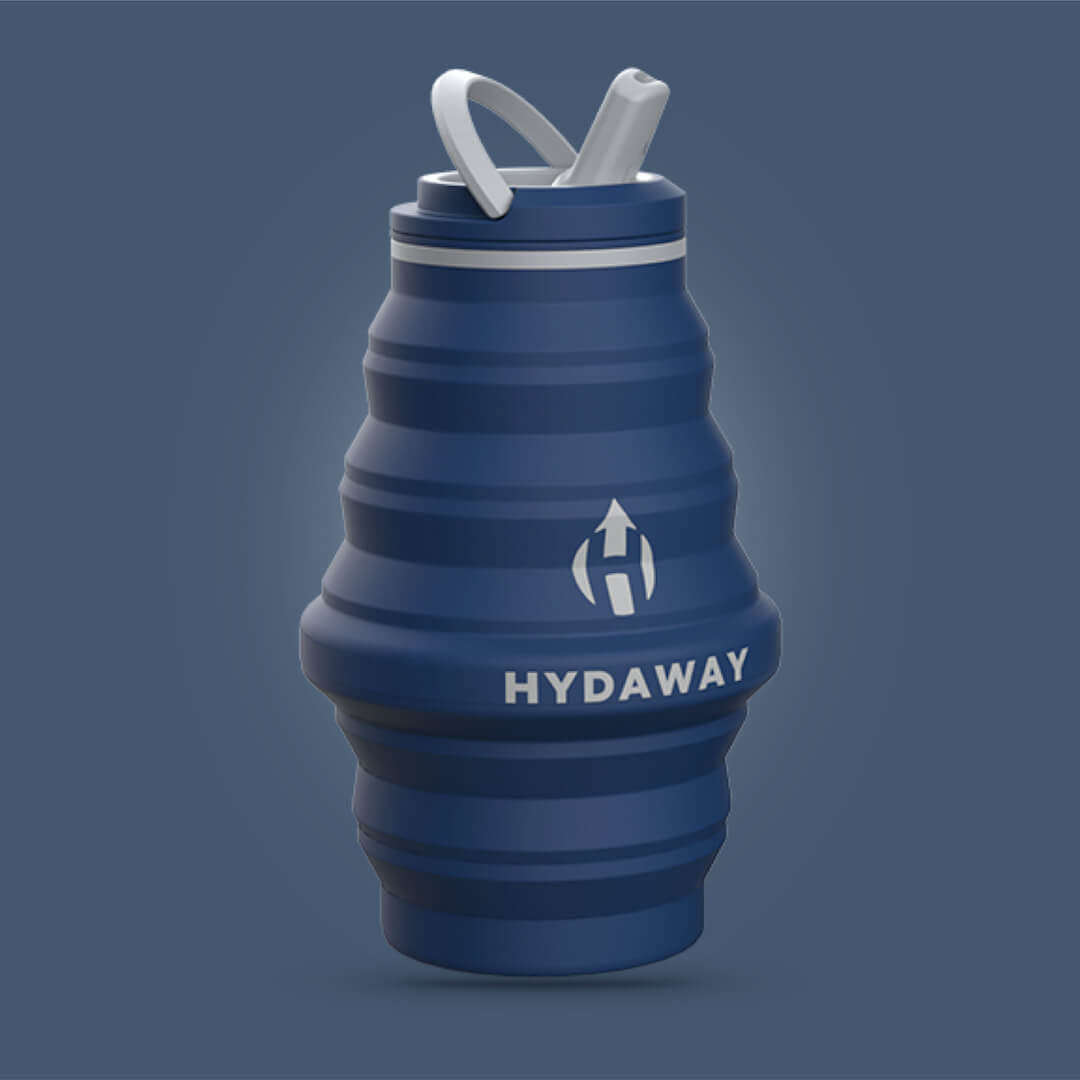
HYDAWAY's collapsible design makes sense for travelers because it packs small when empty and expands when you need it. That's useful for hikers who fill at the trailhead, digital nomads moving through airports, and families who want a bottle that doesn't hog bag space after lunch.

How I'd use it on real trips
For a weekend hike, I'd treat the bottle as clean-water storage. Filter from the source into the bottle, keep the cap and mouthpiece clean, and collapse it when empty on the way out.
For airport and city travel, I'd use it as a refill-friendly bottle that doesn't become dead weight when not in use. That matters more than people think. Packable hydration gear gets used more often because it's less annoying to carry.
For road trips and family outings, a collapsible bottle makes refill stops simpler. You can keep one bottle per person without turning your tote or stroller bag into a hard-plastic pileup.
The safety standard behind the filter side
When you do choose a 0.22 micron filter to pair with your setup, the serious benchmark is validation. To be classified as sterilizing, filters like the 0.22 micron must pass ASTM F838 protocols and demonstrate a 7-log per cm² bacterial removal capability, which confirms the ability to eliminate 10 million bacteria per unit area for sterility assurance (reference).
That's a lab-grade standard, but the travel lesson is straightforward. Don't buy around the headline number alone. Buy around trusted validation, realistic destination risk, and whether the full system is easy to use day after day.
If you want ideas for building that routine with reusable gear, HYDAWAY's article on pairing water filters with reusable bottles is a practical next step.
A smart travel setup isn't one item. It's a combination: appropriate filtration for the risks you expect, a clean and packable bottle, and habits you can repeat when you're jet-lagged, muddy, or rushing to the next stop.
HYDAWAY makes that everyday part easier. If you want a packable, reusable bottle that fits life on the trail, in transit, and around town, take a look at HYDAWAY. Their collapsible hydration gear works especially well for travelers who want filtered water without carrying bulky empty bottles all day.