

The 2026 Guide to water filtration bottles hikers for Safe Trail Hydration

For anyone who spends time on the trail, a good water filtration bottle isn’t just gear—it’s a lifeline. It’s the simple, brilliant combination of a reusable bottle and a built-in filter, turning questionable backcountry water sources into safe, clean hydration. This single piece of equipment means you can stop hauling excessive water weight and gain some serious peace of mind.
Your Lifeline on the Trail: Why Filtration Bottles Are Essential

Picture this: You’re hours into a beautiful but tough hike up to that viral viewpoint you saw on social media. Your water is almost gone, and the trailhead is miles away. But right beside you, a clear, cool stream is flowing. This is the moment a filtration bottle goes from being a smart purchase to an absolute lifesaver.
Instead of rationing your last few sips or suffering under the weight of multiple liters from the get-go, a filter bottle gives you the freedom to refill from natural sources along the way. It dramatically cuts your pack weight, which helps you move faster, save energy, and actually enjoy the hike.
Invisible Dangers in "Clean" Water
That pristine-looking mountain stream might seem perfect, but it can hide some nasty, invisible threats. Even the clearest water can be a cocktail of microscopic bugs that will ruin your trip.
A quick look at common contaminants found in natural water and why filtering is crucial for staying healthy on your hike.
| Contaminant Type | Common Examples | Potential Health Impact on Hikers | Filter Effectiveness |
|---|---|---|---|
| Protozoa | Giardia, Cryptosporidium | Severe gastrointestinal illness, diarrhea, cramps | High (most hiking filters easily remove these) |
| Bacteria | E. coli, Salmonella, Cholera | Food poisoning-like symptoms, fever, dehydration | High (most hiking filters remove bacteria) |
| Viruses | Hepatitis A, Norovirus | Various illnesses, from stomach flu to liver issues | Moderate (requires a purifier or specific virus-rated filter) |
| Sediment | Silt, sand, glacial till | Gritty taste, can clog filters | High (all filters remove sediment) |
These pathogens, often shed by wildlife, are the culprits behind illnesses that can end a trip and leave you sick for days. Don’t let a beautiful stream fool you.
Drinking untreated water is one of the quickest ways to ruin an amazing outdoor adventure. A reliable filter isn't just about quenching thirst; it's about protecting your health so you can keep exploring.
This is why seasoned hikers never gamble with untreated water. They know a simple tool prevents a major disaster, giving them confidence with every single sip. For more ideas on lightening your load, check out our guide on the benefits of a collapsible water bottle for hiking.
Practical Peace of Mind on Every Trail
The beauty of a filtration bottle is its versatility. For a day hiker out on local trails, an all-in-one bottle means they can leave home with it empty and fill up at a park stream. It’s simple and self-contained. For example, you can throw it in your daypack for a Saturday hike at a state park, knowing you can refill from a creek instead of a crowded water fountain.
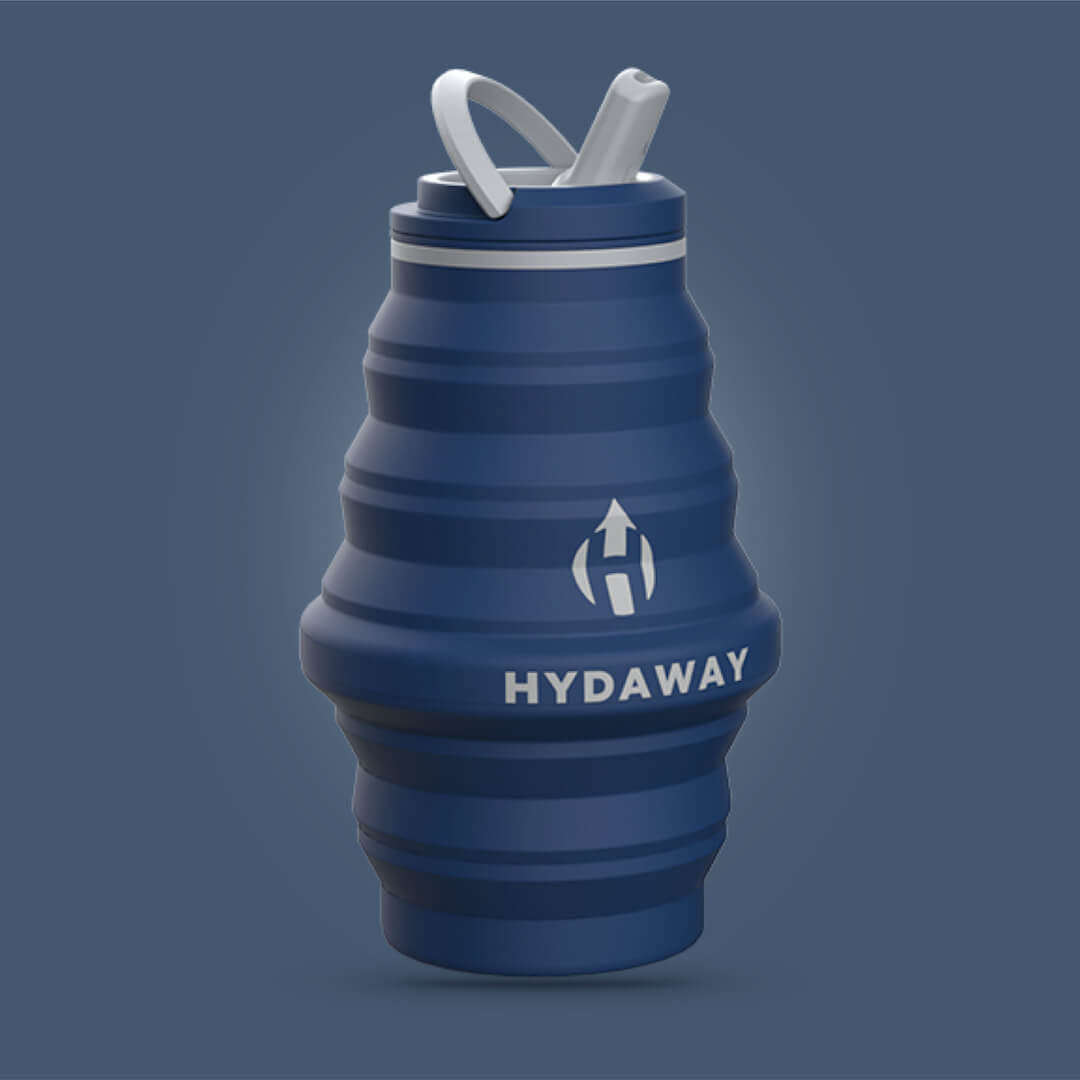
For backpackers on a multi-day trek, a lightweight filter paired with a packable bottle like the HYDAWAY 25oz Collapsible Bottle creates an ultralight, space-saving system. When empty, the bottle shrinks to just over an inch thick, freeing up precious room in your pack. This means you have more space for snacks or a rain jacket, a practical trade-off any hiker can appreciate.
Of course, water is only half the battle on longer treks. Proper nutrition from top backpacking meals is just as vital for keeping your energy up. Ultimately, having a reliable filtration system means you’re prepared, self-sufficient, and, most importantly, safe.
How Your Filter Turns Stream Water into Safe Water

Watching murky stream water become perfectly clear, drinkable water in just a few seconds can feel like trail magic. But it’s not magic at all—it’s a brilliant bit of science working hard inside that little filter. Once you understand how it works, you’ll trust your gear completely with every sip.
Most water filters designed for hikers use a one-two punch: hollow fiber membranes for physical filtering and activated carbon for a bit of chemical cleanup. Think of it as a two-stage security system for your water. The first guy is the bouncer, physically stopping all the big troublemakers. The second is a magnet, grabbing all the invisible stuff the bouncer missed.
The Microscopic Gatekeeper: Hollow Fiber Membranes
The real workhorse in almost any modern hiking filter is the hollow fiber membrane. Picture a tight bundle of microscopic straws, each one covered in millions of tiny holes, or pores. When you squeeze or suck water through, it’s forced through these incredibly small openings.
And when we say small, we mean it. These pores are typically just 0.1 to 0.2 microns across. For a little perspective, a single human hair is about 70 microns wide. This minuscule size is the secret to its success.
Because the pores are so tiny, they act as a physical wall that harmful microorganisms simply can’t squeeze through. This process is called size exclusion, and it’s remarkably effective at blocking the most common threats you’ll encounter on the trail.
- Bacteria: Nasty bugs like E. coli and Salmonella are bigger than 0.2 microns, so they get stopped cold.
- Protozoa: Parasites like Giardia and Cryptosporidium, infamous for causing backcountry misery, are even larger and get filtered out reliably.
This is why even a basic hollow fiber filter offers such solid protection on most North American trails. It physically blocks 99.9999% of bacteria and 99.99% of protozoa, making sure your water is biologically safe to drink.
The Chemical Magnet: Activated Carbon
While the hollow fiber membrane is a champ at knocking out biological threats, it does nothing about weird tastes, funky smells, or chemical contaminants. That's where activated carbon steps in, usually as a secondary piece inside the filter cartridge.
Think of activated carbon as a super-porous sponge with a massive surface area. It works through a process called adsorption, where chemical impurities literally stick to its surface like tiny magnets.
An activated carbon element doesn't just filter—it "cleanses" the water. It’s what turns that earthy, swampy-tasting stream water into something crisp and refreshing, like it came right from a tap.
This stage is all about improving the quality and taste of your water. Activated carbon is fantastic at grabbing:
- Chemicals and Pesticides: It reduces contaminants that might have washed into the water source from farms or roads.
- Bad Tastes and Odors: It pulls out the organic compounds that give water that "pond" flavor.
- Chlorine: If you're filtering tap water while traveling, it gets rid of that chemical aftertaste.
Combining these two technologies creates an incredibly powerful and lightweight system. For example, when you screw a Sawyer Squeeze filter onto a HYDAWAY 25oz collapsible bottle, you’re getting the best of both worlds. The filter gives you safety, while the bottle provides an ultralight, packable container that practically disappears in your pack. This setup allows you to hike lighter and have more room for essentials, turning a gear choice into a smarter hiking strategy. Exploring the different types of reusable water filters helps you dial in the perfect setup for your own adventures, a true cornerstone of modern hiking.
How to Choose the Right Filtration System for Your Hike
Walk into any outdoor gear shop and you’ll be staring at a wall of water filters. It’s easy to get overwhelmed, but the truth is, not all filters are created equal. The perfect system for a thru-hiker on the Pacific Crest Trail is going to be way different from what a family needs for a Saturday afternoon stroll. It’s all about matching the gear to your specific adventure.
Picking the wrong one can be more than just annoying; it can make for a miserable time on the trail. A filter that’s too heavy will drag you down, a slow flow rate will test your patience when you're thirsty, and an uncertified one might not give you the protection you're counting on. Let's break down the four things that really matter—weight, flow rate, filter life, and certifications—so you can pick your perfect trail companion with confidence.
Weight and Packability
For any hiker, every single ounce counts. The weight of your water filtration system has a direct impact on your energy and how much you enjoy your time outside. And we're not just talking about the filter itself, but the whole setup, including whatever bottles or reservoirs you carry.
Ultralight backpackers and thru-hikers are famous for obsessing over shaving grams from their packs. For them, a heavy, bulky pump filter is a non-starter. The go-to solution is almost always a lightweight inline filter, like the ever-popular Sawyer Squeeze, paired up with a collapsible bottle.
This is exactly where HYDAWAY products shine. A HYDAWAY 25oz collapsible bottle weighs just a few ounces and squishes down to about an inch thick when it’s empty. Imagine being able to pack two of these—giving you 50oz of capacity—in a space smaller than a deck of cards. Combine that with a 3 oz filter, and you’ve got a complete, high-performance system that weighs less than a single full Nalgene. It’s a total game-changer for anyone looking to move fast and light.
Flow Rate: How Fast Can You Hydrate?
Flow rate is just a fancy way of saying how quickly water moves through your filter, usually measured in liters per minute (L/min). A faster flow rate means you spend less time squeezing or pumping and more time actually hiking. There’s nothing worse than a slow, clogged filter when you’re tired and parched.
- Squeeze Filters: Some models, like the Katadyn BeFree, can deliver an impressive flow rate of up to 2 L/min, which makes for a super quick and easy refill.
- Pump Filters: While they are heavier, pump filters like the MSR Guardian can process up to 2.5 L/min, making them a great choice for treating a lot of water fast.
- Gravity Filters: These systems are amazing for groups. They use gravity to do the work, filtering several liters at once at around 1.75 L/min with zero manual effort.
A filter's flow rate isn't just about convenience; it's a direct indicator of its condition. A significant drop in speed is your filter's way of telling you it needs to be cleaned or replaced.
Just remember, the flow rate on the box is for a brand-new filter. Over time, all the sediment and gunk from the water source will start to clog the pores, slowing it down. That’s why regular backflushing is so important for keeping the water flowing.
Filter Lifespan and Long-Term Value
A filter's lifespan tells you how much water it can treat before you need to replace it, usually rated in gallons or liters. This can be anywhere from 1,000 liters for a filter like the Katadyn BeFree to a mind-boggling 378,000 liters (100,000 gallons) for a Sawyer Squeeze.
For the average weekend hiker, even a shorter-lifespan filter will last for many seasons. But if you're a thru-hiker filtering water every single day for months, a long-lasting filter gives you much better value and peace of mind. While hikers are all about portable solutions, the principles of choosing the best RV water filter system offer interesting parallels in understanding different capacities and maintenance for safe water. The core ideas of filter life apply whether you’re on the trail or on the road.
Keep in mind that your filter’s actual lifespan really depends on the water you're filtering. If you're consistently pulling from silty or murky streams, it's going to clog up faster and wear out sooner, even if you’re great about maintenance.
Comparing Filtration Systems for Different Hiking Styles
Find the perfect match for your needs, from quick day trips to demanding multi-day expeditions, by comparing these common filter types.
| Feature | All-in-One Filter Bottle | Inline Filter (e.g., Sawyer Squeeze) | UV Purifier Pen | Gravity Filter System |
|---|---|---|---|---|
| Best For | Day hikes, solo travel, convenience | Ultralight backpacking, thru-hiking | International travel, clear water sources | Group camping, basecamp, treating large volumes |
| Pros | Simple, integrated, no extra parts | Extremely lightweight, versatile, long lifespan | Kills viruses, very fast treatment time | No effort required, filters large quantities |
| Cons | Limited capacity, can be slow | Requires squeezing, can clog, doesn't kill viruses | Needs batteries, not effective in murky water | Bulky, slower than pumps, requires a place to hang |
Ultimately, there's no single "best" filter—only the one that works best for you and the adventures you have planned.
Certifications: What Do They Actually Mean?
When it comes to your health, don't just take a brand's word for it. You want to see proof. Look for filters that have been tested against official standards from organizations like the NSF (National Sanitation Foundation) and the EPA (Environmental Protection Agency). These certifications are your guarantee that a filter does what it claims.
The most important standard for hikers is the EPA's Guide Standard and Protocol for Testing Microbiological Purifiers. This is what sets the bar for removing nasty biological contaminants.
- For Bacteria: A filter must remove 99.9999% of bacteria.
- For Protozoa: A filter must remove 99.99% of protozoa like Giardia.
Any reputable filter you see marketed to hikers will meet or exceed these numbers. Checking for this certification gives you the ultimate peace of mind, knowing your filter is truly protecting you from waterborne illness and turning that backcountry stream into a safe, reliable drinking source.
Keeping Your Filter Working Best Practices and Maintenance
Think of your water filter as an investment in your health on the trail. Just like your favorite hiking boots or your trusty tent, it needs a little TLC to keep performing its best. A well-maintained filter isn't just about reliability; it ensures water flows fast, keeps you safe from nasty pathogens, and will last you for seasons of adventure.
The good news is that a few simple habits are all it takes. These practices, both in the field and back home, will protect your filter from damage, bring back its flow, and seriously extend its life. With just a little attention, you can count on your filtration system trip after trip.
The Art of Backflushing to Restore Flow
Over time, all the silt, algae, and other microscopic junk from backcountry water sources will start to clog the tiny pores in your filter. This is totally normal, but it will slow your flow rate down to a frustrating trickle. The fix is backflushing—forcing clean water backward through the filter to blast out all that trapped gunk.
Most filters, like the ever-popular Sawyer Squeeze, include a syringe just for this. The whole process is dead simple:
- Fill the syringe with clean, filtered water (or just tap water when you're home).
- Pop the syringe tip onto the outlet nozzle of your filter.
- Forcefully plunge the water backward through the filter. You’ll probably see some murky water come out the other end—that’s all the stuff you're clearing out!
- Repeat this 3-4 times or until the water runs clear.
Some of the newer filters, like the Katadyn BeFree, have made this even easier. You can often just swish or shake the filter element in clean water to get the debris off, no syringe required. Making a habit of backflushing after every big trip is the single best thing you can do to keep your flow rate speedy.
Essential Field Care for Your Filter
How you treat your filter out on the trail makes a huge difference. A few smart moves can prevent clogs, protect it from damage, and just make your life easier.
- Pre-Filter Your Water: If you come across a water source that’s especially silty or full of floaties, don't just jam your filter in there. Use a bandana or a small cloth over your bottle’s opening to act as a pre-filter. This one simple step keeps the big stuff from clogging your main filter.
- Use a Dedicated "Dirty" Scoop: Cross-contamination is a real risk. Never let unfiltered water touch the clean outlet of your filter or the inside of your clean water bottle. A fantastic trail hack is to use a HYDAWAY collapsible bottle as your dedicated scoop. Its wide mouth is perfect for collecting water from shallow streams, and because it’s so light and collapsible, carrying it just for this purpose is no burden at all.
- Protect it From Freezing: This one is critical. If water freezes inside a hollow fiber filter, the ice expands and creates tiny, invisible cracks in the filter membrane. This permanently ruins it and makes it unsafe to use. On cold nights, tuck your filter into your sleeping bag with you. During the day, keep it in an inside jacket pocket close to your body.
This decision tree gives you a great visual for how your trip plans should influence your choice of water filter or bottle.

As you can see, an all-in-one bottle is often all you need for short day hikes. But once you get into multi-day trips and thru-hikes, you’ll want a more versatile, lightweight, and long-lasting system.
Long-Term Storage and Care
When you finally get home and dump your gear on the floor, don't just toss your filter in the bin. Storing it properly is the key to making it last.
Your filter can grow mold or mildew if stored wet. Always take a few minutes to clean and dry it after a trip to ensure it’s ready and safe for your next adventure.
After giving it a good backflush at home, let the filter air dry completely for several days. Once it's bone dry, store it in a cool, dry place. This little bit of post-trip care prevents anything funky from growing inside and guarantees your filter will be in perfect shape for your next hike.
When You Might Need More Than a Filter
Your water filtration bottle is an absolute workhorse for most backcountry adventures, especially here in North America. That hollow fiber membrane inside is a beast, physically blocking 99.9999% of bacteria and 99.99% of protozoa. It’s your first line of defense against the nasty bugs that cause trail-ending illnesses like Giardia and E. coli.
Frankly, for the vast majority of hikes, that’s all the protection you'll ever need.
But some situations call for leveling up your water treatment game. While filters are brilliant at stopping larger microorganisms, they have an Achilles' heel: viruses. These microscopic threats are too tiny for most filters to catch and become a real concern in certain environments. Think areas with heavy human use, agricultural runoff, or international travel to developing countries.
When viruses enter the picture, the conversation shifts from simple filtration to full-blown purification. A filter acts like a screen door, keeping the bugs out. A purifier goes a step further to neutralize every threat, no matter how small.
Understanding the Viral Threat
Viruses like Hepatitis A and Norovirus aren't typically found in pristine, high-alpine streams. They are almost always introduced into a water source by human waste. This means your risk goes up dramatically near towns, popular campgrounds, or trails that cross pastureland.
For example, a hiker on the Colorado Trail, which weaves through plenty of cattle grazing areas, should seriously consider adding a purification step. The same goes for anyone planning a trek through parts of Southeast Asia or South America where water quality is less certain. In those situations, a filter alone just isn't enough.
Think of it like this: a filter is a bouncer at a club, great for stopping the obvious troublemakers. A purifier is the hazmat team that neutralizes invisible threats. For most local trails, the bouncer is plenty. In sketchier environments, you want to call in the hazmat team, too.
Purification Methods for Complete Protection
When you need that extra layer of security, you’ve got a couple of great, lightweight options that work perfectly with the gear you already have. The goal isn't to ditch your filter—it's to add a second, powerful step to the process.
The two most popular methods for hikers are UV light and chemical tablets.
-
UV Light Purifiers (e.g., Katadyn SteriPen): These pen-like gadgets use ultraviolet light to zap the DNA of viruses, bacteria, and protozoa, making them totally harmless.
- Pros: It’s super fast (purifies a liter in about 90 seconds), leaves no aftertaste, and is simple to use.
- Cons: It runs on batteries and won’t work in cloudy or silty water, since the UV rays can't pass through the gunk.
-
Chemical Purification Tablets (e.g., Katadyn Micropur): These are ultralight tablets that use chlorine dioxide to kill everything, including viruses.
- Pros: They are completely foolproof, weigh next to nothing, and make for an excellent backup.
- Cons: There’s a wait time involved (30 minutes for most things, but up to 4 hours for stubborn Cryptosporidium) and some people notice a slight chemical taste.
The Hybrid Approach: A Perfect System
The smartest, most bombproof strategy for high-risk water is to combine your tools. First, use your filter bottle to pull out all the sediment, bacteria, and protozoa. This not only makes your water safer but also dramatically improves its taste and clarity.
Then, you purify that already-filtered water.
You could, for instance, fill up a HYDAWAY 25oz collapsible bottle from a stream, screw on your filter, and squeeze the now-clear water into a second container. From there, just pop in a UV pen or drop in a purification tablet. The HYDAWAY bottle works perfectly in this system because it’s a flexible, durable container for the first stage, and it collapses out of the way once you’re done.
This two-step system gives you absolute confidence to drink from virtually any water source on the planet. For most water filtration bottles hikers use, adding this secondary step is a simple and nearly weightless way to guarantee your water is safe.
Hike Sustainably and Reduce Your Plastic Footprint
Choosing a reusable water filtration bottle is so much more than a smart gear choice. It’s a powerful way to put your values into practice on the trail. Every time you kneel down to fill up from a clear mountain stream instead of reaching for a disposable bottle, you're embracing a core part of Leave No Trace—leaving the wilderness just as pristine as you found it.
This small act pushes back against a truly massive global problem. An almost unbelievable 460 million metric tons of plastic are produced every single year. Worse, about 20 million metric tons of that ends up polluting our environment. It’s a staggering cost for the convenience of single-use stuff, and it’s why so many of us are looking for better alternatives. You can see how this is changing the game in these market projections and consumer trends on Allied Market Research.
Your Gear as a Statement
When you invest in a durable, long-lasting filtration system, you’re taking a personal stand against plastic waste. Just think about it—how many plastic bottles would you need to haul for a multi-day backpacking trip? Now multiply that by the thousands of hikers on trails everywhere. That plastic often ends up trashing the very landscapes we go out to enjoy.
A reusable filtration bottle just wipes that waste right out of the equation. It's not in your pack, and it's not going to end up in a landfill or a river.
Choosing a reusable filtration system isn't just about reducing your own waste. It’s about sending a message that our trails, forests, and rivers are worth protecting from the endless cycle of single-use plastic.
Practical Sustainability with HYDAWAY
This is exactly why pairing a great filter with a thoughtfully designed reusable bottle is such a game-changer. We created the HYDAWAY collapsible bottle for more than just saving pack space; it’s built to be a long-term replacement for disposable plastic. The durable, BPA-free silicone means you can count on it for years of adventure, stopping hundreds of plastic bottles from ever being made or thrown away.
When you fill your HYDAWAY from a mountain spring, you’re doing more than just getting safe, clean water. You’re actively helping to preserve that beautiful spot for every hiker who comes after you. This same bottle collapses to fit in your carry-on for travel or your daily commuter bag, empowering you to refuse single-use plastic wherever life takes you. We’ve got even more ideas you can use in our guide on how to reduce single-use plastic on your adventures and in your everyday life.
Your Top Questions About Hiking Water Filters, Answered
Even after getting the hang of how water filtration bottles work, a few questions always pop up. That’s totally normal. Nailing down these details is what gives you real confidence and peace of mind out on the trail.
Let's clear up some of the most common things hikers wonder about when it comes to their water filters.
How Often Do I Need to Replace My Filter?
Most filters are rated to handle a huge volume of water, often from 1,000 to over 100,000 liters. For the average hiker, a quality filter like a Sawyer Squeeze can easily last for years and countless adventures.
The real tell-tale sign that it's time for a new one is when backflushing just can't restore a decent flow rate anymore. If you've cleaned it and the water is still just trickling through, your filter has lived a good, long life. It's always a good idea to check the manufacturer’s instructions for their specific lifespan estimates, too.
Can I Use My Filtration Bottle in Freezing Weather?
This is a big one: you absolutely have to protect your filter from freezing. Most of the filters we rely on today use hollow fiber membranes, which naturally hold onto some water after you use them. If that water freezes, the ice expands and creates tiny, invisible cracks in those fibers.
This damage is permanent and renders the filter completely unsafe. On chilly hikes, keep your filter tucked into a jacket pocket close to your body during the day. At night, it belongs in your sleeping bag with you.
A frozen filter is a broken filter. Never gamble with your health by using a filter you suspect has frozen, as it can no longer reliably remove harmful pathogens.
Does a Filter Make Water Taste Better?
That really depends on the type of filter you have. The hollow fiber part of a filter is a physical barrier that's brilliant at removing pathogens, but it does absolutely nothing for funky tastes or smells. If you're after better-tasting water, you need a filter that includes an activated carbon element.
Think of activated carbon as a magnet for the chemicals, pesticides, and organic gunk that cause those unpleasant, swampy flavors. For the crispest, most refreshing water you can get on the trail, look for a two-stage filter that combines both hollow fiber and carbon technologies.
What Is the Difference Between a Filter and a Purifier?
This is a super important distinction for anyone heading into the backcountry. The easiest way to think about it is in terms of what they eliminate.
- A filter physically blocks the bigger microbes. This covers bacteria (like E. coli) and protozoa (like Giardia). For most hiking and backpacking in North America, a good filter is all the protection you need.
- A purifier takes it a step further by deactivating or removing all three classes of microbes. That means bacteria, protozoa, and the much tinier viruses (like Hepatitis A and Norovirus) that most filters are too porous to catch.
You generally only need a purifier when you're traveling internationally to developing regions or hiking in local areas where there's a high risk of human waste contaminating the water sources. A great strategy is to use your filter first, then treat that water with a UV purifier or a chemical tablet. This gives you the best of both worlds—clean, clear, and completely safe water.
Ready to find a hydration solution that’s as adaptable as you are? The HYDAWAY 25oz collapsible bottle is the perfect partner for your favorite water filter, giving you a lightweight, space-saving system for any adventure. Check out our full collection and start hiking smarter at https://myhydaway.com.