

Hydration for Athletes: Maximize Your Game

You finish a hard session and something feels off. Your pace fades sooner than expected. Your legs feel heavy, but not in the normal training way. Your focus gets fuzzy, simple decisions take longer, and the last part of the workout turns into survival instead of execution.
A lot of athletes call that “hitting the wall.” Sometimes it's fueling. Sometimes it's pacing. Very often, it's also hydration.
That's what makes hydration for athletes tricky. General advice heard is too broad to be useful. “Drink more water” sounds simple, but it doesn't answer the practical questions athletes ask in daily life. How much should you drink on a hot track workout? Is plain water enough for a long ride? What if you sweat a lot more than your training partner? What changes when you travel, race twice in one day, or train at altitude?
Those questions matter because hydration isn't just about comfort. It affects how hard your heart has to work, how well you regulate heat, how sharp your reactions stay, and how quickly you recover for the next session. If your plan is vague, your performance usually gets vague too.
The good news is that hydration is trainable. You can measure it. You can adjust it. You can build a routine that matches your sport, your body, and your schedule.
That's the shift this guide is built around. Not “drink whenever you remember.” Not “carry a bigger bottle and hope for the best.” A usable plan.
Most hydration mistakes happen because athletes rely on guesswork when their fluid needs change from one session to the next.
You don't need a lab to fix that. A scale, a bottle, a few notes after training, and a little consistency will get you much closer to a smart routine than generic advice ever will.
If you've ever finished a workout wondering why the effort felt harder than it should have, hydration is one of the first places to look. And once you understand the basics, it becomes one of the easiest performance habits to improve.
Why Hydration Is Your Ultimate Performance Edge
Think of your body like a high-performance engine. An engine needs enough fluid moving through its system to control heat and keep parts working smoothly. Your body works the same way during training. When you lose too much fluid, your system gets less efficient fast.
Hydration affects more than thirst. It helps maintain blood volume, supports blood flow, and gives your body a better shot at controlling rising temperature under effort. When fluid levels drop, exercise usually feels harder than it should. That's one reason athletes describe the same pace as suddenly feeling “expensive.”

The threshold athletes should know
There's one benchmark worth remembering. A widely used performance threshold in sports hydration is a body-mass loss of more than 2%. Abbott's athlete hydration guidance notes that fluid loss greater than 2% of body weight can affect athletic endurance. It gives a simple example: for a 150-pound athlete, losing 3 pounds during exercise is enough to reach that level.
That matters because this kind of dehydration can lower blood volume, raise perceived exertion, and impair alertness. In plain language, your body has to work harder, and your brain doesn't stay as sharp.
What that looks like in real training
You might notice it in different ways depending on your sport:
- On a run: Your usual pace starts to feel strained much earlier.
- In team sports: Your reaction time slips, and your decision-making gets less clean late in a session.
- In the gym: You finish the workout, but your quality drops from set to set.
- During skill work: Technique gets sloppy because concentration fades.
Practical rule: If your effort rises faster than the workout should justify, don't only question your fitness. Check your hydration plan too.
A lot of athletes wait for thirst to tell them when to drink. That's better than nothing, but it's not enough for sessions with heavy sweating, heat, or repeated bouts. By the time performance clearly dips, you're often managing a problem rather than preventing one.
Why this gives you an edge
Hydration won't replace training, pacing, or sleep. But it helps all of them work better. Athletes who stay on top of fluid losses usually make better use of the fitness they already have. They hold quality longer. They recover with less chaos. They show up to the next session less depleted.
That's why hydration for athletes should be treated like any other skill. You don't wing race strategy or strength progression. Fluid intake deserves the same attention.
Understanding Fluid and Electrolyte Balance
Water is the obvious part of hydration. Electrolytes are the part many athletes hear about but don't fully understand. The one to pay closest attention to here is sodium.
When you sweat, you lose both fluid and sodium. Replacing only water can work fine in some situations, especially for moderate exercise and athletes eating a normal diet. But that isn't true for every session or every athlete.

Why sodium matters
A useful way to think about sodium is as a kind of gatekeeper. Water doesn't just need to go into your body. Your body also needs to hold onto enough of it to support circulation and recovery. Sodium helps with that.
According to The Sports Institute's hydration guidance, most athletes on a normal diet can hydrate with water during moderate exercise, but heavy sweaters or athletes in long-duration events may need sodium to avoid fluid imbalance. The key point is that sodium replacement becomes more important in specific scenarios, especially when sweat rate and exercise duration climb.
So when athletes ask, “Is water enough?” the honest answer is, “Sometimes.”
Thirst and electrolyte need aren't the same thing
You can feel thirsty and need fluid. You can also be in a situation where you've had plenty of water but still need sodium support because sweat losses are high. Those are different problems.
That's where athletes often get confused. They assume hydration means volume alone. It doesn't. Composition matters too.
A few simple checkpoints help:
- Moderate session, normal conditions: Water may be enough.
- Long session or repeated same-day training: Sodium can matter more.
- Heavy sweating: Fluid retention becomes a bigger part of the equation.
- Rapid turnaround before the next session: Recovery drinks or salty foods may be more useful than plain water alone.
Your body doesn't just need fluid to go in. It needs the right conditions to keep that fluid where it can help you.
A better way to think about balance
Instead of asking whether water or electrolytes are “better,” ask what the session demands. A short easy workout doesn't ask the same thing from your body as a tournament day, a long run in the heat, or a travel day with limited access to fluids.
If you like digging deeper into how internal balance affects performance and recovery, Lola's guide to internal chemistry offers a useful big-picture look at how body systems interact. It's not a sports hydration manual, but it helps frame why balance matters more than isolated habits.
For athletes, that's the key lesson. Hydration isn't just “drink water.” It's fluid plus context.
Calculate Your Personal Sweat Rate
Generic advice breaks down fast because athletes don't all lose fluid at the same rate. One person finishes a workout lightly damp. Another soaks a shirt, empties a bottle, and still ends up depleted. That difference changes the plan.
The simplest fix is to measure your sweat rate.

The rule of thumb and its limit
The Korey Stringer Institute hydration guidance notes that a common rule of thumb is 200 to 300 mL every 15 minutes during exercise, but that only fits someone losing about 1 L per hour. If you sweat more than that, you can still dehydrate even while following the rule.
That's why personal measurement matters more than copying what your coach, teammate, or favorite creator drinks.
How to run a simple sweat test
Use a session that reflects your normal training. Don't do this on a wildly unusual day unless that's the condition you're trying to plan for.
-
Weigh yourself before exercise
Do it with minimal clothing and under consistent conditions. -
Train for a measured period
A one-hour session makes the math easier, but you can use another duration if you record it carefully. -
Track exactly how much fluid you drink
Measure the amount in your bottle before and after, or record refills. -
Weigh yourself again after exercise
Use the same conditions as the first weigh-in. -
Calculate total sweat loss
Start with body mass lost, then add the fluid you drank during the session. -
Convert that into an hourly rate
Divide total sweat loss by workout duration.
Here's a simple worksheet you can copy into your notes app or training log.
| Metric | Your Measurement |
|---|---|
| Pre-exercise body weight | |
| Post-exercise body weight | |
| Fluid consumed during session | |
| Session duration | |
| Estimated sweat loss | |
| Sweat rate per hour |
For a visual walk-through, this video helps make the process easier to follow after your first test.
Make the number useful
One test is a starting point, not a lifetime prescription. Repeat the process in different situations:
- Hot weather
- Cool weather
- Long sessions
- Higher-intensity workouts
- Travel or race conditions
That gives you a practical map instead of one average number. If you want another perspective on minerals and hydration context, Peak Performance's hydration guide is a helpful companion read.
You can also pair your sweat-rate notes with a heat-specific checklist like this HYDAWAY article on staying hydrated in hot weather, especially if your training block runs through summer.
The athlete who knows their sweat rate has a much better chance of staying ahead of dehydration than the athlete who drinks on instinct alone.
Once you have that number, you stop guessing. You can decide bottle size, refill timing, and break frequency based on what your body loses.
Building Your Hydration Timeline Pre During Post
A good hydration plan works like a timeline, not a random series of sips. You're trying to start sessions ready, stay steady while you train, and recover with enough intent that the next workout doesn't begin in a hole.

Before training
Pre-hydration is about showing up prepared, not stuffed with fluid right before the warm-up. Most athletes do better when they spread intake across the hours leading into training rather than trying to fix everything in the parking lot.
Use your recent training notes to guide this. If you often begin sessions underhydrated, build a simple routine around your day:
- Morning athlete: Drink early, not only during the commute.
- After-work athlete: Keep a bottle visible during the day so you're not playing catch-up at practice.
- Travel day athlete: Pack your hydration gear where you can reach it.
A practical cue is to arrive at training feeling normal, not thirsty, bloated, or behind.
During exercise
Your sweat-rate data, then, becomes actionable. Instead of relying on broad advice, you can estimate how much you're likely to lose during a typical session and build a drinking pattern around it.
A few real-world examples:
- Track workout with planned breaks: Keep measured amounts ready and drink at the same points each set.
- Long run: Carry the volume you expect to need or plan refill locations ahead of time.
- Team practice: Use natural pauses instead of waiting until you feel flat.
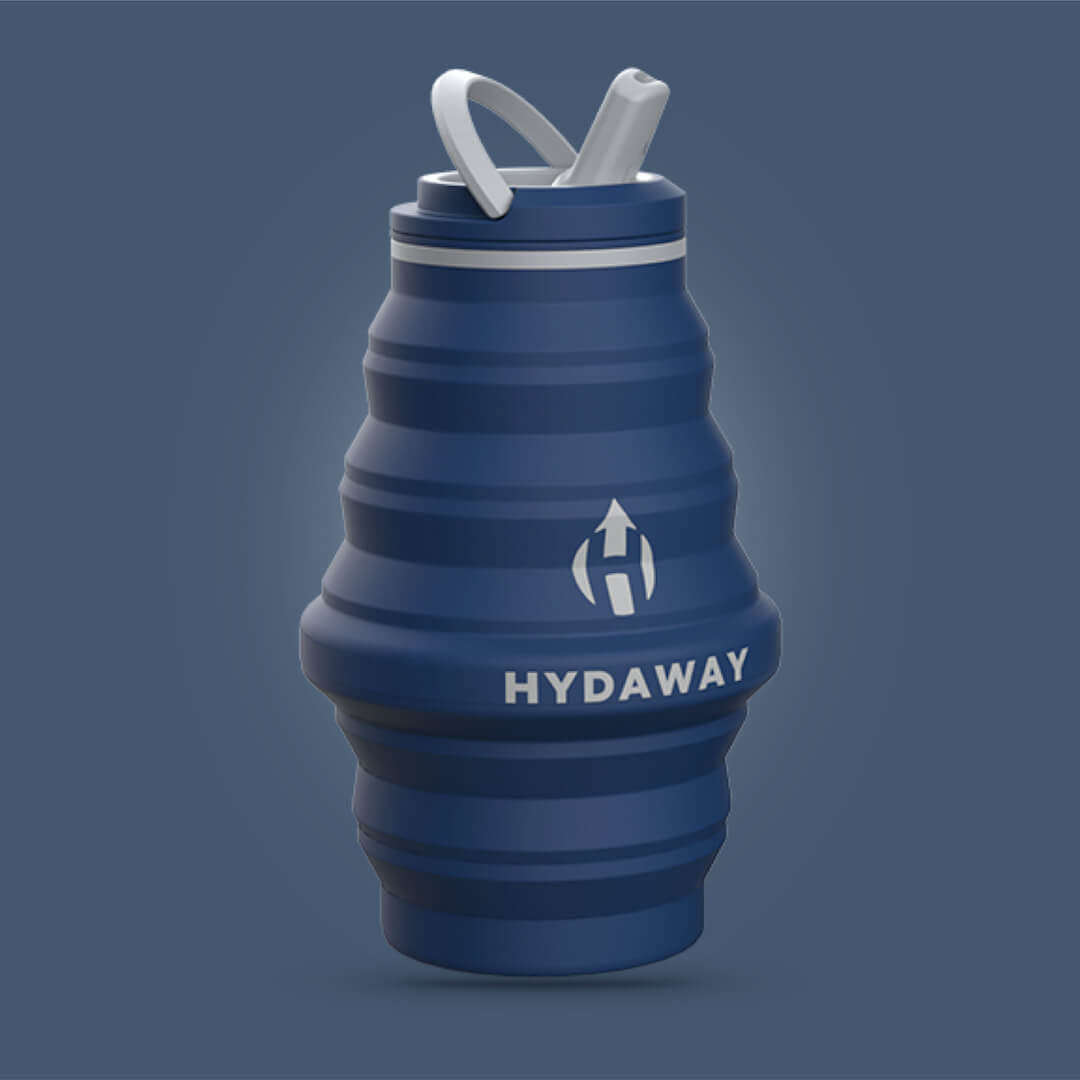
This is also where gear can make consistency easier. A HYDAWAY 25oz Collapsible Bottle lets an athlete carry a planned fluid amount during training without the bulk of a rigid bottle, then fold it down when it's empty for easier packing in a gym bag, race bag, or travel kit.
Consistency usually beats perfection. A plan you can carry and follow matters more than an ideal plan you leave in the car.
After exercise
Recovery hydration isn't just “drink until you feel okay.” Rehydration quality depends on replacing both fluid and sodium when losses are meaningful, especially if the turnaround to the next session is short.
According to the Gatorade Sports Science Institute hydration assessment guidance, when rapid recovery is needed, especially with less than 24 hours before the next session, athletes should aim to drink about 1.2 to 1.5 L for each 1 kg of body mass lost, using a sodium-containing beverage. The sodium helps retain more of the fluid you drink.
That's a key distinction. Water alone may not restore you efficiently when you need to be ready again soon.
Build a repeatable routine
Your timeline doesn't need to be complicated. It needs to be repeatable.
Try this structure in plain language:
- Pre: Start drinking early enough that you arrive ready.
- During: Match intake as closely as practical to your usual sweat losses.
- Post: Replace measured losses with fluids and include sodium when recovery speed matters.
Athletes who do this well usually remove small points of friction. They pre-fill bottles. They know whether they'll need water or a sodium-containing drink. They pack for the session they're doing, not the one they vaguely planned in their head.
That's why hydration for athletes works best when it's tied to routine, not motivation.
Adapting for Different Sports and Conditions
A hydration plan that works for one workout can fail badly in a different setting. Heat changes sweat losses. Altitude changes how easily you dry out. The sport itself matters too. Continuous effort creates different opportunities than stop-and-go play.
The NATA guidance for young athletes emphasizes a point many public guides skip: athletes need regular access to fluids, and longer, more intense, or repeated same-day sessions may require electrolyte support. The broader lesson applies well beyond youth sport. Conditions change the plan.
Three common scenarios
Marathon runner in the heat
This athlete usually deals with sustained sweat loss and fewer chances to improvise. Heat raises the cost of a missed drinking window. A runner in these conditions needs a plan for carrying fluid, refilling, and deciding whether sodium support belongs in the bottle.
Soccer player in cool weather Cool air can hide fluid loss because the session may feel less oppressive even when the athlete is still sweating. The game also includes natural breaks, which can help. But if the athlete assumes cool conditions mean hydration doesn't matter, they can gradually fall behind.
Hiker at altitude
Altitude adds its own challenge because fluid needs can rise even when temperatures are low. People often underestimate this because they don't feel hot. Travel, dry air, and longer outing times make planning more important, not less.
What should change
Don't ask whether your hydration plan is “good.” Ask whether it fits today's demand.
Adjust these variables:
- Environment: Heat, dryness, wind, cold, and altitude all change how fluid losses show up.
- Sport structure: Continuous movement needs a different carry strategy than sports with benches or formal breaks.
- Session density: Back-to-back practices or competition rounds raise the value of faster recovery.
- Access: If fluids won't be easy to get mid-session, you need to solve that before you start.
If you want more sport-specific ideas for endurance sessions, this running hydration resource from HYDAWAY is a practical add-on.
A solid plan is flexible. The athletes who adapt fastest to weather, travel, and schedule changes usually hydrate more effectively than athletes who cling to one routine year-round.
Your Hydration Toolkit Gear Recipes and Warning Signs
The smartest hydration plan is the one you can carry out when life gets messy. Early practices, airport days, crowded sidelines, back-to-back events, and long trail days all create friction. Your toolkit should reduce that friction.
Simple ways to support hydration
You don't always need a commercial drink. For some sessions, a homemade option can work well.
- Light electrolyte mix: Water with a small amount of sodium from everyday foods or a simple electrolyte product can make more sense than plain water when you've had a sweaty session and need to keep drinking afterward.
- Recovery pairing: A sodium-containing beverage plus a normal meal or snack is often more practical than chasing perfect drink formulas.
The point isn't to make hydration complicated. It's to remember that recovery fluids and food often work better together than either one alone.
Gear that removes excuses
Athletes usually fail hydration plans for practical reasons. The bottle is too bulky. It leaks in the bag. It's annoying to carry when empty. They forget to pack it after washing it. A simple setup solves more problems than a complicated one.
A few useful categories:
- Portable bottle: Helpful for runs, gym sessions, and travel days when space matters.
- Insulated container: Useful when you want fluids or recovery food to stay at a better temperature.
- Pack system: Important when you need your hydration setup to move with the rest of your gear.
If you're building a more portable setup for training, hiking, or race travel, this outdoor hydration pack guide offers ideas for organizing gear around real movement instead of just storage.
Know the warning signs
Performance matters, but safety matters first. Watch for signs that your plan needs attention.
Possible dehydration warning signs
- Rising effort: The workout feels harder than expected early.
- Dry mouth or strong thirst: A basic sign, but still useful.
- Heavy fatigue: More than the session should explain.
- Reduced focus: You feel mentally dull or slow to react.
Possible overhydration or fluid imbalance warning signs
- Bloating: You keep drinking but don't feel better.
- Nausea: Especially concerning if paired with heavy fluid intake.
- Headache or unusual confusion: A sign to stop guessing and get help.
- Swelling or a sloshy feeling: Can suggest intake is outpacing what your body can handle well.
If symptoms feel severe, unusual, or fast-moving, stop the session and seek medical help. Don't try to “tough out” a hydration problem.
Hydration for athletes works best when science, routine, and logistics all line up. Measure your sweat rate. Match the plan to the conditions. Carry what you need in a way you'll use. That's how hydration stops being vague advice and becomes part of your performance system.
If you want packable gear that fits real training, travel, and everyday movement, take a look at HYDAWAY. Its collapsible bottles and portable drinkware are built for people who need hydration tools that take up less space and are easier to keep with them, whether they're heading to practice, the airport, or the trail.