

Your Guide to Water Containers With Filters for Any Adventure

When you picture a water filter, what comes to mind? Maybe a rugged explorer, deep in the backcountry, carefully filtering water from a rushing stream. That image isn't wrong, but these days, it’s definitely incomplete.
Water containers with filters have moved far beyond the world of survival gear and into the hands of everyday travelers, hikers, and even health-conscious commuters.
Why Filtered Water Is No Longer Just for Survivalists
Having a reliable filter bottle isn't just about surviving in the wild anymore; it's about thriving in the modern world. It’s a smart, practical choice for anyone who’s on the move.
The big shift comes from a few places: we want our water to taste better, we’re committed to ditching single-use plastic, and we love the peace of mind that comes from having a trusted water source no matter where our day takes us.
The Modern Need for Clean Water
The proof is in the numbers. The global market for water bottles with filters is expected to jump by a massive USD 514.54 million between 2026 and 2030. It’s a clear signal that we're all paying more attention to what we drink, with North America leading the charge. You can explore more data on this significant market shift if you're curious.
This trend solves a lot of real-world headaches:
- For the Traveler: Imagine you’ve just landed in Lisbon for a weekend trip. Instead of spending 2€ on a plastic bottle of water, you confidently walk to the airport water fountain and fill up your filtered HYDAWAY bottle, knowing it's safe to drink. No more late-night hunts for expensive, single-use bottled water.
- For the Hiker: You're planning a day hike in a national park. Instead of hauling a heavy, full water bladder, you carry a lightweight filter and an empty HYDAWAY bottle. You can start with just enough water and top up from a designated stream along the way, keeping your pack light and comfortable.
- For the Daily Commuter: The tap water at your co-working space has that funky chlorine taste. A simple filter in your water bottle makes a world of difference, helping you effortlessly hit your daily hydration goals because your water actually tastes good.
The real benefit is simple: control. You get to control the quality of your water, your impact on the planet, and your budget—no matter where you are.
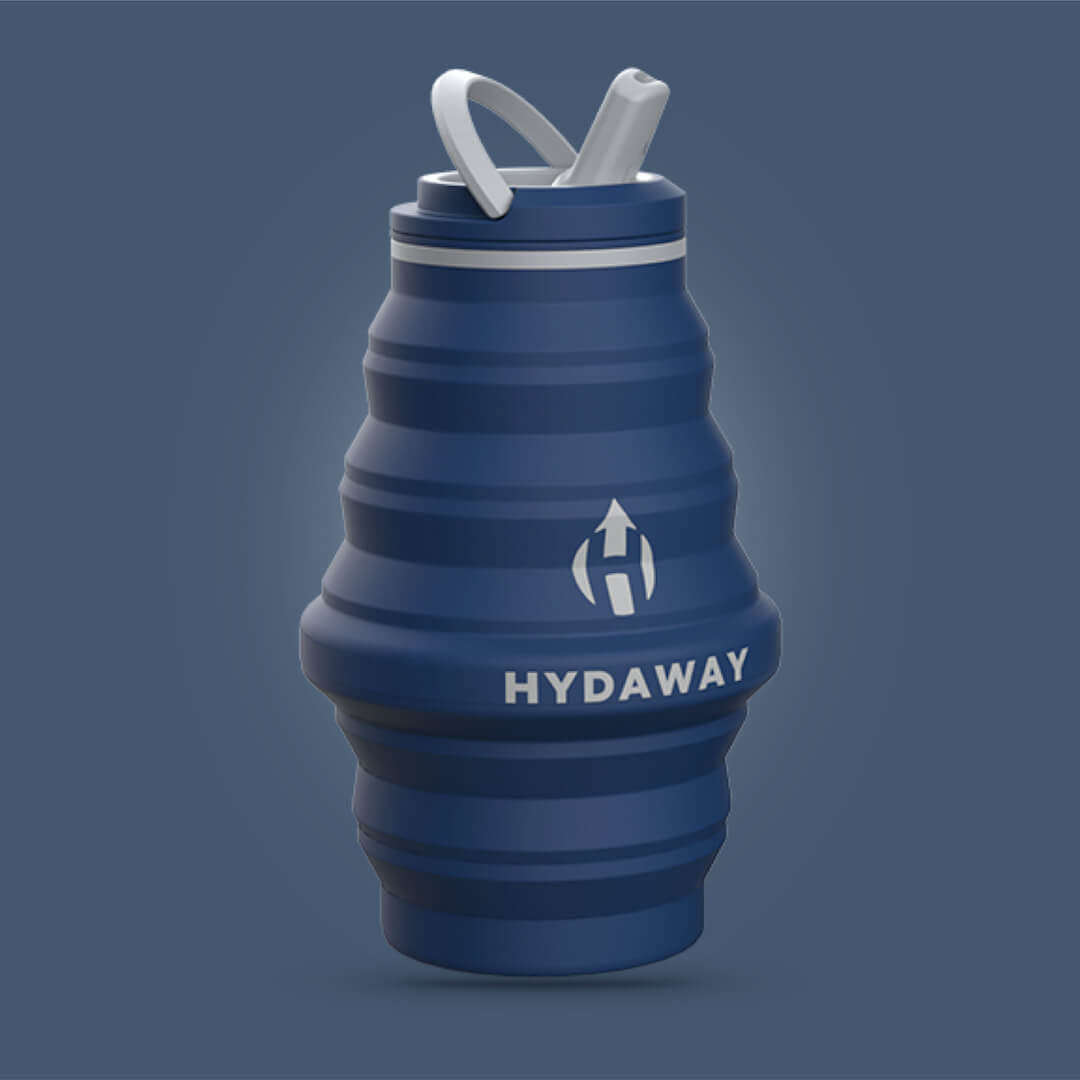
This new wave of smart hydration is a perfect match for HYDAWAY’s philosophy. Our ultra-packable, collapsible bottles are designed for people on the move. When you pair one with a compatible filter, your HYDAWAY bottle becomes a complete, space-saving hydration system that fits right in your pocket, ready for any adventure or just your daily routine.
How Different Water Filters Actually Work
Ever stare at a wall of water filters and feel completely lost? We get it. Picking the right one feels a lot less intimidating once you know what’s actually happening inside that little device.
Let’s pull back the curtain on the most common filter technologies. Think of each one as a unique tool built for a specific job. Some are masters at making city tap water taste fresh and clean, while others are heavy-duty protectors designed for a backcountry stream.
Activated Carbon: The Flavor Purifier
Imagine a tiny, super-powered sponge. That's basically an activated carbon filter. The carbon is specially treated to create millions of microscopic pores, giving it a massive surface area. As water flows through, this surface acts like a magnet, grabbing and holding onto things like chlorine and other chemicals that make water taste and smell funky.
This is exactly why carbon filters are so perfect for everyday use. If you fill your HYDAWAY bottle at the gym and notice a hint of "swimming pool" taste, an activated carbon filter solves that problem instantly. Just remember, its main job is taste and odor—it’s not built to remove bacteria or viruses, so you wouldn’t want to rely on it alone for untreated water.
Hollow-Fiber Membranes: The Bouncer
Now, picture a bouncer at the world’s most exclusive club. That's a hollow-fiber membrane filter. It’s essentially a bundle of microscopic straws with pores so small—often just 0.1 to 0.2 microns—that they physically block nasty stuff from getting through. We're talking bacteria like E. coli and protozoa like Giardia and Cryptosporidium.
It’s a simple, physical barrier. For a hiker, this means they can fill their HYDAWAY bottle from a clear-running mountain stream, screw on a hollow-fiber filter, and drink with confidence. This makes these filters an absolute game-changer for hikers, backpackers, and anyone drinking from rivers or lakes. It’s no wonder this technology is a core feature in many of the best water filtration bottles for hikers looking to keep their packs light.
Ultraviolet (UV) Purifiers: The Digital Assassin
UV purifiers are the high-tech assassins of the water world. Instead of catching contaminants, they zap them with a specific wavelength of ultraviolet light. This scrambles the DNA of microorganisms like bacteria, protozoa, and—most importantly—viruses, neutralizing them on the spot.
This is a fantastic tool for international travel where viral contamination in tap water can be a real concern. A traveler with a HYDAWAY bottle in Southeast Asia can simply fill up from the tap, use a pen-style UV purifier, and have safe, drinkable water in about 90 seconds. The one catch? UV doesn’t remove dirt, chemicals, or bad tastes, so it’s best used with water that’s already visually clear.
This concept map shows how different filters fit into the lives of travelers, hikers, and even daily commuters.

It’s a great reminder that while everyone needs clean water, the right solution really depends on where your adventures take you.
Ion-Exchange: The Chemical Specialist
Last but not least, we have ion-exchange filters. These are the chemical specialists, working like tiny trading posts. The filter is filled with resin beads that hold onto harmless ions (like sodium). When water containing heavy metals like lead or mercury flows past, the filter "trades" its safe ions for the harmful ones, effectively pulling them out of your water.
They are incredibly effective at targeting specific chemical contaminants, but you don't see them as often in portable filters because their capacity is limited. They're more common in home filtration systems where heavy metal contamination is a known issue.
To make it even simpler, here’s a quick-glance table comparing these technologies.
Comparing Common Water Filtration Technologies
| Technology Type | Removes | Best For | Pros | Cons |
|---|---|---|---|---|
| Activated Carbon | Chlorine, pesticides, VOCs, bad tastes/odors. | Everyday tap water, improving flavor. | Inexpensive, improves taste significantly. | Doesn't remove bacteria, viruses, or heavy metals. |
| Hollow-Fiber | 99.9999% of bacteria, 99.9% of protozoa. | Hiking, backpacking, emergency preparedness. | Lightweight, long-lasting, reliable physical barrier. | Can clog with sediment; doesn't remove viruses or chemicals. |
| UV Purifier | 99.99% of viruses, bacteria, and protozoa. | International travel, treating clear water. | Fast, effective against viruses, no chemicals. | Requires batteries; doesn't work in murky water; no effect on taste. |
| Ion-Exchange | Heavy metals (lead, mercury), hardness (calcium, magnesium). | Homes with specific water quality issues. | Targets and removes harmful dissolved solids. | Limited lifespan; doesn't remove microbes. |
Each filter is a piece of a puzzle. Knowing what each piece does helps you build the perfect clean-water solution for wherever you roam.
What to Look for When Choosing Your Filter
Okay, you’ve got the rundown on the different filter technologies out there. Now for the fun part: picking the right one for your adventures. This isn't about grabbing the fanciest-looking box off the shelf. It’s about knowing how to read the specs like a seasoned pro so your filter actually comes through when you need it most.
When you boil it all down, three key details will tell you almost everything about a filter’s real-world performance: its lifespan, flow rate, and certifications. Understanding these numbers helps you cut through the marketing fluff and match a filter to how you actually travel.
Decoding Key Performance Metrics
Think of a filter’s spec sheet as its DNA. These numbers aren’t just boring details; they're a promise of what that filter can deliver when you're miles from the nearest tap.
- Filter Lifespan: This is the big one—how much water a filter can clean before it’s time for a replacement. It's usually measured in gallons or liters. A filter rated for 1,000 gallons is ideal for a long-distance thru-hiker, while one rated for 40 gallons is perfect for a business traveler who just wants to improve hotel tap water for a few trips.
- Flow Rate: Ever tried to suck water through a clogged straw? That's what a slow filter feels like. Flow rate measures how quickly water passes through, usually in liters per minute. A zippy flow rate is a lifesaver when you're parched on the trail, but sometimes speed comes at the cost of filtering out the really tiny stuff.
- Micron Size: This number tells you how big the pores in the filter are. The smaller the micron size—think 0.1 or 0.2 microns—the smaller the nasty stuff it can block. This is absolutely critical for anyone planning to filter water from natural sources, as it's your main defense against bacteria and protozoa.
A thru-hiker who’s relying on streams for water will need a filter with a tiny micron size for safety, but they’ll also want a decent flow rate so they’re not spending ages pumping water. For them, a filter that can process a liter in a minute is a total game-changer.
Choosing a filter is always a bit of a balancing act. You might trade a lightning-fast flow rate for the peace of mind that comes with a virus-proof certification. Or, for a long trip, a massive lifespan might be your top priority.
The Importance of Certifications
Certifications are your guarantee that a filter actually does what it says on the box. These aren't just a jumble of letters and numbers; they represent rigorous testing standards from independent bodies like NSF International to verify a filter’s claims.
- NSF/ANSI 42: This is all about Aesthetic Effects. If a filter has this certification, it's proven to reduce things that make water taste or smell funky, like chlorine. It’s perfect for making tap water at home or in a hotel taste crisp and clean.
- NSF/ANSI 53: Now we’re talking about Health Effects. This certifies a filter can remove specific health-related contaminants like lead, cysts (Giardia and Cryptosporidium), and certain chemicals. This is a must-have for anyone concerned about water quality beyond just the taste.
- NSF/ANSI P231: This is the gold standard for Microbiological Purifiers. A filter with this badge of honor is proven to remove viruses, bacteria, and protozoa. It makes water from sketchy sources safe to drink, period.
If you’re an international traveler heading somewhere with questionable water quality, a purifier with a P231 certification is a non-negotiable part of your kit. It gives you the confidence to fill up your HYDAWAY collapsible bottle from a hostel tap and know you’re safe from viruses. That’s how your bottle becomes a powerful, go-anywhere purification system.
Finding the Right Filter System for Your Life

There’s no single "best" water filter out there. The best one is the one that actually fits into your life without a fuss. The high-powered purifier a backcountry hiker swears by would be total overkill for your office, while a travel-focused filter is an absolute must-have for any globetrotter.
Let's walk through how different water containers with filters really shine in the real world. This is all about finding a setup that solves an actual problem for you—whether that’s saving a bunch of money, ditching single-use plastics, or just making your water taste a whole lot better.
For the Adventure Traveler
Picture this: you're navigating a chaotic train station in a brand-new country. Instead of stressing about finding (and paying for) bottled water, you just walk up to a public tap and confidently fill your HYDAWAY collapsible bottle. With a compatible screw-on purifier attached, you’ve got safe, clean water in seconds.
This kind of setup is a true game-changer for anyone traveling abroad. It gives you:
- Total Peace of Mind: You can trust the water from hostels, airport fountains, and public taps.
- Serious Cost Savings: Think of all the money you'll save by not constantly buying plastic water bottles. It adds up fast!
- A Smaller Footprint: You get to stay hydrated while producing zero plastic waste.
A lightweight, packable system like a HYDAWAY bottle paired with a filter gives you the freedom to just explore without having to constantly worry about water. It practically disappears into your carry-on, but it's a lifeline of clean water wherever your travels take you.
For the Weekend Hiker and Camper
Out on the trail, every single ounce in your pack matters. Lugging gallons of water from the trailhead is just heavy and inefficient. The smart hiker carries a lightweight filter and a versatile bottle, treating water from streams and lakes along their route.
A HYDAWAY collapsible bottle is the perfect trail companion. It flattens down to a slim, one-inch disc, taking up almost no space until you need it. When you hit a water source, you just expand it, fill it up, and filter. This combo means you can carry way less weight and hike much farther. It's the ideal setup for that weekend camping trip you've been planning.
For hikers and campers, it’s all about efficiency. A packable bottle and filter combo gives you clean water on demand, letting you shed weight and truly live by the ‘carry less, explore more’ mantra.
For the Digital Nomad and Daily Commuter
Your life might not involve remote mountain streams, but that doesn't mean your water is always perfect. For a digital nomad bouncing between cities like Mexico City and Bangkok, a portable filter ensures the water from any apartment or co-working space is clean and tastes great.
Even for the daily commuter, a simple carbon filter can be a huge upgrade. If your office tap water has that strong "pool water" chlorine taste, it can make staying hydrated feel like a chore. Filtering it in your HYDAWAY bottle makes your water so much more enjoyable to sip on throughout the day. It’s a tiny change that can make a big difference in a healthy habit. Plus, it looks great on a desk and stashes easily in your bag for the commute home.
Building Your Ultimate Portable Hydration Kit with HYDAWAY

Ask any experienced traveler, and they’ll tell you the same thing: the best gear is the gear you actually have with you. It’s one thing to own a fancy filter, but it’s another to have it on hand when you actually need it. This is where creating a powerful, go-anywhere hydration system really starts—with a bottle that’s built for portability from the ground up.
And that’s where our HYDAWAY collapsible bottles really come into their own. They’re the perfect foundation for an ultra-light, space-saving kit.
A HYDAWAY bottle squishes down to just over an inch thick. That means you can slip it into a pocket, a purse, or a carry-on that’s already packed to the gills. Pair that with a compact, screw-on filter, and you’ve just created a complete water purification setup that takes up almost no space at all.
It's no surprise that people want smaller, more convenient gear. The water bottle market is projected to hit USD 18.4 billion by 2035, with the most popular category being bottles under 500 milliliters. It just goes to show that the demand for compact, easy-to-carry solutions is huge.
Creating Your Custom System
Putting your kit together couldn't be simpler. Our 17oz and 25oz HYDAWAY bottles work with many popular screw-on filters, letting you build a versatile system in seconds. This mix-and-match approach means you can pick the perfect filter for your trip, whether it’s a basic carbon filter for better-tasting tap water in a new city or a full-blown purifier for sketchy backcountry streams.
This combination is the very definition of 'carry less, explore more.' You get top-tier performance without sacrificing an inch of precious bag space. It’s for the modern adventurer who puts a premium on efficiency and minimalism.
A HYDAWAY bottle paired with a compact filter isn't just a container; it's a strategy. Think of it as an adaptable, pocket-sized system that guarantees you have safe, clean water whenever and wherever you need it.
As you put together your hydration kit, it's a smart idea to label your gear so you can easily tell it apart. Using durable waterproof labels for water bottles helps you keep track of your filtered container, especially when you have a few bottles on the go.
This simple, effective combo is what makes a reusable filter system so practical for real-world use. You can read more on how a water filter can benefit your reusable bottle and your adventures. It’s all about creating a reliable solution that just fits your life.
Caring for Your Filter and Bottle
Think of your filter as the heart of your whole clean water setup. Just like any other piece of high-performance gear in your pack, it needs a little TLC to keep it working perfectly trip after trip. Taking a few minutes for maintenance not only makes your filter last longer but guarantees every sip you take is as safe and pure as it should be.
A little upkeep goes a long way. For many of the hollow-fiber filters out there, the secret weapon is a simple technique called backflushing. This just means forcing clean water backward through the filter, and it's a game-changer for dislodging all the gunk and sediment that can build up. You’ll be amazed at how it can bring a sluggish filter right back to life.
Proper Cleaning and Storage
Once you're back from an adventure, getting your filter completely dry is the most important thing you can do. If you store it while it's still damp, you're just asking for mold and mildew to set up shop, which can ruin the filter for good. Just give it a quick backflush with clean tap water, shake out the excess, and let it air dry completely before you pack it away.
Of course, the bottle needs to be clean, too! We made sure that part is as easy as possible. All our collapsible bottles are top-rack dishwasher safe, so you can get your container squeaky clean and ready for the next outing without any fuss.
A filter's performance is only as good as its last cleaning. Consistent, simple maintenance habits protect your investment and guarantee your water is always safe to drink.
Beyond the filter, knowing how to care for the bottle itself is key to making your gear last. You can learn how to clean stainless steel water bottles like an absolute pro to keep them hygienic and in great shape for years. It’s all part of our commitment to creating gear that’s built to last.
Your Filtered Water Bottle Questions, Answered
Alright, let's tackle some of the common questions we hear. When you're out there depending on your gear, you want answers, not guesswork. We've got you covered.
Can I Really Drink from a River with a Filtered Bottle?
This is a big one, and the answer is: it depends entirely on the filter. Think of it this way: the basic carbon filter in your fridge pitcher is great for making city tap water taste crisp and clean, but you wouldn't trust it with a scoop of river water. It’s just not built for that.
To safely drink from a stream, lake, or river, you need something much more powerful. Look for a filter that's specifically labeled as a 'purifier' or one that clearly states it removes bacteria and protozoa. For the ultimate peace of mind, find one that also tackles viruses. Always, always check the specs and look for certifications like NSF P231 before you head into the wild.
So, How Do I Know When It's Time to Replace My Filter?
Your filter will tell you! Most are rated for a certain amount of water, like 40 gallons or 1,000 liters. For a hollow-fiber filter, the most obvious sign is a slowdown. If the water is barely trickling out and a good backflush doesn't fix it, the filter's microscopic pores are permanently clogged. It's done its job.
With a carbon filter, your own senses are the best guide. The moment you start tasting or smelling that familiar hint of chlorine from a tap, you know the carbon is saturated and it's time for a fresh one. Don't ever push a filter past its recommended lifespan—your health isn't worth the risk.
Can I Filter Juice or Hot Tea in My Bottle?
That’s a definite no-go. Only ever run cool, plain water through the filter unit itself. Sugary drinks, electrolyte powders, coffee, or hot liquids will ruin the delicate filter media. They can cause impossible-to-clean clogs and even lead to mold growth.
The right way to do it is simple: filter your water first. Then, just pop the filter unit out of your HYDAWAY bottle and add your drink mix, tea bag, or flavor drops. The bottle can handle it just fine, but the filter is a water-only piece of gear.
Ready to build your ultimate portable hydration system? HYDAWAY makes award-winning collapsible bottles that are the perfect foundation for a space-saving, go-anywhere water filtration kit.