


Mastering Ultralight Backpacking Fishing Gear: 2026 Guide

You're probably here because you've had the same moment a lot of hikers have had. You reach a lake or stream that's obviously holding fish, you've got time before camp, and all you can do is watch the water because carrying a full fishing setup never made sense.
That's exactly where ultralight backpacking fishing gear earns its place. The point isn't to turn your pack into a tackle shop. The point is to carry just enough fishing capability that the gear disappears into your broader backpacking system until you need it.
The common mistake is thinking one needs to choose between “real fishing gear” and a novelty setup that won't work. In the backcountry, the better question is simpler. What is the lightest system that still matches your skill level, the water you'll fish, and the way you travel?
From Hiker to Angler The Ultralight Mentality
You hike six miles into a lake, drop your pack, and watch fish rise in the evening light. If your fishing kit feels like a separate sport you had to haul in, you packed the wrong kit.
The ultralight mentality changes the job. Backpacking gear and fishing gear have to work under the same rules: low bulk, low redundancy, and clear purpose. A rod, reel, line, and small tackle selection only belong in the pack if they earn their space against food, insulation, rain gear, and water treatment.
That shift matters because backcountry fishing is rarely about maximizing options. It is about carrying enough capability to fish well in the water you will see. The angler who packs for every possibility usually ends up with too much weight and still misses the simple questions that matter more. Are you fishing a lake or a creek? Are you trying to catch dinner or just spend an hour casting at camp? Do local regulations allow bait, treble hooks, or harvest at all? Those choices shape the kit long before brand names do.
What the ultralight mindset changes
A roadside angler can solve uncertainty by throwing extra gear in the truck. A backpack angler has to solve uncertainty with better decisions.
That starts with restraint.
- Choose the fishery before the gear. Small streams, alpine lakes, and mixed routes each reward different rods, presentations, and line choices.
- Match the kit to your actual skill. Many beginners fish better with a simple spinning setup than with a stripped-down fly kit. A handline saves the most weight, but it also asks for better positioning, better fish handling, and more patience than many hikers expect.
- Treat regulations and food plans as gear decisions. If the water has bait restrictions, catch-and-release rules, or contamination advisories, that affects what you should carry and whether keeping fish even makes sense.
- Accept the role of the fishing kit. On most trips, fishing supports the trip. It should not force a larger pack, fragile exterior storage, or a pile of single-use accessories.
The practical rule is simple. If an item only helps in one narrow scenario and you cannot justify carrying it all day, leave it home.
I have seen the same pattern for years. The gear that fails in the backcountry is often not the cheapest gear. It is the gear packed without a clear use case. Oversized tackle boxes, heavy rod tubes, lip grippers, spare spools, and piles of lures look reasonable on a garage floor. They turn into dead weight by the second climb.
Good ultralight fishing gear works like the rest of a disciplined hiking kit. It stays compact, protected, and easy to reach. HYDAWAY touches on the same system-first approach in its ultralight camping gear list for reducing bulk and redundancy. The fishing version follows the same logic. Carry less, but make each piece do real work.
A fundamental mindset shift is from ownership to function. Stop asking what a backpacking angler is supposed to carry. Ask what your trip demands, what your skill can support, and what happens after you catch a fish. That last part gets ignored too often. Harvest only matters if you can clean fish legally, handle them safely, and cook or store them without creating a food problem in camp. A lighter kit starts with fewer things, but it also starts with better judgment.
Rethinking Your Gear Component Tradeoffs and Weight Targets
A fishing kit usually gets too heavy one rational decision at a time. You add a sturdier rod case because the rod feels delicate. Then a larger pouch because the reel does not fit cleanly. Then extra lures because the water is unknown. By the time the pack is loaded, the problem is no longer one item. It is a chain reaction.

Set limits before choosing gear. The best target is not a magic number on a spreadsheet. It is a kit small and light enough that your pack still carries like a hiking pack, not a fishing pack. If the rod has to live outside in brush, if the tackle box creates a hard lump against your back, or if the whole system changes how you pack food and layers, the kit is oversized for the trip.
That standard also keeps skill level in the picture. A compact setup only works if you can fish it efficiently. A beginner with one lure they know how to fish will often do better than an experienced gear collector carrying six lure types they barely use.
Rod and reel decisions that matter
Start with the water, not the catalog.
Brushy creeks, pocket water, and short access windows favor short packable rods that deploy fast and stow without drama. Alpine lakes and open shorelines give longer rods more room to pay off. The trade-off is simple. More casting range and line control usually mean more bulk, more fragility, and more attention during the hike.
Reels are where many backpacking kits get bloated. A reel should balance the rod and hold the line you need for the fish and structure you expect. Bigger reels add weight fast, and on small-water trips they rarely solve a real problem. They just make the whole system heavier and harder to pack.
I keep coming back to one rule. If a rod and reel combo needs its own special packing strategy, it had better earn that inconvenience with the kind of water you will fish every day of the trip.
Line and terminal tackle
Line choice is less about maximum strength than control, visibility, and the size of fish you can realistically land in that water. Backpacking anglers often overline compact setups because heavier line feels safer in the hand. In clear streams, that can cost strikes. On tiny reels, it also reduces capacity and makes the setup feel coarse.
A narrow tackle plan keeps the whole kit honest. Carry enough to adapt, not enough to second-guess yourself at every pool.
- One primary presentation: a small spoon, spinner, jig, or fly pattern you already trust
- One backup option: something that covers a different depth or action
- A small handful of terminal pieces: hooks, jig heads, split shot, or swivels based on your system
- One cutting tool and one fish-handling tool: nippers, scissors, forceps, or compact pliers
That is enough for most backcountry fishing.
The same thinking applies outside the fishing pouch. If your water treatment, cook kit, and food storage are already dialed, it is much easier to see what fishing gear the trip can support. Harvest plans matter here too. If you might keep fish, leave room in the system for legal cleaning, clean hands, and safe food handling, not just for catching gear. A quick read on ultralight water filter options for compact backcountry systems fits this part of the planning process because water treatment and fish handling often overlap at the same shoreline.
Weight targets work better when they are tied to trip type.
For a casual hiker who wants the option to fish, the target is a kit that disappears into the pack until a good stream shows up. For a skilled angler building a fishing-forward route, the target can be slightly higher, but every added piece should answer a specific need such as wind, lake depth, larger fish, or stricter regulations on bait and tackle. If you cannot explain why an item is there before the trip starts, it probably should not come.
A quick visual can help if you're sorting through rod and tackle form factors:
Building Your Kit Three Minimalist Setups for Every Angler
You hike six miles into a basin, hit the lake at dusk, and realize the rod you brought solves the wrong problem. It casts well in the yard, but not into a crosswind with a pack still on your back and a steep shoreline at your heels. That is why kit choice matters more than shaving one more gram off the handle.

The right setup depends on three things. What water you will fish, how skilled you are with that style, and whether the trip is catch-and-release or includes legal harvest. Regulations and food handling change what belongs in the kit just as much as rod type does. A fly-only stream, bait restriction, or plan to keep fish can push you toward a different setup fast.
Tenkara for small moving water
Tenkara earns its place on tight streams where fish sit close, drifts matter, and backcasts are a nuisance. In that setting, it is hard to beat. The rod is light, the system is clean, and setup is quick enough that you fish more and fuss less.
It also gets oversold.
Tenkara is simple in hardware, not always simple in execution. Anglers who already know how to manage current seams and approach small water with stealth usually do well with it. Beginners sometimes struggle because fixed-line fishing exposes bad positioning and poor line control right away.
Choose tenkara if your route points to:
- small creeks
- pocket water
- alpine inlets and outlets
- brushy banks where a reel adds more trouble than value
Leave it home if the trip is likely to involve:
- open lakes
- afternoon wind
- deeper water that demands sink time or longer reach
- regulations that steer you toward lure styles tenkara does not handle well
A tenkara kit also assumes restraint. A few proven flies, tippet in the sizes you use, floatant if needed, hemostats, and nippers are enough. Start adding fly boxes for every hatch you might see and the whole point disappears.
Ultralight spinning for the broadest range
For many backpackers, ultralight spinning is the most practical choice. It covers the most water types, handles a wider range of angler skill levels, and usually gives the best odds of catching fish on an unfamiliar trip.
That flexibility has a cost. Spinning kits are easier to overbuild than any other backcountry setup.
A small reel, a compact rod, a short selection of lures, and line matched to the fish and cover are plenty. Most failures come from packing as if the trip were a full day on the local lake. You do not need a tray full of duplicates, oversized hardware, or three ways to fish the same depth band. You need a system that can throw a spinner in moving water, a tiny jig in a lake, and maybe one soft plastic if local rules allow it.
Use spinning gear when:
- you expect a mix of lakes and streams
- you want the shortest learning curve
- you need better performance in wind
- your route involves shorelines where fish may hold farther out
It is less appealing when:
- brush is so tight that casting room barely exists
- total pack volume matters more than fishing comfort
- the trip is built around close-range dry-fly style presentations
For hikers still balancing the rest of their load, a solid backpacking gear list for ultralight travel proves beneficial. A spinning kit makes sense only if it stays in proportion to shelter, insulation, food, and water treatment.
Handline for the smallest possible kit
A handline is what I carry only when fishing is secondary and pack space is under real pressure. It weighs almost nothing, disappears into a corner of the pack, and can still catch fish in the right conditions.
It is also the least forgiving option here.
Without a rod, you lose casting ease, fish-fighting control, and some reach. You make up for that with stealth, better positioning, and lower expectations. That trade can be worth it on trips where the main goal is hiking, scouting, or hunting, and fishing is a bonus. Anglers already trimming every category of gear often use the same mindset they apply to critical gear for backcountry hunting. Carry what solves a real field problem, not what looks good spread out on the floor before the trip.
A handline works best when:
- fish cruise close to shore
- you are comfortable improvising presentations
- the kit is a backup or opportunistic option
- you do not want another fragile item in the pack
Skip it if:
- you are new to fishing
- the water requires repeated accurate casts
- fish are consistently beyond easy reach
- you want the highest odds of success instead of the lowest carried weight
Ultralight Fishing Kit Comparison
| Kit Type | Best For | Typical Weight | Pros | Cons |
|---|---|---|---|---|
| Tenkara | Small streams and technical presentations | Very light | Compact, clean setup, strong close-range control | Narrower use, more demanding tactically than it looks |
| Ultralight spinning | Mixed trips, beginners, lakes plus streams | Light to moderate | Most adaptable, handles wind better, easier for many anglers | More parts, easier to overpack |
| Handline | Minimalist hikers, backup fishing option, tiny kits | Minimal | Lowest bulk, disappears in the pack | Limited reach, harder to fish well, less comfortable |
If you are unsure, start with spinning gear. It gives the widest margin for error and handles the biggest mix of real backcountry conditions.
If your route is dominated by small current and you already know how to read water, tenkara trims bulk without giving up effectiveness. If fishing is only a side mission, a handline can be enough. The best kit is the one that matches the trip, fits your actual skill level, and still leaves room for the boring things that matter later, like legal tackle, clean fish handling, and dinner that stays safe to eat.
Packing Smart How to Integrate Your Kit Seamlessly
You reach camp, drop your pack, and see fish dimpling the lake twenty yards from shore. That is when bad packing shows up. The rod tip is buried under your quilt, the reel is full of grit from a side pocket, and the tackle tin has vanished into the bottom of the pack. A light kit only helps if you can deploy it fast and put it away without creating a mess.
Packing well starts with one rule. Fishing gear cannot take over a hiking pack. If it forces you to reshuffle shelter, food, insulation, and water storage every time you stop, the setup is wrong no matter how light it looks on a scale.
Pack the rod like a breakable load-bearing item
Rods fail in transit more often than in fish fights. Carbon tips do not care that the rod was expensive or marketed as trail friendly. They break when they get pinched, bent across a bear can, or slapped against rock all day.
Pack multi-piece rods inside the pack next to tent poles or along the back panel where the load stays straight. Telescopic rods save space, but many are more vulnerable when lashed outside because they rattle loose and take repeated hits from brush and stone. Reels belong inside the pack unless you are actively fishing. Grit in the drag and bent handles are common, and both are avoidable.
If a rod must ride outside, immobilize it at two points and cap the tip. Loose attachment is what kills gear.
If you carry a crossover load for scouting, hunting, or mixed backcountry trips, the packing logic is similar to other specialized systems. The gear has to live alongside food, layers, and shelter without causing friction, which is a point that also shows up in planning for critical gear for backcountry hunting.
Give the small items one home
Small tackle creates most of the daily frustration. Hooks end up in repair kits. Split shot disappears into pack seams. Soft plastics get crushed and leave residue on clothing or food bags if you toss them in loose.
Use one container for terminal tackle and keep it in the same spot every day. A tiny hard box works well for lures and hooks. A zip pouch works if you fish simple rigs and do not mind a little sorting. I have used both. The deciding factor is not style. It is whether you can reach for it half tired at dusk and know exactly what is inside.
The lightest kit still loses value if you spend ten minutes hunting for one hook.

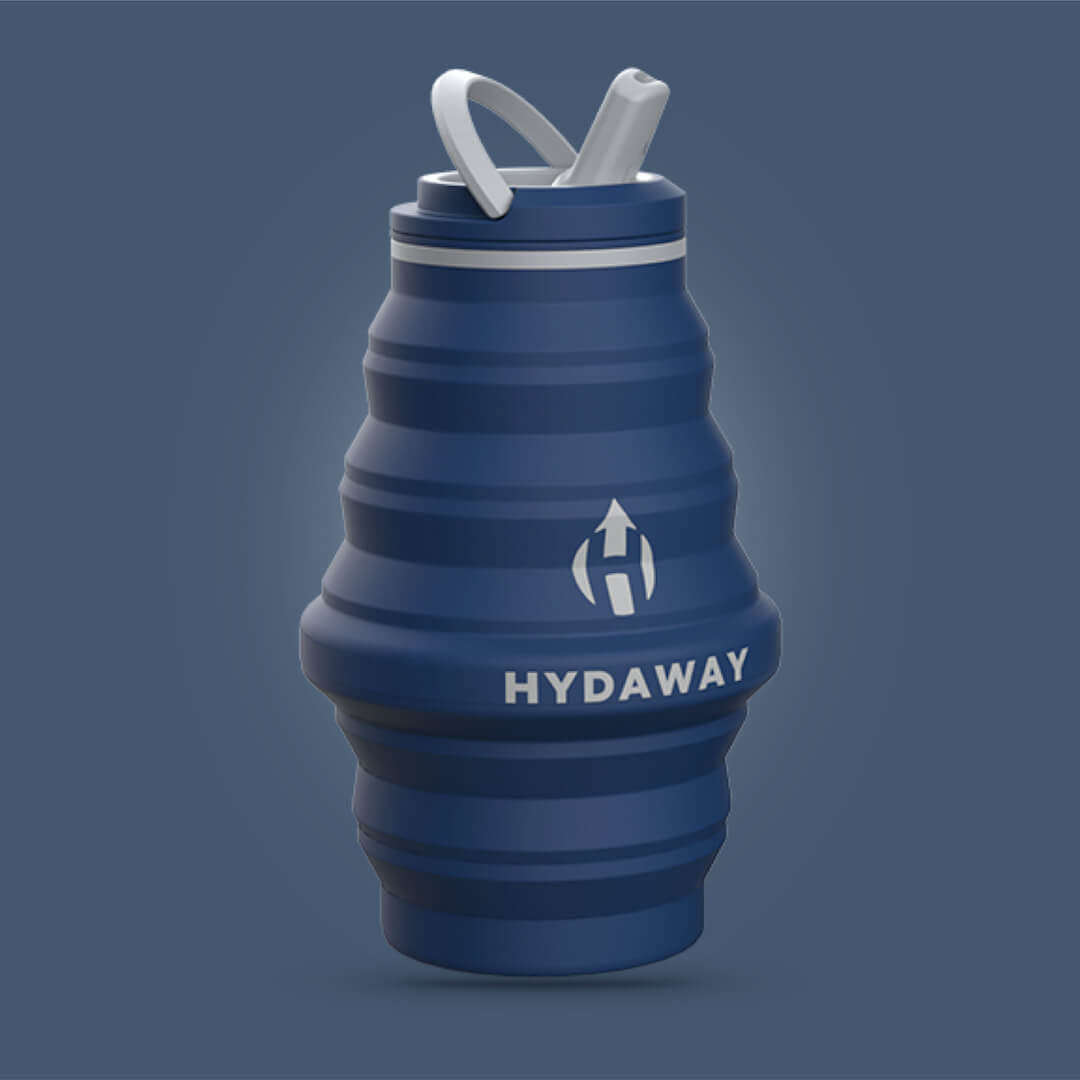
A collapsible item can also help the pack hold its shape better. A HYDAWAY 25oz Collapsible Bottle flattens when empty, which gives that space back instead of locking you into the footprint of a rigid bottle. In practice, that can free a side pocket for a rod tube or reduce crowding in the main bag when the fishing kit comes out. That matters more than carrying one less jig head.
Pack for likely stops, not optimistic ones
Backcountry anglers often overestimate how often they will fish. Miles run long. Weather shifts. Good water appears when you are trying to make camp, not when your gear is arranged for quick access. Pack for the stops you are likely to take.
A simple layout works:
- Quick-access item: One small tackle pouch or fly box near the top of the pack.
- Protected item: Rod and reel next to structured gear or deeper inside the main bag.
- Dirty or wet item: A separate bag or outer pocket for damp line, used lures, slime, or rinsed components.
That last part matters more than many gear lists admit. Wet line and used tackle spread odor, moisture, and grime into the rest of your kit. Good packing is not just about convenience. It also sets up the next decisions. legal tackle, clean fish handling, and food storage that does not create problems later.
Beyond the Catch Regulations Safety and Leave No Trace
A lot of ultralight fishing advice gets the fun part right and skips the part that can get you in trouble. Responsible backcountry fishing starts before the first cast. Gear matters, but legality and food handling matter just as much.
That gap is real. One clear weakness in existing gear-focused coverage is that it often doesn't explain how anglers should handle species regulations, catch limits, transport rules, or sanitation in bear country and Leave No Trace contexts, as noted in this discussion of ultralight angling gaps.
What to check before the trip
Don't assume a mountain lake, park stream, or remote drainage is simple just because it's remote. Some of the most confusing fishing rules show up in exactly those places.
Check these before you leave:
- License requirements: Buy the proper fishing license and carry proof in the format your destination accepts.
- Species rules: Know what you may keep, what must be released, and whether there are seasonal closures.
- Method restrictions: Some waters limit lure types, hook styles, or bait use.
- Transport and cleaning rules: Some areas care how fish are stored or whether remains must be packed out.
A printed screenshot, offline PDF, or saved regulation page can help when you lose service. The ultralight move is not skipping admin weight. It's reducing risk through preparation.
Food safety in the backcountry
Catching a fish is one thing. Turning it into dinner safely is another.
If you plan to keep fish, think through the whole chain. Where will you clean it? How will you wash your hands and tools? What happens to scraps? What happens if the campsite is in active bear country?
A few habits matter:
- Clean away from camp traffic and sleeping areas: Don't turn the place you sleep into a food-processing zone.
- Keep your knife and surfaces controlled: Dirt and fish slime aren't a good combination.
- Manage odor immediately: Fish remains, packaging, and stained cloth all count as attractants.
Responsible angling includes what happens after the fish hits your hand.
Leave No Trace is part of the ultralight ethic
People sometimes treat Leave No Trace as separate from gear talk. It isn't. Carrying less only counts as good style if your choices also reduce mess, impact, and temptation to cut corners.
That means thinking beyond the catch itself. If you release fish, do it quickly and with minimal handling. If you keep fish, have a disposal or pack-out plan that matches the local rules. If a site can't absorb fish cleaning responsibly, don't process a meal there.
Ultralight backpacking fishing gear should make you more mobile and more deliberate, not sloppier. The cleanest kit is the one that keeps your decisions disciplined.
Field Care and Your Printable Ultralight Fishing Checklist
You reach camp, peel off the pack, and find your leader wrapped around a damp fly box in the side pocket. The rod tip is fine, but the line has a rough spot from brushing rocks all afternoon. Nothing is broken yet. This is the stage where small problems get fixed in two minutes, or turn into lost fish the next morning.
Field care matters more with ultralight kits because there is no backup reel, no spare rod section, and usually no room for duplicates. The goal is not a fussy maintenance routine. The goal is to keep a very small system fishing well for the whole trip.
Five habits that keep small gear working

A good field routine is short enough that you will do it when you are tired, cold, or trying to cook before dark.
- Inspect line first: Run the first few feet through your fingers. If it feels nicked, frayed, or flattened, cut it back. Line failure is one of the few problems you can usually catch before it costs you a fish.
- Dry the pieces that trap moisture: Leaders, tippet, flies, soft wallets, and any pouch with foam or fabric can stay wet longer than you think. Packed wet for days, they start corroding, tangling, or smelling.
- Check guides, ferrules, and tip sections: Ultralight rods fish hard for their weight. A little grit in a ferrule or a cracked guide insert can chew through line fast.
- Wipe down reels, pliers, and knives: A full rinse is not always realistic in camp. A quick wipe after sand, mud, or silty water is usually enough to prevent the worst wear.
- Put every small item back in the same place: Hooks, split shot, micro swivels, and fly patches disappear when they do not have a fixed home. Good organization saves more time than shaving another few grams.
This is also where honest kit discipline shows up. A lot of anglers carry accessories they use once a season. On backpacking trips, the better move is usually a tight, trip-specific setup: one rod system, one small tackle module, one cutting tool, and only the line and terminal pieces that fit the water you are fishing. Extra hardware adds weight, clutters camp, and creates more failure points.
Printable ultralight fishing checklist
Print this, save it offline, or copy it into your phone notes. The point is to make decisions before the trip, not improvise after you hook a fish or decide to keep one.
Trip fit
- Water type: Stream, lake, or mixed route
- Chosen system: Tenkara, spinning, or handline
- Skill match: Pick the setup you can fish cleanly under real trail conditions, not the one that looks best on a gear spreadsheet
Core gear
- Rod system packed and protected
- Line matched to likely fish and water
- Small terminal kit only
- Cutting tool and forceps or pliers
- Storage plan for wet gear
Before leaving
- License acquired
- Local regulations saved offline
- Keep-or-release plan decided
- Food handling plan decided
- Waste and odor management considered
At camp
- Inspect line
- Dry components
- Organize tackle
- Keep fish handling separate from sleep area
- Pack out or dispose of remains according to local rules
A checklist like this does more than prevent forgotten gear. It forces the right decisions early. Are you skilled enough to keep fish safely on this trip? Do local rules allow the methods you packed? Do you have a clean way to process dinner without turning camp into a smell source? Those are the questions that turn a gear list into a working system.
If you want your pack to stay compact while adding fishing, cooking, and water-handling capability, take a look at HYDAWAY. Their collapsible bottles, bowls, and packable camp items fit naturally into a space-conscious setup.