


Packable Daypack Reviews That Actually Hold Up

You're at the airport gate, the trailhead pullout, or the theme-park locker line, and the big bag on your back is doing too much. That's when a packable daypack stops being a nice-to-have and turns into the smartest piece of gear in your carry-on. The good ones disappear when you don't need them, then earn their space when you do.
What separates a useful pack from a gimmick is how it behaves in real life. A packable daypack should compress cleanly, carry the stuff you bring on a day out, and avoid the deadweight of a full trail pack when you're just grabbing snacks, a layer, and a bottle. The strongest packable daypack reviews keep circling back to the same truth, small is only useful if the bag still works once it's open.
If you pack light on purpose, this category matters more than ever. It's the backup bag for commuters, the overflow bag for vanlife, the side-trip bag for travelers, and the parent bag for theme parks where you want something small enough to stash fast and useful enough to carry the rest of the day. If you already know you need to pack smarter, how to pack light is the mindset that makes a packable daypack make sense in the first place.
| Model | Capacity | Weight | Packed Size | What It Signals |
|---|---|---|---|---|
| Matador ReFraction Packable Backpack | 16L | Not listed in the verified data | Not listed in the verified data | Balanced, more practical carry |
| Sea to Summit Ultra-Sil Day Pack | 20L | 72g | Not listed in the verified data | Ultralight, minimalist priority |
| Osprey Ultralight Stuff Pack | 18L | 149g | Not listed in the verified data | Light but more substantial |
| HYDAWAY Collapsible Backpack | 15L | Not listed in the verified data | Roughly 8 by 5 by 2.5 inches | Compact backup bag with real-world utility |
Why a Packable Daypack Deserves Space in Your Bag
The need usually shows up at the wrong moment. You've landed, pulled the campervan into a tight spot, or reached the trailhead with a pack that works for the hike but is overkill for the lunch stop. Packable daypacks solve that gap, they give you a real carry option without forcing you to haul a full-size backpack for a short outing.
The category has earned more attention because it solves a real packing problem, not because it looks clever on a product page. Pack Hacker's guide places most packable daypacks in the 10 to 25 liter band, with some travel-oriented models stretching to 35 to 45 liters in travel pack mode, and Wirecutter's travel pick sits at 16 liters, 12 ounces, with packed dimensions of 9 by 9 by 3 inches Pack Hacker and Wirecutter. That spread explains the category in plain terms, these bags are meant for a day's essentials, not for pretending to be a backpacking pack.
Practical rule: if a packable daypack cannot vanish into your larger bag, it is not solving the problem it claims to solve.
That is why this category has moved from niche ultralight accessory to everyday travel tool. A commuter wants it to disappear into a briefcase. A theme-park parent wants it to slide into a locker. A digital nomad wants a backup bag that does not eat carry-on space. A traveler wants something that can hold a bottle, a layer, and the random purchases that show up by midafternoon.
The trade-off is blunt, and a spec sheet will not spell it out. A smaller bag is not automatically better if it turns miserable to wear or too narrow to fit the things you carry. The strongest packable daypack reviews keep pointing to the same outcome, the best packable daypacks stay useful after the first zip, not just before you open them.
What Makes a Packable Daypack Worth Buying
Start with packed size, not marketing copy
Packed size is the first test, because it decides whether the bag earns space in your carry-on, diaper bag, or the corner of a larger daypack. A packable bag folds, stuffs, or compresses into a compact pouch, then stops acting like a second backpack and starts acting like something you can forget about until you need it. If a product page only says “lightweight” and never shows how small the bag gets, that tells you almost nothing.
Use capacity as a real-world test
Usable capacity is where review language gets honest. Liters tell you the expanded volume, but only if the shape still works once the bag is loaded. Packable daypacks that reviewers keep coming back to tend to sit in the mid-teens to low-20s liters range, because that usually covers a jacket, water, snacks, and the random extras that show up by midafternoon without drifting into full backpack territory. That is also the range where a bag can still disappear into a larger travel setup instead of becoming dead weight.
Treat weight as one piece of the puzzle
Weight matters, but only in context. A featherlight bag can be a pain if it has no padding, no structure, and no useful access points.
That is why grams-per-liter is useful. It shows how much weight you are carrying for each liter of capacity, and it makes the trade-off obvious. Two packs with the same size can be built for completely different jobs, one chasing near-zero bulk, the other buying comfort and usability with a little more heft. For a useful benchmark, see customer reviews for paddling, where real-world use often matters more than a tidy spec sheet.
Materials decide whether the bag feels cheap or just light
Ultralight silnylon and ripstop polyester do not feel the same in hand. Silnylon usually feels thinner and easier to pack down, while ripstop polyester often brings a sturdier feel. What you are really choosing is the compromise between a bag that vanishes and a bag that still feels reassuring when you load it with a bottle and a sweatshirt.

The Criteria Real Reviewers Actually Use
Packable daypack reviews have grown up. The old game was just finding the lightest pouch that could pass as a backpack, but credible testing now checks three things at once, packability, capacity, and comfort. That's the only way to compare a bag that disappears into a suitcase with one that still feels decent after a full day on your feet.
Pack Hacker's grams-per-liter data makes the spread obvious. The Sea to Summit Ultra-Sil Day Pack posts 3.40 grams per liter, while the FORCLAZ 100 Compact 10L Travel Backpack sits at 4.54 grams per liter Pack Hacker. On the heavier, more feature-rich end, the WaterField Packable Backpack reaches 21.26 grams per liter, and the NOMATIC Navigator Collapsible Pack 16L reaches 23.92 grams per liter Pack Hacker. That spread is the whole story, some packs chase near-zero bulk, others buy comfort and organization with more weight.
A packable daypack can be ultra-small, or it can be more usable. It usually can't be both.
Packability is about how it stores, not just how it looks
If a bag stuffs into its own pocket or folds into a compact shape, that's genuine packability. If it just uses thin fabric, that's not enough. Reviewers care about how it behaves in a carry-on when space is already spoken for.
Capacity has to match your actual day
A city day, a quick hike, and a parent's theme-park run don't need the same volume. A bag with enough room for a bottle and a layer is useful. A bag that carries a lunch, sunscreen, a camera pouch, and a compact souvenir haul is more useful. The right choice depends on whether you want an emergency backup or an all-day companion.
Comfort is where cheap packs get exposed
The minute you load a packable bag with water and hard items, you feel the lack of padding. That's why a slightly heavier bag with better straps can be the smarter buy. If you want user sentiment to back that up beyond gear testing, the customer reviews for paddling section at PADL shows how readers talk about usefulness, durability, and day-to-day satisfaction when they're evaluating gear they'll carry.
Top Packable Daypack Picks from Current Reviews
| Backpack | Capacity | Weight | Packed Size | Best For |
|---|---|---|---|---|
| Matador ReFraction Packable Backpack | 16L | Not listed in the verified data | Not listed in the verified data | Balanced travel carry |
| Sea to Summit Ultra-Sil Day Pack | 20L | 72g | Not listed in the verified data | Ultralight backup use |
| Osprey Ultralight Stuff Pack | 18L | 149g | Not listed in the verified data | Simple travel overflow |
| WaterField Packable Backpack | 16L | Not listed in the verified data | Not listed in the verified data | More structured everyday use |
| NOMATIC Navigator Collapsible Pack 16L | 16L | Not listed in the verified data | Not listed in the verified data | Feature-heavy carry |
Stuffed into a carry-on, the Matador ReFraction Packable Backpack is the one that makes the most sense for real travel. Pack Hacker treats it as the current consensus pick in its guide, and the logic is straightforward. It carries like a normal daypack, then gets out of the way when you do not need it. That is the sweet spot for a packable bag, and it is why this one stays on the shortlist.
The Sea to Summit Ultra-Sil Day Pack goes after pure compactness. At 20L and 72g, it is built for travelers who care more about disappearing bulk than carrying comfort, and Wirecutter treats that trade-off as the point. I would reach for it as a spare bag, a backup for light errands, or a simple overflow pack. I would not choose it for a long day of wandering with a loaded bottle and extra layers.
The Osprey Ultralight Stuff Pack gives you a little more body at 18L and 149g. That extra substance matters if you expect to carry snacks, a shell, and a bottle without babying the bag. It is still a packable option, just one that feels a bit less disposable when you load it up.
If the bag feels perfect empty but miserable full, it is not the right packable daypack. It is just a tiny sack with shoulder straps.
The WaterField Packable Backpack and NOMATIC Navigator Collapsible Pack 16L sit on the more structured side of the category. They give up some packability to gain shape, pockets, and a carry that feels more like a daypack than a stuffed envelope. That trade makes sense if you hate floppy bags and want something that behaves better once it is on your back.
For readers comparing travel gear across categories, the same mindset applies to the best beginner scuba equipment. A good purchase survives real use, not just a tidy spec sheet. The same rule holds here, especially if you are looking at HYDAWAY's hiking and camping pack guidance and deciding which pack is worth the space in your luggage.
Packable Daypack vs Traditional Trail Daypack
A packable daypack and a traditional trail daypack are not trying to win the same race. The Osprey Talon 22 is CleverHiker's best daypack overall at $175, and the Deuter Speed Lite Pro 25/23 SL is its fast-and-light choice at $140 CleverHiker. Those are structured packs built for support, not for vanishing into a suitcase.
That difference shows up immediately on long summit days. A traditional trail pack gives you better load carry, better stability, and usually a more purposeful harness. If you're hauling layers, lunch, water, and trail junk for hours, that support matters more than compactness.
A packable daypack wins when the day is between uses. It shines on travel days, quick side trips, theme-park visits, and vanlife overflow because it doesn't demand much space while waiting around. It's the pack you keep in reserve, not the pack you count on for a full alpine slog.

When to choose packable
Pick packable if you care most about stowability, carry-on efficiency, or having a backup bag that never feels like baggage. That's the right call for airport transfers, hotel check-ins, and day-two wandering after the big pack gets parked.
When to choose trail
Pick trail if you're carrying heavier loads for longer stretches and want better support. The frame, padding, and ventilation on a real trail pack are what keep the day pleasant when the terrain gets serious.
If you want a deeper comparison for hiking-specific gear, your best hiking camping pack is the right place to think through trail priorities before you buy.
Matching the Right Packable Daypack to Your 2026 Life
The airport carry-on bag should be boring in the best way. You want something that folds away until the boarding pass is scanned, then opens fast for passport, charger, snacks, and one extra layer. The Matador ReFraction Packable Backpack fits that role well because it stays practical once you're out of the terminal, not just light in your luggage.
The theme-park parent pack needs a different kind of discipline. It has to fit locker life, hold snacks and a refillable bottle, and stay out of the way on rides. A small, collapsible bag beats a bulky daypack here because the whole point is to stop hauling around a bag you don't need every minute.
For vanlife overflow, I'd look for a pack that doesn't hog cabinet space and can live as a permanent backup. That's where a more structured packable bag makes sense, especially if you use it for errands, campground walks, or spontaneous grocery runs. Commuters want the same thing, just with fewer snacks and more laptop-adjacent chaos.
The trail-day secondary pack is where people often overthink the category. You don't need your packable bag to replace a serious hiking pack, you need it to solve the side quest. If your main pack stays in the car or campsite and the day only calls for a water bottle, shell, and map, the stowable option is the smarter move.
HYDAWAY's collapsible backpack fits nicely into that backup-bag lane, especially for readers who already use collapsible bottles, bowls, and travel gear from the same system. I'd pair that kind of bag with a themed travel kit when the goal is to keep one compact set together, rather than mixing and matching a bunch of random pouches.
The best packable setup isn't one bag. It's a small system that covers the day without taking over your luggage.
For a good example of a cleanup-friendly, travel-first mindset, HYDAWAY's collapsible bag is built from the same style of reusable, easy-to-clean materials that suit the rest of a compact kit. If you're already carrying a bottle and snack container, the value is in having one bag that disappears after use, not in owning another bulky accessory.
How HYDAWAY's Collapsible Backpack Fits In
HYDAWAY's collapsible backpack sits in the practical middle, and that is the point. It gives you 15L of capacity, water-resistant construction, padded straps, and packed-down dimensions of roughly 8 by 5 by 2.5 inches, so it is a real packable daypack, not just a light fabric pouch with shoulder loops. Compared with the ultralight end of the category, it stays useful once you load it.
That matters because this bag is built for the second-carry job. Drop it in a diaper bag, tuck it under a seat, or leave it in a van cubby, and it becomes the bag you grab when the day changes shape. Theme-park parents, compact travelers, and anyone who wants one branded backup bag can keep it in the rotation without making it a separate project.
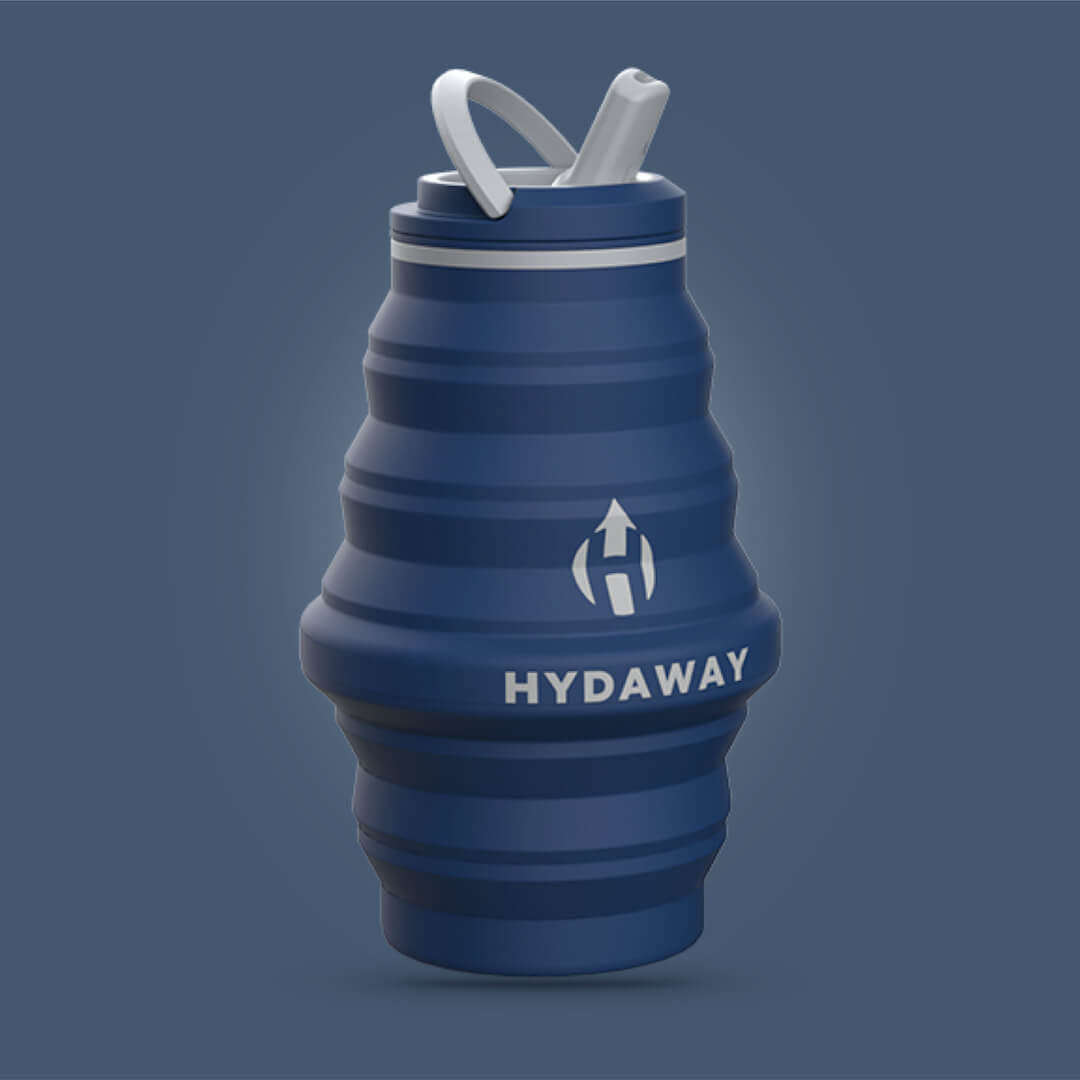
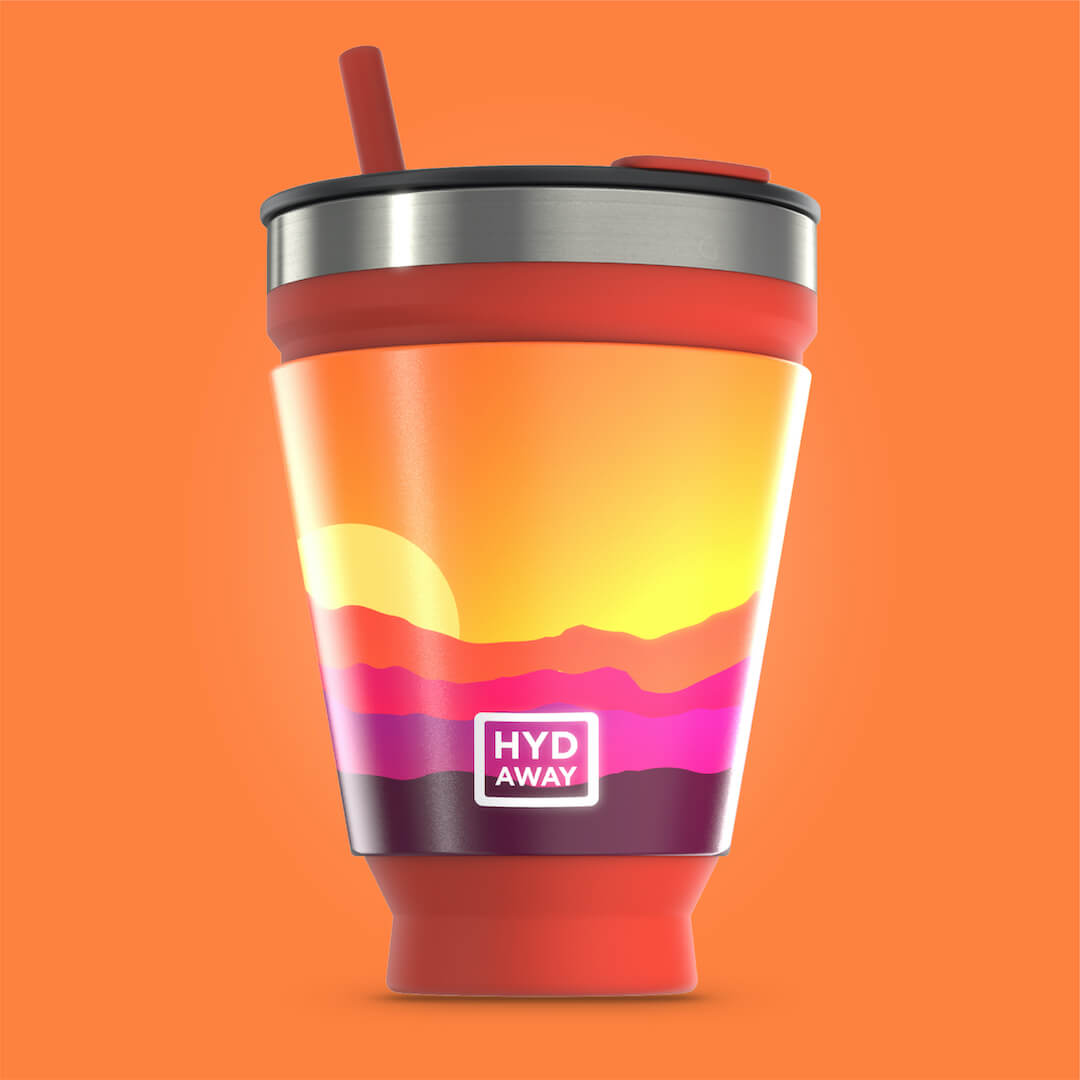
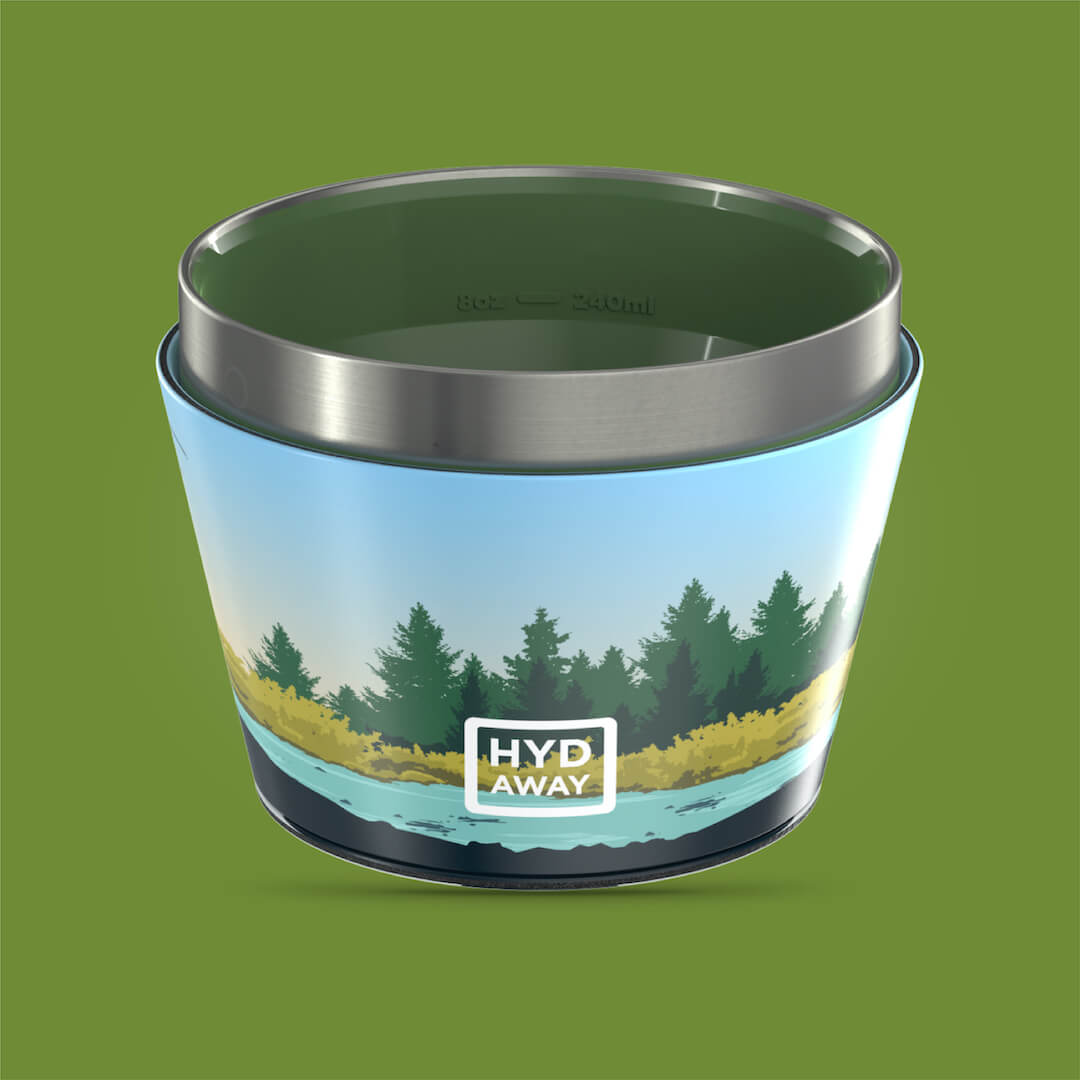
If you already build a travel system around reusable pieces, HYDAWAY's setup makes sense fast. A refillable bottle, insulated bowl, and packable backpack solve related problems from different angles, they cut down on clutter, then disappear when the outing is over. For a corporate buyer, that also makes a cohesive, custom-branded sustainability kit easier to explain and easier to hand out.
The material story matters too. HYDAWAY builds around reusable, dishwasher-safe gear with third-party verified BPA-free positioning, which is the sort of detail that turns a portable item into something people will keep using. If you want to see how travelers think about space-saving add-ons for active trips and mixed-use days, the compressible dry bags approach shows the same packing logic in a different form. For buyers comparing product pages, the HYDAWAY Stash Packable Backpack 16L is the direct product reference worth checking against the broader review field.

For readers lining it up against review favorites, HYDAWAY's pack makes the most sense as a compact backup bag inside a reusable kit. If your only goal is the lightest shell for emergency use, the ultralight picks still have the edge. If you want a tidy everyday fallback for travel, errands, and family outings, this bag fits that job without pretending to be more than it is.
The Final Verdict and Quick Answers
If you want the lightest possible shell, buy the Sea to Summit Ultra-Sil Day Pack. If you want a little more give without stepping up to a bulkier frame, the Osprey Ultralight Stuff Pack makes more sense. If you want the most balanced answer in current reviews, the Matador ReFraction Packable Backpack is the one that still feels like a daypack after you load it.
HYDAWAY's collapsible backpack earns its place when you need a compact, reusable backup bag that fits into a travel system without taking over the rest of your kit. It is not trying to win the ultralight contest. It is built for the kind of portability that works for parents, commuters, and travelers who want one compact bag that can stay in rotation instead of piling up as clutter.
Does silnylon hold up? Yes, but the trade-off is plain. Lighter fabric usually means less structure and less comfort, so durability is only part of the decision.
Is 15L enough for a full day? Usually, yes, if the day is normal and not overloaded. It handles a bottle, snacks, a layer, and daily basics, which is why mid-teens capacity keeps showing up in useful packable daypack reviews.
Will a packable daypack survive checked luggage? Usually, yes, if you tuck it inside another bag and avoid packing hard edges against it. The bigger risk is not that the bag collapses, it is that you defeat the whole point of carrying a compact daypack by packing it carelessly.
If you want a packable setup that works beyond the spec sheet, HYDAWAY makes compact gear for travel days, family outings, and everyday carry that needs to disappear fast. Visit HYDAWAY and look at the collapsible backpack and matching reusable pieces if you want one kit that packs small and still pulls its weight when the day gets messy.