


Marathon Training Essentials: Your 2026 Guide to Race Day Success

So, you’ve decided to run a marathon. That’s a huge deal, but don’t let the number intimidate you. Millions of people cross that finish line every year, and you can absolutely be one of them. The secret isn't just about having the right gear; it’s about building a body that can handle the distance and having a smart plan to get you there.
This is your roadmap to 26.2 miles.
Starting Your 26.2 Mile Journey

The moment you commit to a marathon is a victory in itself. Instead of getting overwhelmed by that 26.2-mile mountain, think of it as a series of small, achievable hills. We're going to break down the whole process, starting with the foundation you need to build before you even think about logging serious miles.
Think about it like building a house. You can't put up the walls and roof without a rock-solid foundation. For a runner, that foundation is a strong, resilient body. Just logging miles without building strength is a fast track to fatigue, bad form, and injury.
Building a Resilient Foundation
Before you get deep into running, you need to build up your body's support system. Spending just two days a week on a focused strength routine can make a world of difference in your running efficiency and help you sidestep common injuries. We're talking about two key areas here:
- Core Stability: A strong core is your running posture’s best friend. Exercises like planks and bird-dogs keep you running tall and strong, especially when you start to get tired in those later miles.
- Lower-Body Strength: Your legs and glutes are the engines that power every single stride. Moves like squats, lunges, and bridges build the raw power you need to keep going.
To really tackle 26.2 miles, getting a handle on your cardiovascular fitness is step one. It's worth diving into everything about cardio to understand how it supports endurance training. This is how you learn to train smarter, not just harder.
Your body is incredible—it adapts to the stress you put on it. By slowly increasing your mileage and strength work, your skin, muscles, and bones get tougher. This makes you more resistant to nagging issues like blisters and stress fractures down the road.
Mindset and Practical Preparation
The physical part is only half the battle; the mental game is just as important. It’s all about creating a routine that actually fits into your life. Let's be real—if your training feels like a chore, you won't stick with it.
For example, maybe you drive to a park or trailhead for your runs. Juggling extra layers, keys, and your phone can be a pain. A simple fix, like packing a HYDAWAY Collapsible Backpack, lets you carry your gear to the start, then scrunch it down and stash it away while you run. When you're done, it pops back open to hold all your sweaty clothes, keeping your car clean. It's these little things that remove friction from the daily grind and make it easier to stay on track.
Choosing Your Essential Marathon Training Gear

Let’s talk gear. The right equipment isn't about having the fanciest, most expensive stuff—it’s about having smart tools that work for you. Think of your gear as your most reliable training partner. It protects your body, keeps you comfortable, and makes those long, tough miles a whole lot more manageable.
Each piece of kit should solve a problem, whether that's stopping blisters before they start, carrying your phone without it bouncing annoyingly, or keeping you hydrated on a hot day.
Start with Your Strongest Foundation: Shoes
If there's one place you absolutely cannot skimp, it's your shoes. Over hundreds of miles, they will absorb thousands of impacts, making them your number one defense against injury. This is not the time to guess or just buy what looks cool online.
You need to get a professional fitting at a specialty running store. Seriously, it's a non-negotiable part of the process. The experts there will analyze your gait—how your foot lands and rolls—and recommend shoes that give you the exact support you need. For more on this, check out this great guide on finding the best running shoes for marathon training.
Here's a pro tip from seasoned runners: rotate between two different pairs of shoes. Research actually shows this can slash your injury risk by 39%! It works because it varies the stress on your feet and legs, so no single muscle group gets over-fatigued.
Dress for Success in Any Weather
After shoes, what you wear is the next most important thing. That old cotton t-shirt from a 5K just won't cut it on a 15-miler. Trust me. The golden rule here is moisture-wicking fabric. It pulls sweat away from your skin, which is a total game-changer for staying dry, comfortable, and—most importantly—chafing-free.
Look for technical fabrics like polyester or merino wool. They’re brilliant at helping regulate your body temperature, keeping you from getting chilled on a cool morning or overheating in the afternoon sun.
Learning to layer is a skill you'll master quickly. A solid system looks like this:
- Base Layer: A fitted, moisture-wicking shirt.
- Mid-Layer: A long-sleeve or light fleece for insulation when it’s cold.
- Outer Layer: A windproof or waterproof jacket to shield you from the elements.
This lets you easily add or shed pieces as you warm up or as the weather turns, keeping you perfectly comfortable from start to finish.
Tech and Tools to Carry Your Run
A GPS watch is one of the most valuable tools you can have. It’s not just for tracking your pace and distance; modern watches like the Garmin Forerunner or COROS PACE series also monitor your heart rate, which is a fantastic way to gauge your effort and make sure your easy days are actually easy.
Once your runs get longer, you’ll need a way to carry your phone, keys, gels, and water. A running belt works great for shorter distances, but a running vest is a must-have for those epic long runs where you need more storage for snacks and hydration. Speaking of hydration, we have a whole guide on picking the perfect running water bottle to go with your new gear.
Think about your whole routine, too. Many of us drive to a trail or park for our runs, leaving us with extra layers and gear to juggle. Instead of stashing valuables in your car, the HYDAWAY Collapsible Backpack is an amazing solution. You can pack your post-run snacks and a change of clothes, collapse the empty pack into your vest for the run, and then expand it to carry all your sweaty gear home. It’s a simple, smart way to keep your training life organized.
Mastering Hydration and Fueling on the Go
Think of your body like an engine during a long run. Hydration is the coolant, and fuel is the gasoline. If you neglect either one, you’re setting yourself up to stall out miles before you ever see that finish line. Learning what, when, and how much to eat and drink is one of the most important things you’ll do during marathon training.
The goal isn't just to avoid a full-on "bonk"—that awful moment when your energy just vanishes. It’s about keeping your performance steady, your mind clear, and your stomach happy. The real key is to practice your strategy on every single long run, so it becomes second nature on race day.
The Science of Sipping Smart
Proper hydration for a runner is so much more than just chugging water. It’s really about keeping your electrolytes in balance. When you sweat, you’re not just losing water; you’re losing crucial minerals like sodium, potassium, and magnesium.
These electrolytes are like tiny messengers that help your muscles contract and your nerves fire properly. Run low on them, and you’re looking at muscle cramps, dizziness, and a serious case of fatigue. This is exactly why so many runners add electrolyte tablets or powders to their water, especially for runs longer than 90 minutes or on hot days.
A good rule of thumb is to never wait until you feel thirsty to drink. By then, you're already behind.
A smarter approach looks like this:
- Pre-hydrating before you even step out the door.
- Sipping consistently every 15-20 minutes during your run.
- Replenishing with both water and electrolytes when you’re done.
Want to dive deeper into your body’s specific needs? We've got a whole article on how to stay hydrated while running.
Convenient Hydration Without the Hassle
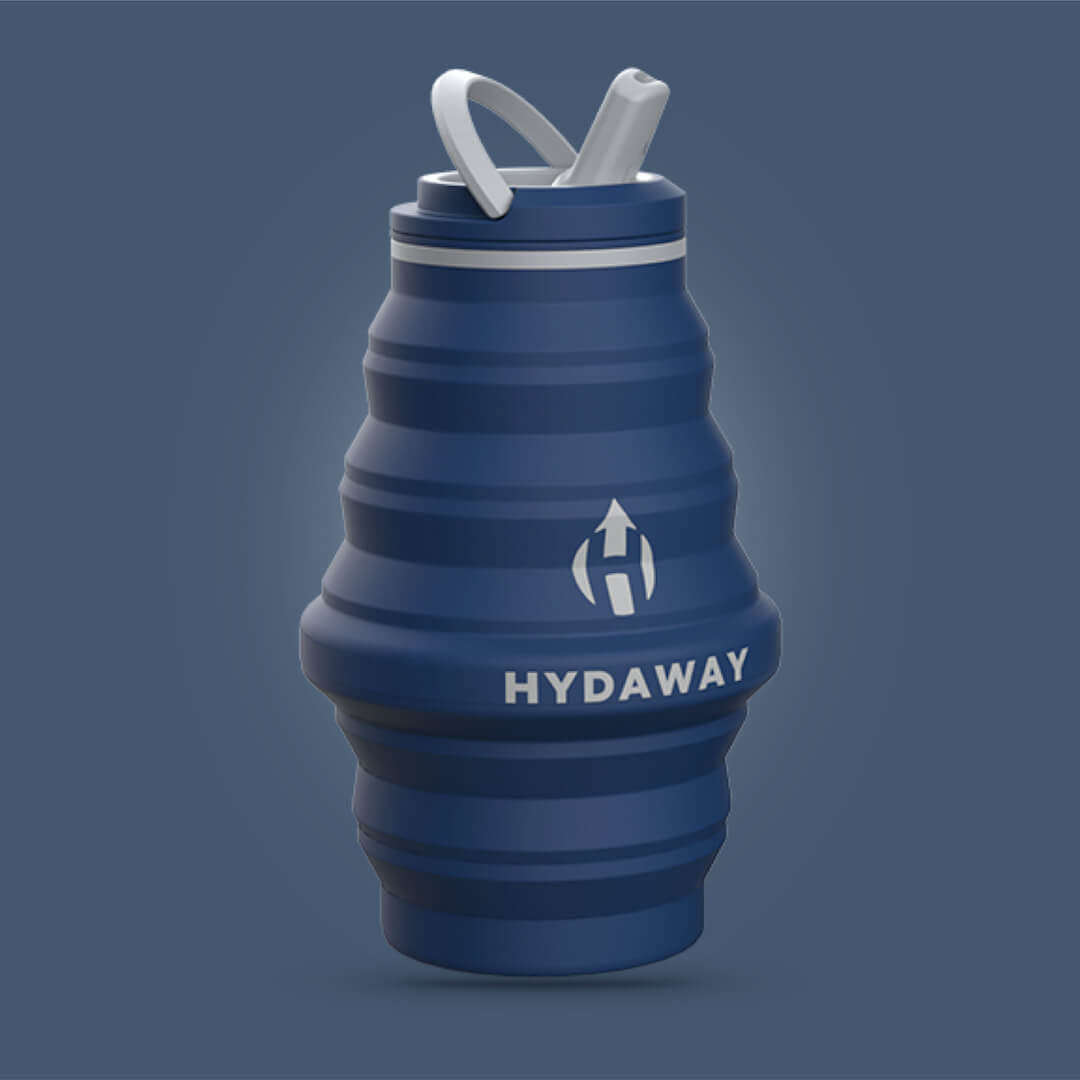
Not too long ago, carrying enough water meant dealing with bulky, sloshing plastic bottles. Thankfully, smart gear has made that a thing of the past. The HYDAWAY 25oz Collapsible Water Bottle is a perfect example. It's light enough to slip into a running vest or belt and holds a good amount of fluid.
The best part? As you drink, it shrinks. Once it's empty, it collapses down to just 1.5 inches thick. You can tuck it away in a pocket and completely forget about it. No more annoying sloshing for the last few miles.
This is a big deal, especially when you see how many people are taking on this challenge. Every year, around 1.1 to 1.3 million people around the world complete a marathon. With a 49.43% growth in finishers between 2008 and 2018, the demand for reliable and reusable gear is obvious. Carrying a leak-proof, BPA-free HYDAWAY bottle helps you stay on top of your game without adding to single-use plastic waste. You can read more about the incredible growth of marathon running participation and what it means for today's athletes.
Fueling Your Run and Recovery
For any run that goes over an hour, you'll need to start putting carbohydrates back into your system to keep your energy stores from hitting empty. This is where energy gels, chews, or even real food like dates and bananas come into play. Your target should be about 30-60 grams of carbs per hour, starting somewhere around the 45-60 minute mark.
Here’s a sample schedule to get you started, but remember to test this out—what works for one person’s stomach might not work for yours.
On-the-Run Hydration and Fueling Schedule
This table gives you a starting point for planning your intake. Listen to your body and adjust the timing and amounts until you find what feels right for you.
| Time into Run | Hydration Action | Fueling Action |
|---|---|---|
| 0-45 Mins | Sip water or electrolyte drink every 15-20 minutes. | No fuel needed yet. Focus on your pace. |
| 45-60 Mins | Continue sipping. | Take your first energy gel, chews, or snack. |
| Every 45 Mins After | Continue sipping. | Take another gel or serving of fuel. |
Experimenting during your training runs will help you build a personalized plan that you can count on when it really matters.
Just as important is what you do after you stop your watch. Your muscles are crying out for protein and carbs to start repairing themselves. Having a recovery meal prepped and ready to go is a total game-changer. For example, you can use the HYDAWAY Insulated Bowl to pack a yogurt parfait or a chilled recovery smoothie before you leave for your run. Its spill-proof lid means it will be waiting for you—perfectly cold—the moment you get back to your car. It’s a simple step that kickstarts your recovery and makes your next run that much better.
Building Your Marathon Training Plan
Let's get one thing straight: a good marathon plan is built on consistency, not soul-crushing intensity. It’s easy to get intimidated by the idea that you have to run huge miles to succeed, but the reality is that it’s all about finding a smart, progressive schedule that actually fits your life.
Whether you're a busy parent, a frequent traveler, or just juggling a demanding job, you can absolutely build a plan that works for you. The real goal is to show up to that starting line feeling healthy, confident, and genuinely excited to celebrate all your hard work. This all comes down to understanding the "why" behind each run and gradually challenging your body in a way it can actually handle.
The Core Components of Your Weekly Schedule
Most marathon plans are built around a few key types of runs. Think of them like different tools in your running toolkit—each one has a specific job, and they all work together to build a strong, resilient runner. A typical week will mix and match these workouts.
- The Long Run: This is the absolute cornerstone of your training. It’s a slow-and-steady effort designed to build your cardiovascular engine, teach your body to burn fat for fuel, and get you mentally ready for hours on your feet.
- Tempo Runs: These are your "comfortably hard" workouts. You'll hold a pace that feels challenging but sustainable, which is the secret to teaching your body to clear lactate more efficiently and boost your speed-endurance.
- Easy and Recovery Runs: These shorter, low-intensity runs are just as critical as the hard days. They help your body recover, flush out metabolic waste, and add valuable "time on feet" without piling on too much stress.
The biggest mistake new runners make is running their easy days too hard. An easy run should feel conversational and relaxed. If you're gasping for air, you're going too fast, which compromises your recovery and sabotages your next key workout.
For busy folks, planning is everything. If you travel a lot for work, you can schedule your shorter, easy runs for days you’re on the road. A HYDAWAY Collapsible Bottle is perfect for this—it takes up almost no space in a carry-on, so you can stay hydrated during your workout without packing bulky gear. This means you can stick to your training plan even in a hotel gym, keeping your progress on track.
Progressive Overload and the 10% Rule
The real secret to getting stronger without getting hurt is a concept called progressive overload. It's just like lifting weights: you wouldn't try to bench press your max weight every single day. Instead, you gradually add a little more over time, giving your muscles a chance to adapt and grow stronger.
Running is the same deal. You build endurance by slowly increasing your weekly mileage. The most trusted guideline for this is the 10% rule. It simply suggests increasing your total weekly mileage by no more than 10% from one week to the next. This gives your bones, muscles, and connective tissues time to adapt to the new stress.
Following this simple rule is your best defense against the "too much, too soon" trap that leads to so many common overuse injuries.
Smart Mileage Not High Mileage
There's a stubborn myth out there that you need to run massive weekly mileage to finish a marathon. But the data tells a completely different story. Marathon mileage varies wildly, even for runners hitting similar finish times. For example, U.S. runners aiming for a 3:30 finish average 34 miles per week, while French runners can hit the same time on just 24 miles per week. For many runners, a consistent 20 miles weekly is plenty. You can learn more about how training volume varies for marathoners and see for yourself why smart training always beats sheer volume.
This simple infographic shows the three-part flow of fueling your body for every workout.

As you can see, fueling isn't just something you do during a run. It’s a full cycle that starts before you even lace up and continues long after you've finished. Here’s a sample progression you can adapt to get started.
Sample 16-Week Mileage Progression
Think of this as a flexible template, not a rigid set of rules. Always listen to your body and don't be afraid to adjust, especially by adding "cutback" weeks where you reduce mileage to give yourself extra recovery time.
| Training Week | Weekly Mileage | Long Run Distance | Key Focus |
|---|---|---|---|
| Week 1 | 15 miles | 4 miles | Building a consistent base |
| Week 4 | 20 miles | 7 miles | Increasing endurance |
| Week 8 | 25 miles | 12 miles | Half marathon distance practice |
| Week 12 | 30 miles | 16 miles | Peak mileage phase begins |
| Week 14 | 35 miles | 20 miles | Final long run effort |
| Week 16 (Race) | 10 miles (pre-race) | 26.2 miles | Taper and race! |
Injury Prevention and Smart Recovery

Here's a secret every seasoned runner knows: getting to the finish line isn't just about the miles you run. It's about the recovery you master. A smart marathon plan is as much about staying healthy as it is about building endurance.
Think of it this way: trying to train without focusing on recovery is like building a house on a shaky foundation. Sooner or later, something is going to give. Injury prevention and smart recovery aren't chores; they're the essential tools that make you stronger, run after run.
Active Recovery and Mobility
What you do after a run is just as crucial as your warm-up. While a pre-run routine gets your blood flowing with dynamic moves like leg swings, your post-run routine is all about helping those hardworking muscles find their way back to a happy, relaxed state.
This is where static stretching and a good old foam roller become your best friends. These simple practices help you stay flexible, dial down muscle soreness, and prevent the nagging tightness that often turns into a full-blown injury.
-
Static Stretching: After you’ve cooled down, gently hold stretches for your major muscle groups—quads, hamstrings, glutes, and calves. Aim for 20-30 seconds per stretch. This helps relax the muscles and get them back to their normal length.
-
Foam Rolling: Consider a foam roller your personal, on-demand massage therapist. Just 5-10 minutes spent rolling out tight spots on your legs and back can work wonders. It helps release muscle knots and boosts circulation, kicking your recovery into high gear.
The point of recovery isn't to feel zero discomfort ever again. It's about learning to manage it. You'll get good at telling the difference between normal soreness and the sharp, stubborn pain that's whispering, "Hey, something's wrong." Listening to your body is a skill—and it's the most valuable one you'll develop.
The Unsung Hero of Recovery: Sleep
You can own all the fancy gear and have the world's best training plan, but if you're not sleeping enough, you're fighting a losing battle. Your body simply can't repair itself without proper rest.
It's during deep sleep that your body releases human growth hormone, which is absolutely critical for fixing the tiny muscle tears that happen on every single run. Making 7-9 hours of quality sleep a non-negotiable part of your training is one of the most powerful things you can do. It's when all your hard work actually sticks.
Post-Run Nutrition and Smart Hydration
That first 30-60 minutes after you stop your watch is a golden window for recovery. Your body is screaming for fuel to restock its energy and start repairing muscle. A snack or drink with a good mix of carbs and protein is the perfect answer.
A post-run recovery smoothie is a fantastic choice, but there's a catch: you want it cold and ready the second you finish your run, not an hour later. This is where having the right gear is a game-changer. The HYDAWAY Insulated Pint is perfect for this. You can whip up your smoothie before you head out for your long run, and its leak-proof design ensures it will be waiting, ice-cold, in your car or bag. It’s a simple trick that gets your recovery started immediately, helping you bounce back faster for your next workout.
This kind of smart, consistent recovery is a huge reason we've seen such incredible improvements in running performance. Between 2008 and 2024, the 100th fastest man in the world got a whopping 3 minutes and 36 seconds faster. These gains come from smarter training that supports injury-free consistency. For runners who travel, like digital nomads, collapsible HYDAWAY gear helps maintain these crucial routines by saving space and ditching single-use plastics. You can dive into more of the fascinating data on the impressive evolution of global marathon performance and see for yourself how smarter training is making everyone faster.
Your Ultimate Race Day Packing Guide
After months of training, race day is finally here. It's the celebration at the end of all your hard work, and the last thing you want is to be scrambling for safety pins or your favorite socks. A little prep work the night before goes a long way in calming those pre-race jitters so you can focus on the 26.2 miles ahead.
The secret from seasoned runners? Think of it as packing two different bags: one for the gear you'll have with you at the start, and another for the finish line. Laying it all out is a time-honored ritual for a reason—it quiets your mind and ensures you don't forget a thing.
Your Pre-Race and Race Day Essentials
This is the stuff you’ll wear or have on you when the starting gun goes off. The goal is to have everything laid out and ready to go, from your outfit to your tech.
- Race Bib and Safety Pins: This is your golden ticket. Pin it to your shirt the night before so there’s zero fumbling in the morning.
- Complete Race Outfit: Lay out the entire kit you’ve trained in. Your shoes, socks, shorts, singlet—everything. Race day is never the time to experiment with new gear.
- Charged GPS Watch and Heart Rate Monitor: Plug everything in so it's fully charged. There's nothing worse than a watch dying mid-race.
- On-the-Go Hydration: Even with aid stations, having your own water is a smart move. A HYDAWAY 17oz Collapsible Bottle is perfect for sipping on the way to the starting corral. It’s super light and squishes down to nothing once you’re done, so you can tuck it away without adding bulk.
- Your Proven Fuel: Pack the exact gels, chews, or snacks you’ve used on your long runs. Tuck them into your belt or pockets so they're easy to grab when you need them.
Laying out your gear is more than just a checklist; it's a mental rehearsal. Seeing your complete kit ready to go builds confidence and quiets last-minute doubts, letting you step up to the starting line feeling prepared and in control.
Packing Your Finish Line Gear-Check Bag
Think of this bag as a high-five from your past self to your future, post-race self. Once you cross that finish line, you’ll be exhausted, overjoyed, and desperate for a little comfort.
- A Full Change of Clothes: Nothing beats putting on dry, comfortable clothes. Pack something loose and soft, like joggers and a hoodie, plus fresh socks and underwear.
- Comfortable Post-Race Shoes: Your feet will be swollen and begging for relief. A pair of flip-flops or cushy recovery slides will feel like heaven.
- A Rewarding Drink: Time to celebrate! The HYDAWAY Insulated Drink Tumbler is a brilliant choice here. Imagine finishing the race and knowing you have an ice-cold celebratory drink or a hot recovery tea waiting for you. Fill it up before you leave, and it’ll be there at the perfect temperature thanks to its insulation.
- Post-Race Snacks: The finish line will have food, but having your favorite recovery bar or salty snack ready to go is a pro move.
- Small Essentials: A small pack of body wipes, deodorant, and any personal medications can make you feel human again.
Packing smart, especially with gear that saves space, makes the whole race weekend run smoother. For more tricks on efficient packing, you might like our guide on how to save space when packing for any kind of trip—including your next race-cation.
Got Questions? We’ve Got Answers.
As you dive headfirst into your 26.2-mile journey, you’re bound to have questions. It’s totally normal. We’ve rounded up some of the most common ones we hear from runners, with clear, practical answers to help you train with confidence.
How Many Days a Week Should I Run?
Most solid marathon training plans will have you running 3 to 5 days a week. This schedule is the magic formula, giving you a smart balance between key workouts—like your long run and speed sessions—and the crucial rest days your body needs to repair and get stronger.
If this is your first marathon, four days a week is often the sweet spot. It’s enough mileage to build serious endurance without pushing you into burnout or toward those nagging overuse injuries that can stop you in your tracks.
What’s the Best Meal to Eat Before a Long Run?
The night before a big run, think simple. Your dinner should be packed with easy-to-digest carbohydrates, have a moderate amount of protein, and be low in fat and fiber. This combo tops off your energy stores without giving your stomach any trouble mid-run.
Stick to the classics that runners swear by:
- Pasta with a light tomato sauce
- A baked potato with a small side of lean chicken
- White rice paired with some grilled fish
The golden rule is "nothing new on race week," and that goes for your long training runs, too. Always stick to familiar foods you know agree with you. Now is not the time to experiment with that new spicy curry recipe.
This strategy ensures your energy is ready to go when you need it most.
Do I Really Need a Special Water Bottle for Long Runs?
While you could technically run with any old bottle, a specialized running bottle is one of the most practical pieces of gear you can own. Clumsy disposable or rigid bottles are a real pain—they’re bulky, heavy, and create that annoying sloshing and bouncing with every step.
This is where a collapsible bottle, like the HYDAWAY 17oz or 25oz, becomes a total game-changer. It's incredibly lightweight, has an easy-sip spout for drinking on the move, and shrinks down as you empty it. Once you’re done, it collapses to fit into a tiny pocket, getting rid of all the bulk and letting you focus on your form. This means you can easily carry it in a running vest or belt without the annoying bounce of a hard bottle, making your long runs much more comfortable.
At HYDAWAY, we’re all about creating gear that makes your adventures easier, whether you're tackling 26.2 miles or just exploring a new city. Our collapsible, space-saving products ensure you stay hydrated and prepared, minus the extra weight. Discover the full collection of smart, packable gear at https://myhydaway.com.