

Camping Kitchen Setup Ideas for Better Camp Meals

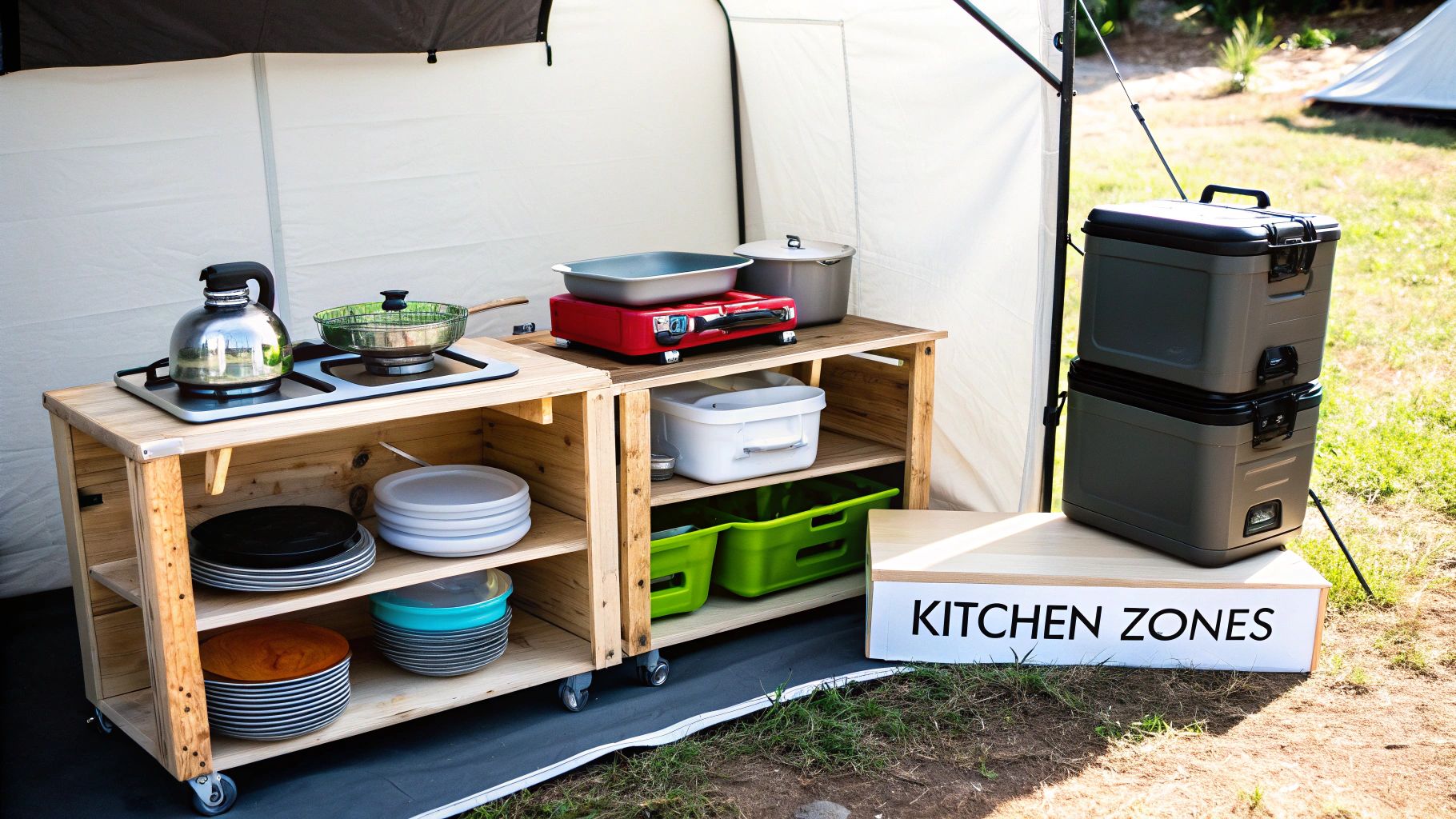
A great camping meal isn’t just about the recipe—it’s born from a well-planned kitchen. The absolute best camping kitchen setup ideas all boil down to creating an organized, efficient workspace with three distinct zones: one for prepping, one for cooking, and one for cleaning. This simple approach is a total game-changer, keeping your campsite tidy and making cooking in the great outdoors a genuine pleasure.
Your Blueprint for a Stress-Free Camp Kitchen
The secret to amazing camp meals isn’t just what you cook—it’s having a kitchen that works for you, not against you. Whether you're a weekend car camper or a full-time van lifer, the principles of a functional outdoor cooking space are the same. It all starts with being intentional.
And it seems like everyone is getting on board. The global camping equipment market was valued at around USD 89.81 billion recently, and it's still growing. That boom shows a clear demand for gear that makes our time outside more comfortable and efficient.
The Power of the Zone Method
The 'zone' method is my go-to for campsite efficiency. Think of it as creating a mini-workflow, just like in your home kitchen. This strategy keeps chaos from taking over and ensures everything you need is always within arm's reach when you need it.
- Prep Zone: This is your command center for chopping veggies, mixing ingredients, and plating your meals. Even a small cutting board on top of your cooler makes a perfect prep station. Imagine prepping fresh salsa for your campsite tacos without having to balance everything on your lap.
- Cooking Zone: This area is all about the heat—your stove or grill. Keep it a safe distance from your tent and clear of any dry leaves or flammable debris.
- Cleaning Zone: Set aside a spot for a collapsible sink or a couple of wash basins. Keeping this separate is crucial to prevent soapy water from contaminating your food prep surfaces.
An organized camp kitchen saves you time and reduces stress, letting you focus on the food and the view. By dedicating specific areas for tasks, you avoid that frantic search for a spatula while your pancakes are burning.
Assess Your Needs and Pack Smart
Trust me, overpacking is the fastest way to a stressful trip. Before you throw anything in the bin, ask yourself: can this do more than one thing? This is where modern, space-saving gear really shines.
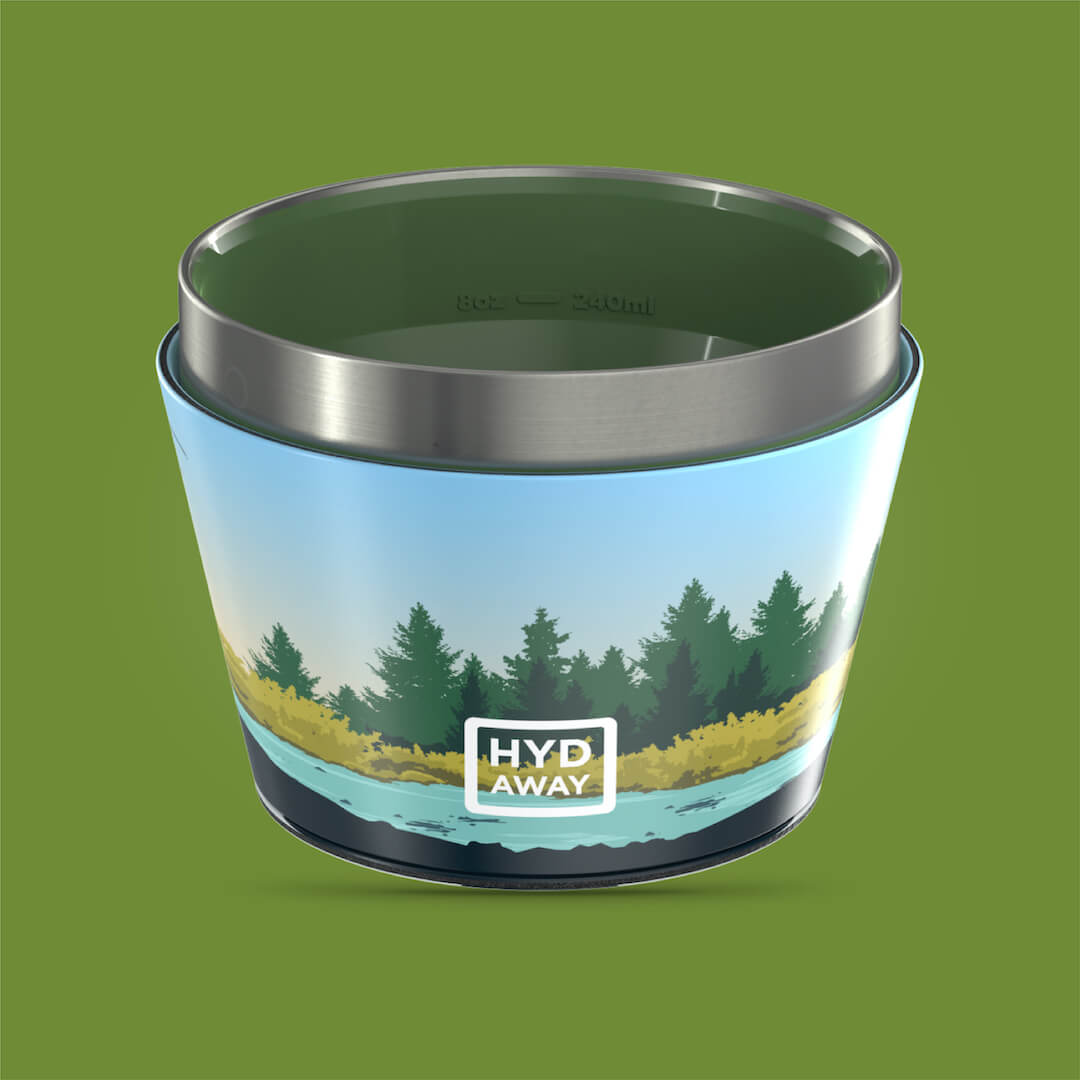
A HYDAWAY collapsible bowl, for example, can be your oatmeal bowl in the morning and a measuring cup for dinner, instantly cutting down on clutter. You can prep chopped veggies in it, serve a side of chili, and then collapse it down to the size of a coaster to save precious space.
Likewise, having a smart solution for water is non-negotiable. For some great ideas on that front, check out our guide on camping water storage solutions. This foundational approach ensures you spend more time enjoying the outdoors and less time wrestling with your gear.
Camping Kitchen Setups At A Glance
Your kitchen setup will look a little different depending on how you're camping. Here’s a quick comparison to help you prioritize what gear really matters for your style of adventure.
| Camping Style | Primary Goal | Key Gear Examples | HYDAWAY Product Fit |
|---|---|---|---|
| Backpacking | Ultralight & compact | Pocket stove, spork, small pot | The Collapsible Water Bottle keeps you hydrated on the trail without the bulk of a rigid bottle. |
| Car Camping | Comfort & convenience | 2-burner stove, large cooler, camp table | Collapsible Bowls & Pints are perfect for family meals and pack down small in the gear bin. |
| Van Life | Space-saving & multi-use | Built-in sink, induction cooktop, fridge | The Everyday Carry Series fits seamlessly into tight drawers and maximizes limited cabinet space. |
| Tent Camping | Simple & portable | Single-burner stove, small cooler, wash basin | The Adventure Travel Kit provides a bottle and case for easy transport and access at the campsite. |
No matter where you're headed, thinking through your setup beforehand makes all the difference once you’re out there. A little planning goes a long way toward delicious, stress-free meals.
Choosing Your Essential Camp Cooking Gear
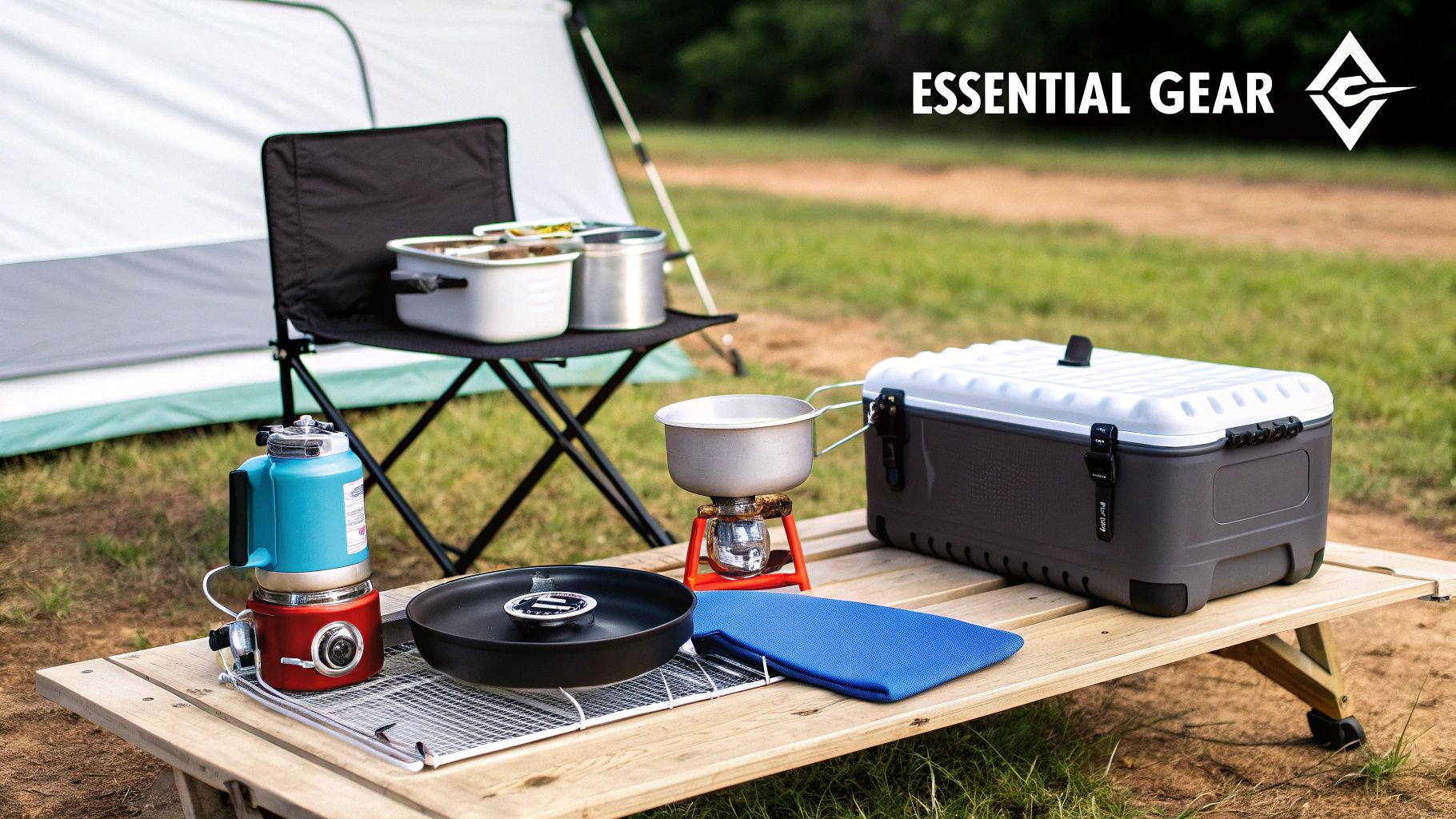
Having the right tools is what transforms camp cooking from a chore into one of the best parts of the trip. A great camp kitchen isn’t about bringing everything you own; it’s about choosing smart, effective gear that pulls its weight. I always tell people to start with the "Big Three"—a reliable stove, an efficient cooler, and a stable work surface.
Your stove is the heart of your whole operation. This is where your budget is well spent, whether it's a simple single-burner for boiling water or a beefy double-burner for cooking up a feast. For a different style of cooking beyond traditional gas stoves, something like the versatile Homefires Camp Braai can completely change your outdoor culinary game.
The Foundation: Your Stove, Cooler, and Surface
Once you’ve got the stove sorted, turn your attention to the cooler and work surface. A good cooler does more than just keep food cold—it’s your backcountry pantry and often doubles as a prep station or an extra seat around the fire. Your work surface can be a dedicated camp table, the top of a sturdy gear bin, or even a flat-topped cooler.
This trio is the foundation of all great camping kitchen setup ideas. Get these three pieces dialed in, and everything that follows—from cooking to cleaning—becomes infinitely easier.
Selecting Your Cookware and Utensils
Now for the details. Your cookware choices are always a bit of a trade-off. A cast-iron skillet gives you that incredible, even heat for searing steaks or whipping up a breakfast hash, but man, is it heavy. Titanium pots, on the other hand, are unbelievably light but can develop hot spots if you’re not careful.
The key is matching the material to your camping style. If you’re car camping, you can afford the luxury and weight of cast iron. Backpackers? Stick to lightweight titanium or aluminum. The growing interest in quality gear is pretty clear; the global camping utensils market was valued at USD 2.6 billion and is expected to hit USD 4.6 billion by 2031. It just goes to show that campers are willing to invest in tools that make their outdoor experience better.
Pro Tip: Don't get bogged down by every specialty gadget you see. A good knife, a cutting board, a spatula, and tongs will handle 90% of what you need to do. Anything beyond that should earn its spot in your kit.
This is where modern, space-saving gear really shines and solves those classic packing headaches. For instance, why pack bulky, rigid water bottles or dog bowls that take up valuable space even when they're empty?
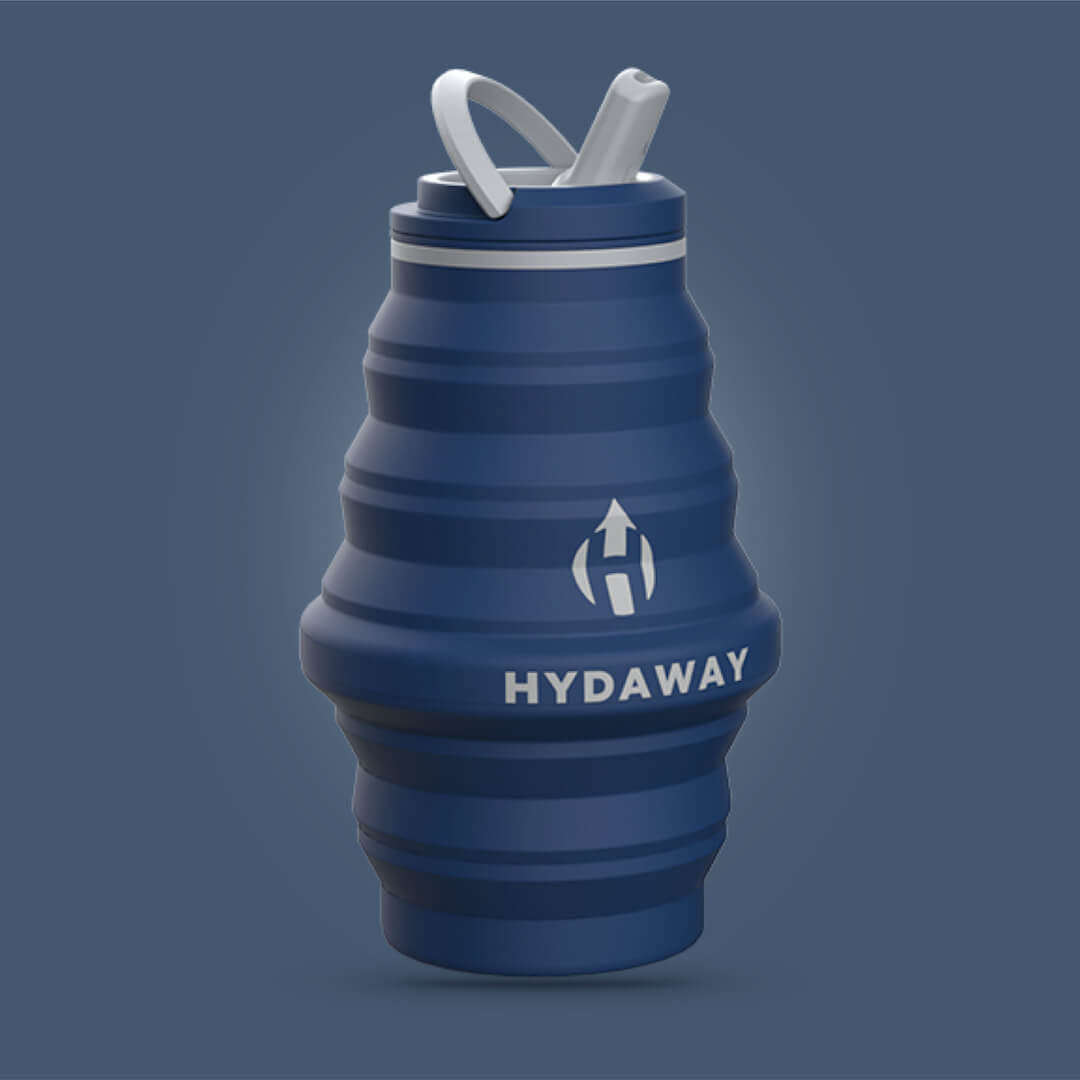
HYDAWAY's collapsible drinkware and bowls flatten to about an inch thick. This simple but brilliant design frees up critical room in your gear bin for more food or an extra warm layer. Imagine packing for a family of four and having all your plates and bowls take up less space than a single frisbee. They’re a perfect example of how choosing the right gear saves a ton of space without sacrificing an ounce of function. For more ideas, check out our insights on collapsible camping cookware.
Don't Forget Cleaning Supplies
Finally, a well-equipped kitchen needs a solid cleaning setup. This doesn't have to be complicated at all. A collapsible sink (or two wash bins), some biodegradable soap, a sponge, and a quick-dry towel are all you really need.
Thinking about your cleanup kit is just as important as planning your meals. It helps you keep a tidy, hygienic camp and makes it easy to follow Leave No Trace principles, leaving your beautiful spot just as you found it.
Smart Packing and Organization Hacks
Let's be honest, a well-organized camp kitchen is the secret to happy campers and effortless meals. The best camping kitchen setup ideas I’ve seen all boil down to one thing: a smart system that makes everything easy to find the second you roll into your site. A little bit of prep at home really does translate into more time relaxing by the fire.
One of the most effective strategies I swear by is the 'kitchen-in-a-box' system. The idea is simple: dedicate one or two big, clear plastic totes or even a classic wooden 'chuck box' just for your kitchen gear. Everything—from your stove and fuel to spatulas and plates—lives in this box. When it’s time to go camping, you just grab it. No more frantic searching.
Create Mini-Kits for Maximum Efficiency
Inside that main kitchen box, grouping items into smaller, task-specific kits is a total game-changer. This simple trick stops you from digging through the entire tote just for a tiny spice jar, keeping your campsite tidy and your cooking process running smoothly.
Here are a few mini-kit ideas to get you started:
- The Coffee Station: Pack a small pouch with your coffee grounds, filters, a scoop, and your favorite camp mug. When you wake up, you only need to grab this one kit to get your morning started. No fumbling around before you've had your caffeine.
- The Spice Kit: Use small, leak-proof containers to bring just the spices you need for whatever you're cooking. Think salt, pepper, garlic powder, or a pre-mixed taco seasoning. It saves you from hauling your entire home spice rack into the woods.
- The Cleaning Kit: A small mesh bag with biodegradable soap, a sponge, and a small, quick-dry towel keeps your cleaning supplies contained and ready to go.
Prepping at home is your secret weapon. By doing the tedious work beforehand, you minimize mess and maximize your time enjoying the outdoors. It's the difference between a chaotic campsite and a calm, enjoyable cooking experience.
Prep at Home to Save Time and Mess
Think about all the little tasks you can knock out in the comfort of your own kitchen. Pre-chopping vegetables like onions and bell peppers and storing them in reusable containers is a huge time-saver. You can also marinate meats in sealed bags or pre-measure dry ingredients for pancakes or oatmeal right at home.
This approach not only makes cooking way faster but also dramatically cuts down on the garbage you have to pack out. For more ideas on using the right containers for this, check out our guide on the benefits of collapsible silicone food containers.
Of course, even the most organized camper can run into a snag. For those moments when you realize you forgot something crucial, knowing a handy trick like how to open a tin without a can opener can be a real trip-saver.
A core principle here is embracing multi-functional gear. A HYDAWAY Collapsible Water Bottle, for instance, isn't just for water. It has measurement markings on the side, so it can pull double duty as a measuring cup for recipes. This simple feature means one less bulky item to pack, perfectly embodying the spirit of packing smarter, not harder.
Practical Kitchen Layouts for Any Campsite
Let's be real: no two campsites are ever the same. One spot might have a perfectly level picnic table, while the next has you working with a patch of dirt and a well-placed rock. But that's the beauty of it. The key isn't having one perfect setup, but a flexible blueprint you can adapt to whatever nature throws your way.
Having a go-to layout means less time digging around for the spork and more time actually enjoying the sunset. It’s all about creating a natural workflow that makes cooking outside feel less like a chore and more like part of the adventure.
The Classic Car Camper Setup
If you're car camping and scored a site with a picnic table, the classic 'L-shape' is your best friend. It’s a simple, effective way to create separate zones for prepping and cooking, which is a huge deal for keeping things clean and organized.
Here's how I like to do it:
- Cooking Zone: I'll set up my two-burner stove at one end of the table, creating the short leg of the "L." This keeps all the heat, steam, and bacon splatter contained in one spot.
- Prep Zone: The long side of the table becomes my command center. This is where the cutting board, cooler (kept close for easy grabbing), and dry goods bin all live.
- Cleaning Station: A couple of wash bins go on the ground at the far end of the prep zone, well away from where I’m actually cooking.
Van Life and Modular Systems
Van lifers are the undisputed champions of maximizing small spaces. Those slide-out galleys and modular kitchen pods you see everywhere are popular for a reason—they pack an incredible amount of function into a tiny footprint without eating up valuable living space. The most common setup is a countertop that pulls out from the back or side of the van, often with the stove and a small sink built right in.
No matter your setup, safety has to be the top priority. Always put your stove on a stable, level surface. Make sure it’s a safe distance from your tent, your vehicle, and any flammable stuff like dry grass or pine needles.
A pro tip for van life is to use magnetic spice tins on a metal backsplash—they stay put while you're driving. And collapsible gear is a game-changer. A HYDAWAY Collapsible Bowl is perfect for mixing up pancake batter and then flattens down to almost nothing to slide into a shallow drawer. This is the kind of practical, space-saving design that makes tiny living possible.
Lightweight Tent Camping Stations
When you're tent camping and keeping things light, your kitchen setup is going to be more minimalist, but it can still be incredibly efficient. Your cooler is the star of the show here, pulling double duty as both your pantry and a makeshift countertop.
Just find the flattest patch of ground you can, clear away any twigs or rocks, and use the top of your cooler as a sturdy base for your single-burner stove.
This simple infographic breaks down a workflow that you can apply to pretty much any layout you create. It’s a reminder that good organization starts back at home, making the actual campsite setup a breeze.
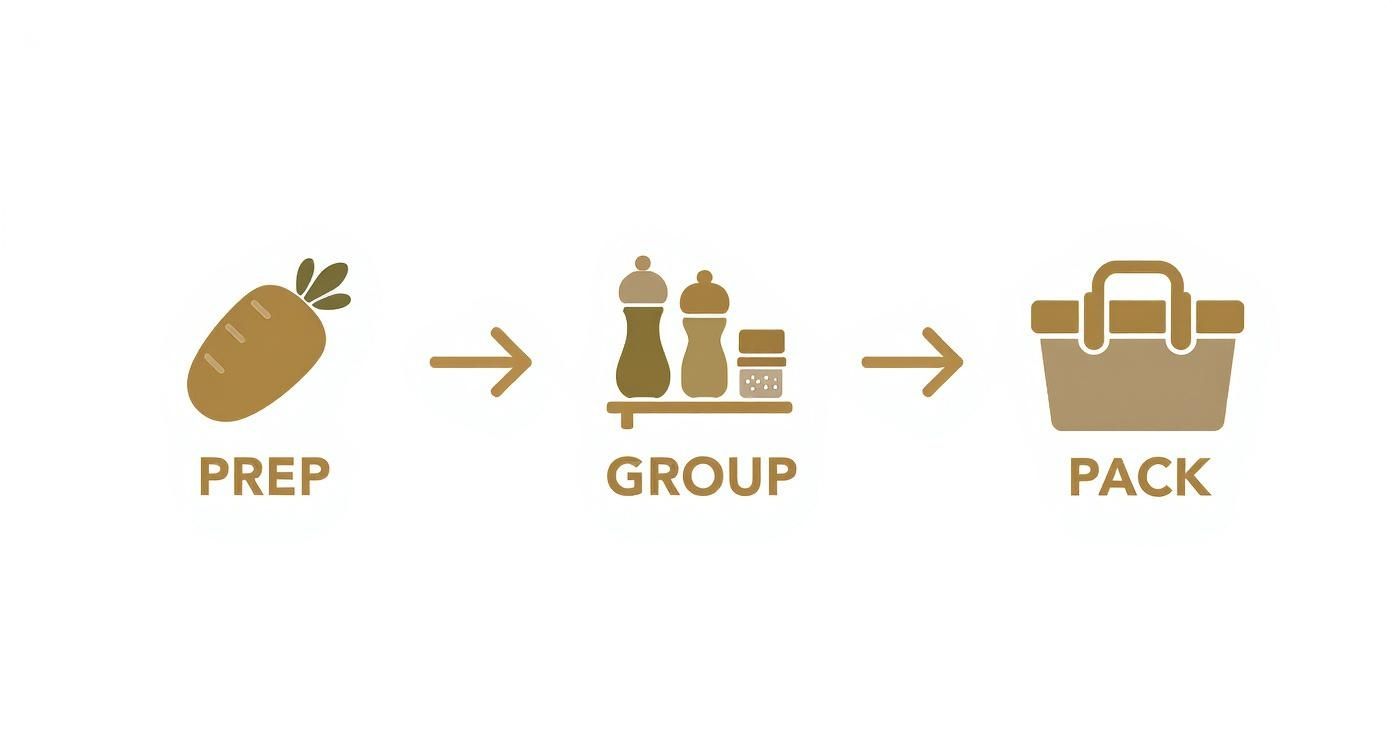
By thinking through this flow, you can take any of these layouts and tweak them for your trip. You’ll have a functional, safe, and stress-free kitchen, no matter where you pitch your tent.
Mastering Cleanup and Food Safety in the Wild
The meal isn't really over until the last dish is clean and every crumb is safely tucked away. I know, I know—this part of camp life can feel like a total chore, but getting a good system down makes it surprisingly quick and painless.
More importantly, proper cleanup and food storage are non-negotiable for keeping wildlife wild and your campsite safe. A messy kitchen is an open invitation for unwanted guests, from tiny ants to much larger, furrier visitors. Keeping a clean camp isn’t just about being tidy; it’s a core principle of being a responsible guest in nature. The goal is to spend less time scrubbing and more time stargazing.
The Three-Bin Dishwashing System
For camp cleanup, the three-bin system is the absolute gold standard. It’s an efficient, water-conscious method that nails the Leave No Trace principles, ensuring you leave your campsite better than you found it.
Here’s the simple setup:
- Wash Bin: Fill one basin with hot, soapy water. A little goes a long way. Make sure to use a biodegradable, camp-friendly soap to minimize your impact.
- Rinse Bin: The second basin gets filled with clean, cool water for a quick rinse to get any suds off.
- Sanitize Bin: The final bin has cool water with just a few drops of bleach or a sanitizing tablet. A quick dunk here kills any lingering bacteria and gives you peace of mind.
Once they're clean, I just place dishes on a quick-dry towel or a portable rack. When you're done, be sure to dispose of your greywater properly. Strain out any food scraps (pack these out with your trash!) and scatter the water at least 200 feet away from any river, lake, or stream.
Keeping Your Food Safe and Secure
Out here, food safety really comes down to two things: temperature control and wildlife prevention.
First up, your cooler. Pre-chill it before you even start packing, use a mix of block ice (it lasts longer) and cubed ice (it fills the gaps), and try to limit how often you open the lid. Every time you peek inside, you’re letting cold air out. A well-managed cooler keeps your food at a safe temp and makes your ice last for days.
At night, or anytime you leave your campsite, all food and anything with a scent has to be secured. And I mean everything—that includes your toothpaste, deodorant, and even the trash from dinner.
Storing your food properly isn't just a suggestion; it’s a must-do. Use a bear-resistant container or lock everything with a scent inside your vehicle. This protects not only your supplies but also the local wildlife from getting dangerously comfortable with human food.
This is another spot where smart gear choices make a huge difference. Using items like HYDAWAY’s Collapsible Camp Bowls means they take up almost no space in your wash bins and drying rack, making the three-bin system even easier to manage. Their packable design is a perfect example of a bigger trend we're seeing. The camp kitchen equipment market, currently valued at around USD 0.34 billion, is blowing up with portable and compact gear because campers are looking for more convenient solutions. You can read more about camp kitchen market trends to see how this focus is shaping awesome new products.
When you choose gear that’s easy to clean and even easier to store, the whole cleanup process becomes faster and way more manageable.
Your Top Camp Kitchen Questions Answered
Even the most dialed-in camp kitchen has its quirks. Let's be real, questions always pop up when you're trying to perfect your setup. Getting a handle on these common headaches is often the final piece of the puzzle for a truly smooth outdoor cooking experience.
We've all been there—the messy oil spill, the cooler that gives up halfway through a trip. A few simple tweaks can make all the difference. The real goal is to get ahead of these problems before they even start, so you can spend less time troubleshooting and more time enjoying yourself.
What Is the Best Way to Pack Spices and Oils?
Whatever you do, don't bring full-sized containers. It’s a guaranteed recipe for clutter and spills. For spices, you have to think small. Grab some dedicated travel-sized shakers, pre-mix your seasoning blends for specific meals into tiny reusable bags, or even wash out old Tic Tac containers for salt and pepper.
And when it comes to liquids like cooking oil or soy sauce, small, leak-proof travel bottles are your absolute best friend. You can usually find them in the toiletries aisle of most stores. This one hack saves a surprising amount of space and, more importantly, prevents a greasy disaster inside your gear box.
How Can I Keep My Cooler Cold Longer?
A warm cooler can ruin a whole weekend. To get the most out of yours, pre-chill it before you even think about packing food. Just toss in a bag of "sacrificial" ice for a few hours to bring the internal temp way down.
When you're ready to load it up, use a combination of block ice on the bottom (it melts way slower than cubes) and then fill in all the gaps with cubed ice.
Here's the most effective trick of all: just open it less. Seriously. If you can, bring a separate, smaller cooler just for drinks, since that's the one everyone is constantly grabbing from.
Another pro tip is to pack frozen food at the very bottom, letting it act as extra ice blocks. Make sure to fill any empty air space with towels or even crumpled paper to boost the insulation.
What's the Most Common Camp Kitchen Mistake?
The single biggest mistake we see? Overpacking. It’s so tempting to bring every kitchen gadget you own "just in case," but it almost always leads to a chaotic, stressful, and disorganized cooking space.
Before you toss an item into the bin, ask yourself: can this thing serve more than one purpose?
This is the fastest way to streamline your whole kit. Gear like HYDAWAY's collapsible bowls and bottles are a perfect example of this principle. They work just like your dishes at home but pack down almost completely flat, solving the space issue without sacrificing an ounce of utility. When you choose smart, multi-use items, you build a camp kitchen that’s both incredibly capable and wonderfully simple.
Ready to upgrade your gear with smart, space-saving solutions? Explore the full collection of collapsible, adventure-ready products from HYDAWAY and discover how much more you can do with less. Find your perfect travel and camping companions at https://myhydaway.com.