

Get Your Travel Tumbler Personalized: 2026 Guide

You're probably carrying a drink right now that's doing only half the job. It keeps coffee warm for the commute, or water cold on a drive, but it doesn't fit how you travel. It slides around in a daypack, gets mixed up at camp, or ends up forgotten in a rental car cup holder because it looks like everyone else's.
That's why a personalized travel tumbler makes sense when you choose it like gear, not like a novelty gift. The name, coordinates, logo, or design matter. But the main question is simpler. Will this thing still look good after weeks of road dust, airport bins, dishwashing, and being shoved into a backpack next to keys and charging cables?
For travelers, van-lifers, hikers, commuters, and families trying to carry fewer disposable cups, the right custom tumbler earns its place the same way any good piece of kit does. It gets used often, packs easily, cleans up fast, and survives abuse without turning ugly.
More Than a Mug Your Personalized Travel Companion
A travel tumbler personalized with your name or design works best when it solves a real problem. On the road, that problem is usually a mix of convenience, ownership, and repeat use. If your tumbler is easy to spot, hard to confuse with someone else's, and pleasant to carry every day, you're far more likely to keep using it.
That matters because this category isn't fading out. The global travel mugs and tumblers market was valued at about USD 2 billion and is projected to reach about USD 3.3 billion by 2033, with an estimated 7.1% CAGR from 2024 to 2033, according to DataHorizzon Research's travel mugs and tumblers market overview. For anyone choosing reusable drinkware, that signals durable demand, not a passing fad.
Why personalization matters on actual trips
A plain tumbler is easy to lose. A personalized one has a little more gravity. You notice it. Your partner or travel buddy notices it. It's easier to claim at a campsite picnic table or in the cup holder lineup of a crowded van.
That's the part generic gift guides often miss. Personalization isn't only about decoration. It can create attachment to an item you already need.
Practical rule: If a tumbler won't survive your routine, the personalization won't save it.
What to personalize for
The best custom choices usually come from use case first.
- Daily commuting: A compact design, clean text, and a lid you can trust in a bag.
- Road trips: Larger capacity, high visibility, and a finish that won't look wrecked after cup holder friction.
- Trail and camp use: Tough surface treatment, easy cleaning, and low-fuss graphics.
- Group travel: Names, icons, or color coding that stop mix-ups fast.
A good travel tumbler personalized for your life should still feel like useful equipment long after the novelty wears off.
Choosing Your Canvas Tumbler Materials and Performance
A tumbler that lives in a van door pocket, trail pack, or airport tote takes more abuse than a desk mug ever will. Start with the body and lid first, because those decide whether your personalized tumbler becomes daily gear or shelf clutter.

Start with insulation and material
For real travel use, stainless steel usually earns its place. It handles drops, resists odor better than many plastic interiors, and gives you a surface that holds up well if you choose engraving later. Vacuum-insulated steel also keeps drinks usable for longer stretches, which matters on cold starts, long drives, and flights where refills are unpredictable. Pens.com describes many custom tumblers and logo travel mugs as double-wall, vacuum-insulated designs built for extended hot and cold retention on its custom tumblers and logo travel mugs page.
Plastic still has a role. It cuts weight and cost, which can make sense for short commutes, family travel, or situations where losing a tumbler would sting less than denting a premium steel one. The trade-off is lifespan. Plastic models tend to show wear faster, and they usually feel less at home in rough camp bins, packed coolers, and gravel parking lots.
Lids deserve the same scrutiny as the body. A great tumbler with a fiddly lid becomes annoying fast.
Size changes how often you'll carry it
Custom tumblers come in a wide span of capacities. Save A Cup notes options ranging from compact 9 oz sizes up to 40 oz formats in its overview of custom travel mug sizes and styles. That range exists for a reason. Capacity affects comfort, packability, refill frequency, and whether the tumbler fits where you need it to live.
I usually break it down like this:
- 9 to 14 oz: Good for coffee-focused use, short drives, and lighter everyday carry.
- 16 to 24 oz: The most practical middle ground for mixed use. It works for commuting, flights, and day outings without becoming awkward.
- 30 to 40 oz: Better for long road days and hot-weather hydration, but heavier when full and more likely to fight your cup holder, backpack pocket, or camp chair sleeve.
A larger tumbler looks appealing online. On the road, bulk has a cost.
Shape matters more than specs
Travelers usually notice shape problems before insulation problems. A base that will not fit a standard cup holder is a daily irritation. A tall narrow body may fit better in a backpack pocket, while a wide body can feel steadier in hand around camp. Powder-coated finishes also tend to grip better than slick surfaces when your hands are wet, cold, or sunscreen-covered.
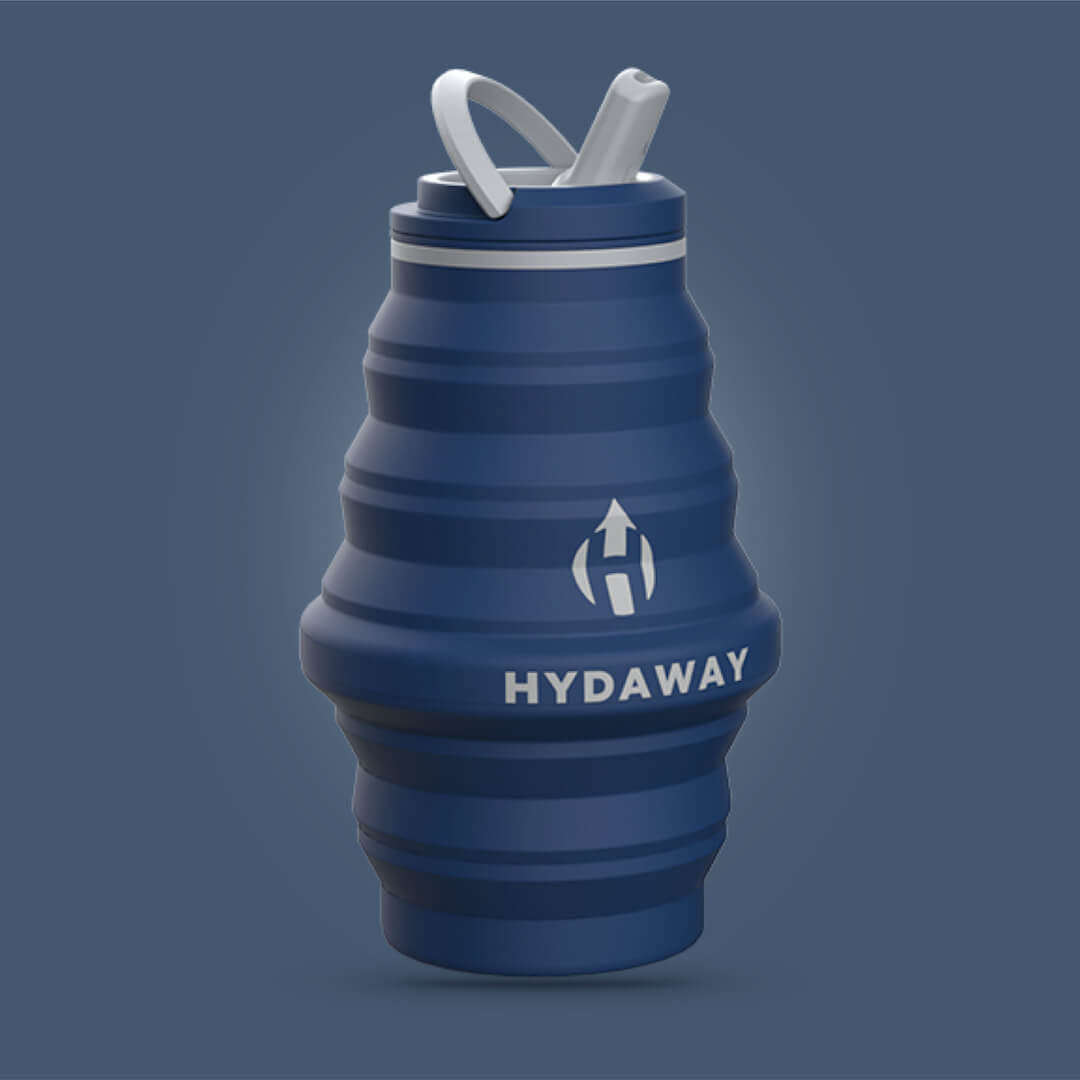
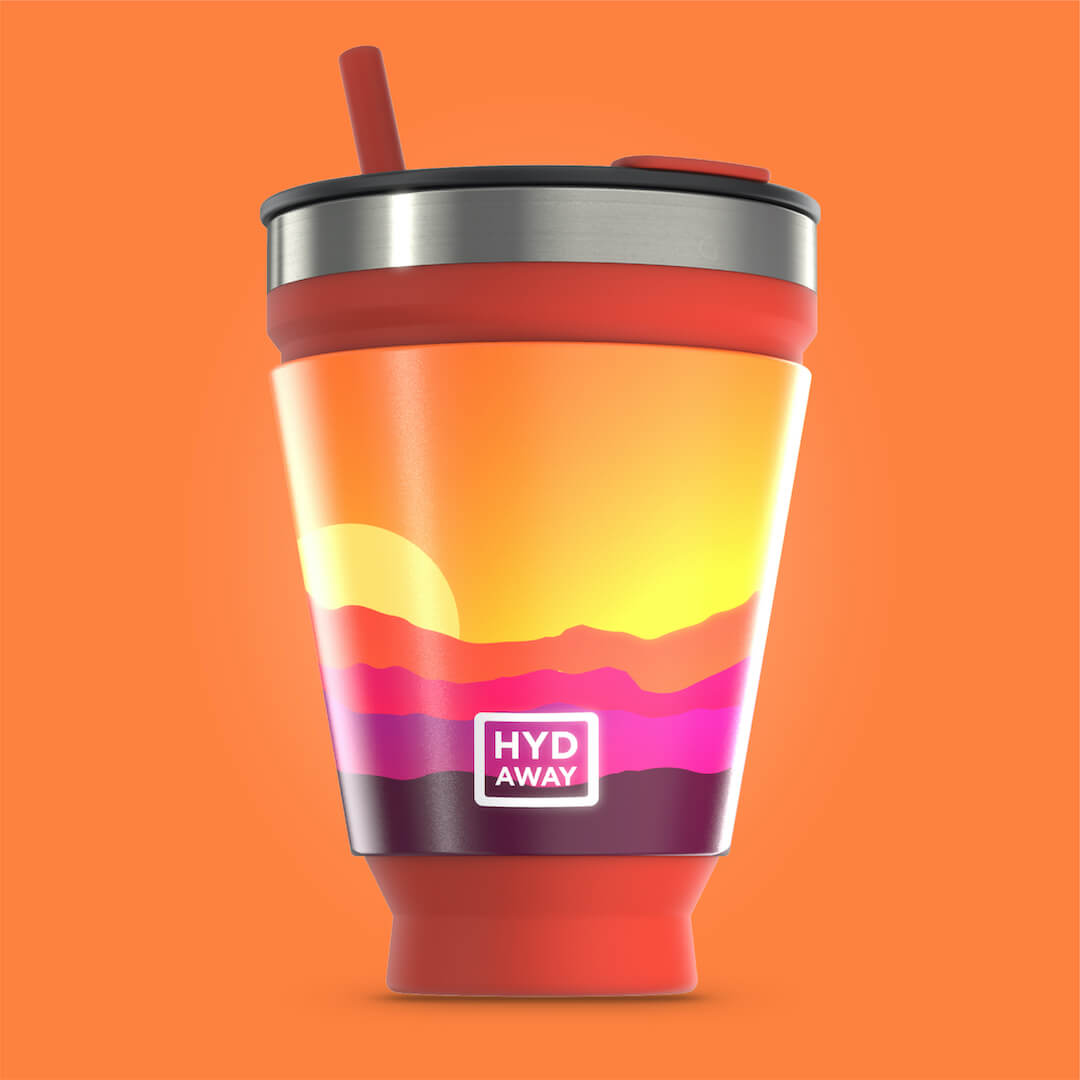
For tight packers, collapsible drinkware can solve a different problem entirely. HYDAWAY's collapsible tumbler folds down after use, which makes sense in a carry-on, campervan drawer, or crowded daypack. That same portability-first approach shows up in their broader drinkware line and in resources like this guide to BPA-free water bottles for travel and everyday carry.
The best personalized tumbler is the one that survives your routine and keeps getting packed.
If you're comparing blanks before customization, Cobra DTF's wholesale blank tumbler guide is a useful reference for understanding common formats, finishes, and what makes one tumbler body easier to decorate than another.
Decoding Personalization Methods Engraving vs Printing
Most buyers focus on the artwork. Experienced travelers focus on the failure mode. Will the design scratch off? Fade in the dishwasher? Peel at the edges after a month in a backpack pocket?
That's where personalization methods start to matter more than the graphic itself.

Engraving is the hard-use choice
Laser engraving removes surface material rather than laying color on top. On stainless steel, that usually gives you the longest-lasting result for names, monograms, simple logos, and minimal graphics.
There's a production trade-off, though. A detailed, full-wrap design on a 20 oz tumbler can take up to an hour on a lower-power laser, based on the workflow shown in this laser engraving tumbler video demonstration. That makes engraving especially efficient for smaller design areas and simpler artwork.
Engraving usually works well when you want:
- A permanent mark: No added ink or adhesive layer to wear away.
- A low-maintenance finish: Better suited to friction from bags, cup holders, and camp bins.
- A cleaner look: Great for initials, route coordinates, trail names, or a simple wordmark.
Printing gives you freedom, but asks more from the surface
Surface printing opens the door to color, gradients, detailed illustrations, and photo-style designs. If you want a national park skyline in multiple colors or a full-wrap trip graphic, printing is often the better tool.
The downside is durability under rough handling. As noted in seller content focused on stainless steel custom tumblers, engraving is generally more abrasion-resistant than surface printing, especially for people who keep tumblers in backpacks instead of on a desk. That gap is part of what makes Evright Industrial's durable Yeti customization solutions worth reviewing if you want to see how hard-use engraving is positioned in practice.
Wrap-style decoration looks bold, but can be the first to show wear
Wraps and similar decorative approaches can deliver big visual impact. They're often the easiest way to get a loud design around most of the tumbler body. They're also the style I'd avoid for rough adventure use unless appearance matters more than longevity.
Edges, seams, and high-contact zones are where these methods tend to feel vulnerable. In desk use, that might be acceptable. In a van console or a hiking pack, it usually isn't my first pick.
Here's the clean comparison.
| Method | Durability | Best For | Considerations |
|---|---|---|---|
| Laser engraving | High, generally the strongest against abrasion | Names, monograms, logos, simple outdoor-ready designs | Usually limited in color expression and slower for dense full-wrap detail |
| UV color printing | Moderate, especially if the tumbler sees heavy rubbing | Full-color graphics, gift designs, detailed art | Surface decoration can show wear sooner in bags, dishwashing, and daily commuting |
| Vinyl or wrap-style decoration | Variable, often more vulnerable in travel use | Bold visuals, themed events, short-run designs | Edges and surface wear matter more when packed tightly or used hard |
A quick visual can help if you're deciding between a crisp permanent mark and a color-heavy print.
If your tumbler lives in a backpack, choose the method that survives rubbing. If it lives on a desk, you can afford to prioritize graphics.
Designing a Tumbler That Tells Your Story
A good travel tumbler earns its place fast. It rides in a dusty cup holder, gets clipped into a pack side pocket, and ends up on picnic tables, trail gates, ferry decks, and campground sinks. The design has to hold up in those settings and still feel like yours a year later.

The strongest custom work looks intentional, not busy. A route you still talk about, a camp tradition, a ferry code, a ridgeline from a favorite hike, or a joke only your travel crew gets. Those details turn a tumbler from a novelty into gear you keep using.
Good travel designs usually start small
Compact artwork usually ages better in real travel use. Fine details get lost on curved steel, and oversized graphics often look dated once the excitement of the order wears off.
Good options include:
- Coordinates that matter: a trailhead, surf break, family campsite, or the city where a long trip started
- A route marker: a highway number, summit name, rail line, or airport code set from a memorable itinerary
- Minimal line art: a van silhouette, mountain profile, wave, pine tree, or compass
- Useful identity: your name, a phone number, a family trip label, or a simple symbol that stands out in a group camp kitchen
The tumbler's shape is a frequently overlooked detail that impacts daily use. Tall narrow models leave less room for wide artwork. Shorter, broader tumblers can carry a design more comfortably, but they also make off-center layouts more obvious. Before approving a proof, check where your hand sits, where the cup holder grips, and where scuffs will show first.
Match the design to real use
Artwork should fit the tumbler, but it also needs to fit the trip. A ski-weekend tumbler can carry a playful graphic. A bottle that lives in your van every day usually benefits from cleaner marks that still look good after months of hard handling.
A few design rules help on curved drinkware:
- Short text reads better: long quotes often wrap awkwardly or print too small
- Bold fonts hold up visually: thin script disappears fast on metal
- Clear contrast works: engraved marks and simple icons stay legible longer than crowded layouts
- Empty space helps: curved surfaces make clutter feel heavier
If you want inspiration for practical everyday personalization, HYDAWAY's guide to personalized insulated water bottles for everyday carry is a useful reference point.
Build for years, not for the first photo
Travel gear gets judged in bad conditions. Wet hands, sunscreen, trail dust, coffee drips, and rough bins expose weak design choices quickly. The designs that keep looking good are usually the ones that stay readable from a distance and avoid tiny decorative elements in high-contact areas.
A good travel design should still make sense when the tumbler is scratched, wet, or sitting three feet away on a picnic table.
If you are creating art yourself, mock it up at actual size before you order. Print it on paper, tape it around a bottle or mug, and check line thickness, spacing, and placement. That simple test catches a lot of mistakes that look fine on a screen.
For printed add-ons or layered graphics, it also helps to understand how to use UV DTF for products before choosing a decorative treatment. Some applications look sharp on day one but make more sense for lighter use than for a tumbler that spends its life in transit.
How to Order Your Personalized Tumbler
Ordering goes smoothly when you treat it like a gear purchase, not an impulse customization. You need the right blank, the right decoration method, and a proof that matches how the tumbler will really be used.
For single orders, inspect the listing like a traveler
A one-off personalized tumbler is usually the easiest path for a gift or your own daily kit. The mistake people make is focusing only on the design tool.
Check these basics first:
- Read the decoration method. If the seller doesn't say whether it's engraved, printed, or wrap-style, ask.
- Look at lid details. A handsome tumbler with a sloppy lid becomes annoying fast.
- Check care instructions. Those often reveal how delicate the customization really is.
- Review mockup accuracy. Digital previews can make small artwork look larger than it prints.
If you're comparing branded reusable drinkware options for gifts, teams, or personal use, HYDAWAY's overview of personalized insulated water bottles is a practical example of how brands frame customization around everyday carry rather than pure decoration.
For bulk orders, simplify the art
Group orders for retreats, company offsites, van clubs, running crews, or event merchandise work best when the artwork is restrained. A simple logo, short phrase, or location mark usually produces fewer proofing issues than a busy full-wrap concept.
When you order in volume, ask these questions before approving anything:
- Where exactly will the design sit? Front placement, wrap placement, and vertical orientation all feel different in the hand.
- What file type do they prefer? Clean vector art usually prevents fuzzy edges and interpretation problems.
- Will they send a proof? Always review spelling, placement, and scale before production.
- How will the decoration hold up? Ask specifically about abrasion and dishwashing, not just appearance on day one.
For anyone considering sticker-based product decoration or hybrid customization workflows, Raccoon Transfers has a useful explainer on how to use UV DTF for products. It's a good way to understand another route some sellers use for applying graphics to hard goods.
Order with your real routine in mind
The final decision should come down to where the tumbler will live.
A commuter who keeps a tumbler in a tote bag has different needs than a parent bringing drinks into theme parks, and both are different from a van traveler stuffing gear into tight drawers. If the tumbler will take hard contact, order for durability first. If it's mostly a gift piece or event keepsake, visual detail can matter more.
That one choice prevents most disappointment.
Keeping Your Custom Tumbler Adventure Ready
A custom tumbler doesn't need babying, but it does need the right kind of care. Travelers put drinkware through more than office users do. Cup holders grind the finish. Backpack pockets rub against zippers. Camp sinks invite hasty scrubbing with whatever sponge is around.

Care the decoration, not just the cup
The most important durability split is simple. Engraving is generally more abrasion-resistant than surface printing, which becomes especially relevant when your tumbler rides in backpacks or loose travel bins, as discussed in DiscountMugs' custom stainless steel travel mug category.
That means care should match the finish:
- Engraved tumblers: Usually the easiest to live with. Focus on preventing dents and keeping the lid clean.
- Printed tumblers: Use milder washing habits and avoid abrasive scrubbers on decorated areas.
- Wrap-style finishes: Be cautious with repeated rubbing, tight packing, and rough drying.
A few habits make a big difference
You don't need a special ritual. You need consistency.
- Wash with soft tools: A bottle brush, soft sponge, and mild soap are enough for most cleaning.
- Dry before sealing: Lids and gaskets get funky when stored wet.
- Pack with intention: Don't toss a custom tumbler into a gear bin with metal utensils and keys.
- Clean lids separately: Sliding and flip components collect residue faster than the tumbler body.
A lot of people assume tumbler care is mostly about hygiene. For custom drinkware, it's also about preserving the finish you paid for. If you want a practical maintenance baseline, HYDAWAY's guide to dishwasher-safe insulated tumblers is useful for thinking through how cleaning habits affect long-term usability.
The fastest way to ruin a nice custom finish is to treat the outside like cast iron and the lid like an afterthought.
Travel storage matters too
When you're on the move, store the tumbler upright when possible and empty it before long stretches in a pack. If the lid traps moisture, leave it open while airing out overnight. That's especially helpful in vans, hotel rooms, and campsites where items tend to get repacked before they're fully dry.
The gear that lasts usually isn't the gear with the fanciest features. It's the gear that fits easy maintenance.
A Sustainable Choice That Lasts
The strongest reason to personalize a tumbler isn't vanity. It's repeat use. A custom tumbler that feels like yours has a better chance of making it into your bag, onto the passenger seat, and through the airport than a generic cup you don't care about.
That's why one question matters more than most style decisions. Will personalization make you use the tumbler more often? That idea sits at the center of a useful point from Lands' End's promotional drinkware category. A customized tumbler can increase attachment and lower loss rates, making it more than a pricier generic cup. It can become a practical tool for behavior change and waste reduction, especially for travelers, as noted in this discussion of travel mugs and tumblers.
What lasts is what gets carried
A sustainable choice has to survive real life. That means the right size for your routine, a finish that matches your abuse level, and a design you still like after the trip glow wears off.
The tumbler that helps isn't the one with the most dramatic artwork. It's the one you reach for automatically before a drive, train ride, hike, workday, or park visit. Personalization can support that. Durability makes it stick.
Choose the body first. Choose the decoration second. Then take care of it like the useful piece of travel gear it is.
If you want reusable drinkware built around portability, HYDAWAY is worth a look. Their compact, travel-focused lineup fits people who care about saving pack space, carrying less single-use waste, and using gear that works from daily commutes to longer adventures.