

BPA-Free: Your Guide to Product Safety Verification

You're in the drinkware aisle, or maybe scrolling product pages with six tabs open, trying to choose something simple: a bottle, a tumbler, a lunch container. One product shouts “BPA-Free!” in big friendly lettering. Another says “food-grade silicone.” A third says almost nothing at all.
That's where a lot of smart shoppers get stuck. Not because they aren't paying attention, but because labels don't always tell you how a product was checked, who checked it, or what “safe” means in daily use.
If you've ever wondered, “How do I know this is really safe for hot coffee, cold water, snacks, or everyday family use?” you're asking the right question. The useful answer isn't just a label. It's safety verification. That means looking past the front of the package and into the evidence behind the claim.
Beyond the Label What Safety Verification Really Means
A label is a starting point. It isn't the whole story.
When shoppers see phrases like “non-toxic,” “eco-friendly,” or “BPA-free,” they often assume those words tell them everything they need to know. They don't. A label usually tells you what a brand wants to highlight. Safety verification tells you what was checked.
Why labels create confusion
Take a reusable bottle as an example. One brand may focus on a single chemical claim. Another may describe the material. Neither statement, by itself, tells you whether an independent lab tested the finished product for food-contact safety.
That difference matters because real safety questions happen in real life. You leave a bottle in a hot car. You fill it with coffee before a commute. Your kid uses it daily. You wash it often. You want to know not just what it's made from, but whether it was evaluated for how it's used.
Practical rule: Treat a front-of-package claim like a clue, not a conclusion.
For many shoppers, the biggest shift is learning that product safety isn't just a marketing message. It's a process. Brands that take this seriously usually explain their testing clearly, and they make room for questions instead of hiding behind vague language. If you want a plain-English primer on what independent review looks like, HYDAWAY's overview of third-party verification is a helpful place to start.
Why verification matters beyond compliance
In safety-critical fields, verification exists because checking assumptions prevents harm. The logic carries over to consumer products. Verification is what turns “we believe this is safe” into “this product was tested against a defined standard.”
That mindset has broad value. In workplace safety, the scale of preventable harm is a reminder that verification isn't busywork. The U.S. Bureau of Labor Statistics reported 5,486 fatal work injuries in 2022, up 5.7% from 5,190 in 2021, and the same data showed 2.8 million nonfatal workplace injuries and illnesses, according to OSHA-related reporting on workplace safety statistics. Consumer drinkware isn't the same as an industrial jobsite, of course, but the lesson is similar. When safety gets verified instead of assumed, people make better decisions.
A Background Check for Your Bottle
The easiest way to understand safety verification is to think of it as a background check for a product.
A manufacturer's claim is like a resume. It tells you what the company says about itself. A third-party test report is closer to the independent check that confirms whether the claim holds up.
Self-claim versus independent verification
A brand can say a bottle is BPA-free because that's how it specified the material. That's a self-declaration. It may be honest, but it still comes from the company selling the item.
Third-party safety verification works differently. An independent lab receives product samples and tests them against a recognized standard. The lab isn't there to write marketing copy. Its job is to measure, compare, and document.
That's the difference between hearing “trust us” and seeing evidence.
If you want a quick refresher on the claim consumers see most often, HYDAWAY's article on what BPA-free means helps separate the single-chemical claim from the bigger food-safety question.
What a background check should answer
For food-contact products, the useful question isn't only “Does it contain BPA?” It's also whether anything unwanted could migrate from the material into what you eat or drink during normal use.
A good verification process helps answer questions like these:
- Material identity: Is the product made from the material the brand says it uses?
- Intended use: Was it evaluated for contact with food or beverages, not just for appearance or durability?
- Real-world conditions: Was it tested in conditions that reflect heat, liquid contact, and regular use?
- Clear results: Did the report show a pass against the named standard?
Why one chemical claim isn't enough
“BPA-free” sounds reassuring because it's specific. The problem is that shoppers can mistake one claim for complete safety proof.
That's why a broader testing mindset matters. If you're buying a collapsible bottle for flights, commuting, or trail days, you want confidence in the finished product as used, not just confidence that one ingredient was excluded. A background check looks at the bigger picture.
A strong safety claim doesn't stop at what's absent. It shows what was tested, by whom, and against which standard.
For everyday buyers, that's the practical takeaway. Don't stop at the headline. Ask what evidence sits behind it.
Decoding the Alphabet Soup of Safety Standards
Once you start looking for proof, you run into acronyms fast. FDA. LFGB. REACH. BPA-free. They often appear side by side, even though they don't all mean the same thing.
That's why shoppers benefit from reading these labels less like badges and more like categories. Some refer to regulatory frameworks, some to material claims, and some to chemical rules.

What these labels usually mean in practice
For a bottle, cup, bowl, or food container, FDA language in the U.S. generally signals that the material is intended to meet baseline food-contact expectations for the American market. LFGB is a German food-contact standard that many careful shoppers watch for because it's often treated as a stricter benchmark for consumer goods that touch food and drink. REACH relates to chemical substances in the European context. BPA-free tells you something narrower. It says one specific chemical is not part of the product claim.
That means these labels answer different questions.
One practical comparison helps:
| Standard | Region | Primary Focus | Key Takeaway for Consumers |
|---|---|---|---|
| FDA | United States | Food-contact safety baseline | Useful baseline for drinkware sold in the U.S. |
| LFGB | Germany / widely recognized in EU product discussions | Food-contact testing for consumer goods | Often viewed as a tougher reassurance signal for items touching food and beverages |
| BPA-free | Product claim used across markets | Absence of Bisphenol A | Helpful, but too narrow to treat as full safety verification |
| REACH | European Union | Chemical substance regulation | Good sign a brand pays attention to broader chemical compliance |
How to rank these as a shopper
If you only remember one thing, remember this: a broad testing standard is usually more useful than a single-chemical slogan.
Here are several approaches:
- FDA claim: Good baseline if you're shopping in the U.S.
- LFGB mention: Stronger peace-of-mind signal for food-contact use.
- BPA-free only: Better than nothing, but incomplete.
- REACH mention: Helpful for chemical compliance context, though it doesn't replace food-contact testing.
For readers who like to understand how manufacturing quality connects to these claims, HYDAWAY's notes on manufacturing standards are useful context.
Why standards still need interpretation
Standards matter, but they aren't magic words. A brand still needs to show which product was tested and whether the final product passed.
Many buyers get tripped up by this. They see an acronym and assume it applies to the exact item in their cart. Sometimes it does. Sometimes the brand is speaking generally about materials, not the finished product.
That's also why context matters in other fields that demand purity and control. If you've ever looked at technical materials used in lab or pharmaceutical settings, a resource like Herbilabs water for injection shows how carefully intended use, purity, and verification have to line up. Consumer drinkware is a different category, but the decision habit is the same. Match the claim to the use.
How Independent Lab Testing Works
A lot of shoppers imagine “tested safe” as a vague stamp that appears at the end of product development. The actual process is more concrete than that.
It starts with a brand choosing the standard it wants the product to meet. Then it sends samples to an independent lab for evaluation.

The basic path from design to report
Here's the simple version of how independent lab testing usually works:
-
The product is designed
The brand selects materials and defines intended use. A bottle for water and coffee has different expectations than a decorative container.
-
Samples go to a neutral lab
The company submits the actual product or production-like samples to an outside testing organization.
-
The lab runs the defined tests
Technicians evaluate the item against the chosen standard. For food-contact products, that can involve exposure conditions that reflect contact with liquids or heat.
-
The lab records the findings
The results are documented in a report. This is the part consumers should ask to see when a brand talks about verification.
-
The brand uses the result carefully
A responsible brand ties its claim to the tested product and standard, not to broad feel-good language.
A quick visual helps make that path easier to picture.
Why independence matters
The lab's independence is the point. If the seller writes the conclusion and controls the evidence, you're back to trusting a resume. If a neutral party measures the product against a standard, the result carries more weight.
That same idea shows up in high-stakes engineering. In aviation software, verification isn't treated as paperwork. FAA guidance for DAL A software includes target metrics such as 95% toggle coverage, 97% assertion coverage, and 97% functional coverage, as described in FAA guidance on verification coverage. Most consumers won't ever need those metrics, but the lesson is useful: credible verification defines what gets checked and how completely it gets checked.
What consumers should listen for
When a brand talks about product safety, the language should sound specific. Good signs include named standards, mention of independent testing, and willingness to share documentation.
Weak signs sound like this:
- Vague reassurance: “Made with safe materials.”
- Broad buzzwords: “Clean,” “natural,” or “healthy” without proof.
- Missing lab detail: No report, no standard, no testing partner named.
A clear explanation builds trust because it gives you something to verify for yourself.
How to Read a Safety Report Like a Pro
This is the skill that changes how you shop.
Once you know what to look for, a lab report stops feeling technical and starts reading like a checklist. You don't need to be a chemist. You just need to confirm that the report matches the product and that the result is clear.

The five parts worth checking first
When a brand shares a certificate or test report, scan these areas before anything else:
- Client name: Does the report name the brand you're buying from?
- Product description: Does it match the actual item, not just a generic material?
- Test standard: Is the standard named clearly?
- Result summary: Can you find a clear pass outcome?
- Date and lab identity: Is the document current enough to feel relevant, and does it come from a recognizable testing lab?
If one of those pieces is missing, slow down.
What a strong report feels like
A useful report should let you connect the dots without guessing. You should be able to say, “This brand sent this product to this lab, and it passed this standard.”
That's different from a marketing image with icons and no documentation. The icons may still be true. You just can't verify them.
Bring the same mindset you'd use when checking water quality claims at home. This practical guide to water quality testing methods from BacteriaFAQ.com is a good reminder that test results only help when you know what was measured, under what method, and for what purpose.
Quick red flags that deserve a second look
Some warning signs are easy to miss because they look official at first glance.
| What you see | Why it can be a problem | What to do |
|---|---|---|
| A report for raw material only | The finished product may differ from the input material | Ask whether the final product was tested |
| A generic certificate image | It may not identify your product at all | Request the full report or compliance document |
| No date | You can't tell how current it is | Ask for the latest version |
| Brand claim without lab name | There's no way to assess independence | Ask who performed the testing |
The smart question to ask a retailer or brand
Instead of asking, “Is this safe?” ask something more concrete:
“Can you share the safety verification report or certificate for this exact product?”
That question changes the conversation. A transparent brand can usually answer it directly. A vague seller often replies with general copy about materials, which tells you less than you need.
Confidence comes from matching details
You don't need to memorize every standard. You do need to build the habit of matching the brand, product, standard, and result.
Once you've done that a few times, safety documents become much less intimidating. You start seeing the difference between a checked claim and a decorative one.
HYDAWAYs Commitment to Verified Safety
For a practical example, consider how a travel or outdoor brand should handle this information.
If you carry collapsible drinkware on flights, hikes, road trips, or your daily commute, you want materials that are easy to live with and documentation that's easy to check. That's especially true for products that are folded, packed, washed, and reused often.
What transparency looks like in real life
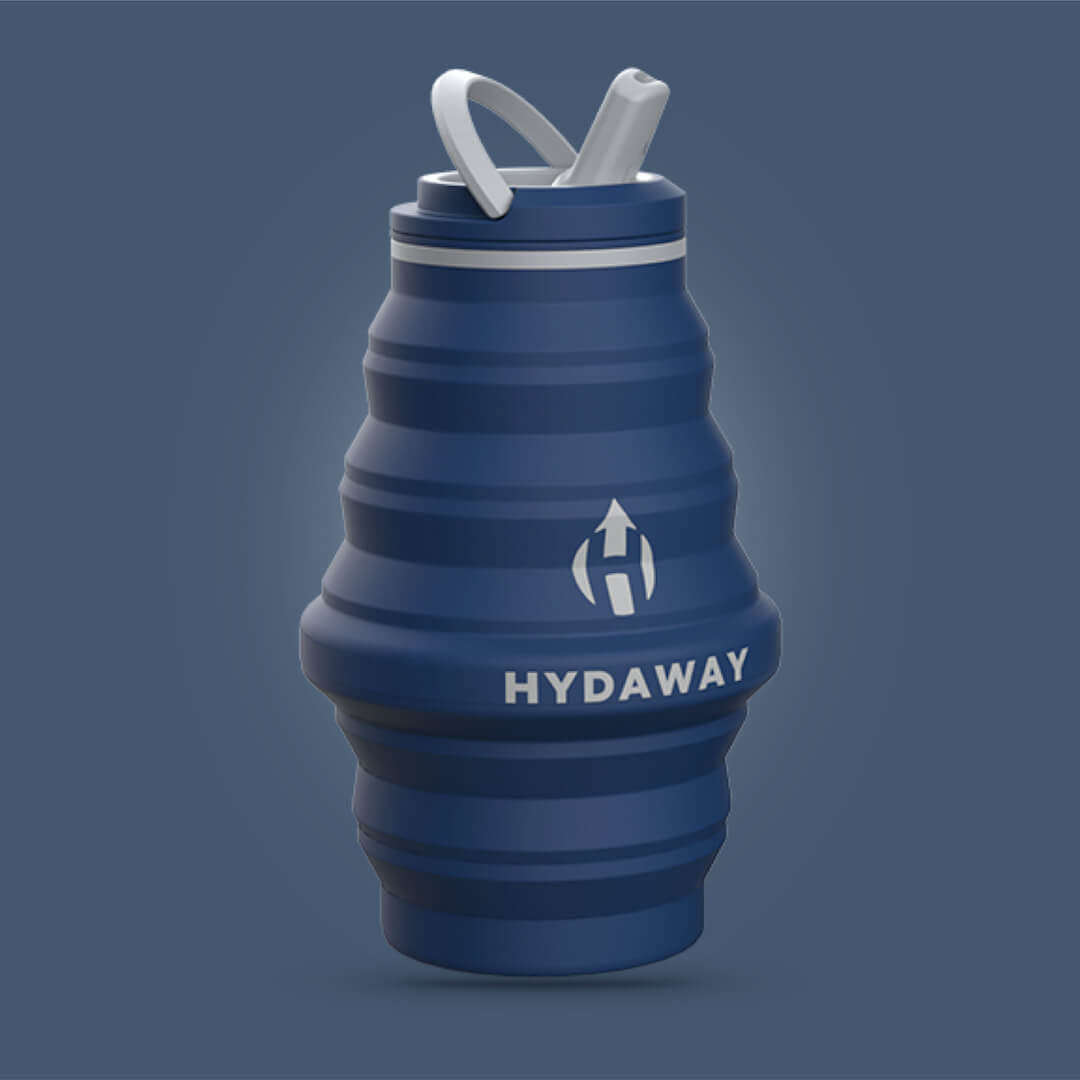
HYDAWAY states that its products are made from food-grade silicone and are third-party tested to meet U.S. FDA and German LFGB standards. For a shopper, that matters because it combines three useful things: a named material, independent testing, and identified standards.
That kind of transparency fits everyday use. A collapsible bottle packed into a personal item for a weekend flight, a cup tucked into a work bag, or a bowl carried to the campsite all live in close contact with food and drink. Safety verification matters more when the product is something you use repeatedly and without much thought.

What to take from that example
The useful lesson isn't “trust a logo.” It's “look for brands that connect their claims to evidence.”
When a company names the material, identifies the testing approach, and points to recognized standards, it gives consumers something solid to work with. That makes buying less stressful, especially for parents, travelers, commuters, and anyone trying to reduce single-use plastics without adding uncertainty to the routine.
Your Practical Safety Checklist for Choosing Products
When you shop for drinkware, containers, or portable food gear, keep the process simple.
Start by looking past broad claims. “BPA-free” can be part of the story, but it shouldn't be the whole story. Look for standards that tell you more about food-contact safety, and pay attention to whether the brand explains its testing clearly.
A short checklist helps:
- Go past the headline: Don't stop at “non-toxic” or “eco-friendly.”
- Look for named standards: FDA, LFGB, and similar references give you more to evaluate.
- Ask for proof: Request the report or certificate for the exact product.
- Match the details: Brand name, product name, standard, date, and pass result should line up.
- Choose transparent sellers: If a company makes safety verification easy to understand, that usually tells you something good about how it operates.
If you compare materials across categories, it can also help to see how other buyers evaluate safety questions in adjacent products. For example, this guide on whether titanium cookware is safe is a useful example of how to think through material claims before you buy.
The goal isn't to become suspicious of every product. It's to become calm, informed, and harder to mislead.
If you want reusable gear from a brand that explains its materials and testing clearly, take a look at HYDAWAY. It's a practical place to see how safety verification, packable design, and everyday travel use can come together in one product line.