


Master Product Specification: Your 2026 Guide

You probably have a product idea sitting in a notes app, a sketchbook, or a spreadsheet right now. It might be a smarter lunch container, a better travel mug, or a packable bit of gear you wish existed for your commute, your flights, or your weekends outside. The idea feels clear in your head.
Then the hard part starts. You send reference photos to a factory. You describe what you want in a few emails. You approve a rough sample. Weeks later, a tangible sample lands on your desk and it's off in ways that are hard to ignore. The lid feels loose. The finish looks cheap. The folded version doesn't fit where you expected. The product technically exists, but it doesn't match the promise you thought you were building.
That gap usually isn't caused by bad intent. It's caused by missing specificity. A manufacturer can only build what you define, and vague direction creates vague outcomes. That's why product teams rely on a product specification. It turns instinct into instructions, and it gives everyone involved the same target to hit.
For entrepreneurs and creators, this matters more than people admit. A good product specification isn't paperwork for large companies. It's the tool that protects your idea from being diluted as it moves from sketch to sample to shelf.
From Great Idea to Failed Product The Story of Why Specs Matter
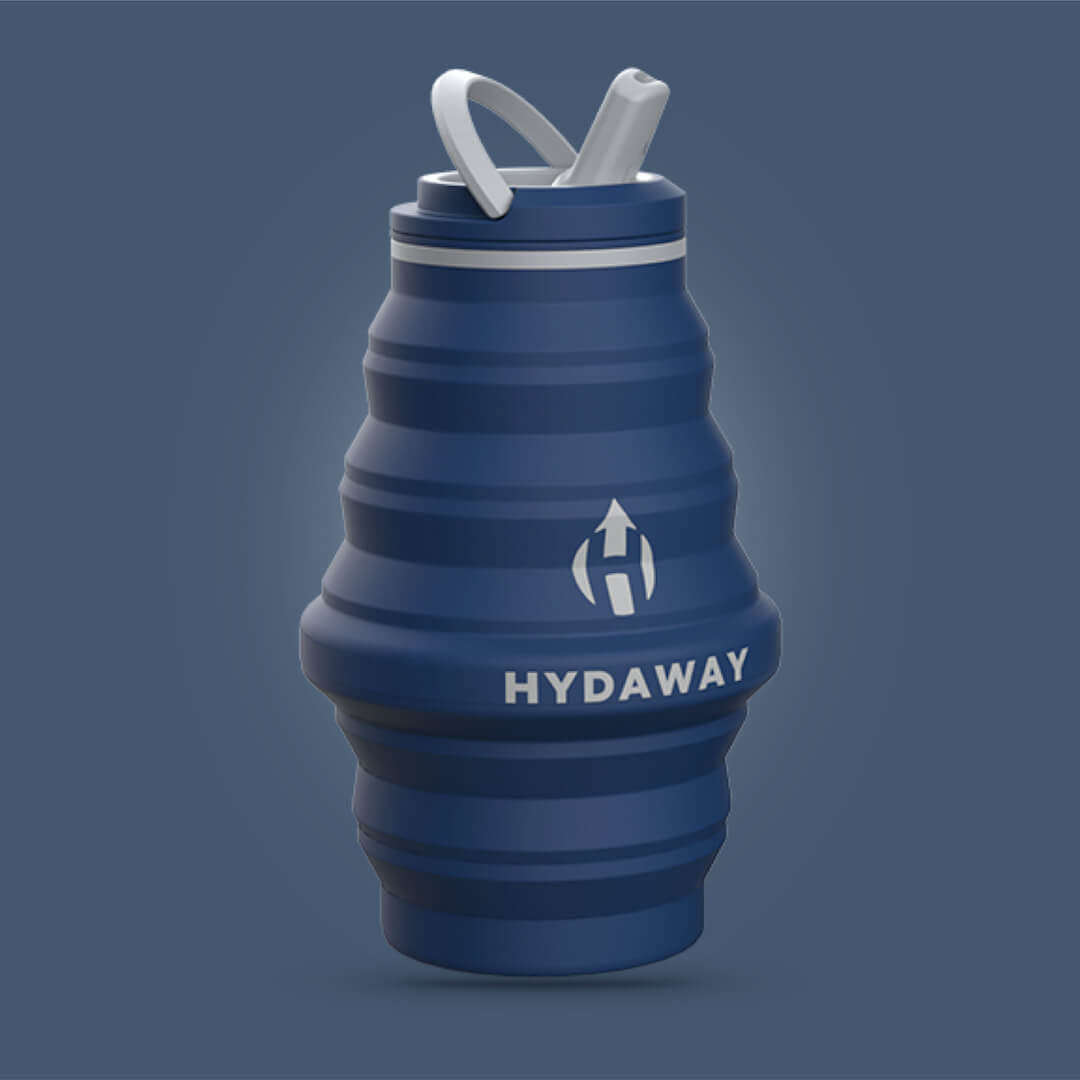
A founder I once worked with had a simple goal. She wanted a travel bottle that felt premium, packed flat, and held up to daily use. She had mood boards, a rough CAD drawing, and a clear sense of the brand. What she didn't have was a real spec.
She told the factory she wanted it to be “durable,” “compact,” and “easy to clean.” Those sound useful until you realize each person hears them differently. To one supplier, durable meant thick material. To another, it meant a stiffer hinge. To the customer, it meant the bottle should survive regular folding, washing, stuffing into a tote, and being forgotten in a car cup holder.
The first round of samples told the whole story. One version folded nicely but felt too soft when full. Another stood upright but took up too much space when collapsed. A third looked polished in photos but trapped moisture in places that made cleaning annoying. Nobody had violated instructions. The instructions weren't specific enough.
The hidden cost of vague language
Words like “high quality” and “premium feel” are fine for marketing. They're risky in production.
A factory needs concrete direction such as:
- What size matters most: Does collapsed height matter more than full capacity?
- What performance matters most: Should it resist leaks in a backpack or just stand stable on a desk?
- What must never change: Are materials, color, lid fit, or cleanability fixed requirements?
- How success gets checked: What test decides whether a sample passes?
A product can miss the mark even when every supplier involved is trying to help. Misalignment usually starts with assumptions, not laziness.
That's the core job of a product specification. It becomes the single source of truth for what the product is, how it should perform, what it's made from, and how the team will know it's ready. Without that, everyone fills in blanks with their own judgment.
For a collapsible bottle or bowl, those blanks matter in daily life. People don't buy packable gear because it sounds clever. They buy it because they want something that disappears into a bag when empty, shows up when needed, and doesn't create a new hassle. If your spec doesn't protect that experience, the product won't either.
What Is a Product Specification Really
A product specification is best understood as the master recipe for a product. The menu says “collapsible bottle.” The recipe defines the exact ingredients, measurements, method, and standard for whether the final dish is right.
That distinction matters because a product spec does far more than describe. As Inriver's overview of product information explains, product specification is a structured data set that can span the full product lifecycle, from sourcing and design through manufacturing, sales, after-sales, recycling, and retirement. In practical commerce systems, it commonly includes dimensions, weight, materials, sizing guides, features, functions, warranty length, capacity, and pricing data.

It's not the same as a product description
A product description helps someone want the item. A product specification helps a team build, test, source, and support it.
That's why the same product may be described in two very different ways:
| Document type | Example line for a collapsible bottle |
|---|---|
| Marketing description | Folds flat for travel and everyday carry |
| Product specification | Defines dimensions, materials, closure details, cleaning requirements, and pass-fail standards |
If you're a founder, that difference can feel subtle at first. It isn't. One document inspires demand. The other prevents mistakes.
Why creators should care
A good spec helps more than your factory. It helps your designer choose tradeoffs, your operations team order the right packaging, your wholesale partner understand what they're stocking, and your customer support team answer real questions.
It also strengthens trust when your claims need proof. If you say a material is safer, cleaner, or more responsibly verified, your spec should connect that claim to documentation and test requirements. That's part of why brands increasingly talk about verification, not just branding, as seen in this HYDAWAY piece on what third-party verification means.
The simplest way to think about it
Use this mental model:
- The idea is the promise.
- The prototype is the experiment.
- The product specification is the agreement.
Practical rule: If two smart people can read your spec and still imagine two different products, the spec isn't finished.
For physical products, that agreement needs to cover the what, the how, and the proof. That's where many first-time founders get stuck. They write what they hope the product feels like, but they don't define what the team must build or how anyone will verify it.
The 7 Essential Elements of a Great Spec Sheet
A great spec sheet works like the blueprint for a house. If the blueprint is vague, every builder fills in the gaps differently. For a physical product, that is how a clever idea turns into a bottle that leaks, feels flimsy, or misses the brand promise that made people care in the first place.
Founders and creators often hear “specification” and assume it is an engineer's document. It is, but it is also a translation tool. It turns intent into instructions that designers, suppliers, factories, and quality teams can all follow in the same way. For a collapsible water bottle, that matters even more because the product has to do several jobs at once. It needs to hold liquid safely, collapse neatly, feel good in hand, clean up well, and still look like your brand meant it to look.

Purpose and scope
Start with the job the product is hired to do.
Write the purpose in plain language. Who is the product for? What problem does it solve? In what situations should it work well? A collapsible bottle might be built for commuting, travel, gym bags, and carry-on packing. That gives the whole team a shared target.
Scope also sets boundaries. If portability matters more than maximum insulation or extra-large capacity, say that clearly. Good products come from tradeoffs made on purpose, not by accident.
Functional requirements
Functional requirements describe the actions the product must perform. They are the promises the product has to keep every time someone uses it.
For a collapsible bottle, that could include expanding for drinking, collapsing for storage, standing upright when full, sealing securely in transit, and fitting into the intended carry setup. These statements should read like observable behaviors, not marketing language.
A simple format helps:
- Must store liquid safely
- Must collapse without disassembly
- Must open and close in a way users can repeat easily
- Must fit the intended use context, such as a backpack pocket or travel pouch
If you want a helpful product manager's perspective on effective product spec writing, that resource is a useful companion.
Non-functional requirements
This category catches the details customers notice first, even if they are harder to name.
A product can technically work and still frustrate people. A bottle may hold water but feel awkward to grip. It may collapse correctly but retain odors after washing. It may seal under normal use but fail when squeezed inside a packed bag. Those quality expectations belong in the spec because they shape whether the product gets used again tomorrow.
Write these as measurable expectations wherever possible. Instead of “durable,” define the kind of stress it should handle. Instead of “easy to clean,” define what happens after dishwasher or hand-wash testing.
Technical specifications
Technical specifications are the exact build instructions, detailing how broad ideas become specific enough to manufacture consistently.
List the materials, dimensions, wall thicknesses, tolerances, finishes, color references, closure details, seals, threading, branding placements, packaging interfaces, and compatibility requirements. A founder may be tempted to leave some of this flexible. That usually creates more confusion, not more creativity.
For collapsible products, capture both forms. The open size matters. The collapsed size matters too. So does the mechanism that connects those two states, because the movement affects durability, user feel, and long-term performance.
Testing and acceptance criteria
A spec is only useful if someone can verify it.
That means each important requirement should connect to a test method and a pass-fail standard. A bottle should not be approved because a sample “looks good.” It should be approved because it passed the agreed leak test, survived the required number of fold cycles, met visual standards, and stayed within dimensional tolerance.
For a collapsible bottle, this section often includes:
- Leak testing: method, fill level, orientation, duration, and what counts as failure
- Cycle testing: how many collapse and expansion cycles the product must survive
- Cleaning checks: what must remain true after dishwasher or hand-wash use
- Visual inspection: acceptable limits for scratches, print alignment, flash, color variation, and blemishes
This part saves money because it catches disagreement before production, not after cartons arrive.
Design details
A good spec sheet protects the customer experience, not only the mechanics.
Include the visual and tactile details that make the product feel intentional. That can mean grip texture, firmness, finish level, seam placement, logo size, color standards, and how the product should look in both expanded and collapsed form. These details often seem small until a factory changes one of them and the product suddenly feels off-brand.
A short table keeps this clear:
| Area | Design detail to capture |
|---|---|
| Form | Shape when expanded and when collapsed |
| Touch | Grip texture, flexibility, firmness |
| Finish | Surface treatment, gloss, matte, print placement |
| Experience | Ease of opening, drinking, cleaning, storing |
Approvals and version control
Every product changes during development. That is normal. Trouble starts when one team is working from version 3, another is quoting version 4, and the factory is building from a marked-up PDF no one approved.
Your spec should record version number, revision date, owner, summary of changes, and sign-off status. Treat it like the master copy of the product's truth.
For entrepreneurs, this may feel administrative. In practice, it protects time, budget, and trust. If your collapsible bottle is meant to represent quality, safety, and thoughtful design, version control is part of keeping that promise.
A HYDAWAY Product Spec in Action
The easiest way to understand a spec is to examine a product that people use in real life. Take an insulated collapsible bowl. A casual product page might say it keeps food warm and packs down for travel. That's useful, but it leaves out the exact questions buyers and production partners both need answered.

The hidden questions a real spec must answer
A bowl like this gets used in more places than people first assume. It might ride in a commuter bag with lunch, sit in a campervan drawer, go into a theme park daypack for snacks, or help a traveler avoid disposable containers in airports and hotels. Those use cases sound similar, but they stress the product in different ways.
That's why generic spec language falls apart. Buyers don't only want to know what the product is. They want to know whether it works in their situation. SaleAI's discussion of product content gap analysis highlights this underserved angle. Buyers often need missing details around compatibility, use-case fit, and proof points because a page can identify a product and still leave them unsure whether it fits their needs.
For a collapsible insulated bowl, the hidden questions often look like this:
- Packability: How compact is it when collapsed, and what carrying situations does that allow for?
- Performance tradeoff: What changes when the bowl folds? Does insulation, rigidity, or lid security change?
- Cleaning reality: Are there features that make trapped food or moisture more likely?
- Travel practicality: Does the shape work in a crowded bag, not just on a countertop?
- Claim verification: What evidence supports safety or sustainability claims?
What the spec would include
A useful spec for this kind of product would document the exact materials, the shape in both expanded and collapsed states, the lid fit, the intended temperature-use conditions, and the acceptance tests for leak resistance, stability, and cleaning durability. It would also connect any safety or sustainability claims to required documentation rather than leaving them as marketing copy.
Just as important, it would spell out tradeoffs in plain language for internal teams. A collapsible product always balances two goals that pull against each other. It needs to compress small, but it also has to feel dependable when in use. If you don't define where flexibility is allowed and where firmness is required, your samples will swing too far in one direction.
Good specs answer the question behind the question. Not just “Is it insulated?” but “What does insulation still mean after the product folds flat and rides in a backpack?”
This product video helps illustrate how much of the user experience comes from motion, packing, and transformation, not just static dimensions.
Why this matters to everyday users
A founder may write specs for a supplier, but the final beneficiary is the person using the product on a rushed morning or a long travel day. If the bowl collapses neatly but the lid becomes unreliable after repeated use, the problem shows up in a lunch bag. If the material claim sounds reassuring but isn't tied to documentation, the doubt shows up right at purchase.
That's why a product specification should work on two levels at once. It should guide manufacturing with precision, and it should force the brand to answer real-world questions with honesty.
Editable Templates and Checklists to Get Started
If you're staring at a blank document, start with a template. Don't try to write the perfect spec from scratch. Build a working draft including the essentials, then sharpen it as samples and questions come in.

A simple product specification template
Copy this structure into your own doc:
-
Product name and version
Include model name, revision date, and owner. -
Purpose and user
State what problem the product solves and where people will use it. -
Core functions
List what the product must do in use. -
Performance requirements
Define what “good enough” means for durability, usability, and reliability. -
Technical details
Add materials, dimensions, finishes, components, color references, and packaging notes. -
Testing and acceptance
Record test method, pass-fail criteria, sample approval process, and defect standards. -
Approvals and revision history
Capture changes, sign-offs, and current version status.
A practical checklist before you send it out
Before sharing your spec with a supplier or wholesale partner, check for these gaps:
- Missing proof: Are safety, sustainability, or compliance claims connected to documents?
- Vague adjectives: Replace terms like sturdy, sleek, premium, and travel-friendly with criteria people can test.
- Unclear use case: State where the product should perform well and where it may not be intended for use.
- No owner: Every section needs someone responsible for final decisions.
- No launch readiness view: Product specs don't live alone. Packaging, operations, fulfillment, and retail readiness matter too.
For founders launching a consumer product, this broader CPG product launch checklist is a helpful companion because it catches operational details a spec sheet won't cover by itself.
If you're building from an early-stage concept, HYDAWAY also keeps practical Kickstarter resources for product creators that can help you connect product definition to launch planning.
One habit that saves time
Write your first spec as if your future self will inherit the project after six months away. That mindset changes everything. You'll explain decisions more clearly, label files better, and stop relying on memory to fill in critical details.
Collaborating with Manufacturers and Wholesalers
A spec sheet earns its keep the moment your product leaves your head and enters someone else's factory.
That handoff is where many founder-led products wobble. You know what “the lid should feel secure” means because you have the idea in your mind. A manufacturer does not. A wholesaler does not. They need the written version of your intent. For a collapsible water bottle, that could mean the difference between a cap that clicks shut with confidence and one that leaks in a backpack, then erodes trust in your brand.
A good specification creates shared reality. It gives the factory a clear target to build toward, and it gives wholesale partners confidence that the product they sample is the product they can reorder later.
Clear specs make better conversations
The point of a spec is not to corner a supplier after a mistake. The point is to prevent avoidable mistakes before tooling, sampling, and production get expensive.
Say your document calls for a “high-quality silicone body.” That phrase sounds useful, but it leaves too much open to interpretation. Does high-quality mean a certain grade of silicone, a certain wall thickness, a certain odor standard, or a certain number of fold cycles without cracking? Once you write those details down, the conversation changes. You are no longer debating taste. You are reviewing criteria.
That shift matters because factories are making choices all day long. If your standards are fuzzy, they will fill in the blanks. Sometimes they will guess correctly. Sometimes they will choose the fastest, cheapest, or most available option and assume it is acceptable.
What to review together
A spec review meeting should focus on the parts of the product most likely to create friction, returns, or disappointment. For a travel product like a collapsible bottle, these are usually the places where the customer's hand, eyes, and routine meet the product first.
Talk through:
- Customer-facing failure points: What would make someone lose trust fast, such as leaking, bad odors, hard-to-clean threads, or collapse mechanisms that feel unstable?
- Allowed variation: Which dimensions can flex slightly, and which ones affect fit, sealing, stacking, or packaging and must stay tight?
- How pass or fail is judged: Spell out the test method, not just the expectation. A drop test, leak test, or fit test only helps if both sides use the same method.
- Proof behind claims: If you are claiming food safety, recycled content, or compliance, note what documents the supplier must provide and when.
- Retail-readiness details: Wholesalers also care about case pack, barcodes, shelf presentation, labeling, and how the product arrives in sellable condition.
HYDAWAY's article on manufacturing standard practices is a useful reference here because it shows how documented standards protect consistency before production volume grows.
Wholesalers need a spec for a different reason
Manufacturers use the spec to build. Wholesalers use it to assess risk.
A buyer is asking practical questions. Will every unit look the same on the shelf? Will the stated capacity, material, and care instructions hold up under customer scrutiny? Will the packaging support the story the brand is telling? Your spec helps answer those questions before a retailer commits money and space to your product.
This is one reason founders in many product categories run into the same problem. The idea may be strong, but the documentation is too thin to support production and sales. The lesson shows up far beyond drinkware, which is why the PledgeBox guide for game creators feels surprisingly relevant. Different product, same truth. Creative products still need precise instructions.
Keep the relationship practical and calm
Language matters during sample review.
Saying “this sample is wrong” often leads to defensiveness. Saying “the sample missed the agreed leak-test requirement and the rim dimension is outside tolerance” gives the team something concrete to fix. It turns frustration into problem-solving.
A clear spec makes feedback fair. It protects both sides from memory, assumptions, and shifting expectations. That is how good partnerships scale. Not through vague goodwill alone, but through written definitions everyone can work from.
Your Blueprint for a Successful Product
A good product starts as an idea, but it survives because somebody took the time to define it clearly. That's what a product specification does. It turns taste into criteria, intention into instructions, and promises into something a team can verify.
For creators, this work can feel slower than sketching, branding, or posting launch teasers. It's still the work that protects your investment. It helps you avoid avoidable sample rounds, weak claims, mismatched expectations, and products that almost fit people's lives but not quite.
That lesson carries across categories. Even creators outside physical gear can learn from it. For example, board game founders often discover that the difference between a fun concept and a manufacturable product lies in documentation, production detail, and launch discipline, which is why this PledgeBox guide for game creators feels surprisingly relevant.
The strongest products don't happen because someone had a clever idea. They happen because someone translated that idea with enough care that other people could build it well.
If you want to see how thoughtful, packable gear shows up in real life, explore HYDAWAY for collapsible hydration, drinkware, and dinnerware designed for travel, commuting, outdoor days, and everyday routines where saving space matters.