


Best Reusable Travel Coffee Cup 2026 Guide

You know the moment. You clear security, grab your bag, and realize your empty mug is still taking up the same amount of space as a full one. It bangs against your laptop, steals room from a jacket layer, and feels like one more object to manage before you have even had coffee.
That is why choosing a reusable travel coffee cup is not a minor gear decision. For travelers, commuters, campers, and carry-on-only people, the wrong cup creates friction all day. The right one disappears into your routine, keeps coffee where it belongs, and earns its place in your bag every single time.
The Modern Traveler’s Quest for the Perfect Coffee
Airports, train stations, rental cars, hostel kitchens, camp tables. Coffee follows us everywhere, but the cup often lets us down.
A lot of travelers start with the same logic. Buy a sturdy mug, toss it in the bag, and call it solved. Then real life happens. The mug is bulky when empty. The lid leaks when packed sideways. The base does not fit the cup holder. The exterior gets hot. Or the cup is so heavy that you leave it behind, then end up back in line for another disposable.
That pattern matters beyond convenience. The global reusable coffee cup market reached USD 2.13 billion in 2024 and is projected to grow to USD 3.97 billion by 2033, driven in part by consumers looking for alternatives to the 500 billion single-use coffee cups that enter landfills annually (Market Intelo reusable coffee cup market data). People want a better habit. They just do not always have the right tool for it.
The frustrating part is that coffee itself is often the bright spot in a travel day. A flat white before a long train ride. Hotel room pour-over before sunrise. A takeaway americano for the walk into town. Good coffee feels grounding when everything else is in motion.
Why the wrong cup keeps failing
Some cups are built like kitchenware, not travel gear.
They work if you commute by car and empty them quickly. They fail when you are moving through crowded terminals, carrying a daypack, or trying to pack light for a week. Travel exposes design flaws fast.
Three pain points show up over and over:
- Bulk when empty: Rigid cups occupy full volume all day, even after the coffee is gone.
- False leak protection: Many lids are spill-resistant in your hand but risky inside a tote or backpack.
- Poor fit with real travel habits: A mug can insulate well and still be annoying to carry.
A travel cup should solve a problem, not become one.
The cup worth carrying is the one that fits how you move. That might mean strong insulation for a road trip. It might mean a collapsible body for one-bag travel. It might mean a lid you trust enough to pack next to electronics. Those choices shape the rest of your day more than most buyers expect.
More Than a Mug How a Reusable Cup Shapes Your Travels
A travel coffee cup is gear. Put it in the same category as a daypack that fits under the seat or a charger that works in multiple countries. If it is reliable, your day gets easier. If it is not, you feel it every time you leave your room or campsite.

It changes what you can do between stops
A dependable cup creates options.
You can fill up at the hotel before heading out. You can buy coffee at a local café and carry it through a museum district without racing the clock. You can bring a drink onto a train platform, into a rideshare, or across a campground without juggling a flimsy paper cup and a separate bottle.
That matters more on long days than people think. Travel is a chain of transitions. The right cup smooths out the gaps between them.
It can reduce waste without asking for a perfect lifestyle
Many people do not need a zero-waste fantasy. They need a repeatable habit.
A reusable cup gives you one practical way to cut disposable use in a category that adds up fast. In many places, takeaway coffee is an everyday purchase. Having your own cup means you can choose the more durable option when the opportunity is there, instead of relying on whatever single-use vessel a café hands over.
The habit is simple. Keep the cup packed. Rinse it when you can. Use it again tomorrow.
It improves coffee quality in ordinary ways
This gets overlooked. Coffee usually tastes better when the vessel is built for drinking, not for surviving a ten-minute handoff.
A better lid makes sipping easier while walking. A more stable form is less messy in motion. A cup with decent thermal performance gives you time to enjoy the drink instead of gulping it before it goes flat or cold.
It becomes part of your packing system
Frequent travelers eventually organize by friction. Anything awkward gets removed.
A reusable travel coffee cup survives that test only if it earns its volume and weight. That is why shape matters so much. A commuter with a slim tote cares about profile. A family at a theme park cares about bag space. A van-lifer cares about storage and cleanup. A digital nomad cares about all of it.
Here is the practical lens I use.
| Travel style | What matters most in a cup |
|---|---|
| Carry-on only | Packability, low bulk, simple cleaning |
| Daily commuter | Leak protection, one-hand use, cup-holder fit |
| Road trip or van life | Insulation, durability, easy wash-up |
| Family outing | Space efficiency, low mess, repeat use |
A cup is not meaningful because it is reusable in theory. It matters because it works in the exact moments when disposable cups seem easier.
Decoding Cup Materials and Insulation
Materials decide how a cup feels in the hand, how it behaves in a bag, how easy it is to clean, and whether you will still want to use it six months from now. Insulation decides whether your coffee survives the morning.
Those are separate questions. Good buyers treat them separately.

Stainless steel for durability and heat retention
If your priority is ruggedness and temperature control, stainless steel is still the standard pick.
Many well-built travel mugs use 18/8 stainless steel. It handles drops better than glass, resists rust, and pairs well with vacuum insulation. For people who commute in winter, drive long distances, or drink slowly, it is usually the easiest material to trust.
Its trade-offs are familiar:
- Pros: Strong, durable, good for insulated construction
- Cons: Rigid and bulky, often heavier than collapsible options
- Best for: Car travel, office commutes, long walks with hot coffee
Some travelers also prefer ceramic-lined steel interiors because they reduce the metallic note that plain stainless can sometimes leave on delicate coffee.
Silicone for flexibility and storage efficiency
Food-grade silicone serves a different job. It is not trying to beat steel at insulation. It is solving the space problem.
A good silicone cup can collapse when empty, which changes the entire ownership experience for people who pack tight. It is useful for flights, daypacks, beach bags, diaper bags, and hiking setups where every awkward object becomes a nuisance. If you want a material primer, this guide on food-grade silicone and how it is used in travel gear is worth reading.
Silicone works best when the cup is engineered for stability and supported by a good sleeve or frame. Cheap versions can feel floppy or awkward. Better ones feel intentional.
Glass and ceramic for taste purity
Glass is excellent for flavor neutrality. If you care about taste and usually drink in calmer settings, glass can be satisfying.
For travel, it comes with obvious limits. It is heavier, more fragile, and less forgiving in crowded bags or outdoor settings. Even when protected by a sleeve, it tends to suit careful commuters more than hikers or one-bag travelers.
Ceramic interiors, especially inside a more durable shell, split the difference. You get some of the taste benefits without going full glass.
A quick material comparison
- Choose steel if you want long heat retention and hard-use durability.
- Choose silicone if empty-space efficiency matters as much as drinking performance.
- Choose glass if taste is your top priority and breakage risk is low.
- Choose ceramic-lined designs if you want flavor neutrality in a more travel-ready format.
The right material is the one that matches your movement pattern, not the one that wins a lab comparison on a single feature.
Why vacuum insulation matters
Insulation is where buyers get confused because “double-wall” and “insulated” can mean very different things.
A simple way to think about it is this. A standard double-walled mug still has a medium between layers. A vacuum-insulated mug removes that medium, which sharply reduces heat transfer. That is why vacuum-insulated cups, made with double-walled stainless steel, can keep beverages hot 4 to 6 times longer than non-vacuum designs, and some models can hold an optimal sipping temperature above 140°F/60°C for over 6 hours (AeroPress travel mug product details).
For travelers, that translates into three real benefits:
- More flexible timing: You do not need to finish your drink immediately.
- Less reheating: Useful in vans, offices, and hotel rooms.
- More comfortable carry: Better insulated mugs often keep exterior heat from transferring to your hand.
What insulation cannot do
Insulation does not fix a bad lid. It does not make a large rigid mug easier to pack. It does not compensate for a cup shape that does not fit your routine.
That is why the best buying decision usually starts with one question: do you need maximum heat retention, or do you need a cup you will carry when space is tight?
The Packability Factor Collapsible Versus Rigid Designs
Most buying guides treat packability like a side note. For travelers, it often decides whether the cup gets used at all.
A rigid mug performs one way. It occupies the same space whether it is full, half-full, or empty. That is fine on a desk. It is much less appealing in a backpack that also holds a sweater, headphones, snacks, and a camera.

Why collapsible design matters in real travel
The empty-cup problem is what pushes many people toward single-use cups. They are not choosing disposables because they love waste. They are choosing convenience.
Collapsible cups respond to that exact friction point. Once empty, they shrink down and stop competing for space with the rest of your essentials. For anyone traveling with one bag, moving through cities on foot, or carrying gear for a family, that matters.
For such travelers, form factor becomes more important than many product pages admit. A cup can have decent insulation and a decent lid, yet still lose because it is annoying after the coffee is gone.
Rigid cups still have a clear place
Rigid mugs are still the right answer in some routines.
If your day centers on a car cup holder, a workstation, or long slow sipping in cold weather, a rigid vacuum-insulated steel mug is hard to beat. It feels stable. It protects temperature well. It usually has a familiar drinking experience.
That is why I do not frame collapsible versus rigid as a winner-take-all debate. It is a routing decision.
| Use case | Better fit |
|---|---|
| Long cold commute with one drink lasting hours | Rigid insulated mug |
| Airport, train, or daypack travel with limited space | Collapsible cup |
| Camp kitchen with lots of gear already packed | Collapsible or nesting solution |
| Desk use with minimal movement | Either, based on preference |
What works in collapsible cups and what does not
The good collapsible designs solve three things at once. They create enough structure to drink comfortably, enough sealing to trust in transit, and enough compression to justify their existence.
The weak ones usually fail in one of these areas:
- Too soft at the rim: awkward to sip from when hot
- Poor locking geometry: annoying to open and close repeatedly
- Unreliable lid fit: acceptable upright, risky in a bag
- No grip or sleeve: harder to handle with hot drinks
A recent field study cited in gear coverage found that high-quality, BPA-free silicone collapsible cups can withstand over 500 dishwasher cycles, but only 27% retained full leak-resistance after a year of rugged use, which puts the focus on engineering quality rather than the concept alone (field study summary on collapsible cup durability).
That finding matches what experienced travelers already know. The issue is rarely “collapsible is bad.” The issue is whether the cup was designed for rough, repetitive use or for a stylish product photo.
Where HYDAWAY fits
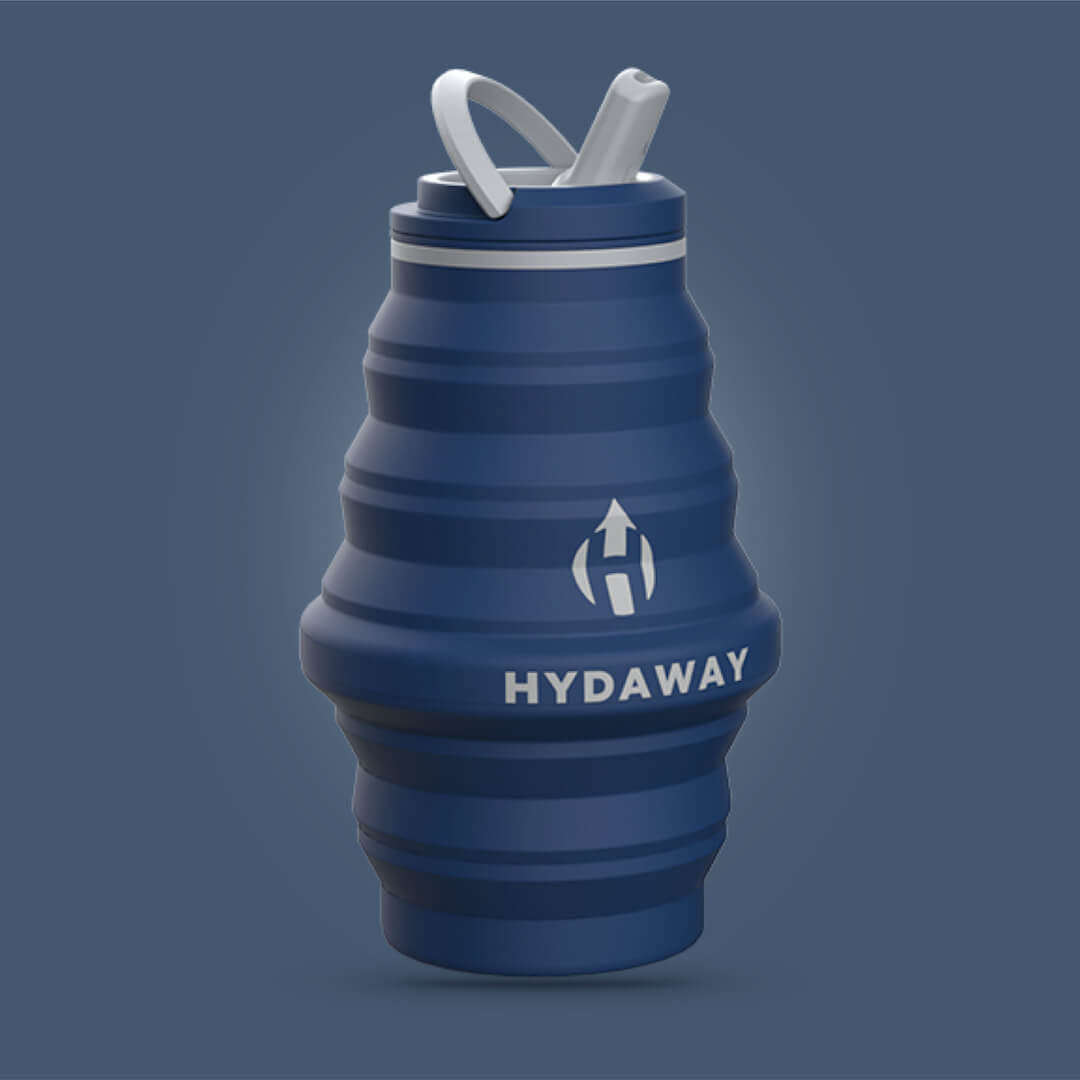
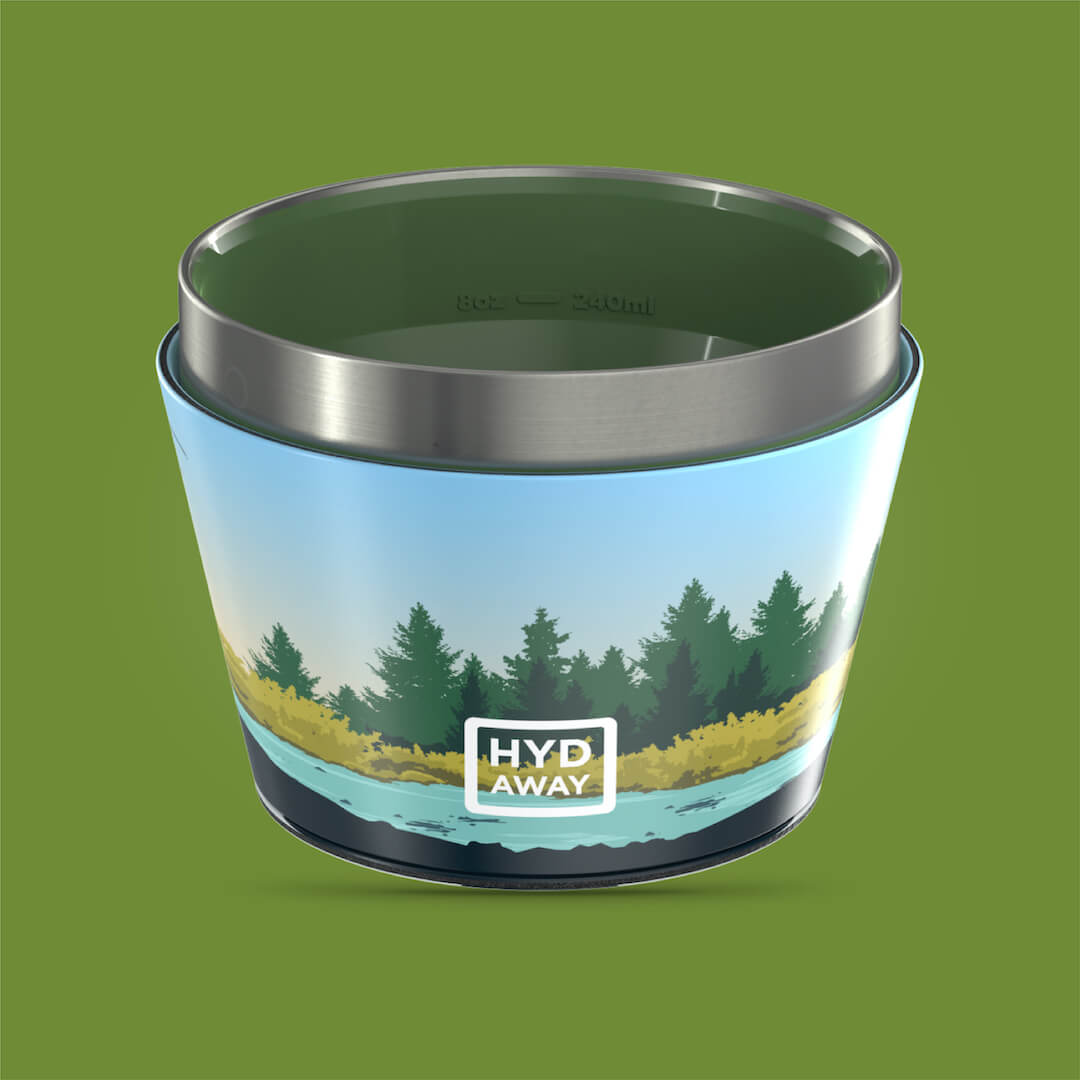
For travelers who care about space first, HYDAWAY sits in the useful middle ground. Its collapsible drinkware is built around the idea that a cup should fold down when you do not need it, then expand into something practical enough for everyday use. That is especially relevant for people traveling with a daypack, a stroller bag, or a compact van setup. This overview of a collapsible travel cup and how it solves packing friction captures the use case well.
If a cup saves space when empty, you are much more likely to keep carrying it. That is the habit advantage collapsible designs have over rigid mugs.
The better way to choose
Ask two questions.
First, where does the cup live when it is empty?
Second, how much do you care about all-day heat retention compared with space savings?
People who answer usually land in the right category fast. If your coffee cup spends more time packed than in your hand, collapsible design deserves serious attention.
Your Guide to Leak-Proof Lids
A cup body gets the attention. The lid decides whether you trust the cup.
That is true on a train seat, in a laptop bag, and in the footwell of a rental car. Many products advertised for travel are only spill-resistant. That means they perform decently while upright in your hand. It does not mean they belong loose inside a backpack.

Three lid styles and what they really mean
Plug or slider lids are common on commuter tumblers. They are convenient for sipping. They are usually the weakest choice for packed travel.
Flip-top lids improve protection, especially if the mouthpiece is covered. They work well for walking and one-hand drinking, but hinges and small seals can become maintenance points.
Screw-on sealed lids are the safest choice when the cup may end up sideways in a bag. They take slightly longer to open, but they reduce uncertainty.
That trade-off is worth it for many travelers. A cup you can toss into a tote without thinking changes how often you bring it.
What makes a lid leak-proof
The phrase gets used loosely, so it helps to know what to look for.
A strong travel lid usually includes:
- A continuous gasket or seal that compresses evenly
- A locking closure that cannot drift open in transit
- Protected drinking surfaces that stay cleaner inside bags
- Simple disassembly so residue does not build up in hidden channels
Lid design also affects hygiene. A spring-loaded, push-click lid that creates an airtight seal can allow 360-degree sipping without spills and has been shown in hygiene studies to reduce bacterial colonization by up to 90% compared with open-mouthpiece designs (Circular&Co travel mug lid details).
That matters more than most buyers realize. Coffee oils and milk residue collect fast. A beautifully sealed lid that cannot be cleaned easily will eventually become the weak point.
Quick test before you trust a lid
Do this at home before any trip.
- Fill the cup with water.
- Seal it fully.
- Turn it upside down over the sink.
- Shake it lightly.
- Leave it on its side for a while.
If it fails this test, it does not go near a passport, headphones, or laptop.
For a broader look at what separates real seals from marketing language, this HYDAWAY article on leak-proof travel bottles and closure design is useful.
A short visual can also help you spot the details that matter in lid construction and closure behavior:
My rule for bag travel
If I would hesitate to place the cup next to electronics, I do not consider it leak-proof enough for travel.
That sounds strict. It saves gear.
Cleaning and Care on the Go
A reusable cup only stays pleasant if you can clean it without a full kitchen. Travel care needs to be simple, repeatable, and realistic.
The good news is that daily maintenance is usually easy. The bigger problem is letting residue sit too long, especially in lids, seals, and folded creases.
The hotel sink method
This is the routine I recommend because it works almost anywhere.
- Rinse early: Do not leave coffee dregs in the cup all day if you can avoid it.
- Add warm water and a little soap: Hotel hand soap is not ideal, but it is better than letting oils bake in.
- Close and shake: This loosens fresh residue quickly.
- Open and scrub with what you have: A clean cloth, fingers, or a soft bottle brush works.
- Rinse twice: Soap taste ruins the next drink faster than almost anything.
If the lid comes apart, separate the pieces. Most odor issues live there, not in the main cup body.
Care by material
Different materials reward different habits.
- Stainless steel: Use soft cleaning tools. Abrasive pads can wear finishes and make the cup look rough long before its useful life is over.
- Silicone: Wash folds and corners carefully. Coffee oils can cling where the material flexes.
- Glass or ceramic-lined interiors: Gentle cleaning is usually enough, but handle carefully around hard sink edges.
- Plastic lid components: Check seals and mouthpieces closely. They collect grime faster than people expect.
How to deal with smell and staining
If your cup starts smelling stale, do not mask it with stronger coffee. Deep clean it.
At home or at a longer stay, fill the cup with warm water and use a mild odor-removal approach like baking soda or vinegar, then rinse thoroughly. Let every part dry completely before reassembling. Trapped moisture can make a clean cup smell dirty again.
The fastest way to ruin a reusable cup habit is carrying a cup that tastes like yesterday’s coffee.
A few habits that extend cup life
- Dry with the lid off: Airflow matters.
- Do not store it sealed when damp: Especially important for lids and gaskets.
- Check the gasket regularly: If a seal twists or lifts, leaks often follow.
- Use the dishwasher thoughtfully: If your cup is dishwasher safe, top-rack placement is often gentler on finishes and smaller components.
People often focus on buying the right cup and ignore ownership. In practice, a well-maintained midrange cup beats a premium one that never gets cleaned properly.
Finding Your HYDAWAY The Right Cup for Your Adventure
The easiest way to choose is to stop thinking in product categories and think in travel days. What kind of day are you packing for?
The digital nomad with one backpack
She works from cafés, coworking spaces, and apartments rented for a month at a time. Space is always contested. Camera cube, laptop stand, sweater, chargers. Nothing bulky lasts long in that setup.
A collapsible tumbler makes sense here because the cup is only a cup for part of the day. After the morning coffee, it becomes packed gear again. That is the kind of user who benefits from a fold-flat design more than from maximum thermal retention.
The family doing long days out
Parents carrying snacks, sunscreen, wipes, extra layers, and souvenirs already know that every rigid item multiplies the chaos.
For this traveler, the win is not only sustainability. It is reclaiming space. A cup that packs down after use is easier to stash in a park bag or stroller caddy. It also gives the family a repeatable routine for drinks without filling the bag with empties.
The van-lifer who wants fewer single-use items
Van life makes trade-offs visible. Storage is finite. Cleanup is constant. Multipurpose gear earns respect fast.
A compact drink vessel that can live in a drawer, a door pocket, or a small bin has real value here. If the same setup can handle coffee in the morning and another drink later in the day, even better. Simple cleaning matters here as much as compact storage.
The commuter who packs light on purpose
This traveler may not think of themself as an adventurer, but the logic is similar. Small tote, train platform, office kitchen, crowded elevator.
A slim insulated mug can work well if the commute is predictable and the mug lives upright. But if the bag changes from work tote to gym bag to weekend carry-on, portability starts to matter more. That is when collapsible designs begin to look less like novelty and more like a practical answer.
How to match the cup to the person
Use this lens.
- You drink slowly and care most about heat retention: pick rigid insulated steel.
- You pack tight and hate carrying empty volume: pick collapsible.
- You move between very different settings in one day: prioritize flexibility and easy cleaning.
- You throw the cup into a bag often: lid reliability matters as much as the body.
The right cup is not the most technical one on paper. It is the one that fits your rhythm closely enough that you keep bringing it.
Making Your Choice Count The Impact of Reusables
The most sustainable cup is not the one with the nicest materials story or the most polished marketing. It is the one you use often enough to replace disposables consistently.
That is why the break-even point matters. A reusable cup must be used 20 to 100 times to offset the emissions from its production, and for a stainless steel mug the break-even point is around 50 uses compared with disposable paper cups (MTPak on reusable cup sustainability thresholds).
This is good news, not a burden.
It means the decision pays off through ordinary repetition. Morning commute. Airport coffee. Weekend road trip. Campground brew. You do not need a dramatic lifestyle overhaul. You need a cup that fits your routine so well that using it becomes automatic.
That is the key lesson after years of travel gear testing. Performance matters. Materials matter. Lid design matters. But habit wins.
Choose the reusable travel coffee cup you will carry, clean, pack, and use. Once that happens, the environmental benefit stops being abstract and becomes part of how you move through the world.
If you want packable drinkware designed around real travel constraints, take a look at HYDAWAY. Their collapsible approach is especially relevant for people who value space-saving gear for flights, road trips, camping, commuting, and everyday carry.