


Eco Friendly Camping Gear: A Practical Guide for 2026

The most popular advice about eco friendly camping gear starts with the wrong question. Buyers are told to look for recycled polyester, bio-based materials, PFAS-free coatings, or a recycled-content badge, then assume the product with the most impressive label is automatically the responsible choice. In practice, a repairable shelter, bottle, or cooking tool that stays functional for years can be a better environmental decision than a supposedly greener item that fails after one season.
The useful test is simple: How long will this product remain in active use, and what happens when something breaks? That question changes how you shop for tents, sleeping systems, clothing, cookware, hydration, and the small pieces of equipment that travel on every road trip. It also explains why compact reusable drinkware matters. Gear you can carry consistently is more likely to replace disposable purchases.
Why Green Labels Do Not Always Mean Sustainable
A recycled-material claim tells you something about an input. It doesn't tell you how long the finished product will work, whether a zipper can be replaced, or whether the manufacturer provides useful care and repair information. Those details often determine whether the environmental cost of production is spread across years of use or concentrated in a short-lived purchase.
A 2022 study of outdoor brands and retailers found that outdoor products are difficult to recycle because their complexity and functionality often require multiple materials and specialized construction. The same research identifies durability, repairability, and maintenance information as major enablers of longer use, while consumer willingness to pay for highly durable products remains a barrier. The study's findings on circularity in outdoor gear support a more practical buying rule: preserve function over time before chasing recycled content in every component.

The label is only the starting point
Recycled polyester can reduce reliance on virgin feedstock, and PFAS-free water repellency addresses a meaningful chemical concern. Neither claim guarantees a strong seam, a replaceable buckle, or a design that can survive repeated packing, wet storage, abrasion against rock, and hurried setup in bad weather.
The same issue appears in cookware and hydration. A lightweight cup that cracks in a hot vehicle may create more waste than a slightly heavier option that you use for years. A rigid bottle may have sound material credentials but remain in the cupboard because it takes up too much space. In that case, the environmental advantage exists on paper, not in your actual travel pattern.
Practical rule: Judge the product you'll use repeatedly, not the label you'll admire once.
Active life beats optimistic intentions
Repair changes the calculation. An environmental assessment of a jacket zipper repair found that production dominated the jacket's global-warming impact. Repairing the zipper reduced environmental impact by at least 44% across four impact categories, and the repair remained beneficial when the product traveled up to 1175 km between the user and repairer. The environmental assessment and repair findings show why a local repair shop, mail-in repair service, or available spare part can matter more than a polished material story.
Before buying, ask whether the item can be cleaned, patched, resoled, resewn, or fitted with a new component. If the answer is unclear, treat the green claim as incomplete. For additional guidance on checking the credibility of environmental claims, use this explanation of third-party verification for product claims.
What Actually Makes Camping Gear Eco Friendly
A reliable evaluation has four connected parts. Material sourcing matters, but it sits alongside certification, full lifecycle impact, and repairability. None of the four works as a substitute for the others.
Material sourcing
Start by identifying what the product is made from and why that material suits the job. Recycled polyester, recycled aluminum, recycled plastics, renewable fibers, titanium, silicone, and conventional synthetics all involve trade-offs in weight, strength, production, cleaning, and end-of-life handling.
A recycled input can be useful when it supports a durable construction. It becomes less persuasive when the item has fragile hardware, difficult-to-repair seams, or a short expected service life. For a rain shell, ask about the face fabric, membrane, seam construction, and water-repellent treatment rather than stopping at “recycled.”
Certifications and verified claims
Certifications can make a claim easier to assess because an outside organization applies a defined standard. Look for transparent information about bluesign, Fair Trade construction, PFAS-free treatments, recycled content, labor practices, and testing. These labels address different concerns, so one badge shouldn't be treated as proof that a product performs well across its entire lifecycle.
A manufacturer should explain what the certification covers and which part of the product it applies to. If the language stays vague, look for technical documentation, care instructions, repair policies, and material disclosures before purchasing.

Lifecycle impact
Lifecycle thinking follows a product from raw material and manufacturing through transport, use, maintenance, repair, and disposal. Production often represents a substantial share of outdoor equipment's impact, which means extending active use can be more effective than replacing a working item with a newer product that has a better label.
An outdoor-industry analysis found that extending active use by nine months can reduce total carbon, waste, and water footprints by roughly 20% to 30%. The outdoor equipment footprint analysis makes serviceability a core sustainability variable. It also gives you a useful reason to maintain an older tent or jacket instead of upgrading because a new version uses a different fabric.
Repairability
Repairability is visible in practical details. A tent with replaceable poles, accessible stitching, and available zippers gives you options after damage. A sleeping bag with a repair service and clear washing instructions has a better chance of staying useful. A bottle with a cleanable interior, durable closure, and sensible warranty is less likely to become an early replacement.
These pillars interact. The strongest choice is usually not the product with the most sustainability terms. It's the one with appropriate materials, credible verification, a sensible lifecycle profile, and a realistic path to continued use.
How to Evaluate Gear Before You Buy
Shopping for sustainable camping gear gets easier when you stop asking whether a product is “green” and start asking whether it will earn its place in your kit. Use the checklist below on a product page, in a store, or while comparing two nearly identical items.
| Criterion | What to Look For | Red Flags |
|---|---|---|
| Expected lifespan | Strong construction, realistic use guidance, documented testing, and a warranty | Vague durability language, delicate components, or no care information |
| Repair options and spare parts | Replaceable poles, buckles, valves, zippers, batteries, or panels, plus a repair route | Glued or sealed assemblies with no replacement parts |
| Material transparency | Specific fiber, coating, metal, plastic, or silicone information | “Eco material” without composition or scope |
| Multi-use potential | One item works for camping, road trips, flights, work, and daily errands | A single-purpose item that adds bulk to an already full kit |
| End-of-life recyclability | Clear take-back guidance or separable materials | Mixed construction with no disposal instructions |
Ask the lifespan question first
Look at the parts most likely to fail, not just the main body. On a tent, inspect pole sections, clips, zippers, guy points, and floor coating. On a chair, check hinges and feet. On a hydration product, examine the closure, gasket, and cleaning access.
If the manufacturer doesn't describe those components, search for replacement-part listings and repair instructions. A repair policy is useful only if you can understand what it covers and how you'll access it while traveling.
Test the multi-use case
The most sustainable item is often the one that replaces several purchases. A bowl that works for campsite meals, takeout, hotel breakfasts, and office lunches earns more regular use than a specialized container that stays in a storage bin. A collapsible bottle that fits a daypack can be easier to bring than a rigid bottle, especially when your pack is already crowded.
Cost per use is a helpful way to think about a higher upfront price without pretending price alone proves sustainability. A durable item can carry a larger initial cost, but its practical value depends on whether you use it, maintain it, and repair it. Don't buy durability you won't carry.
Check the end-of-life path
Recycling isn't a magic finish. Multi-material construction can make recovery difficult, and local programs may not accept specialized outdoor equipment. Before buying, identify whether the manufacturer separates components, offers a take-back route, or gives disposal instructions.
A product's end-of-life story matters, but its use-life story comes first. Keep a sound item working before replacing it.
Sustainable Choices by Gear Category
Different categories have different failure points. The best swap for hydration isn't necessarily the best swap for shelter, and a material that performs well in a pot may be unnecessary in a dinner bowl.
Hydration
Reusable bottles make sense only when you carry and refill them. MIT's Office of Sustainability notes that, excluding the water source, reusable bottles become comparable in impact after roughly 10 to 20 uses, depending on material. MIT's comparison of reusable and single-use bottles makes portability part of the sustainability equation.
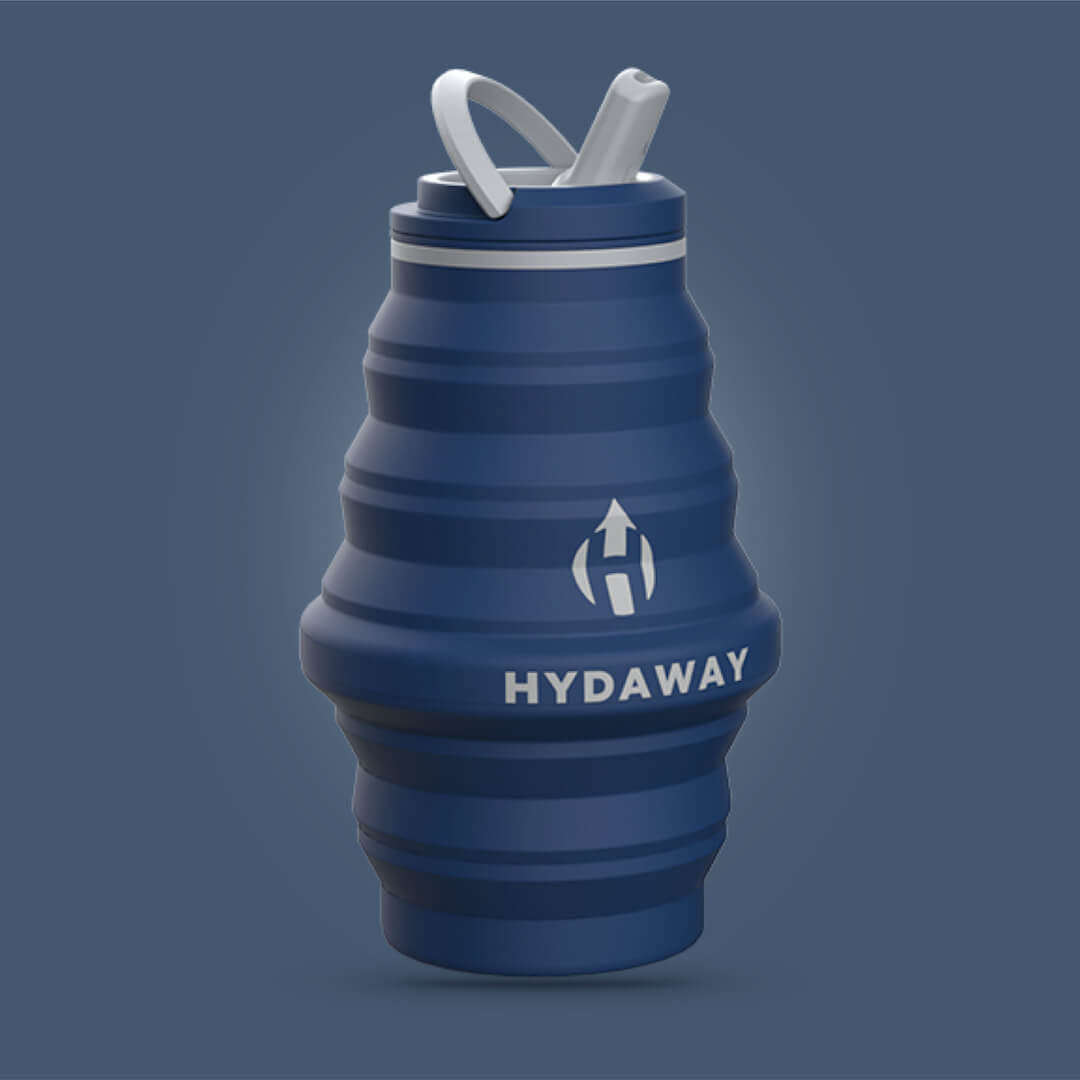
A rigid stainless steel bottle may suit a vehicle or base camp, while a collapsible bottle is easier for a day hike, flight, or theme park visit. HYDAWAY's collapsible bottles are designed to fold flat, so you can carry reusable hydration when space is limited and expand the bottle when you reach a refill point.
Oregon's Department of Environmental Quality reports that tap water in a typical reusable bottle uses 85% less energy and produces 79% fewer greenhouse gas emissions across its full lifecycle than buying and disposing of the same quantity of water in disposable packaging. Oregon DEQ's reusable bottle assessment provides a concrete reason to prioritize a bottle you'll bring everywhere.
Cookware and dinnerware
Titanium is light and durable, but it can be expensive and less pleasant for eating directly because it transfers heat quickly. Stainless steel is sturdy and easy to scrub, though it takes more space and can add weight. Collapsible silicone bowls solve the storage problem, but inspect the rim, lid, and folds for cleanability before committing.
For campers who eat in a vehicle, carry meals through airports, or pack food for a long day out, this practical guide to camping dinnerware offers a useful starting point. HYDAWAY's collapsible bowls, insulated options, and reusable utensil formats fit the situation where a full rigid kitchen kit won't.
Shelter and sleep systems
A repair-friendly tent should have accessible stress points, replaceable poles or clips, and a fly or floor that can be patched. Recycled fabric can be a sensible choice, but only if the shelter still handles repeated pitching, wet drying, and abrasive ground conditions.
For choosing a family shelter, compare layout, packed size, materials, and repair access in this guide by That Blanket Co. A sleeping bag made with recycled fibers or a PFAS-free treatment may reduce particular impacts, but correct washing, thorough drying, and careful storage determine whether the insulation stays useful.

Apparel and accessories
PFAS-free waterproofing is increasingly available, but a coating still needs care and eventual renewal. Layering usually gives you more flexibility than buying a separate garment for every temperature. Wash technical clothing according to its care instructions, repair small tears early, and avoid storing damp fabric.
Accessories deserve the same scrutiny. Reusable utensils replace disposable cutlery, solar lights can reduce battery dependence, and a compact charger may be useful when it replaces repeated disposable power solutions. Choose the item that fits your actual route and maintenance habits, not the most technical specification.
How Collapsible Reusables Eliminate Single-Use Waste on the Go
The sustainability upgrade that gets forgotten most often is the one used at every meal and refill stop. A tent may receive all the attention, but bottles, cups, bowls, and utensils create repeated waste when travelers choose convenience over carrying a reusable alternative.

Consider a family spending a day at Disneyland. If everyone waits until they're thirsty, buying packaged drinks becomes the easy option. A collapsible bottle in each daypack changes the sequence. The family carries empty, compact containers through the entrance, fills them when needed, and avoids making hydration a series of impulse purchases.
A van-lifer faces a different problem. The vehicle kitchen may have a small drawer, and a rigid bowl or cup can consume the space needed for food, tools, or clothing. A collapsible bowl with a lid can handle leftovers, a roadside meal, or a campsite breakfast, then flatten for storage after washing. HYDAWAY's collapsible silicone food containers fit this kind of routine because packability removes the main reason people leave reusables behind.
International travelers and digital nomads encounter the same friction on flights, trains, and hotel days. A tumbler or bottle that fits inside a personal bag is easier to keep than a bulky vessel that must be carried separately. Columbia University describes choosing reusable bottles instead of single-use plastics as a pro-environmental behavior that reduces plastic production and waste. The Columbia University discussion of reusable bottles connects a small travel habit with a broader waste problem.
National Geographic reports that plastic bottles account for 14% of littered waste, making them the second-largest contributor after plastic bags, while about 8 million tons of plastic waste enter the ocean annually. National Geographic's overview of reusable bottles and plastic waste shows why point-of-use replacements matter in outdoor settings where waste systems can be limited.
A compact reusable kit works when it stays accessible. Keep the bottle in the vehicle door, the bowl near the food bin, and the utensil kit with your travel documents rather than buried under the tent.
Maintenance and Packing Habits That Extend Gear Life
The environmental value of durable gear depends on what happens after the purchase. A well-made tent still fails early if it goes into storage wet. A sleeping bag loses performance when compressed for long periods, and a bottle becomes unpleasant to use when its lid and gasket aren't cleaned properly.
Use a simple maintenance rhythm
After every trip, empty food and water containers, wash them, and let them dry fully before storage. Shake dirt from tent fabric, wipe muddy floors, and hang the shelter until no moisture remains. Store sleeping bags loosely in their large storage sacks rather than leaving them compressed in a small stuff sack.
Before the next trip, inspect seams, clips, poles, buckles, and zippers. Lubricate zippers with a product intended for outdoor hardware, patch small punctures, and replace worn shock cord before a failure strands you at camp. Refresh a rain shell's durable water repellent when water stops beading, following the garment maker's instructions.
Pack to prevent waste
A low-waste packing routine is mostly about making the reusable choice convenient:
- Build a compact food kit: Carry a bowl, cup, bottle, and utensils together so you don't improvise with disposable serviceware.
- Plan meals around containers: Choose food that travels in containers you already own, rather than buying individually packaged portions for every stop.
- Use dry bags: Organize clothing and food without disposable liners, and keep wet items separate from sleeping equipment.
- Carry a repair pouch: Include patches, cord, a small sewing kit, and the specific tools your gear requires.
- Keep cleaning supplies simple: Use a small brush and cloth that can serve the bottle, bowl, cookware, and camp kitchen.
- Dry before driving home: Air wet fabric during the return journey whenever conditions allow, then finish drying at home.
- Store components together: Keep lids, valves, poles, and repair parts with the product they belong to.
- Replace parts first: Look for a new gasket, buckle, pole section, or zipper pull before replacing the entire item.
- Audit unused gear: Remove equipment you never carry, then avoid buying another version for the same job.
- Share specialized items: Borrow or rent infrequent-use gear instead of owning duplicates.
For family trips, a printable resource such as this downloadable family packing checklist can help assign shared items and prevent last-minute disposable purchases. The best checklist includes not only clothing and food, but also refillable drinkware, meal containers, repair supplies, and drying plans.
Building Your Sustainable Camping Kit for 2026 and Beyond
A durable camping kit doesn't need to be replaced all at once. Start with the items that see the most use and create the most repeated waste, usually hydration, cups, bowls, and utensils. Then replace worn shelter, sleep, and apparel components with products that disclose materials, support repair, and provide clear care instructions.
Use the same test for every purchase: Will I carry it, maintain it, repair it, and use it across more than one setting? A collapsible bottle that travels from a van to a trailhead to an airport may deliver more practical value than a technically impressive product that stays at home. A reusable bowl that handles campsite food, leftovers, and takeout can reduce clutter while making low-waste choices easier.
In 2026, the useful direction for eco friendly camping gear is clear. Buy fewer, more adaptable products. Keep them clean and dry. Repair functional gear before replacing it. Choose material and certification claims that come with enough detail to evaluate the whole product, not just its headline feature.
HYDAWAY offers collapsible bottles, insulated tumblers, bowls, dinnerware, travel cases, and curated camping and travel kits designed to fold flat for compact packing. Visit HYDAWAY to choose a reusable setup for your next campsite, road trip, flight, or everyday refill routine.