


10 Smart Packing Tips For Your Europe Trip in 2025

Planning a trip to Europe is exhilarating, conjuring images of cobblestone streets, historic landmarks, and diverse cultures. But before you can sip espresso in Rome or wander through the Louvre, there's one crucial step: packing. Getting this right ensures a seamless journey. Getting it wrong can lead to surprise overweight baggage fees at the Ryanair counter, disorganized hotel rooms, and the constant frustration of not having what you actually need when you need it.
This isn't just another generic list. This is your definitive, strategic guide filled with actionable and modern packing tips for a Europe trip. We've designed this resource to tackle the unique challenges of multi-city travel, strict budget airline restrictions, and the continent's famously variable weather patterns. Our goal is to transform your packing process from a dreaded chore into an efficient science.
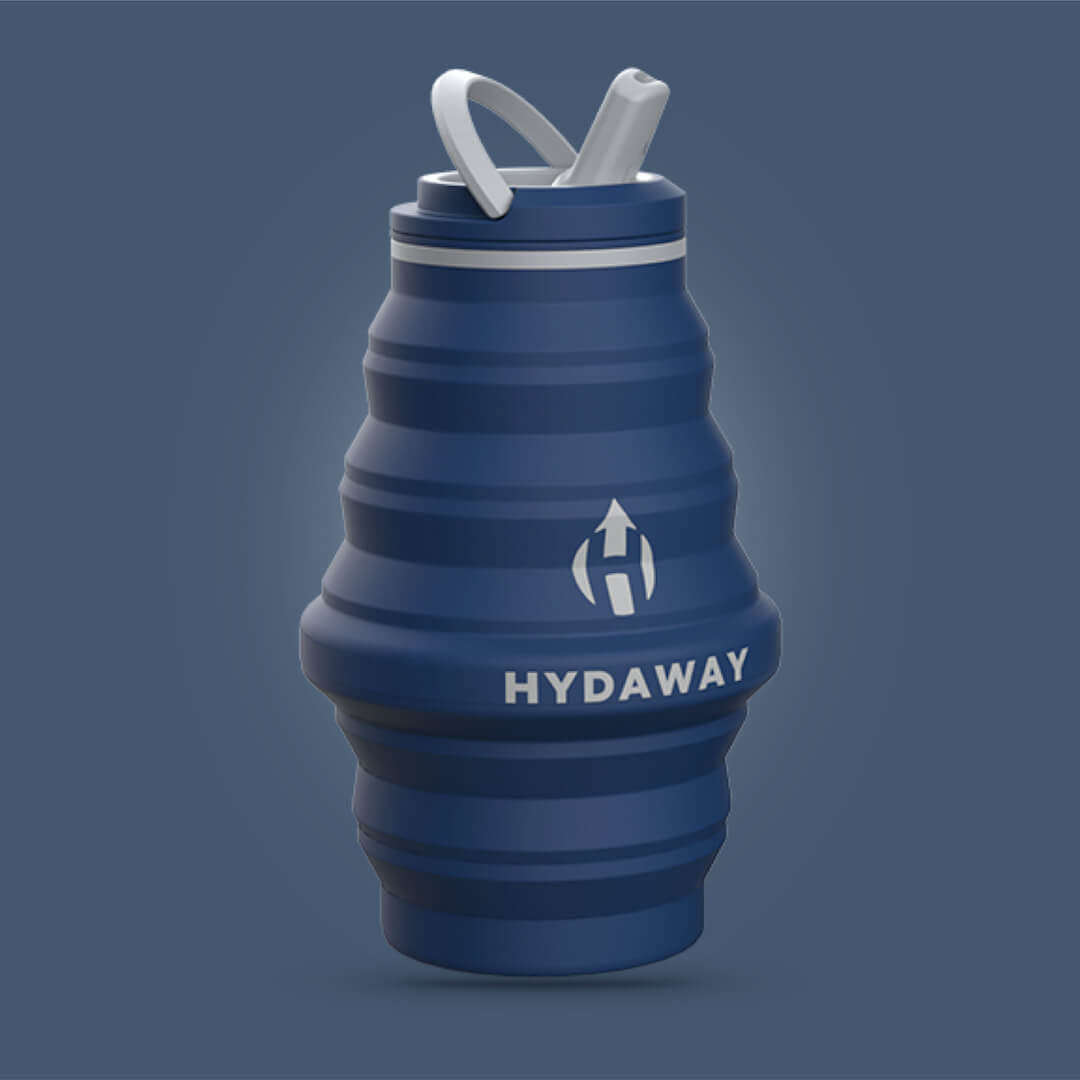
You'll learn how to master the art of the capsule wardrobe, employ space-saving techniques that actually work, and choose smart, sustainable gear. For example, we'll show you how a simple item like a HYDAWAY collapsible water bottle can save you money and reduce plastic waste, easily fitting into your daypack while exploring ancient cities. Instead of paying €3 for bottled water near the Colosseum, you can refill for free at one of Rome’s many historic nasoni (public fountains), staying hydrated and on budget. This guide covers everything from carry-on strategies to essential electronics, ensuring you travel lighter, smarter, and with complete peace of mind. Prepare to pack with confidence and set yourself up for the European adventure of a lifetime.
1. Master the Art of the Capsule Wardrobe for Every Season
Instead of packing disjointed outfits for each day, the capsule wardrobe is a game-changing strategy for any European trip. This approach involves selecting a limited collection of versatile clothing items that can be mixed and matched to create numerous distinct looks. A well-curated capsule ensures you're stylishly prepared for a museum tour in Paris, a coastal hike in Italy, or a formal dinner in Prague, all while using minimal luggage space.
This method is the cornerstone of efficient travel packing, saving you from the stress of overpacked bags and the daily "what to wear" debate. The core principle is building your wardrobe around a cohesive, neutral color palette and adding pops of color with a few select pieces.
How to Build Your European Capsule Wardrobe
The most effective capsule wardrobes are built on a foundation of interchangeable basics. Start by choosing a base color palette to ensure every top works with every bottom.
- Choose a Neutral Base: Select two to three core neutral colors that complement each other, such as black, navy, grey, tan, or cream. These will form the foundation of your pants, jackets, and shoes.
- Add Accent Colors: Pick one or two complementary accent colors for your tops, sweaters, and accessories. Think shades like terracotta, olive green, burgundy, or a vibrant blue.
- Focus on Fabrics: Prioritize wrinkle-resistant and quick-drying fabrics like merino wool, Tencel, and certain synthetic blends. These are ideal for travel, as they require less maintenance.
Pro Tip: A classic example for a 10-day trip to Portugal might include: 2 pairs of trousers (one black, one tan linen), 1 versatile dress, 5 tops (in your neutral and accent colors), 1 lightweight merino sweater, 1 stylish trench coat, and 2 pairs of comfortable yet chic shoes. This small collection can create over 20 unique outfits, perfect for moving from Lisbon's city hills to the Algarve's coast.
By adopting this mindset, you not only pack lighter but also travel smarter, leaving more room for souvenirs and less time worrying about your attire. It's one of the most effective packing tips for a Europe trip, streamlining your entire travel experience.
2. Use Packing Cubes to Organize by Day or Category
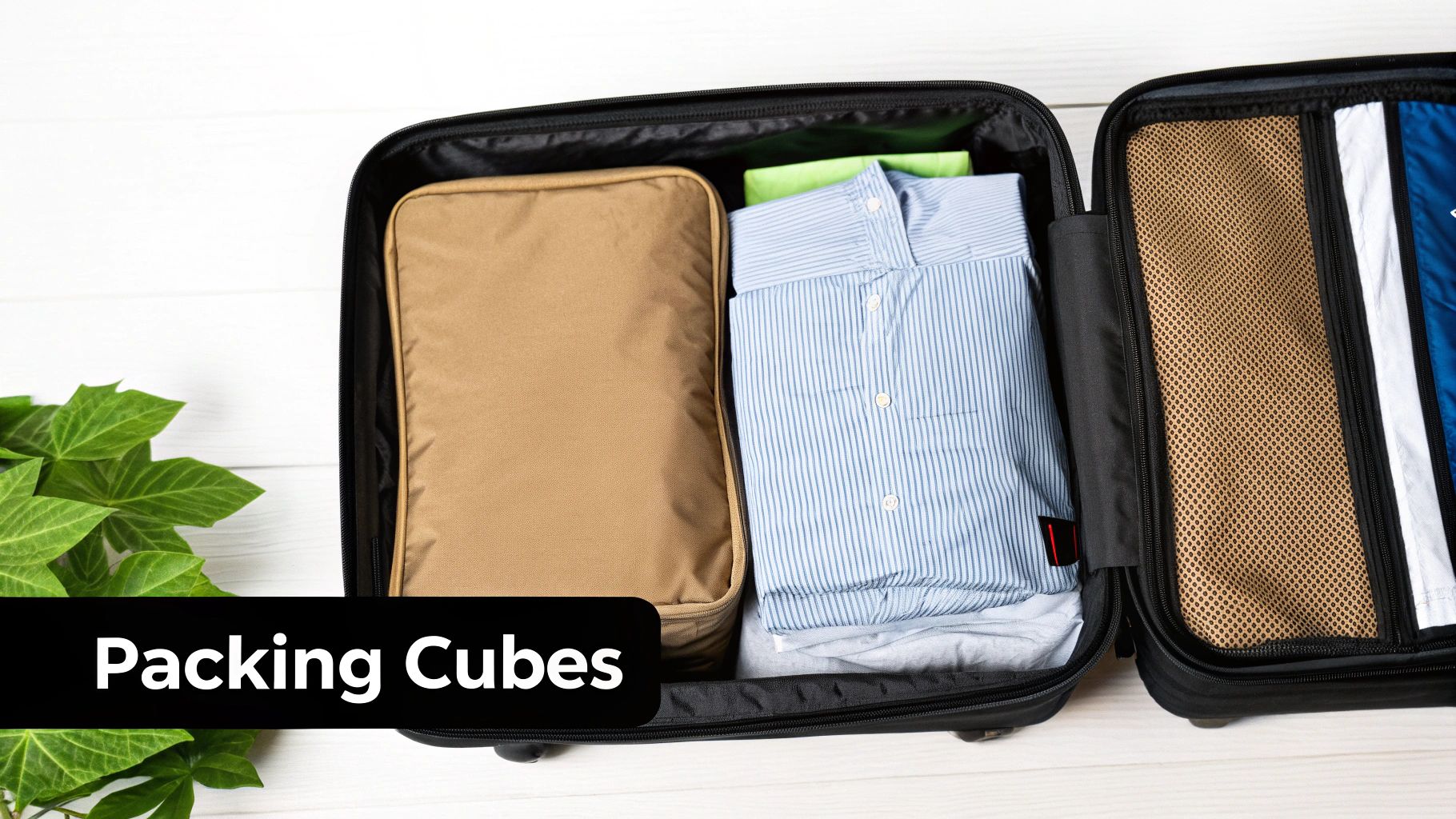
Packing cubes are the secret weapon for anyone looking to bring order to the potential chaos of a suitcase. These small fabric organizers compartmentalize your luggage, allowing you to group items by clothing category, specific outfits, or even by day. This strategy not only saves space through compression but also makes locating what you need effortless, a lifesaver on multi-city European trips where you're constantly on the move.
This method transforms your suitcase from a jumbled pile into a well-organized dresser on the go. Instead of emptying your entire bag to find one shirt, you can simply pull out the relevant cube. For travelers hopping between cities like Rome, Florence, and Venice by train, this means less time repacking and more time exploring.
How to Maximize Your Luggage with Packing Cubes
The key to using packing cubes effectively is to develop a system that suits your travel style. Whether you organize by item type or by daily outfits, consistency is what makes this one of the best packing tips for a Europe trip.
- Categorize Smartly: Designate specific cubes for tops, bottoms, underwear, and electronics. Using different colored or sized cubes for each category makes identification instant.
- Plan by Outfit: For a meticulously planned trip, pack a complete outfit in each cube. This is perfect for business travelers or anyone with a tight itinerary.
- Compress and Stack: Roll your clothes tightly before placing them in the cubes to maximize space. Place heavier, more compressed cubes at the bottom of your suitcase near the wheels for better balance.
- Separate and Sanitize: Use a spare cube to isolate dirty laundry, keeping it separate from your clean clothes throughout your journey.
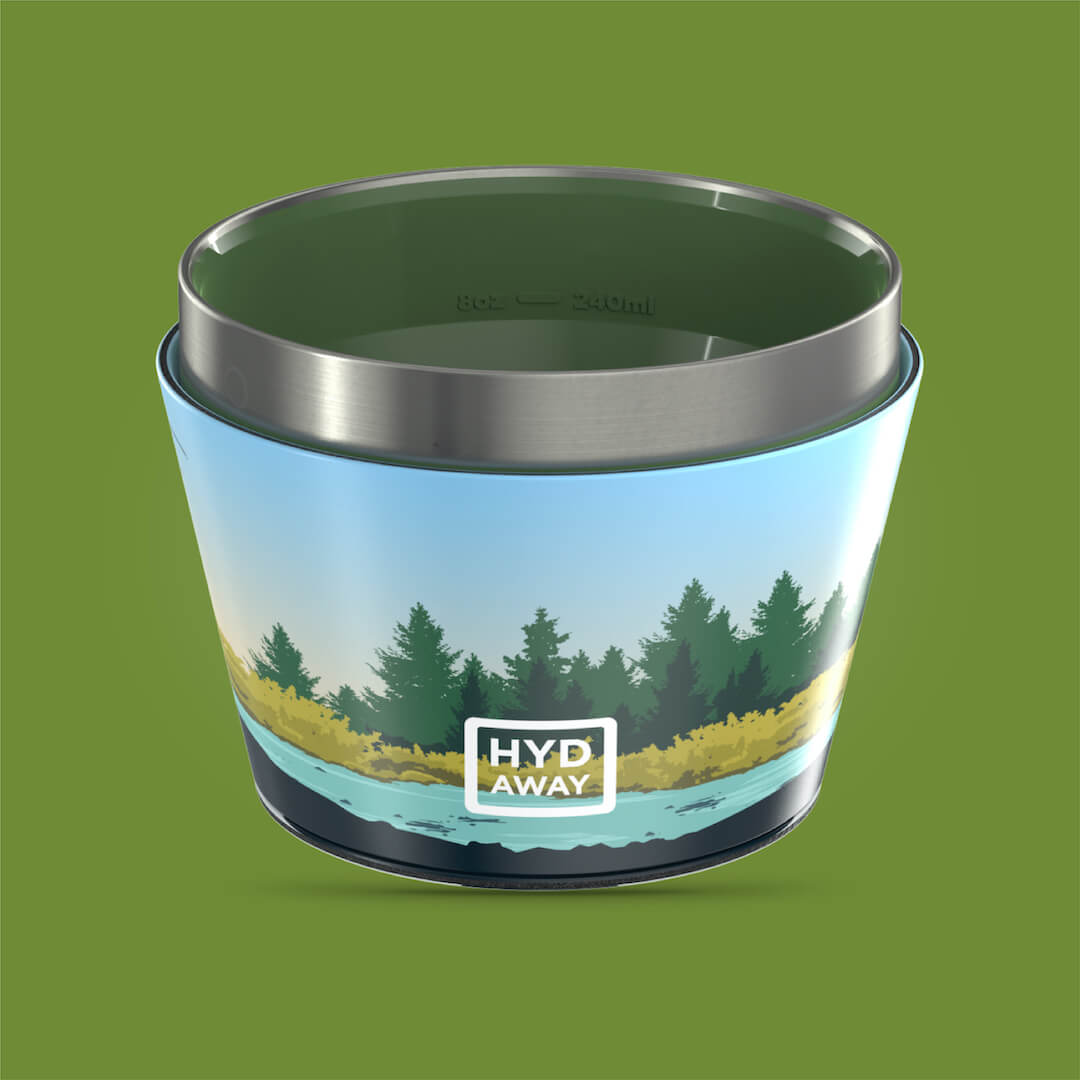
Pro Tip: For a family trip, assign each member a specific color of packing cubes. This makes it easy to distribute clothes upon arrival at your Airbnb without mixing everything up. A small cube can also be dedicated to on-the-go essentials like a collapsible HYDAWAY tumbler and bowl, ensuring you're ready for a picnic in the Tuileries Garden or a quick snack on a train to the Swiss Alps.
By compartmentalizing your belongings, you streamline the entire packing and unpacking process. This organizational system is a game-changer for maintaining your sanity and saving precious time on any European adventure.
3. Wear Your Bulkiest Items on Travel Days
One of the most effective yet simple strategies for optimizing luggage space is to wear your heaviest and most space-consuming items on travel days. This tactical move dramatically reduces your suitcase weight and frees up valuable real estate inside your bag. It’s a classic packing tip for a Europe trip that proves especially useful when navigating budget airline weight restrictions or hopping between cities on trains.
This approach isn’t just about saving space; it's about smart logistics. By wearing your bulkiest layers, you keep them accessible for fluctuating cabin temperatures on planes or drafty train cars, ensuring comfort throughout your journey. It’s a practical solution that prevents you from having to choose between bringing your favorite warm coat or having enough room for souvenirs.
How to Strategically Wear Your Heaviest Gear
Implementing this tip is straightforward and pays huge dividends. Think of your travel day outfit as a mobile storage unit for the items that would otherwise monopolize your luggage.
- Prioritize Your Outerwear: Your winter coat, trench coat, or heavy-duty rain jacket should always be worn or carried onto the plane. These items take up the most space, and wearing them is the single biggest space-saver.
- Choose Your Heaviest Footwear: If you're bringing hiking boots for the Swiss Alps or sturdy Doc Martens for walking through London, make them your travel day shoes. Packing them can easily consume a quarter of a carry-on's volume.
- Layer Up Intelligently: Wear your chunkiest sweater or fleece as a mid-layer. You can easily remove it once you're settled in your seat. Denim is also heavier and bulkier than other fabrics, so wear your jeans instead of packing them.
- Don't Forget Accessories: Bulky scarves, beanies, or wide-brimmed hats can be worn or easily carried without taking up precious luggage space.
Pro Tip: For maximum efficiency at airport security, opt for slip-on boots if possible. If you wear lace-up hiking boots, be prepared to take them off and on quickly. Keeping a thin pair of socks in your personal item can also add comfort once you remove your heavy shoes on a long-haul flight.
By adopting this simple habit, you ensure your essential bulky items make it to your destination without compromising your packing limits. This practical approach is fundamental to mastering how to pack for international travel and makes the entire process smoother. To dive deeper into smart packing logistics, you can discover more about international travel packing strategies on myhydaway.com.
4. Pack a Minimalist Color Palette (3-4 Colors Maximum)
Beyond just a capsule wardrobe, the secret to truly effortless European travel style lies in a disciplined color palette. Limiting your clothing to just three or four coordinating colors is a powerful strategy that guarantees every single piece works together. This approach eliminates duplicate items, simplifies morning outfit decisions, and maximizes your style potential with minimal packing.
This minimalist color strategy is the engine that makes a capsule wardrobe run smoothly. It ensures you can create a surprising number of distinct, polished outfits for any European setting, from exploring ancient ruins in Rome to enjoying a sophisticated evening in Vienna, without ever feeling like you have nothing to wear. The core idea is to build a foundation of neutrals and then add one or two complementary accent colors.
How to Build Your European Color Palette
A well-planned color scheme is your best defense against overpacking. Start by selecting a base of neutral colors and then strategically introduce a small, curated selection of accent shades that bring your personality to the forefront.
- Establish a Neutral Foundation: Choose two core neutral colors that you feel comfortable in and that work well together. Classics like navy, black, grey, tan, or cream are perfect for trousers, jackets, and shoes.
- Select One or Two Accent Colors: Pick one or two accent colors that you love and that complement your neutral base. This could be anything from olive green and terracotta to a striking cobalt blue or burgundy. These colors will shine in your tops, scarves, and accessories.
- Coordinate Everything: Before you pack a single item, lay it all out. Ensure every top can be worn with every bottom. This simple check is one of the most effective packing tips for a Europe trip, preventing you from bringing "orphan" items that only work in one specific outfit.
Pro Tip: A fashion-forward traveler might build a 14-day palette around navy and cream as their neutrals, with terracotta and olive green as accents. This allows for countless combinations while maintaining a cohesive, sophisticated look. Even your accessories, like a HYDAWAY collapsible water bottle, can fit into this scheme. For this palette, you could choose a bottle in Charcoal Grey or vibrant Ocean Blue to perfectly complement your minimalist wardrobe while you stay hydrated exploring the city.
By adhering to this simple color rule, you'll not only travel lighter but also more stylishly, leaving you with more energy to focus on the incredible experiences Europe has to offer.
5. Pack Versatile Layering Pieces for Variable European Weather
European weather is famously unpredictable, often changing dramatically from morning to afternoon. This is where mastering the art of layering becomes an indispensable skill, allowing you to adapt to sun, wind, and rain without overpacking. Instead of bulky, single-purpose items, this strategy relies on thin, versatile pieces that can be added or removed to achieve the perfect level of comfort.
This method is the key to staying comfortable whether you're exploring the misty Swiss Alps in the fall or experiencing a sudden downpour during a spring day in Paris. It ensures you’re prepared for a full day of sightseeing that might start with a chilly morning, warm up by midday, and end with a cool evening breeze, all while keeping your luggage light and manageable.
How to Master the Art of Layering for Europe
Building an effective layering system is about selecting synergistic pieces that work together. The goal is a three-part system: a base layer to manage moisture, a mid-layer for insulation, and an outer layer for protection from the elements.
- Start with a Smart Base Layer: Choose lightweight, moisture-wicking fabrics like merino wool or high-quality synthetics. A simple t-shirt or long-sleeve top in one of these materials will keep you dry and comfortable.
- Add an Insulating Mid-Layer: This is your warmth layer. A fleece jacket, a cashmere or merino wool sweater, or a lightweight down vest are excellent options. They provide significant warmth without adding much bulk.
- Finish with a Protective Outer Layer: Your final layer should be a waterproof and windproof shell. A packable rain jacket or a stylish trench coat is perfect for fending off unexpected showers and brisk winds without taking up much space in your daypack.
Pro Tip: For a 10-day trip to Vienna in October, your layering system could include: two merino wool t-shirts (base), one versatile cardigan (mid), and one packable waterproof jacket (outer). This combination allows you to adjust from a single t-shirt on a sunny afternoon to all three layers for a cool, rainy evening, ensuring you’re prepared for anything the city's variable autumn weather throws at you.
This layering approach is one of the most practical packing tips for a Europe trip, giving you the flexibility to handle diverse climates and conditions with a minimal, highly efficient wardrobe.
6. Bring a Portable Luggage Scale to Avoid Overweight Fees
One of the most unwelcome surprises at the airport is a hefty overweight baggage fee. A portable digital luggage scale is a small, inexpensive gadget that saves you from this predicament, ensuring your bags comply with strict airline weight limits. This simple tool empowers you to pack strategically, especially after accumulating souvenirs or shopping in destinations like Milan or Paris.
This proactive approach is a cornerstone of savvy travel, preventing last-minute stress and unexpected costs. By knowing your exact luggage weight before you even leave for the airport, you can make necessary adjustments, redistribute items, or decide if that extra bottle of Tuscan wine is worth checking in another bag.
How to Effectively Use Your Luggage Scale
Using a luggage scale is straightforward, but a few key practices ensure you avoid fees. It’s all about checking your weight at critical points during your journey.
- Do a Pre-Departure Weigh-In: Weigh your fully packed suitcase at home before you leave. This gives you a baseline and confirms you’re starting your trip within the limits.
- Know Your Airline's Limits: Always double-check the specific weight restrictions for every airline on your itinerary. Budget carriers in Europe like easyJet or Ryanair often have stricter, lower limits (sometimes as low as 15-20kg) than transatlantic flights (typically 23kg or 50lbs).
- Pack it for the Return Trip: Keep the scale in your carry-on or an easily accessible pocket of your suitcase. It’s most valuable for the journey home after you’ve added gifts, clothing, and other items.
- Leave a Small Buffer: Aim to be about 500g to 1kg (1-2 lbs) under the maximum weight limit. Airport scales can vary slightly, and this small buffer provides peace of mind.
Pro Tip: If you're traveling as a couple or family, a luggage scale is invaluable. Imagine one suitcase is 2kg over and another is 3kg under. Instead of frantically repacking on the airport floor, you can simply redistribute items in your hotel room, saving both money and embarrassment before your flight out of Heathrow.
This small device is one of the most practical packing tips for a Europe trip, turning a potential financial headache into a simple, manageable task. It allows you to shop and explore freely without the nagging worry of exceeding your allowance.
7. Pack a Universal Power Adapter and Multi-Port Charger
Navigating the diverse electrical systems across Europe can be a major headache for unprepared travelers. Instead of collecting a different plug adapter for each country, a universal power adapter combined with a multi-port charger is an essential, space-saving solution. This powerful duo allows you to charge your phone, camera, laptop, and other electronics simultaneously from a single outlet, a common scenario in older European hotels with limited plug sockets.
This strategy is the cornerstone of modern travel tech, ensuring your devices stay powered up from London to Athens without a jumble of converters and adapters. It simplifies your packing list, reduces electronic clutter, and provides peace of mind, knowing you can connect anywhere.
How to Choose and Use Your Power Hub
The most effective setup involves a single, high-quality universal adapter that works across the continent, paired with a charging block that has multiple USB ports. This centralizes your charging needs into one compact system.
- Go Universal: Select an all-in-one universal adapter that features sliding prongs for UK, EU, and other international outlets. This prevents you from carrying multiple single-country adapters.
- Prioritize Ports: Choose a multi-port USB charging block with at least three ports (ideally a mix of USB-A and USB-C). This allows you to charge your phone, a power bank, and other gadgets all at once.
- Check for Safety Features: Look for adapters with built-in surge protection and safety certifications (like CE or FCC) to protect your expensive electronics from power fluctuations.
Pro Tip: A digital nomad working from a café in Lisbon can power their laptop directly through the adapter while using the attached USB hub to charge their phone, headphones, and portable battery. This turns one wall socket into a complete charging station, making it one of the most practical packing tips for a Europe trip.
By consolidating your charging gear, you not only pack smarter but also stay connected more efficiently. This simple but crucial item ensures you're always ready to navigate with your phone, capture memories, and stay in touch, no matter where your European adventure takes you.
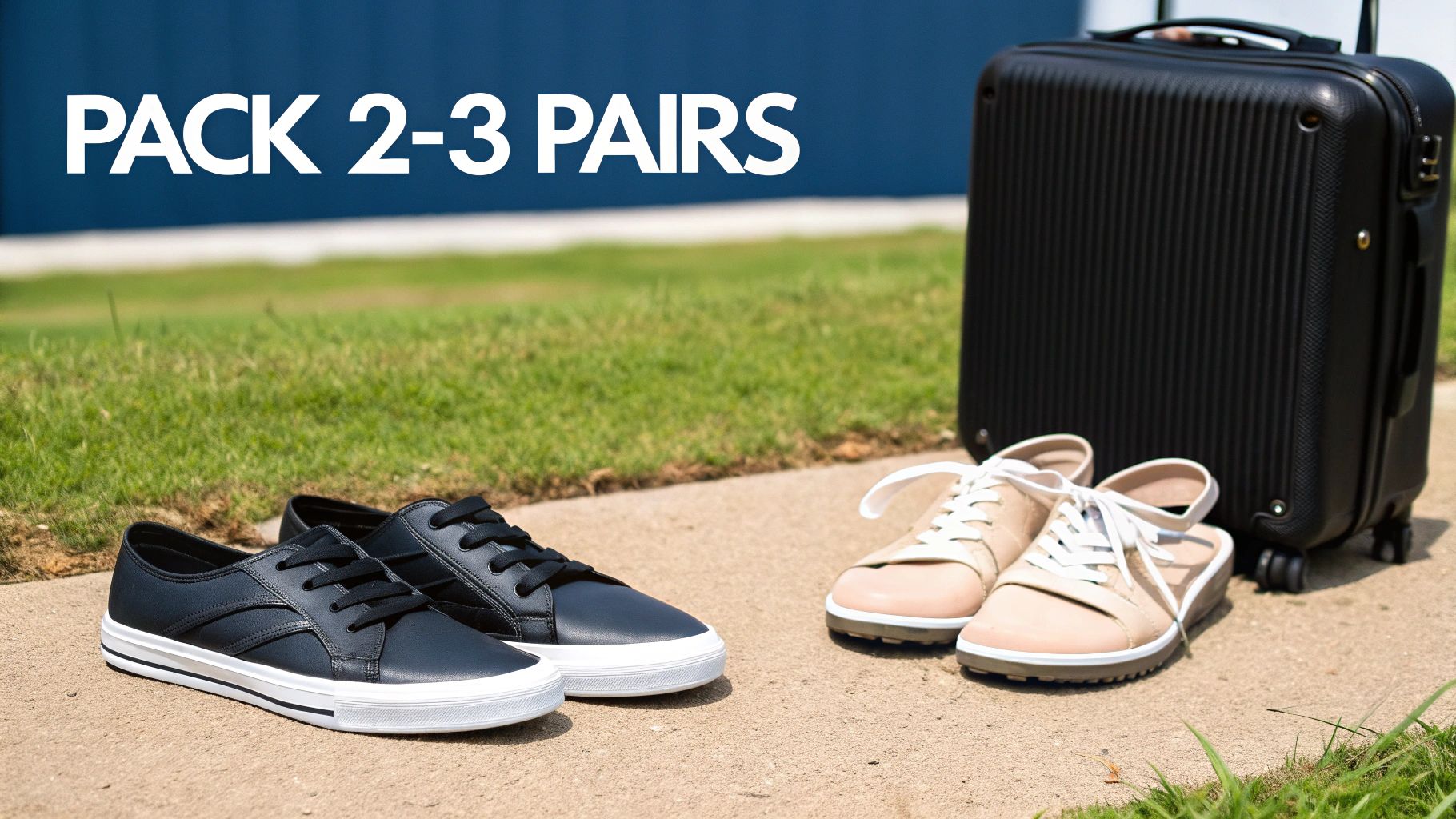
8. Limit Shoes to 2-3 Pairs Maximum
Shoes are notoriously bulky and heavy, often consuming the most valuable real estate in your luggage. Adopting a strict three-pair rule is one of the most impactful packing tips for a Europe trip, forcing you to choose versatile, functional footwear that serves multiple purposes. This strategy prevents overpacking and ensures you have exactly what you need for cobblestone streets, museum visits, and evening dinners without the burden of excess weight.
This minimalist approach is about smart selection, not deprivation. By carefully choosing two or three pairs, you can build a travel shoe collection that is lightweight, comfortable, and stylish enough for any European itinerary. It’s the key to navigating diverse activities while keeping your luggage manageable.
How to Select Your Trio of Travel Shoes
The goal is to cover all your bases: extensive walking, a slightly more formal occasion, and any special activity. Your choices should coordinate seamlessly with your capsule wardrobe.
- Prioritize a Comfortable Walker: This is your non-negotiable primary shoe. Choose a well-broken-in pair of stylish sneakers (like On Cloud or HOKAs), walking shoes, or supportive flats that can handle 10+ miles of walking a day.
- Add a Versatile Dressier Option: Select a shoe that can transition from a casual day look to a nice dinner. This could be a chic loafer, a comfortable block heel, or a sleek ankle boot, depending on the season.
- Include an Optional Specialty Shoe: If your trip includes specific activities like hiking the Swiss Alps or visiting a beach on the Amalfi Coast, your third pair should be for that purpose, such as trail runners or lightweight sandals.
Pro Tip: For a typical 14-day multi-city trip, a perfect combination is: a pair of cushioned, all-white leather sneakers for daily sightseeing, a pair of black leather loafers for evenings and nicer meals, and a pair of packable sandals for warmer days or hotel use. Always wear your bulkiest pair on the plane.
This disciplined approach to footwear is a cornerstone of efficient travel. It frees up critical space, reduces luggage weight, and simplifies your daily decisions, letting you focus more on the European experience and less on your feet.
9. Use Compression Bags or Vacuum-Sealed Storage for Off-Season Items
For travelers grappling with bulky items or visiting multiple climates, compression bags are an absolute packing revelation. These bags, which can be vacuum-sealed or hand-rolled, work by expelling every last bit of air from your clothing, dramatically reducing their volume. This technique is especially brilliant for packing puffy jackets, chunky sweaters, and thermal layers, which would otherwise consume a huge portion of your suitcase.
This strategy is one of the most effective packing tips for a Europe trip that spans different seasons, like a spring journey from sunny Sicily to the still-chilly Alps. It also provides a secret weapon for the return journey, allowing you to compress your worn clothes to make ample room for delicate souvenirs and new purchases. It ensures your luggage remains manageable without sacrificing essential items.
How to Maximize Space with Compression Bags
Properly using compression bags can shrink the space your clothes occupy by up to 80%, but technique matters. Follow these steps to get the most out of every bag.
- Roll, Don't Fold: Tightly roll each clothing item before placing it inside the bag. This method prevents hard creases and allows for a more uniform, efficient compression.
- Choose the Right Type: For on-the-go convenience without needing a vacuum, opt for travel-specific, hand-rolled compression bags. For home-packing, vacuum-sealed bags offer the tightest compression.
- Organize and Label: Group similar items together in bags (e.g., all sweaters, all thermal wear) and label each one with a marker. This saves you from having to decompress and recompress multiple bags just to find one shirt.
- Pack Strategically: Place the dense, compressed bags at the bottom of your suitcase, near the wheels, to create a stable base and prevent your luggage from tipping over.
Pro Tip: Don't overfill the bags beyond the indicated "fill line." Forcing too many items in can strain the seams and zipper, causing the bag to rupture or leak air during transit. This is especially true after a long trip when you're just trying to get everything to fit for the flight home. Gradual, even compression is key.
By integrating compression bags into your packing system, you gain unparalleled control over your luggage volume. This allows you to pack for any weather contingency or bring back more treasures, all while keeping your bag light and organized.
10. Pack Travel-Sized Toiletries and Consider Solid Alternatives
Navigating airport security and maximizing luggage space requires a smart approach to toiletries. Carrying full-sized bottles is impractical, as they violate carry-on liquid restrictions (100ml or 3.4oz per item) and add unnecessary weight. The solution is to embrace travel-sized products and innovative solid alternatives, a key strategy for any efficient packer.
This approach ensures you comply with international travel regulations while freeing up valuable room in your bag for other essentials. From solid shampoo bars that last for weeks to multi-purpose moisturizers, rethinking your toiletry bag is a simple yet powerful packing hack. It's one of the most effective packing tips for a Europe trip, whether you're a backpacker on a month-long journey or a professional on a quick city break.
How to Streamline Your European Toiletry Kit
The goal is to pack only what you need in the most compact form possible. This means decanting, downsizing, and discovering solid alternatives that save space and prevent spills.
- Comply with Liquid Limits: All liquids, aerosols, and gels in your carry-on must fit in a single, transparent, quart-sized bag. Purchase travel-sized versions of your favorite products or transfer them into smaller, reusable containers to meet this rule.
- Embrace Solid Alternatives: Solid toiletries are a traveler's best friend. Consider solid shampoo and conditioner bars, bar soap for face and body, deodorant sticks, and even solid perfume. These items don't count toward your liquid allowance and eliminate the risk of leaks.
- Focus on Multipurpose Products: Reduce the number of items you pack by choosing products that serve multiple functions. Think of a tinted moisturizer with SPF, a 3-in-1 soap for body, face, and hair, or a lip-and-cheek stain.
Pro Tip: For a two-week trip, a minimalist might pack: one solid shampoo bar, one travel-sized tube of toothpaste, a deodorant stick, a small bar of soap, and a decanted 50ml bottle of face moisturizer with SPF. This entire kit easily fits into the required clear bag with room to spare, staying well within airline limits and keeping your luggage light.
By adopting this strategy, you’ll breeze through security, avoid overweight baggage fees, and reduce your environmental footprint. Making smart choices with reusable options like HYDAWAY's collapsible bottles also aligns with a more sustainable travel mindset.
Top 10 Europe Packing Tips Comparison
| Item | 🔄 Implementation Complexity | ⚡ Resource Requirements | 📊 Expected Outcomes | 💡 Ideal Use Cases | ⭐ Key Advantages |
|---|---|---|---|---|---|
| Roll Your Clothes Instead of Folding | Moderate — needs practice to roll optimally 🔄 | Minimal — no extra gear (optional packing cubes) ⚡ | High space savings (30–40%) and reduced wrinkles 📊 | Small carry-ons, backpacking, week-long trips 💡 | Maximizes space, improves visibility, fewer creases ⭐ |
| Use Packing Cubes to Organize by Day or Category | Low — easy after initial setup 🔄 | Moderate — buy a set ($20–60); adds ~100–400g ⚡ | High organization, simpler repacking, moderate compression 📊 | Multi-city trips, families, business travel 💡 | Compartmentalizes outfits, speeds packing/unpacking ⭐ |
| Wear Your Bulkiest Items on Travel Days | Low — simple planning choice 🔄 | Minimal — no purchase; may affect comfort ⚡ | Reduces luggage weight (1–2kg) and avoids fees 📊 | Winter travel, flights, budget-conscious travelers 💡 | Immediate space/weight savings; extra warmth during travel ⭐ |
| Pack a Minimalist Color Palette (3–4 Colors) | Moderate — requires pre-trip planning 🔄 | Minimal — curating wardrobe, possible selective purchases ⚡ | Fewer pieces with maximal outfit combinations 📊 | Business trips, capsule wardrobes, long trips 💡 | Easy mix-and-match, less decision fatigue, lighter luggage ⭐ |
| Pack Versatile Layering Pieces for Variable Weather | Moderate — needs thoughtful fabric/fit choices 🔄 | Moderate — invest in quality merino/synthetics ⚡ | High adaptability; many outfit combos with less bulk 📊 | Shoulder seasons, mixed-climate itineraries, active travel 💡 | Temperature control, packable warmth, odor-resistant options ⭐ |
| Bring a Portable Luggage Scale to Avoid Overweight Fees | Low — simple digital use 🔄 | Low — inexpensive ($10–30), small, battery-powered ⚡ | Prevents overweight fees; enables informed packing decisions 📊 | Shopping-heavy returns, frequent flyers, families 💡 | Saves money on fees; compact and reliable ⭐ |
| Pack a Universal Power Adapter and Multi-Port Charger | Low — one-time device choice; verify compatibility 🔄 | Moderate — buy adapter/charger; quality varies ⚡ | Charge multiple devices across countries; fewer adapters needed 📊 | Digital nomads, photographers, business travelers 💡 | Universal compatibility, multiple ports, space saved ⭐ |
| Limit Shoes to 2–3 Pairs Maximum | Low — requires selection & prioritization 🔄 | Minimal — no extra items; wear bulkiest en route ⚡ | Saves 2–4 liters space and 1–2kg weight; simplifies choices 📊 | City travel, walking-intensive itineraries, multi-destination trips 💡 | Prioritizes comfort, frees luggage room, reduces weight ⭐ |
| Use Compression Bags or Vacuum-Sealed Storage | Moderate — requires proper technique to avoid damage 🔄 | Low–Moderate — inexpensive bags ($5–15); reusable ⚡ | Up to 50–80% volume reduction; moisture protection 📊 | Packing bulky winter coats, returns with souvenirs, seasonal items 💡 | Maximum volume savings; protects clothes from moisture ⭐ |
| Pack Travel-Sized Toiletries and Consider Solid Alternatives | Low — pack within regulations; test solids beforehand 🔄 | Minimal — travel bottles/solid products; may cost more per oz ⚡ | Compliant with carry-on rules, lighter toiletry load 📊 | Carry-on-only travelers, eco-conscious trips, multi-flight itineraries 💡 | Saves space/weight, avoids liquid restrictions, eco-friendly options ⭐ |
Your Perfectly Packed Bag: The First Step to an Unforgettable Trip
You've made it through the ultimate guide to smart European travel. The strategies laid out in this article aren't just a random assortment of suggestions; they are a comprehensive system for transforming how you prepare for and experience your journey. By moving beyond generic advice, you've unlocked a modern, actionable toolkit of packing tips for a Europe trip that directly addresses the challenges of modern travel: airline fees, variable weather, and the desire for a lighter, more flexible adventure.
Let's recap the core principles that will redefine your next trip. It starts with the revolutionary 'roll and cube' method, a simple yet powerful technique to maximize every square inch of your luggage. When combined with a minimalist color palette and versatile layering pieces, you’ve created a capsule wardrobe that can take you from a Parisian café to a hike in the Swiss Alps without a single moment of "I have nothing to wear." This isn't about restriction; it's about liberation from the burden of overpacking.
From Theory to Action: Your Final Checklist
The true value of these packing tips for a Europe trip lies in their implementation. It’s the small, deliberate choices you make before you even zip up your suitcase that pave the way for a stress-free adventure. You now understand why wearing your bulkiest items on the plane is a non-negotiable space-saver and how a portable luggage scale can be the single best investment against surprise airline fees. You're equipped to handle Europe's diverse electronic needs with a single universal adapter and multi-port charger, eliminating the dreaded tangle of cords.
More importantly, you're prepared to travel more consciously. By opting for solid toiletries and collapsible, reusable gear, you're not just saving space; you're actively reducing your environmental footprint. Imagine effortlessly refilling your HYDAWAY bottle at a historic Roman fountain or enjoying a picnic with your collapsible bowls in a London park, all while avoiding single-use plastics. This is the essence of smart travel: creating a seamless experience for yourself while respecting the beautiful destinations you've come to explore.
Key Takeaway: Thoughtful packing is your first act of travel planning. It sets the tone for your entire journey, giving you the freedom to be spontaneous, the energy to explore further, and the peace of mind to be fully present in every incredible moment.
Your bag is no longer a source of stress but a curated collection of essentials designed to enhance your European experience. You're not just packed; you're prepared. You've traded the 'what ifs' for a confident 'I'm ready'. Now, the only thing left to do is go out and create the memories that will fill the empty space you so intelligently created in your luggage. Safe travels, and enjoy every second of your perfectly planned adventure.
Ready to master the art of space-saving and sustainable travel? Equip yourself with the ultimate packing essential from HYDAWAY. Explore our full range of collapsible, ultra-packable water bottles, bowls, and tumblers at HYDAWAY and discover how easy it is to stay hydrated and eco-friendly on your next European journey.