


How to Pack for a Month Long Trip Like a Pro

When you're packing for a month-long trip, there's one golden rule that will change everything: pack for one week and plan to do laundry.
This simple shift in mindset is what separates the seasoned traveler from the rookie. It’s the key to ditching that massive checked bag and breezing through airports with just a carry-on, saving you from ridiculous baggage fees and the nightmare of lost luggage.
The Modern Traveler's Guide to Packing Light
Staring at an empty suitcase before a month-long adventure can be totally overwhelming. We've all been there—tempted to throw in that extra pair of shoes "just in case." But that exact impulse is your biggest enemy in an era of strict airline rules and soaring fees.
The trick is to reframe how you think about packing. It's not about sacrifice; it's about freedom. Packing light isn't about leaving necessities behind. It's about freeing yourself from the weight of things you simply don't need.
Imagine gliding through a crowded Tokyo train station without a second thought, or easily fitting your bag into a tiny European rental car. That’s the freedom smart packing gives you.
Embrace a Minimalist Mindset
Recent travel data tells a pretty clear story. A big survey found that a whopping 71.7% of travelers admit they overpack, and many come home with 40% of their clothes unworn. It’s a habit that leads to bulging bags and surprise fees—in fact, nearly 20% of Americans have paid for overweight baggage.
For a month-long trip, overpacking is a critical mistake. For example, a student backpacking through Southeast Asia for a month will have a much easier time navigating crowded buses and hostels with a nimble 27-liter pack than someone wrestling a cumbersome 90-liter beast through Vietnam.
The goal is to carry less but experience more. When you're selective and strategic, your focus shifts from managing your stuff to actually immersing yourself in your destination.
Before we dive into the 'how,' let's look at the difference between a typical packer and a smart packer.
The Overpacker vs The Smart Packer: A Month-Long Trip Comparison
This table really highlights the common pitfalls of overpacking versus the strategic wins of packing light for an extended trip.
| Packing Challenge | The Overpacker's Mistake | The Smart Packer's Solution |
|---|---|---|
| Wardrobe | Packs 30+ outfits "just in case," resulting in a heavy, disorganized bag. | Creates a 10-12 piece capsule wardrobe; plans for laundry once a week. |
| Toiletries | Brings full-size bottles of shampoo, conditioner, and body wash. | Uses solid toiletries (shampoo bars, etc.) and travel-size containers for liquids. |
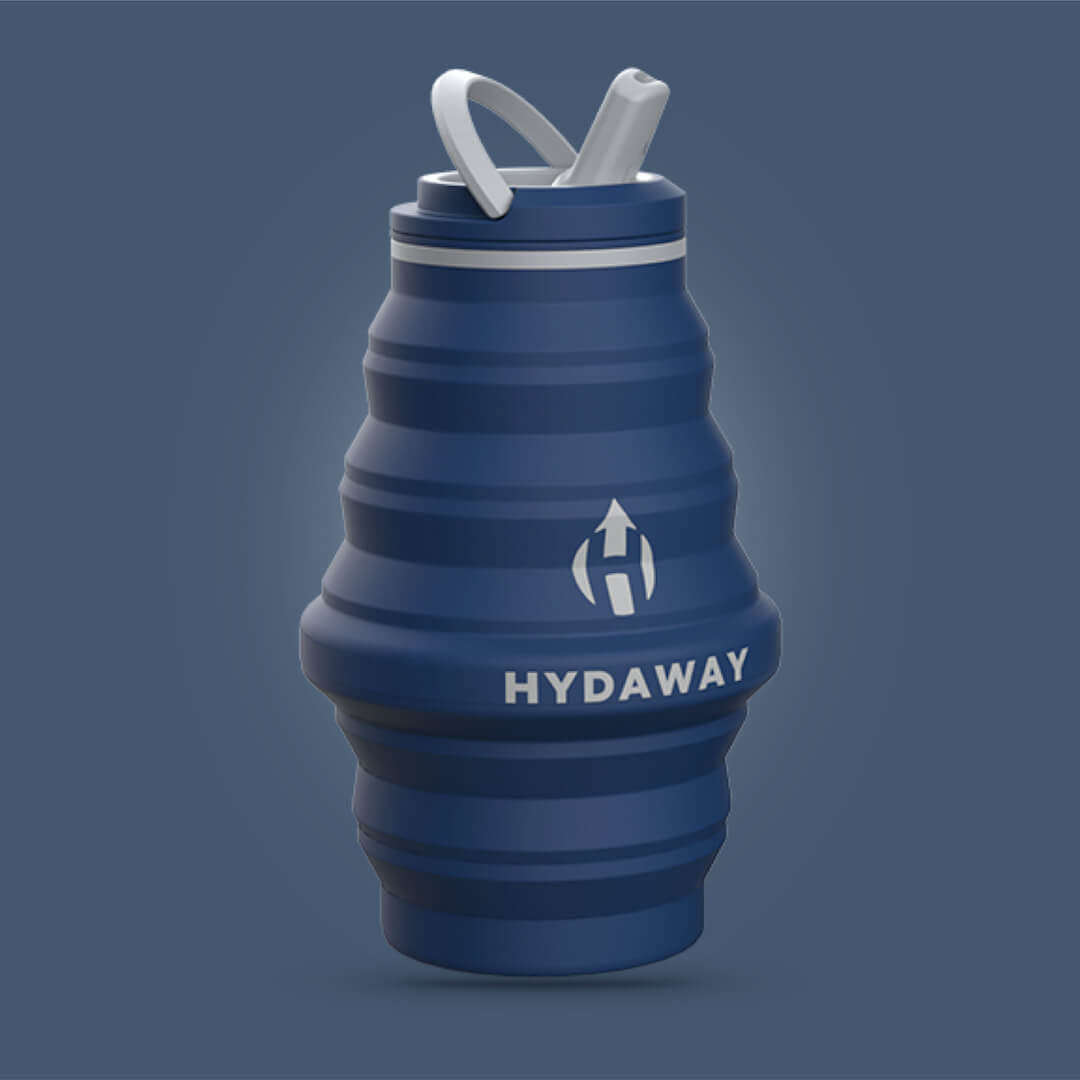
| Gear | Carries a bulky, hard-sided water bottle that takes up space even when empty. | Uses a collapsible water bottle like HYDAWAY that flattens to a slim disc. |
| Flexibility | Struggles to fit everything, leaving no room for souvenirs or unique finds. | Leaves 20% of bag space empty for new purchases and treasures from the trip. |
| Mobility | Drags a heavy suitcase up stairs, on cobblestone streets, and onto crowded trains. | Moves effortlessly with a carry-on backpack or a small spinner suitcase. |
Seeing the comparison laid out like this makes the choice pretty clear. A little planning upfront saves a world of hassle on the road.
The Power of Smart, Packable Gear
Modern travel gear is designed to solve this exact problem. Innovations in collapsible and multi-use items mean you can stay prepared without the bulk. Staying hydrated, for instance, is non-negotiable, but a standard reusable bottle hogs precious space once it’s empty.
This is where HYDAWAY products fit perfectly into your travel strategy.
-
HYDAWAY Collapsible Water Bottles: Say you're exploring the ruins of Pompeii. You can use a 25oz bottle to stay hydrated under the Italian sun. Once it's empty, it collapses down to a super-slim disc that you can slip into a small pocket or daypack. No more empty bottle rattling around in your bag as you head to dinner.
-
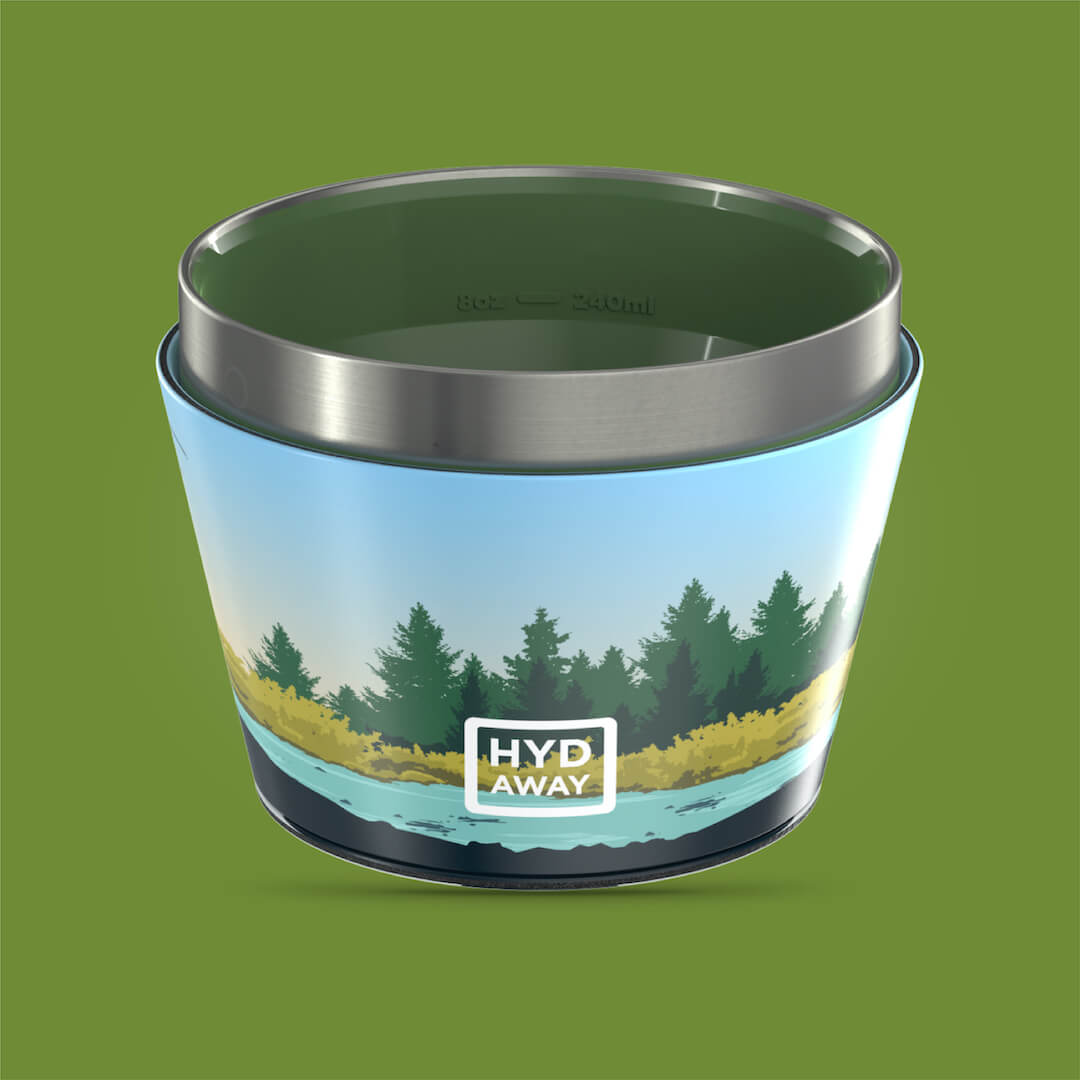
HYDAWAY Camp Bowls: These are perfect for grabbing takeaway pad thai from a street vendor in Bangkok or enjoying a packed lunch while hiking in a U.S. National Park. They're lightweight, have a spill-proof lid, and pack completely flat, so you can skip the bulky food containers and reduce single-use plastic waste.
By choosing gear that adapts to your needs, you set the stage for a journey defined by mobility and ease. And for a little more travel inspiration, you might find some great ideas by exploring some of the 10 Best Travel Blogs.
Laying the Groundwork: Your Pre-Trip Packing Blueprint
The secret to a perfectly packed bag isn’t decided when you’re staring down a pile of clothes. It happens long before that. This initial planning phase is your blueprint for success, the one thing that turns a chaotic mess of maybes into a strategic, streamlined travel kit.
Forget generic checklists you find online. This is about becoming a travel detective for your own adventure.
Your first mission is to get intimately familiar with your destination. Start with the obvious: the weather. But don't just glance at the average temperature for the month. Dig into the historical data for daily highs and lows. A month-long trip to Italy in October might mean glorious autumn days in Rome, but it could also mean bone-chilling, rainy evenings in the Dolomites. That little bit of detail makes all the difference in your fabric choices and layering strategy.
Of course, the investigation doesn't stop with the weather. Cultural norms play a huge role in what you should pack. Heading to temples in Thailand or grand cathedrals in Europe? You'll need modest clothing that covers your shoulders and knees. A lightweight scarf or sarong is a fantastic multi-use solution here, saving you from having to buy something you don't need on the spot.
Build Your Master List From the Ground Up
With your research in hand, you can start building a master list that’s actually tailored to your specific trip. This isn't just a jumble of items; it’s a direct reflection of what you'll be doing. Are you hiking the Inca Trail, then jetting off to a business meeting in Tokyo, and finally winding down on a beach in Bali? Each of those activities demands totally different gear.
Keep your list organized and focused by breaking it into categories:
- Clothing: Get granular. Break this down into tops, bottoms, outerwear, and underwear. Be specific—"two merino wool t-shirts" is way more helpful than just "shirts."
- Footwear: List the exact pairs you'll need, like "waterproof trail runners" and "comfortable city sandals." Remember, shoes are bullies in a suitcase; every pair must earn its spot.
- Toiletries & Meds: Note everything from your toothbrush to prescriptions. This is the time to plan for travel-sized containers or solid alternatives to save space and avoid leaks.
- Electronics: This includes all your chargers, a trusty power bank, adapters, and any other tech you can't live without.
- Documents & Essentials: Passport, visas, travel insurance, and both digital and physical copies of everything. Seriously.
Think Through the Real-World Logistics
A critical piece of your blueprint is figuring out laundry. A month is a long time to go without washing your clothes. Before you go, research your accommodations. Do they offer laundry services, or is there a laundromat nearby? Knowing this ahead of time confirms the classic "pack for one week" strategy and keeps you from hauling four weeks' worth of socks around the world.
This planning phase is what separates the savvy traveler from the stressed-out one. It’s the difference between effortlessly gliding through your journey and making a frantic, late-night run to a store because you forgot something essential.
This meticulous approach isn't just a good idea; it's backed by data. Recent travel packing statistics and trends show that 72.9% of travelers create a list, and an overwhelming 77.1% of them say it makes them far less likely to forget something important. As travel continues its strong rebound—with international traffic hitting 88.6% of 2019 levels last year—and luggage mishandling rates on the rise, a solid plan is your best defense against travel headaches.
As you map out your needs, you'll naturally start spotting opportunities for multi-use items. A quick-dry towel is perfect for both the beach and your post-hike shower. A collapsible HYDAWAY Camp Bowl is ideal for that instant oatmeal at the hostel and for packing up leftovers from a street food market, saving you space, money, and waste. This blueprint isn't just about what to bring; it’s about building a smarter system for a better adventure.
Building Your Ultimate 30-Day Capsule Wardrobe
The real secret to packing for a month isn't a bigger suitcase—it's a smaller, smarter wardrobe. This is where the magic of the capsule wardrobe comes in. It’s a hand-picked collection of essential items you can mix and match to create an endless stream of outfits. The goal is to pack less but have more options.
Forget that last-minute panic of trying to stuff thirty different outfits into one bag. Instead, you'll be focusing on a core set of versatile pieces that all work together. Honestly, this is the single most powerful strategy for traveling light for an entire month without ever feeling like you have nothing to wear. It’s about being intentional, not deprived.
A solid capsule wardrobe is built on a few key ideas: a smart color palette, high-performance fabrics, and the fine art of layering. When you nail these, packing stops being a chore and turns into a creative puzzle.
Choosing a Versatile Color Palette
The foundation of any great travel wardrobe is a simple, strategic color scheme. A foolproof method I always come back to is the 3+2 rule: three neutrals and two accent colors. This little formula ensures every top works with every bottom, which means your outfit combinations grow exponentially without adding bulk.
- Neutrals: Think black, navy, gray, beige, or olive green. These are your workhorses. They're timeless, they go with everything, and you can easily dress them up or down.
- Accents: This is where you get to show some personality! Pick two complementary colors you love—maybe a burnt orange, a deep teal, or a vibrant mustard. Use these for a few key pieces like a scarf, a t-shirt, or a statement accessory.
For example, imagine a palette of navy, gray, and cream paired with rust and forest green accents for an autumn trip through Europe. Every piece coordinates, making it a breeze to get dressed in the morning, whether you’re exploring the Louvre or hiking in the Swiss Alps.
Selecting High-Performance Fabrics
Picking the right fabrics is an absolute game-changer for long-term travel. It can mean the difference between doing laundry every single night and wearing an item multiple times before it needs a wash. You want to look for materials that are lightweight, wrinkle-resistant, quick-drying, and maybe even odor-resistant.
Merino wool is the undisputed champion here. It's a natural fiber that regulates your body temperature, wicks away moisture, and resists odors like nothing else. You can seriously wear a merino tee for days without it getting funky. Other great choices include Tencel, modal, and quality synthetic blends that offer stretch and durability.
Mastering the Art of Layering
Layering is how you make a small wardrobe work for all kinds of weather. Instead of lugging around a bulky coat for cold days and separate light clothes for warm ones, you pack thin, versatile layers that you can combine as needed.
A smart layering system—a base layer, a mid-layer, and a waterproof outer shell—is far more versatile than a single heavy jacket. It prepares you for unexpected rain in London, a chilly evening in Prague, or a surprisingly warm afternoon in Lisbon, all with just three key pieces.
This concept map shows how pre-trip planning elements like climate directly influence your wardrobe choices.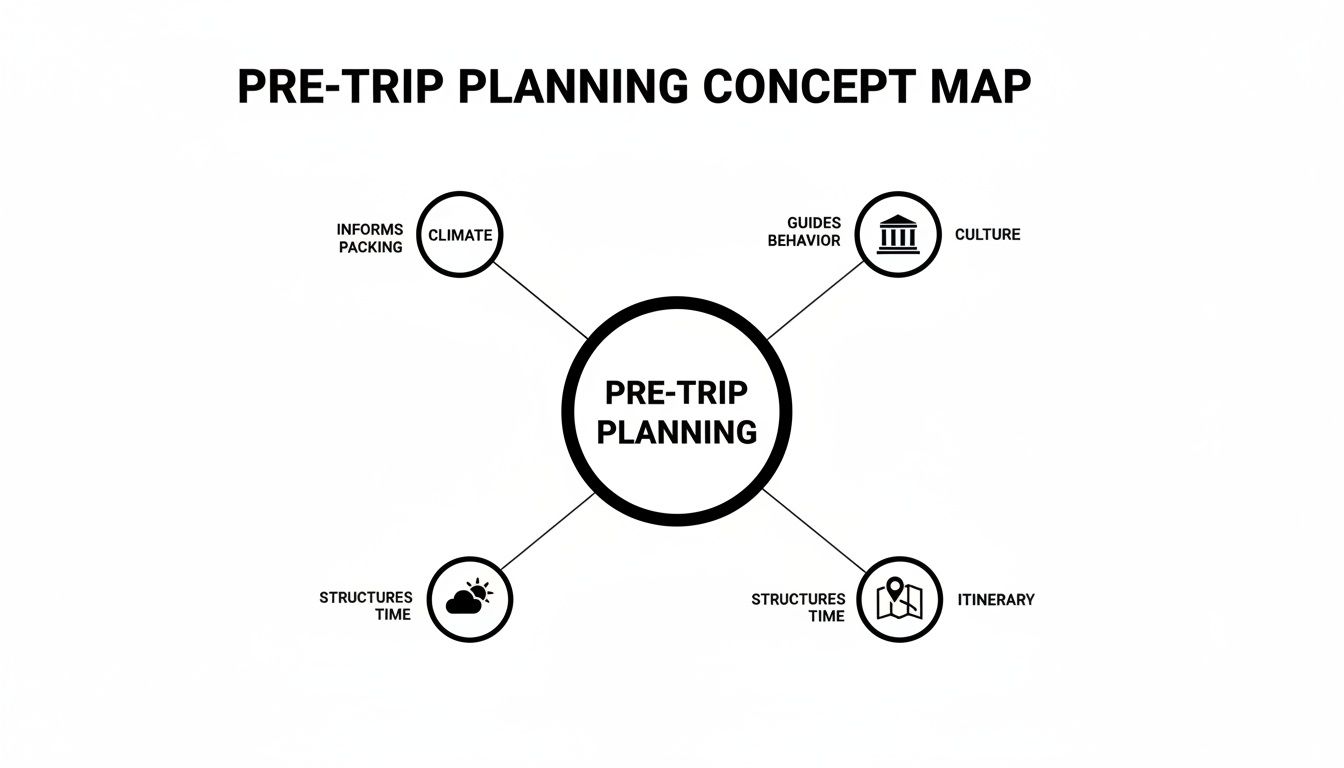
By thinking through your itinerary, the local culture, and the weather you expect, you can build a capsule wardrobe that’s perfectly suited for your adventure.
The One-Week Rule In Action
The core principle that really unlocks packing freedom is the 'one-week rule': pack enough clothes for seven days and plan to do laundry. This is the mindset shift that makes packing for a month in just a carry-on totally possible. Let's break down how this works with a real-world example.
Example Capsule: A 15-Piece Wardrobe for a Month in Europe
This minimalist list is designed for a trip with varied activities, from city tours to nice dinners. It can easily create over 40 distinct outfits.
-
Tops (6):
- 2 merino wool t-shirts (neutral colors)
- 1 long-sleeve base layer
- 2 versatile blouses or button-down shirts
- 1 stylish sweater (cashmere or merino blend)
-
Bottoms (3):
- 1 pair of comfortable, dark-wash jeans
- 1 pair of travel pants (like black trousers or chinos)
- 1 pair of leggings or joggers for lounging/travel days
-
Outerwear (2):
- 1 waterproof, windproof shell jacket
- 1 packable mid-layer (fleece or down vest)
-
Shoes (3):
- 1 pair of comfortable, waterproof walking shoes
- 1 pair of stylish ankle boots or loafers
- 1 pair of lightweight flats or sandals
-
Dress (1):
- 1 versatile black or navy dress that can be dressed up or down.
This compact collection, plus seven sets of underwear and socks, is everything you need. Throw in a collapsible HYDAWAY water bottle for all-day hydration and a packable HYDAWAY Camp Bowl for grabbing lunches from the market, and you’ll be ready for anything without being weighed down. For more ideas on assembling the perfect minimalist kit, check out our guide on creating a digital nomad packing list.
Maximizing Space with Smart Packing Techniques
You’ve curated the perfect capsule wardrobe, but now comes the real challenge: getting it all into your luggage without sitting on your suitcase to zip it closed. This is where smart packing goes way beyond the classic "roll, don't fold" advice. It’s time to get hands-on with the methods seasoned travelers use to make every single inch count.
These strategies aren't just about cramming more stuff in; they're about creating an actual system. A well-packed bag means less time spent digging for a clean pair of socks and more time enjoying your trip. When you know exactly where everything is, travel just feels smoother.
Packing Cubes as a Modular System
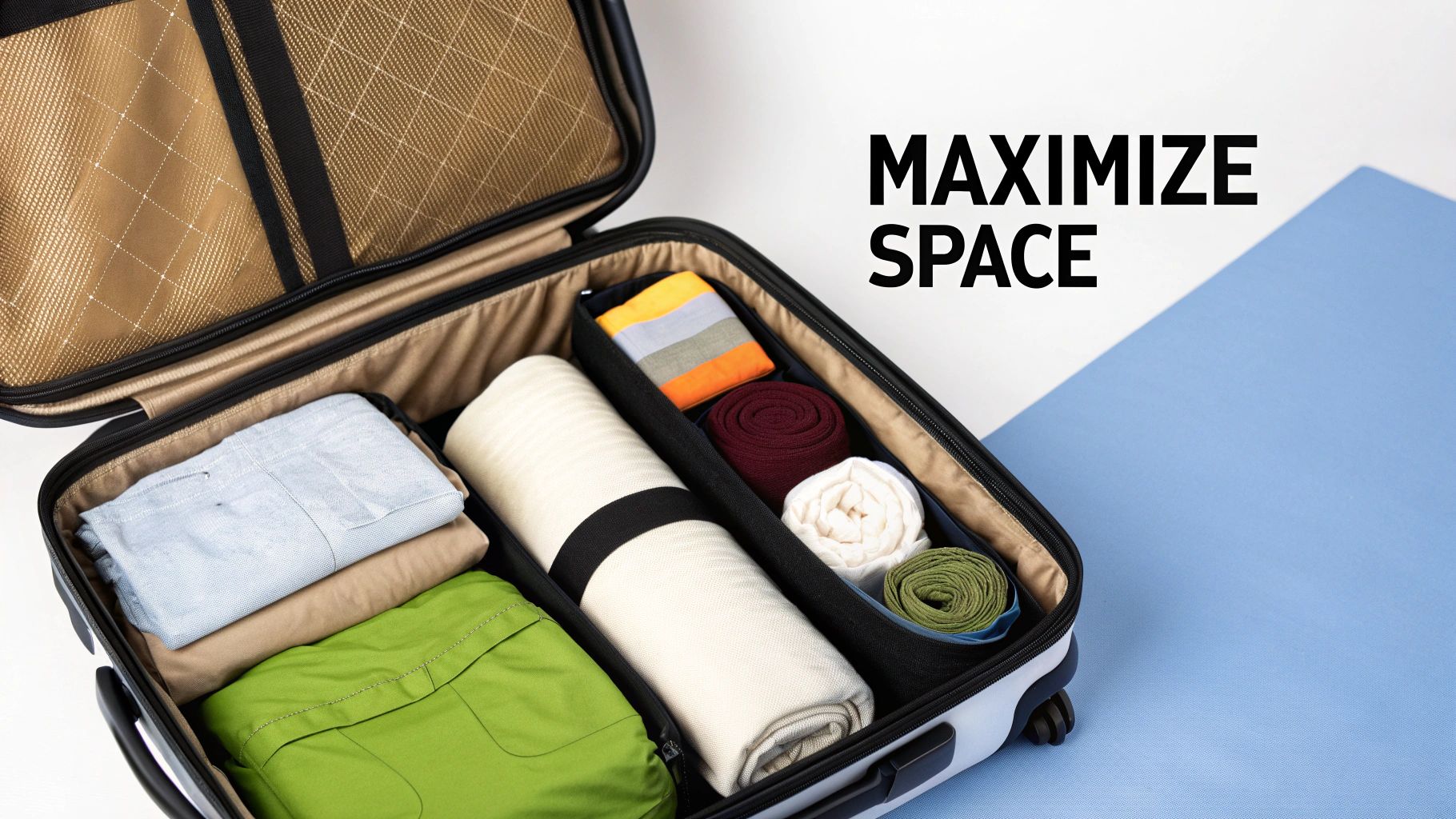
For a month-long trip, packing cubes are your absolute best friends. Think of them less as simple bags and more like modular drawers for your suitcase. They transform a chaotic pile of clothes into an organized, easy-to-navigate system.
Instead of grouping by item type (all shirts in one cube, all pants in another), try organizing by outfit. You could create a "city exploration" cube with a pair of trousers, a versatile blouse, and a lightweight scarf. This makes getting dressed effortless—just grab a cube and go.
This approach is a game-changer when you know your itinerary. If you're spending the first week hiking in Patagonia before heading to Buenos Aires, you can dedicate one cube to all your trail gear. When you arrive in the city, you can leave that cube untouched, keeping your hotel room tidy and your focus on the tango.
Shrinking Bulk with Compression Sacks
Bulky items like puffer jackets or heavy fleece sweaters are the biggest space hogs in any suitcase. This is where compression sacks are a lifesaver. These simple bags let you squeeze all the excess air out, shrinking your puffy items down to a fraction of their original size.
A warm jacket is non-negotiable for exploring Tokyo's chilly streets in January, but you don't want it monopolizing your bag. By stuffing it in a compression sack, you can reduce its volume by up to 80%. That frees up a massive amount of space for other essentials or souvenirs.
Use compression sacks for your soft, bulky items, but avoid them for anything prone to wrinkling, like a linen shirt. The intense pressure will set deep creases that are nearly impossible to get out on the road.
The Tetris Method for a Perfect Fit
Once your clothes are rolled and your bulky items compressed, it's time to assemble the puzzle. The Tetris method is all about arranging these pieces in your suitcase to eliminate every bit of wasted space. Start by placing your largest, heaviest items at the bottom near the wheels—this helps with balance and makes the bag easier to roll.
Next, fit your packing cubes and compression sacks around these larger items. The final, crucial step is to fill in all the gaps.
- Roll socks and underwear and stuff them inside your shoes.
- Tuck smaller items like chargers or belts into the crevices along the edges of the suitcase.
- Place flat items like a book or a folder on top right before zipping up.
This meticulous approach ensures a tight, secure pack where items are far less likely to shift and wrinkle during transit. For an even more detailed breakdown, you might be interested in our guide on how to save space when packing.
Choosing Essential Gear That Saves Space and Money
Beyond a well-planned wardrobe, the right gear is what truly elevates a month-long trip from manageable to effortless. I’ve learned over the years that smart, multi-functional items are non-negotiable for long-term travel. They’re the secret weapons that solve common packing problems, save you money on the road, and shrink your environmental footprint.
The goal is to shift your mindset from single-use convenience to long-term value. Instead of buying endless plastic water bottles or disposable coffee cups, you carry gear that adapts to your daily needs. This strategy doesn't just save a surprising amount of cash over a month—it dramatically cuts down on the space you need in your luggage.
Collapsible Gear for Everyday Adventures
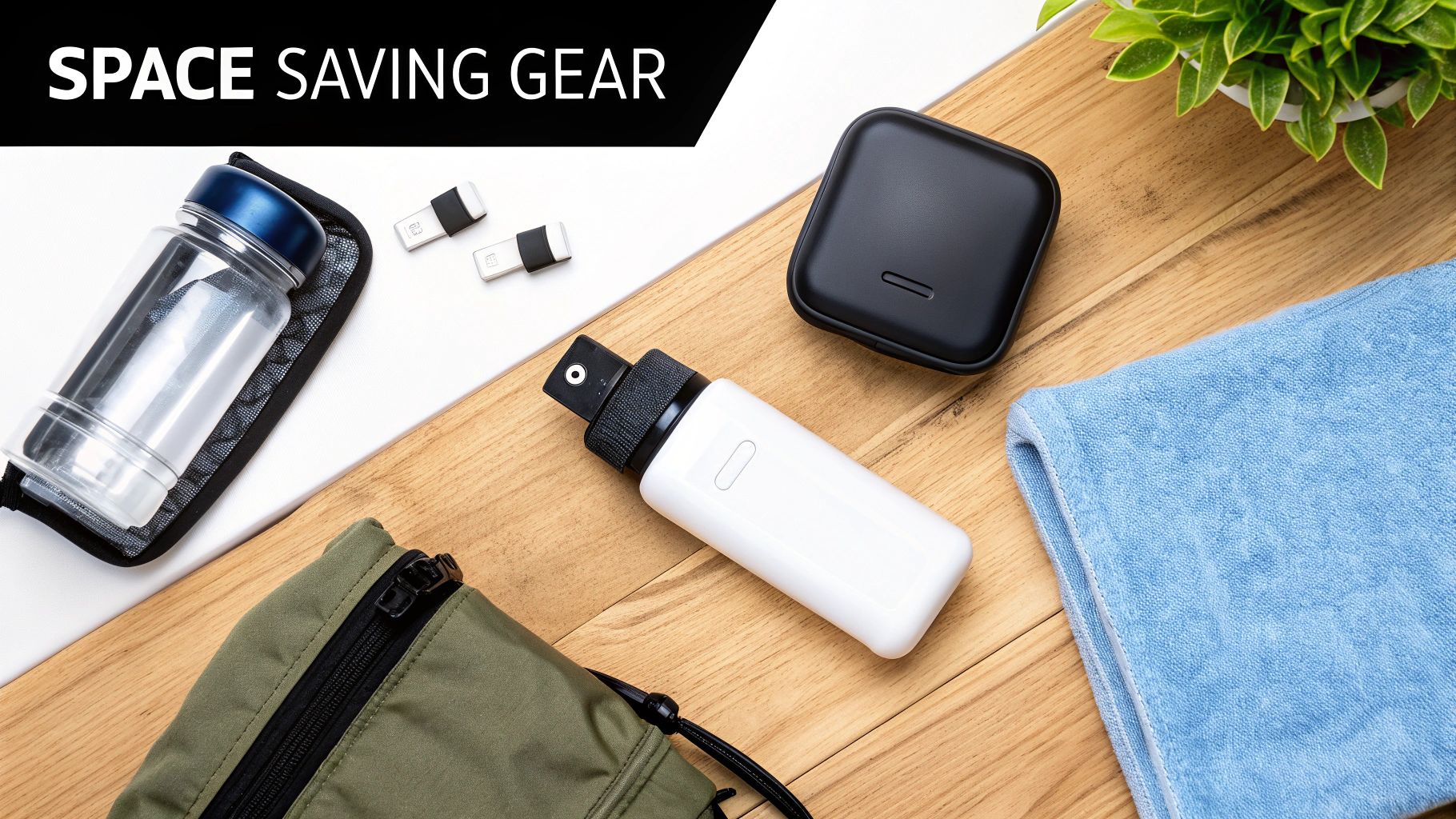
Let's be real: one of the biggest space hogs in any bag is a traditional reusable water bottle. It's essential for staying hydrated, of course, but becomes a bulky, empty tube once you're done drinking. This is where collapsible gear becomes an absolute game-changer for anyone figuring out how to pack for a month-long trip.
Imagine you’re a digital nomad working from a cafe in Lisbon. With a HYDAWAY Collapsible Water Bottle, you can stay hydrated all morning, then flatten it to a slim disc that slips right into your laptop bag. Suddenly, there’s plenty of room for your charger and notebook. It’s such a simple but powerful space-saving solution.
The same logic applies to food. Picture a family exploring a U.S. National Park. Instead of packing bulky Tupperware for picnics, they can use HYDAWAY's insulated Camp Bowls. These keep trail mix secure on a hike, pack flat in a daypack afterward, and are perfect for a mess-free lunch. Plus, the spill-proof lids mean no more worrying about messes on the move.
Must-Have Travel Tech and Toiletries
Smart gear choices go far beyond just hydration and food. A few other innovations have totally changed the game for traveling lighter and more efficiently.
- Solid Toiletries: Shampoo, conditioner, and soap bars are a traveler's best friend. They completely eliminate the risk of spills, last for ages, and breeze right through airport security without counting toward your liquid allowance. You can learn more about how these and other items fit into a minimalist travel plan by exploring options for reusable travel containers.
- Quick-Dry Travel Towel: A microfiber towel is a must. It’s incredibly absorbent, yet it packs down to the size of a small book and dries in just a few hours. It's perfect for a spontaneous beach day in Thailand or for hostels that don't provide linens.
- Compact Portable Charger: A powerful yet small power bank is non-negotiable in 2024. It ensures your phone—your map, translator, and camera—is always juiced up, giving you peace of mind when you're navigating a new city.
- Universal Travel Adapter: Ditch the bag full of different plugs. Just invest in one high-quality universal adapter with multiple USB ports. This lets you charge your phone, laptop, and power bank all at once from a single wall outlet.
The Impact of Smart Gear on Your Luggage
The cumulative effect of choosing packable gear is enormous. It's what allows you to confidently travel with just a carry-on, a strategy that's more critical than ever. Recent data shows that a whopping 71.7% of travelers struggle with overpacking. With lost luggage rates on the rise, mastering the art of the carry-on is a crucial skill.
By opting for gear like HYDAWAY's ultra-portable bottles and dinnerware, you directly combat the bulk that leads to checking a bag.
Choosing multi-functional, durable items is an investment in a smoother journey. You’ll spend less time managing your belongings and more time fully present in your adventure, all while reducing waste and saving money.
This philosophy extends to your clothing, too. For footwear, investing in quality items like durable and comfortable merino wool crew socks can make a huge difference. Their natural odor resistance and quick-drying properties mean you can pack fewer pairs without sacrificing comfort or hygiene. Each smart gear choice, no matter how small, adds up to a lighter, more flexible travel experience.
Managing Daily Logistics on the Road
Living out of a suitcase for a month is about more than just a perfectly packed bag. It’s really about building a solid system for all the small, daily tasks that can either become a total headache or just a seamless part of your adventure. Getting these on-the-go logistics dialed in is what keeps you sane, organized, and focused on the good stuff.
A big piece of that puzzle is your toiletries. We've talked about the magic of solid bars, but let's be real—some liquids are non-negotiable. For essentials like your favorite face wash or that one specific sunscreen, grab some high-quality, leak-proof reusable containers that meet the TSA’s 3.4oz (100ml) rule. The idea isn't to haul a month's supply, but just enough for a week or two before you plan to restock locally.
Your Simple On-the-Go Laundry Strategy
The thought of doing laundry on vacation might make you groan, but it's the secret weapon for packing light. For a month-long trip, you really only need to plan for one wash cycle a week. That's it. This simple mindset frees you from the ridiculous burden of carrying four weeks' worth of clothes.
Your laundry game plan can be incredibly straightforward:
- Local Laundromats: You can find coin laundries in almost any city, from Tokyo to Rome. Honestly, it can be a pretty cool way to feel like a local for an hour. Just pack a few laundry detergent sheets—they’re weightless, mess-free, and so much better than dealing with powders or pods.
- Hotel Sink Wash: For those in-between moments, hand-washing a few items like socks or a t-shirt in your hotel sink is a total lifesaver. All you need is a universal sink plug and a tiny bottle of travel wash. Clothes made from merino wool are perfect for this, as they wash easily and are usually dry by morning.
Staying Organized Day-to-Day
A month is a long time to live out of a bag, and without a daily system, things can get chaotic fast. Keeping your gear organized saves you precious time and mental energy, helping you avoid that frantic morning hunt for a clean pair of socks.
One of the best habits you can build is dedicating one packing cube exclusively for dirty laundry. This simple trick keeps worn clothes contained and makes it a breeze to grab everything on laundry day. Another pro tip? Adopt a five-minute repacking routine each morning. Before you head out for the day, take a few moments to tidy your suitcase and put everything back where it belongs.
This daily discipline is your secret weapon. It prevents the dreaded "suitcase explosion" and ensures you can pack up and move to your next destination in minutes, not hours.
Think about it this way: after a long day of exploring, instead of just dumping your daypack's contents onto a chair, put your portable charger back in its electronics pouch and your empty HYDAWAY Camp Bowl back with your food kit. It’s these small, consistent actions that make long-term travel feel effortless, ensuring you spend less time managing your stuff and more time actually enjoying the journey.
Your Top Questions About Packing for a Month
Even with the best plan, there are always a few nagging questions that pop up right before a big trip. Getting these details sorted is that last little step toward feeling totally confident as you head out the door. Let's tackle some of the most common ones.
What’s the Best Size Luggage for a One-Month Trip?
This might surprise you, but you should aim for a carry-on size backpack or suitcase, something in the 35 to 45-liter range. This isn't about being a minimalist just for the sake of it; it forces you to be smart about what you bring.
Going carry-on only means you dodge those pesky checked bag fees and completely sidestep the nightmare of lost luggage. More importantly, it makes your life so much easier when you're navigating train stations, hopping on buses, or dragging your stuff over the cobblestone streets of Prague. A bigger bag is just an open invitation to overpack "just in case" items you’ll never actually use.
How Can You Pack for Different Climates in a Single Carry-On?
It all comes down to one word: layers. But not just any layers—you need versatile fabrics that work together.
The system is pretty simple. Start with a moisture-wicking base layer (merino wool is fantastic for this), add a cozy mid-layer for warmth (like a fleece or a packable down jacket), and finish it with a waterproof outer shell. This three-part system can handle almost anything. Also, think multi-purpose. Convertible pants that zip off into shorts or waterproof trail shoes that look good enough for city walking are your best friends.
The biggest mistake people make is packing bulky, single-purpose items. You want a flexible system where three lightweight pieces can offer more warmth and versatility than one heavy coat. That's how you stay prepared for a chilly mountain morning and a warm city afternoon without overpacking.
What's the Smartest Way to Pack Toiletries for a Month?
Your new mantra is "go solid." Switching to solid shampoo, conditioner, and soap bars is a game-changer. They save a ton of space and, best of all, they can't spill all over your clothes. For any liquids you absolutely can't live without, use leak-proof, reusable travel bottles under the 3.4 oz (100ml) limit.
The strategy here isn't to haul a month's supply from home. Pack enough for the first week or two, and then plan to restock things like sunscreen or lotion when you get there. It’s often a fun little adventure in a local pharmacy, and it keeps your liquids bag light and TSA-friendly.
Ready to gear up with smart, space-saving essentials? Explore the full collection of collapsible, packable gear from HYDAWAY and travel lighter on your next adventure. Shop Now at myhydaway.com.