


Eco Friendly Travel Mugs: Your 2026 Ultimate Guide

You’re probably carrying one of two things right now. A paper cup from the airport kiosk, hotel breakfast station, or gas stop. Or a reusable mug that seemed like a good idea until it leaked in your bag, took up too much space, or was annoying to clean.
That's the fundamental challenge with eco friendly travel mugs. Many don’t need another lecture about waste. They need a mug that fits real life on the move.
I’ve felt that tension in all kinds of places. Early train platforms, campgrounds before sunrise, crowded terminals, rental cars with one usable cup holder, and beach towns where the trash cans overflow by noon. You want to travel lighter and waste less. But convenience keeps pulling you back toward disposable cups.
A better mug can change that. Not because it’s trendy, but because it makes the sustainable choice easier to repeat.
The Traveler’s Dilemma Single Use Waste on the Go
You stop for coffee before a ferry, a flight, or a long drive. The drink is hot, the line is moving, and the paper cup feels harmless because it will only be in your hand for fifteen minutes.
Then you notice the bins nearby. Lids, sleeves, cups, stirrers. A whole pile created by one busy morning.

That moment hits harder when you travel somewhere beautiful. A lookout, a trailhead, a marina, a national park town. You came for the scenery, but waste follows people everywhere.
The scale gets ugly fast
An estimated 2.5 to 5 billion disposable cups are discarded globally each year, and only about 1 in 400 cups, or 0.25%, are recycled according to Firebelly Tea’s summary of single use cup waste.
That number explains why a personal habit matters. Disposable cups aren’t disappearing neatly after you toss them. Most of them are ending up in landfill.
Practical rule: If you buy drinks on the go more than occasionally, a reusable mug isn’t a niche accessory. It’s basic travel gear.
Why travelers struggle to change the habit
People rarely keep using single use cups because they don’t care. They keep using them because travel exposes every weak point in a reusable mug.
- Too bulky: It steals room from your daypack, tote, or carry-on.
- Too fussy: The lid has too many parts and you put off washing it.
- Too risky: You don’t trust it near electronics, passports, or a spare shirt.
- Too specialized: It works for commuting, but not for hiking, road trips, or family travel.
That’s why the right reusable mug matters more than a generic “green” purchase. A mug has to earn its place in your bag.
If you’re trying to build lower-waste habits beyond drinkware, HYDAWAY’s article on how to reduce single-use plastic is a practical place to start.
The small object that changes the routine
A good travel mug does something simple. It removes friction. When your mug is easy to pack, easy to clean, and reliable enough to carry all day, you stop making the disposable choice by default.
That’s why this topic matters so much to travelers. Every refill is small. The habit isn’t.
What Truly Defines an Eco Friendly Travel Mug
“Reusable” and “eco friendly” aren’t the same thing.
A mug can be reusable and still be a poor long-term choice if it breaks quickly, uses mixed materials that are hard to handle at end of life, or spends most of its time forgotten in a cabinet. An eco friendly travel mug has to make sense across its whole life, not just at checkout.
Think of it like farm to table
Food lovers often ask where a meal came from, how it was produced, and what happened before it reached the plate. A mug deserves the same kind of thinking.
You’re not just buying a vessel for coffee. You’re choosing materials, manufacturing choices, lifespan, and what happens when the mug is finally worn out.
Four signs a mug is genuinely eco minded
Material matters first
Start with what touches your drink and what makes up most of the mug. Stainless steel, glass, and food-grade silicone each bring different strengths. Some plastics are BPA-free, but “BPA-free” doesn’t automatically mean low impact or long lasting.
If you want a simple refresher on what that label does and doesn’t mean, HYDAWAY’s guide to what is BPA-free plastic helps clear up the confusion.
Manufacturing matters too
A mug can sound sustainable because it uses recycled content or plant-based language, but those claims don’t tell the full story by themselves. Materials still have to be processed, formed, shipped, and assembled.
Readers often get tripped up. They look for one perfect material. Usually there isn’t one. A better question is whether the mug’s build supports long use and avoids wasteful replacement.
Durability is part of sustainability
This point gets missed all the time. A mug that lasts and gets used regularly is usually more meaningful than a fragile or inconvenient mug that gets replaced or abandoned.
Ask blunt questions:
- Will I carry it often?
- Can it handle my routine?
- Will I still want to use it next year?
If the answer is no, the mug may be reusable in theory but not in practice.
The greenest mug is often the one you’ll use without thinking twice.
End of life still counts
Eventually every mug reaches its limit. When that happens, simpler material systems are easier to understand and handle responsibly than products built from hard-to-separate parts.
This doesn’t mean every buyer needs to become a materials expert. It means you should notice when brands hide behind vague feel-good language instead of explaining what the mug is made from and how it’s built.
A quick checklist for spotting greenwashing
When you compare eco friendly travel mugs, ignore buzzwords at first and look for these basics:
- Clear materials list: You should know what the body, lid, and seal are made from.
- Repairable or durable design: Hinges, seals, and closures shouldn’t feel disposable.
- Practical fit: If it doesn’t work for your commute, flights, or trail days, you won’t use it enough.
- Honest limitations: Trust brands that admit trade-offs instead of pretending every feature is perfect.
That last point matters most. Honest products come with compromises. Honest guidance should too.
Comparing Common Eco Friendly Mug Materials
Material choice shapes almost everything. Weight in your bag. Taste in your drink. How well the mug survives a drop in a parking lot. Whether it keeps coffee warm through a delayed train or an afternoon work session.
The most useful way to compare eco friendly travel mugs is side by side.

Eco-Friendly Mug Material Comparison
| Material | Durability | Portability | Insulation | Eco-Friendliness (Lifecycle) |
|---|---|---|---|---|
| Stainless Steel | Excellent for daily knocks and travel wear | Moderate. Strong but often heavier and rigid | Excellent when vacuum insulated | Strong long-term option because it lasts well and resists rust and odors |
| Glass | Good if protected, poor if dropped hard | Lower for travel because breakage risk changes how you pack it | Low on its own | Can work well for taste purity and repeat use, but fragility limits some travel use |
| Food-Grade Silicone | Very good for flex and impact resistance | Excellent because it can be lightweight and packable | Moderate unless paired with insulating structure | Strong practical option when used often and kept for a long time |
| Bamboo or Plant-Based Composites | Mixed. Depends heavily on blend and construction | Usually light | Usually low to moderate | Often marketed as green, but the full lifecycle can be harder to judge |
| Recycled Plastic or Tritan-style designs | Good for everyday use, less premium feel over time | Usually very light | Usually low unless double-wall construction is added | Better than disposable use patterns, but long-term sustainability depends on lifespan and continued use |
Stainless steel for performance
Stainless steel holds over 65% of the travel mug market in 2024 because people value its durability, insulation, and resistance to rust and odors, according to IMARC Group’s travel mug market overview.
That tracks with real travel behavior. Stainless steel is what many people reach for when they need dependable temperature control and don’t want to baby their gear.
It suits:
- Commuters who want one mug all week
- Road trippers who leave drinks in cup holders for hours
- Airport travelers who need something sturdy in a packed tote
Its downside is obvious. Steel mugs don’t collapse, and rigid insulation usually means more bulk.
Glass for taste and simplicity
Glass fans usually care about taste neutrality and easy cleaning. Tea tastes like tea. Coffee tastes like coffee. You don’t get the same mental “gear” feel you get from a rugged outdoor tumbler.
But travel exposes glass fast. One drop on tile in a station bathroom or a bump against campsite rock can end the experiment.
Glass works best when movement is limited. Think desk, hotel room, car basecamp, or short local errands.
Food-grade silicone for people who pack light
Silicone solves a different problem. It bends, compresses, and handles impact better than glass. That makes it interesting for travel in a way many comparison lists overlook.
For travelers, the biggest advantage isn’t abstract sustainability language. It’s that flexible drinkware can fit into crowded life. Daypacks. seat-back pockets. glove compartments. stroller organizers. campervan drawers.
If your mug never fits your bag, you won’t carry it. If you won’t carry it, you’ll buy a disposable drink.
Silicone isn’t always the right choice for people who want maximum heat retention or a fully plastic-free setup. But it can be the smartest choice for travelers who care most about portability.
Bamboo and plant-based composites need closer scrutiny
These mugs often look earthy and giftable. That makes them popular online. But “plant-based” can hide a lot of complexity.
Some composite products blend natural fibers with binders or polymers. That doesn’t make them bad by default. It does mean you should ask harder questions before assuming they’re automatically more sustainable than other options.
Recycled plastic for lightweight convenience
Recycled plastic designs can be useful, especially when weight matters and you want something easy for kids or casual carry. The practical appeal is clear.
The trade-off is that these mugs usually compete on convenience rather than premium insulation or long-haul ruggedness. For some people that’s enough. For others, it’s why the mug gets replaced later.
Beyond the Material Key Features for Modern Travelers
The material tells you what a mug is. The features tell you whether you’ll use it.
That’s where many buying decisions go wrong. People focus on the body material and ignore the details that affect every single day of ownership.

Insulation changes the whole travel day
If you drink slowly, move between locations, or don’t have reliable access to reheating, insulation matters a lot. Good double-wall vacuum insulation creates a gap that slows heat transfer. In plain language, your drink changes temperature much more slowly.
High-quality stainless steel mugs with double-wall vacuum insulation can keep drinks hot above 140°F for over 6 hours and cold for over 12 hours, based on the performance summary in A Simple Lifetime’s review of sustainable travel coffee mugs.
That’s useful in ordinary situations:
- A delayed flight: Your coffee is still pleasant after gate changes.
- A long drive: Cold water doesn’t turn lukewarm before lunch.
- A campsite morning: You can pour once and focus on packing up.
Leak resistance decides where you can carry it
A mug that only works upright in a cup holder isn’t very flexible. Travelers need options. Sometimes your mug rides in a backpack side pocket. Sometimes it sits next to a laptop. Sometimes a kid stuffs it sideways under a seat.
Look closely at lids and seals. Here, eco claims meet reality. Many mugs use mixed materials in the closure system because flexibility and sealing often require it.
That compromise frustrates some buyers, but it’s better to notice it upfront than pretend it doesn’t exist.
Cleaning determines whether the habit sticks
A mug should be simple enough to clean on tired days. If the lid has hidden grooves, awkward hinges, or tiny channels that trap milk residue, your motivation fades fast.
The easiest mugs to live with usually share a few traits:
- Wide access: You can reach inside properly.
- Simple lid geometry: Fewer hidden corners.
- Dishwasher-safe construction: Helpful when you get home late or rotate gear quickly.
You can see the packability side of this idea in action below.
Packability is a real feature, not a gimmick
People underestimate how often bulk kills good intentions. A rigid mug might work perfectly at home but get left behind on travel days because space is already spoken for.
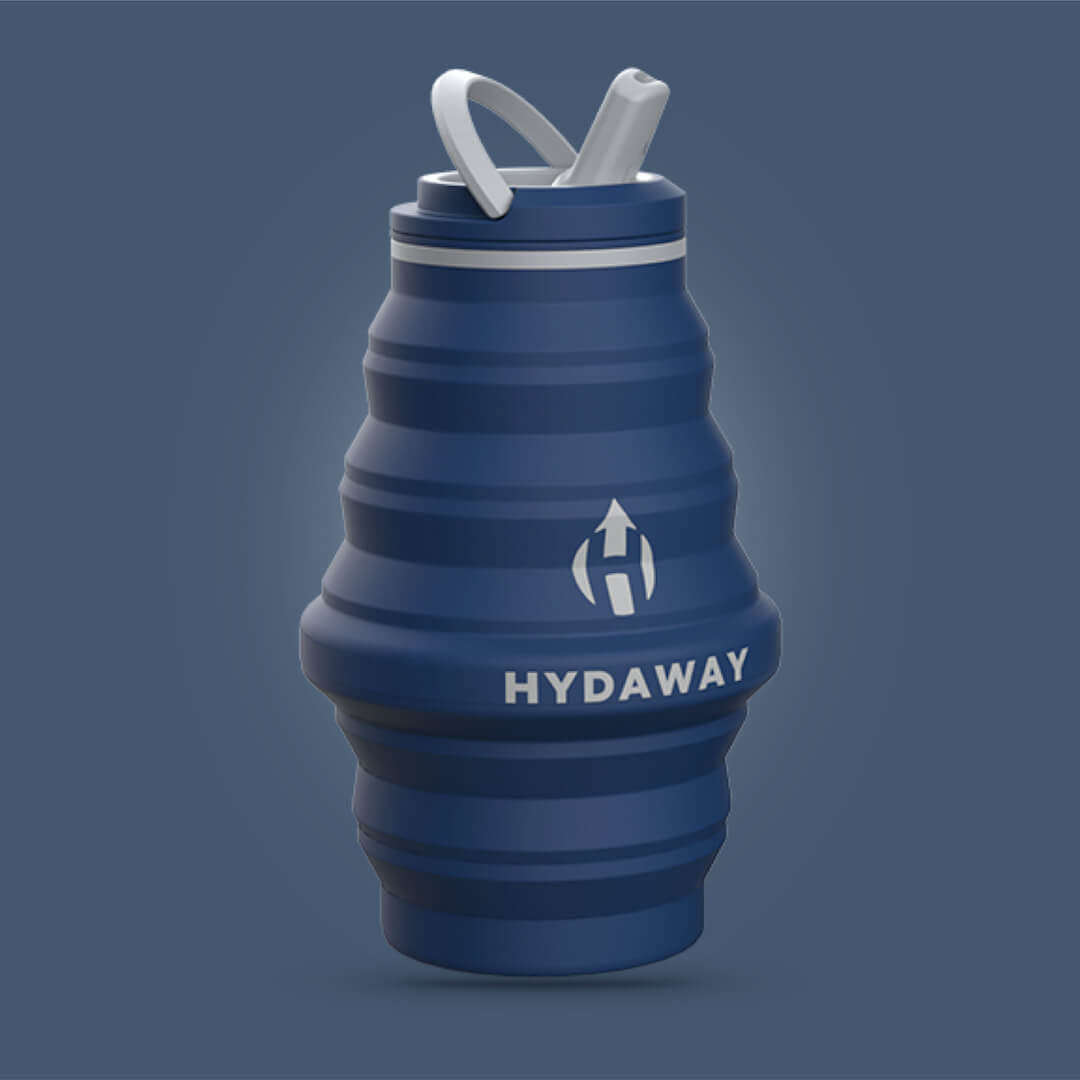
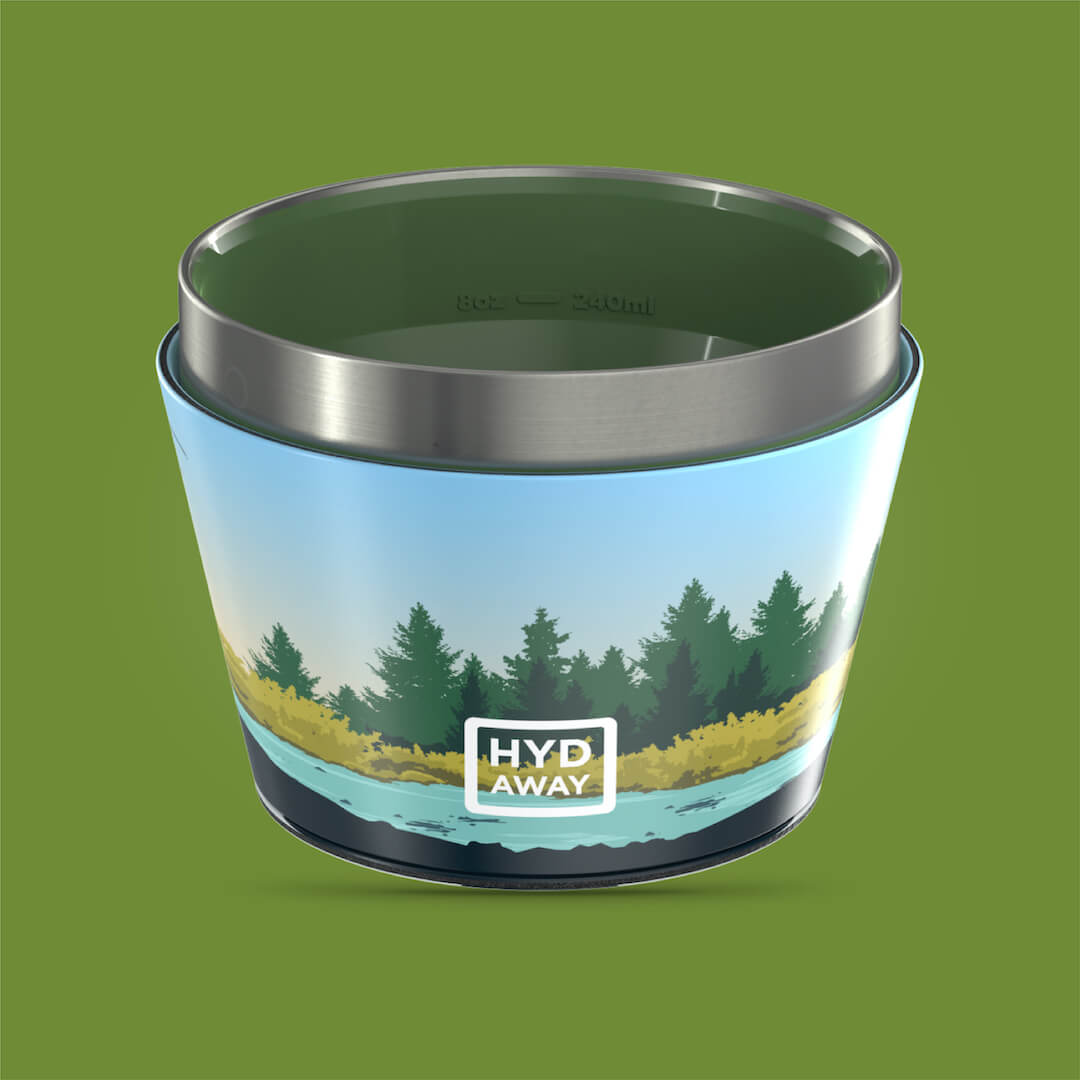
Collapsible drinkware plays a clear role. A product like the HYDAWAY Collapsible Tumbler is built for people who want a reusable option that folds down when not in use, which makes sense for carry-on travel, crowded commuter bags, day hikes, and family outings where every pocket matters.
That doesn’t replace insulated stainless steel for everyone. It solves a different problem. If your biggest barrier is storage and packability, a collapsible design can be more useful than a bulkier mug with stronger temperature performance.
Your mug doesn’t need every feature. It needs the feature that removes your biggest excuse.
How to Choose the Right Eco Friendly Mug for You
The “right” mug depends on what kind of traveler you are when nobody’s watching. Not your aspirational self. Your actual self.
Do you sip through a whole commute? Throw gear into a trunk? Travel with kids? Work from airport lounges with a backpack that’s already overstuffed?

Start with the trade-off, not the label
A lot of people shop for eco friendly travel mugs as if one model can maximize material purity, leak resistance, insulation, packability, and simplicity at the same time. Usually it can’t.
As noted by The Filtery’s discussion of non-toxic and plastic-free travel mugs, many buyers end up choosing between a fully leak-proof, insulated mug with some plastic components and a more plastic-free option that may not seal or insulate as well.
That’s not bad news. It’s useful news.
The daily commuter
You need reliability more than philosophy. If your coffee leaves the house with you at 7:10 a.m., your mug has one job. Don’t leak. Keep the drink enjoyable long enough to matter.
Choose a mug with strong sealing and real insulation. Stainless steel often fits this routine well.
Your likely compromise is material purity in the lid. For many commuters, that’s acceptable because performance is what keeps the reusable habit alive.
The weekend hiker
You care about weight, durability, and how gear behaves when tossed into motion. Your mug may ride in a side pocket, get clipped externally, or share space with snacks and extra layers.
You probably don’t need café-level elegance. You need something that survives use and doesn’t become dead weight when empty.
A lighter, more flexible mug can make sense here, especially if your hike is short and insulation matters less than easy packing.
The global adventurer or digital nomad
You’re living out of a backpack, roller bag, or campervan storage cube. Space is premium. Every object competes with chargers, layers, toiletries, and work gear.
This traveler should prioritize:
- Packability: Bulky gear loses.
- Low-fuss cleaning: Because your sink situation changes.
- Versatility: One item should work in airports, rentals, coworking spaces, and day trips.
If you keep buying drinks because your reusable mug takes too much room, choose the option that removes that barrier first. For this travel style, collapsibility can matter more than maximum heat retention.
The family on vacation
Families have a different decision tree. Parents need durability, easy cleaning, and fewer spill disasters. They also need gear that multiple people can use without a complicated maintenance ritual.
For family travel, good questions are practical:
- Can this survive being dropped?
- Can I wash it quickly in a hotel sink if needed?
- Will it fit in a stroller pocket, tote, or car organizer?
- Can I hand it to a teenager or grandparent without a long explanation?
A slightly less specialized mug often wins here because simplicity beats precision.
Buy for your hardest day of use, not your ideal day of use.
A fast way to decide
If you’re stuck between two mug styles, ask which problem annoys you most now.
| If this is your problem | Prioritize this |
|---|---|
| My drink gets cold too fast | Insulation |
| My bag is too full already | Collapsibility or lighter weight |
| I’ve had leaks before | Lid and seal design |
| I stop using mugs because they’re annoying to wash | Easy-clean construction |
| I care most about reducing plastic contact | Simpler material setup, while accepting possible feature trade-offs |
That question usually clears the fog. Don’t buy the mug with the longest feature list. Buy the one that solves the reason you’ve kept reaching for disposable cups.
Maximizing Your Mugs Lifespan and Impact
A reusable mug only does its job if you keep using it. Longevity is where the environmental payoff becomes real in daily life.
That starts with maintenance. Not obsessive maintenance. Just a routine simple enough that you’ll stick to it.
Clean it before residues settle in
Coffee oils, tea tannins, and milk residue are what turn a good mug into a smelly one. Rinse soon after use when you can, especially if you’ve had anything creamy or sweet.
A few habits help a lot:
- Separate the lid parts: If the design allows it, open seals and closures so trapped residue doesn’t sit overnight.
- Air dry fully: Moisture trapped under a seal can create odors.
- Don’t ignore the drinking edge: That’s where buildup often hides first.
Match the cleaning style to the material
Stainless steel usually handles regular washing well, and many travelers like it because it doesn’t hang onto odors easily. Silicone needs a thorough wash too, especially around folds, but its flexibility can make it easier to inspect closely.
For busy routines, dishwasher-safe gear is practical because it lowers the friction of repeated use. That’s one reason some travelers prefer designs made for everyday cleanup rather than delicate hand-wash routines.
If your mug needs a deeper refresh, products like bottle cleaner tablets can help remove stubborn smells and residue from reusable drinkware.
Protect the parts that wear first
Most mugs fail at the lid, seal, or closure. The body often outlasts the small components.
Treat those parts with a little care:
- Store with the lid loosened when dry: This can help reduce trapped smells.
- Check seals after travel days: Sand, crumbs, and lint can interfere with closure.
- Avoid forcing folded or threaded parts: Most leaks start after repeated rough handling.
A mug lasts longer when cleaning and storage are easy enough to do tired.
Keep the habit visible
One last trick matters more than people expect. Store your mug where you’ll grab it.
Near your keys. In your daypack. In the campervan door pocket. In the family park bag. If your mug lives in the back of a cabinet, disposable habits will fill the gap.
Sustainability often looks ordinary. Wash it. Dry it. Pack it again tomorrow.
Your Next Adventure Starts with a Smarter Choice
A good reusable mug isn’t just a cup with a lid. It’s a decision about how you move through the world.
The smartest choice usually isn’t the mug with the flashiest eco language. It’s the one that matches your travel style closely enough that you’ll carry it again and again. For some people, that means stainless steel and long-lasting insulation. For others, it means lighter weight, simpler cleaning, or a collapsible shape that fits into a packed bag.
That’s the part many guides skip. Eco friendly travel mugs involve trade-offs. Some are stronger on insulation. Some are stronger on packability. Some reduce plastic contact more directly. Some make everyday use easier, which is what keeps them out of drawers and in rotation.
That doesn’t weaken the sustainable argument. It makes it more honest.
The encouraging part is that this isn’t a grand, unreachable lifestyle overhaul. It’s one repeated choice. One mug in your backpack, your cup holder, your suitcase, or your stroller caddy. One less disposable cup when you’re tired, rushed, or far from home.
Travel changes how you see places. It can also change how you consume in them. When you carry a mug that fits your real life, you make it easier to leave less behind.
HYDAWAY makes reusable travel gear for people who need packable solutions that work in motion. If you want drinkware built for commuting, travel days, trail stops, and tight bags, take a look at HYDAWAY.