


Eco Friendly Meal Prep Containers: Top Travel & Home Picks

Eco-friendly meal prep containers are pretty simple: they’re reusable solutions designed to kick wasteful, single--use plastics to the curb. Usually made from materials like glass, stainless steel, silicone, or bamboo, they offer a durable, sustainable, and often healthier way to pack up your meals. They’re an essential piece of gear for a modern, eco-conscious lifestyle.
The Sustainable Shift in Meal Prepping
Picture this: you’ve just wrapped up a productive Sunday cooking session, and your fridge is beautifully stocked with healthy meals for the week. Awesome, right? But then you look over at the sink and see a guilt-inducing pile of flimsy, single-use plastic containers, destined for the landfill. It’s a scene all too familiar for busy parents, weekend adventurers, and anyone trying to eat well on the go.
This guide is all about a smarter, more sustainable solution: eco-friendly meal prep containers. Choosing the right container isn't just a trend; it's a practical upgrade to your daily routine. It’s an intentional choice that’s better for your health, your wallet, and the planet.
Why Reusables Are Gaining Momentum
The move away from disposables is huge. The global market for reusable meal prep containers is projected to grow from USD 0.09 billion in 2026 to USD 0.14 billion by 2035, all driven by people who want durable, long-lasting options.
This whole movement is about making conscious choices that fit an active, thoughtful lifestyle. It’s not just about buying better products, but finding inspiration to use them well. Getting into the groove with some easy vegan lunch ideas for work can make switching to eco-friendly meal prep feel totally seamless and even fun.
A Practical Solution for Modern Life
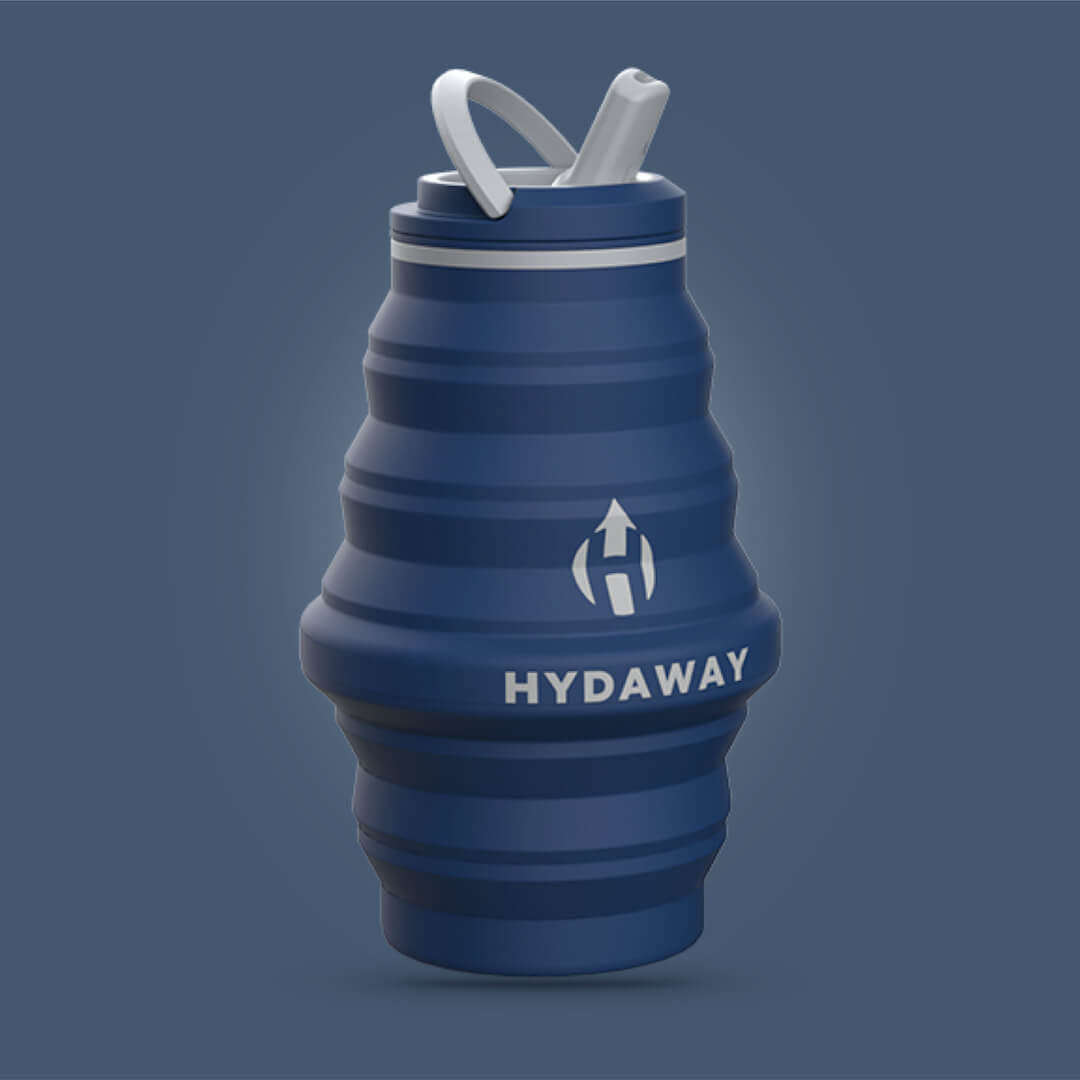
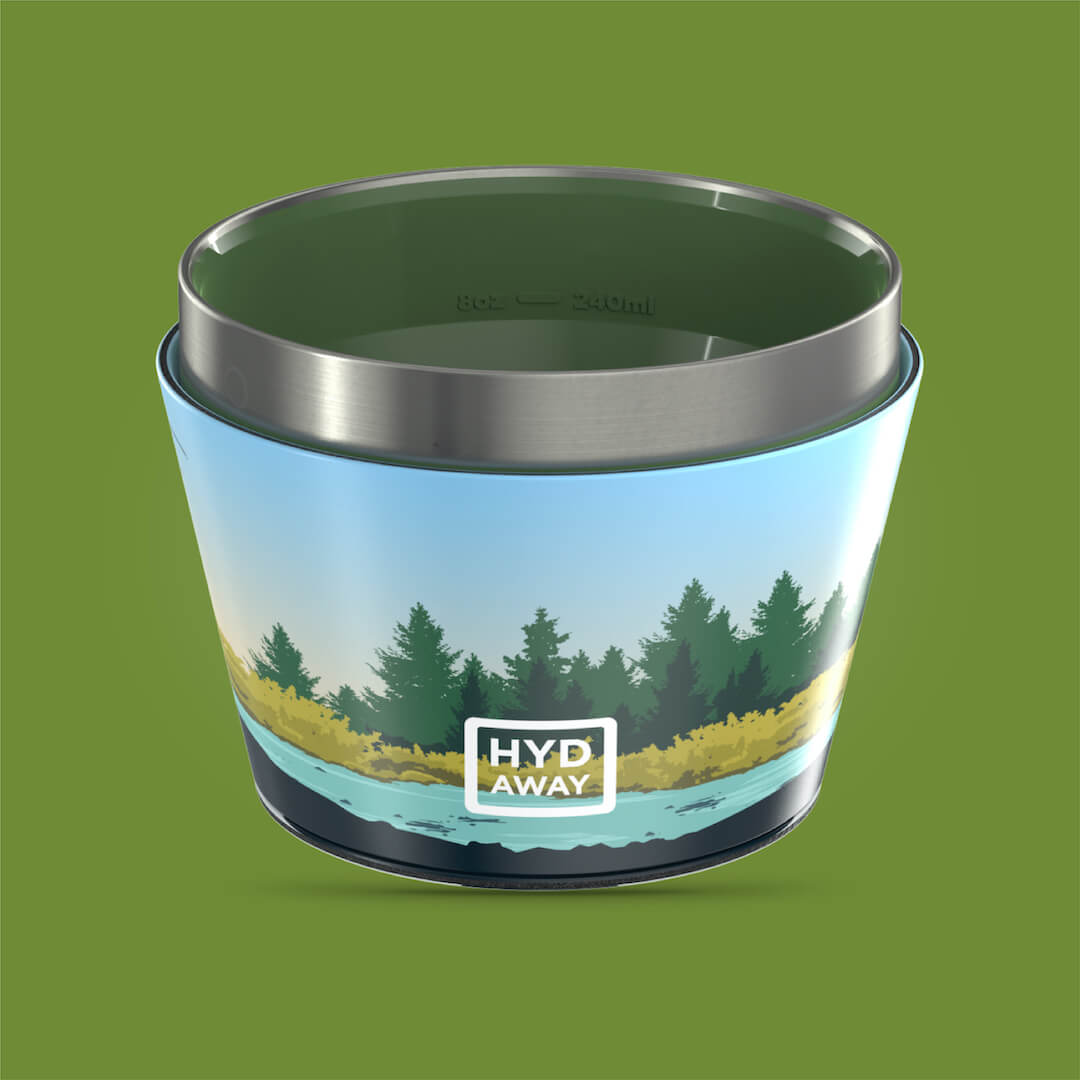
At its core, switching to sustainable containers just simplifies things. Brands like HYDAWAY are creating gear that fits perfectly into a life in motion. Take their collapsible, spill-resistant bowls—they’re a game-changer for a traveler trying to save every last inch of backpack space or a parent packing snacks for a family outing. For instance, imagine you're headed to a park potluck. Instead of lugging a heavy glass dish, you can pack your famous quinoa salad in a lightweight HYDAWAY bowl. After everyone has enjoyed it, the bowl collapses down to a slim disc, easily fitting into your tote bag for the walk home.
Choosing reusable containers is a powerful step towards a less wasteful life. It’s a small change in habit that creates a large, positive impact over time, both for the environment and your personal budget.
We'll lay out a clear roadmap for picking the perfect containers for your life, whether you're a van-lifer, a daily commuter, or a weekend hiker. By understanding what’s out there, you can confidently invest in products that are built to last. For more tips on cutting down on disposables, check out our guide on how to reduce plastic waste.
Decoding Eco Friendly Materials
The term "eco friendly" gets thrown around a lot these days, but what does it actually mean when we're talking about meal prep containers? It's about so much more than just being reusable. A truly sustainable container has a positive story to tell, from the moment it's created to its eventual retirement.
Think of it like choosing good hiking gear. You don't just grab any old backpack off the shelf; you check out the materials, the stitching, and how it’s built to handle whatever the trail throws at you. In the same way, picking the right eco friendly meal prep containers means looking at the entire lifecycle.
This concept map really breaks down how making a single switch—choosing sustainable meal prep—creates a ripple effect of benefits for your health, the planet, and even your wallet.
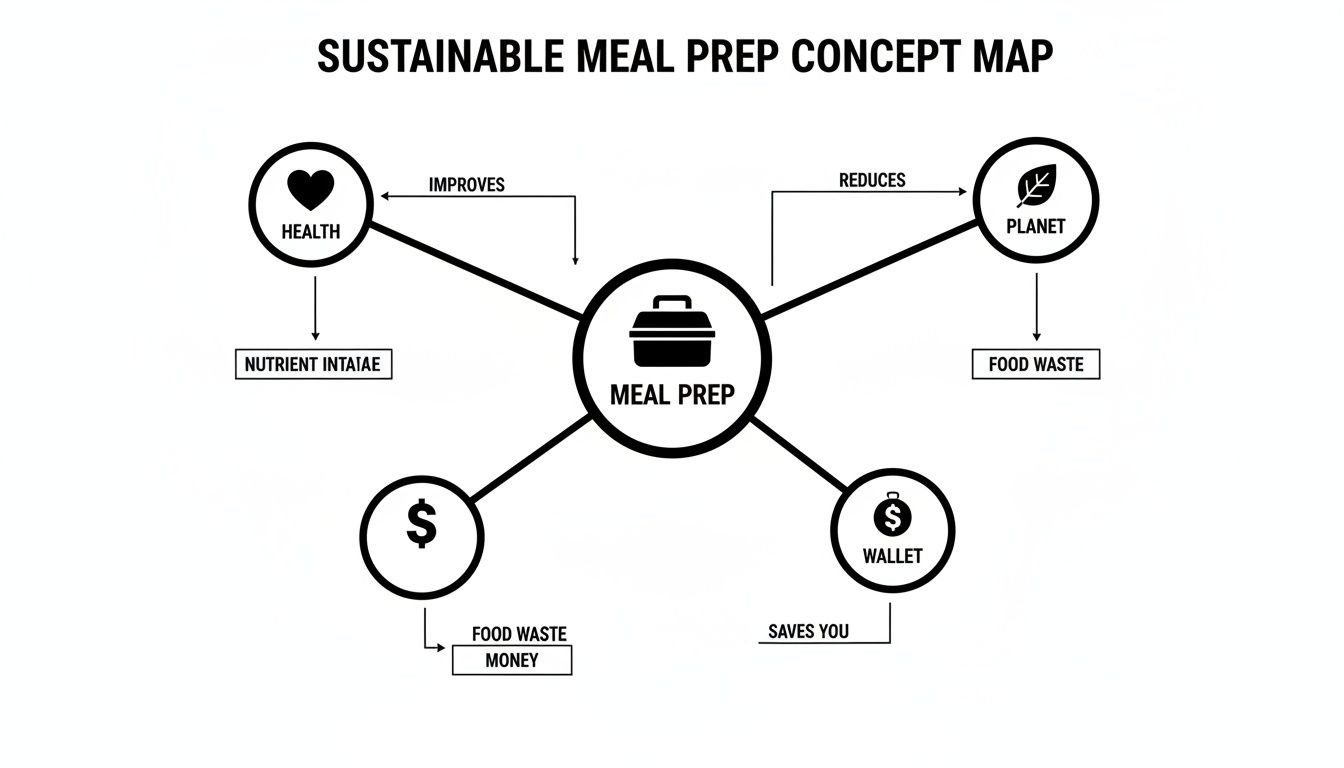
It’s pretty clear: one small change can lead to a whole lot of good.
The Full Lifecycle Of A Container
A container's environmental footprint starts long before it ever lands in your kitchen. It all begins with where the raw materials come from. Is it made from sustainably harvested bamboo, recycled metals, or virgin plastic that comes from fossil fuels? Each origin story has a wildly different impact on our planet.
Next up is manufacturing. Turning those raw materials into a finished product takes energy and water. Companies that are truly committed to sustainability often lean on renewable energy and cleaner production methods to keep their impact as low as possible during this stage.
Finally, we have to think about what happens when it's no longer useful. Can it be easily recycled? Is it compostable, or is it just destined for a landfill where it will sit for centuries? A genuinely eco-friendly product is designed for a circular economy, where it can either be repurposed or returned to the earth.
Understanding Important Labels And Terms
When you're shopping, you’ll bump into a few key terms. Knowing what they mean helps you cut through the marketing fluff and choose with confidence.
- BPA-Free: This is a big one for health and safety. It means the product is free of Bisphenol A, an industrial chemical that can seep into food and has been linked to negative health effects. Definitely a non-negotiable.
- Food-Grade Silicone: Not all silicone is created equal. This label ensures the silicone is safe for contact with food and won't release any funky fillers or byproducts. High-quality silicone, like the kind we use in HYDAWAY products, is stable, non-toxic, and incredibly durable.
- FSC-Certified: You'll often see this on products with bamboo or wood parts, like lids. The Forest Stewardship Council (FSC) certification is your guarantee that the wood was harvested from a forest that's managed responsibly.
This growing awareness is making huge waves. The demand for eco-friendly food packaging is set to jump from USD 244.71 billion in 2025 to USD 353.78 billion by 2030, thanks to people like you and growing bans on single-use plastics. For an individual, making the switch can cut personal plastic waste by an average of 75 pounds a year. Pretty cool, right? You can dig deeper into this trend by exploring the latest eco-friendly food packaging market research.
How HYDAWAY Prioritizes Safe Materials
When you're packing a lunch for a long hike or just a day at the office, you need to trust that your container is safe. Our collapsible bowls are made from third-party verified, food-grade silicone, ensuring they are completely free of BPA, phthalates, and other nasty pollutants.
By choosing materials that are both durable and non-toxic, you invest in a solution that protects your health while minimizing environmental waste. This dual benefit is the core principle of smart, sustainable living.
This commitment means you can pack your meals—hot or cold—without ever worrying about chemicals leaching into your food. It’s a practical example of how a brand’s material choices directly impact your daily wellness and peace of mind, so you can focus on the adventure ahead. For instance, when you pack chili in a HYDAWAY bowl for a chilly soccer game, you can reheat it with confidence knowing no harmful chemicals will compromise your meal.
Choosing Your Perfect Container Material
Now that we have a solid handle on what makes a container truly eco-friendly, it’s time to meet the top contenders for your kitchen and travel pack. The big three—glass, stainless steel, and silicone—each bring their own unique strengths to the table. This isn't about finding one "best" option; it's about finding the right material for your lifestyle.
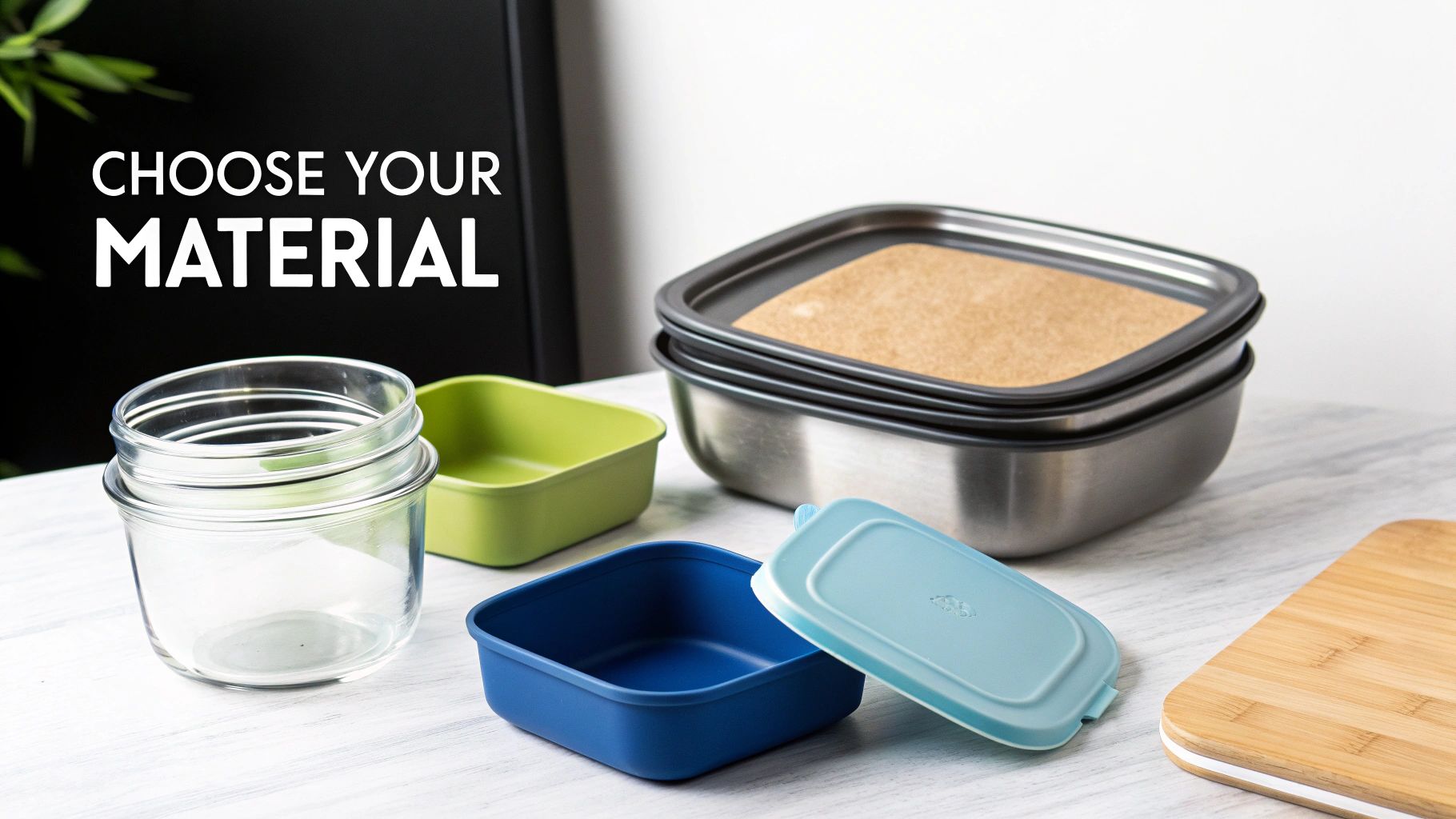
Think of it like picking out shoes. You wouldn’t wear hiking boots to the office or dress shoes on a mountain trail. In the same way, the best eco friendly meal prep containers for stashing leftovers at home might be a terrible choice for a multi-day trek or a flight across the country.
The Classic Contender: Glass
Glass containers are an absolute gem for home-based meal prepping. They’re celebrated for their purity—glass is completely non-porous, meaning it will never absorb food odors, funky flavors, or stubborn stains. That week-old curry won't leave a ghost behind after a quick wash, so your next meal tastes exactly like it should.
The trade-off? Glass is heavy and fragile. While it's perfect for the fridge or taking lunch to a stationary office, it’s just not a practical travel buddy. Tossing a few glass containers in a backpack adds serious weight and brings the constant risk of chipping or shattering.
The Indestructible Option: Stainless Steel
When it comes to pure toughness, stainless steel is the undisputed champ. It's the rugged workhorse of the container world—lightweight, incredibly durable, and pretty much indestructible. This makes it a go-to for camping trips, construction sites, and school lunches. You can chuck a stainless steel container in your bag without a second thought.
Its one major weakness is the microwave. You can't nuke it. This can be a deal-breaker if reheating leftovers is a core part of your lunch routine. While stainless steel is fantastic for salads, sandwiches, and grain bowls, it’s not so convenient for hot meals unless you have another dish to transfer them to.
The Versatile Hero: Silicone
This is where food-grade silicone really shines. It's the modern solution that cleverly combines the best features of glass and steel. You get a lightweight, flexible, and highly durable material that fits almost any situation. It’s non-toxic, handles hot and cold temps like a pro, and won’t shatter when you inevitably drop it.
Silicone's genius lies in its adaptability. It's tough enough for rugged outdoor adventures yet flexible enough to collapse and fit into the smallest spaces, making it the ultimate material for life in motion.
This unique combination is exactly what makes HYDAWAY products so incredibly practical. Picture packing for a family road trip. Instead of rigid, bulky containers hogging all the cooler space, you can use HYDAWAY's Collapsible Everyday Bowls. They hold a hearty meal, but once lunch is over, they shrink down to a slim disc that slips right into a car door pocket or a crowded backpack. For anyone who needs their gear to be as efficient and mobile as they are, this is a total game-changer.
Take a digital nomad working from a new city each month. They need gear that's feather-light for flights and compact enough for tiny apartment kitchens. A set of our collapsible bowls gives them a full-size dining solution that takes up virtually zero luggage space. HYDAWAY’s smart design truly delivers a safe, eco-conscious option built for a life of adventure, big or small.
Solving The Space Problem For Travelers
Anyone who's ever tried to play Tetris with their life's essentials to fit them into a backpack, carry-on, or campervan drawer knows the struggle is real. For travelers, hikers, and digital nomads, every single inch of space is precious real estate. This constant battle for room is exactly why traditional eco-friendly meal prep containers—like bulky glass jars or rigid stainless steel boxes—often get left behind.
A life on the move demands a different kind of gear. It needs to be incredibly lightweight, so you can dodge extra baggage fees and save your back on the trail. It has to be tough enough to handle being tossed around. Most importantly, it needs to shrink down to practically nothing, because when you’re living out of a bag, wasted space is a luxury you just can't afford.
This is where the genius of collapsible design becomes an absolute game-changer for staying sustainable on the road.
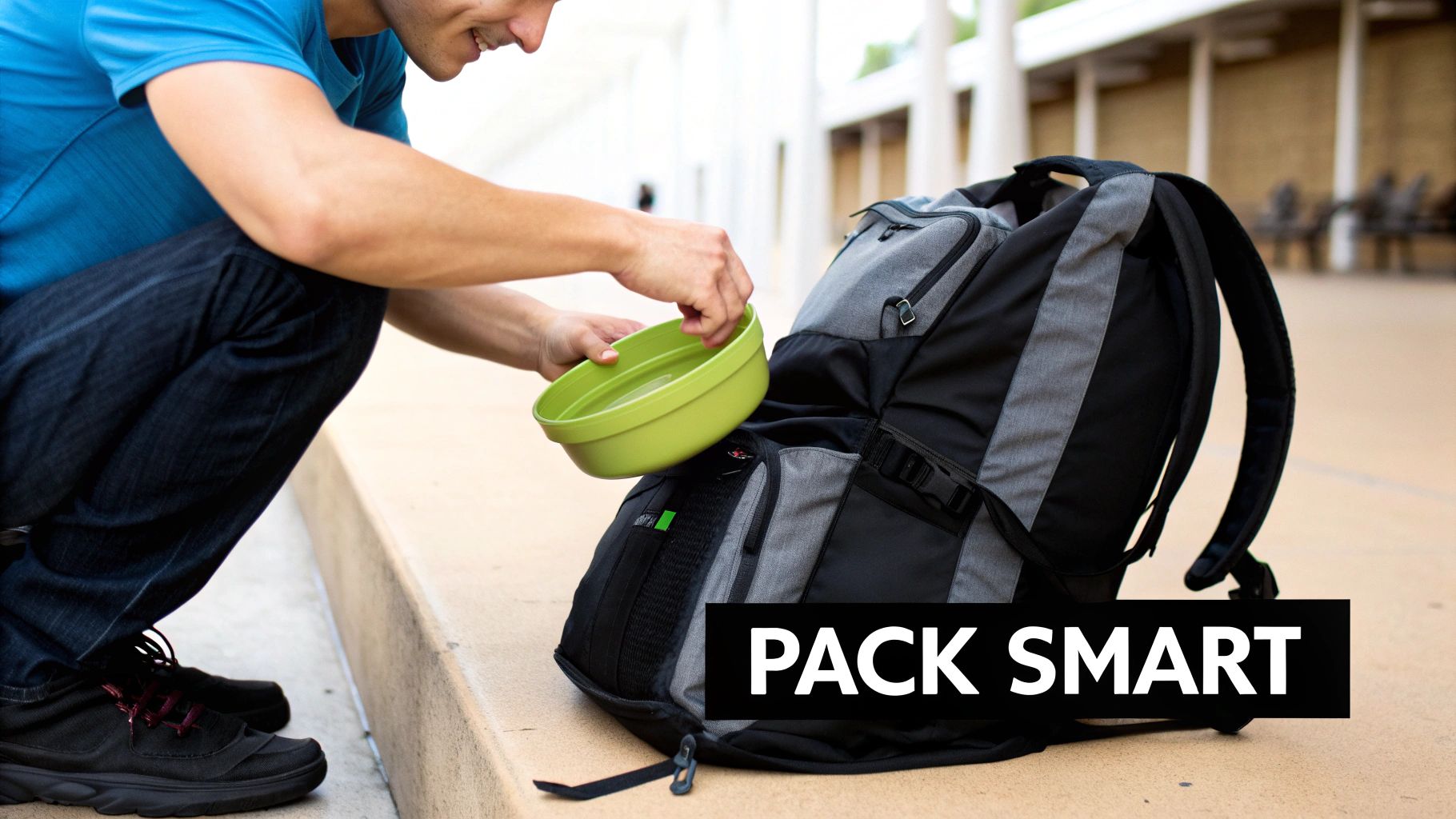
The Magic Of Collapsible Design
Picture this: you've reached a mountain summit after a long hike and are enjoying a well-deserved lunch you packed. With a typical container, you're stuck carrying an empty, clunky box all the way back down. But with a collapsible bowl, the story is completely different.
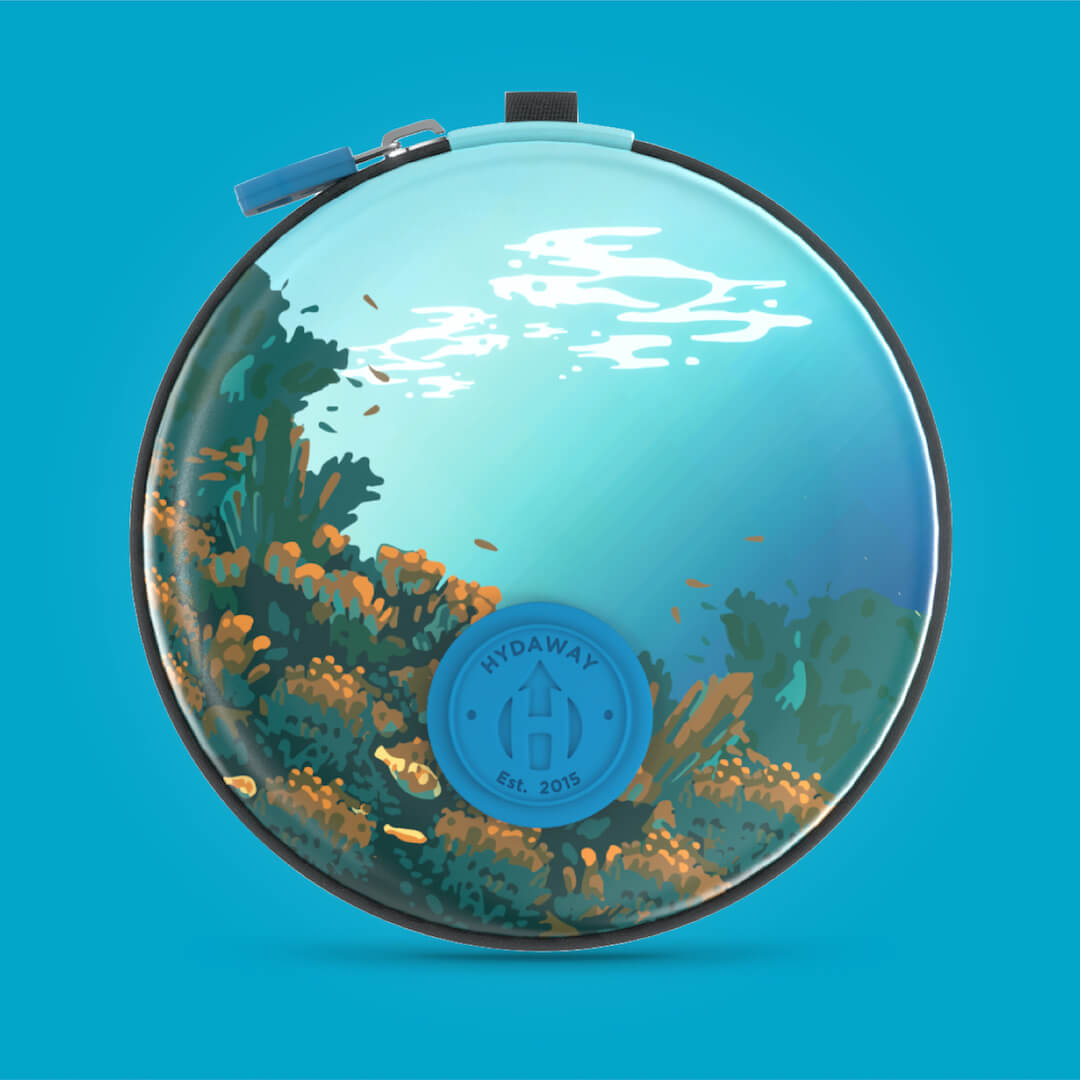
Once you’ve scraped up the last bite, you just press down, and that full-sized bowl shrinks to about the thickness of a wallet. It slips easily into a side pocket of your pack, freeing up tons of space and making your descent that much lighter. This is the practical magic HYDAWAY products bring to every single adventure.
For the modern traveler, gear has to be multifunctional and space-efficient. Collapsible containers aren't just a nice-to-have; they are a fundamental solution that makes a sustainable, on-the-go lifestyle truly possible.
This simple but powerful feature completely transforms how you pack, travel, and eat. It finally ends that frustrating trade-off between being prepared with your own meals and traveling light.
Real-World Scenarios Where HYDAWAY Shines
The beauty of a space-saving design goes way beyond the hiking trail. Just think about all the moments in a traveler's life where HYDAWAY’s collapsible gear makes a real, tangible difference.
- The Airport Dash: A family hustling through a busy airport can pack healthy, homemade snacks in leak-proof, collapsible bowls. After the kids are done, the containers squish flat, taking up virtually no room in a carry-on for the flight home.
- The Van-Life Kitchen: In a campervan or RV, cabinet and drawer space is gold. A set of HYDAWAY’s insulated bowls gives you a full dinnerware solution for cooking and eating, then nests together to store in a tiny sliver of space.
- The Digital Nomad's Apartment: When you’re hopping between furnished apartments every few months, you don't want to start collecting bulky kitchenware. A few collapsible bowls ensure you always have what you need for a proper meal without adding weight or volume to your luggage.
HYDAWAY’s innovative designs make sustainable travel not just an option, but an incredibly simple and practical one. Whether you’re trying to save money on pricey airport food or cut down on your waste while exploring a new country, these containers are built to support your goals. To see just how versatile they are, you can learn more about our collapsible silicone food container. It’s all about carrying less so you can do and experience more.
Maximizing The Life of Your Reusable Containers
The real magic of any eco friendly meal prep containers isn't just what they're made of—it's how long they last. Picking a durable, reusable container is a great start, but it’s the care you give it that really counts. Proper care ensures it can take the place of hundreds, even thousands, of single-use plastics over its lifetime.
Think of your containers as an investment in a less wasteful lifestyle. A little bit of maintenance goes a long way in protecting that investment and keeping your gear ready for years of meal-prepping adventures.
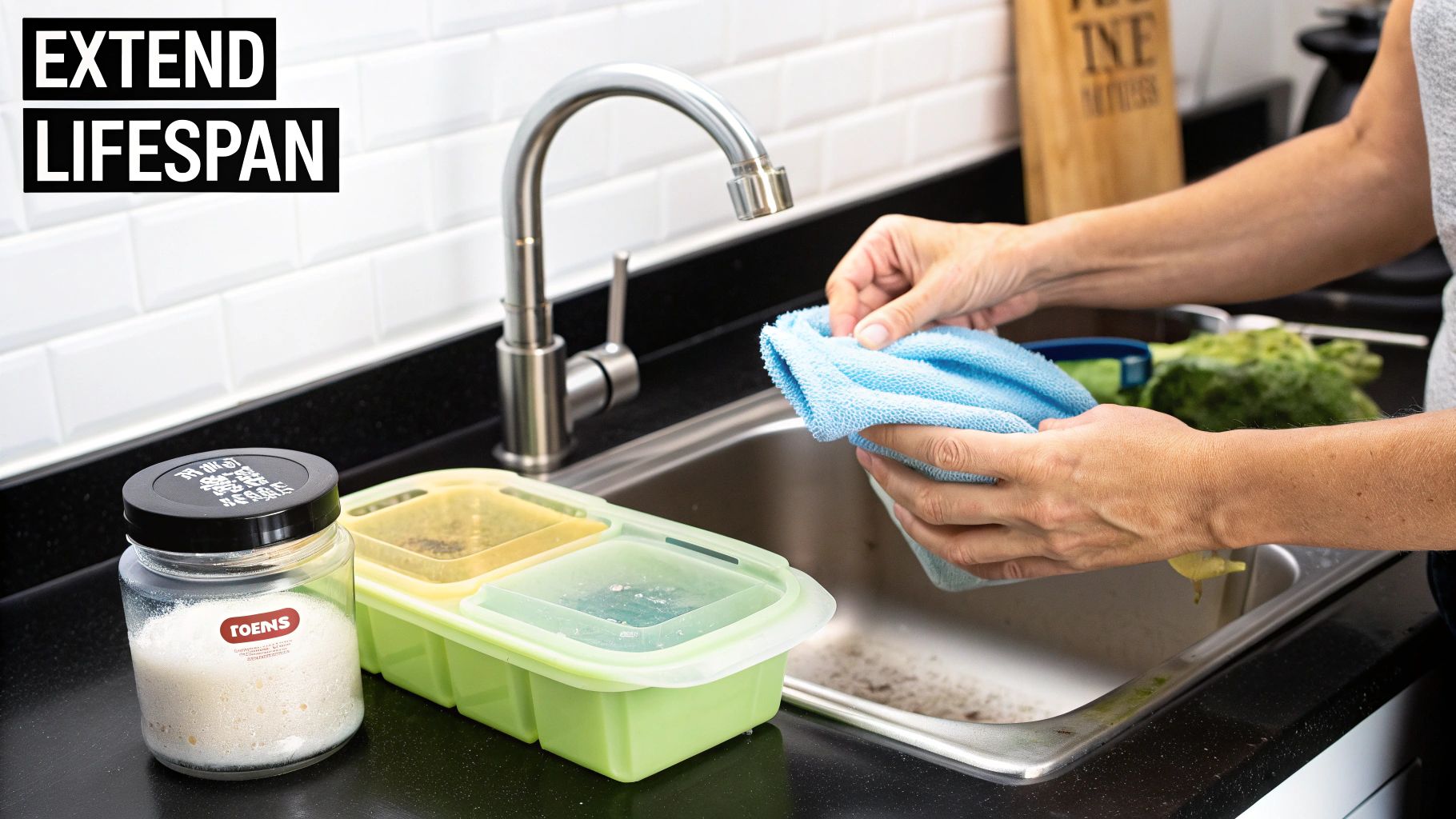
Smart Cleaning And Maintenance Tips
Different materials need slightly different TLC to stay in top shape. These simple, material-specific tricks will keep your collection looking and performing its best.
- For Silicone Containers: After a flavorful curry or tomato soup, you might notice a faint stain or smell. The fix is surprisingly easy: just make a paste with baking soda and water, spread it inside, and let it sit for a few hours before washing. It naturally gets rid of odors and lifts stains without any harsh chemicals.
- For Bamboo Lids: Bamboo is an amazing, sustainable material, but it really doesn't like to stay wet. To keep your lids from cracking, always hand-wash them and dry them right away. Never, ever let them soak in the sink or send them through the dishwasher.
- For Stainless Steel: To keep your stainless steel containers looking brand new, stay away from abrasive scrubbers like steel wool that can scratch the surface. A simple wash with soap and water is usually all you need. For a deeper clean, a quick wipe with a vinegar and water solution will bring back that original shine.
Good maintenance habits are especially key for versatile gear like HYDAWAY's products. Their high-quality, food-grade silicone is built for the long haul. Plus, being dishwasher-safe makes daily cleanup a breeze, so you can spend less time scrubbing and more time planning your next meal. Check out our guide for more on the benefits of dishwasher-safe meal prep containers.
The Financial Upside Of Long-Term Use
Beyond the environmental brownie points, sticking with reusable containers is a huge win for your wallet. It's a big reason the global meal prep market is expected to jump from USD 2.8 billion in 2025 to USD 5.2 billion by 2030.
People are catching on that they can save an average of $150 a year just by ditching disposable options and taking care of their reusable gear. You can dig into more insights on this trend in recent market analysis.
Let’s break it down with a real-world example.
The Daily Commuter's Savings
Imagine buying lunch five days a week, often in disposable containers that cost about $0.50 each. That quickly adds up to $2.50 a week, or $130 over a year—just for the packaging! Investing in a good set of long-lasting containers pays for itself in just a few months, and from then on, it's pure savings.
This simple math shows that choosing durable, easy-to-clean products like those from HYDAWAY isn't just a smart move for the planet—it's a brilliant move for your budget. When you make your containers last, you turn a one-time purchase into years of savings and waste reduction.
Alright, let's turn all this theory into practice.
The goal isn't just to find an eco-friendly meal prep container, but to find the right ones for your life. Think of it less like a single purchase and more like putting together your own personalized toolkit for eating well on the move.
This simple game plan will help you cut through the noise and figure out exactly what you need. A few key questions are all it takes to make a choice you’ll feel great about—one that actually fits your routine and adventures.
Find Your Ideal Container Match
First things first, what does your typical week look like? Your lifestyle is the best blueprint for picking the perfect gear.
- The Daily Commuter: Are you shuttling meals from your home fridge to the office microwave? Microwave-safe materials and a seriously leak-proof lid are non-negotiable. No one wants soup in their laptop bag.
- The Weekend Camper: When you're heading for the trail, durability and weight are everything. You need something that won’t crack or add unnecessary bulk. Unbreakable materials like stainless steel or tough silicone are your best friends out there.
- The Globetrotter: Is every inch of your backpack or suitcase prime real estate? Packability is key. This is where collapsible containers, like our HYDAWAY bowls and cups, are an absolute game-changer, shrinking down to save precious space for the journey home.
Nailing this down makes the final decision a whole lot easier by showing you which features really matter.
Build Your Sustainable System
Once you know your main needs, you can build out a versatile collection. A weekend warrior might have a couple of rugged, indestructible HYDAWAY bowls for the trail and a few glass containers at home for storing leftovers. The point isn't to own dozens of containers, but to own the right ones.
The most effective sustainable action is the one you can actually stick with. When you choose containers that make your life easier, you’ll use them constantly. That’s how you make a real dent in single-use waste.
Ultimately, this is about more than just buying a product; it’s about making a conscious choice. At HYDAWAY, our whole mission is built on creating practical, well-designed tools that empower a more adventurous and sustainable life.
When you pick gear that aligns with your goals—whether that’s a leak-proof bowl for your commute or an ultra-packable one for a trip around the world—you’re making a smart investment. It’s an investment in your health, your wallet, and a planet with a little less plastic, one delicious meal at a time.
A Few More Questions Answered
Diving into the world of eco friendly meal prep containers can bring up a few questions. Let's tackle some of the most common ones so you can feel totally confident in your choices.
Are Silicone Meal Prep Containers Actually Safe?
Yes, absolutely—as long as you stick with high-quality, food-grade silicone. The great thing about this material is that it's super stable and non-toxic, so you don't have to worry about nasty chemicals like BPA or phthalates. It won't leach anything funky into your food, whether you've got a hot soup or a cold salad in there.
It's also incredibly tough. A single, well-made silicone container can easily take the place of hundreds of single-use plastics over its lifetime. For anyone on the move, its lightweight and unbreakable nature makes it the perfect, worry-free companion for any adventure.
How Do I Get Stains or Smells Out of My Containers?
Stubborn food odors or stains are no match for a simple trick using stuff you probably already have. A paste made from baking soda and water works wonders, especially on silicone. Just coat the inside, let it sit for a few hours, and then wash it like you normally would.
Here's a little pro-tip: Place your clean, empty container out in the sun for a few hours. The UV rays act like a natural bleach, helping to fade discoloration from things like tomato sauce or turmeric without any harsh chemicals.
Of course, the best defense is a good offense—washing your containers right after you use them is the easiest way to keep them looking and smelling fresh.
Should I Have a Few Different Types of Containers?
Honestly, yes. Having a small, curated collection of different materials is the most practical way to go for most people. Different materials are just better suited for different jobs.
Think of it like building out your toolkit for life:
- Glass containers are the champs for storing leftovers in the fridge or freezer at home, where their weight isn't a big deal.
- Stainless steel makes an awesome, rugged lunchbox for daily trips to the office or a job site.
- Collapsible silicone containers, like the ones we make at HYDAWAY, are unbeatable for travel, hiking, or any time you're tight on space.
When you match the container to the activity, you'll always have the perfect tool ready to go.
Ready to upgrade your meal prep game with gear that's as adventurous and efficient as you are? Explore the full collection of collapsible, space-saving bowls and drinkware from HYDAWAY and discover how easy it is to live sustainably on the go. Find your perfect travel companion today at myhydaway.com.