


Your Guide to Compact Camping Equipment for Lighter Adventures

Compact camping gear is all about brilliant efficiency, multi-functionality, and space-saving designs that make getting outdoors lighter and more mobile. It's not just about shrinking your stuff; it’s about choosing smarter gear that improves your adventure without weighing you down.
The Shift to Smarter Camping Gear
Let's face it, camping has changed. The days of lugging massive, oversized coolers and heavy canvas tents for a simple weekend getaway are mostly behind us. Today’s adventurers, from seasoned thru-hikers to families enjoying a local park, are all about freedom, mobility, and experiences—not excess baggage. This new mindset has kicked off a major shift toward minimalist, high-performance kits built around compact camping equipment.
This modern approach isn’t just about size. It’s about intelligent design that solves real-world problems out on the trail or at the campsite. Think of it like the difference between an old, clunky flip phone and a sleek smartphone. Both can make calls, but one does a whole lot more while fitting right in your pocket. Compact gear brings that same smart-thinking to the outdoors.
Why Modern Campers Demand Less Bulk
The reasons for going small are pretty clear. Lighter, more packable gear means you can hike further without feeling exhausted, fit everything into a smaller car, or even hop on a plane for your next adventure. It’s about getting back space and energy for what really matters—the experience itself.
This trend is making waves in the market. The global camping equipment industry is booming, projected to hit USD 88.2 billion by 2033, a huge leap from USD 35.4 billion back in 2021. A big part of that growth comes from the 7.7 million new campers who are looking for efficient, packable gear for everything from van-life trips to quick weekend escapes. You can get more details on this growing market from Cognitive Market Research.
How Smart Design Is Changing the Game
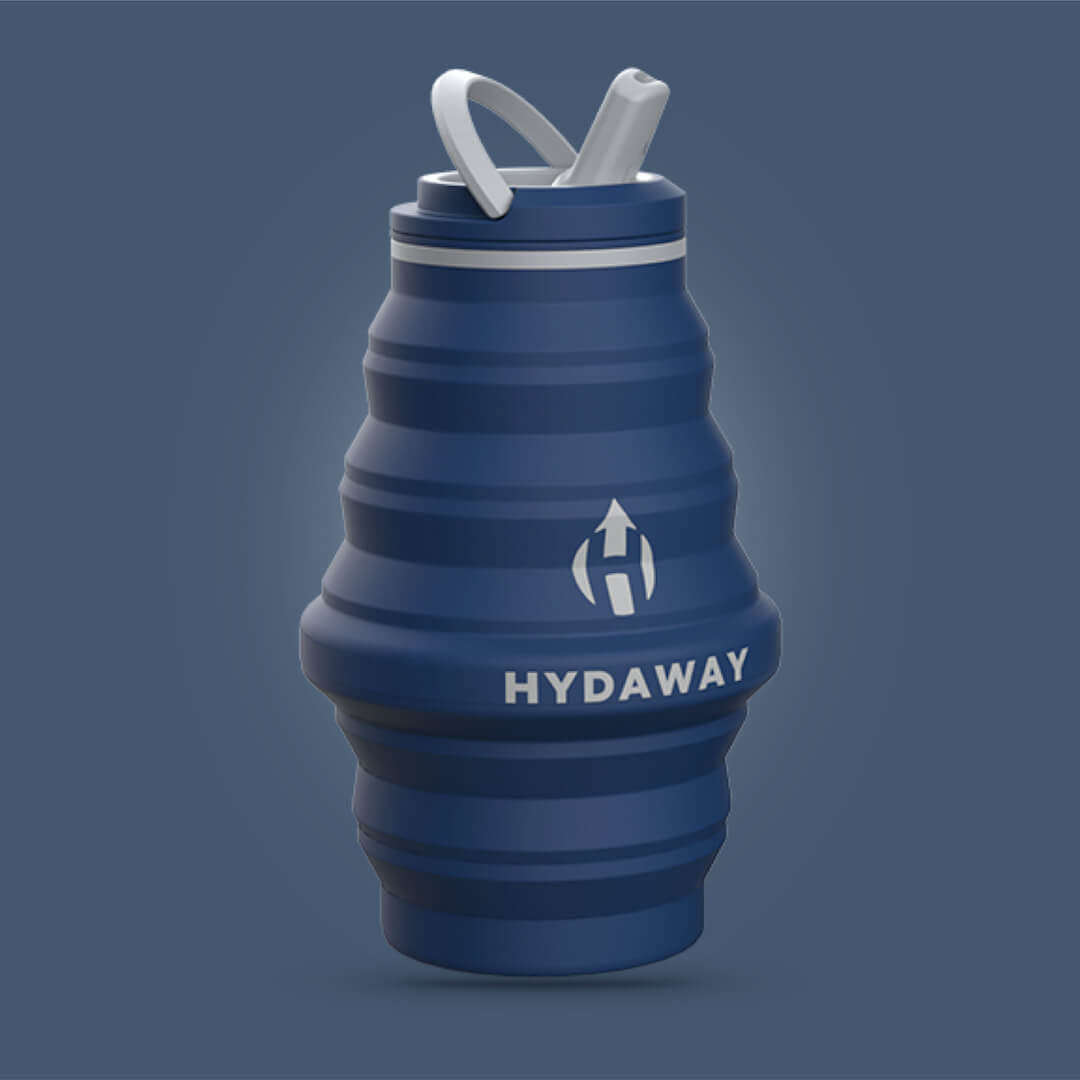
This is where innovators like HYDAWAY step in, nailing this modern approach perfectly. They looked at a piece of gear every camper has—the water bottle—and fixed its biggest annoyance: what do you do with it when it’s empty? For a practical example, imagine you've just finished a long hike to a scenic overlook. With a traditional bottle, you're stuck carrying that bulky, empty container all the way back down.
A rigid, empty water bottle takes up the same amount of precious pack space as a full one. A HYDAWAY collapsible bottle, however, shrinks down to almost nothing, freeing up room for other essentials. This simple yet effective design philosophy is at the heart of the compact gear movement.
By creating collapsible water bottles and nesting dinnerware, HYDAWAY shows just how much smart design can change the way you pack. This guide will dig deeper into that idea, exploring the must-have gear categories and what to look for, so you can build a lighter, more efficient kit for any adventure that comes your way.
Building Your Compact Camping Kit
Putting together the right compact camping kit can feel like a game of Tetris, but it’s a lot easier when you know which pieces matter most. A smart, well-organized kit is your ticket to a lighter, more nimble setup, covering everything from your camp kitchen to the roof over your head. Let's walk through each key category and see how choosing smaller, more efficient gear can completely change how you adventure.
The whole point is to win back precious pack space without giving up the essentials. Think of it like this: each piece of gear is a block. The better shaped and more compact each block is, the more you can fit inside, and the easier it is to carry.
This chart really nails the thinking behind great compact gear, showing how it goes from a clever concept to a super-efficient piece of equipment you can rely on.
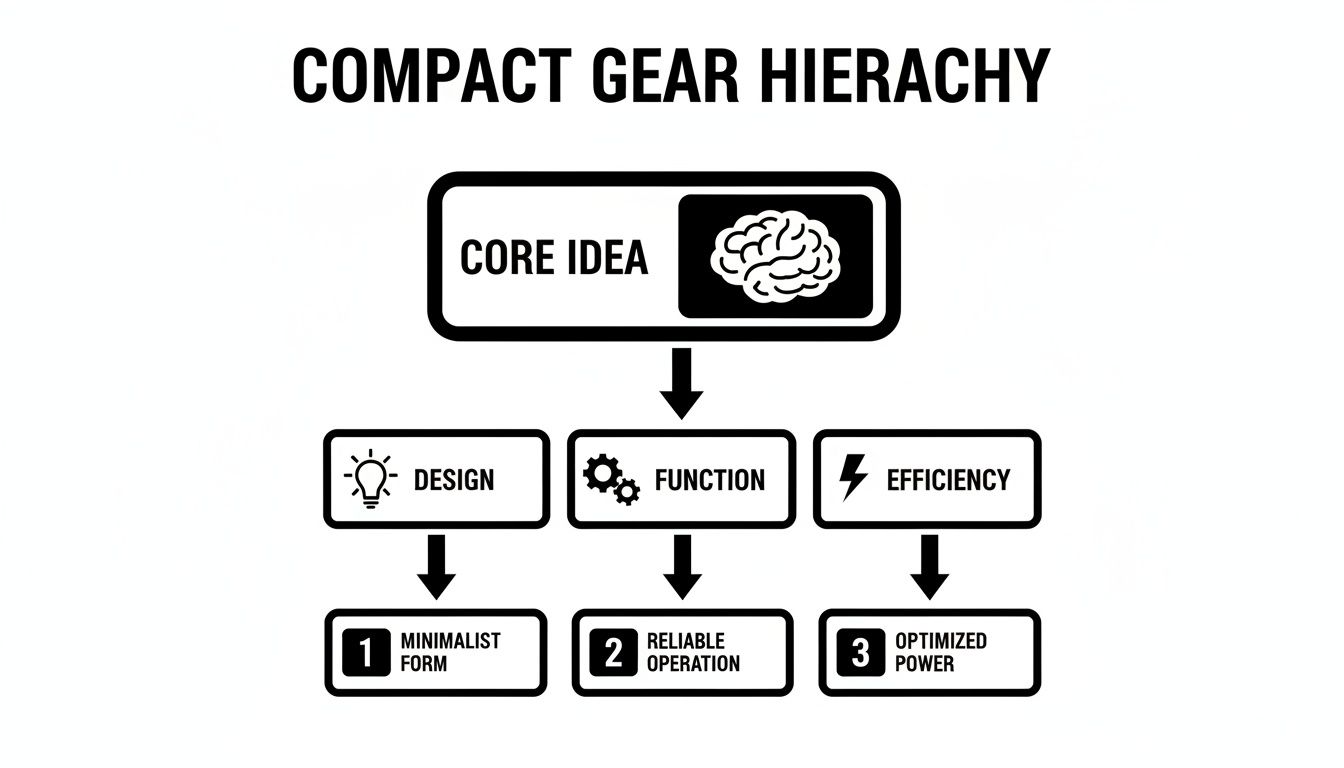
As you can see, the best gear starts with a smart idea, is brought to life through thoughtful design, and proves its worth with practical function, giving you ultimate efficiency out on the trail.
Hydration and Cookware
Your camp kitchen is usually the biggest space hog, but it’s also where you can find the biggest wins in saving space. Let’s be honest, traditional hard-sided water bottles, pots, and bowls are bulky, especially when they’re empty. This is exactly where collapsible designs come in and save the day.
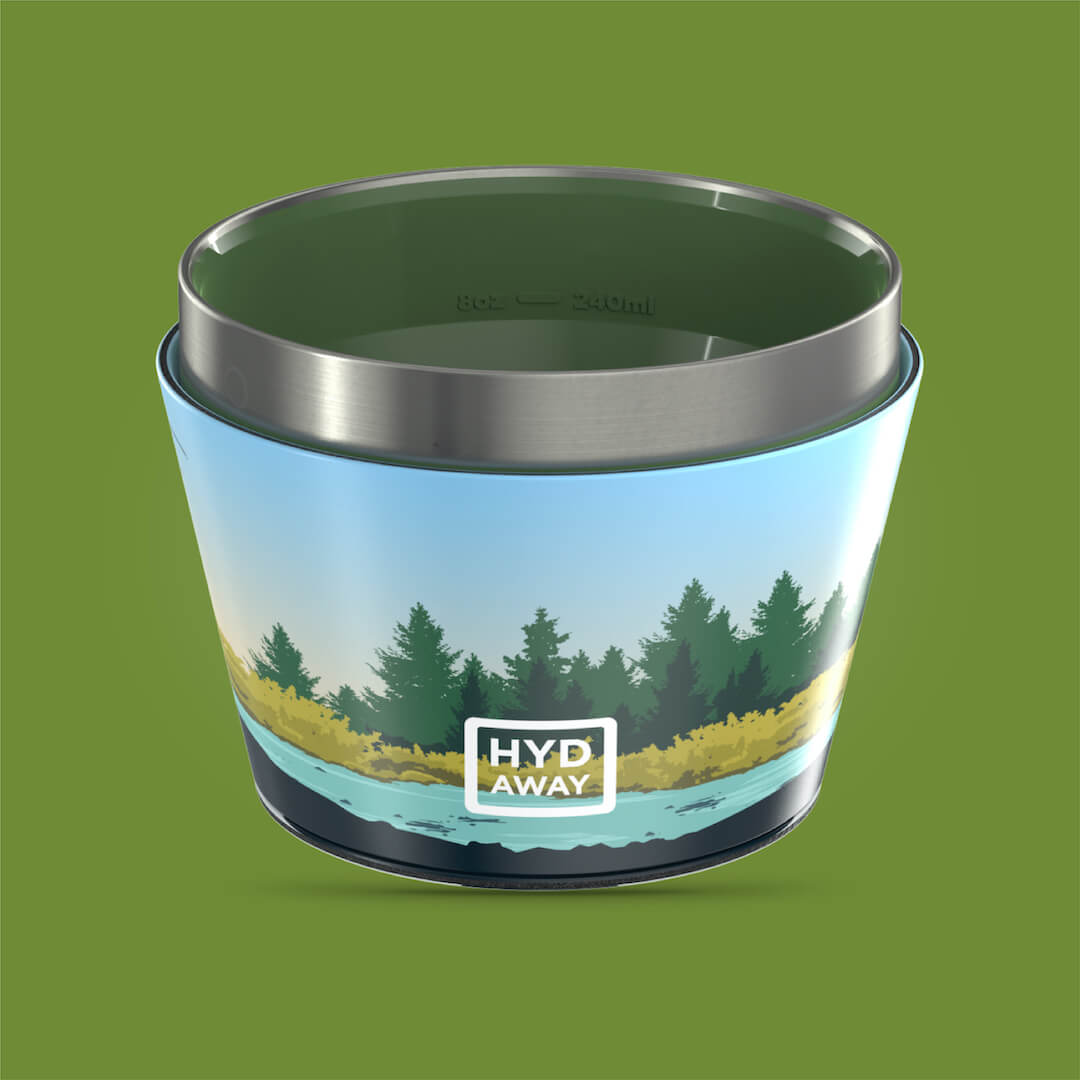
For example, just swapping out a rigid Nalgene for a HYDAWAY collapsible bottle makes a world of difference. When it’s full, it holds 17oz or 25oz of water just fine. But once you drink it down, it flattens to just over an inch thick. You can tuck it into a side pocket, the lid of your pack, or even your back pocket—instantly freeing up all that space a hard bottle would waste. The same goes for mealtime. A HYDAWAY insulated bowl keeps your chili warm, then collapses flat for painless packing.
Beyond just bottles and bowls, look for other clever cookware solutions:
- Nesting Pots and Pans: These are brilliant. The whole set stacks together into one tidy unit, keeping all your cooking gear contained.
- Foldable Utensils: A simple spork that folds in half takes up way less room than a standard one. It all adds up.
- Packable Stoves: Modern backpacking stoves like the MSR PocketRocket 2 or Jetboil Flash are tiny but mighty, boiling water in just a few minutes.
When you focus on gear that can collapse, nest, or fold, you can shrink your entire kitchen down to a surprisingly small package. To really get into the weeds, check out our guide on collapsible camping cookware.
Shelter and Sleep Systems
Your tent, sleeping bag, and sleeping pad—often called the "big three"—are almost always your heaviest and bulkiest items. Nailing this part of your kit is crucial. Thankfully, the days of lugging a five-pound tent on a solo trip are over, replaced by ultralight designs that keep you dry without weighing you down.
A modern ultralight backpacking tent from brands like Big Agnes or Zpacks can weigh under two pounds and pack down to the size of a water bottle. Seriously. For trips in the woods, a backpacking hammock with a built-in bug net and rain tarp is an even more minimalist and comfortable option.
Your sleep system should follow the same logic. A compressible down or synthetic sleeping bag can be squished into a tiny stuff sack, taking up hardly any room in your pack. Pair it with a new-school inflatable sleeping pad that deflates to the size of a soda can, and you've just saved a massive amount of space compared to that old foam roll mat.
Choosing a compact sleep system isn't just about saving space; it's about enabling bigger adventures. A lighter, smaller pack allows you to move faster and more comfortably, turning a strenuous slog into an enjoyable journey.
Backpacks and Storage
Finally, the bag that holds it all is a key part of your compact strategy. Frameless or minimalist-frame backpacks are built specifically for lighter loads, getting rid of any unnecessary weight and frills. Here's a pro tip: choose your pack after you’ve picked out your other gear. That way, you know exactly what size you actually need and won't end up with a bag that's too big.
The backpack's role as the centerpiece of a camper's kit is clear. Market analysis shows backpacks are expected to hold a huge 28.12% of the camping equipment market share in 2025. While packs are the leaders, other gear is catching up fast—especially camping furniture, which is projected to grow at a 7.76% CAGR through 2031. This trend is fueled by innovations in lightweight, packable materials that make products like HYDAWAY's 17oz and 25oz collapsible bottles or insulated bowls a no-brainer for hikers, van-lifers, and families who need gear that gets out of the way when not in use.
To help you get started, here’s a quick-reference checklist organizing essential compact gear by category. Think of it as your cheat sheet for planning and packing more efficiently.
Compact Camping Equipment Checklist by Category
| Category | Essential Compact Gear Examples | Key Feature to Look For |
|---|---|---|
| Hydration | Collapsible water bottles (like HYDAWAY), soft flasks, portable water filter | Collapsibility, leak-proof design, lightweight materials |
| Cookware | Nesting pot/pan sets, foldable sporks, collapsible bowls/mugs | Nesting/Stacking design, multi-functionality, durable silicone or titanium |
| Sleep System | Compressible down/synthetic sleeping bag, inflatable sleeping pad | High compression, good warmth-to-weight ratio, small packed size |
| Shelter | Ultralight backpacking tent, hammock with integrated tarp, tarp shelter | Low packed weight, small packed volume, weather resistance |
| Storage | Minimalist or frameless backpack, compression sacks, packing cubes | Correct volume for your gear, lightweight materials, durable construction |
| Apparel | Packable rain jacket, merino wool layers, convertible pants | Packability, moisture-wicking fabric, layering capability |
| Tools | Compact multi-tool, small headlamp, folding knife | Multi-functionality, small footprint, essential tools only |
This table should give you a solid starting point for building out a kit that's light on your back but still has everything you need for a great trip.
So, you're ready to dive into the world of compact camping equipment? It can feel a little overwhelming at first. You'll see words like "packability," "ultralight," and "multi-functional" thrown around, but what does that actually mean when you’re about to spend your hard-earned cash?
Making a smart buy is all about understanding the real-world trade-offs behind the marketing buzz and matching the gear to the kind of adventures you truly love.
After all, not all compact gear is built the same. The perfect piece of kit for a thru-hiker tackling hundreds of miles is probably overkill for a family enjoying a weekend at a state park. The trick is to look past the flashy labels and judge gear on a few core ideas. That way, you’ll end up with a reliable partner for your journey, not a piece of junk that lets you down.
Balancing Weight with Durability
This is the classic dilemma you'll face again and again: weight versus durability. It’s so tempting to just grab the lightest thing you can find, but dropping a few ounces sometimes means giving up a lot of toughness. An ultralight tent made from whisper-thin fabric is a dream for a solo hiker counting every gram, but it might not last a single afternoon with kids and a dog running in and out.
Think of it like this: a high-end carbon fiber trekking pole is incredibly light, but it can snap under the wrong kind of pressure. A slightly heavier aluminum pole might get a dent, but you can often bend it back into shape and finish your hike. You’re looking for the sweet spot for your specific needs, not just the lowest number on the scale.
A HYDAWAY collapsible water bottle is a perfect example of this balance in action. It’s way lighter than a bulky stainless steel bottle, but its food-grade silicone body is tough enough to be squished in a pack, dropped on the trail, and collapsed thousands of times without giving up. That’s the kind of everyday durability that really matters.
The True Value of Packability
Packability isn't just about being small—it's about how efficiently something fits into your pack with everything else. The shape of an item when it's packed is just as crucial as its size. A weird, bulky shape can create awkward dead space, while a well-designed piece of gear just disappears.
This is where collapsible and nesting gear really proves its worth. Imagine swapping that rigid metal canteen that’s always banging against your hip for a HYDAWAY bottle. Once it’s empty, it flattens down to about an inch thick. You can slide it into the lid of your pack, a side pouch, or even your jacket pocket. Suddenly, you've got all that space back for an extra layer or more snacks.
The best compact gear doesn't just fit into your pack—it disappears. Its clever design minimizes its footprint when not in use, creating a more organized, less cluttered, and ultimately more comfortable carrying experience.
Prioritizing Multi-Functional Gear
Another fantastic way to build a smarter kit is to pick items that can pull double or even triple duty. Every piece of gear that can do more than one job is one less thing you have to pack, carry, and keep track of.
Here are a few real-world examples to get you thinking:
- A stuff sack that’s also a pillow: Many companies now make stuff sacks with a soft fleece lining. Just turn it inside out, stuff it with your puffy jacket, and you’ve got a surprisingly comfy pillow for the night.
- Trekking poles that hold up your tent: A lot of ultralight shelters don't even come with dedicated tent poles. They're designed to use your trekking poles for structure, which saves a ton of weight and bulk.
- A bandana with a dozen uses: It can be a sun shield for your neck, a pre-filter for gritty water, a makeshift pot holder, a bandage in a pinch, or a small towel.
When you start thinking this way, you see your gear as a complete system, not just a pile of individual items. It’s a simple shift that leads to a lighter, more streamlined setup that lets you do way more with way less.
And when you're ready to find that perfect bottle to kickstart your compact gear collection, our guide on the best collapsible water bottles is the perfect place to start.
Compact Gear Setups for Real-World Adventures
All the theory in the world is great, but what really matters is seeing how smart choices in compact camping equipment actually play out on the trail, in the van, or on the go. Different adventures call for totally different kits, so let’s dive into how four unique travelers build their setups.
By looking at their specific needs—from the minimalist thru-hiker to the family hitting a theme park—you can borrow strategies that make your own trips smoother and a lot more fun. They all have different packing challenges, but the solution is always the same: gear that's lightweight, multi-functional, and disappears when you don't need it.
The Ultralight Thru-Hiker
When you're tackling hundreds or thousands of miles on foot, every single ounce is a calculated decision. For a thru-hiker, the goal is a base weight—everything in their pack minus food and water—that's often under 15 pounds. This laser focus on minimalism means their gear has to be ridiculously efficient.
A thru-hiker's kit is a masterclass in pulling double duty. Their trekking poles become their tent poles. Their puffy jacket is also their pillow. Their cook pot is their mug and their bowl. This is exactly where something like the HYDAWAY 25oz collapsible bottle shines. After a big water carry, it shrinks down and vanishes into a side pocket, getting rid of the dead space a rigid bottle would take up all day.
The Space-Saving Van-Lifer
Van-lifers might not obsess over every ounce, but they are absolute masters of maximizing every single square inch of their tiny homes on wheels. Cabinet and drawer space is precious real estate, so bulky, single-purpose items are the first things to get kicked out. They need gear that’s tough enough for daily life but compact enough to tuck away neatly.
This is where collapsible dinnerware becomes a complete game-changer. Just imagine a tiny campervan drawer trying to hold plates, bowls, and cups for two people. Stacking normal bowls creates a wobbly, space-hogging tower.
By switching to HYDAWAY’s insulated collapsible bowls, a van-lifer can store a whole set of four in the same space a single ceramic bowl would eat up. They stack flat, creating a clean, organized kitchen that makes life on the road so much simpler.
The Versatile Digital Nomad
The digital nomad lives a hybrid life of work and play, often packing for a week that includes city coffee shops and mountain trails. Their backpack needs to be a mobile office, holding a laptop and chargers, but also an adventure kit with hiking shoes and a rain jacket. For them, versatility is everything.
Their gear has to transition seamlessly from urban to outdoor settings. A HYDAWAY collapsible pint glass, for instance, is perfect for a craft beer at a campsite after a long hike, but it doesn't look out of place holding a cold brew at a coworking space. It’s all about choosing gear that doesn't scream "I just got back from the woods" but is still technical enough for an impromptu adventure. For those seeking even bigger thrills, specialized gear for climbing and abseiling adventures also follows the same principles of being compact and utterly reliable.
The Budget-Conscious Theme Park Family
For a family heading to a theme park, "compact" is less about trail weight and more about pure convenience and saving cash. A day at a park can get seriously expensive, and the cost of buying single-use water bottles for everyone adds up fast. The challenge is carrying enough water without having to haul a giant, heavy backpack all day.
This is the perfect job for a family armed with HYDAWAY bottles.
- Morning: Everyone starts with a full 17oz bottle, keeping hydrated while waiting for the first ride.
- Mid-day: Once the bottles are empty, they collapse down flat and get tucked into a small bag or even a parent’s pocket. No more bulky, empty bottles.
- Refills: They're a breeze to refill at water fountains throughout the park, saving $4-5 per bottle compared to buying disposables.
This simple move can save a family $50 or more over a weekend trip. Not only that, but it drastically cuts down on their plastic waste, making the whole adventure more affordable and a lot more eco-friendly.
Mastering the Art of Efficient Packing
Having the right compact camping equipment is half the battle. Knowing how to pack it efficiently is what truly transforms your trip. A well-packed bag isn't just about cramming more stuff in; it’s about creating a balanced, accessible system that's actually comfortable to carry.
Think of your backpack less like a bottomless pit and more like a carefully arranged puzzle. Every piece has its place, and every square inch is maximized. A few smart strategies can turn a good kit into a great one, cutting down on clutter and giving you more freedom on the trail.
The Building Block Technique
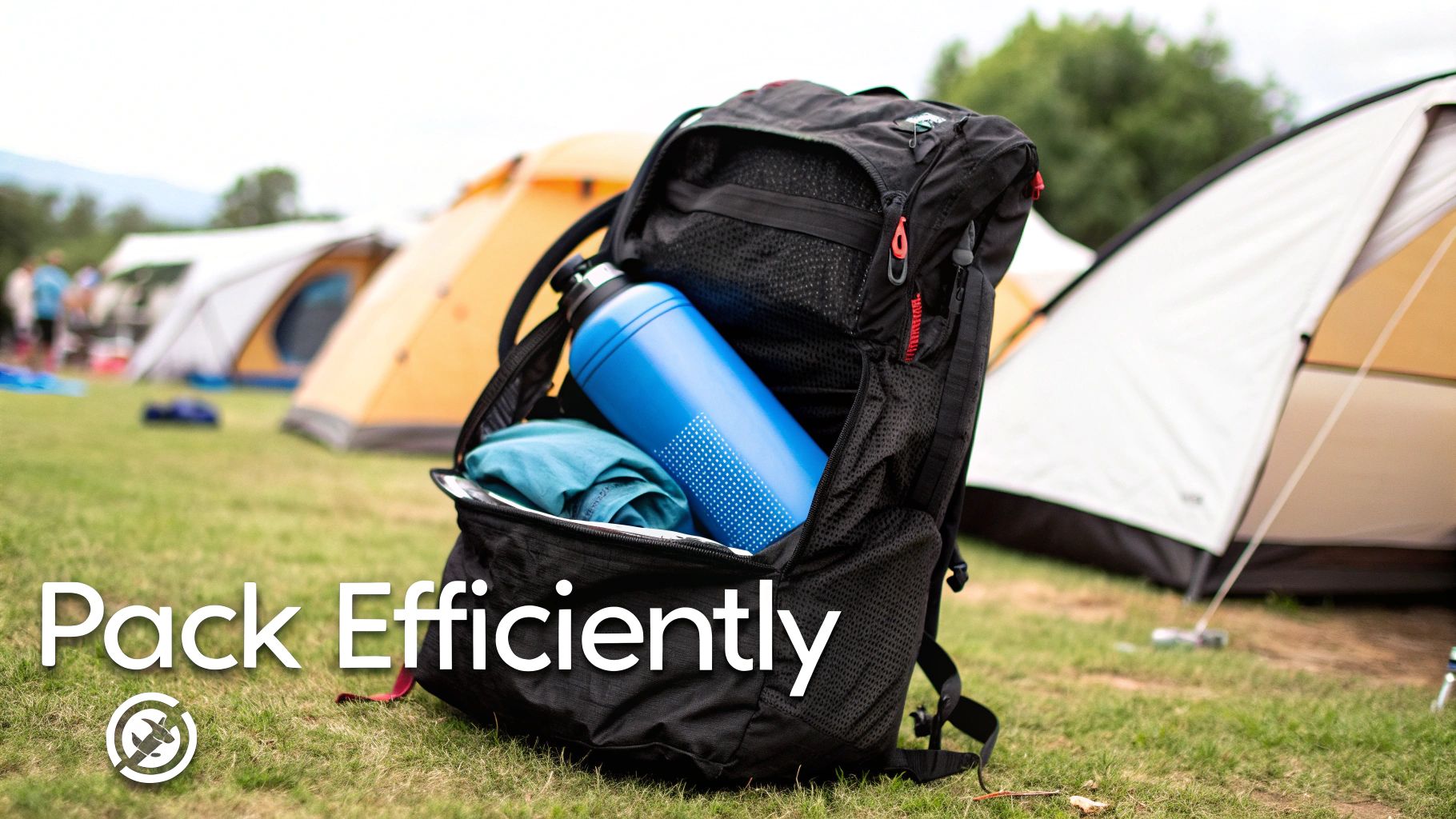
At the heart of smart packing is the building block technique. Instead of just shoving gear into your pack randomly, you group related items into smaller, modular "blocks" using stuff sacks or packing cubes. This simple method creates a surprisingly stable and organized structure inside your pack, getting rid of dead space and stopping things from shifting around.
For instance, you might have one block for your sleep system (sleeping bag, pad, pillow), another for your camp kitchen, and a third for your extra layers of clothing. These dense, squarish blocks stack neatly against each other, building a solid core that makes the pack feel much more stable on your back. To dive deeper into this organized approach, check out our guide on how to organize camping gear.
Master the Art of Compression
Compression sacks are non-negotiable for maximizing space. They work wonders on bulky but soft items like your sleeping bag or puffy jacket. By cranking down the straps, you can shrink these items down to a fraction of their original volume, freeing up a massive amount of room. A good down sleeping bag, for example, can be squeezed into a bundle no bigger than a loaf of bread.
This doesn't just save space—it's also key to creating those dense "building blocks" you need for a stable load. Pushing all the air out lets you build a tighter, more compact pack that won’t sag or sway while you're hiking.
Smart Weight Distribution for a Better Carry
How you distribute the weight in your pack is just as critical as what you put in it. A lopsided pack can throw off your center of gravity, leading to an aching back and a miserable day on the trail. The golden rule is simple: keep the heaviest items close to your spine and centered between your shoulder blades.
Here’s how that looks in practice:
- Bottom Zone (Lightest Gear): Start with your sleeping bag and other light, bulky stuff you won’t need until you set up camp. This creates a solid foundation.
- Middle Zone (Heaviest Gear): Your densest gear—like your food bag, cook set, and water reservoir—should be packed in the middle, right up against your back.
- Top Zone (Essentials): The top of your pack is prime real estate for things you need to grab quickly. Think rain jacket, first-aid kit, and trail snacks.
A well-packed backpack should feel like an extension of your body, not a clumsy object you're wrestling with. Proper weight distribution is what makes that happen, helping you hike farther and more comfortably.
Finally, don't forget to use all the little nooks and crannies. This is where collapsible gear like a HYDAWAY bottle shines. Once it's empty, it flattens to just over an inch thick. You can slide it into a side pocket, the pack's lid, or any other tight spot, instantly reclaiming valuable real estate that a rigid bottle would hog all day.
Why Compact Gear Is a Sustainable Choice
Choosing high-quality compact camping equipment is about so much more than just saving a little room in your pack. It’s a powerful statement about how you want to interact with the world around you. Every durable, reusable piece of gear you own is a vote against the throwaway culture that leaves so much trash in our beautiful wild spaces.
Just think about the kind of waste you see on trails and at campsites. It’s almost always single-use plastic bottles, flimsy plates, and cheap plastic forks. They’re bought for a moment of convenience but create an environmental headache that lasts for centuries. The hard truth is that much of this garbage never even makes it to a recycling plant, adding to the 8 million metric tons of plastic that flood into our oceans every single year.
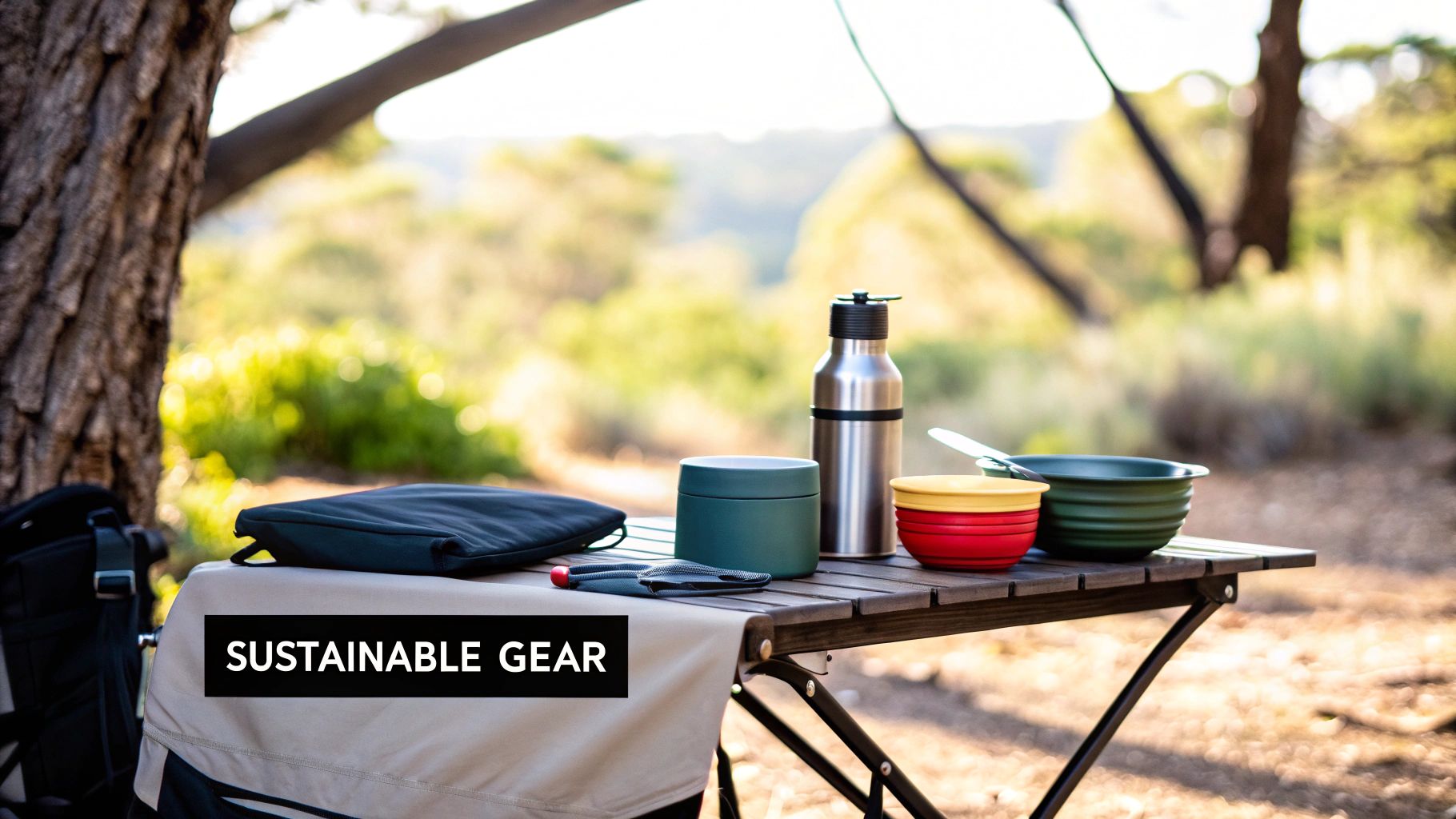
This is exactly where a brand like HYDAWAY comes in. Their entire line of collapsible gear was created to tackle this problem head-on. Instead of buying and tossing endless plastic water bottles, a HYDAWAY collapsible bottle can be used again and again—thousands of times, in fact. When it’s empty, it collapses flat, so there’s never an excuse not to pack it out. The same goes for their collapsible bowls, which are a perfect replacement for single-use styrofoam or paper containers at mealtime.
Extending the Life of Your Gear
Picking the right gear is step one. Step two is making it last. When you take good care of your equipment, you ensure it’s with you for countless adventures, which keeps it out of the landfill. This doesn't just save you money; it honors the resources that went into making your gear in the first place.
Here are a few quick tips to keep your compact kit in trail-ready shape:
- Silicone and Plastics: For items like your HYDAWAY bottles and bowls, a simple cleaning with warm, soapy water after each use is key. For a deeper clean, a soak in a vinegar-water solution can get rid of any lingering tastes or smells. Most importantly, always make sure they are completely dry before you collapse and store them to prevent any mildew from growing.
- Technical Fabrics: After a trip, wipe down your tent, rain jacket, and backpack with a damp cloth to get rid of dirt. Never, ever store them while they're still wet. From time to time, you’ll also want to refresh the waterproof coating with a product like Nikwax to keep them performing their best in bad weather.
- Zippers and Hardware: Keep your zippers clean and free of grit. A small brush works wonders for getting dirt out, and a little zipper lubricant will help them glide smoothly for years to come.
By investing in durable, reusable compact equipment and committing to its care, you actively reduce your environmental footprint. It transforms your gear from a simple purchase into a long-term partner in adventure that helps protect the very places you love to explore.
Common Questions About Compact Camping Gear
Making the leap to compact camping equipment can feel like a huge commitment, but it's way simpler than you might think. Let's walk through a few common questions that pop up when people start thinking about building a lighter, more efficient kit.
Is Compact Gear Durable Enough?
Absolutely. It's a common myth that lighter means weaker, but today's compact gear is anything but flimsy. It's actually engineered with some seriously tough materials—think high-grade silicone, titanium, and ripstop nylon—that hit an incredible sweet spot between low weight and high durability.
Good brands design their products to take a beating in the real world. For example, a HYDAWAY collapsible bowl is made from a food-grade silicone that's third-party verified for safety. It’s built to be squashed, stretched, and dropped on the trail over and over again. While you always have to be a bit mindful with ultralight gear, you can trust modern compact equipment to hold up on your adventures.
Does Compact Always Mean More Expensive?
Not at all. Sure, some super-specialized, high-performance gear comes with a premium price tag, but the market is full of fantastic, affordable options. Better yet, investing in quality, reusable compact gear can actually save you a ton of money over time.
Think about it: grabbing a HYDAWAY collapsible bottle for a weekend trip means you're not buying half a dozen single-use plastic water bottles. That adds up fast, especially for a family at a theme park or a frequent traveler. The initial purchase pays for itself pretty quickly.
How Do I Start Without Replacing Everything?
Don't feel like you have to do a complete gear overhaul overnight! The smartest way to go is a gradual approach. Start with the pieces that will give you the biggest bang for your buck in terms of weight and space savings. In the backpacking world, we call these the "big three": your shelter, your sleep system, and your backpack.
Once you have those sorted, turn your attention to the high-impact items you use constantly, like your water bottle and cookware. Swapping a bulky, rigid bottle for a HYDAWAY collapsible bottle is such an easy and low-cost first step. It immediately frees up a surprising amount of space in your pack and solves a common packing headache. From there, you can upgrade other items as your budget and adventures allow.
Ready to take that first easy step toward a lighter, more sustainable adventure kit? Explore HYDAWAY's full collection of collapsible, space-saving gear at our online shop and discover how much more you can do with less.