


The Best Alternatives for Plastic Water Bottles a Complete Guide

When you're looking for the best alternatives for plastic water bottles, the top contenders are almost always reusable options made from materials like stainless steel, glass, or food-grade silicone. Making the switch is a huge win—it cuts out single-use waste and drastically reduces your exposure to sketchy chemicals often lurking in disposable plastics.
Why You Need Alternatives for Plastic Water Bottles
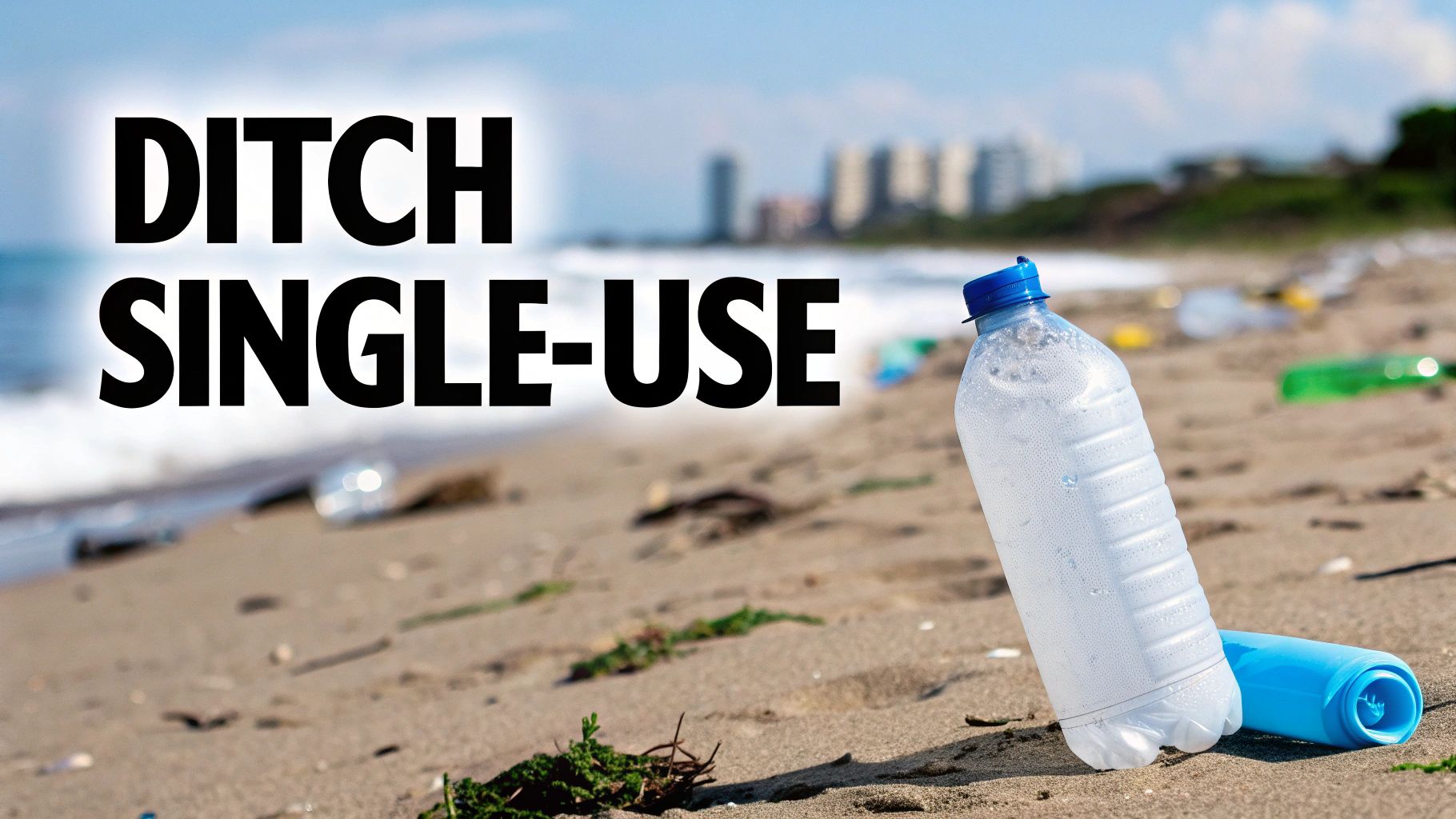
The single-use plastic water bottle has become the poster child for thoughtless convenience, but its real cost is staggering. Every bottle tossed away adds to a global environmental crisis, choking our landfills and poisoning our oceans at a pace that's hard to fathom.
This isn't some far-off problem; it’s a direct result of our everyday choices. The sheer scale of our plastic habit is almost unbelievable. Globally, we burn through roughly 1.3 billion plastic bottles every single day. That adds up to over 480 billion bottles a year.
The Environmental Impact of Plastic Bottles
From the moment they're made to the day they're discarded, single-use plastics leave a massive footprint. Manufacturing them is an energy- and water-intensive process that pumps out significant carbon emissions. After just one use, the vast majority end up in landfills or floating in our waterways, where they’ll spend centuries breaking down into toxic microplastics.
Choosing a reusable bottle is one of the most practical and powerful actions you can take. It’s a simple switch that directly reduces plastic pollution, conserves natural resources, and lowers your personal carbon footprint.
This shift is more than just an eco-friendly statement; it's a commitment to a healthier way of living. Recognizing why we need to move away from single-use plastics is the first step toward bigger change, and it's inspiring to see so many organizations championing various eco-friendly initiatives.
The Health Concerns Behind Disposables
Beyond the environmental disaster, there's a growing mountain of evidence about the health risks of drinking from disposable plastic bottles. Chemicals like BPA and phthalates, both known endocrine disruptors, can leach out of the plastic and into your water, especially when the bottle gets warm. For example, leaving a disposable bottle in your car on a sunny afternoon can accelerate this process.
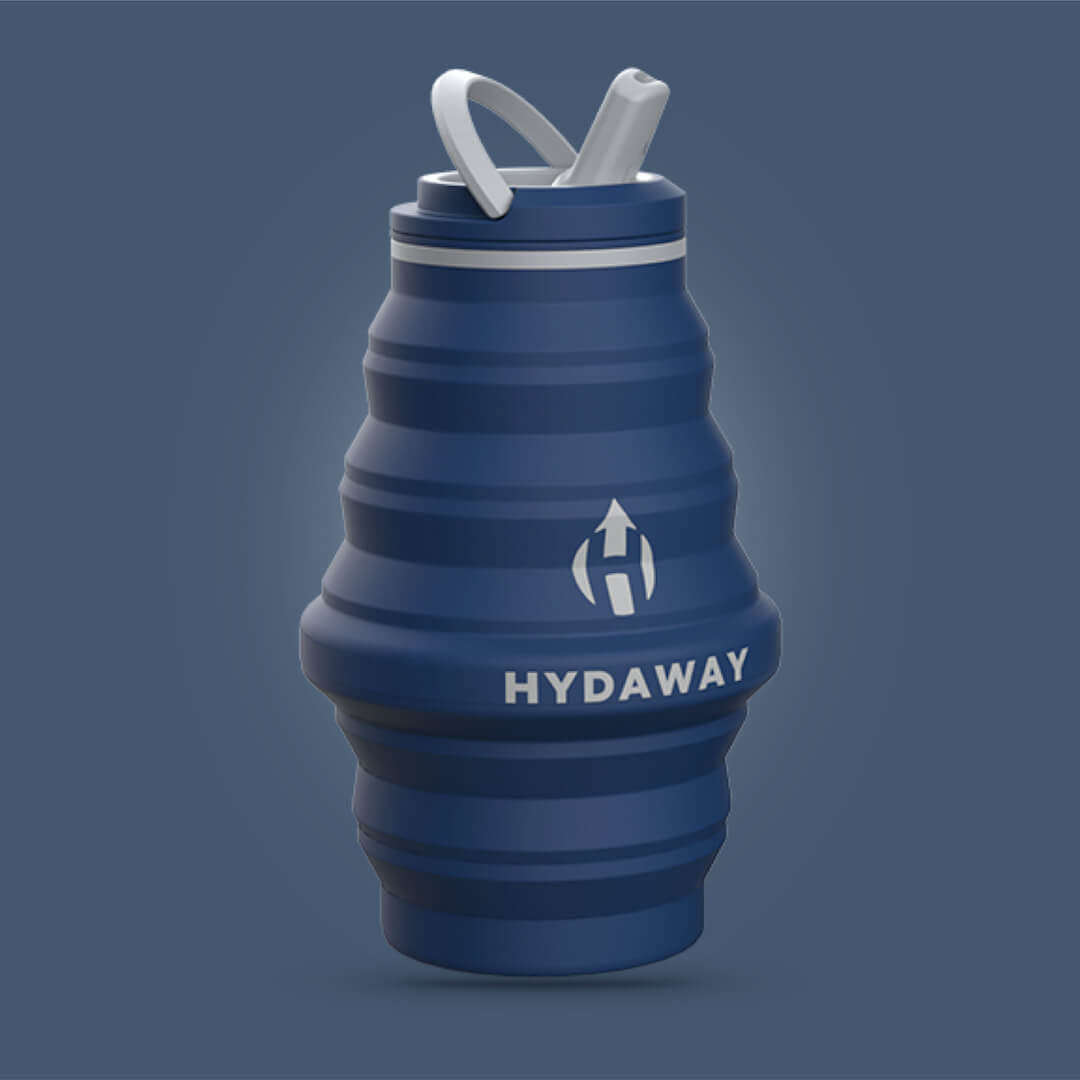
Opting for better alternatives for plastic water bottles is a simple way to protect yourself. Modern reusables, like HYDAWAY’s collapsible bottles, are made from third-party verified, food-grade silicone. This ensures they are completely free from BPA, phthalates, and other nasty pollutants.
This guarantees your water stays pure and safe, giving you peace of mind with every sip you take. It's a smart investment in your personal well-being and the planet’s future.
A Practical Comparison of Reusable Bottle Materials
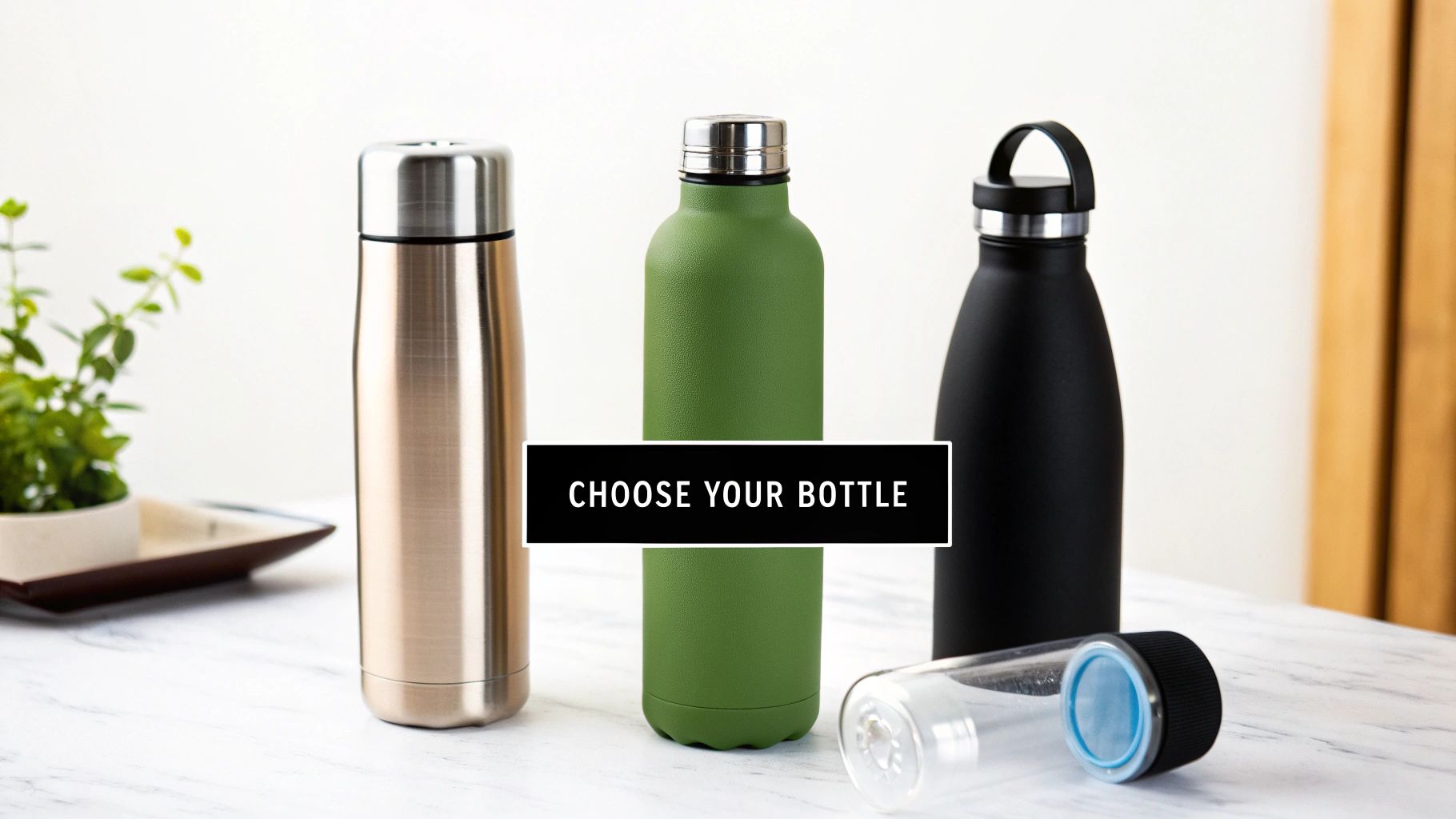
Choosing the right reusable bottle isn't about finding the single "best" one—it's about finding the best fit for your life. The ideal bottle for a daily commuter is worlds apart from what a minimalist traveler needs. Let's break down the most popular alternatives for plastic water bottles—stainless steel, glass, and silicone—through the lens of real-world use.
This isn't just a list of pros and cons. It's a guide to help you decide which material truly serves your needs, whether you're at the office, on a trail, or navigating airport security.
Stainless Steel: The Durable Workhorse
Stainless steel bottles are everywhere for a reason: they're tough, often insulated, and won't hang onto the taste of yesterday's lemonade. They're the reliable choice for keeping your coffee hot for hours on a morning commute or your water ice-cold on a sweltering day at the beach.
But their biggest strength—durability—comes with a trade-off. A 24-ounce insulated steel bottle can be heavy and bulky, eating up precious space in a backpack or carry-on. While it's perfect for car camping or office life, it can feel like a brick on a long-distance hike where every ounce matters.
- Best for: Daily commutes, gym sessions, and road trips where weight isn't your top concern.
- Practical Example: You fill your bottle with ice water for your kid's soccer game, and it’s still cold hours later, long after the game is over.
- Key Drawback: The weight and rigid shape make them a tough sell for lightweight travel or trying to cram them into an already full bag.
Glass: The Purest Taste Experience
When it comes to taste, glass is king. Water simply tastes like water, with zero metallic or plastic notes. This makes them a fantastic choice for anyone who prioritizes a pure, clean sip above all else. They’re also a breeze to clean and totally dishwasher safe, so you never have to worry about lingering flavors.
Of course, the obvious downside is fragility. Many glass bottles come with protective silicone sleeves, but a bad drop on concrete or tile can still end in a shattering mess. This makes them a great fit for controlled environments like your home or office desk, but a gamble for a busy theme park or a rocky trail.
For office workers or anyone who primarily hydrates at a desk, a glass bottle is a fantastic option. The clean taste and sleek look are great, but its lack of portability and breakability limit its use for active lifestyles.
This is a key reason why so many people look for other alternatives for plastic water bottles when they're on the move. For a deeper look into material safety and performance, you can check out this guide on the best eco-friendly water bottles.
Silicone: The Ultimate Space-Saver
Silicone bottles are a game-changer for anyone who values portability. Their defining feature is the ability to collapse down from a full-size bottle into a small, pocket-sized disc. This completely solves the "empty bottle problem" that plagues travelers, hikers, and parents everywhere.
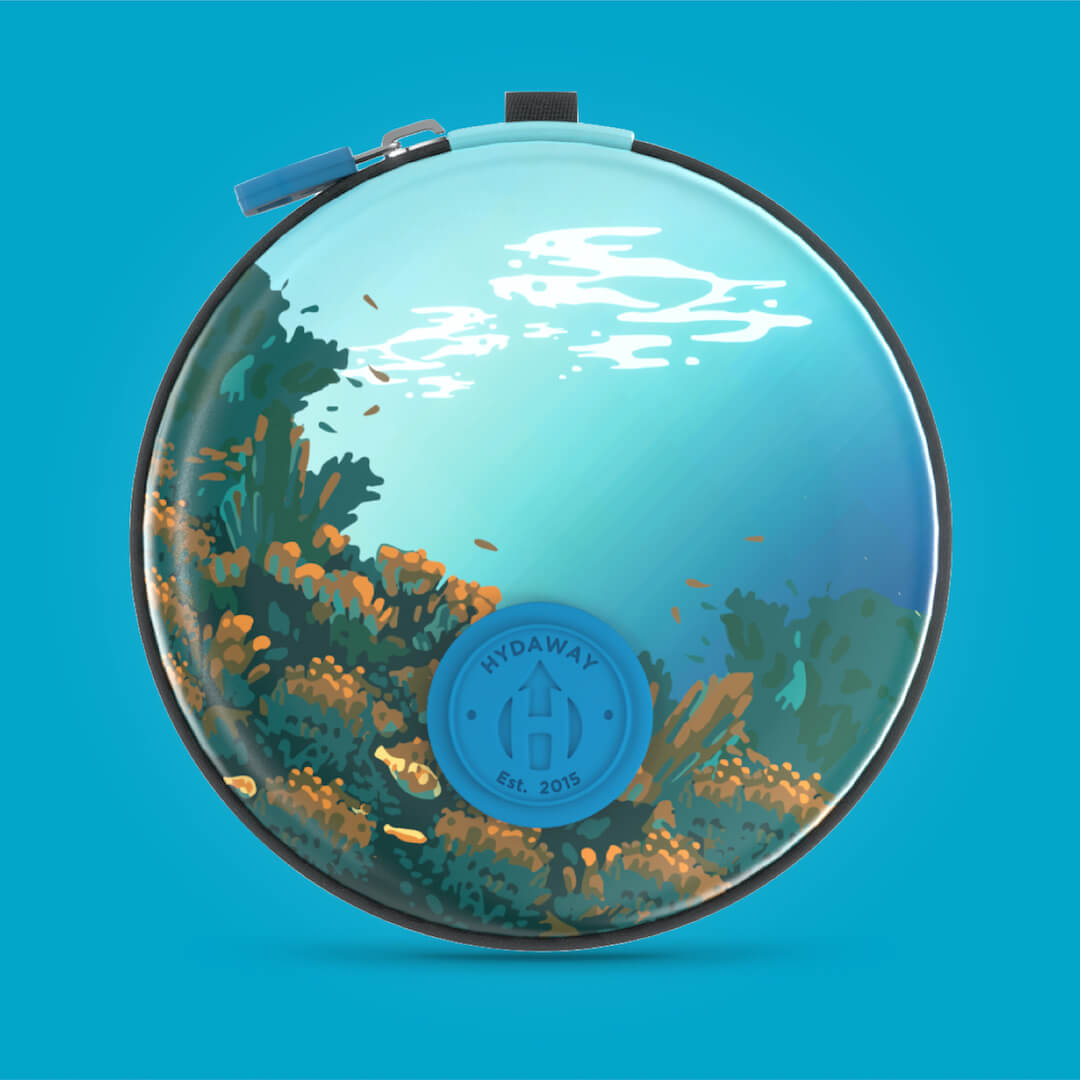
Picture this: you finish your water after clearing airport security. Instead of lugging around a bulky, empty bottle, you can collapse your HYDAWAY bottle to just over an inch thick and clip it to your bag. It’s there when you need it and practically disappears when you don't. Made from food-grade silicone, these bottles are lightweight, durable, and free of harmful chemicals.
This makes them the perfect solution for:
- Travelers: Maximize every inch of carry-on space and stay hydrated without the bulk.
- Parents at Theme Parks: Ditch the expensive bottled water and easily store the empty bottle between refills.
- Hikers and Backpackers: Free up precious pack space once your water is gone.
While they don't have the insulation of stainless steel, their incredible packability and feather-light design offer a freedom that rigid bottles just can't match. For a life on the move, they're simply the smarter choice.
Reusable Bottle Material Comparison for Different Lifestyles
To make things even clearer, this table breaks down which bottle material shines in different situations. It’s a quick way to see which option lines up best with your daily routine and adventures.
| Material | Best For | Key Advantage | Main Drawback | HYDAWAY Solution |
|---|---|---|---|---|
| Stainless Steel | Daily Commuting, Gym, Car Trips | Excellent insulation and durability | Heavy and bulky, takes up space | A rigid choice for stationary use |
| Glass | Home & Office Use, Flavor Purists | Purest taste, easy to clean | Fragile and heavy, not portable | Best for controlled environments |
| Silicone | Travel, Hiking, Theme Parks | Collapsible and extremely lightweight | No insulation for hot/cold drinks | Solves portability and space issues |
| BPA-Free Plastic | Budget-Conscious Fitness & Hiking | Lightweight and affordable | Can retain odors, potential health concerns | A less durable, less packable alternative |
Ultimately, the best reusable bottle is the one you’ll actually use. By matching the material to your lifestyle, you’re more likely to find a bottle that becomes a trusted companion for all your adventures.
The Real Price of Single-Use Plastics
That plastic water bottle might seem cheap at the checkout counter, but its real cost is staggering. We've been trained to reach for convenience, but every time we do, we're paying a much steeper price in environmental damage and potential health risks. The true expense isn't measured in dollars and cents; it's measured in the long-term health of our planet and ourselves.
To really get it, you have to look at the entire life of a single plastic bottle, from creation to disposal. It all starts with a massive consumption of resources. Just manufacturing these bottles is an incredibly energy- and water-guzzling process, pumping out greenhouse gases long before a single drop of water even goes inside.
The Hidden Environmental Toll
The bottle's carbon footprint only gets bigger as it travels from the factory to the store. And once we're done with it? The vast majority of these plastics never see a recycling bin. They end up in landfills or, even worse, our oceans and natural spaces. This is where the damage becomes painfully visible.
The numbers are pretty shocking. Each year, an estimated 20 to 30 billion pounds of plastic waste floods into our oceans. Beverage containers alone account for about 12% of all trash entering marine environments—that's nearly 4 billion pounds a year. And the production process is wildly inefficient: creating just one plastic bottle takes between 11 and 90 times more energy than getting the same amount of water straight from your tap. You can learn more about the deep impact of plastic bottles and their complete lifecycle.
The Health Concerns We Can't Ignore
Beyond the ecological nightmare, there’s a growing unease about what single-use plastics might be doing to our bodies. These containers often contain chemicals like BPA (bisphenol A) and phthalates, which are known endocrine disruptors. When a bottle gets warm—say, left in a sunny car—these chemicals can leach from the plastic directly into the water you're about to drink.
Choosing reusable alternatives for plastic water bottles is a direct investment in the health of our planet and your own well-being. It's a simple switch, but it's a powerful statement against throwaway culture and a real step toward a cleaner, safer future.
When you frame it that way, the choice becomes clear. The one-time cost of a reusable bottle from a brand like HYDAWAY is nothing compared to the compounding environmental and health costs of disposables. For a deeper dive, check out our guide on what single-use plastics are. Switching to a reusable bottle isn't just about making less trash; it's about actively protecting our world and our health for years to come.
Matching the Right Bottle to Your Lifestyle
Let's be real: the best reusable bottle isn't the one with all the bells and whistles. It's the one you actually use—the one that fits so seamlessly into your life you forget it’s even there. Picking the right alternative to a plastic water bottle is all about matching its design to your daily grind.
That heavy-duty insulated bottle might be your best friend at your desk, but it can feel like a lead weight on a long hike or a nightmare to pack for a flight. You have to think about where you'll be using it most. Are you a minimalist traveler counting every ounce? A busy parent juggling a million things? An outdoor adventurer who needs gear that pulls its weight? Each lifestyle has its own hydration challenges, and what works for one person is often totally impractical for another.
This simple flowchart breaks down the basic choice between endlessly buying expensive bottled water and making the smarter, more sustainable switch to a reusable bottle.
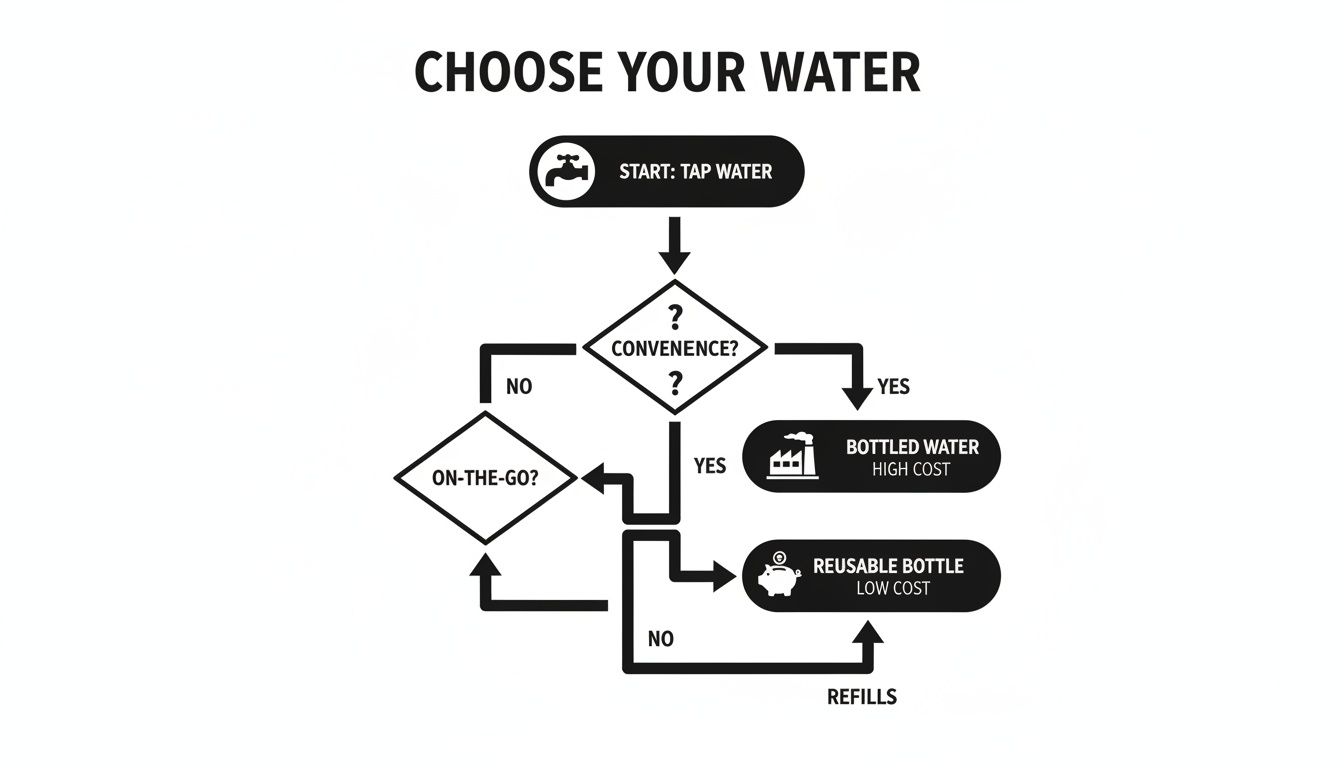
It’s pretty clear that while single-use plastic is convenient in the moment, reusable options win big time on long-term savings and are way kinder to the planet.
For the Minimalist Traveler
Anyone who lives out of a carry-on knows that space is gold. The constant challenge is staying hydrated without hauling a bulky, empty bottle through airports and across cities. A traditional stainless steel or glass bottle, once empty, is just dead weight taking up precious real estate in your bag.
This is where a collapsible bottle changes the game. Picture this practical scenario: you finish your water before the airport security line, then shrink your bottle down to a flat little disc. Now you can breeze through TSA and refill it at a fountain on the other side, saving you from buying a $7 airport water bottle.
The HYDAWAY 25oz Collapsible Bottle was literally made for this moment. It gives you a full-size bottle when you need it and practically disappears when you don't. Just clip it to your pack or slide it into a pocket, and you’ve just freed up a ton of space for other essentials.
For the modern traveler, packability isn't just a feature—it's freedom. A bottle that disappears when empty means less to carry, less to worry about, and more room for the things that matter.
For the Busy Parent on the Go
Trying to keep everyone hydrated at a theme park, the zoo, or just during a long day of errands can be a logistical nightmare. Shelling out $5 or more for a single bottle of water gets old fast, but lugging multiple rigid reusable bottles for the whole family isn't much better.
A parent’s bag is already a black hole of snacks, wipes, and toys. The last thing you need is a bunch of empty, bulky bottles clanking around after everyone’s had their first drink.
This is the perfect scenario for a space-saving solution. With a HYDAWAY bottle, everyone in the family gets their own. Once they're empty, they collapse down and can be tucked into a small pocket of a backpack, ready for the next water fountain. It's a simple swap that saves money, reduces single-use plastic waste from your family trip, and ends the hassle of carrying around empty containers all day.
For the Outdoor Enthusiast
When you're hiking, camping, or backpacking, every single ounce and inch of pack space matters. Every piece of gear has to earn its spot. Hydration is obviously non-negotiable, but an empty bottle that takes up the same amount of room as a full one is just inefficient packing.
Outdoor adventurers need gear that’s lightweight, tough, and adaptable. After you've downed your water on the trail, that newly empty space in your pack becomes incredibly valuable for stashing a rain jacket or other gear.
A collapsible HYDAWAY bottle fits the "pack it in, pack it out" philosophy perfectly, but with a clever twist—it packs down smaller on the way out. It’s a durable, leakproof, and lightweight sidekick that fuels your adventure without weighing you down, making it one of the most practical alternatives for plastic water bottles you can take on the trail.
The Global Shift Towards Sustainable Hydration
Making the switch to a reusable bottle is way bigger than just a personal choice. It's about joining a massive, worldwide movement. People everywhere are consciously turning their backs on disposables, and that collective decision is creating a powerful ripple effect, completely reshaping how we think about hydration.
This isn't just some fringe trend, either. The proof is in the numbers. The global reusable water bottle market has seen explosive growth, a clear sign of a major consumer pivot. In 2024, the market was valued at an impressive USD 9.8 billion, and it's projected to climb to over USD 13.5 billion by 2032.
That kind of momentum means your decision to ditch single-use plastic is being echoed by millions of others who are also demanding smarter solutions for themselves and the planet.
A New Generation of Conscious Consumers
Today’s eco-aware consumers are different. They're looking for products that reflect their values but refuse to compromise on performance. Durability, safety, and real-world convenience are non-negotiable. This is where brands like HYDAWAY are making a real difference, meeting the needs of a generation that’s always on the move and values both sustainability and practicality.
By choosing a reusable bottle, you are participating in a forward-thinking culture. You’re sending a clear message that convenience should not come at the cost of our planet’s health.
This cultural shift is all about thoughtful consumption. Understanding what sustainable living truly means can give you the power to make even more impactful choices in your day-to-day life.
HYDAWAY Leading the Charge for Portable Hydration
Innovation is what’s really driving this movement forward. Traditional reusable bottles solved the waste problem, but they often created a new one: bulk. Nobody enjoys lugging around a heavy, empty bottle all day. It's just not practical for travelers, parents, or anyone with a packed schedule.
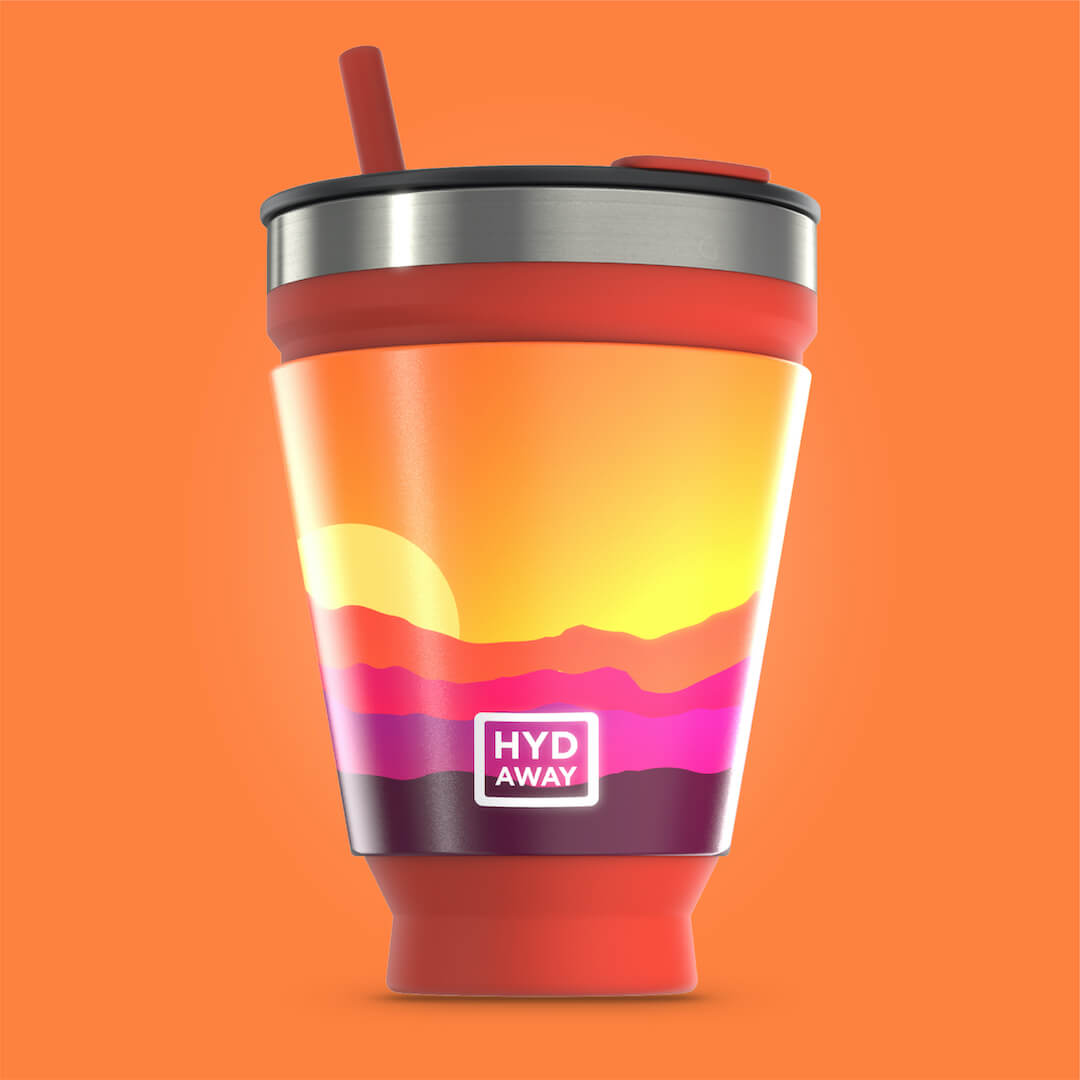
HYDAWAY’s collapsible bottles tackle this problem head-on. They give you the full function of a standard bottle when you need it, but then shrink down to a pocket-sized disc when you don't. For someone who flies frequently or takes public transit, this isn't a small perk—it's a complete solution to the daily hassle of hydration. This clever design makes the sustainable choice an effortless one, proving that you don’t have to pick between being eco-friendly and being practical.
By fitting so seamlessly into modern life, HYDAWAY helps make the switch to reusables not just an easy choice, but the most logical one.
A Few Common Questions About Reusable Bottles
Making the jump from single-use plastics to a reusable bottle is a no-brainer, but it's natural to have a few questions before you commit. We get it. From durability to keeping things clean, let's tackle some of the most common things people wonder about when choosing the right bottle.
Are Collapsible Bottles Like HYDAWAY As Durable As Hard Bottles?
Absolutely. You might think "collapsible" means "flimsy," but high-quality collapsible bottles are built for the real world. A HYDAWAY bottle, for example, uses tough, food-grade silicone that’s not just flexible but surprisingly resilient. It’s designed to handle being dropped, squished, and tossed in a bag day after day.
Think of it this way: while a hard stainless steel bottle can certainly take a major hit, it will also dent permanently. A silicone bottle just bounces back. This makes it a practical choice for a family outing where bottles might get dropped, or for a rugged hike where gear gets knocked around.
How Do I Keep My Reusable Bottle Clean and Prevent Smells?
This is a big one for any reusable bottle, not just collapsible ones. The key is consistent, simple cleaning. The good news? All HYDAWAY products are top-rack dishwasher safe, which makes daily cleaning pretty much effortless. If you're washing by hand, a bottle brush with a bit of warm, soapy water is all you need.
The number one trick to preventing that funky bottle smell is letting it dry completely with the cap off. The wide-mouth design on HYDAWAY bottles is a huge help here, making them super easy to clean and quick to air-dry.
If you do end up with a stubborn odor, just let it soak for a bit with a mixture of baking soda and water or some diluted vinegar. That’ll neutralize just about anything.
Is It Really Cheaper to Use a Reusable Bottle?
Yes, and the long-term savings are bigger than you'd think. A reusable bottle is a small one-time purchase, but buying bottled water is a constant drain on your wallet. A single bottle of water can cost anywhere from $2 to over $5 at an airport, concert venue, or theme park.
If you're buying just three a week, you could easily be spending over $300 a year. A good reusable bottle pays for itself in just a matter of weeks. For a family at a theme park or a traveler in an expensive city, refilling at water fountains adds up to massive savings. It's one of the smartest moves you can make for both your budget and the planet.
Ready to find the perfect travel companion? Discover how HYDAWAY’s collapsible, space-saving designs can fit seamlessly into your life and adventures. Check out our gear.