


The 1 Qt Canteen: A Guide for Modern Adventurers (2026)

You’re doing the final gear check before heading out. Your backpack is dialed in. Chargers are rolled tight. Layers are compressed. Snacks are tucked into the last open corner. Then you reach for water and hit the same old problem. The 1 qt canteen still works, but it takes up the same awkward chunk of space whether you’re boarding a flight, walking into Disneyland, or setting off on a day hike.
That’s why this old piece of kit still sparks debate. It’s iconic, reliable, and easy to recognize at a glance. It’s also bulky, not always pleasant to clean, and often better suited to older field systems than to how people move through the world now.
The smart question isn’t whether the classic canteen is good or bad. The better question is whether it still fits the way you travel.
That Old Canteen What's It Doing in Your Modern Pack
A lot of people still have one. Maybe it came from a military surplus shop. Maybe it’s a hand-me-down from a parent who swore by it on every fishing trip. Maybe you bought one because it looked bombproof and timeless, which it is.

Then real life gets involved. You’re trying to slide it into a personal-item backpack for a Europe trip. Or wedge it into a stroller organizer for a long park day. Or fit it alongside a camera cube, a rain shell, and a power bank in a carry-on. Suddenly the canteen feels less like a clever classic and more like an object you have to pack around.
That doesn’t mean it stopped being useful. It means your priorities changed. Older field gear was built around ruggedness first. Modern travel asks for ruggedness too, but it also asks for packability, easy cleaning, and flexibility.
Practical rule: If a water container makes the rest of your bag harder to organize when it’s empty, it needs to earn that inconvenience.
The 1 qt canteen still earns its place for some people. For others, it’s become more of a symbol than a solution. That distinction matters, because once you separate nostalgia from function, your hydration setup gets much easier to choose.
The Legacy of the 1 Quart Canteen
The 1 qt canteen didn’t become standard by accident. It earned that place because armies needed a simple, durable way to move water with people on foot for long stretches of time.

It started as a supply problem
During the American War of Independence, shortages of tin canteens pushed a fast shift toward wooden designs. According to this history of original canteens, woodworkers in Hingham, Massachusetts produced 15,000 wooden “drum” canteens, and that period helped establish the 1-quart standard for portable hydration in extended field campaigns.
That detail matters because it shows what the canteen originally solved. It wasn’t lifestyle gear. It was logistics. Soldiers needed enough water to carry without turning the container itself into a burden.
By the time supply systems matured, that one-quart idea had staying power. It was enough water to matter, compact enough to carry, and simple enough to reproduce at scale.
The military made it a formal system
The U.S. military’s Model 1910 1-quart canteen set was developed in 1909 and first produced in 1910, with a stainless steel bottle, aluminum cup, and khaki canvas cover, according to this overview of the M-1910 and later variants. It remained in service through 1942 and carried the 1 quart (0.946 liters) format across World War I and early World War II.
That’s the moment the 1 qt canteen stopped being just a practical vessel and became a recognizable field standard. The bottle, cup, cover, and carry method worked as a complete kit. You didn’t just carry water. You carried a compact hydration and heating system.
A few design shifts followed:
- Metal era: Early military sets relied on stainless steel and aluminum.
- Plastic transition: Production moved to plastic in 1962, which reduced weight and improved shatter resistance, as noted in the same canteen development overview.
- Enduring size: Through all those material changes, the 1-quart format stayed put.
The canteen lasted because it solved a real problem cleanly. Carry enough water, survive rough use, and integrate with the rest of your kit.
Why that legacy still matters
A lot of outdoor gear comes and goes. The 1 qt canteen didn’t. It stayed relevant because its core design was hard to beat for marching, field use, and simple camp routines.
That history deserves respect. When people still choose a canteen today, they’re not choosing a random old bottle. They’re choosing a format shaped by decades of practical use under hard conditions.
Anatomy of a Modern 1 Qt Canteen
The modern GI-style 1 qt canteen is straightforward, and that’s part of its appeal. It’s usually a rigid bottle with a screw cap, often kidney-shaped to sit close to the body, and commonly paired with a cup and fabric cover. Nothing about it feels accidental. Every part comes from field use.
Why the plastic version is so tough
The big upgrade in later military-style canteens was material. The standard GI plastic canteen uses high-density blow-molded virgin polyethylene, and the product specification details note that it can survive multiple 6-foot drops onto concrete without rupture or leakage.
That tells you exactly what this bottle is good at. It handles impacts, rough handling, and being shoved into hard-use gear without much drama. If your day involves job sites, brush, vehicle floors, or camp setups where gear gets dropped, that kind of reliability is still valuable.
A modern canteen also benefits from a simple shape. There aren’t many moving parts. There’s not much to fail. In ugly conditions, simple is often better.
The canteen system still has real strengths
The classic canteen isn’t just the bottle. It’s usually part of a system.
| Component | What works | Trade-off |
|---|---|---|
| Rigid bottle | Tough and predictable in rough use | Takes up full space when empty |
| Nested cup | Useful for heating water or simple camp tasks | Adds bulk and weight to the package |
| Fabric cover | Protects the bottle and gives attachment options | Doesn’t solve cleaning or storage issues |
| Screw cap | Familiar and secure when threaded properly | Narrow openings can be harder to scrub |
For bushcraft-style use, that nested cup still matters. For travel, commuting, or theme park days, it often matters a lot less.
Material safety matters too, and if you compare old-school plastics with newer flexible options, it’s worth understanding what food-grade silicone means in practical use. That helps when you’re choosing between a field bottle built around impact resistance and a newer bottle built around portability and repeated everyday handling.
Where the classic design starts to lag
Most frustration with a 1 qt canteen comes from daily use, not survival use. The narrow mouth can hold onto smells. Covers can stay damp. The rigid body keeps occupying space long after you’ve finished the water.
Insulation is another weak point. Some military-style setups use insulated or “arctic” covers, but a canteen set listing discussing those designs notes that they don’t provide quantified performance data and that rigid plastic canteens retain ice for less than 4 hours in warm conditions. That’s not ideal for families at theme parks, travelers in hot climates, or anyone expecting all-day cold water.
So the modern 1 qt canteen remains durable. No question. But durability alone doesn’t decide what belongs in your bag now.
Who Still Needs a 1 Qt Canteen in 2026
Not everyone should stop using a traditional canteen. Some people still get more value from it than from newer formats.
The bushcraft camper
This is the person who likes a direct, dependable setup. They want a bottle that rides in a fixed spot and a cup that nests around it for heating water at camp. They’re not trying to save every inch inside a carry-on. They’re building around function at camp and familiarity in the field.
For that person, a canteen system still makes sense. The rigid body is a feature, not a flaw.
The reenactor or collector
Some gear isn’t chosen because it’s the most efficient. It’s chosen because authenticity matters. If you’re building a historically accurate loadout or collecting military field gear, the 1 qt canteen is part of the experience.
That use case doesn’t need defending. A classic tool can have value beyond optimization.
Some gear earns its place because it works. Some gear earns its place because it connects you to a tradition. The canteen can do both.
The worker in rough environments
A person tossing gear into trucks, carrying equipment through brush, or working in conditions where drops are normal may still prefer the old GI pattern. Rugged plastic, fixed shape, and a proven cap design can be reassuring when convenience features matter less than basic reliability.
The rest of us
Most travelers, commuters, park-going families, and digital nomads aren’t building around those needs. They’re dealing with airport security bins, crowded daypacks, hotel sinks, stroller baskets, and bags that do double duty for work and play.
For them, the canteen’s strengths are real but narrow. Its weaknesses show up every day.
The Packability Problem and The HYDAWAY Solution
The biggest issue with a rigid 1 qt canteen is simple. It’s a fixed-volume object. Empty or full, it still occupies the same lump of space in your bag.
That’s fine in a belt kit or an old field pack designed around canteen pouches. It’s much less fine in a backpack that also needs to carry a laptop, cables, layers, snacks, sunscreen, and whatever your day throws at you.
Why rigid bottles waste valuable bag space
The classic canteen often falls short for modern users. It asks you to reserve space in advance. Once your water is gone, you don’t get that space back.
For people who live out of carry-ons, travel with kids, or try to keep a daypack clean and flexible, that’s a bad trade.

The demand for something slimmer is already there. A market gap summary on 1-quart plastic canteens and travel needs says post-2025 surveys found 42% of users wanted hydration gear with “under 1-inch packed thickness,” a need bulky GI canteens don’t address.
That preference tracks with what people do now. They carry less dedicated gear and expect each item to disappear into the background when not in use.
Where collapsible design changes the equation
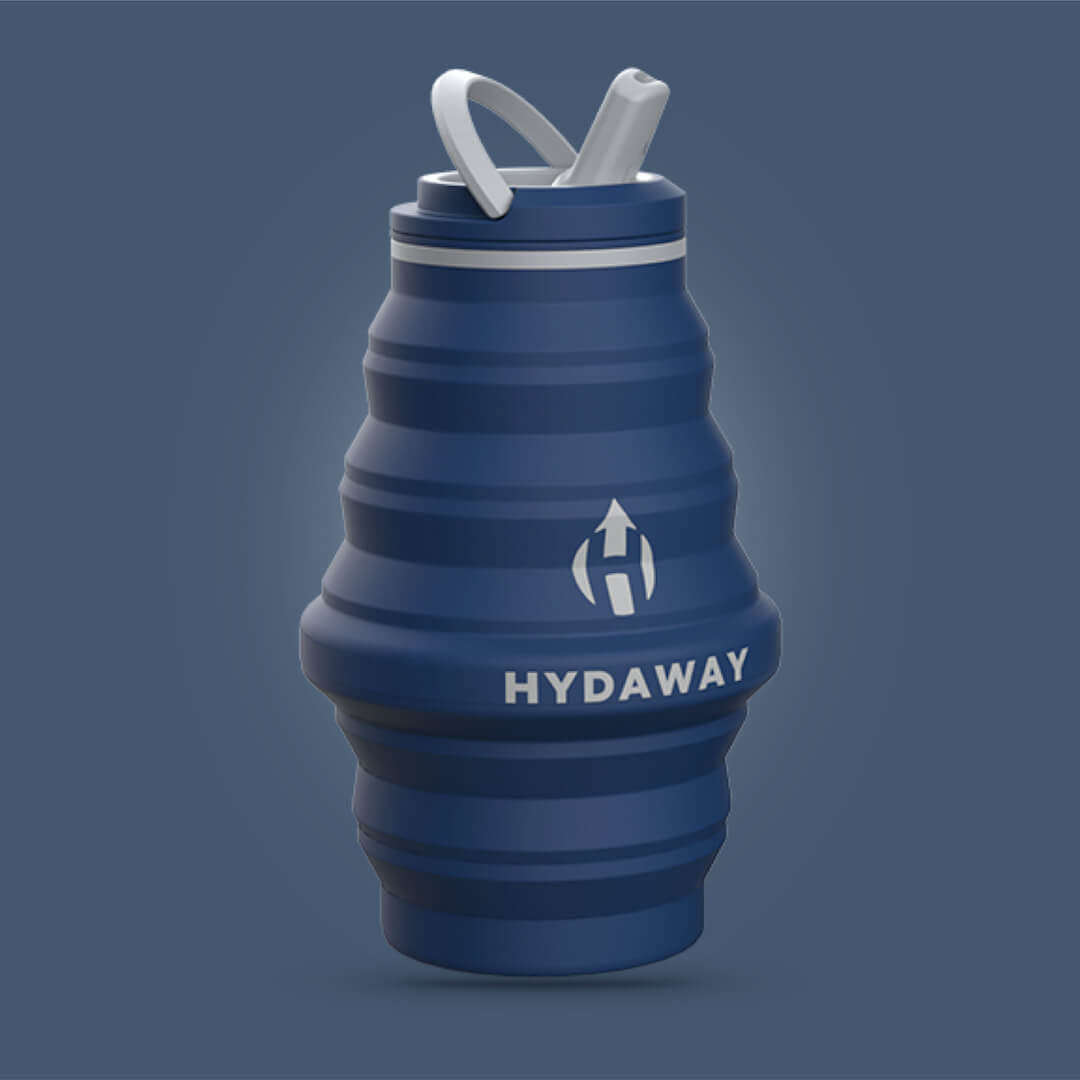
A collapsible bottle solves the exact problem a rigid canteen creates. You drink. The bottle empties. Then it compresses and gives your space back.
That sounds like a small upgrade until you use it on a real trip.
- At the airport: You pass through security with an empty bottle, fill it after screening, then collapse it when you land and head into town.
- At a theme park: You refill during the day, then flatten it into a bag pocket when the rides, snacks, and extra layers start taking over.
- On a hike: You keep water when you need it, then reduce bulk once the route gets shorter or a refill point is close.
For readers comparing formats, this roundup of best collapsible water bottles is useful because it frames packability as a primary feature, not a novelty.
The other issue people overlook is hygiene
Bulk gets most of the attention, but cleaning is the second deal-breaker. Traditional canteens often have narrow openings, deep corners, and fabric covers that can trap moisture and smell.
Modern collapsible bottles are better when they’re designed for easy maintenance. That matters on trips where you refill with different water sources, add electrolytes, or forget to wash a bottle until the end of the day. A bottle that folds away but also cleans up fast fits modern life better than one that’s merely hard to break.
Empty space in a bag is never really empty. It’s room for a layer, lunch, a camera, or the souvenirs your kids insist on carrying for ten minutes and then handing back to you.
That marks a significant change. Today’s best hydration gear doesn’t just hold water well. It gets out of the way when you don’t need it.
Practical Tips for Care Packing and Refilling
If you already own a 1 qt canteen, you don’t need to toss it. You need to use it where it makes sense and manage its weak spots well.

Cleaning without creating a science project
Rigid canteens are easy to neglect because they look sturdy enough to ignore. That’s how you end up with stale smells, odd taste, and a bottle you trust less every trip.
A practical cleaning routine looks like this:
- Rinse immediately: Don’t leave sports drink, flavored packets, or sweetened mixes sitting overnight.
- Use the right brush: Narrow-mouth containers need a bottle brush that can reach the shoulder and bottom seam.
- Dry completely: Store the bottle and cap apart until both are fully dry.
- Deep clean as needed: If buildup or odor starts hanging on, use a dedicated cleaner instead of hoping hot water fixes it.
If you prefer a low-effort routine, bottle cleaning tablets for reusable drinkware are a practical option to keep in a travel kit.
A collapsible bottle has an easier path here. Open it fully, wash the surfaces you can reach, and if it’s dishwasher safe, the maintenance burden drops fast. That’s a big deal for frequent travelers who don’t want “clean the bottle properly” turning into a hotel-room chore.
Pack around the bottle or let the bottle adapt
This is the daily difference felt right away.
With a rigid canteen, you usually assign it a dedicated area in the bag. Once that space is claimed, it stays claimed. You don’t gain anything back when the bottle is empty.
With a collapsible bottle, packing gets more flexible:
- Tuck it into a jacket pocket after use.
- Slide it into the thin space above packing cubes.
- Keep it in a sling bag without sacrificing room for sunglasses or snacks.
- Hand it to a kid when full, then stash it once they’re done.
That kind of adaptability matters more than people expect, especially on mixed-use days where your load changes hour by hour.
Here’s a quick visual walkthrough before your next trip:
Refilling smart in hot weather
Most airports, parks, museums, and public venues are friendlier to refill culture than they used to be, but the experience still depends on your bottle. If it’s awkward to carry, awkward to clean, and poor at keeping drinks cool, you’ll notice.
That’s one place classic canteens show their age. As noted earlier, military-style insulated covers often underperform in heat, with rigid plastic canteens holding ice for less than 4 hours in warm conditions. For hot-weather travel, modern insulated drinkware usually makes more sense than a standard canteen cover.
Pack for the part of the trip that usually annoys you. If warm water and bottle-cleaning hassles keep happening, fix those first.
A good refill setup should be easy to carry empty, quick to refill, and simple to wash routinely. That’s what keeps a reusable bottle in rotation instead of forgotten in the side pocket.
Choose the Right Hydration for Your Adventure
The 1 qt canteen still deserves respect. It has a real history, a proven shape, and a clear role in rugged field use. If you want a classic system with a cup, cover, and no-nonsense durability, it still holds up.
But many aren’t packing for trench lines, reenactments, or a fixed camp routine. They’re packing for flexible travel, daily movement, crowded bags, and fast transitions. In that world, space, hygiene, and convenience matter as much as toughness.
That’s why a lot of modern adventurers do better with collapsible hydration. It fits the way people move now. If your needs lean more athletic than travel-focused, a dedicated lightweight bottle for runners can also be worth a look for shorter, faster outings.
The best hydration gear isn’t the one with the strongest nostalgia factor. It’s the one you’ll happily bring everywhere. Take a look at your current setup and ask a hard question. Does your gear serve your adventure, or does your adventure serve your gear?
If you want hydration gear that packs smaller, cleans easier, and fits modern travel better than a rigid old-school bottle, take a look at HYDAWAY.