


The 1 Gallon Plastic Jug: A 2026 Guide to Usage & Disposal

You're probably looking at one right now. It might be in the garage next to camping gear, rolling around the back of the car after a grocery run, or wedged into a cooler as the “easy” way to carry water for the day.
The 1 gallon plastic jug has earned that spot. It's cheap, familiar, and useful in a lot of real situations. It also has obvious flaws the moment you have to live with it. It's rigid when your pack space is tight, awkward once it starts sloshing, and never feels quite as easy to carry as it looked on the shelf.
That doesn't make it outdated. It just means it works best when you use it for the jobs it's good at, and stop asking it to solve every hydration problem. For road trips, basecamp cooking, emergency water storage, and garage utility use, it still makes sense. For day hikes, airport travel, crowded theme parks, and anything that rewards compact gear, it starts to show its age fast.
The Awkward Truth About the Gallon Jug
A gallon jug usually enters the story with good intentions. You buy one before a picnic, a soccer tournament, or a campsite weekend because more capacity feels smarter than carrying a handful of smaller bottles. Then the day starts.
By the second stop, the handle digs into your fingers, the liquid inside throws your balance off, and the jug suddenly needs its own seat in the car. Once it's half-empty, it gets even more annoying. The container is still full-size, but now the liquid shifts around every time you pick it up.
You don't notice the bulk of a gallon jug on the store shelf. You notice it on the walk from the car to the beach.
That's the central trade-off. A 1 gallon plastic jug is excellent at holding a lot of liquid in one place. It's much less impressive when that place keeps changing.
Where it still works
The classic jug still earns its keep in a few settings:
- Car camping: Keep it on the picnic table for cooking water, coffee water, or hand-rinse duty.
- Home backup storage: It's easy to stack a few in a closet or utility area.
- Team and family use: One large container is simpler than chasing several individual bottles.
- Garage and workshop tasks: Distilled water, rinse water, and non-potable utility storage are all practical fits.
Where it starts to fail
Other situations expose every weakness:
- Trail use: Too bulky and rigid for pack carry.
- Air travel: Empty or full, it takes up too much room.
- Urban walking: It's hard to carry discreetly or comfortably.
- Long day outings: It doesn't adapt as the day changes.
A gallon jug isn't bad gear. It's just specialized gear that too many people treat like an all-purpose answer.
Decoding Your Jug Materials and Safety Marks
Before using a jug for drinking water, look at the bottom and the cap area. Those small molded details tell you a lot about how the container was intended to be used.
A standard 1 gallon plastic jug is typically made from HDPE, or high-density polyethylene, and often uses either a 38/400 narrow-mouth finish or a 63-485 wide-mouth finish, depending on the jug style and intended use. That affects cap fit, splash control, and pouring behavior, as noted in this HDPE jug specification reference.

What HDPE usually means in practice
For everyday users, HDPE matters because it's the material commonly associated with sturdy jugs for milk and other food-contact uses. It's opaque or translucent, fairly tough, and better suited to repeated handling than flimsier disposable drink bottles.
That said, don't treat every plastic jug as interchangeable. A jug made for detergent or industrial liquids may look similar to a food jug, but intended use matters. If you're repurposing a container, start with one that was originally used for food or beverage storage.
For a broader look at packaging formats used in kitchens and food businesses, this overview of plastic container solutions for restaurants is useful because it shows how container shape and closure style affect real-world use.
The marks worth checking
When you flip a jug over, focus on a few practical clues:
- Material code: If you see HDPE, that's the standard material typically found in a gallon jug.
- Original purpose: A jug that first held milk or drinking water is a safer reuse candidate than one that held chemicals.
- Neck size: Narrow-mouth jugs usually pour with better control. Wide-mouth jugs are easier to fill and clean.
- Condition: Deep scratches, cloudy walls, or a cap that no longer seals well are all warning signs.
A lot of people also want to understand BPA-free labeling before reusing plastic for beverages. HYDAWAY has a clear explainer on what BPA-free plastic means, and it's worth reading if you want a plain-English refresher before choosing travel drinkware or reusable containers.
Field check: If you can't tell what the jug originally held, skip it for drinking water.
Shape matters more than people think
Round handled jugs and oblong F-style jugs feel different in the hand even when they hold the same volume. Round jugs are common for general pouring and carrying. Oblong jugs often feel more controlled because the mass sits closer to the handle.
Here's the quick comparison:
| Jug style | Best trait | Main drawback |
|---|---|---|
| Round handled jug | Familiar grip and easy single-hand carry | Can feel more tippy while pouring |
| F-style oblong jug | Better control during filling and pouring | Less comfortable for some one-hand carries |
| Narrow-mouth opening | Reduced splashing | Harder to clean inside |
| Wide-mouth opening | Easier filling and washing | Easier to slosh or overpour |
Best Uses for a 1 Gallon Plastic Jug at Home and Outdoors
The gallon jug earns its place when you stop trying to carry it everywhere and start using it as a stationary liquid source. Think of it as camp infrastructure, not pocket gear.

At a campground, one jug on the picnic table can handle breakfast water, dish rinse duty, and coffee prep without forcing everyone to open and discard several small bottles. At home, that same jug works well as backup water in a hallway closet or mudroom cabinet. In a vehicle, it's a practical reserve for long drives, especially when you don't want to depend on convenience-store stops.
Strong use cases that make sense
Some jobs fit the format perfectly:
- Basecamp hydration: Keep a jug near camp chairs, the stove, or the tailgate.
- Sports sideline mixing: A gallon size is useful for mixing drink concentrates or carrying plain rinse water.
- Emergency home storage: Easy to designate, label, and rotate.
- Appliance water: Distilled water for irons, humidifiers, or similar household equipment.
- Non-potable utility use: Rinse water for muddy boots, washing gear, or basic cleanup.
The format also matters at scale. A 1-gallon plastic jug holds about the same liquid as eight standard 16.9-ounce bottles, which shows how quickly packaging count multiplies when people default to single bottles instead of one larger container, according to this bottled-water comparison.
Good outdoors use usually means short carry distance
The sweet spot is simple. Carry the jug from the car to camp, from the kitchen to the porch, or from the garage to the garden. Don't plan on hiking with it any meaningful distance unless you absolutely have to.
That's also why many experienced campers pair a stationary gallon source with smaller drink vessels. The jug stays at camp. The smaller container goes with the person.
This short demo is useful if you want to see the format in a more practical, everyday context:
A simple rule for choosing it
Use a gallon jug when these three things are true:
- You need bulk volume more than portability
- The container will stay mostly in one place
- You can clean and dry it properly afterward
If even one of those isn't true, the jug becomes more hassle than help.
Cleaning and Storing Your Jug for Long Term Use
Reusing a jug only works if you clean it like you mean it. A quick rinse and a loose cap tossed back on the shelf is how odors settle in and residue gets ignored until the next trip.
Plastic food containers like HDPE jugs can degrade with repeated use, heat, scratches, and harsh cleaning. That wear can create microscopic scratches where bacteria can hide, which is why proper cleaning and timely replacement matter.
The cleaning routine that actually works
For regular water use, keep it simple and consistent:
- Empty it fully. Don't leave old water sitting in the bottom between trips.
- Wash with mild soap and warm water. Avoid aggressive scrubbing tools that gouge the interior.
- Clean the cap and threads carefully. That area traps film and odor faster than the body of the jug.
- Rinse until there's no soap residue left.
- Dry it completely with the cap off. Airflow matters more than commonly assumed.
If you use tablets for reusable drinkware and travel gear, HYDAWAY's guide to bottle cleaner tablets is a helpful reference for building a better cleaning habit around containers you use repeatedly.
Practical rule: If the inside never fully dries, the jug never gets fully clean in any meaningful sense.
What not to do
People ruin reusable jugs by overcorrecting. They attack odor with harsh chemicals, boiling water, or rough brushes. That often makes the container worse, not better.
Avoid these mistakes:
- Don't use very hot cleaning methods unless the product specifically says it can handle them.
- Don't scrape hard with abrasive tools. Scratches are a long-term hygiene problem.
- Don't store it sealed while damp.
- Don't ignore smells. Persistent odor is usually telling you something.
When to retire the jug
A reusable jug doesn't need to look perfect, but it does need to remain cleanable and trustworthy.
Replace it if you notice:
- Persistent odor after proper washing and drying
- Cloudiness that doesn't wash out
- Visible interior scratches
- Cap wear or poor sealing
- Warping or softened plastic
- Any history of storing non-food liquids
The best storage setup is boring on purpose. Keep the jug dry, uncapped or loosely capped only after it's fully dry, and away from heat. A cool shelf in a pantry, mudroom, or gear closet is better than a hot trunk or sun-baked garage window.
The Environmental Impact of Your Water Container Choice
A gallon jug isn't a perfect environmental answer. It is, however, a more sensible container in many situations than buying the same amount of liquid as a stack of small bottles.
That matters because packaging choices add up quickly. Since plastic was introduced in the 1950s, about 8.3 billion metric tons of plastic have been produced, and roughly 79% of all plastic ever made now sits in landfills or the natural environment, according to Earth Day's single-use plastics fact sheet. The same source notes that over 60 million plastic water bottles are thrown away every day in the U.S. alone.

Why the jug can still be the better choice
One larger container usually means less packaging clutter, fewer caps, and fewer individual units to buy, carry, chill, and throw away. That doesn't erase plastic use, but it can reduce the stream of single-use items moving through your day.
For readers trying to clean up their broader food-and-drink habits, this guide to sustainable food containers is a useful companion read because it pushes the same practical question: what will you reuse consistently?
HYDAWAY also has a solid piece on how to reduce single-use plastic if you're trying to make container choices that hold up in daily life, not just on one camping trip.
Reuse beats good intentions
A jug helps the environment only when you use it more than once and use it well. Buying a large container and then treating it like disposable gear doesn't move the needle much.
A better mindset is to ask:
- Can I refill this repeatedly without turning cleaning into a chore?
- Is this size matched to how I move through the day?
- Will this replace smaller throwaway containers, or just sit in storage?
The greenest container in your house is usually the one you'll keep using, washing, and carrying without resentment.
Smart second lives for an old jug
When a food jug is no longer worth trusting for beverage storage, it may still work for household tasks if it's clean and structurally sound.
Ideas that are practical:
- Watering can substitute: Puncture the cap carefully for a controlled pour.
- Gear rinse jug: Keep one for muddy shoes or bike cleanup.
- Dry goods scoop: Cut and repurpose only for non-food garage or garden use.
- Seedling shield: Use sections of the plastic as simple plant protection in a garden bed.
The strongest environmental move is still to reduce how many single-use containers enter your routine in the first place. The gallon jug can help with that. It just isn't the end point.
Beyond the Jug Modern Alternatives for Active Lifestyles
The gallon jug belongs at basecamp, in the car, or on a shelf. Once your day involves movement, crowds, transit, or changing plans, the old format starts fighting you.
That's where modern travel gear has pulled ahead. People who hike, commute, fly, train, work remotely, or spend long days out with kids don't just need capacity. They need gear that shrinks, packs, seals, and disappears when it's empty.

Why old-school bulk stops making sense
A rigid gallon container has three built-in limits for active use:
| Need | Gallon jug problem | Better direction |
|---|---|---|
| Packability | Takes the same space empty or full | Collapsible drinkware and flat-packing gear |
| Personal carry | Awkward in hand and poor in small bags | Compact bottle-sized carry |
| Flexible daily use | Best for static storage, not movement | Reusables that adapt from commute to trail |
That distinction matters for real people, not gear catalogs. A parent walking through a theme park doesn't want a big sloshing jug under the stroller all day. A digital nomad moving through airports wants an empty bottle that packs small before security and fills later. A day hiker wants water on hand without dedicating half the pack to one rigid shell.
The practical upgrade path
HYDAWAY fits naturally into modern routines. Instead of carrying one large, awkward container everywhere, you can treat hydration and food storage as modular.
A few examples make the difference clear:
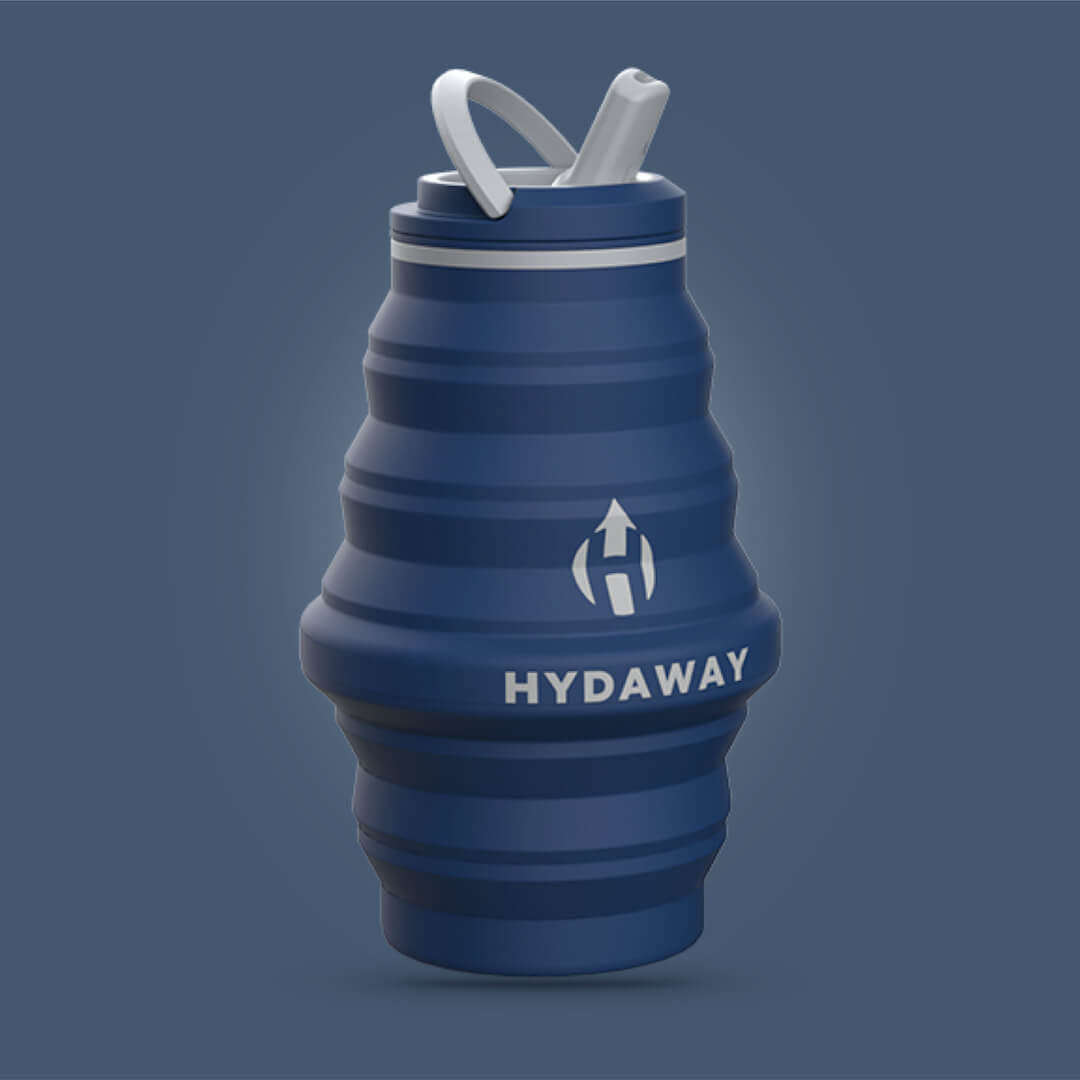
- For flights and city travel: A collapsible water bottle makes more sense than any gallon container. It stores small when empty and stays useful once you refill it.
- For day hikes: A compact reusable bottle is easier to stow in a side pocket, jacket pocket, or sling.
- For van life and road trips: Keep bulk water at camp or in the vehicle, then carry a smaller collapsible bottle when you walk away from it.
- For family outings: Packable bowls, tumblers, and bottles reduce bulk without forcing everyone into disposable cups and containers.
- For everyday work life: A flat-packing bottle or tumbler takes up less dead space in a commuter bag than a rigid backup container.
A gallon jug solves storage. Portable gear solves movement. Most people need both, but not in the same role.
What works best in the real world
The most useful setup is usually a two-layer system. Keep larger water storage where weight and bulk don't matter much. Then use compact reusable drinkware for the part of the day spent walking, exploring, or commuting.
That approach works for:
- Campers who want one water source at camp and lighter personal carry on the trail
- Families who want to refill reusable bottles instead of buying drinks all day
- Retirement travelers who need simple, low-bulk gear for tours, beach days, and long transit days
- Commuters and gym users who don't want a bag dominated by one hard-sided bottle
- Overlanders and van-lifers who count every inch of storage space
A gallon jug still has a place in 2026. It's just no longer the default answer for every situation. Use it where bulk storage wins. Switch to portable reusable gear where mobility matters. That's the smarter, cleaner, less annoying way to handle hydration now.
If you want gear built for the part of life that happens after you leave the car, take a look at HYDAWAY. Their collapsible bottles, drinkware, dinnerware, and travel-ready accessories make more sense for hiking, commuting, airport days, family outings, and any trip where space matters as much as capacity.