


Water Bottle Handles: Carry Your Bottle Smarter in 2026

Your hands are full right now. Grocery bag cutting into one wrist, phone half-sliding from your palm, keys somewhere between your fingers, and a water bottle that suddenly feels harder to carry than everything else.
That's why bottle handles are more significant than often perceived. A good bottle is easy to drink from. A good handle ensures you bring the bottle with you in the first place. It changes how a bottle behaves in daily life, on a trail, in an airport line, and during the boring walk from the car to the office.
A lot of people treat the handle like a minor accessory. In practice, it's often the difference between a bottle that gets used all day and one that stays in the car cup holder or bangs around at the bottom of a backpack.
Why Your Water Bottle Needs a Better Handle
The easiest way to understand water bottle handles is to look at the failure points. Big bottle, smooth body, cold condensation, awkward grip. You pick it up with two fingers, it swings, your hand gets tired, and eventually you stop carrying it unless you absolutely need it.
That's even worse with oversized gym bottles and refill jugs. They make sense when you're training, driving long distances, or trying to avoid constant refills. They don't make sense when the bottle itself becomes annoying to move from place to place.
The market has caught up with that reality. The global water bottle handle market was valued at $500 million in 2025, with projections showing a 7.43% CAGR, according to market analysis of water bottle handle trends. That growth tells you something simple. Buyers aren't treating handles as an afterthought anymore.
Where bad handles fail
A poor handle usually has one of these problems:
- Too thin: It digs into your fingers when the bottle is heavy.
- Too slick: It feels fine dry, then turns sketchy once condensation builds.
- Too small: You can't get enough fingers through it for a stable carry.
- Too bulky: It solves grip, but makes the bottle harder to pack.
Practical rule: If carrying the bottle feels awkward when it's full, the handle design is already failing its main job.
There's also a lifestyle shift behind this. People don't use one bottle in one setting anymore. The same person might carry a rigid bottle to the gym, want something compact for a flight, and clip a bottle to a pack on weekends. The handle has to support movement, not just storage.
A better handle won't make a bad bottle perfect. But it will make a good bottle much more usable, and that matters every single day.
The Two Main Types of Bottle Handles
There are a lot of bottle handle designs on the market, but most of them fall into two families. Integrated handles and detachable handles.
Consider a car. Some features are built into the vehicle from the factory. Others are add-ons you install later because you want different function.

Integrated handles
Integrated handles are molded into the lid, neck, or body of the bottle. You see them on gallon jugs, stainless sport bottles, and many travel bottles with loop caps or hinged carry points.
They usually work best when:
- You want simplicity: Nothing to install, adjust, or lose.
- You carry a full bottle often: The handle is designed with the bottle's weight and balance in mind.
- You care about a clean profile: Built-in designs usually feel more intentional and secure.
Integrated handles are often the better pick for people who don't want to think about accessories. You grab the bottle and go.
Detachable handles
Detachable handles include straps, paracord wraps, silicone sleeves with loops, clip-on carriers, and aftermarket grips. These give you more flexibility, especially if the bottle itself doesn't have a good carry solution.
They make sense when:
- You already own a bottle you like: Adding a handle is cheaper than replacing the bottle.
- You switch carry styles: Hand carry one day, clip carry the next.
- You use different environments: A soft strap can feel better for errands, while a rigid grip may be better for lifting and lowering a bottle repeatedly.
A detachable handle can rescue a bottle with poor portability, but it can't fix bad bottle balance.
Which type usually works better
If the bottle will be your main daily bottle, integrated is usually cleaner and more dependable. If you rotate bottles, adapt gear often, or want to customize comfort, detachable is more versatile.
What doesn't work well is pretending all handles do the same thing. A molded loop on a travel bottle, a side handle on a tumbler, and a paracord carry strap solve different problems. Buy for the carry style you use, not the one that just looks good in product photos.
Comparing Handle Materials and Ergonomic Designs
Material decides how a handle feels after ten minutes, not ten seconds. Plenty of handles seem fine on the shelf. Then you carry a full bottle across a parking lot, through a terminal, or around a campground and find out quickly what the trade-offs are.
Ergonomics matter just as much as material. Studies on bottle handle sizing aim for dimensions that fit 95% of hand sizes, with a target length of around 10 cm and width of 2.5 cm to reduce fatigue when carrying larger bottles, according to ergonomic handle research.
What comfort really comes from
Handle comfort usually comes from four things working together:
- Diameter: Too thin creates pressure points. Too thick weakens grip.
- Edge finish: Rounded edges beat sharp molded edges every time.
- Surface feel: A little traction helps, especially with sweat or condensation.
- Clearance: You need enough room for fingers without forcing a cramped hold.
Rigid handle design guidance lines up with that. Grip diameter and smooth edge radiusing are key for avoiding hot spots on the hand, especially in wet conditions, as outlined in this selection guide for plastic water bottle handles.
Water Bottle Handle Material Comparison
| Material | Best For | Pros | Cons |
|---|---|---|---|
| Plastic | Gym jugs, rigid sport bottles, hard-use daily carry | Durable, structured, easy to grab quickly, holds shape well | Can feel harsh if edges are sharp, less forgiving on heavy loads |
| Silicone | Everyday bottles, travel bottles, soft-touch grips | Comfortable, grippy, flexible, easier on fingers | Can attract lint, some designs feel floppy under load |
| Paracord | Outdoor carry, custom setups, clipped carry | Strong, adaptable, easy to wrap or customize, good for field repairs | Harder to clean, can stay damp, can twist if poorly tied |
| Neoprene | Sleeved bottles, casual carry, short walks | Soft feel, adds cushion, comfortable against skin | Less structured, can stretch, often bulkier than it looks |
What works and what doesn't
For a heavy rigid bottle, hard plastic with rounded edges usually works better than soft material with poor structure. A floppy strap sounds comfortable, but it often lets the bottle swing and hit your leg.
For travel and compact carry, silicone and low-profile flexible loops make more sense. They pack down better and don't create extra bulk.
If you're looking at silicone parts, it helps to understand what quality material should do in daily use. This quick guide to food-grade silicone is useful background when you're comparing bottle components and sleeves.
Rounded edges matter more than fancy texture. A simple handle with smooth contact points often beats a complicated one with aggressive styling.
Paracord has one big advantage. It's easy to adapt. If you camp, overland, or like DIY gear, a paracord handle can turn an awkward bottle into something much easier to carry. The downside is maintenance. Dirt, sweat, spilled drink mix, and rain all stay in the weave longer than they do on smooth plastic or silicone.
Handles for Collapsible and Rigid Bottles
You leave the house with a big bottle for the gym, then need something packable for a flight two days later. The bottle changes. The carry problem does not. A good handle setup should feel consistent whether you're lifting a full rigid jug out of the car or clipping a flattened travel bottle to a daypack after security.

Rigid bottles reward control. Collapsible bottles reward adaptability. If you use both, the smart move is to choose handles that support the same habit. Carry by hand, hang from two fingers, or clip to the outside of a bag. Repeating that motion across bottle types sounds minor, but it makes daily use easier and cuts down on the little annoyances that make people stop bringing a bottle at all.
Rigid bottles need carry control
A full rigid bottle has momentum. Once you get into the 32-ounce range and above, handle shape matters more than clever styling.
The best rigid-bottle handles usually have:
- A firm top loop or molded side handle that keeps the bottle from rolling in your grip
- Enough clearance for two or three fingers so the handle still works with larger hands
- Rounded contact points that stay comfortable during repeated short carries
Small cap loops are the weak point on many large bottles. They work in product photos. They feel much worse in a parking lot, on bleachers, or walking from the car to the office with a full load.
Collapsible bottles need versatility
A collapsible bottle has a different job. It needs to carry well when full, then get out of the way when empty.
That matters most in travel. TSA allows empty reusable water bottles through security, including collapsible models, according to the TSA guidance on reusable water bottles. After screening, a low-profile handle gives you options. Hold it, clip it, or stash it flat inside a personal item without wasting space on a bulky loop.
I look for a handle that still works when the bottle is collapsed. Some do this well. Others fold down into an awkward tab that is fine on a shelf and annoying in real use.
One handle strategy can cover both
The goal is not one bottle that does every job. The goal is a familiar carry style across two bottle categories.
A practical setup usually looks like this:
- A large rigid bottle for gym sessions, commuting, workdays, and car travel
- A collapsible bottle for flights, concerts, museums, and backup hydration in a day bag
- A similar handle behavior across both, so grabbing, clipping, or stowing feels natural every time
If you want compact options that travel well, this guide to the best collapsible water bottles for travel and daily carry helps sort through the trade-offs.
One detail gets overlooked here. Many modern collapsible bottle handles do more than carry. Some include a cutout that can prop up a phone on a tray table, hotel desk, or campsite surface. That small feature makes more sense on a travel bottle than on a heavy rigid one, and it shows why handle design deserves more attention than it usually gets.
Buying Tips and Secret Handle Features
Most shoppers spend too much time on bottle size and not enough on carry behavior. That's backwards. If the bottle is annoying to handle, you'll leave it behind or stop using it once the novelty wears off.
Start with the handle before you commit.

What to check before buying
Use a short checklist. It catches most bad designs fast.
- Grip test: Can you hold it comfortably with the bottle full, not just empty?
- Swing test: If you carry it at your side, does it bang into your leg or stay controlled?
- Wet-hand test: Does the handle still feel secure with condensation or sweaty hands?
- Pack test: Will the handle catch on things, or does it stay low-profile enough for your bag?
If a handle fails two of those, keep looking.
The hidden feature most people miss
A rapidly emerging feature in 2024 to 2025 is the smartphone stand notch built into many collapsible bottle handles, letting the bottle support hands-free viewing. It's a real user-discovered function that marketing often ignores, as discussed in this Reddit thread about the notch in a collapsible bottle handle.
That feature matters more than it sounds. If you work remotely, travel in a campervan, sit in an airport, or cook at a campsite while following a recipe, a bottle that props up your phone can replace one more piece of gear.
Some of the best bottle features aren't on the product box. They show up when people actually live with the gear.
Look for a notch or cradle point in the handle that seems oddly shaped for carrying alone. That's usually the clue. Test it in horizontal orientation first. Not every bottle balances the same, and heavier phones may need a flatter surface underneath.
Here's a look at carry and handle behavior in action:
Easy upgrades for bottles you already own
If your current bottle is fine except for the handle, upgrade the carry system before replacing the whole thing.
Try one of these:
- Add a small carabiner loop: Good for clipping to a daypack or stroller.
- Wrap with paracord: Better for outdoor bottles with poor grip points.
- Use a silicone sleeve with a loop: Handy when the bottle body is slick and hard to grasp.
The best buying tip is simple. Don't shop for a handle in isolation. Shop for the way you carry water when your hands are busy, your bag is packed, and your day is already moving fast.
Handle Use Cases for Every Lifestyle
You are leaving the house with full hands. Phone in one hand, keys in the other, maybe a tote bag, maybe a kid, maybe a boarding pass. In that moment, the handle decides whether the bottle comes with you or stays on the counter.
That matters across more than one kind of bottle. A good carry setup should work for the giant rigid bottle you use at the gym and the collapsible bottle you flatten for travel. If your routine shifts from commute to airport to weekend hike, the handle should keep up without forcing you to relearn how you carry water.
The airport traveler
Travel is where collapsible bottles earn their spot. An empty bottle can ride outside a backpack after security, then tuck away when you do not need it. The handle is what makes that practical. You can grab it fast at a refill station, clip it while walking to the gate, and keep pocket space free for the things you need more often.
Some travelers also get extra use from the handle once they sit down. On many modern collapsible bottles, the handle shape can prop up a phone for a movie, recipe, or boarding update. That is a small feature, but in an airport or hotel room it saves space and cuts one more accessory from your bag.
The trail hiker and runner
Out on the trail, handle choice changes with pace and load. A rigid bottle with a solid top loop works well when you stop often and want a secure grab point. A collapsible bottle makes more sense when pack space matters or when you want the bottle to shrink as you drink.
For running or fast hikes, hand carry only works if the bottle stays stable and does not chew up your grip. A soft, low-profile loop usually beats a hard handle here. If you want a setup that matches your pace, this guide to a handheld water bottle for running lays out when hand carry works better than stashing your bottle in a vest or pack.
The family outing
At a zoo, ball field, or theme park, the best handle is usually the simplest one. Kids need a loop they can hold. Adults need something that hooks to a stroller, wagon, or tote without a fight.
Three details matter most:
- A loop sized for quick grabs
- Rounded edges that will not pinch small hands
- A shape that clips cleanly to family gear
I have seen plenty of sleek bottles turn into dead weight on family outings because nobody can carry them comfortably between stops.
The grocery run and daily commute
Daily life exposes bad handle design fast. You notice it in a parking lot, on apartment stairs, and while trying to open a door with groceries on one arm and a laptop bag on the other.
For this kind of use, comfort over short carries matters more than technical features. A rigid bottle with a wide handle feels better when it is full and heavy. A collapsible bottle with a flexible loop wins when space is tight and the bottle spends part of the day inside a work bag. Many people end up rotating both, not because they need more gear, but because one handle style rarely covers every job equally well.
That is a key use case most buyers miss. The better strategy is not choosing between rigid and collapsible. It is choosing a handle style that feels familiar across both, so switching bottles does not change how you pack, carry, clip, or set up for the day.
Care Maintenance and Quick Troubleshooting
A handle takes more abuse than most parts of a bottle. It gets yanked, dropped, clipped, dragged across tables, and touched with dirty hands all day. If you ignore it, even a good handle gets grimy or starts feeling loose.
Keep it clean without overthinking it
Different materials need different cleaning habits.
- Plastic handles: Wash with warm soapy water and pay attention to seams and hinge points.
- Silicone loops or sleeves: Remove if possible and clean around the attachment area where residue builds up.
- Paracord wraps: Rinse thoroughly, use mild soap when needed, and let them dry completely before storing.
- Neoprene carriers: Air dry fully after washing so they don't hold odor.
If the handle is integrated into a bottle body, inspect the joints and recessed areas. Handle wells and curved transitions can trap moisture if they aren't cleaned properly. Patent guidance for integral bottle handle geometry emphasizes shapes that help prevent pooling and improve cleanability in reusable bottles, as described in this patent overview of handle well design and cleaning flow.
Quick fixes that usually work
Most handle problems start small.
- Loose paracord wrap: Retighten and re-knot before it starts twisting under load.
- Sticky hinge or folding loop: Wash out grit first. Don't assume it needs replacement.
- Sharp plastic edge: Stop using it as-is. That edge will only get more annoying over time.
- Cracked clip piece: Replace the accessory. Don't trust a damaged clip over concrete, tile, or electronics.
A handle should feel boring in the best possible way. No drama, no slipping, no strain, no weird surprises.
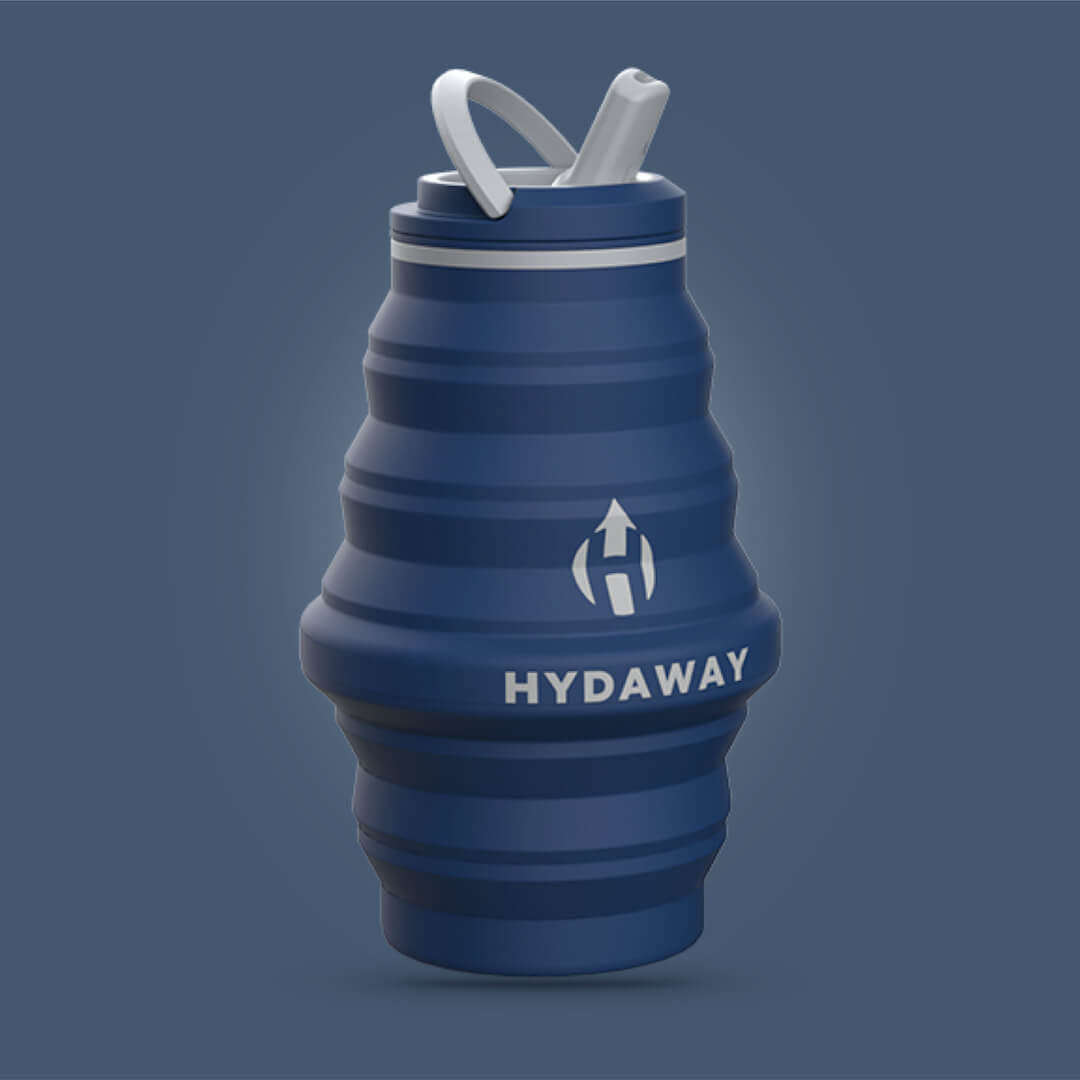
If you want hydration gear that disappears into your travel routine instead of taking over your bag, take a look at HYDAWAY. Their collapsible bottles and compact adventure gear fit the way people move now, from flights and commuter days to trail miles and campervan weekends.