


Lightweight Travel Gear: The 2026 Packing Guide

You're standing in an airport line or a theme park snack queue, and the same problem keeps showing up. Your water bottle is too bulky, your bag feels overstuffed, and the cheap drinks and disposable containers around you start looking annoyingly practical. That's where lightweight travel gear stops being a niche preference and starts being a travel habit that saves space, reduces friction, and makes a trip easier to live through.
The strongest gear in this category isn't just smaller. It folds, collapses, compresses, or uses lighter materials so you can carry less mass without giving up the function you need. That matters whether you're flying carry-on only, packing a campervan, or trying to keep a family day out from turning into a series of overpriced convenience purchases.
Why Lightweight Travel Gear Changes Everything
A trip gets harder fast when one object keeps demanding attention. I've watched travelers pause at security because a rigid bottle won't fit back into a daypack, then spend the next hour carrying it in a hand that should've been free. I've also seen families at attractions buy bottle after bottle because nobody wanted to haul clunky reusable containers all day, even though they'd packed them in the car.
The shift with lightweight travel gear is that it removes the little points of resistance that make travel feel heavy before the day has even started. A collapsible cup, a flat bottle, or a packable bag doesn't just weigh less, it occupies less mental and physical space. That's the difference between gear you own and gear you use.
This is also where buying decisions get smarter. If you're comparing travel tools, it helps to look at what each product changes in practice, not just how it looks on a product page. For a useful contrast point on travel spend and payment choices, the guide on NomadCards versus crypto travel cards is a practical read, because the same logic applies, less friction usually beats novelty.
Practical rule: If a travel item only works well when it stays at home, it's probably not lightweight in the way that matters.
The market signals match what travelers already know. The global ultralight backpacking gear market is estimated at USD 1.96 billion in 2024 and projected to reach USD 3.72 billion by 2033, with a 7.4% CAGR. Another forecast puts the category at $2.8 billion in 2025 and $5.6 billion by 2034 at an 8.1% CAGR, and says backpacks hold the largest product-type share at 28.4% in 2025, which tells you this isn't a passing fad, it's a durable buying pattern tied to compact, high-performance travel equipment. Growth Market Reports
The Real Benefits Beyond Just Saving Space

The obvious benefit is lower bulk, but the practical payoff is broader than that. If your bottle, bowl, or backpack packs flat, you create reserve capacity for food, souvenirs, kid gear, or just cleaner organization on the return leg. That reserve matters because travel rarely stays as neat as the packing video.
Packability and weight reduction
The clearest benchmark in the brief comes from travel guidance, not marketing copy. REI's travel-light advice includes the “one hat, two pairs of shoes, three bottoms, four tops, five pairs of socks, six pairs of underwear” guideline for two weeks of travel, and it recommends adventure travelers aim for about 10% of body weight in pack weight. REI Once you treat weight as a target, collapsible gear becomes easy to evaluate. If a bottle or bowl takes up too much of your daily packing allowance, a flatter version directly supports the system.
Material engineering and durability
Weight savings shouldn't come from fragile construction. A carbon-fiber Gitzo Traveler tripod weighs 2.94 lb and still reaches 64.96 in, which shows how advanced materials can preserve usability while keeping the structure portable. Gitzo The same idea applies to travel packs and reusables, lighter doesn't have to mean flimsy if the design uses the right material choices.
Sustainability and repeated-use value
There's also the repeated-use angle. The luggage market itself is large, valued at USD 38.80 billion in 2023 and projected to reach USD 61.49 billion by 2030 at a 7.1% CAGR, while 62% of travelers say they prioritize lightweight luggage when buying new suitcases and 38% of international travelers now prioritize it, up from 29% in 2019. Zipdo That tells you lightweight travel gear is being chosen for mainstream trips, not just niche expeditions. When a reusable bottle or bowl replaces recurring disposable purchases, the value compounds across the whole trip.
A useful way to judge any item is simple.
If a product saves space but forces you to buy convenience on the road, it's only half doing its job.
What to look for
- Packability: Does it flatten, collapse, or compress fast enough that you'll bring it?
- Usefulness: Does it still function when you're tired, rushed, or eating on the move?
- Durability: Can it survive real travel handling, not just a clean room demo?
- Comfort: Does it keep temperature, fit your hand, and stay pleasant to use?
- Waste reduction: Does it replace something you'd otherwise buy again and again?
That's the lens to use before you chase any “ultralight” label.
Feature Checklists for Every Type of Traveler

A backpacker and a family at a theme park don't need the same gear, even if both want less bulk. The mistake I see most often is buying one “universal” travel item and hoping it covers every use case. It usually doesn't.
Backpackers who count every ounce
For backpackers, the best filter is capacity-to-weight ratio. The dissertation-backed benchmark in the brief says light is often defined below 15 lb and ultralight below 10 lb in U.S. backpacking culture, with older related teaching materials using different thresholds for shelter and sleep systems. Top Shot Systems PDF That gives you a mechanical target. If a reusable item is bulky enough to blow up your base weight, it needs to earn its place.
Look for:
- Flat-pack hydration, so you can carry water gear without wasting pocket space.
- Simple forms, because extra structure adds weight fast.
- Quick drying surfaces, especially if you're moving day after day.
Van-lifers and campervan travelers
Storage in a van is never as generous as it looks in photos. Collapsible dinnerware helps because the same cabinet has to hold food, cookware, chargers, and the random gear every road trip accumulates. I've found that rigid bowls and oversized tumblers are the first things to get exiled when a van starts feeling crowded.
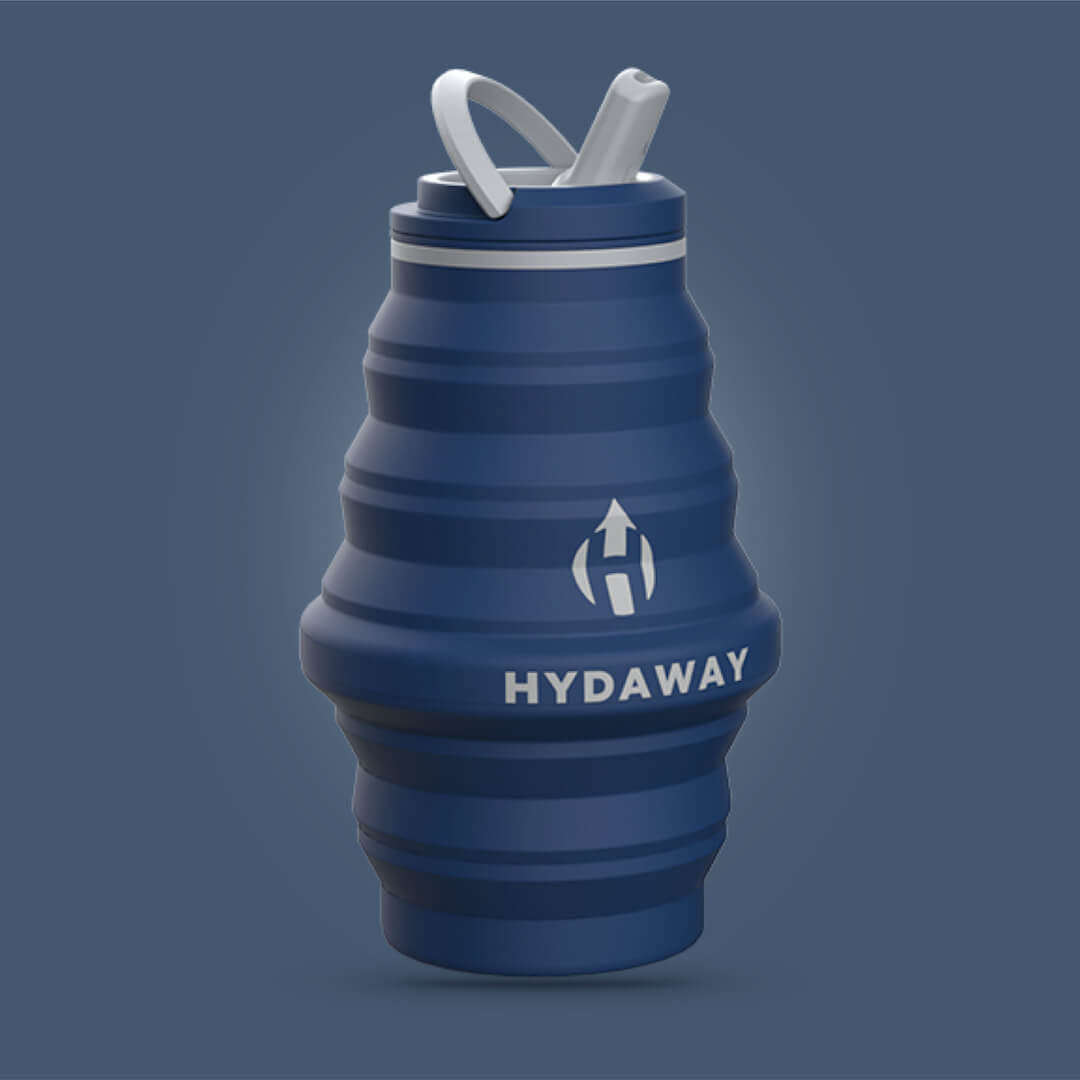
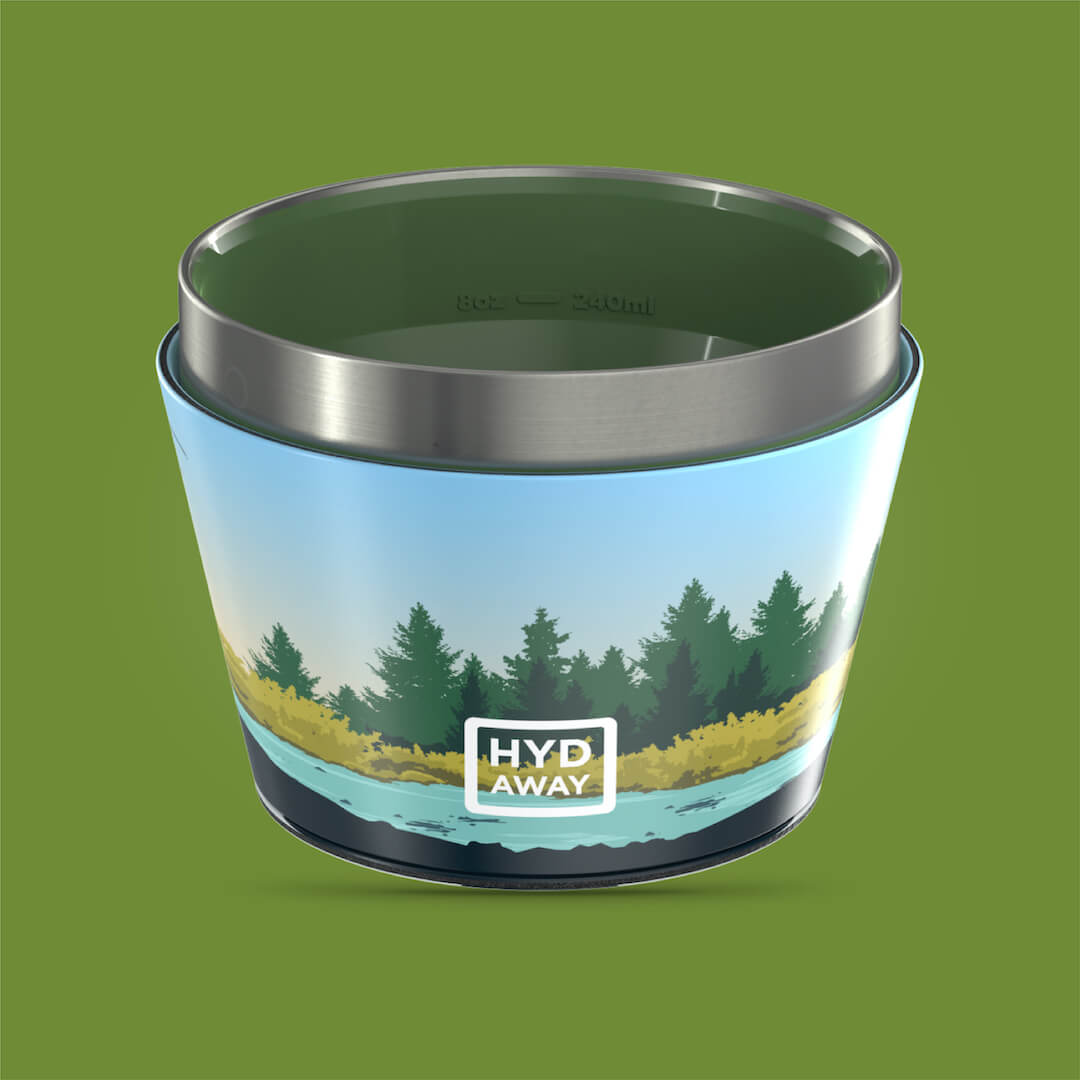
HYDAWAY fits this kind of setup with collapsible water bottles, insulated drink tumblers, and insulated bowls with spill-proof lids that fold flat between stops. That matters more in a campervan than on a glossy packing list, because a flat item is easier to slot beside food bins and soft bags than a hard shell is.
Daily commuters and city travelers
Commuters need gear that disappears until the moment they need it. A packable backpack is more useful than a big travel bag if your day alternates between train, office, coffee shop, and gym. The technical benchmark from the brief is the Osprey Daylite Carry-On Travel Pack 44, which weighs 1,182 g, offers 44 L, and works out to about 26.9 g per liter, with recycled polyester and DWR made without PFAS. Ultralight Outdoor Gear That's the kind of ratio that makes everyday carry feel intentional, not oversized.
Families managing gear for multiple people
Families need repeatable systems. The REI packing rule, one hat, two pairs of shoes, three bottoms, four tops, five pairs of socks, six pairs of underwear for two weeks, helps keep kids' bags from ballooning. REI Add collapsible bottles and compact bowls, and you stop buying extra drinks and disposable containers every time hunger or thirst hits.
A good family checklist looks like this:
- Easy cleaning: because nobody wants extra hand-washing on vacation.
- Clear labeling or separate cases: so each person's items stay together.
- Flat storage: because packing cubes can't solve every bulk problem.
- Travel-safe lids: because spills are the fastest way to regret “saving space.”
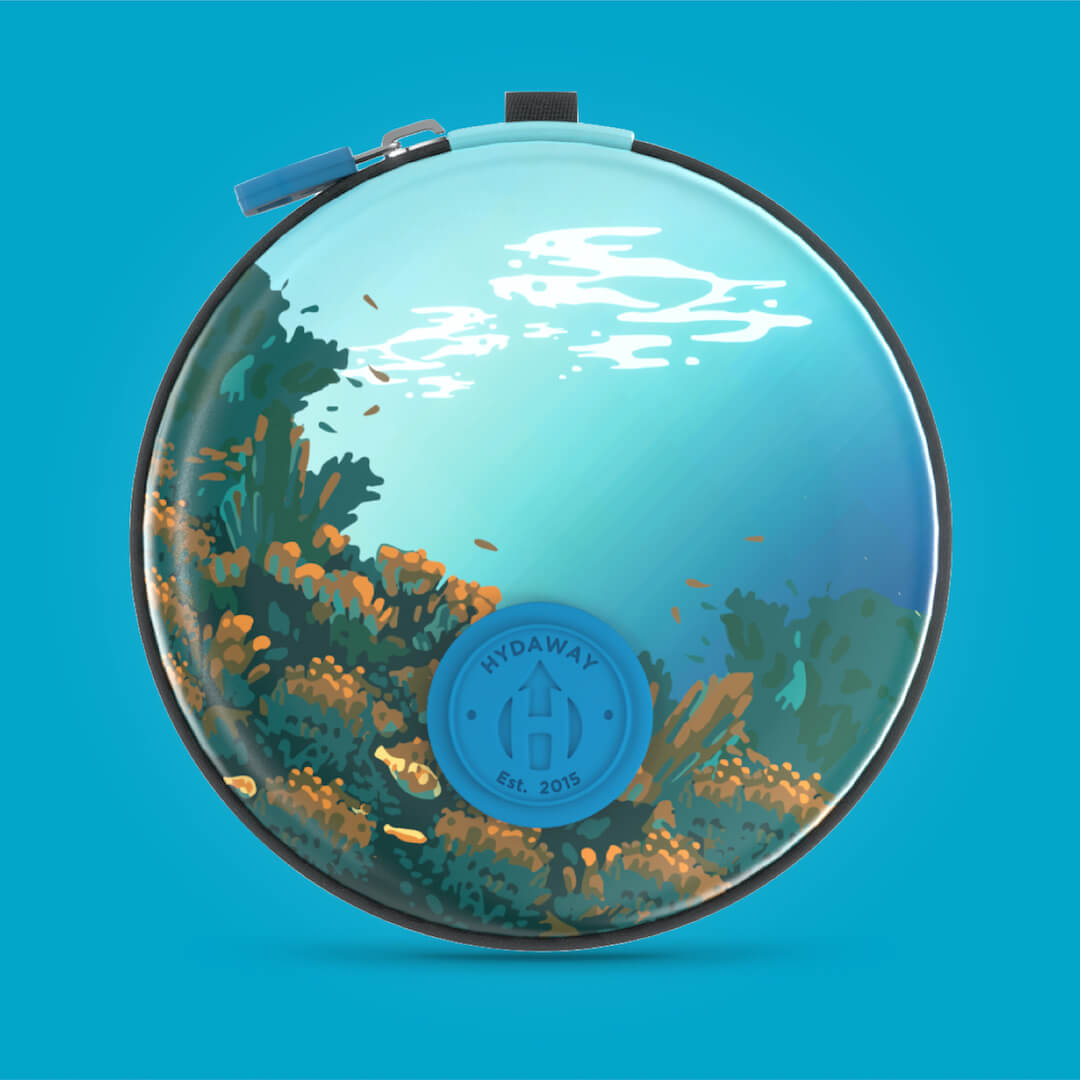
I'd treat HYDAWAY's travel case as a sensible add-on for separating compact bottles in a family bag or daypack. It's a storage answer, not a lifestyle statement, and that's exactly why it works.
When Going Ultralight Costs You Comfort
Ultralight gear gets sold as a universal win, but that's not how travel works. If you run cold, travel in shoulder seasons, or spend long days walking in mixed weather, shaving every possible ounce can create a trip that feels worse even if the bag itself feels better.
The practical mistake is confusing “lighter” with “better for this trip.” A traveler headed to damp evenings in spring may be happier with one warm layer than with three thin pieces that don't hold heat as well. That's the kind of trade-off people miss when they buy by weight alone.
What you sacrifice first
The first thing ultralight swaps often sacrifice is comfort margin. That can mean thinner insulation, less durable materials, or a bottle shape that packs well but feels awkward when you're using it all day. I've also seen travelers choose rigid minimalist gear that looks neat in a packing photo but becomes annoying once it has to go in and out of a daypack twenty times.
Here's the clean test.
If a lighter item makes you pack a backup item, you didn't save much. You just split the problem.
The better decision framework
Use trip conditions, not ideology, to decide. The practical ultralight advice in the brief says to weigh gear, prioritize base weight, and keep pack weight under 20% of body weight, while also noting that travelers who run cold should pack warmer layers rather than more layers. Lily M Tang That gives you a decision rule, not a fashion statement.
For lightweight swaps, ask three questions:
- Does it keep full function?
- Does it reduce volume without weakening comfort?
- Does it replace recurring friction, or just look clever?
Collapsible hydration and dinnerware usually pass that test. They still hold water, still let you eat, and still disappear into a pocket or side compartment once emptied. They avoid the common ultralight trap of giving you less performance just to claim a lower number.

The smartest light packing systems don't worship minimalism, they preserve options. That's why a quarter-empty bag works better than an overstuffed one, and why packable gear matters on trips where you may bring something home.
The gear list filter
Before you buy anything, check whether it supports a real travel pattern or just a packing fantasy. The internal guide on ultralight camping gear list is useful precisely because it forces that sort of decision-making. What you want is fewer weak points, not just fewer ounces.
Packing Strategies That Actually Work
The best packing systems are boring in the right way. They repeat well, they survive delays, and they leave you enough room to handle the messy stuff that always shows up, snacks, souvenirs, wet clothes, or a kid who suddenly needs one more layer.
A carry-on-first approach does most of the heavy lifting. Once you stop planning around checked luggage, every item has to justify itself in the bag you'll physically manage through the airport, the train station, and the hotel lobby. That alone cuts down on overpacking.
The quarter empty rule is one of the few travel habits that consistently pays off. Keeping about a quarter of your bag open gives you space for purchases, laundry, and the random things that happen on multi-stop trips. It also keeps pack tension down, which matters because an overcompressed bag tends to become a miserable bag.
Leave space on purpose. Travel almost always uses it.
The other useful benchmark is the 10% body weight target from REI for adventure travelers. REI For a traveler trying to stay nimble, that gives a reality check before the airport ever does. If your reusable bottle, bowl, or cup pushes the system over the edge, the solution is usually a flatter version, not a hard compromise on hydration or food.
How collapsible gear fits the system
Collapsible bottles and dinnerware work because they reduce occupied volume without removing the function you rely on. On a city break, that means the bottle can disappear once you're through security, then reappear when you need it. In a campervan, it means dinnerware can live in a shallow drawer instead of taking over the only cabinet that should also hold food.
Families feel the savings differently. A theme park day gets expensive fast when every drink is bought on demand, and that's before you account for the hassle of carrying rigid containers all day. Collapsible hydration gear doesn't solve every cost on the trip, but it does remove one of the most repetitive ones.
A packing audit that helps
- Identify bulky repeat-use items. If you touch it every day, it's a better candidate than something you use once.
- Compare occupied volume. Flat alternatives should be obviously easier to place.
- Keep transit items accessible. If you can't reach it fast, it will slow you down.
- Preserve return-trip space. That's where most packing mistakes show up.
For travelers who want a cleaner system, the internal guide on how to pack light lines up with the same approach, keep essentials visible, keep dead weight out, and use the bag as a structure instead of a storage bin.
Sustainability and the Economics of Reusable Gear
The sustainability case for lightweight travel gear is strongest when it solves a real friction point. Nobody needs another reusable item that stays at home because it's awkward to carry. What works is gear that makes the reusable choice easier than buying another disposable one.
That matters because travel is full of recurring purchase traps. Airports, theme parks, tourist districts, and long road days all nudge people toward single-use drinks and meals. A collapsible bottle or bowl can cut that cycle without adding much bulk, which is why the economics and the environmental case point in the same direction.
The broader environmental backdrop is plain. Single-use plastics contribute to the 8 million tons entering oceans annually. That number is one reason compact reusables matter beyond personal convenience. Wanderlust Magazine
What reusable gear changes
Reusable compact gear changes the decision at the moment of purchase. If your bottle is already in your daypack, you're less likely to buy another plastic one. If your bowl or cup is easy to carry, you're more likely to use it instead of accepting a disposable default. That's especially useful for long trips where repeated small purchases add up.
HYDAWAY's products fit this framework because the lineup centers on collapsible water bottles, insulated drinkware, and collapsible dinnerware that are designed to pack flat, are third-party verified, BPA-free, and dishwasher safe. Those traits matter because reusable gear only earns its place if it stays easy to clean and easy to bring back into rotation.
Maintenance makes the economics real
A reusable item only saves money and waste if it lasts. Care is part of the value proposition, not an afterthought. Keep seals clean, dry lids before storage, and inspect the parts that move or fold, because those are the pieces that get tired first.
If you want a practical cleaning mindset for soft gear and travel fabrics, the Tumble Laundry cleaning guide is a helpful reference point for how proper care extends useful life. The same basic principle applies here, maintain the item well enough that replacement stays far in the future.
The best lightweight gear lowers friction, cuts waste, and doesn't ask you to baby it. That's the standard to use when you decide what stays in your bag.
Maintenance Tips to Make Your Gear Last
The longest-lasting lightweight gear is the gear you treat like travel equipment, not like a novelty. Collapsible bottles, bowls, and tumblers hold up better when they're cleaned soon after use, dried fully, and stored without crushing the parts that need to hold shape on the road.
Dishwasher-safe products make this easier, but they still need basic attention. I've had more travel gear fail from lazy storage than from hard use, especially when lids stayed damp in closed compartments or when flat items were forced into tight spaces under heavier equipment.
What to check after every trip
- Seals and lids: Make sure nothing is warped, loose, or sticky before the next departure.
- Folding points: Look for stress marks where the product compresses or expands.
- Interior cleanliness: Food residue shortens the life of reusable drinkware fast.
- Outer surfaces: Check for abrasion if the item rode in a crowded daypack.
Storage that preserves the structure
Keep collapsible items flat when they're dry and fully cooled down. If they get packed wet, they can pick up odors or create creases that make them less satisfying to use later. For items that rely on insulation or shape, don't store them jammed under heavy gear for months at a time.
Seasonal travel creates different wear patterns too. Summer trips tend to punish drinkware and bowls with constant use, while cooler months are harder on insulation, lids, and any gear that gets packed and unpacked around layers. The fix is simple, inspect after the season ends and reset the kit before the next busy stretch.
A durable, well-kept reusable is still the most sensible version of lightweight travel gear. It keeps your pack lean, avoids repeated replacements, and makes every future trip easier to start.
If you want lightweight travel gear that solves the packing problems travelers run into every week, HYDAWAY builds collapsible hydration and dinnerware that pack flat and work when you need them. Visit HYDAWAY to see compact bottles, drinkware, and travel-ready gear that fit into real trips instead of just packing lists.