


How to Organize Camping Gear The Definitive Guide

Getting outside should be about the adventure, not a frantic search for your headlamp.
I’ll let you in on a secret that completely changed my packing game: stop packing from scratch for every trip. The real solution is to build a system of modular, grab-and-go kits. Think one bin for cooking, another for sleeping gear, one for first aid, and so on. This simple shift in mindset turns hours of chaotic packing into a quick, stress-free process.
Your Blueprint for Stress-Free Camping Adventures
Picture this: It's Friday afternoon and you get a text from a friend—"Let's hit that new spot by the lake this weekend!" Instead of a mad dash through closets and garage corners, you calmly grab three pre-packed bins, your tent duffel, and a cooler. Within 15 minutes, you’re on the road.
This isn’t some far-off dream; it’s the reality of a smart, organized system that works for you, not against you.
This guide tackles the core problem of gear chaos head-on. We'll show you how to create a reliable system that adapts to any adventure, whether it’s a solo backpacking mission or a big family getaway. The goal is to make your prep time as effortless as the trip itself.
The Power of Smart, Modern Gear
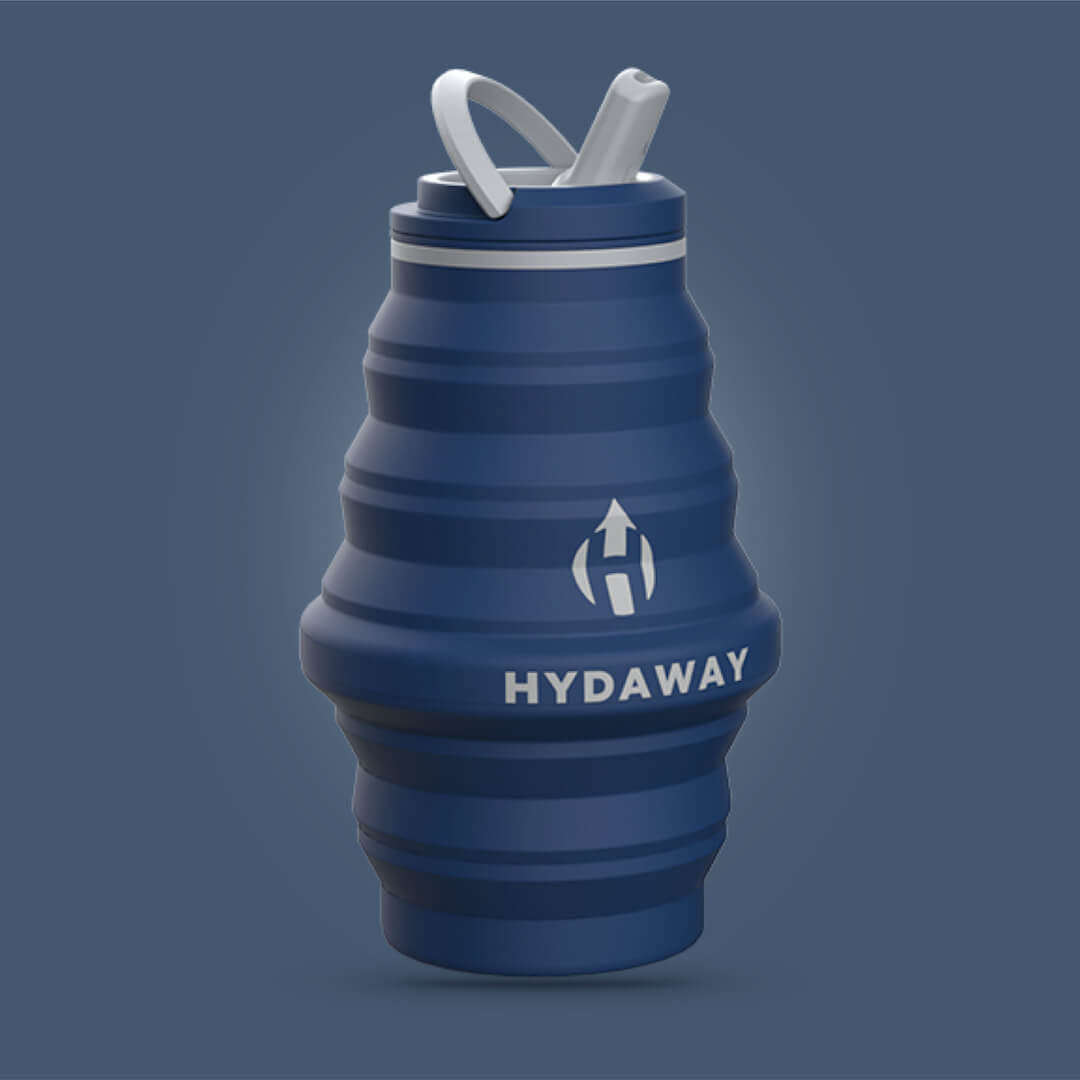
A huge part of this organizational philosophy is choosing gear that works smarter, not harder. Modern, collapsible items are total game-changers for saving precious space in your bins and packs. This is where products from HYDAWAY fit so perfectly into the system.
- Maximized Space: A full-size HYDAWAY water bottle collapses down to just over an inch thick. That frees up a ton of room in a backpack's side pocket or a tightly packed car—space you can now use for an extra layer or your favorite camp snack.
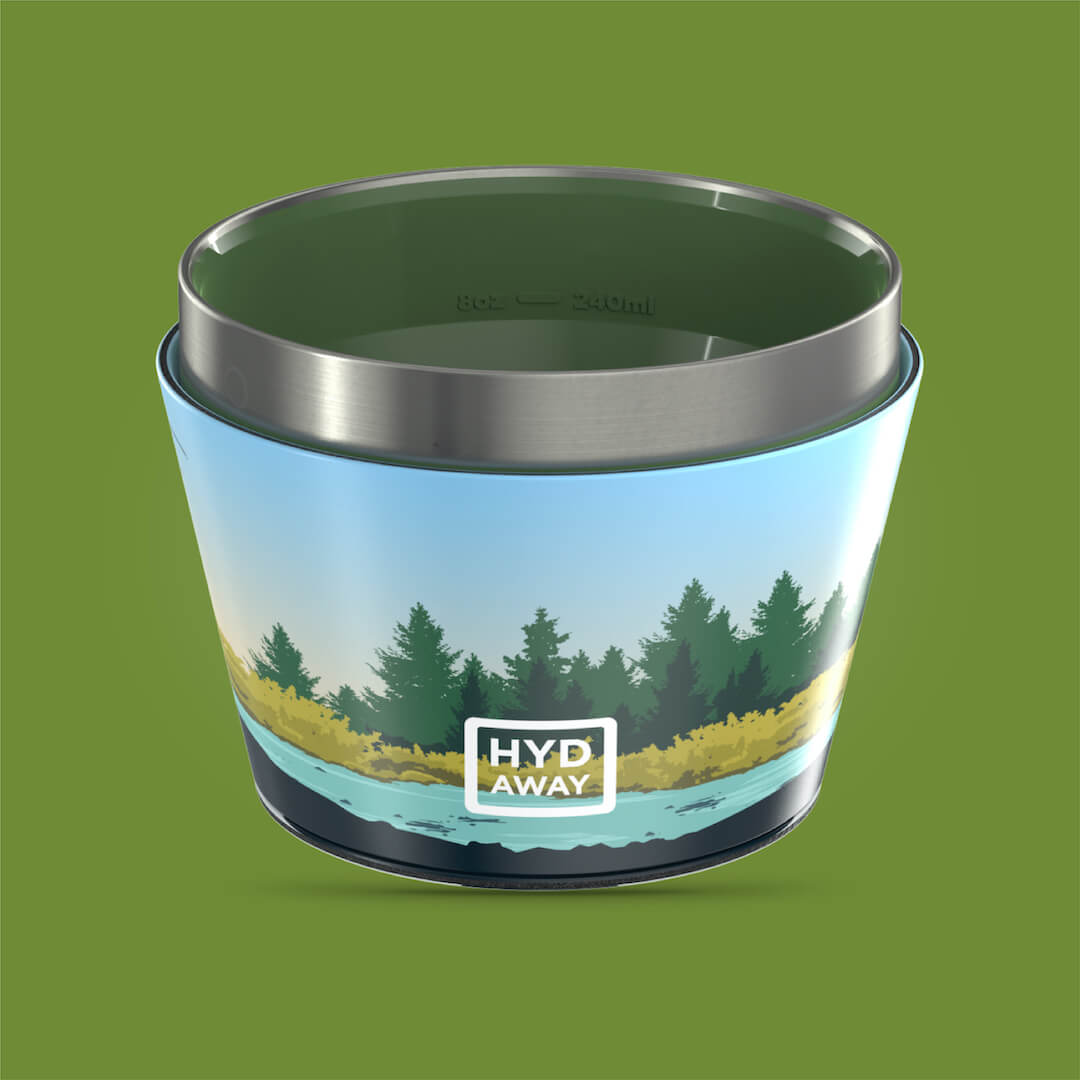
- Reduced Clutter: Instead of bulky plastic bowls rattling around in your kitchen kit, a set of HYDAWAY's collapsible travel bowls nests together, creating a quiet and compact food prep station. This means no more annoying clatter on bumpy roads and more room for actual food.
- Systematic Packing: When you know your essential hydration and dinnerware take up almost no space, you can build much more efficient and lighter kits from the start. A HYDAWAY bottle gives you 25oz of hydration when you need it and disappears when you don't, making it a no-brainer for any packing list.
By integrating smart, packable items, you don’t have to choose between being prepared and being overloaded. For anyone just starting out, our guide on the best camping gear for beginners is a great resource for selecting foundational items that pack down small. It’s all about shifting your mindset toward efficiency and readiness.
The Great Gear Sort: A Proven Decluttering System
The journey to organized camping never starts with buying new bins. It starts with a brutally honest look at what you already own. Before you can dream up the perfect system, you have to wade through the clutter.
This means pulling everything out. Every single stake, stove, and sleeping bag needs to come out of the garage, the back of the closet, or that forgotten corner of the basement. Pile it all in one place.
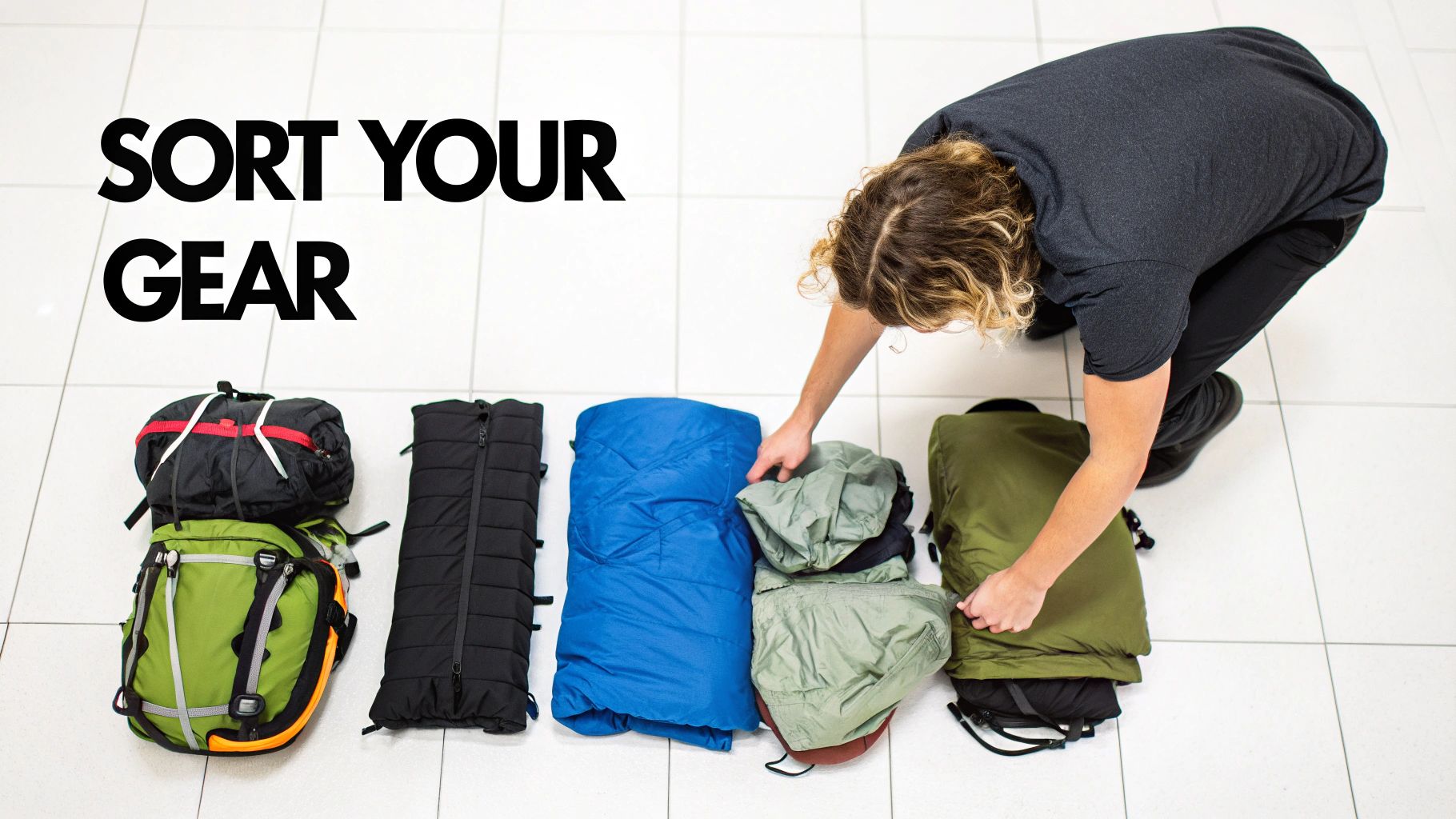
Yes, it feels overwhelming at first. But this chaos forces you to confront the reality of your collection. Once it’s all laid out, the real work can begin.
Create Four Distinct Piles
To make this less painful, give every single item a home in one of four categories. This is a non-negotiable step and the true foundation of an organized gear library.
- Keep: This is for the gear you actually use. If it’s in good shape and you've used it in the last year or two, it’s a keeper. Be honest—if you haven't touched that weird spork-trowel combo you bought at an outdoor expo, it probably doesn't belong here.
- Repair: This pile is for old friends that need a little TLC. That jacket with the finicky zipper, the tent with a pinhole tear, or the sleeping pad with that infuriatingly slow leak. Many brands now offer repair kits or services, making this pile more viable than ever.
- Donate/Sell: Got functional gear you’ve outgrown? That extra two-person tent from before you had kids? The ultralight stove you upgraded from last season? List it on a gear-swap site or donate it to a local scout troop.
- Trash: Time to say goodbye. This is for anything broken beyond repair, unsafe, or just plain obsolete. Think delaminated rain jackets that are more sponge than shell, expired fuel canisters, or hopelessly bent tent poles.
This audit is more than just tidying up. You're curating a reliable, efficient kit that you can trust when you're miles from anywhere. It's also the perfect time to spot bulky items that could be replaced with smarter, space-saving alternatives. That rigid one-gallon water jug, for instance, can easily be swapped for a collapsible HYDAWAY Squishy Water Bottle that holds plenty of water at camp but packs down completely flat for the trip home.
Taking the time for a thorough gear sort is the single most important step. It prevents you from just organizing clutter and ensures every item in your kit earns its place. This foundational work makes every future packing session faster and more efficient.
The need for smart organization has never been greater. The global camping equipment market was valued at USD 17.6 billion in 2024 and is only getting bigger, meaning our gear closets are getting more crowded. To combat this, the pros sort everything by function—kitchen, shelter, sleeping—and use visual cues like color-coded bags to make packing and setup a breeze. You can check out more market insights on the growth of outdoor recreation in IMARC Group's latest report. This initial sort is your first move toward that level of efficiency.
So, you’ve sorted through your gear, and what's left is the good stuff—the equipment you actually use and trust. Fantastic. Now, let’s turn that pile into a lightning-fast packing system. This is where we stop thinking about individual items and start building dedicated, modular kits.
Imagine this: no more hunting for a headlamp or your favorite camp mug minutes before you’re supposed to leave. By creating a system of grab-and-go kits, you kill that frantic last-minute search. You’ll just know everything you need is ready to roll.
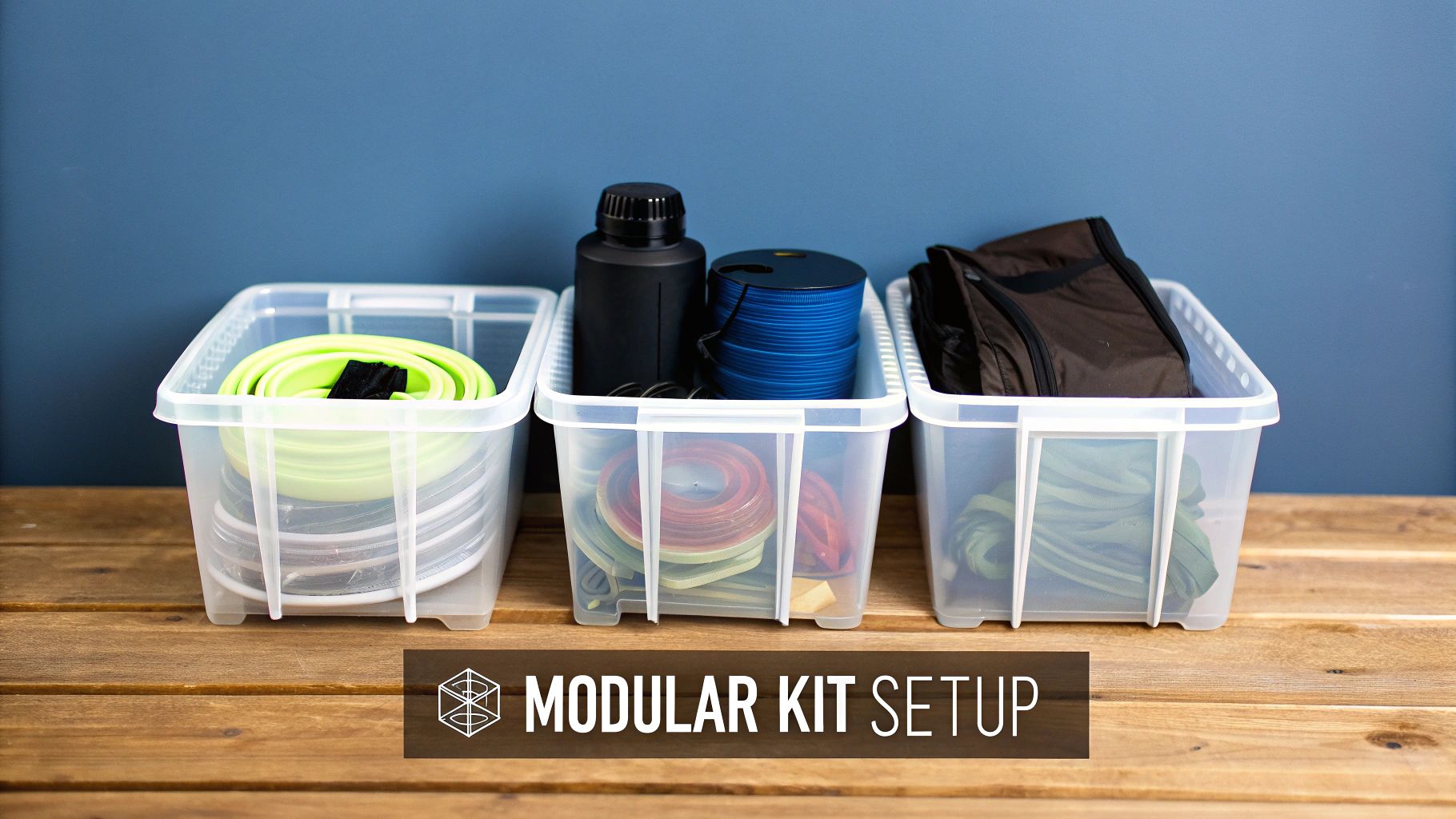
The Core Four Camping Modules
I recommend starting with four primary modules. Think of these as the foundational building blocks for pretty much any camping trip. Using clear plastic bins or even just some durable, color-coded bags makes it incredibly easy to see what you have at a glance.
1. The Kitchen Kit
This is the heart of your camp, right? It’s usually the first bin you open and the last one you put away. The goal here is a completely self-sufficient cooking setup that you never have to raid from your home kitchen again.
- What to Include: A dedicated camp stove, fuel, pots, pans, utensils, plates, bowls, mugs, a cutting board, knives, a can opener, soap, a sponge, and a small spice kit.
- Space-Saving Tip: This is where collapsible gear is a game-changer. A HYDAWAY Camp Bowl packs down to less than an inch thick, freeing up critical space that bulky plastic or metal bowls would hog. Throw in a HYDAWAY Squishy Water Bottle for a compact water source that practically disappears when it's empty. This means more room for food or other kitchen essentials.
2. The Shelter and Sleep System
This module is all about a comfortable night's sleep. Keep everything together in a large, dedicated duffel bag or a specific bin so you can get your sleeping quarters set up fast when you arrive at camp.
- What to Include: Your tent (with all its poles and stakes!), sleeping bags, sleeping pads or an air mattress, pillows, and a small pump if you need one.
- Best Practice: After every trip, make absolutely sure your tent and sleeping bags are completely dry before you repack them. It's the only way to prevent mold and mildew from ruining your gear. A practical way to do this is to hang them over a railing in your garage or a dry spot indoors for a day or two.
Essentials and Clothing Modules
With your kitchen and shelter sorted, the next two kits cover personal needs and safety. These are smaller, more specialized modules that round out your grab-and-go system perfectly.
3. First Aid and Essentials Pouch
This small but mighty kit holds your "ten essentials" for safety and navigation. Keep it in a brightly colored, waterproof pouch. That way, it’s easy to spot in an emergency and simple to transfer from your car camping bin to your daypack.
- What to Include: A solid first-aid kit, headlamps with fresh batteries, a multi-tool, navigation tools (map and compass, or a GPS), sun protection, fire starters, and an emergency blanket.
4. The Clothing Module
Instead of a bin, I've found packing cubes work best for this. Designate different colored cubes for different clothing—one for base layers, one for socks and underwear, one for mid-layers, and so on. This simple trick keeps your duffel bag or backpack from exploding into chaos.
The beauty of this modular system is how adaptable it is. For a big car camping trip, you grab all four modules. For a lightweight backpacking weekend, you just pull specific items from each kit—like your small stove from the Kitchen Kit, your tent from the Shelter System, and your essentials pouch. It's that simple.
As you build out your kits, you'll start to see what works and what doesn't. It's always a good idea to check out guides on the best camping gadgets to find new, efficient items that can make your setup even slicker.
Packing Strategies for Different Camping Styles
Once you have your modular kits built, the real fun begins: adapting them to whatever adventure is calling your name. Let’s be real, organizing camping gear isn’t a one-size-fits-all deal. A cushy weekend car camping trip and a grueling multi-day backpacking trek are two totally different animals, and they demand completely different packing strategies.
The beauty of this system is that you’re not reinventing the wheel every time you head out. Instead of starting from a chaotic pile of gear scattered across the living room floor, you’re starting from a place of order. You just need to pull the right items from your pre-built kits.
For the Car Camper: Maximizing Space and Comfort
Car camping is all about leaning into the luxury of extra space. You don't have to count every single ounce, so why not bring along the gear that makes life a little sweeter? Think two-burner stoves, a thick, dreamy sleeping pad, or even your favorite pillow from home.
Your modular bin system is king here. Just grab your Kitchen Kit, your Shelter & Sleep System bin, and your Essentials Pouch and load them straight into the trunk. Since you've got room to spare, you can even pack a dedicated "comfort" bin with goodies like camp chairs, a hammock, and a few lanterns for that perfect evening glow.
For the Backpacker: Every Ounce Counts
Backpacking completely flips the script. Suddenly, weight and volume are your biggest enemies. This is where your modular system truly shines. You’re obviously not taking the whole kitchen bin, but you can cherry-pick the essentials: your ultralight stove, a single pot, and a trusty spork.
How you distribute that weight in your pack is everything. This is especially true for backpacking, which now leads revenue in the booming global camping market. With personal use making up 76.72% of that market, knowing how to pack smart is crucial. Following the simple 'weight distribution rule'—packing heavy items like food and water low and close to your spine—can cut down on fatigue by a whopping 20-30%. It’s a game-changer.
A few more tips for the trail:
- Go for Multi-Use Gear: This is where your HYDAWAY bottle becomes the MVP. It keeps you hydrated on the trail and collapses to practically nothing when it’s empty, saving precious pack space for a rain jacket or extra snacks.
- Embrace Compression Sacks: These are non-negotiable for your sleeping bag and clothes. You'll be amazed at how much volume they can shrink.
- Be Ruthless: If an item doesn't serve a critical safety or comfort function, it stays home. No exceptions.
For the Vanlifer: Living Small and Smart
Vanlife is the ultimate masterclass in long-term organization within a tiny footprint. Clutter is the absolute enemy, so every single item needs a designated home. Your best friends are built-in drawers, smartly placed cabinets, and anything that takes advantage of vertical space.
Your modular kits can be unpacked and integrated directly into these spots. Your kitchen gear slides into its own drawer, and your clothing cubes fit perfectly onto a shelf. The goal is to have almost nothing loose. A collapsible HYDAWAY bowl is perfect for this lifestyle—use it for a meal, then flatten it to slide into a slim drawer, keeping your limited counter space clear and tidy. For more ideas on outfitting a mobile cook space, check out our guide on creating the perfect camping kitchen setup.
For the Family Camper: Juggling Multiple Needs
Throwing kids into the mix adds a whole new layer of organizational complexity. You're not just packing for yourself anymore; you're the gear manager for multiple people with very different needs (and attention spans).
The modular bin system is a total lifesaver here. Give each family member their own color-coded packing cube for clothes and a personal duffel for their sleeping bag and pillow. It teaches a little responsibility and, more importantly, makes it easy to find a clean pair of socks without tearing everything apart. Your kitchen kit will need to be scaled up, but the core idea is the same. And while they're geared toward moving, these pro packing and decluttering tricks have universal principles that can definitely streamline your camp prep.
Pro-tip for family camping: Create a dedicated "Kids' Fun Bin." Fill it with card games, nature scavenger hunt lists, headlamps for storytelling, and special snacks. Keeping them happy and engaged makes the entire trip smoother for everyone.
Smart Storage Solutions for Your Gear at Home
Your whole organization system lives or dies by your post-trip routine. Let's be honest, we've all been there—dumping everything in a corner of the garage until the next adventure. It’s a recipe for damaged gear and a seriously stressful packing day.
Proper at-home storage isn't just about being tidy; it's about protecting your investment and keeping those modular kits ready to grab and go. The goal is to create a dedicated “camping corner,” whether you've got a spacious garage or just a single closet. This zone keeps your gear clean, dry, and organized, putting an end to that frantic, last-minute search for a missing tent pole.
Creating Your Gear Hub
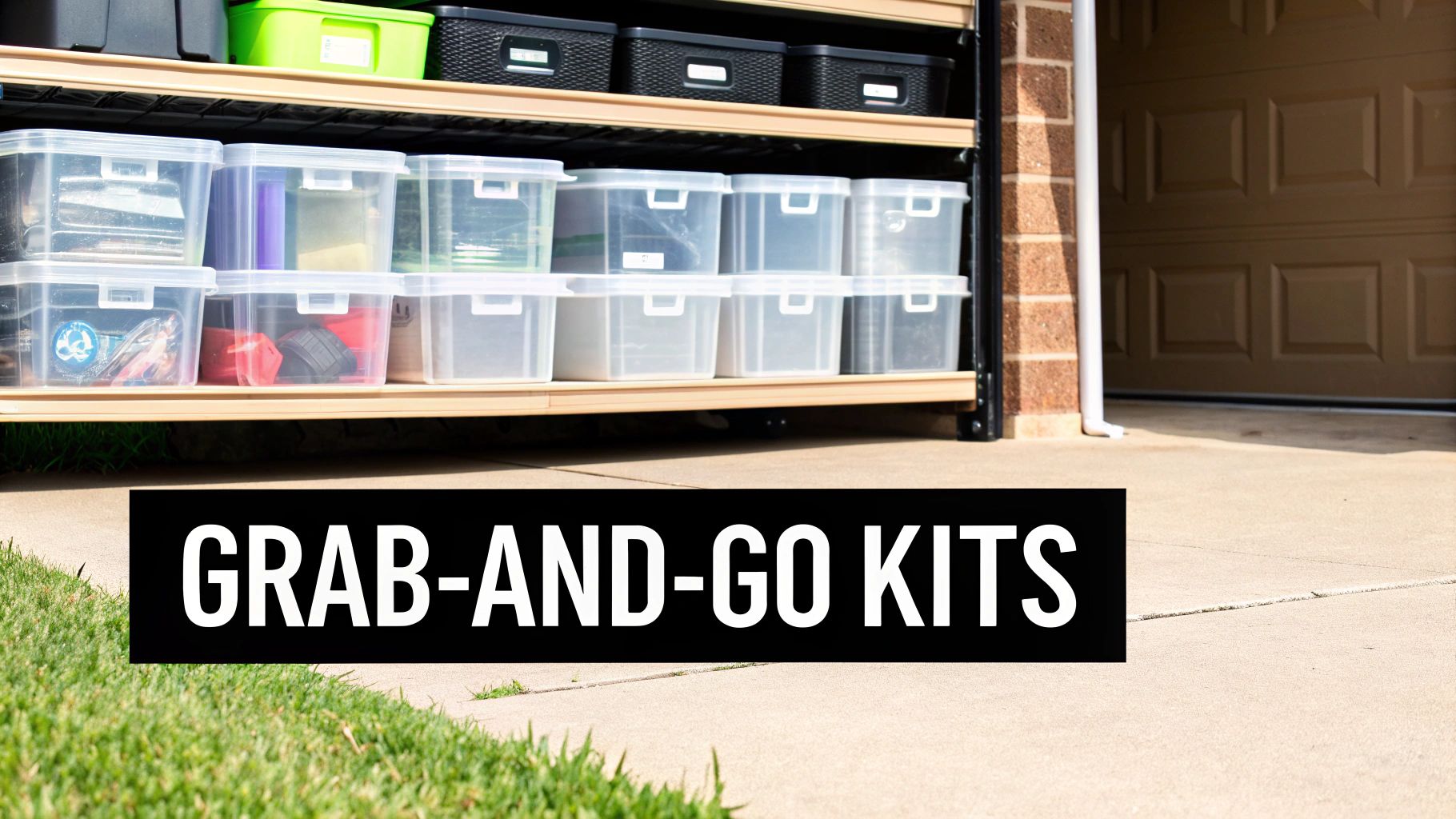
The best way to organize camping gear at home is to think vertically. Shelving units are a game-changer for holding your labeled, stackable bins. This simple trick gets everything off the floor, safe from moisture, and makes it easy to see what you have at a glance.
A pegboard is another fantastic tool for a gear hub. It’s perfect for hanging those awkward items that don’t fit well in bins, like camp chairs, backpacks, and trekking poles. This also keeps them aired out and prevents them from becoming a tangled mess.
If you're working with a smaller area, maximizing vertical space is even more critical. Our guide on how to organize small spaces has a ton of clever ideas you can adapt for your gear closet.
Essential Long-Term Storage Practices
Improper storage can ruin expensive gear faster than a surprise hailstorm. Certain items need specific care to make sure they perform trip after trip. Skipping these steps can lead to costly replacements and, worse, gear failure when you're counting on it most.
Here are the non-negotiables for taking care of your gear between trips:
- Sleeping Bags: Never store a sleeping bag stuffed into its tiny compression sack. This crushes the insulation over time, permanently wrecking its loft and warmth. Instead, keep it in the large, breathable mesh or cotton sack it came with so it can breathe.
- Tents: Before you even think about packing it away, make sure your tent is 100% clean and bone dry. Even a tiny bit of dampness can lead to mildew, which will destroy the fabric's waterproof coating and make your tent smell awful. Hang it inside or in a shady spot until it's completely dry.
- Electronics: Pop the batteries out of your headlamps, GPS devices, and lanterns. This prevents battery corrosion that can completely ruin the electronics while they sit in storage.
- Collapsible Gear: Make sure items like your HYDAWAY bottles and bowls are totally dry before collapsing and storing them. This prevents any trapped moisture and keeps them fresh and ready for your next outing.
This decision tree is a great way to visualize how different trips influence your packing choices.
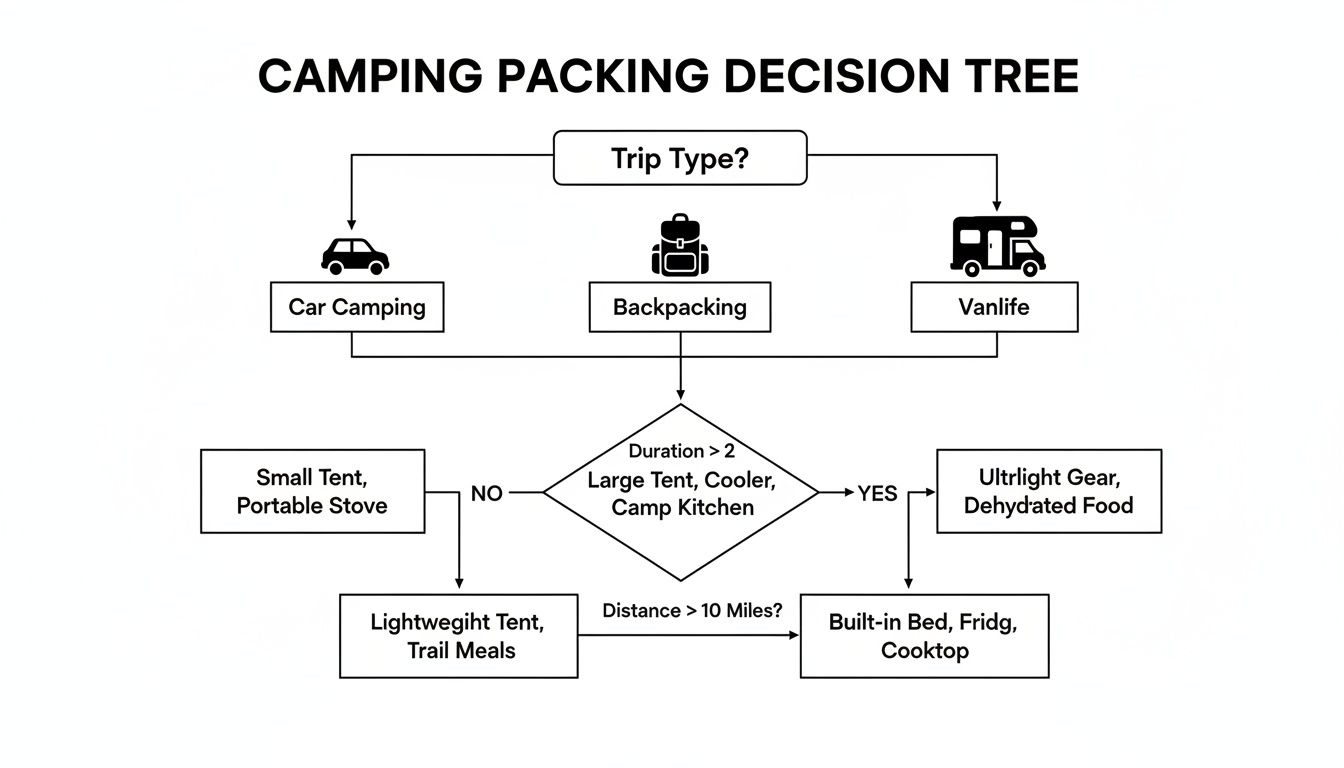
The key takeaway here is that your core kits serve as the foundation. From there, you just customize based on the specific demands of your next adventure. By mastering these simple storage habits, you make sure your gear is always in peak condition and ready for a spontaneous trip whenever the mood strikes.
A Few Common Questions We Hear
Even with the best system in place, some questions always seem to pop up. Trust me, how you handle these little details is often the difference between a system that works and one that just creates more work. Let’s dig into some of the most common challenges campers run into.
What Is the Best Way to Store a Sleeping Bag?
This is a big one, especially since a good sleeping bag is a serious investment. The absolute best way to store your bag is uncompressed, hanging in a closet or laid out under a bed in a large, breathable storage sack—not the little stuff sack you cram it into on the trail.
When you leave it compressed for months, you're crushing the insulation (this applies to both down and synthetic fill). That damage is permanent, and it kills the bag's ability to loft up and keep you warm. Find a cool, dry spot for it, definitely not a damp basement or a sweltering attic.
How Can I Organize My Camp Kitchen on a Budget?
You absolutely do not need a decked-out, expensive chuck box to get your camp kitchen in order. Honestly, a simple, sturdy plastic bin with a lid is one of the most effective and affordable ways to start.
Get creative inside the bin. Use old take-out containers or small cardboard boxes to keep smaller things like spices, utensils, and lighters from rattling around. A reusable grocery bag is perfect for corralling your pots and pans. The whole point is just to keep everything related to cooking in one spot. This is also where a space-saver like the HYDAWAY Camp Bowl really shines, since it flattens down and leaves a ton of room for other gear.
Here's the most important tip I can give anyone feeling buried in gear: just start small. Don't try to organize everything in one weekend. Pick one area, like your 'Sleep System,' and get it perfect. Next week, you can tackle the 'Kitchen Kit.' When you break it down like that, the whole process feels so much more manageable.
Should I Really Unpack Everything After Every Single Trip?
Yes. 100% yes. This is a non-negotiable habit if you want your gear to last.
At the bare minimum, you have to unpack, clean, and thoroughly dry anything that got wet or dirty. I’m talking about your tent, rain gear, and cooking stuff. This one step is your best defense against destructive mold, mildew, and rust.
It’s also the perfect time to restock your kits for the next adventure. Refill that fuel canister, check your first-aid supplies, and top off any non-perishable snacks. Taking 30 minutes to do this right after a trip will save you hours of frantic packing and stress before the next one. This kind of discipline is becoming even more crucial as technology finds its way into our outdoor prep. In fact, 35% of U.S. recreators now use digital tools like packing apps, which can cut camp setup time by 40%. You can dive deeper into these market trends and what they mean for campers in this detailed industry report.
With a solid organizational system and smart, packable gear from HYDAWAY, you're always just minutes away from your next adventure. Shop the full collection of collapsible, space-saving gear at myhydaway.com and make packing stress a thing of the past.