


Compression Stuff Sack Guide to Smarter Packing

That packed-to-the-brim moment usually happens right before you need to leave. Your jacket won't fit. The sleeping bag turns into a stubborn loaf at the bottom of the pack. The zipper fights back. In Bend, I see this all the time with new backpackers, van campers, and travelers trying to make one bag do everything.
A common reaction is to stuff harder. That works for about thirty seconds.
A compression stuff sack is one of those pieces of gear that seems minor until you use it well. Then it changes how your whole bag works. It doesn't just hold gear. It reshapes bulky, soft items so they pack cleaner, ride better, and stop taking over the rest of your system.
That matters whether you're loading an internal-frame pack for an overnight in the Cascades, organizing bedding in a van, or trying to keep a personal-item travel setup from turning chaotic. Smart packing isn't about bringing less just to suffer. It's about creating room for what improves the trip, like water, food, layers, or a little breathing space so you're not unpacking the whole bag at every stop.
The End of Overstuffed Backpacks
A common scene at trailheads around Central Oregon goes like this. Someone has a solid kit, a good pack, and all the right intentions. Then they try to load a lofty sleeping bag, a puffy layer, spare clothes, and camp extras into a space that looked generous at home and suddenly feels tiny in the parking lot.
The issue usually isn't that they brought the wrong sleeping bag. It's that soft gear expands into every available inch, then creates dead space around itself. A loose sleeping bag at the bottom of a pack can waste more room than people realize, especially in an internal-frame backpack where shape matters almost as much as raw capacity.
That's where the compression stuff sack earns its keep. A standard stuff sack contains gear. A compression version turns that same gear into a denser, more manageable package. Historically, that shift came from adding a rigid lid and adjustable straps to the basic drawstring stuff sack, which let campers physically reduce the size of non-rigid contents like sleeping bags and clothing, especially for space-sensitive backpack use, as described in the history and design of stuff sacks.
What changes on the road or trail
Once bulky gear becomes one compact unit, the rest of your bag gets simpler.
- Backpackers gain usable space for food, layers, or a better cook setup.
- Van travelers get cleaner storage because bedding stops exploding across bins and corners.
- Carry-on travelers reduce clutter by turning soft clothing into one contained block instead of a pile of loose items.
Practical rule: If a soft item keeps shifting shape and stealing room from everything around it, it probably belongs in a compression stuff sack.
This is also where efficient travel starts to overlap with sustainable travel. When your kit packs smaller and cleaner, you're more likely to stick with one-bag habits, reuse the gear you already own, and avoid buying duplicate storage solutions for every kind of trip.
How a Compression Stuff Sack Works
A compression stuff sack is a specialized evolution of the basic stuff sack. The old-school version is just a drawstring bag for containing gear. The compression version adds structure and the ability so you can reduce packed volume, not just organize it. That distinction is what turned sleeping-bag storage into a real space-management tool, according to the stuff sack overview.
It resembles a small, soft-sided press. You load the sack with compressible gear, close it, and then use external straps to pull the top and bottom closer together. The air gets pushed out. The contents densify. The bundle becomes shorter, firmer, and easier to place inside a backpack or duffel.

The parts that matter
Most compression sacks rely on a few simple components working together:
- Sack body. This holds the gear and takes the main load.
- Drawstring closure. This seals the opening before compression starts.
- Protective lid. This spreads pressure across the top of the load.
- Compression straps. These provide the force that shrinks volume.
- Buckles and webbing. These let you tighten gradually and hold tension.
A plain stuff sack stops at containment. A compression stuff sack goes further by applying external pressure to non-rigid gear like sleeping bags, quilts, and clothing.
Why shape control matters
Good compression isn't just about making gear smaller. It's about making it pack better.
Granite Gear describes its Round Rock Solid Compression Sack as designed to compress sleeping bags and clothing to a “nearly rock solid” state, and says the geometry “evenly distributes the stress of compression and prevents bulging” on its product page for compression sack design. That's a useful design principle because uneven pressure creates awkward lumps that waste space and can stress seams.
A compact bundle isn't automatically a useful bundle. The best ones come out dense and uniform, not twisted or bulbous.
In practice, this is why cheap sacks sometimes disappoint. They may cinch down, but the load becomes a crooked cylinder that fits nowhere cleanly. A well-designed compression stuff sack gives you a stable shape you can slot into the bottom of a pack, stand upright in a bin, or nest beside harder items instead of fighting them.
Benefits for Modern Travelers and Adventurers
Space savings only matter if they change what you can do with your bag. That's the value. The useful question isn't whether a compression sack sounds efficient. It's whether it creates meaningful room in a backpack, van, or carry-on, which is the key tradeoff highlighted in this look at compression sack packability and efficiency.

For hikers and backpackers
On trail, every oddly shaped item has a cost. A sleeping bag that sprawls across the bottom of your pack can block food, water, and spare layers from fitting where they should. Compress that same insulation into a cleaner package, and the load becomes easier to balance.
That can also improve the rest of your packing system. If you're dialing in the full setup, a practical companion read is this best hydration backpack guide, especially if you're deciding how water carry and pack volume should work together.
A better-packed bag usually feels calmer to live out of. You open it less. You dig less. You stop repacking the same item three times a day.
For van life and road travel
Van storage punishes bulky bedding. Blankets and sleeping bags expand into cabinets, benches, and under-bed drawers unless you give them a defined shape. A compression stuff sack turns soft camp bedding into a repeatable unit you can stack, rotate, and put away quickly.
That sounds small until you've lived with gear in a tiny space for a week. Then it becomes the difference between a van that feels usable and one that feels like a laundry pile on wheels.
A short demo helps make that practical difference easier to see:
For one-bag and carry-on travelers
Travelers often assume compression gear is only for backpacking. It isn't. If your clothing tends to balloon inside a soft-sided bag, a compression stuff sack can turn sweaters, workout layers, or laundry into one contained block.
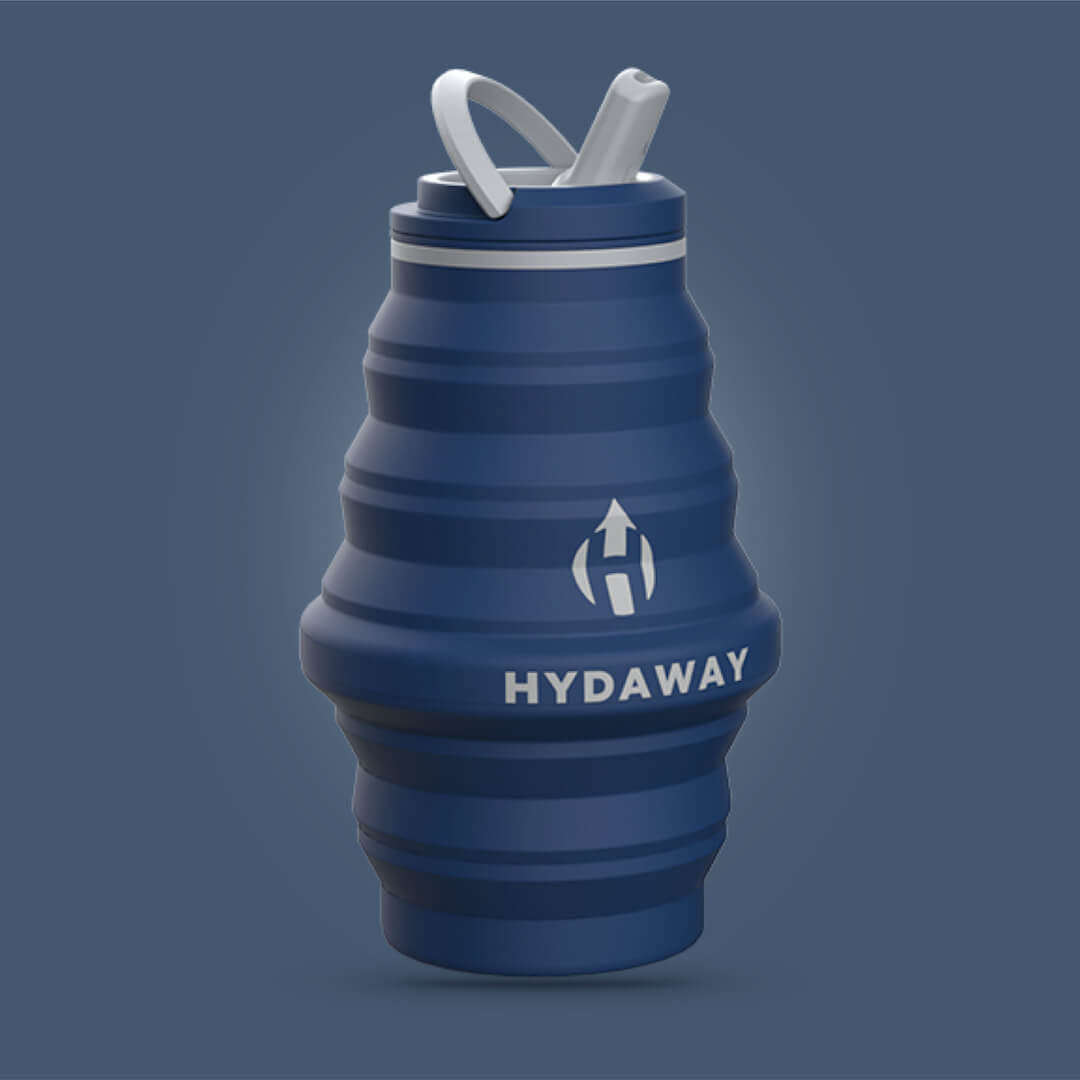
That can free room for the compact extras that make a trip easier. HYDAWAY fits neatly into that kind of setup because collapsible bottles, drinkware, and packs take up less space when they're not in use, which works well alongside compressed clothing or bedding in a tight carry-on.
The best packing upgrades don't add complexity. They remove it.
The catch is that not every item deserves aggressive compression. Bulky and soft is usually a good candidate. Fragile, structured, or moisture-sensitive gear usually isn't. That's where smart packing beats maximum packing.
How to Choose the Right Compression Sack
Buying the right compression stuff sack comes down to three things. Size, material, and shape. Most mistakes happen in the first category. People choose by bag length, not actual packed volume, then wonder why the sack is either impossible to load or too big to compress well.
Sea to Summit puts it plainly in its sleeping bag compression sack sizing guidance. Sizing is a volume-matching problem. Major brands commonly offer sizes like 10 L, 15 L, and 20 L, and the right move is to size for your gear's mildly compressed loft, then choose the smallest sack that doesn't require over-stuffing.

Get the size right first
For sleeping bags, insulation type and temperature rating are useful starting points. Popular Mechanics notes these common ranges in its compression sack sizing overview for sleeping bags.
| Insulation Type | Temperature Rating | Recommended Size (Liters) |
|---|---|---|
| Down | Summer (40°F) | 6–8 liters |
| Down | 3-season (20°F) | 8–12 liters |
| Down | Winter (0°F) | 14–20 liters |
| Down | Extreme cold below -20°F | 22–30 liters |
| Synthetic | Summer (40°F) | 9–13 liters |
| Synthetic | 3-season (20°F) | 16–20 liters |
| Synthetic | Winter (0°F) | 25–35 liters |
| Synthetic | Extreme cold below -20°F | similar extreme-weather capacities |
If you want a more detailed walkthrough focused on sleeping bags, HYDAWAY's article on what size stuff sack for a sleeping bag is a helpful companion.
Buy for the gear's packed volume, not your hope that it will somehow squeeze smaller than physics allows.
Material changes how the sack behaves
Material determines more than weight. It affects abrasion resistance, slipperiness inside the pack, and how much structure the sack keeps under tension.
Some buyers want a lightweight option for travel or occasional use. Others need a tougher sack for repeated trail miles and rough packing. The important distinction is to choose based on use, not marketing language.
- Lighter fabrics work well when low weight and small packed size matter most.
- Heavier fabrics usually tolerate rougher handling, repeated stuffing, and abrasion better.
- Water-resistant fabrics can help with splashes and damp conditions, but that doesn't make them waterproof.
- Waterproof-style designs are better when keeping contents dry is the priority, though that's a different use case from maximum compression.
Shape affects how it fits your bag
Most compression sacks are cylindrical. That shape works well in many backpacks, especially when loaded vertically or used at the bottom of the pack.
But not every bag likes a cylinder. Some travel packs and bins prefer flatter or squarer storage shapes because they stack with less wasted air around them.
A quick way to decide:
- Choose cylindrical if you're packing a sleeping bag into a hiking backpack.
- Choose a more rectangular or boxy organizer if you care more about suitcase-style organization than maximum cinch-down compression.
- Choose simple over specialized if your main goal is separating clothing categories rather than shrinking one bulky item.
The right compression sack should feel like it belongs to your larger packing system, not like a wrestling match you repeat every morning.
Packing Your Sack for Maximum Compression
Performance is often lost before the straps are even touched. Items are folded neatly, air becomes trapped in corners, creating a bundle that resists compression from the start. Soft gear packs better when you stuff it, not when you try to make it look tidy.
That matters most with sleeping bags, puffy layers, and loose clothing. These items fill gaps well when stuffed irregularly, and that helps the sack compress more evenly.

The best way to load and cinch
Use this sequence when you want the most compact, usable result:
- Start loose. Open the sack fully and loosen all straps before loading.
- Stuff from the bottom up. Push gear in a little at a time rather than rolling it into one fixed lump.
- Spread the fill. Pat down high spots so the load is roughly even before closing.
- Seal the top. Close the drawstring or top closure completely.
- Tighten in rotation. Cinch one strap a little, then move to the next. Keep alternating so the pressure stays balanced.
- Press out trapped air. As the straps tighten, use your hands or knees gently to help air escape.
- Stop when resistance rises sharply. If the straps are fighting hard, you're at the useful limit.
What works and what doesn't
A compression sack is great for transport. It's not a universal storage answer.
According to this video guidance on compression sacks and storage habits, there's a critical difference between what a compression sack can be used for and what it should be used for. It's useful for making sleeping bags and clothing smaller in transit, but down insulation shouldn't be stored compressed long-term because that can damage loft.
Use a compression sack for:
- Sleeping bags in transit
- Puffy clothing
- Extra layers
- Soft laundry on the return trip
Don't use a compression sack for:
- Long-term down storage
- Electronics
- Fragile toiletries
- Hard or sharp objects that create pressure points
If you're cranking the straps just to prove it can go smaller, you're usually past the useful point.
For the broader backpack-loading side of the equation, HYDAWAY's guide on how to pack a backpack pairs well with this technique because compression only helps if the rest of the bag is loaded in a sensible order.
One mistake I see often
People use compression sacks for wet gear when what they really need is moisture management. Damp laundry, rain layers, and muddy clothing may need separation, but not always hard compression. In those cases, a dry-bag-style solution or a simple dedicated laundry bag often makes more sense than squeezing everything into the smallest possible bundle.
Building Your Complete Space-Saving System
The smartest travelers don't rely on one miracle item. They build a system where each piece solves a specific problem. A compression stuff sack handles bulky soft goods. Other tools should handle hydration, food, organization, and daily carry without wasting space when they're empty.
That systems mindset mirrors good compression sack design. Granite Gear's design language emphasizes evenly distributing the stress of compression to prevent bulging, which creates a denser, more uniform cylinder and improves overall packability on its compression sack engineering page. The same principle works across your whole kit. Every item should cooperate with the others.
Think in roles, not products
A clean packing system usually includes a few distinct jobs:
- Compression for soft bulk like sleeping bags, camp clothing, and bedding
- Protection for sensitive gear like electronics or important documents
- Organization for small essentials so cables, toiletries, and first aid don't disappear
- Pack-flat utility items that expand only when you need them
This is why efficient travel feels easier, not harsher. You're not trying to crush every object into submission. You're assigning the right container to the right category.
Why this matters beyond the trail
The same logic helps digital nomads, road trippers, and remote workers. Physical clutter and digital clutter create the same kind of friction. If you work while traveling, this practical guide to managing large files for remote work is a useful parallel. Compression works best when it's part of a larger system, not a one-off fix.
For travel gear, that can mean pairing compressed clothing or bedding with flat-packing daily-carry items, reusable drinkware, and compact meal gear. The less dead space you carry, the easier it is to keep one bag functional from airport to trailhead to campground.
A good packing system also tends to be a more sustainable one. Reusable gear that packs small gets used more often. Multi-use items replace single-purpose clutter. You buy fewer duplicates because your core kit works across more kinds of trips.
If you're reworking your setup, HYDAWAY's guide on how to save space when packing is a practical next step. It fits the same idea: less bulk, less hassle, more room for the parts of travel that matter.
Good gear earns space in your bag twice. Once when you pack it, and again when it helps you avoid carrying something else.
A compression stuff sack won't fix sloppy packing by itself. But inside a thoughtful system, it does something valuable. It turns chaos into shape, and shape into usable room.
If you want a travel kit built around compact, reusable gear, take a look at HYDAWAY. Their fold-flat bottles, drinkware, dinnerware, and packable accessories fit naturally into a carry-less, do-more approach to travel.