


What to Bring on a Day Hike: A Quick Essential Guide

Figuring out what to bring on a day hike really comes down to one simple idea: hope for the best, but pack for the worst. A beautiful, sunny trail can throw a curveball at you in minutes, and having the right gear is your best insurance policy. The foundation for any smart packing list is the classic "Ten Essentials," a time-tested system that covers everything from navigation and safety to hydration and shelter.
Unpacking the Ten Essentials for a Day Hike
Think of your day pack not just as a bag for snacks and water, but as your personal toolkit for staying safe and comfortable on the trail. Every single item needs to earn its spot.
This mindset is more important than ever. The global hiking gear market is currently valued at around USD 6.7 billion and is projected to skyrocket by 2034, all because hikers are demanding smarter, lighter, and more durable equipment. Carrying compact, high-performing gear isn't just a trend anymore—it's the new standard for a great day outdoors.
To make packing a breeze, let's break down the must-have items every hiker should carry, starting with the absolute essentials.
The Core Safety System: The Ten Essentials
The Ten Essentials aren't just a random list; they're a complete system designed to get you through an emergency. The items are grouped into categories to make sure you're covered, whether you've taken a wrong turn or are dealing with a scraped knee.
The real goal here is self-sufficiency. Each of the "essentials" is a direct solution to a potential problem, making sure you can handle things yourself if your hike doesn't go quite as planned.
These items are non-negotiable, no matter how short or easy the trail seems.
To give you a quick overview, here are the core safety items every day hiker should have in their pack.
The Ten Essentials At a Glance
| Essential Category | Why You Need It |
|---|---|
| Navigation | Your phone can die. A physical map and compass are foolproof backups to find your way. |
| Headlamp | An unexpected delay could have you hiking in the dark. A light source is critical for safety. |
| Sun Protection | To prevent sunburn, heat exhaustion, and long-term skin damage on exposed trails. |
| First-Aid | For treating blisters, cuts, and scrapes on the spot before they become bigger problems. |
| Knife/Multi-tool | Incredibly versatile for gear repair, food prep, and countless other small tasks. |
| Fire | A reliable way to start a fire for warmth or signaling in an emergency situation. |
| Shelter | An emergency blanket or bivy provides critical protection from wind and rain if you get stranded. |
| Extra Food | A day's worth of extra, non-perishable food in case your hike takes longer than expected. |
| Extra Water | Essential for staying hydrated. Always carry more than you think you'll need. |
| Extra Clothes | An extra insulating layer can be a lifesaver if the temperature drops unexpectedly. |
Think of this table as your ultimate "don't-leave-home-without-it" checklist for hitting the trail safely.
A Closer Look at the Essentials
Let's dig into a few of the most critical categories from that list:
- Navigation: You'll want a map and compass, plus a GPS device or a reliable app on your phone. But please, don't just rely on electronics. A physical map and the knowledge to use it are your most dependable backup.
- Headlamp: Even if you plan on being back long before sunset, a wrong turn or a slower-than-expected pace can leave you hiking in the dark. A good headlamp keeps your hands free and the trail visible. It’s a must.
- Sun Protection: This is a big one. Pack sunglasses, a good hat, and broad-spectrum sunscreen. Sunburn and heat exhaustion can ruin a hike and pose a serious health risk.
- First-Aid Kit: You can buy a pre-made kit or build your own. Make sure it includes the basics like blister treatment (a hiker's best friend!), bandages of various sizes, antiseptic wipes, and some pain relievers. For more intense or remote hikes, you might even check out a comprehensive NZ Emergency Kit Checklist: Must-Have Communication and Survival Gear to see what else you could add.
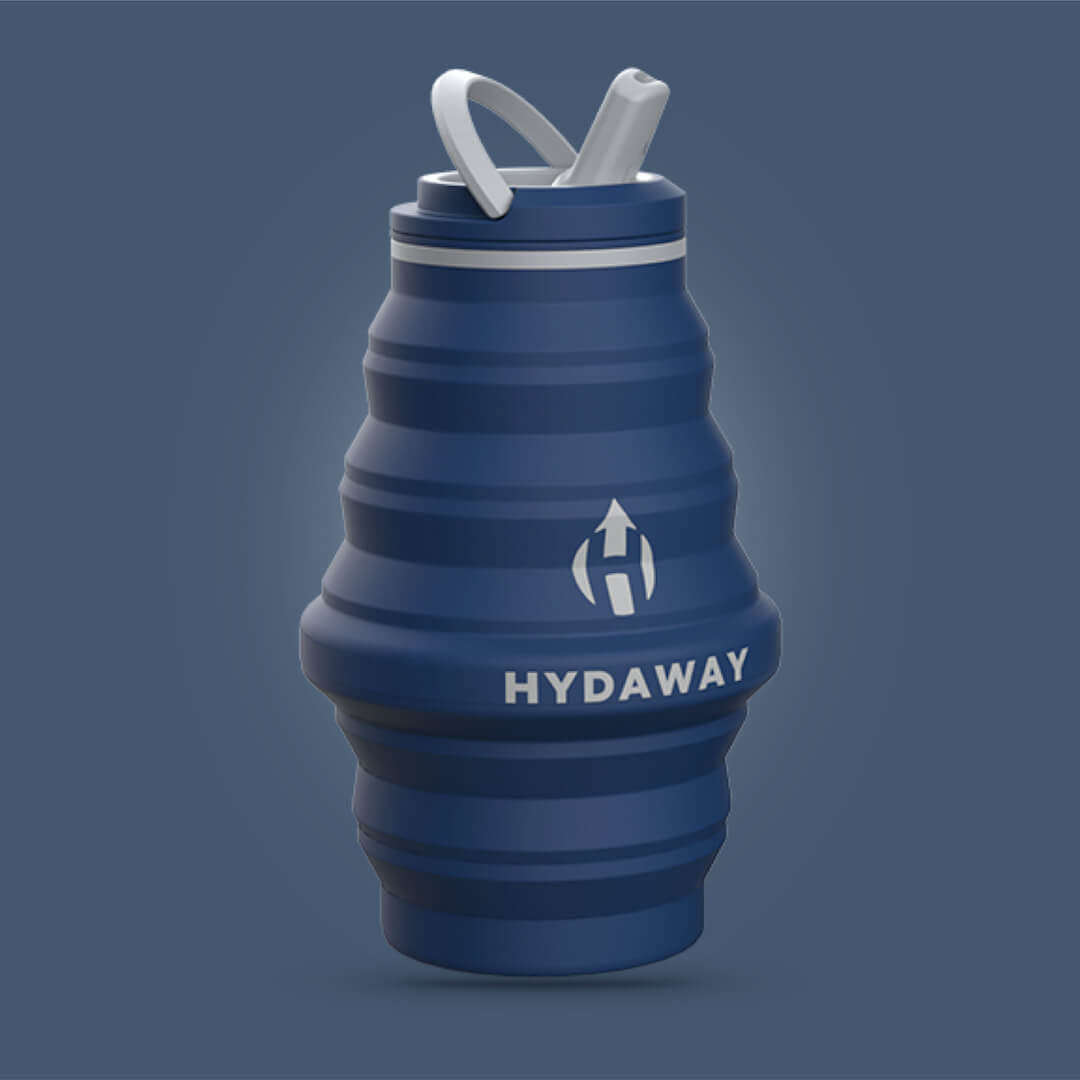
- Hydration: Staying hydrated is everything. Imagine your regular hard-sided water bottle taking up the same bulky space whether it’s full or empty. A smart, space-saving option like HYDAWAY’s collapsible bottles is perfect for day hikes. They hold plenty of water when you need them and then shrink down to almost nothing, freeing up precious pack space for the hike back to the car.
How to Layer Your Hiking Clothes for Any Weather
Your clothing is your first line of defense out on the trail. I like to think of it as my personal weather-control system. The secret isn't finding one perfect, do-it-all jacket, but learning how to use a flexible system of layers that all work together. When you get this right, you can handle a chilly morning start, a sweaty uphill climb, and a windy summit—all in the same day.
Think of your hiking outfit as having three distinct jobs, each handled by a separate layer. Getting this system down is what turns a potentially miserable, shiver-fest of a day into a comfortable adventure. When you're pulling your clothes together, you have to think about how you'll adapt. For more ideas, you can find some great packing tips and waterproof gear suggestions for varying outdoor conditions that apply to almost any outdoor trip.
The Three Essential Layers
Every piece of clothing you pull on should have a purpose. Understanding how they all function together is the real key to all-day comfort on the trail.
- Base Layer (The Wicking Layer): This is what's right up against your skin. Its main job isn't to be warm, but to pull sweat away from your body to keep you dry. Look for materials like merino wool or synthetics like polyester. Avoid cotton at all costs. Seriously. It just soaks up moisture and will leave you dangerously cold once you stop moving and the sweat starts to cool.
- Mid Layer (The Insulating Layer): This is your warmth. It's designed to trap your body heat and keep you cozy. Fleece jackets, puffy down or synthetic vests, and wool sweaters are all classic mid-layers. How thick this layer needs to be depends entirely on the forecast for the day.
- Outer Shell (The Protection Layer): This is your armor against the elements. A good outer shell should be waterproof (or at least water-resistant) and windproof. It protects your other layers from getting soaked and, just as importantly, shields you from wind, which can strip away your body heat incredibly fast.
The whole point of layering isn't just about staying warm—it's about regulating your temperature. You'll be adding and removing layers all day as you work harder or as the weather shifts. A good rule of thumb is to start your hike feeling just a little bit cool, because you'll warm up in a hurry once you get moving.
Beyond the Core Layers
That core three-layer system is vital, but a few key accessories are what really complete your weather-ready outfit. It's easy to forget about your head, hands, and feet, but they're absolutely crucial for your overall comfort and safety out there.
Getting your clothing system right is just as important as packing the right gear, which is where the time-tested "Ten Essentials" framework comes in.
This gives you a great visual breakdown of those core components—showing how things like navigation, safety, and shelter form the foundation of what's in your pack.
As the diagram shows, it's not just about the big gear; it's the foundational safety systems that truly prepare you for a day on the trail.
Just like you pack that essential gear, choosing the right accessories is totally non-negotiable. Good hiking socks made of wool or synthetics are your number one defense against blisters. A sun hat is a must for any exposed trail, while a warm beanie and gloves can be lifesavers in cold or windy conditions. When you combine a smart layering system with the right accessories, you'll be ready for pretty much anything the trail decides to throw at you.
Fueling Your Hike with Smart Food and Hydration
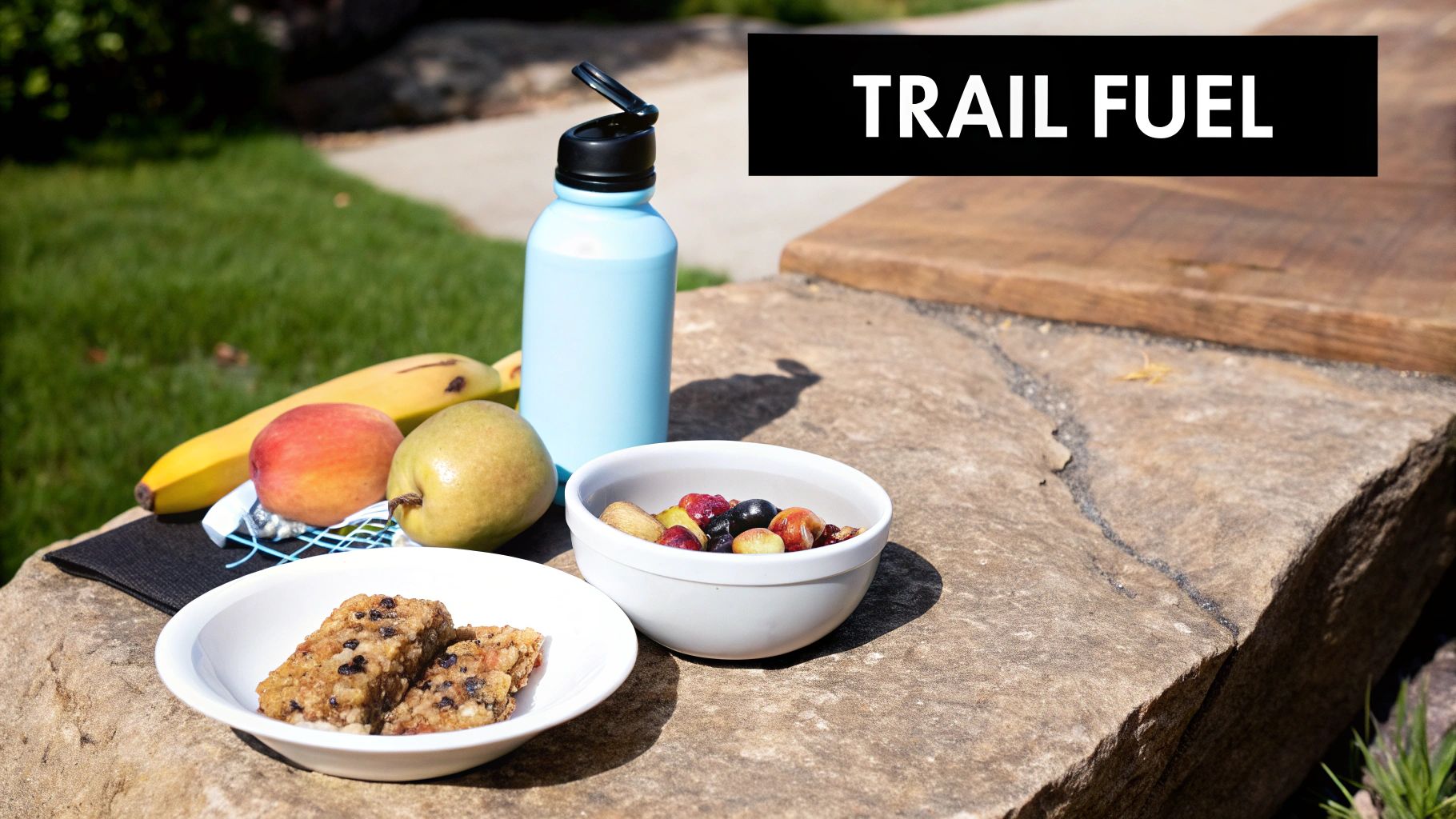
Think of your body as an engine. The food and water you bring are the high-octane fuel that keeps it running strong on the trail. Just like a car sputtering to a stop, neglecting your energy and hydration needs can turn a beautiful day outdoors into a real struggle.
The secret is packing smart. You want to strike that perfect balance between having enough fuel to power through and not weighing your pack down with a portable pantry. The goal is to bring nutrient-dense, easily packable foods that give you sustained energy for the miles ahead.
Choosing the Right Trail Snacks
When you're picking out trail food, your mantra should be "lightweight and high-energy." You're looking for snacks packed with complex carbs, healthy fats, and quality protein to keep your energy from crashing.
Here are a few trail-tested favorites that deliver a ton of power without taking up precious pack space:
- Trail Mix: It’s a classic for a reason. A good mix of nuts (almonds, walnuts), seeds (pumpkin, sunflower), and some dried fruit gives you the perfect trifecta of fats, protein, and quick-access carbs.
- Energy Bars or Gels: These are your grab-and-go fuel source. To avoid the dreaded sugar crash, look for bars made with whole-food ingredients instead of a bunch of synthetic sweeteners.
- Jerky: A fantastic source of lean protein. It helps your muscles recover and makes you feel full longer than you’d expect.
- Nut Butter Packets: These little single-serving packets are pure gold. They're an incredibly efficient way to get a dose of healthy fats and protein without any mess.
Pro Tip: Always, always pack more food than you think you’ll need. A wrong turn, an unexpectedly tough climb, or just burning more calories than you planned for can happen to anyone. That "extra" bar could be the one thing that gets you back to the car feeling good.
Staying Hydrated the Smart Way
Hydration is even more important than food out on the trail. Even mild dehydration can lead to fatigue, headaches, and fuzzy thinking—none of which you want when you're navigating a rocky path. A good rule of thumb is to sip about half a liter of water per hour of hiking, but listen to your body and drink more when it's hot or the trail is steep.
It's no surprise that the hiking gear market is a massive USD 25 billion industry, with a huge chunk of that going toward hydration systems. As Straits Research points out, hikers know that staying hydrated means better performance and less fatigue. Your water bottle isn't just a container; it's a critical piece of gear.
But for day hikers, bulk is the enemy. A traditional hard-sided bottle takes up the same amount of room in your pack whether it's full at the start of your hike or empty on the way back. This is where a little gear innovation goes a long way.
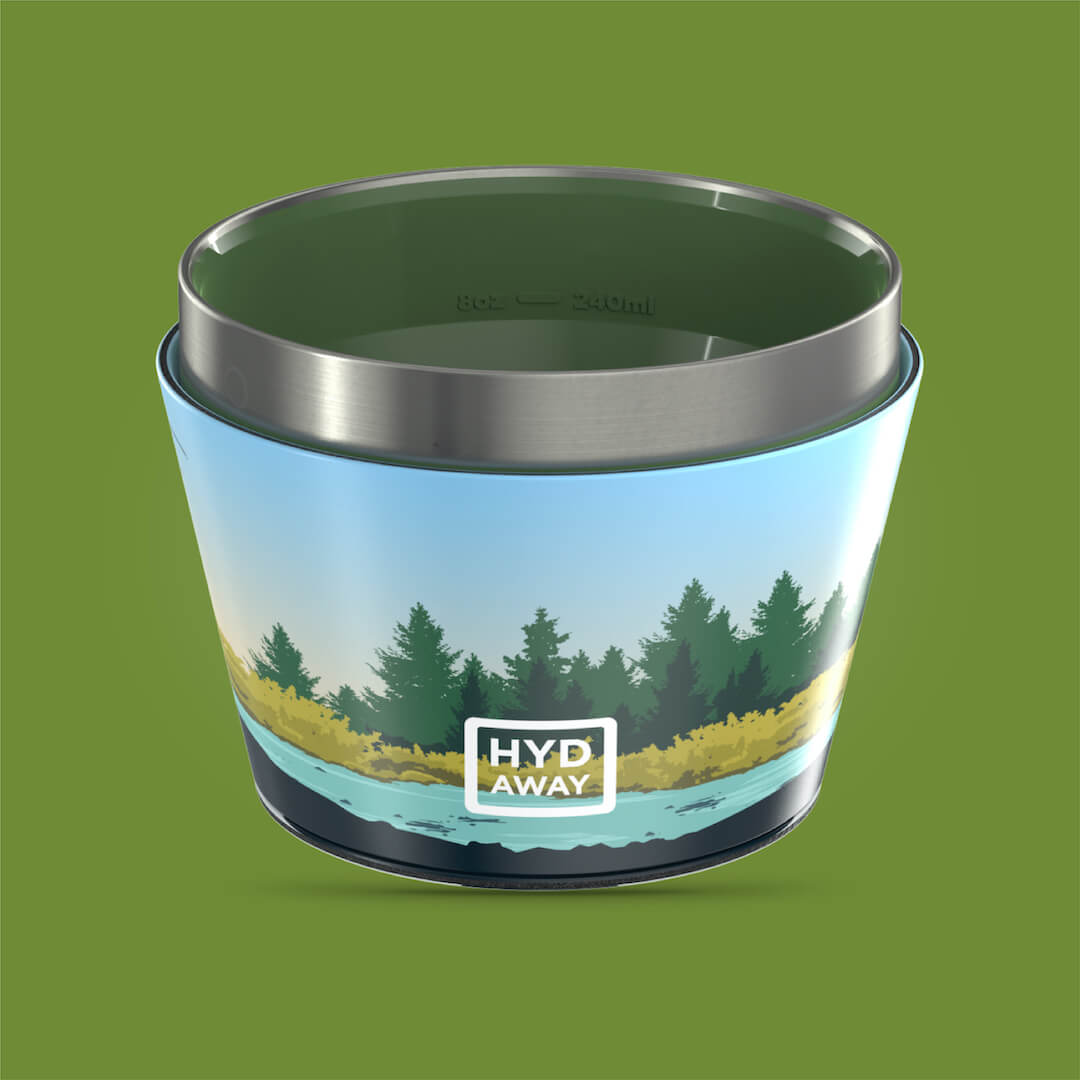
The HYDAWAY Collapsible Water Bottle is a game-changer. It holds plenty of water (up to 25oz) for your hike, but once you've drunk it all, it squishes down to just over an inch thick. Suddenly, you’ve got a ton of extra space in your pack for the trek back down. Pair it with a collapsible silicone food container from HYDAWAY, and you've got a complete, space-saving system for your trail fuel.
Navigating with Confidence and Staying Safe
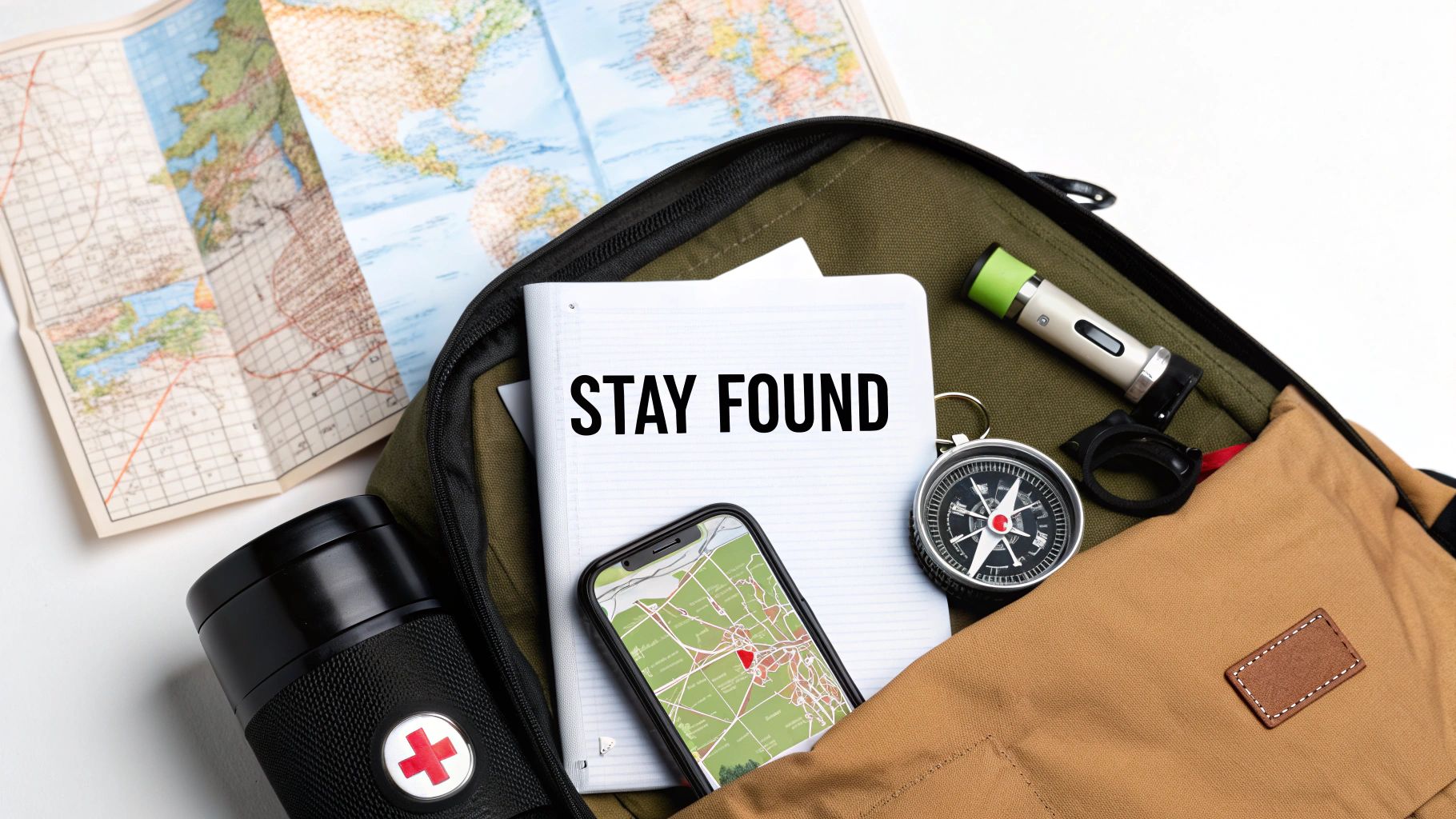
Even a trail you've walked a dozen times can throw a curveball. Being ready for the unexpected is what separates a casual walker from a truly prepared hiker. Safety and navigation aren't just for epic, multi-day treks; they're the bedrock of every single day hike, no matter how short.
The right tools are what turn a moment of potential panic into a totally solvable problem. You can see this shift in how people gear up, with a growing demand for GPS watches and portable chargers. Modern hikers know technology can be a huge asset—you can read more about these hiking gear equipment market trends to see how tech is shaping outdoor readiness.
This trend highlights a crucial point: your safety system should be layered, just like your clothing. Having a plan B isn't just a good idea—it’s essential.
Your Navigation Safety Net
Think of your navigation tools as a safety net with multiple layers. Your phone’s GPS is fantastic—it’s quick, convenient, and loaded with features. But relying on it alone is a classic rookie mistake.
A dead battery, a cracked screen, or a sudden dead zone can make your primary tool totally useless in an instant. This is exactly when old-school reliability becomes your best friend.
- Primary Tool (Digital): Use a trusted GPS app on your fully charged phone (like AllTrails or Gaia GPS) or a dedicated GPS device. These are perfect for real-time tracking and easy route-finding.
- Backup Tool (Analog): Always, always carry a physical map of the area and a compass. More importantly, you need to know the basics of how to use them together. This waterproof, battery-free system is your foolproof guarantee for staying found.
Here's a practical action step: before your next hike, download an offline map of the trail area in your favorite app. Also, find a 5-minute YouTube video on "how to use a compass with a map." This small prep makes your backup system a tool you can actually use, not just dead weight.
First Aid on the Trail
Your first-aid kit shouldn't be some bulky, generic box you bought ages ago. It needs to be a compact, personalized kit ready for the most common trail mishaps. Blisters, scrapes, and twisted ankles don't care if you're only two miles from the car.
Start with a pre-made hiking first-aid kit, then make it your own. Toss in more of what you use most (like extra blister pads) and any personal medications. The goal is to handle minor issues right on the spot, before they have a chance to ruin your hike.
A well-stocked first-aid kit is more than just a box of supplies; it's peace of mind in your pack. Knowing you can handle the small stuff allows you to focus on the trail ahead.
Building Your Personalized First-Aid Kit
Every hiker's needs are a little different, but this table provides a solid foundation for a kit that can handle the most common trailside troubles. Use it as a starting point and add personal items like an EpiPen or specific allergy medications.
| Item | Purpose | Recommended Quantity |
|---|---|---|
| Adhesive Bandages | For minor cuts and scrapes. | Assorted sizes, 10-15 total |
| Blister Treatment | Moleskin or gel pads. | 1 small sheet or 4-6 pads |
| Antiseptic Wipes | To clean wounds and prevent infection. | 5-6 individual wipes |
| Gauze Pads | For larger wounds or to apply pressure. | 2-4 sterile pads (various sizes) |
| Medical Tape | To secure gauze or wrap a sprain. | 1 small roll |
| Pain Relievers | Ibuprofen or acetaminophen. | 4-6 tablets |
| Antihistamine | For insect bites or allergic reactions. | 2-4 tablets (e.g., Benadryl) |
| Tweezers | For removing splinters or ticks. | 1 pair, fine-tipped |
| Emergency Whistle | To signal for help. | 1 per person |
Remember to check your kit before every season to replace any expired items and restock anything you've used. A little prep at home saves a lot of headaches on the trail.
Essential Safety Gear Beyond the Basics
A few other non-negotiables in your safety kit can be absolute lifesavers. These are the items that often seem like overkill—right up until the moment you desperately need them.
First, always pack a headlamp, even on a short afternoon hike. An unexpected delay or a wrong turn can quickly leave you trying to find your way in the dark. A headlamp keeps your hands free to hold trekking poles or check that map of yours.
Second, a simple multi-tool is invaluable. Whether you need to fix a broken backpack strap, cut a piece of medical tape, or open a stubborn package of trail mix, its utility is endless. It's a tiny tool that solves big problems, and packing one is a core part of what to bring on a day hike for total peace of mind.
Packing Smarter for Different Types of Trails
Let's be real: not all day hikes are created equal. Packing for a gentle two-hour loop through your local state park is a completely different ballgame than gearing up for a grueling, eight-hour mountain summit. The secret to a great hike isn't just what you bring, but knowing how to adapt your pack for the specific trail ahead. You want exactly what you need, without getting bogged down by a bunch of extra weight.
Think of it like dressing for an occasion—you wouldn't show up to a beach party in a tuxedo. In the same way, your hiking pack needs to be fine-tuned for the trail's length, difficulty, and whatever the weather decides to do that day. A short, easy hike might only call for a single water bottle and a granola bar, but a longer trek demands a whole lot more planning.
Short and Easy Hikes vs. Long and Strenuous Treks
For a quick outing—say, under three miles on a well-marked trail—you can keep your pack wonderfully minimal. Just focus on the absolute essentials: enough water, a snack, some sun protection, and your phone.
This is where lightweight, versatile gear really shines. A HYDAWAY collapsible bottle is perfect for these shorter trips; it’s a full-size bottle when you need it and squishes down to almost nothing when it's empty, so you can easily tuck it into a pocket or small bag. No more bulky, empty bottles rattling around in your pack.
On the flip side, a long, tough hike requires a much more serious approach. You'll need to scale up your supplies in a big way:
- More Water: Instead of one bottle, plan on carrying two, or bring a larger hydration reservoir.
- Extra Food: Pack a proper lunch plus several high-energy snacks. I always throw in an emergency bar, just in case.
- Additional Layers: A rain shell and an insulating mid-layer are no longer optional—they’re must-haves.
- Full First-Aid Kit: Your kit should be beefed up to handle more than just a blister or a scrape.
The goal is to match your gear to the challenge. Overpacking for a short hike is an annoyance, but underpacking for a long one can be genuinely dangerous. When the difficulty ramps up, always err on the side of caution.
Adjusting Your Pack for the Season
The season you're hiking in will completely change what goes into your pack. Your gear list for a hike in July will look wildly different from your list in January, even if you’re tackling the exact same trail.
For a summer hike, your top priorities are managing heat and sun exposure. That means packing extra water, maybe some electrolyte powders to replace what you sweat out, and being diligent about reapplying sunscreen. Lightweight, breathable clothing is your best friend.
Winter hiking, however, is all about staying warm and dry. This means adding some very specific gear to your pack:
- Insulated Layers: Think a puffy jacket and thermal base layers.
- Traction Devices: Microspikes or crampons are lifesavers on icy trails.
- Warm Accessories: Insulated gloves, a warm hat, and even a few chemical hand warmers can make a world of difference.
This mindset of adapting your gear is key to smart hiking, and it becomes even more critical for multi-day trips. You can explore a detailed ultralight camping gear list to see how seasoned backpackers meticulously cut weight while staying safe—a principle that every day hiker can learn from.
Adding Comfort and Convenience to Your Hike
Once you've got your safety and survival gear squared away, you can start thinking about the fun stuff—the items that make your day on the trail that much more enjoyable. These aren't life-or-death pieces of kit, but a few smart, lightweight additions can really transform a good hike into a great one.
Think about the physical toll of hiking. After a few miles, especially on the way back down, your knees can really start to feel it. That’s where trekking poles become an absolute game-changer. They help spread the load from your legs to your arms, which takes a ton of strain off your joints and gives you much better stability on tricky, uneven ground.
Smart Extras for the Modern Hiker
Let's face it, even in the woods, we're still connected. A few bits of tech and comfort items have pretty much become standard for most hikers, and for good reason. Keeping your phone charged and your skin protected are the small details that make a huge difference out there.
- Portable Power Bank: Your phone isn't just for snapping amazing summit photos; it’s your map, your GPS, and your emergency lifeline. A small, lightweight power bank is cheap insurance against being left with a dead battery when you need it most.
- Sunscreen and Insect Repellent: Nothing ruins the memory of a beautiful hike faster than a wicked sunburn or a dozen itchy bug bites. Always toss travel-sized bottles of both in your pack and don't forget to reapply.
The best 'nice-to-have' items are the ones that solve a common trail problem without adding a bunch of weight. You're aiming for maximum comfort with a minimal penalty.
This is also where versatile gear really gets a chance to shine. Stopping for a proper trailside lunch is one of the best parts of a hike, but lugging bulky, empty food containers back down the mountain is a drag. That’s where HYDAWAY’s packable and lightweight travel accessories, like their collapsible bowls, are perfect. They give you a sturdy, spill-proof way to enjoy your meal, and when you're done, they fold down flat. Just like that, you’ve got more space in your pack for the hike home.
Common Day Hiking Questions Answered
Still have a few things rattling around in your head before you hit the trail? Let's clear up some of the most common questions hikers ask about packing for a day trip.
How Heavy Should My Daypack Be?
This is a great question, and the answer is probably less than you think. A good rule of thumb is to keep your fully loaded daypack at or below 10% of your body weight.
For most people, that lands somewhere between 10 to 20 pounds. This is the sweet spot where you have everything you need to be safe and comfortable, but you’re not hauling so much weight that it turns a fun hike into a grueling slog.
Should I Really Bring a Map if I Have My Phone?
Yes. A thousand times, yes. Think of it this way: your phone is a fantastic tool, but it's fragile. Batteries die, screens crack, and cell service vanishes right when you need it most. It's just not something you want to bet your safety on.
A physical map and a simple compass are your unbreakable backup plan. They don't need charging, they can get wet, and they work every single time. It's a small bit of weight for a huge amount of peace of mind.
What’s the Most Forgotten Piece of Gear?
You'd be surprised, but it's almost always a headlamp or a flashlight. It makes sense—most of us don't plan on hiking in the dark.
But things happen. A trail takes longer than you expected, you take a wrong turn, or you just want to stay and watch a killer sunset. A reliable light source is one of the most critical safety items you can carry, ensuring you can find your way back to the car safely if the day gets away from you.
Don't let bulky gear dictate your adventure. With HYDAWAY's brilliantly designed collapsible water bottles and travel gear, you can stay hydrated and prepared while saving a ton of space in your pack. Check out the full collection to lighten your load and make your next hike the best one yet.