


Ultralight Water Filter: A Complete Buyer's Guide (2026)

Your bottle is getting light. The trail still has miles left. Down in the trees, a stream looks cold, clear, and perfect. Then the usual question hits: Can I trust it?
That moment is why the ultralight water filter matters so much. It is not just a gear purchase. It is the tool that turns uncertain water into a usable part of your route, your camp routine, and your margin for error.
Modern filters feel simple because a century of design work made them simple. The hard part now is not finding a filter. It is choosing one that still works well after trail use, not just on day one or in a product listing.
The Thirsty Hiker's Dilemma
I have seen this play out the same way on weekend hikes, bikepacking overnighters, and long travel days out of a van. Someone reaches a water source, kneels down, and hesitates. The creek looks clean. The map says water. The body says drink now. Experience says slow down.
Clear water is not the same as safe water. That gap between how water looks and what it carries is where a lot of bad backcountry decisions begin.
For a long time, portable treatment was clumsy. Before lightweight backcountry filters became common, people relied on bulkier systems, boiling, or chemical treatment. Early military approaches were especially awkward for portable travel.
How we got from bulky gear to pocket gear
The big leap came with the Katadyn Pocket Filter, developed in 1929 by Swiss professor Georg Alexander Krause. Outside reports that it marked the first ultralight backcountry water filter, used a ceramic element still in production nearly 100 years later as of 2026, and was roughly the size of a Maglite. That was a major shift from early 20th-century U.S. military filters, which were limited to no more than four feet high and 18 inches in diameter, making them unrealistic for portable use (Outside).
That history matters because it explains what today’s gear is trying to solve. We are no longer choosing between “safe” and “portable.” We are choosing between different forms of portable.
Why this still feels confusing
Many shoppers for an ultralight water filter compare weight first. That makes sense. Nobody wants dead weight in a pack.
But the better question is this: Will this filter still be usable when the trip gets messy? Silt, cold water, awkward refill spots, and a tired user at dusk expose weaknesses quickly. The right filter keeps the day moving. The wrong one turns every refill into a chore.
A good filter should disappear into your routine. If you start planning your day around babying it, the system is wrong for your trip.
That is why the smartest buyers look beyond “small and light.” They look at maintenance, compatibility, and how the whole water setup works in motion.
Decoding Filter and Purifier Technology
Most water treatment confusion comes from one simple mix-up. People use filter and purifier as if they mean the same thing. They do not.
A useful mental model is a door team at a venue. A filter is the bouncer checking who gets through. Water passes. Larger troublemakers do not. A purifier is a tighter security system built to stop even smaller threats.

What a filter does
A backcountry filter usually focuses on physical removal. It is built to catch sediment, bacteria, and protozoa while letting water move through.
That is why filters are so popular for hiking, camping, and bikepacking in places where virus risk is not the main concern. They are compact, fast to use, and easy to build into soft-flask, squeeze, inline, or gravity setups.
If you want a simple example of the filter category, the Lifestraw survival water filter is a familiar reference point because it shows the most stripped-down version of mechanical treatment: drink through the device and let the membrane do the blocking.
What a purifier does
A purifier aims at broader protection. It is the better fit for travel where water sources are more questionable, where virus risk is part of the equation, or where you do not want to rely on source selection alone.
Purifiers can use different methods. Some rely on chemical treatment. Some use UV. Some use more advanced filtration systems. The key difference is not the shape of the product. It is the level of protection it is designed to provide.
The two filter technologies you will see most
When you shop for an ultralight water filter, two technologies show up again and again.
Hollow fiber membranes
Think of hollow fiber as a bundle of tiny drinking straws. Water moves through the walls of those fibers. Contaminants that are too large get trapped.
This design is popular because it packs small and works well in squeeze and gravity systems. It also explains why flow can change over time. As fine material sticks to those tiny passageways, you feel more resistance.
If you want a basic primer on how membrane filtration stages are discussed in portable systems, HYDAWAY’s article on a 10 micron filter helps frame the bigger filtration picture in plain language.
Ceramic filters
Ceramic works more like a rigid porous shell. Water passes through microscopic passages in the ceramic while unwanted particles stay behind.
Ceramic tends to feel more old-school, but it remains relevant because it can be durable and field-cleanable. If a hollow-fiber filter feels like a bundle of micro-tubes, a ceramic filter feels like a hard scrub-able barrier.
Where chemical treatments fit
Chemical drops and tablets are a third category. They do not work by physically straining water through pores. They treat water chemically.
That changes the trade-off. You carry less hardware, but you give up the immediate “fill and drink” feel of a squeeze filter. Some travelers also use chemicals as a backup when they want redundancy.
A smart buyer does not ask, “Which technology is best?” The better question is, “Which one matches how I travel?” Fast solo hiking, global travel, van-based basecamping, and mixed urban-outdoor trips all reward different answers.
Balancing Weight Packability and Performance
Ultralight gear is always a negotiation. You shave bulk in one place and accept effort somewhere else. Water treatment makes that trade-off obvious.
The smallest systems feel brilliant when you are moving fast. They also ask more from you. You squeeze more. You clean more. You notice flow loss sooner.

What performance looks like in the field
HydraPak thread-on squeeze filters using hollow-fiber microfiltration with a pore size around 0.2 microns can remove 99.9999% of bacteria and protozoa, treat up to 1,500 liters, and achieve flow rates over 1 liter per minute with manual squeeze pressure. The same testing notes that pre-filtering turbid water can extend lifespan by 20 to 50% by reducing sediment buildup (Bikepacking.com).
That sounds great on paper, and often it is great on trail. The important part is translating those specs into real use.
If your source is a clear spring, a squeeze filter can feel fast and painless. If your source is a shallow cattle-trod puddle or a silty river edge, the exact same filter can become slower, harder to squeeze, and more annoying to trust.
The main trade-offs
Here is the practical version.
| Priority | What you gain | What you often give up |
|---|---|---|
| Low weight | Easier carry, faster movement, less pack fatigue | More hands-on maintenance |
| Small packed size | Better fit in running vests, hip packs, bike bags | Less comfort for group water duty |
| High flow feel | Faster refills, less waiting at sources | Performance can fade if neglected |
| Long-term durability | More confidence on extended trips | Usually more weight or bulk |
That is why there is no universal winner. A solo thru-hiker, a couple sharing camp chores, and a van-lifer topping up at trailheads are solving different problems.
Packability matters more than people think
A lot of “light” systems still become annoying because they are awkward to store. Hard bottles eat space even when empty. Odd hoses tangle. Pump handles snag.
That is why the whole system matters more than the filter alone. A collapsible carry option can make a squeeze filter much more usable because the storage burden drops when the container is empty. For travelers who care about space as much as ounces, that matters every day, not just at weigh-in.
If you are also dialing in the rest of your setup, HYDAWAY’s guide to ultralight camping gear list is useful because water treatment choices make more sense when you view them as part of your broader packing system.
If you hate using your water setup, you will postpone refills. That is how small gear annoyances turn into bad hydration decisions.
How to read specs without getting fooled
Manufacturer numbers describe potential. They do not describe your stream, your patience, or your maintenance habits.
Use specs as a starting point, then ask:
- How dirty are my typical water sources
- Am I filtering for one person or several
- Do I want to drink while moving or process water in camp
- Will I pre-filter cloudy water when I am tired
Those answers determine performance more than the product page does.
Understanding Your Contamination Shield
Choosing an ultralight water filter gets easier when you stop treating “bad stuff in water” as one category. It is not one category. It is a stack of different threats.
A simple analogy helps. Think of your filter as a net in the water. A net with larger holes catches larger fish. Smaller fish slip through. Water treatment works the same way.

The three threat levels most travelers care about
Protozoa are the larger targets. These are often the reason hikers started taking filtration more seriously in backcountry settings.
Bacteria are smaller, but still within the scope of many common filters.
Viruses are the hardest part for standard ultralight filters. They are the reason “filter” and “purifier” should not be treated as interchangeable words.
Matching the shield to the trip
Matching the shield to the trip often presents a challenge. They buy one compact filter and assume it solves every water problem everywhere.
It does not.
A backcountry trip in North America with carefully chosen mountain sources is a different problem from international travel, downstream water near development, or any place where human contamination risk is higher. In the first case, a standard filter may be an appropriate tool. In the second, many travelers step up to a purifier or add a secondary treatment method.
A simple way to think about risk
Use this quick framework before any trip:
- Remote mountain travel: Standard filtration may fit if your source choices are strong.
- Busy recreation corridors: Filtration still helps, but source selection matters more than people admit.
- Agricultural or populated areas: Consider whether broader treatment is needed.
- International or uncertain tap water situations: A purifier mindset is safer than a minimalist filter mindset.
The cleaner a source looks, the easier it is to get overconfident. Water decisions should be based on exposure risk, not aesthetics.
The goal is not fear. The goal is matching your tool to the environment. That is what turns an ultralight water filter from a trendy gadget into real safety equipment.
Mastering Field Care and Maintenance
Day three on trail is when an ultralight water filter reveals its personality. A brand-new filter can feel fast and effortless at the first creek. After a few silty fills, the squeeze gets harder, the flow slows to a trickle, and a tiny piece of gear starts dictating your whole water routine.
That is why field care matters so much.
A lot of filters get blamed for “failing” when the underlying problem is that they were treated like disposable accessories instead of precision tools. Long-term durability gets ignored in this category. Shoppers compare listed weight and fresh-out-of-the-box flow rate, but the better question is simpler: will this system still work well after repeated dirty fills, rough packing, cold nights, and imperfect cleaning?

Clogging is part of the job
Hollow-fiber filters work like bundles of tiny drinking straws with microscopic walls. Water passes through. Sediment, algae, and organic gunk stay behind. Over time, those passages get crowded.
Adventure Alan notes that silty water can cut flow fast, and regular backwashing helps restore performance (Adventure Alan). The practical lesson is clear. Do not shop for a filter that never clogs. Shop for one you can realistically clean in the field, with cold hands, limited patience, and whatever clean water you can spare.
A filter that is easy to service often beats a lighter one that turns fussy after a week.
Habits that keep a filter usable
Small habits make a big difference over a long trip:
- Pre-filter murky water: Pouring water through a bandana or other clean cloth keeps grit out of the filter and saves you work later.
- Backwash before flow gets terrible: Preventive cleaning is easier than trying to rescue a badly clogged unit.
- Protect the housing: Hollow-fiber elements and lightweight plastic threads do not handle repeated drops or careless stuffing very well.
- Separate dirty and clean parts: Caps, threads, and nozzles are common failure points because contamination often comes from handling, not from the filter media itself.
- Dry and store with intention after trips: Residual moisture and trapped debris can shorten useful life and make the next trip start with a half-clogged filter.
If you want a practical visual, this guide to reusable water filter systems and maintenance basics pairs well with real trail practice.
Here is a useful visual if you want to see trail cleaning in action:
The two failure modes hikers forget
Clogging gets the attention because you can feel it. Two other problems are easier to miss and sometimes more serious.
Freezing
A wet filter that freezes may have internal damage even if the outside looks fine. That makes shoulder-season and alpine travel tricky. Treat a wet filter like a phone battery in winter. Keep it protected, keep it close, and do not leave it out overnight if temperatures might drop below freezing.
Cross-contamination
Clean water can become dirty again in seconds. A contaminated cap, unwashed hands, muddy bottle threads, or a dirty scoop bag can undo careful filtering. This is one reason experienced hikers build simple routines and stick to them. Dirty side stays dirty. Clean side stays clean.
Serviceability matters more on long trips
Manufacturer specs describe a new filter in ideal conditions. Field durability shows up later, after repeated squeezing, packing, rinsing, and bumping around in the side pocket of one of those backpacks optimized for hiking. That is the test many buyers skip.
The filters that earn trust over time are usually the ones with straightforward cleaning, threads that hold up, parts that are easy to inspect, and routines you will follow when tired. A slightly heavier or less trendy option can deliver a better trip if it stays dependable when the water is silty and camp is still miles away.
Good maintenance is not busywork. It is what keeps a tiny piece of gear from becoming the reason your day gets harder.
Building Your Ideal Hydration Kit
The smartest water setups are modular. They match the trip, the carry style, and the amount of effort you are willing to spend at each refill.
A single ultralight water filter can work in very different kits. The difference is what you pair it with.
Kit ideas for three common travelers
Fast-moving hiker
This person wants quick access and low bulk. A squeeze filter paired with a soft flask or collapsible bottle makes sense because it keeps the refill process direct. Scoop, treat, move.
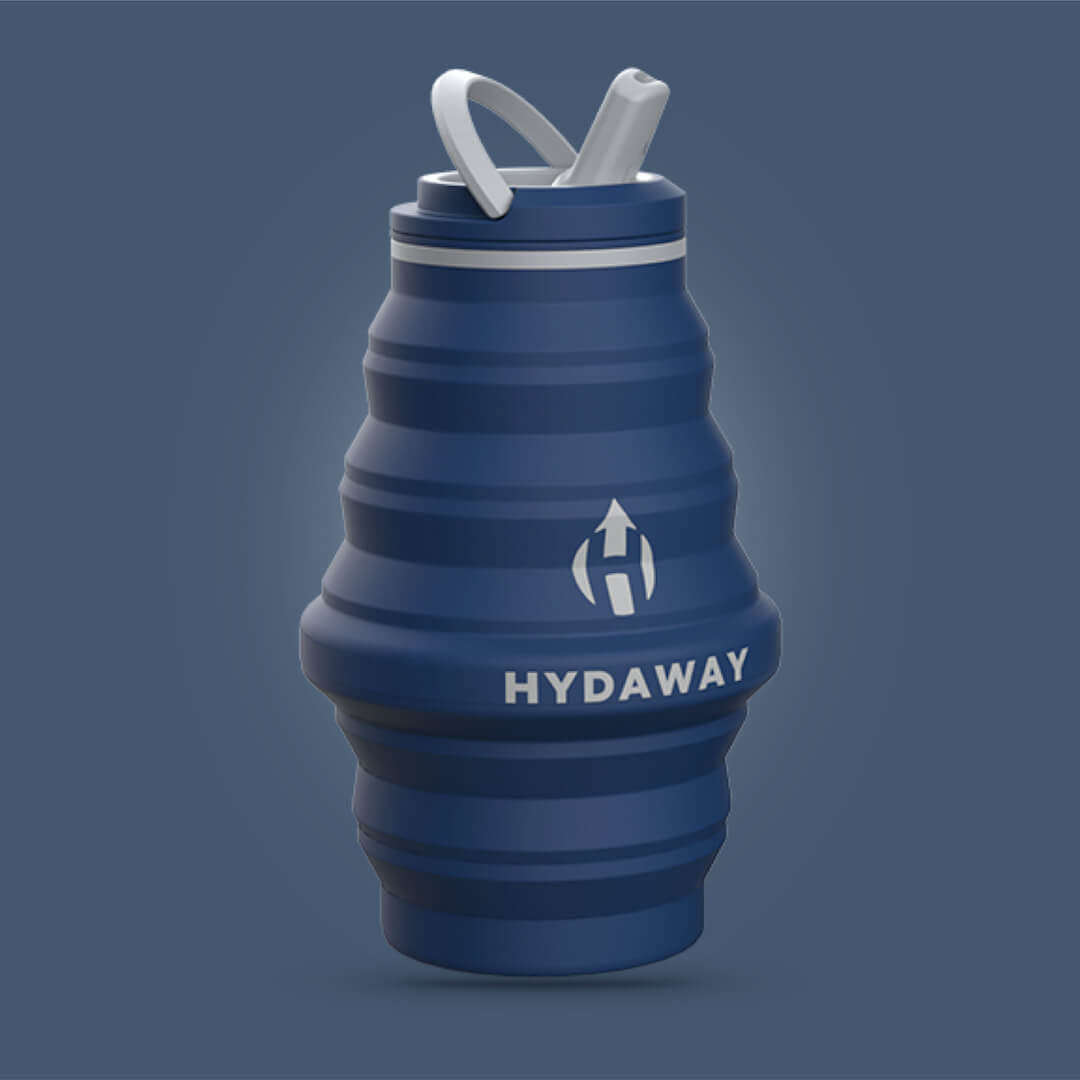
This is one place where HYDAWAY fits naturally. Its collapsible bottles are built for space-conscious travel, and the filter-ready design can make sense for hikers who want a screw-on treatment option without carrying a rigid empty bottle for the rest of the day.
Van-lifer or overlander
A bigger camp setup often works better at base, while a compact filter handles side trips. That split is practical. You keep volume and convenience in camp, then go small for trail walks, fishing laps, or quick summit pushes.
The right kit here is less about minimum weight and more about minimizing clutter. In a van, packability is still precious.
Digital nomad with outdoor overlap
Some travelers bounce between hostels, airport refill points, coworking spaces, and weekend trails. They need versatility more than specialization.
A compact filter bottle or bottle-plus-filter combo can cover day hikes and uncertain tap situations, while still staying easy to stash in luggage. If you are pairing that with luggage and packs built around mobility, this guide to backpacks optimized for hiking is a useful starting point because hydration systems work better when the bag layout supports them.
Build around the container, not just the filter
A lot of buyers start with the cartridge and forget the rest. But your real experience depends on:
- How you collect water
- How you carry clean water after treatment
- How easy the system is to pack when empty
- Whether the threads and components play nicely together
If you want a broader look at how reusable bottles and filters fit together for travel and outdoor use, HYDAWAY’s article on water filter reusable is a helpful companion read.
The best kit is the one you will use cleanly, pack easily, and trust without fuss.
Your Decision Checklist for the Right Filter
Late in the day, filter choice stops being a spreadsheet problem. It becomes a tired-hands problem.
You reach a shallow source that is a little cloudy. Your bottle is empty, dinner still needs water, and your filter has already seen a few hard days of silt, cold mornings, and hurried packing. That is the moment that exposes whether you bought a light tool or a dependable system.
A good decision checklist should help you choose for that moment, not for the product page.
Start with the trip, then the filter
Ask these questions in order.
-
Who needs water from this setup?
A solo hiker can tolerate slower flow or smaller batches. A pair or camp group usually benefits from easier collection and higher daily output. -
What will the water sources look like?
Clear streams are easy on filters. Silty ponds, glacial runoff, and livestock-adjacent sources wear them down faster and ask more from pre-filtering and cleaning. -
What health risks are realistic where you are going?
In some places, a standard hollow-fiber filter is enough. In others, you may want a purifier or a filter plus chemical backup because the threat is broader than sediment and protozoa. -
How honest am I about maintenance?
Some filters work like a coffee maker that needs occasional rinsing. Others act more like a tiny performance engine. Ignore upkeep, and performance drops at the worst time. -
Which friction bothers me more in the field?
Repeated squeezing, slow gravity hangs, awkward bottles, extra hoses, and careful backflushing all cost energy. The best setup is often the one you will still use correctly when you are cold, hungry, and in a hurry.
Put durability near the top of your checklist
This is the part buyers often skip.
Manufacturer specs tell you how a filter behaves when it is new and clean. Field use is rougher. Fine sediment, accidental drops, cross-threaded bottles, freezing risk, and neglected backflushing all chip away at reliability. A filter with excellent lab numbers can still become frustrating on a longer trip if it clogs easily or is hard to service.
As noted earlier, long-distance hikers and gear testers keep returning to the same lesson. Serviceability matters. If a system is easy to rinse, backflush, inspect, and protect, it has a better chance of still working well on day five, day ten, and beyond.
Buy for the version of the trip where things get messy.
Use this final reality check
Before you buy, run a short field test in your head.
You are tired. Light is fading. The water is not ideal. You need to collect, treat, drink, and pack up without contaminating your clean bottle or fumbling through a complicated routine.
Now ask: Would I trust myself to use this system well under a little stress, and keep it working for the whole trip?
If yes, you are close.
If not, choose the simpler or more maintainable option, even if it weighs a little more. In real travel, a few extra grams often matter less than a filter that keeps flowing, packs cleanly, and does not turn every refill into a chore.
Stay Hydrated Stay Safe
The best ultralight water filter is the one that matches your environment, your pace, and your willingness to maintain it. Weight matters. Packability matters. Reliability in real conditions matters more.
Keep these habits simple:
- Choose treatment based on destination risk
- Pre-filter dirty water when you can
- Clean and backwash before flow gets miserable
- Protect wet filters from freezing
- Keep clean and dirty parts separate
- Build a full hydration system, not just a filter purchase
Safe water makes better miles. Smart, compact gear makes those miles easier.
If you want hydration gear that takes up less space in a pack, van drawer, or day bag, take a look at HYDAWAY. Their collapsible travel and outdoor gear is built for people who want practical carry solutions without hauling bulky empty containers around.