Insulated Water Bottle Sleeve: Choosing the Right One

The bottle rides in the car at 7:40 a.m., still cold, and by the trailhead at eleven it's the temperature of a swimming pool. The sleeve you bought for exactly that problem is in a drawer at home, because it slid down to the base every time you pulled the bottle out of your pack, and by day four it smelled like the inside of a gym bag.
The sleeve wasn't the wrong idea. It was the wrong sleeve, bought against the wrong question. Many shoppers focus on thickness and never ask whether the sleeve fits the body, whether the bottle already has a vacuum wall doing the main work, or how they'll dry the thing between trips.
Fit, heat path and hygiene decide what a sleeve is worth. Get all three right and it earns pack space for years. Get one wrong and it's a damp tube in a drawer.
Sleeve Fit by Bottle Type at a Glance
A hiker packs a 25oz collapsible bottle, leaves it on the passenger seat in July, and comes back to a sleeve that has crept halfway down the body. Nothing is broken. The sleeve's inner diameter is wider than the bottle it was sold for, and grip on a soft or tapered body depends on contact along the full height, not just the middle band.
An insulated water bottle sleeve is a fitted outer layer that adds grip, takes the first impact when the bottle lands, and slows heat movement through the wall. It does those three things only when its inner diameter and its height match the bottle's body.
| Bottle type | Fit to check | Sleeve style that suits it |
|---|---|---|
| Collapsible silicone bottle, 17oz (500ml) | Fit in expanded state; check cup-holder and pack-pocket width | Thin neoprene or foam wrap |
| Collapsible silicone bottle, 25oz (750ml) | Taller body; confirm the sleeve clears the lid and base | Longer neoprene wrap with open base |
| Stainless vacuum bottle, 20oz to 24oz | Snug over the body; keep the base and lid free | Neoprene or insulated fabric sleeve |
| Stainless vacuum bottle, 32oz to 40oz with handle | Taller body and handle clearance | Rigid insulated sleeve with handle cut-out |
| Single-wall plastic bottle, 20oz to 32oz | Compression fit to limit sweat between sleeve and wall | Foam sleeve with condensation liner |
| Glass bottle, 16oz to 24oz | Padding around the whole body, no rattle | Padded sleeve with cushioned base |
Measure the body, not the lid
Width first. Run a ruler or a cheap pair of calipers across the widest part of the body, which is usually the shoulder rather than the base. Height second, from the base up to where the neck starts, ignoring the cap entirely. Then pick a sleeve whose stated inner diameter is about 2 to 3 mm larger than your measurement.
Less than that and you'll fight the bottle in and out of the sleeve every refill. Much more and the sleeve rotates under your hand when you unscrew the lid, which is how people end up with a wrist full of cold water.
Collapsible bottles change shape, so measure the expanded state and measure the section where the sleeve will sit. A folded bottle tells you nothing about fit.
Fit check: slide the sleeve on, grip the bottle one-handed, and confirm the lid, spout and base all stay reachable. If the sleeve twists when you pour, it's too loose.
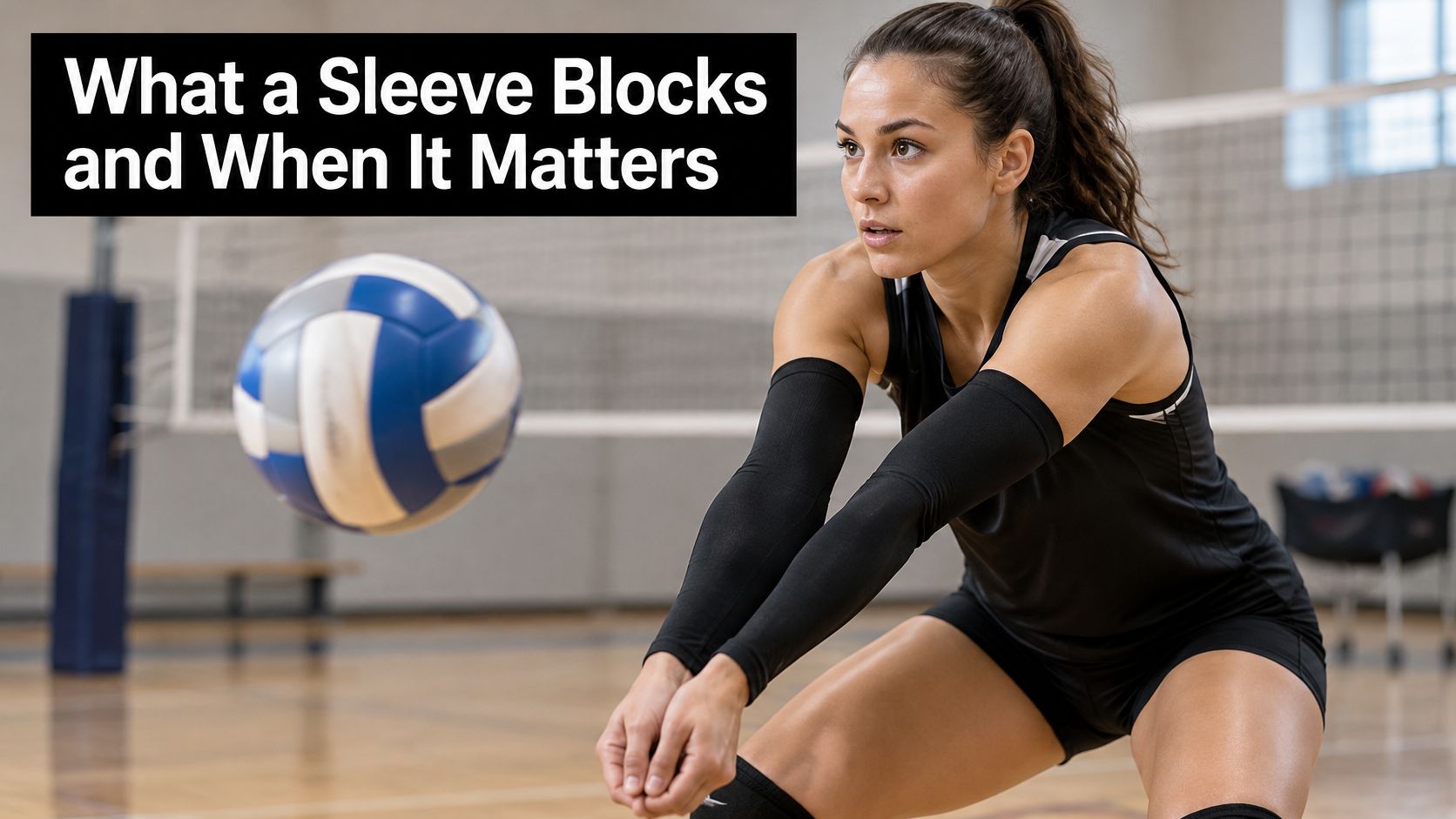
What a Sleeve Blocks and When It Matters
A sleeve is a coat, not a cooler. A coat slows heat leaving your body; it doesn't make warmth. Wrap one around a bottle and you slow the movement of heat in or out of the liquid, which buys time in the right conditions and does nearly nothing in the wrong ones.
Three paths heat takes
Conduction runs through the bottle wall into whatever touches it: your hand, the sleeve, the car seat, a metal chair. A compressible foam or textile layer puts a low-conductivity gap in that path, and that's most of the reason a sleeve helps a single-wall bottle at all.
Convection moves heat with air. A loose sleeve lets air circulate between fabric and wall; a close fit kills that pocket and cuts the loss.
Radiation arrives from the sun. A light-coloured or reflective outer surface bounces a share of it away, and on a pack's side pocket in full sun that matters far more than bulk thickness.
Where the sleeve loses to its own seams
Seams, zipper openings, an exposed neck and the squeeze of a pack strap all work as thermal bridges, and they can dominate real-world losses even when the bulk material is thick. Insulation performance is also temperature-dependent, which is why ASTM C1058 recommends reporting material and construction properties at test mean temperatures that represent the intended end use, keeping the low and high test means within 10°C of the temperatures of interest. In practice, that means cold-drink testing near fridge or winter conditions and hot-drink testing near the beverage temperature, not a single room-temperature number that flatters everything.
| Scenario | Main heat path | What the sleeve does | Size of benefit |
|---|---|---|---|
| Hiking in direct sun with a single-wall bottle | Radiant heat from sunlight | Reflective outer layer reduces heat gain | High |
| Cold drink in a warm car | Conduction through the wall | Foam or textile layer slows heat transfer | High on single-wall bottles |
| Double-wall vacuum bottle in shade | Little heat gain to begin with | Mainly grip, impact protection and sweat control | Low to modest |
| Pack carried on a warm bus or train | Convection and contact warmth | Close fit limits air movement | Moderate |
| Hot drink on a cold morning | Heat loss through the lid | Helps only if the lid stays closed and the neck is covered | Low to moderate |
If you're still choosing the bottle itself, the insulated water bottle comparison on our blog is the more consequential decision, because a vacuum wall does more for temperature than any fabric wrap ever will.
The buyer's test is simple. Put the same volume of the same starting temperature liquid in two identical bottles, sleeve one of them, leave both in the same spot, and log the temperature over time. A sleeve that moves the curve by a couple of degrees in shade can move it by a lot in a hot car.
Whether a Sleeve Helps Reusable Bottles Last
A sleeve is one more object in the world, so it deserves the blunt question: does buying one just add waste?
Not if it keeps a bottle in service. A Massachusetts Institute of Technology sustainability analysis found that an aluminum reusable bottle needed approximately 50 uses before its life-cycle impact per serving became comparable with a single-use bottle, once the analysis included the water source, manufacturing energy, chemical inputs, washing and end-of-life treatment. Excluding the water source, the break-even point fell to roughly 10 to 20 uses depending on the bottle material, and plastic had the lowest impact per use, followed by steel and aluminum.
That's the frame a sleeve belongs in. Its job isn't to be the environmental intervention; it's to keep the bottle you already own in rotation across commuting, hiking, camping and travel, by making the thing comfortable to carry and slower to dent. A sleeve that outlasts three bottles is a different product from one that pills apart after a season.
Reuse beats recycling on the numbers
A California reusable-drinking-water literature review reported that a reusable water bottle produced 79% fewer greenhouse-gas emissions over its life cycle than using an equivalent number of PET bottles once and disposing of them, even under extremely conservative dishwashing assumptions. The same review found that recycling PET cut emissions by only 16% relative to disposal.
Three checks keep a sleeve on the right side of that math:
- Buy for the bottle's lifespan, not the trip. A sleeve should survive more than one season of pack straps and car floors.
- Skip single-trip designs. Anything thin enough to tear on a zipper pull is a disposable product wearing a reusable label.
- Replace on fit and drying, not on looks. Retire a sleeve when it stops gripping or stops drying out, not because a new colour dropped.
One question settles most of it: how many days a week will you carry the bottle? Under two, a sleeve is decoration. Five and it's part of the routine that keeps the bottle out of the cupboard.
How to Test a Sleeve's Insulation Claims
A sleeve marked "insulated" has told you close to nothing. Performance depends on starting temperature, fill volume, ambient heat, bottle construction and how often you open the lid, and a label rarely states any of them. Two sleeves with identical tags can behave like different products once the sun angle changes.
ASTM D3103 is the more useful reference point: it identifies exterior insulation, the thermal energy of the contents and the payload as the key variables governing heat transfer, and it supports testing under changing ambient temperatures with measured internal temperatures. That framing keeps you honest about what you're comparing.
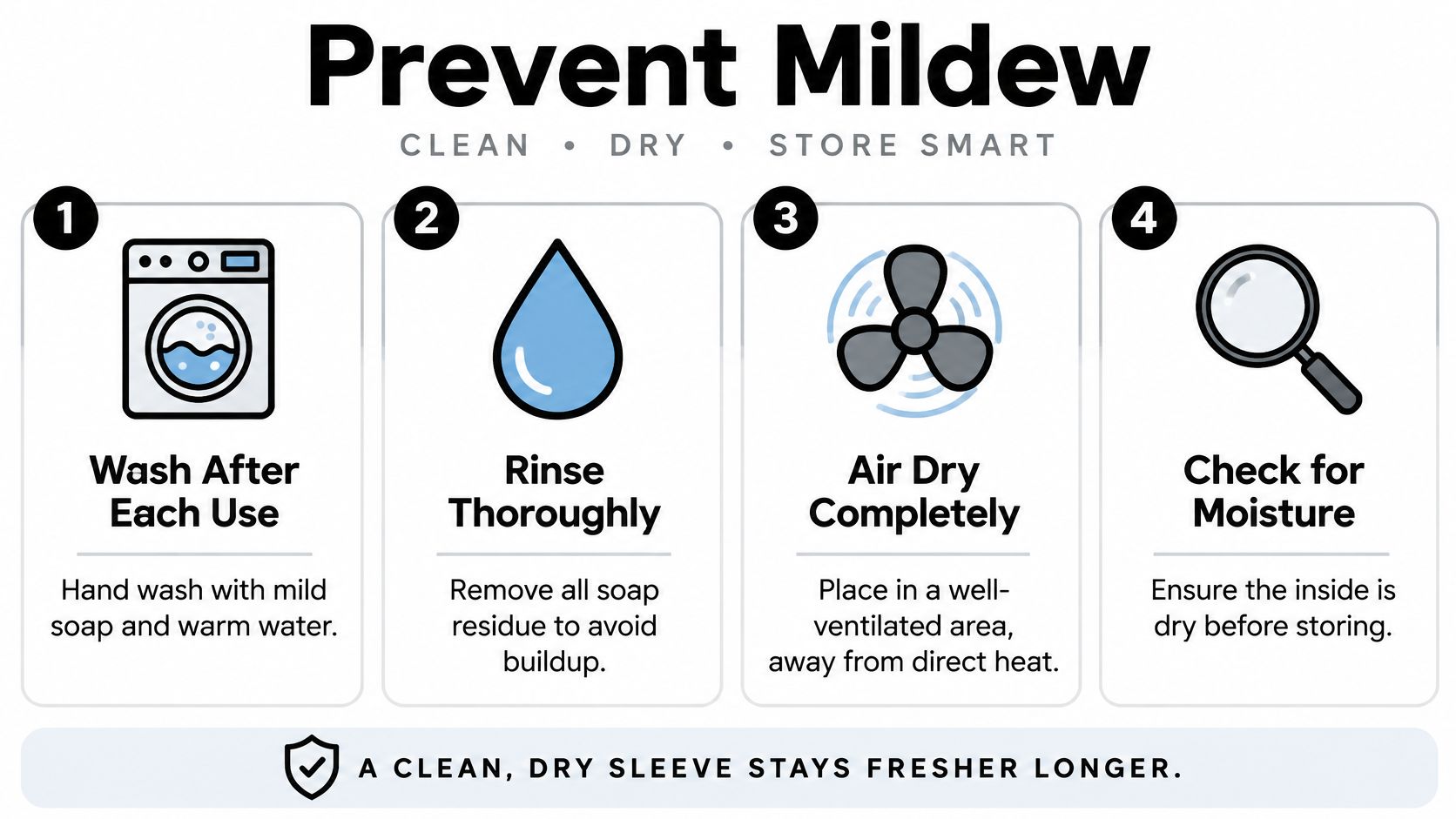
Start with a clean, dry sleeve, because a damp one behaves like a different product and starts to smell before you've finished the test.
Run the comparison yourself
- Precondition both bottles. Chill or warm the bottle and the liquid together, and write down the starting temperature before anything else happens.
- Match the fill. Same liquid, same volume in the sleeved bottle and the bare control bottle, because a larger volume holds more thermal energy and changes more slowly.
- Record the ambient temperature and the exposure. Shade, direct sun and a parked car are three different tests and give three different answers.
- Expose both bottles to the same condition. Same surface, same sun angle, same distance from the windscreen.
- Log at set intervals. Every 30 minutes for four hours is enough to see the shape of both curves, not just the endpoint.
- Keep the lid closed except for readings, and note every time you open it, because an open lid moves more heat than a sleeve stops.
- Repeat after a wash cycle and after a day compressed in a pack, since compression flattens foam and laundered fabric loses loft.
Compare the two curves at the end. If the gap at hour three is a degree or two, you bought grip and protection, which is a legitimate purchase. If it's six or eight degrees in sun, the sleeve is doing thermal work. On a vacuum-insulated bottle expect the gap to sit at the small end of that range, because the bottle's own walls are doing most of the insulating; there the sleeve earns its place through comfort and dent protection rather than degrees.
A claim without a duration, an ambient temperature and a fill volume isn't a claim. It's a mood.
The shape of the curve tells you more than any single peak number, and the real-world test notes on the HYDAWAY blog show what logged interval readings look like in practice. A credible product claim states the test duration, ambient conditions, starting temperature, fill volume and whether the bottle was opened.
Cleaning and Drying a Sleeve Without Mildew
A cold bottle sweats inside its sleeve on a hot afternoon. You shove it back in the pack wet, drive home, and a week later the sleeve carries that sweet, damp smell no rinse removes. Mildew is the failure mode nobody mentions at the checkout.
Think of the sleeve as part of the bottle's hygiene system rather than a wrap you forget about. It traps condensation against the bottle wall and intercepts soil from pack pockets, vehicle floors and trail surfaces. That interception is useful work, but it means the sleeve needs washing on the bottle's schedule, not whenever it starts to look grubby.
The bottle underneath is already carrying a load. A 2024 study found PET bottles showed a 70% microbial increase after three hours, against 23% for stainless steel, while washing reduced the measured mean load to 11.2 ± 2.3 CFU/mL, as reported in the bottle-hygiene research indexed by the National Library of Medicine.
What the evidence says about bottle surfaces
The outside matters as much as the inside. Bottle exteriors pick up bacteria from pack pockets, cup holders and vehicle floors, and that contamination can transfer to hands the way it does from other frequently touched objects. How much builds up depends on how often you refill, what you fill with and how regularly you clean. A sleeve presses against that surface for hours at a stretch, so it joins the same cleaning problem even when it adds little thermal benefit.
Here's the routine that works:
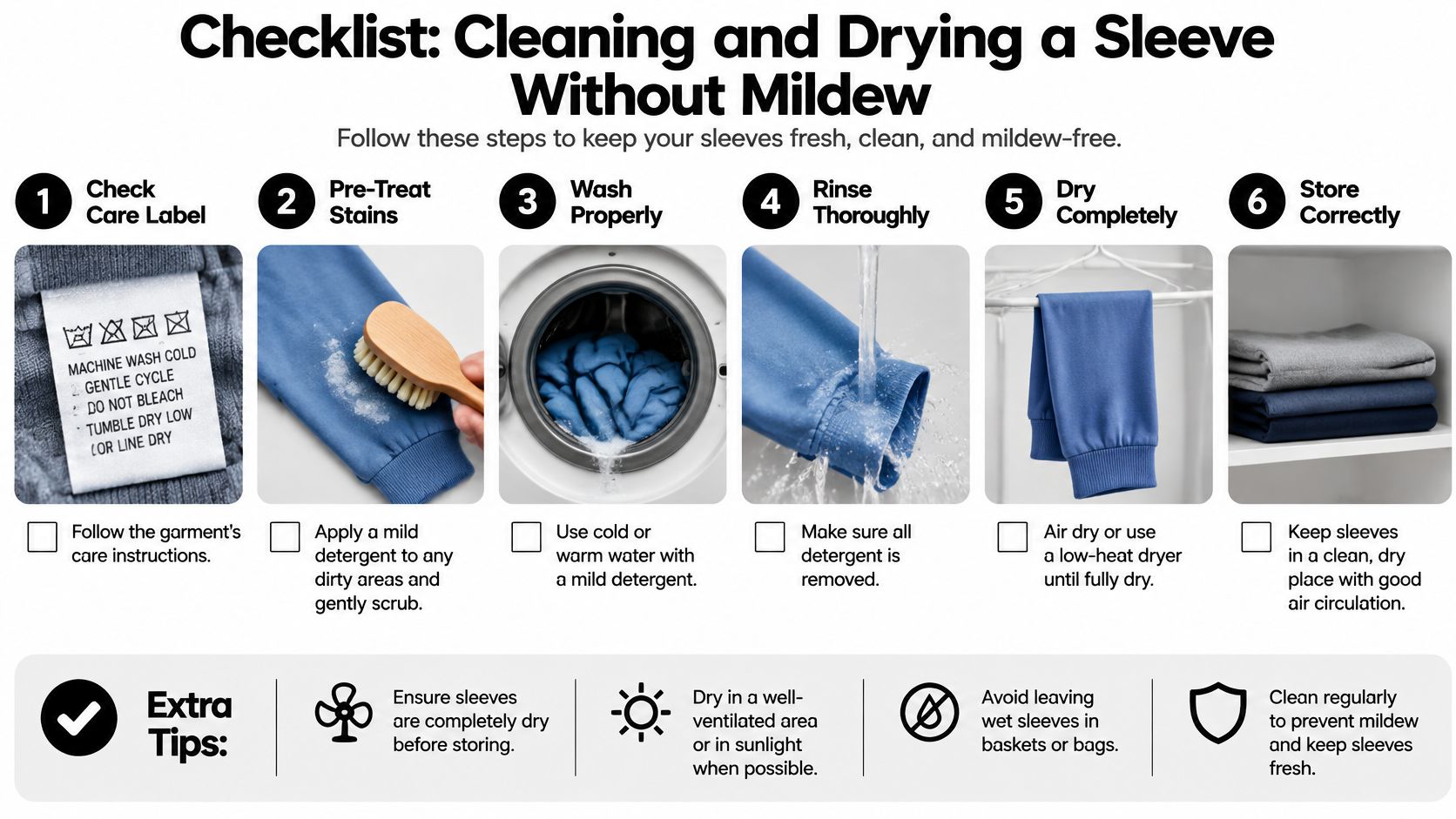
- Choose removable if you can. A sleeve you can take off gets washed; a permanently bonded one gets wiped and stays damp behind the seam.
- Check whether the sleeve itself is machine-washable before you buy, and read whether that means cold wash, no dryer or hand wash only.
- Dry the two separately, sleeve open and upside down, bottle upright, both in moving air rather than a closed cupboard.
- Wipe the bottle exterior after cold fills, especially before it goes back into the sleeve for a commute.
- Retire it on smell. Persistent odour or visible mildew after a proper wash means the material has gone, and no amount of sunlight brings it back.
Your routine decides which sleeve you should own. A daily commuter can wash and air-dry on a kitchen rack; a camper three days from a sink needs something that dries overnight on a pack strap, which usually means thinner fabric and an open base. For the bottle itself, the same damp-storage logic applies, and the guide to preventing mold growth in reusable bottles covers that side of the routine.
Choosing a Sleeve for Heat, Hikes and Commutes
Three people, three heat problems. A theme-park parent at 2 p.m. in July stands in reflected heat off asphalt. A hiker on an exposed ridge takes direct sun plus wind. A commuter moves between a hot platform and an air-conditioned carriage, and the bottle keeps crossing the boundary.
The health case for keeping water close is straightforward. Health guidance generally recommends drinking water regularly during heat exposure, and direct sun can make conditions feel much hotter than the air temperature. Park operators make the same point practical by letting you carry your own supply, as the outside food and drink policy at Disneyland sets out, which only helps if the water is still drinkable at hour four.
Five criteria do most of the sorting:
- Insulation need. A single-wall or collapsible bottle gains real benefit, because no vacuum layer is doing the work already. A vacuum bottle mostly gains grip, scratch protection and a quieter set-down on hard surfaces.
- Weight and pack volume. Every gram and every millimetre of diameter costs you a side pocket somewhere.
- Removability. Can it come off for washing and dry separately from the bottle?
- Grip and handle access. The sleeve has to leave the lid, handle and spout usable with one hand.
- Stowage when empty. Some sleeves roll into their own cuff, some don't fold at all.
For a hands-on walkthrough of what a sleeve can and can't change on a real bottle, this covers the practical side well:
| Reader | Priority | Sleeve trade-off |
|---|---|---|
| Hiker | Low weight and fast drying | Thin neoprene or foam wrap that stows in a side pocket |
| Family on a theme-park day | Easy grip and quick-clean material | Neoprene wrap with handle access |
| Commuter | Fits a bag side pocket | Slim sleeve matched to bottle height |
| Camper | Tolerates dirt and repeated drying | Removable, durable sleeve with a drying routine |
Hikers should buy the thinnest sleeve that stops condensation and holds grip, and stop there. Families on a park day want a surface a wet hand can hold onto, and a sleeve they can rinse in a bathroom sink between rides. Commuters get the most from a slim fit that slides into a bag pocket and keeps a sweating bottle off whatever rides next to it.
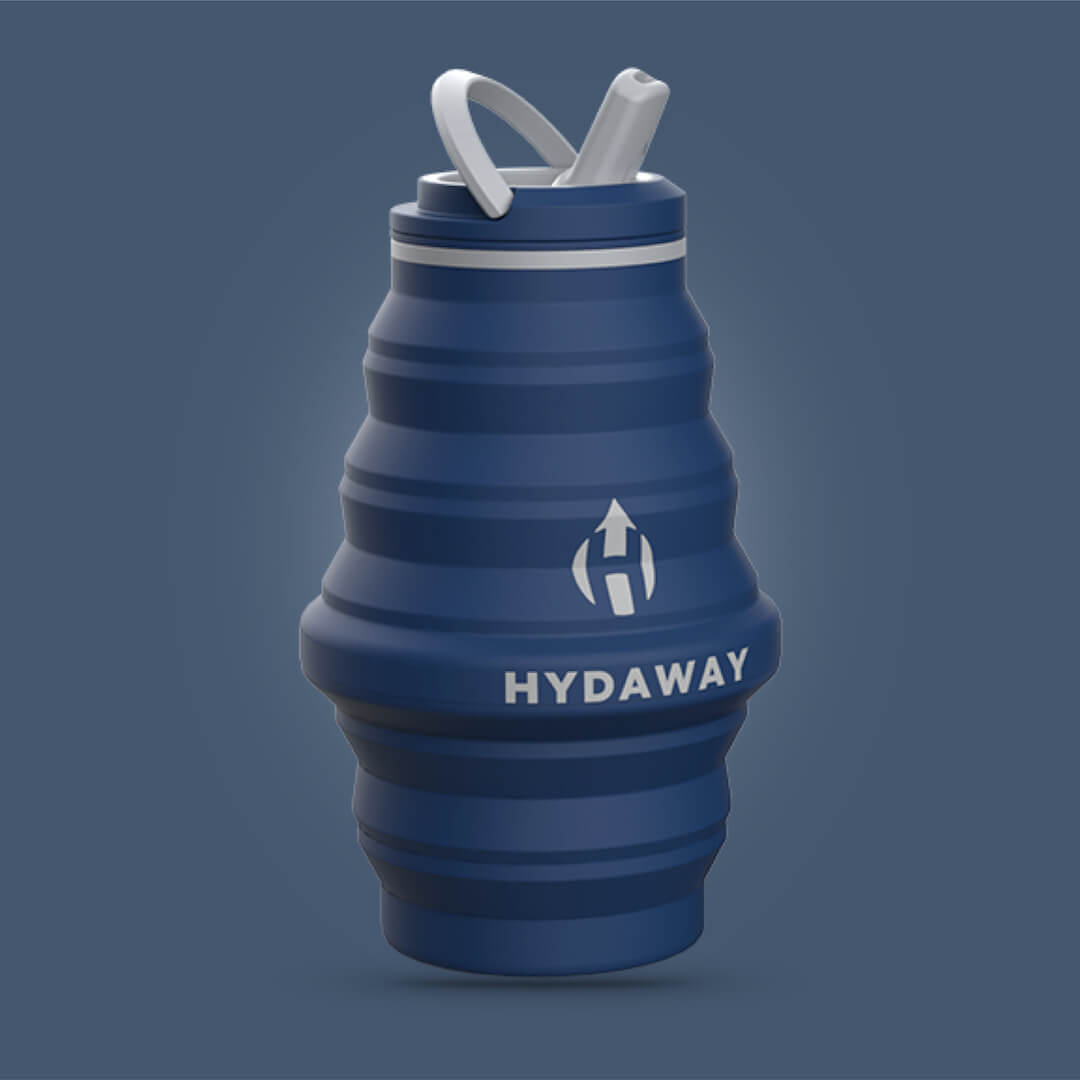
Campers and van-lifers face the drying problem more than the heat problem. A removable sleeve that airs out on a roof rack overnight beats a thicker one that stays damp in a storage bin. The HYDAWAY collapsible bottles in 17oz and 25oz fold down when empty (the 17oz to a 1.5 inch profile), so the sleeve only has to fit the expanded bottle during the day and can be dried flat overnight.
Rule of thumb: match the sleeve's added weight and bulk to the temperature gain the trip actually needs, not to the worst case you can imagine.
Decide Before You Buy
Buy a sleeve when three things line up: your bottle matches a fit row in the chart, your trips need the grip, protection or temperature gain it adds, and you can wash or retire it on your normal routine. If any of those fail, the money is better spent elsewhere.
Run one worked example. A 25oz collapsible bottle, three hours on a July hike, riding in a shaded side pocket most of the way. You check fit in the expanded state, note that the pocket shields it from direct sun, and buy a grip-and-protection sleeve rather than chasing insulation it can't deliver from the shade. That's the honest outcome, and it's still a useful product, because the bottle stops sweating through your shirt and stops taking the first knock when you set it down on rock.
The next trip settles it. Run the cold-fill test: same liquid, same volume, same four hours, one bottle sleeved and one bare, both in the same exposure. If the sleeved bottle is still cold enough to drink at hour four and the bare one isn't, you've bought the right thing.
The three buying checks
- Compare stated inner diameter with your measured body, aiming for 2 to 3 mm of extra room, and check the height clears both the lid and the base.
- Decide between temperature gain and handling. Direct sun or a hot car means a reflective or foam layer earns its place; shade and a vacuum bottle mean you're buying grip and impact protection, which is a fair reason on its own.
- Confirm the care routine. If it can't be washed and dried on the schedule you keep, it becomes the smelly thing in the drawer, whatever its thermal numbers say.
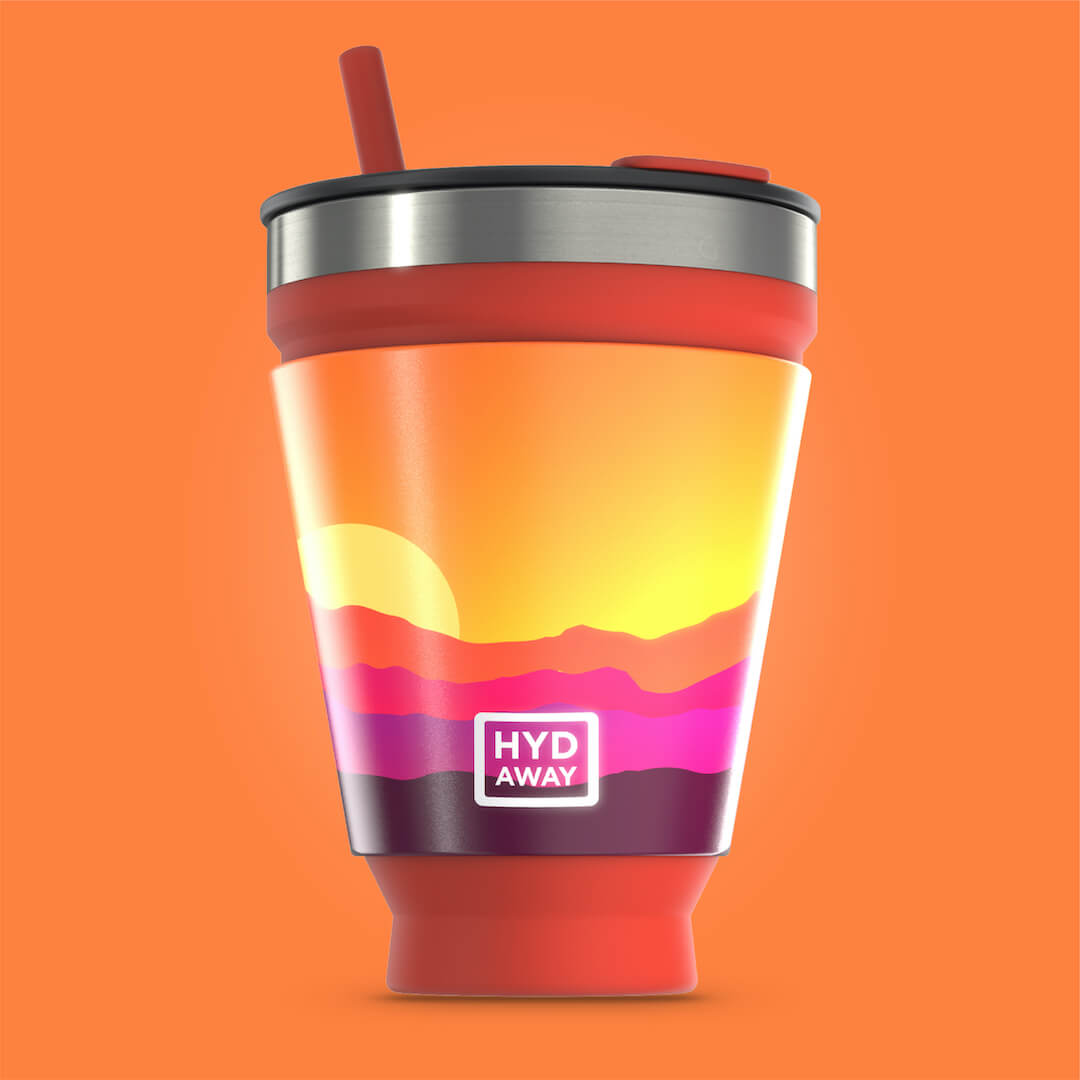
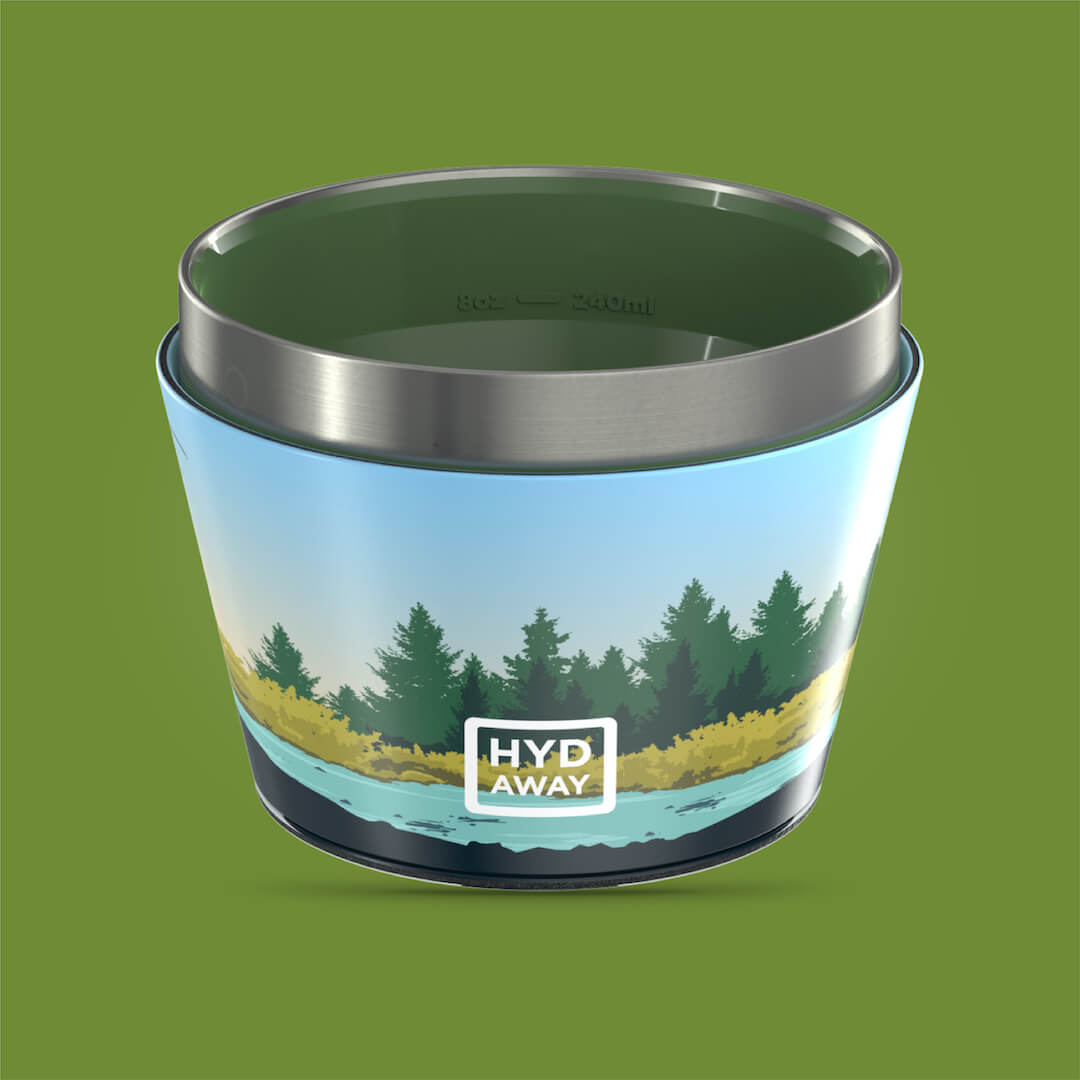
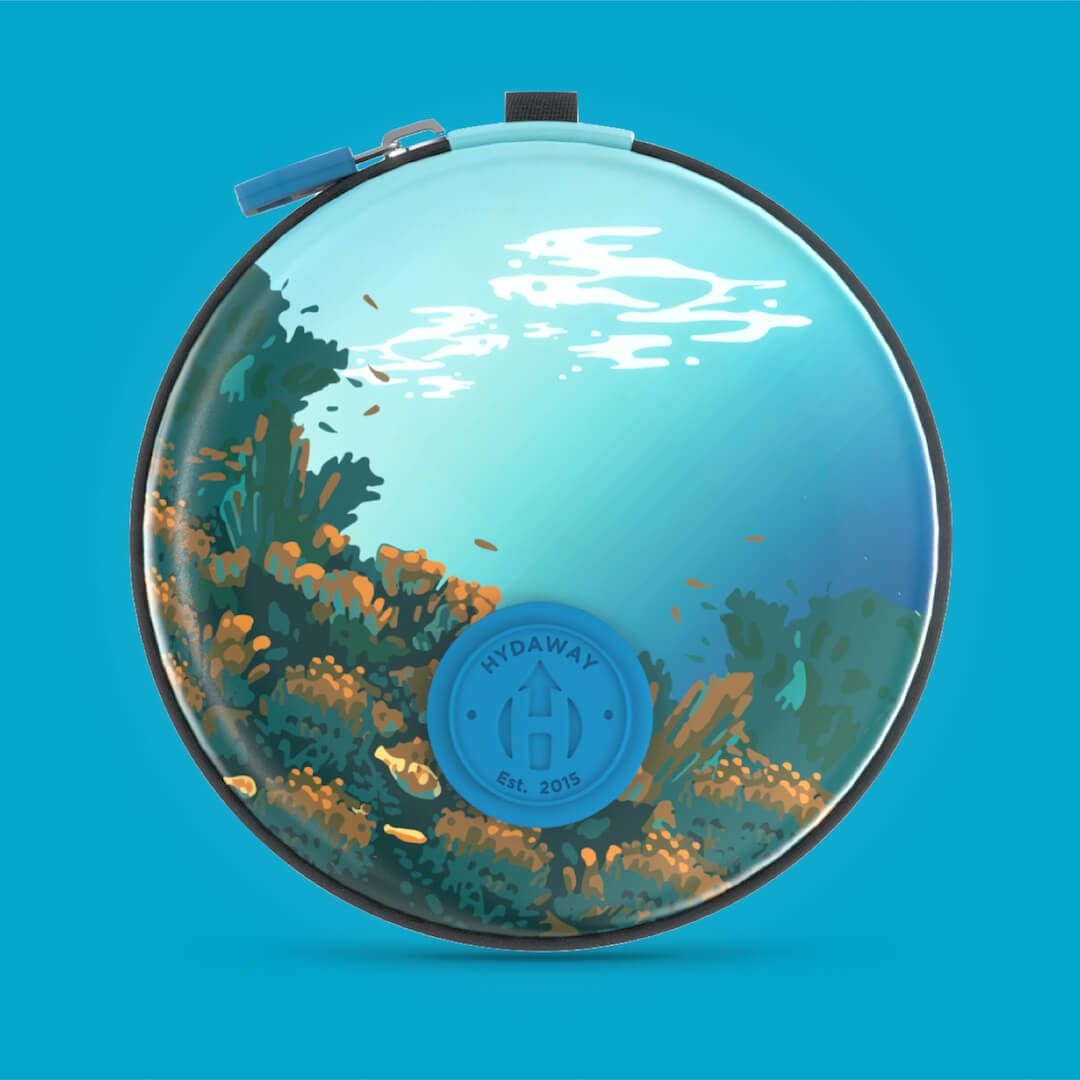
For our own line, the 17oz collapsible water bottle collapses from a 17oz capacity to a 1.5 inch profile, which makes the sleeve a daytime-only item that can dry flat at night. The HYDAWAY Travel Case fits all our drinkware and dinnerware up to a 4 inch diameter, so the sleeve and the case don't compete for the same space. Every HYDAWAY product is third-party tested and free from BPA, phthalates, PFAS and other plastic pollutants, which matters for a sleeve that sits against the bottle you drink from all day.
Pick one style from the first chart, match it to your own bottle by measurement rather than by photo, and run a cold-fill test on your next trip. Four hours and two temperature readings will tell you more than any product page.
A refillable bottle only earns its footprint through repeated use, and HYDAWAY builds for exactly that habit: collapsible bottles that fold flat when empty, so one bottle travels across commuting, hiking, camping and long flights without eating pack space. Pair one with a fitted sleeve, a Travel Case and a drying routine you'll keep, and the whole setup keeps working trip after trip. Visit HYDAWAY to see the bottles, cases and kits that make carrying less the easier choice.