


How to Pack for a Week in a Carry-On and Travel Light

Here's the thing: packing for a full week in just a carry-on isn't some dark art. It’s a pretty straightforward strategy that boils down to three things: a versatile capsule wardrobe, smart packing techniques, and using every last inch of your bag. Once you get the hang of it, you can ditch the checked bag fees and the nightmare of lost luggage for good.
Your Blueprint for One-Bag Freedom
Picture this: you've just landed from a long flight to Rome, and you're strolling past that chaotic baggage claim carousel, heading straight for the exit and into your vacation. This isn't just a fantasy; it's what happens when you fully embrace the one-bag lifestyle. It’s all about shifting your mindset from packing "just in case" to packing "just what's needed."
This isn’t about depriving yourself; it's about gaining freedom. Freedom from those ever-increasing checked bag fees, sure, but also freedom from the stress of a lost suitcase completely wrecking your trip. We're all guilty of overpacking. A 2021 survey found that a whopping 71.7% of people admit to bringing clothes they never even touch. And even worse, 19.3% of Americans have had to fork over cash for overweight bags—a totally avoidable headache.
The Core Strategy for Carry-On Success
Getting to one-bag freedom is a clear path. It starts with picking the right bag, planning your outfits with real intention, and then packing it all up using proven techniques.
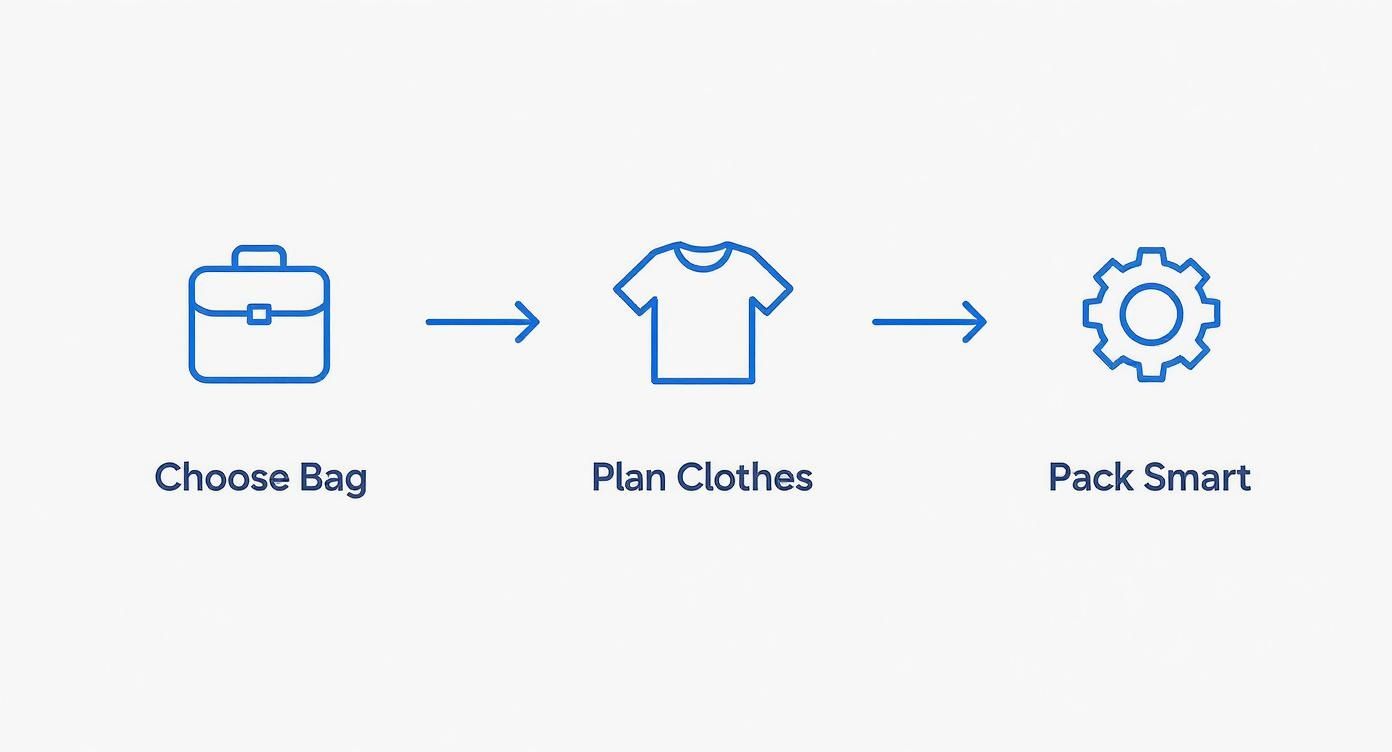
This visual really drives home the point that great packing happens long before you start stuffing things into your suitcase. It's all about thoughtful planning.
When you nail this minimalist approach, you're ready for anything—whether that's navigating cobblestone streets in Europe or hopping between islands in Southeast Asia. It’s about making your gear work for you, not the other way around. If you're tackling a big international trip, it's worth checking out these pro tips for international travel preparation to cover all your bases.
Let's break down the essential planning stages to get you started.
| Planning Stage | Key Action | Why It Matters |
|---|---|---|
| Pick Your Bag | Choose a carry-on that meets airline size limits and fits your travel style. | The right bag is your foundation. It sets the physical constraints you need to work within. |
| Plan Your Outfits | Create a mix-and-match capsule wardrobe based on your itinerary and the weather. | This prevents overpacking and ensures everything you bring is something you'll actually wear. |
| Pack Smart | Use techniques like rolling, bundling, or packing cubes to compress items. | Smart packing maximizes every bit of space, making room for everything you truly need. |
Following these steps transforms packing from a chore into a simple, repeatable system for stress-free travel.
Making Space for What Matters
Ultimately, packing light lets you focus on the actual experience. A smaller bag is just easier to handle on trains, in tiny hotel rooms, and up endless flights of stairs. It also forces you to be a bit more resourceful with your gear.
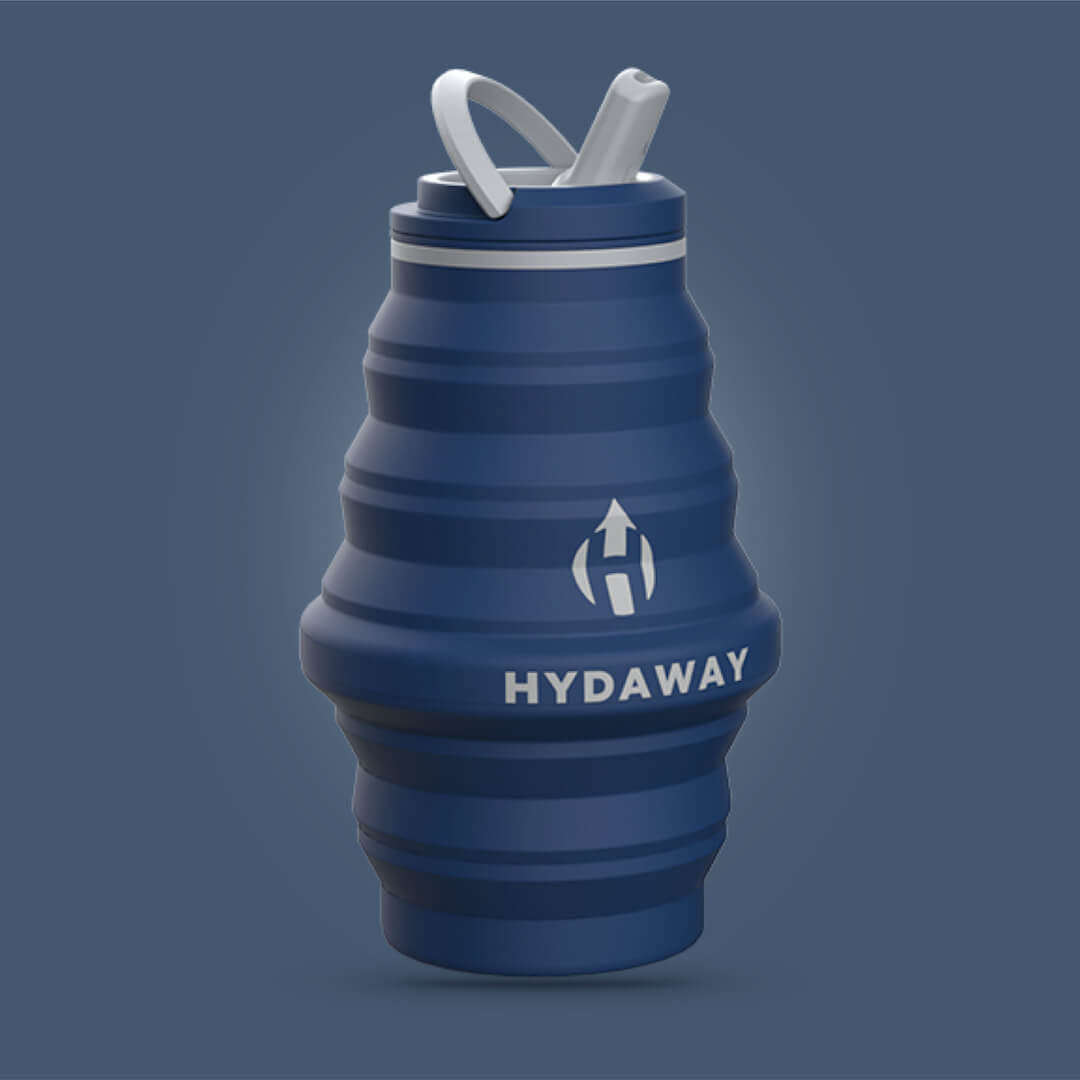
For example, a common traveler pain point is staying hydrated without buying expensive, single-use plastic bottles at the airport. Instead of a bulky bottle, a HYDAWAY Collapsible Water Bottle can be a total game-changer. It’s there for you when you need to hydrate at a refill station, but then it flattens down to almost nothing, fitting right in your pocket when it’s empty. It’s all about these little space-saving hacks that solve real-world travel problems. If you're looking for more ways to lighten your load, check out our complete guide on how to pack light.
Build Your Perfect 7-Day Travel Capsule Wardrobe
The magic trick to fitting a week's worth of clothes into a carry-on isn't really magic at all—it’s a smart, simple strategy called a capsule wardrobe. This is all about picking a small, curated collection of items that you can mix and match to create a surprising number of different outfits. It’s your best defense against that sinking feeling of staring into a tiny suitcase and thinking, "I have nothing to wear."
The whole point is to feel prepared and stylish for whatever comes your way, whether it's a spontaneous hike through the city or an unexpected invitation to a nice dinner.
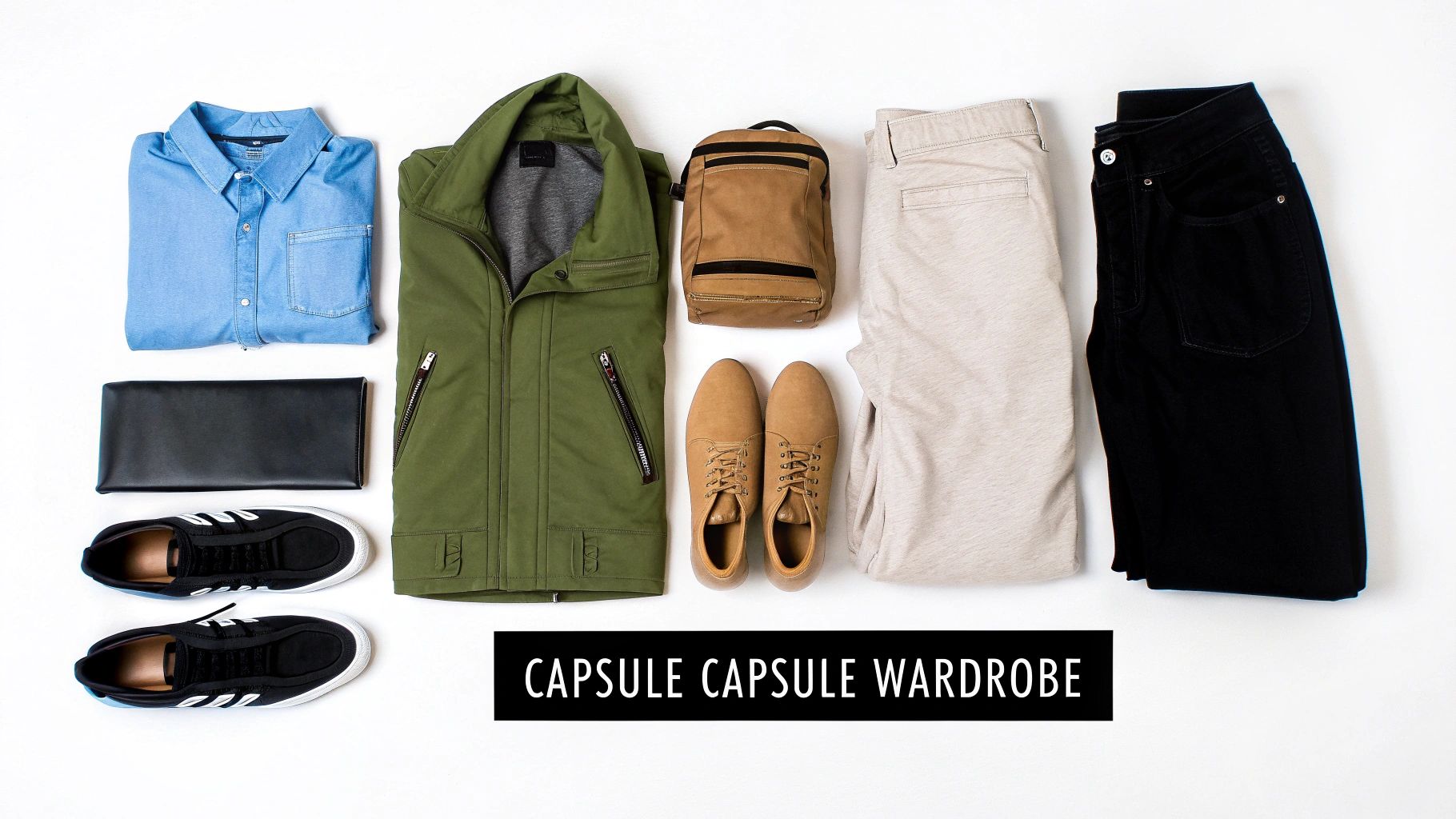
This turns packing from a chore into a creative challenge. Instead of just grabbing random things from your closet, you’re thoughtfully building a travel uniform that’s functional, comfortable, and totally you.
Start With a Smart Color Palette
The bedrock of any great travel capsule is a tight color palette. This is what guarantees that every single top you pack will go with every single bottom, multiplying your outfit options without you even having to think about it.
A practically foolproof way to do this is the two-plus-one rule:
- Two Neutral Base Colors: Pick two neutrals that look great together, like black and gray, navy and tan, or olive and cream. These will be the colors of your main pieces—pants, jackets, and shoes.
- One Accent Color: Now, choose one pop of color to bring some life to your wardrobe. This could be a terracotta, a dusty blue, or a sage green. Use this for a couple of tops or maybe a scarf to add some personality.
Imagine you're heading to Lisbon in the spring. You could go with navy and beige as your neutrals and a rust orange for your accent. Just like that, your entire travel wardrobe feels intentional and pulled-together.
The core idea is that any top you grab from your bag should effortlessly match any bottom you've packed. This simple rule eliminates decision fatigue and dramatically expands your outfit possibilities from a minimal number of items.
Choose Fabrics That Work for You
When every square inch of your bag matters, the fabric of your clothes is just as crucial as the style. The right materials are the difference between looking sharp and feeling like a wrinkled mess by day two. Thankfully, modern travel fabrics are designed to be high-performance and low-maintenance.
Here are a few of my go-to choices:
- Merino Wool: This isn't your grandpa's itchy wool sweater. Modern merino is incredibly soft, breathable, and thermoregulating—it keeps you cool when it's hot and warm when it's chilly. Best of all, it’s naturally odor-resistant, so you can easily wear a merino t-shirt a few times before it needs a wash.
- Tencel (Lyocell): Known for its silky feel and beautiful drape, Tencel is also a champion at resisting wrinkles. It's an amazing choice for dresses, blouses, and comfy travel pants that still look polished.
- Technical Fabrics: Think of the materials used in good activewear, like certain blends of polyester or nylon. They’re lightweight, quick-drying, and super durable, making them perfect for anything you might need to wash in a hotel sink.
This kind of strategic thinking is what light packing is all about. Many seasoned travelers swear by a ratio of about six tops to two pairs of pants to get the perfect balance. Learning from their carry-on strategies and tips is a great way to free yourself from the tyranny of a heavy, overstuffed suitcase.
Sample Capsule Wardrobes for Different Trips
To see how this all comes together in the real world, here are a couple of sample wardrobes. Each one uses just 9-10 core clothing items to create outfits for an entire week—and then some.
Example 1: European City Break (e.g., Paris in Autumn)
This wardrobe is all about smart layers and pieces that can easily be dressed up or down.
- Tops (5): A striped long-sleeve tee, a black merino wool sweater, a classic white button-down, a silk-blend camisole, and a cashmere crewneck in an accent color (like burgundy).
- Bottoms (2): One pair of dark-wash, comfortable jeans and one pair of black tailored trousers.
- Outerwear (1): A timeless trench coat.
- Dress (1): A versatile black knit midi dress.
- Shoes (2): One pair of stylish leather ankle boots and one pair of comfy-but-chic white sneakers.
Example 2: Tropical Beach Getaway (e.g., Costa Rica)
Here, the focus is on lightweight, breathable fabrics that can handle the heat and humidity.
- Tops (4): Two linen tank tops (in neutral colors), one loose Tencel t-shirt, and one lightweight white cotton blouse to double as a swim cover-up.
- Bottoms (2): A pair of denim shorts and a pair of flowy, wide-leg linen pants.
- Dress/Jumpsuit (2): One casual sundress for daytime and a comfortable jumpsuit for evenings.
- Swimwear (2): Two mix-and-match swimsuits.
- Shoes (2): A pair of waterproof sandals (like Birkenstock EVAs) and a pair of versatile espadrilles.
This minimalist mindset is a game-changer, especially for longer trips. For even more ideas on extended travel, check out our in-depth digital nomad packing list, which builds on these same principles. By choosing every item with care, you can travel for a week—or much longer—with just a carry-on and a wonderful sense of freedom.
Master Your Packing Methods and Gear
You’ve laid out your perfect capsule wardrobe, but the real magic of fitting a week's worth of clothes into a carry-on comes down to how you get it all in there. This isn’t about brute force; it’s a game of strategy. The right techniques and gear are what turn a pile of clothes into a perfectly organized suitcase, making your bag a masterfully arranged puzzle where every piece has its place.
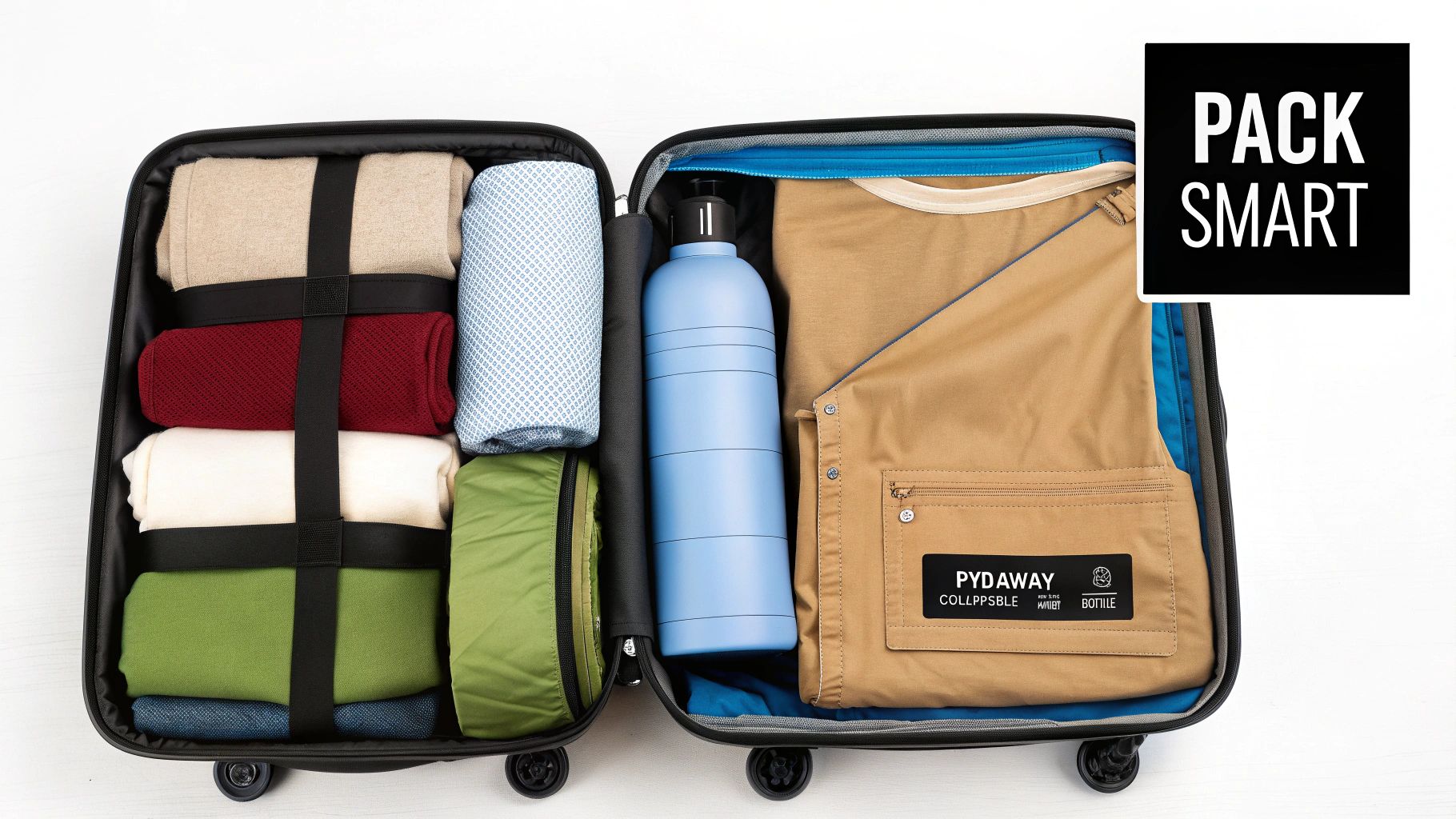
This is where you gain an edge, finding hidden pockets of space you never knew existed. By mastering a few key methods, you’ll not only fit everything you need but also make it easy to find without your luggage exploding all over the hotel room floor.
The Great Debate: Rolling vs. Folding
Every traveler has an opinion on whether to roll or fold. After years of travel, I can tell you the truth: there’s a time and a place for both. The best packers use a hybrid approach.
When to Roll Your Clothes
Rolling is fantastic for soft, wrinkle-resistant fabrics. Think t-shirts, knit sweaters, leggings, and casual pants. The technique is simple: fold the item in half lengthwise and roll it up as tightly as you can. This compresses the fabric and creates uniform little "logs" you can arrange like a game of Tetris, killing all that dead space in your bag.
When to Fold Your Clothes
For more structured or easily creased items, folding is the way to go.
- Blazers and Jackets: A more deliberate fold protects the shape of the shoulders.
- Button-Down Shirts: A crisp, flat fold will keep collars and plackets looking sharp.
- Starched Trousers: Folding along the existing creases is the only way to prevent weird new lines from appearing.
Mixing these methods respects each garment while squeezing the most out of every square inch.
Unleash the Power of Packing Cubes
If there's one piece of gear that has completely changed the packing game, it's the packing cube. I have no idea how I ever traveled without them. These zippered fabric containers are more than just organizers; they bring a beautiful sense of order to the chaos.
Packing cubes let you compartmentalize everything. You can group items by type—all tops in one, bottoms in another, and underwear in a third. This system makes it insanely easy to find what you need without having to dig through your entire suitcase.
For even more space, look into compression packing cubes. They have an extra zipper that squeezes out excess air, shrinking bulky sweaters and jackets down to a fraction of their size. It’s a game-changer.
This method basically turns your suitcase into a neat set of drawers. Just pull out the cube you need, and the rest of your luggage stays perfectly intact.
Your Personal Item Is Your Secret Weapon
That backpack or tote bag you carry on isn't just an afterthought—it's a strategic extension of your main carry-on. This bag is for everything you need access to during your flight and the moment you land.
Think of it as your in-flight command center. Here’s how I use mine:
- Electronics: Laptop, Kindle, chargers, and a power bank.
- In-Flight Comforts: Noise-canceling headphones, a travel pillow, and a light scarf that can double as a blanket.
- Essentials: Wallet, passport, phone, medications, and a pen (you'll always need one for customs forms).
This is also the perfect place for your water bottle. A rigid bottle takes up the same amount of space whether it's full or empty. That’s why I always pack a HYDAWAY Collapsible Water Bottle. It fits into an outside pocket, and once I’m through security, I can fill it up. When it's empty, it collapses to just over an inch thick, freeing up valuable space for the journey home.
Filling Every Last Gap
The final step to becoming a packing pro is using every single nook and cranny. This is where you get creative.
Start by placing your packed cubes and folded items into your suitcase. Then, look for all those small, awkward gaps. These are goldmines for small items.
- Inside Shoes: Stuff socks, underwear, or small chargers inside your shoes. It saves a surprising amount of space and helps your shoes keep their shape.
- Along the Edges: The perimeter of your suitcase is perfect for slotting in belts, scarves, or other long, thin items.
- In the Corners: Small things like travel adapters or toiletry bags can be wedged into the corners of the suitcase frame.
With this mindset, no space is wasted. If you want to double-check you've covered all your bases, a general checklist of what to bring for travel can be a huge help. With these techniques, you'll be amazed at how much you can fit, turning the challenge of packing for a week into a simple, stress-free routine.
Navigate Liquids and Toiletries Like a Pro
https://www.youtube.com/embed/9tyoMHwUPyk
Let’s be honest: liquids and toiletries are often the final boss of carry-on packing. That clear, quart-sized bag can feel impossibly small, forcing tough decisions between your favorite face wash and that new sunscreen. But breezing through airport security without ditching half your bathroom cabinet is entirely possible with a few smart swaps and the right gear.
The key is to rethink what "essential" means and to embrace the world of solid toiletries. I've found this simple shift is the single most effective way to conquer the infamous TSA 3-1-1 rule (3.4 ounces or 100 milliliters per container).
Make the Switch to Solids
The easiest way to free up space in your liquids bag is to pack items that aren't liquid at all. In recent years, the market for solid toiletries has absolutely exploded, offering high-quality alternatives that work just as well as their liquid counterparts—without taking up precious space or posing a spill risk.
Consider making these simple swaps for your next trip:
- Shampoo and Conditioner Bars: One small bar can last for weeks and lathers up just like the real thing. It's an easy way to avoid packing two bulky bottles.
- Solid Perfume: These usually come in tins or sticks and are perfect for a quick refresh. Best of all, you don't have to worry about a fragile glass bottle breaking in your bag.
- Toothpaste Tablets: These chewable tabs are a fantastic, mess-free alternative to traditional toothpaste tubes.
- Bar Soap: An old classic for a reason. A good bar of soap in a travel case can be used for your face, body, and even for hand-washing clothes in a pinch.
By converting even a few of these items to solid form, you suddenly have so much more room for the liquids you truly can't live without, like contact lens solution or a specific face serum.
The Right Containers for Your Liquids
For the liquids that absolutely must make the cut, your choice of container is critical. No one wants to arrive at their destination to find a sticky lotion explosion has ruined their carefully planned outfits. This is where investing in a quality set of reusable travel bottles pays for itself on the first trip.
The goal is leak-proof and space-efficient. Flimsy, single-use travel-sized bottles often fail after one or two uses. Durable, reusable silicone bottles are far more reliable and a much better long-term solution.
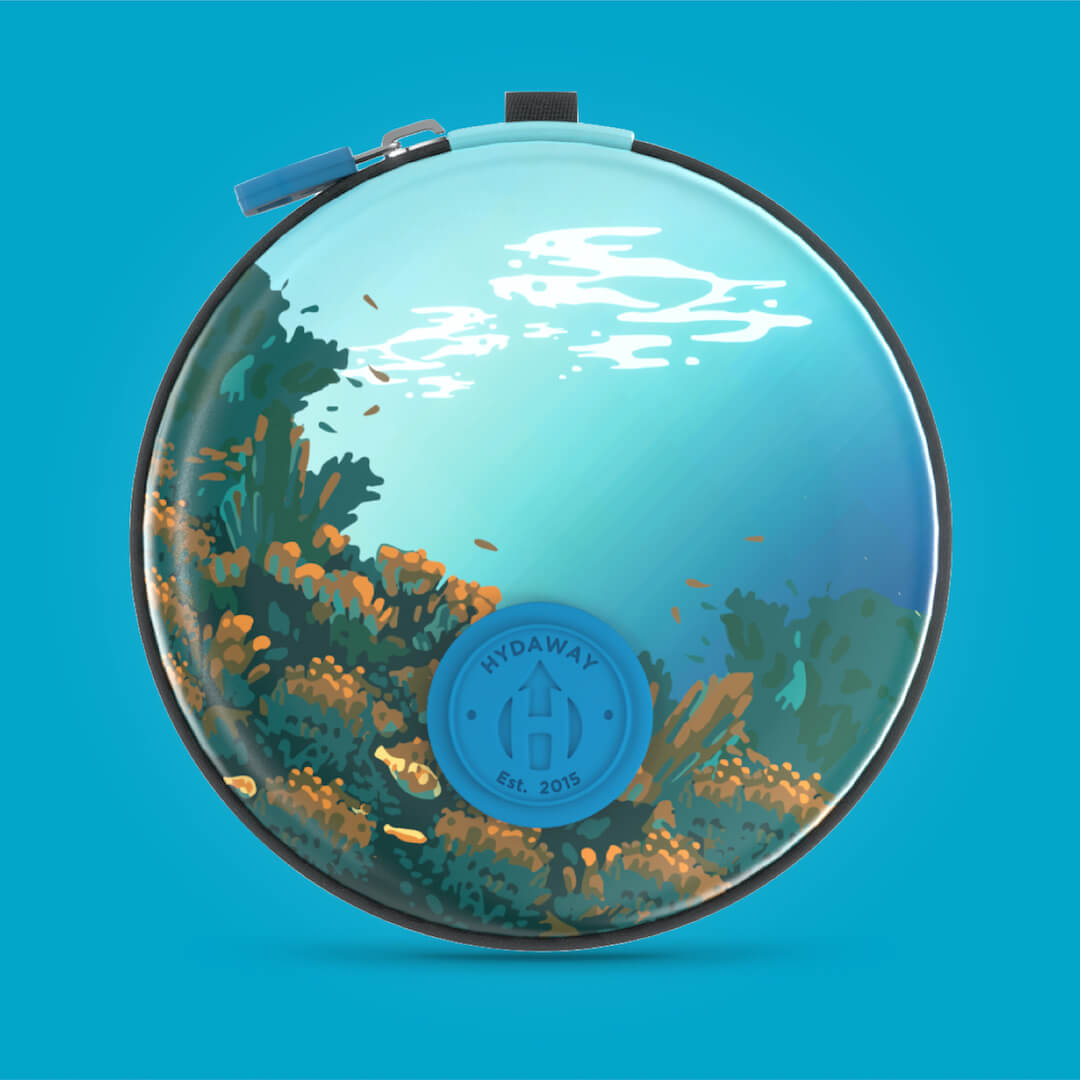
The HYDAWAY Travel Kit is a perfect example of smart design. The set includes TSA-approved silicone bottles that are tough enough to prevent leaks but flexible enough to squeeze out every last drop. Having a dedicated, reliable kit means no more last-minute scrambling for containers that fit the rules. To dive deeper into finding the perfect options, you can explore our guide to the best reusable travel containers for every need.
Think Beyond the Toiletry Bag
Smart, space-saving gear can help you stay prepared for more than just your morning routine. A week-long trip often involves grabbing quick meals or snacks on the go, whether it's yogurt from a local market in Greece or packing leftovers from a great restaurant in New York. This is where multi-purpose items really prove their worth.
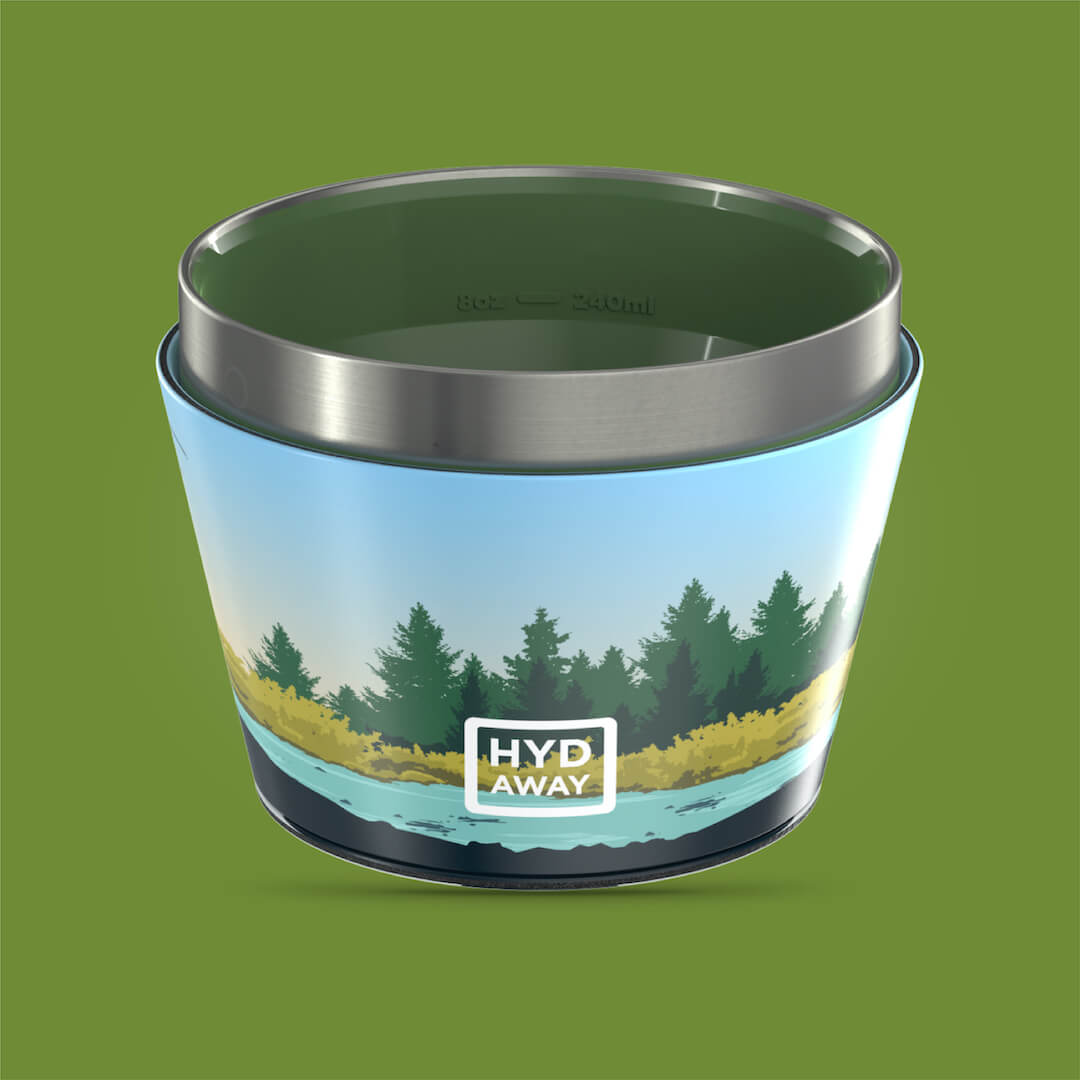
A product like the HYDAWAY Collapsible Insulated Bowl is a secret weapon for the self-sufficient traveler. You can use it for your morning oatmeal, pack a salad for a picnic lunch, or store snacks for a long train ride. When you're done, it collapses completely flat, taking up virtually no space in your bag. This is how you pack for a week in a carry-on like an expert—by choosing gear that serves a purpose and then disappears.
Thinking about what can be swapped out for a solid or collapsible alternative is a game-changer for carry-on travel. It's less about sacrificing items and more about being strategic with your choices.
Carry-On Liquid Alternatives and Space-Savers
Here’s a quick comparison of how traditional liquid items stack up against their more travel-friendly counterparts.
| Item Category | Traditional Liquid Option | Space-Saving Alternative | Benefit |
|---|---|---|---|
| Hair Care | 3.4 oz bottle of shampoo | Solid shampoo bar | Frees up liquid bag space; no risk of spills. |
| Fragrance | Glass perfume bottle | Solid perfume stick or tin | Durable and compact; not subject to liquid rules. |
| Skincare | Bottle of face wash | Solid cleansing bar/stick | Multi-purpose; saves liquid space for serums. |
| Food & Drink | Buying single-use containers | HYDAWAY Insulated Bowl | Reusable for meals/snacks; collapses flat after use. |
This strategic approach to toiletries and on-the-go essentials transforms a major packing headache into a simple, streamlined process. Once you get the hang of it, you'll wonder why you ever packed any other way.
Choose the Right Bag and Maximize Every Inch
Think of your carry-on as more than just a box for your stuff; it's the foundation of your entire one-bag travel system. Getting this first step right sets you up for a smooth trip, while the wrong bag can mean a whole lot of frustration at the gate. Learning how to pack for a week in a carry-on starts with picking the perfect bag and then treating its interior like a master-level puzzle.
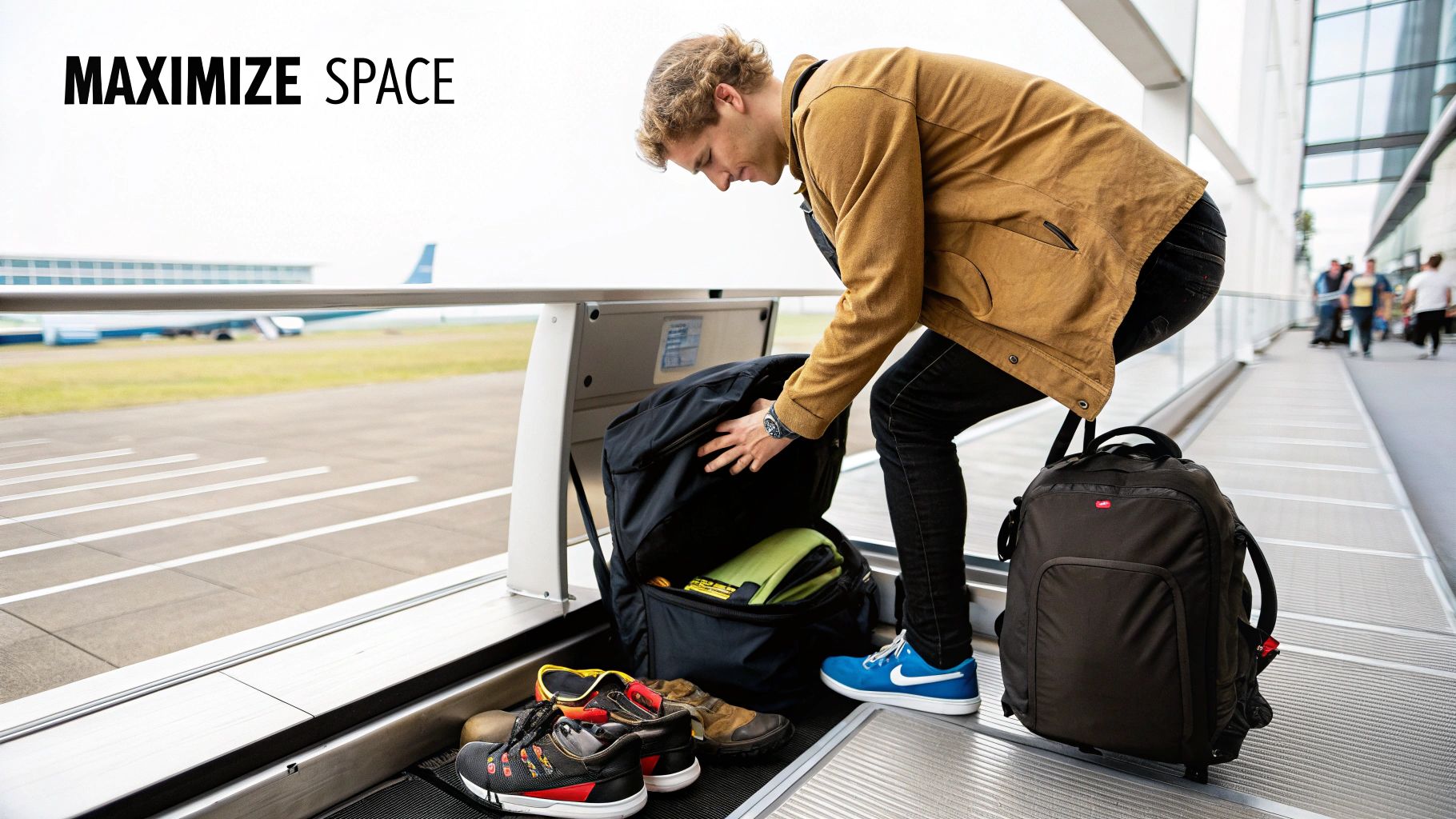
The market for carry-on luggage is absolutely exploding, which tells you one thing: travelers are done with checking bags. The North American carry-on market alone hit a value of around $2.33 billion USD, proving just how popular this travel style has become. Most airlines stick to a size limit around 22 x 14 x 9 inches, so bag designers work hard to max out every cubic inch within those rules—and you should, too. You can get a deeper dive into how luggage market dynamics are shaping travel on cognitivemarketresearch.com.
Hard-Shell Spinner vs. Soft-Sided Backpack
Your first big decision is whether to go with a hard-shell roller or a soft-sided travel backpack. They both have their moments, and the right choice really comes down to your travel style.
- Hard-Shell Spinners: These guys are the champions of protection and easy gliding. That rigid exterior is a lifesaver for fragile souvenirs, and the four spinner wheels make navigating a smooth airport terminal a breeze. The downside? They have zero give when you're trying to jam them into a packed overhead bin and are a nightmare on cobblestone streets.
- Soft-Sided Backpacks: This is where you get incredible flexibility. A backpack's soft body can squish into tight spots, and having your luggage on your back frees up your hands for navigating stairs, hopping on public transit, or weaving through a crowded market. The trade-off is pretty obvious: less protection if your bag takes a tumble.
If I'm planning a European adventure with multiple train rides and lots of exploring old cities, a backpack wins every time. For a business trip where I'm just moving between airports, taxis, and hotels, the effortless roll of a spinner is hard to beat.
Become a Space Detective
Once you’ve got your bag, it's time to uncover its hidden potential. Modern carry-ons are full of clever little compartments and overlooked zones that most people never even notice.
Go on a scavenger hunt inside your own bag. Look for those small zippered pockets on the inside of the lid, hidden sleeves behind the main lining, and any external pouches meant for quick-grab items. These are the perfect spots for corralling small but crucial gear like charging cables, adapters, and travel documents, keeping them from disappearing into the main abyss.
The most overlooked space in any suitcase is inside the items you're already packing. Think of your shoes not just as footwear, but as protective containers for your smallest, most delicate items.
Stuffing socks, underwear, or even a tiny bag of jewelry inside your shoes is a double-win. It uses up dead space and helps your shoes keep their shape so they don't get crushed flat.
Wear Your Bulk, Don't Pack It
This is probably the easiest and most effective space-saving trick in the book. Your bulkiest items should never even see the inside of your suitcase. Instead, they belong on you.
Planes are almost always freezing, so wearing your heaviest sweater or a light jacket is just smart planning. It keeps you comfortable and saves a ton of space. Bringing hiking boots? Wear them on the flight. That one move can free up enough room in your carry-on for two or three extra outfits, no joke.
This applies to accessories, too. If you've got a wide-brimmed hat, wear it. A bulky scarf? Drape it around your neck. You’re basically turning your body into a strategic extension of your luggage.
When you pair the right bag with a smart strategy for using every last inch, packing stops feeling like a chore and becomes an art. Every item has its place, and every bit of space serves a purpose.
Common Carry-On Packing Questions Answered
Even the most seasoned traveler has those last-minute questions that pop up while zipping up their bag. You’ve planned the outfits and Tetris’d your packing cubes, but what about those little “what if” scenarios?
Let's smooth out those final wrinkles. Think of this as the final check-in, where we tackle the most common carry-on conundrums so you can head out the door with total confidence.
What About Unpredictable Weather?
How do you pack for a week when the forecast is all over the place? The answer, in one word, is layering. Forget that bulky winter coat; it's the single biggest space-waster in any suitcase.
Instead, think of your clothes as a flexible system:
- Base Layer: Start with a thin, moisture-wicking top. A merino wool t-shirt is perfect here, since it regulates your temperature and fights off odor.
- Mid-Layer: Next, add a fleece pullover or a lightweight cardigan for that cozy warmth.
- Outer Shell: Top it all off with a packable, waterproof, and windproof jacket. This shell is your MVP—it can be worn over everything in a downpour or by itself in a light drizzle.
This simple trio gives you multiple levels of warmth and protection. You can easily adjust for anything from a chilly morning to a surprisingly sunny afternoon, all while taking up less space than one traditional jacket.
How to Handle Laundry on the Go
For a seven-day trip, you can often get away with not doing any laundry at all, especially if you’ve packed smart with odor-resistant fabrics like merino wool. But for more active trips or if you just prefer that fresh-clothes feeling, managing laundry is surprisingly easy.
You don’t have to hunt down a laundromat. Just pack a few laundry detergent sheets or a travel-sized bottle of detergent. Washing essentials like socks, underwear, and a t-shirt in your hotel sink takes just a few minutes before bed. If you've packed quick-drying fabrics, they’ll be fresh and ready to wear by morning.
Can You Really Fit Enough Shoes?
Shoes are notoriously bulky, but you absolutely do not need more than three pairs for a week-long trip. This is a tried-and-true strategy that savvy travelers have sworn by for years.
First, wear your heaviest, bulkiest pair on the plane. That could be your hiking boots for a trip to Banff or your chunky sneakers for exploring Tokyo. Second, pack one versatile, comfortable walking shoe that can handle miles of sightseeing but still looks good enough for dinner. Finally, toss in a situation-specific third pair, like flat sandals for a beach trip or packable dress shoes for a formal event.
Here's a classic space-saving hack for a reason: stuff your packed shoes with socks or other small items. You not only reclaim dead space but also help your shoes keep their shape in transit.
Where Do HYDAWAY Products Fit In?
HYDAWAY gear was literally designed to solve these exact space-related travel problems. Think about it: a normal rigid water bottle takes up the same amount of room whether it's full or empty.
The HYDAWAY Collapsible Water Bottle, on the other hand, flattens to just over an inch thick once you're done, easily sliding into a pocket or a tiny crevice in your bag.
It's the same idea with the Collapsible Insulated Bowl. You can pack snacks or save leftovers from a great meal without dedicating permanent space to a clunky container. Once you're finished, it collapses flat, freeing up that precious real estate for souvenirs on the way home. Our products are designed to exist only when you need them and disappear when you don't—the ultimate principle of carry-on packing.
Ready to master the art of space-saving? Equip yourself with the best collapsible gear from HYDAWAY and discover how much more you can do with less. Shop the full collection at https://myhydaway.com.