

Filtered Water Bottles for Hiking Your Ultimate 2026 Guide

A good filtered water bottle for hiking is more than just another piece of gear—it's your lifeline on the trail. Think of it as non-negotiable safety equipment that lets you turn a questionable stream or lake into safe, clean drinking water, sidestepping the nasty waterborne illnesses that can bring any adventure to a screeching halt.
Your Essential Companion for Safe Trail Hydration
When you're mapping out your next adventure, whether it's exploring one of the top 10 hikes in Colorado or summiting a new peak, reliable hydration should be at the top of your list. That crystal-clear alpine stream might look perfectly pure, but it can be swimming with invisible pathogens.
Nasty microscopic threats like Giardia, Cryptosporidium, and E. coli are all too common in natural water sources, usually left behind by wildlife. Taking a sip of that water unfiltered can lead to some serious gastrointestinal misery, turning a dream hike into a total nightmare. A filtered water bottle is like your personal bodyguard, standing between you and those unseen dangers.
Why Every Hiker Needs a Filter
And this isn't just for the hardcore thru-hikers logging hundreds of miles. Even on a simple day hike, a filtration system gives you incredible peace of mind and seriously lightens your pack. Instead of lugging all the water you'll need for the day, you can just carry a smaller amount and refill from sources along the trail. It’s a simple switch that cuts weight, letting you hike farther and feel better doing it.
A filtered water bottle is an investment in your health and your hiking experience. It empowers you with the freedom to explore wild places confidently, knowing you have a safe source of hydration readily available whenever you find water.
This growing awareness is causing a huge shift in the outdoor gear market. The global demand for water filter bottles is massive—valued at $2.5 billion in 2025 and on track to hit $4.2 billion by 2033. This boom is driven by hikers and travelers who simply refuse to compromise on water safety.
The HYDAWAY Advantage
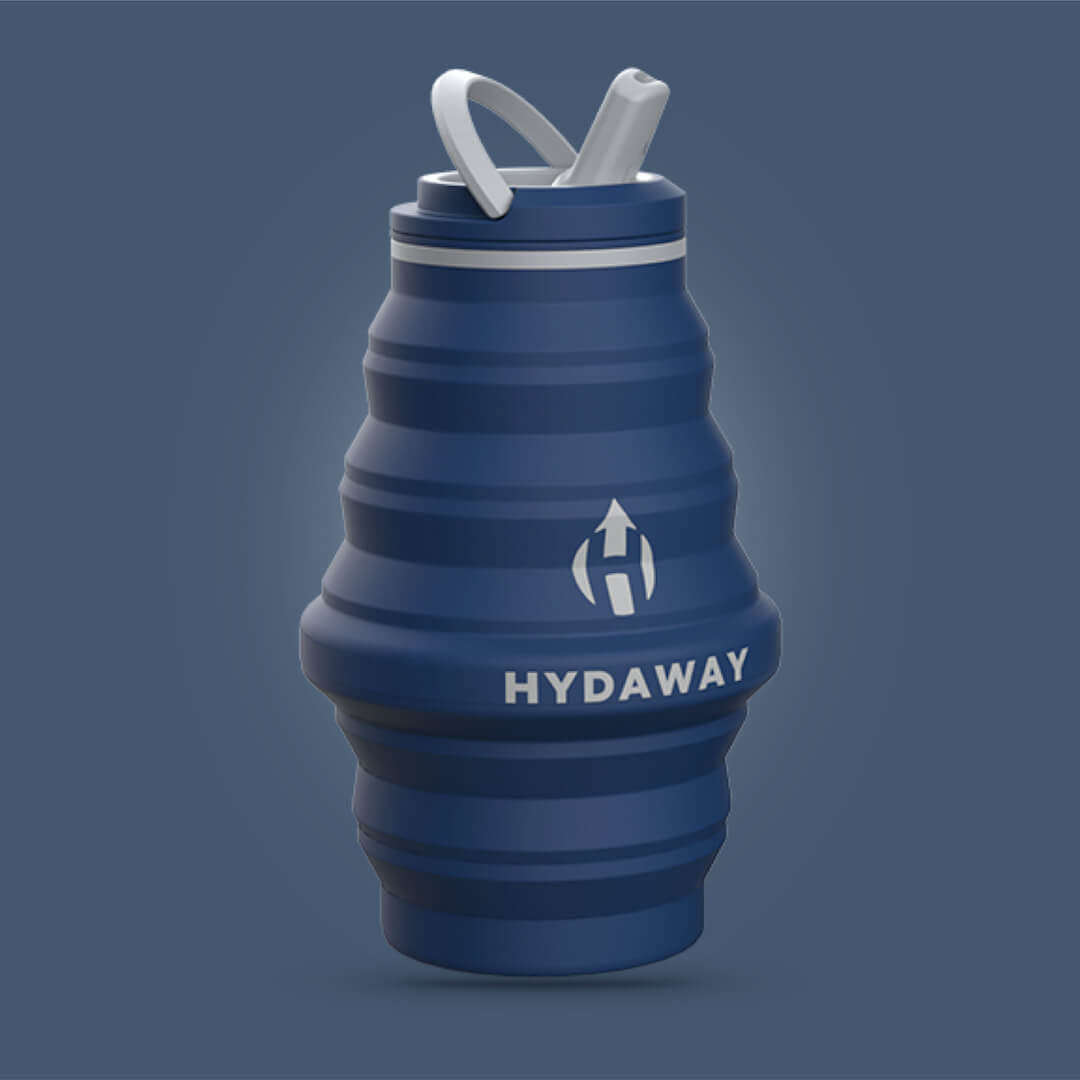
This is where gear designed for modern adventurers really makes a difference. At HYDAWAY, our mission is all about creating ultra-portable, collapsible gear that perfectly fits the needs of hikers who want both performance and packability.
A rigid, bulky water bottle takes up the same precious pack space whether it’s full or bone-dry. That's the exact problem we set out to solve. Picture this:
- You start your day hike with a full 25oz HYDAWAY bottle.
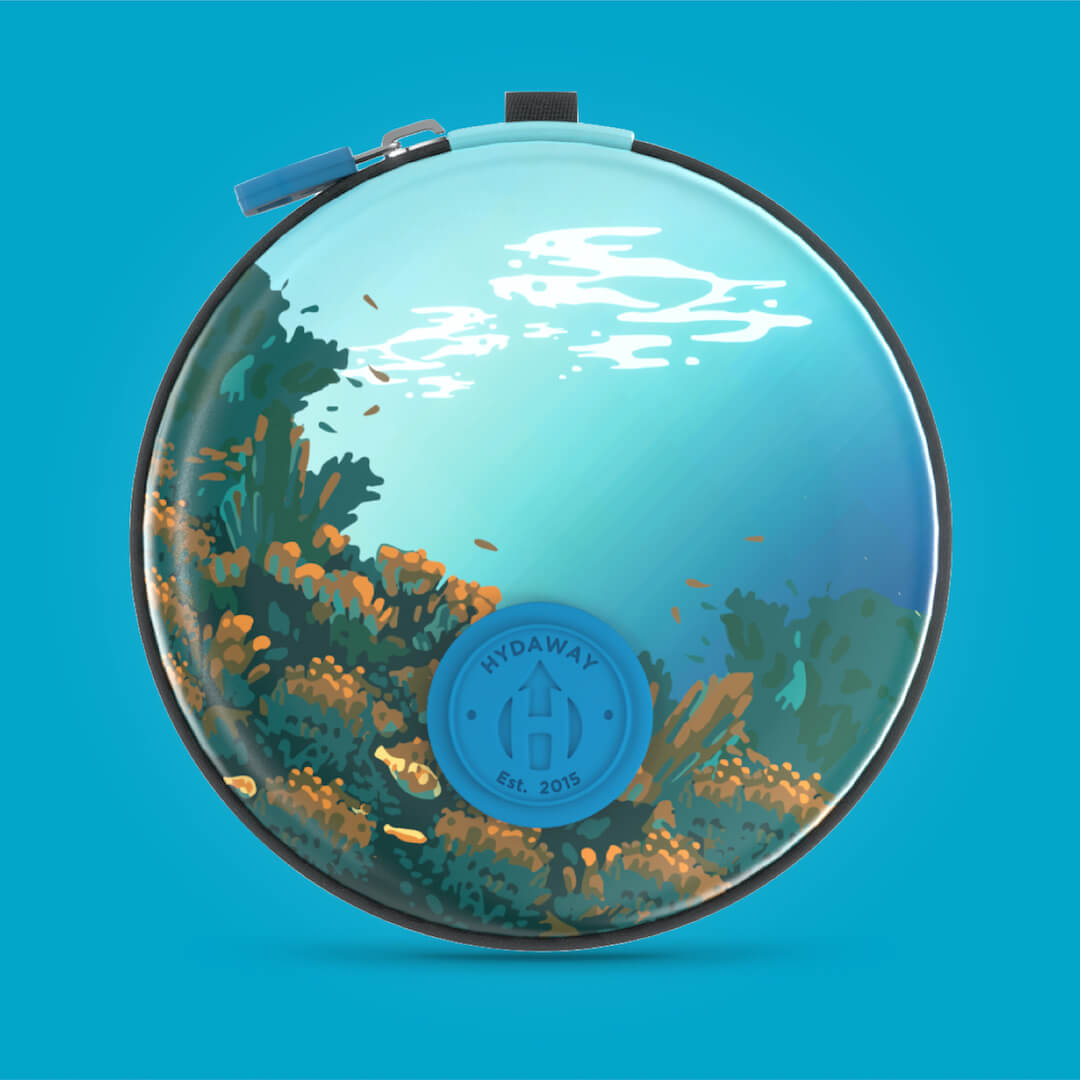
- After a couple of miles, you drink it dry and collapse it down to a slim, 1.5-inch disc that you can stash in your pack's hip belt pocket.
- When you reach the next stream, you just expand it, fill it up, attach a compatible filter, and you’ve got fresh, safe water in seconds.
This approach is all about smart, lightweight backpacking. When you pair a space-saving HYDAWAY bottle with a reliable filter, you’re creating a hydration system that’s incredibly effective and ridiculously convenient. It’s a game-changing strategy for anyone looking to carry less and do more out on the trail.
How Trail Water Filtration Actually Works
There's nothing quite like dipping your bottle into a crisp mountain stream and wondering if that crystal-clear water is actually safe to drink. How can a tiny device instantly make it okay? It’s not magic, but it is some seriously clever science. Once you understand how filtered water bottles for hiking do their job, you’ll trust your gear to keep you hydrated and healthy, no matter where the trail takes you.
Think of a water filter as a hyper-selective bouncer for your water bottle. Its only job is to keep the troublemakers out—we're talking bacteria, parasites, and dirt—while letting the good stuff (pure H₂O) flow right on through. This all comes down to a few key technologies that work together to make sure every sip is a safe one.
The Science of Straining: Mechanical Filtration
The workhorse of most hiking filters is mechanical filtration. This method uses a physical barrier, usually a hollow fiber membrane, to literally strain the bad stuff out of your water. Picture a bundle of microscopic straws packed together, each with pores so tiny that water molecules can slip through, but larger pathogens get stopped dead in their tracks.
These pores are measured in microns, and size matters. To be effective against the usual backcountry culprits, you need a filter with a pore size of 0.2 microns or smaller. That’s small enough to block:
- Bacteria: Like nasty E. coli and Salmonella.
- Protozoa: Including parasites like Giardia and Cryptosporidium that can ruin any trip.
When you squeeze your bottle or sip through the filter, you’re forcing water through this intricate web. The harmful microorganisms can't fit and get trapped on the outside. It’s a beautifully simple and effective method that’s perfect for clearing up the cloudy water you might find anywhere from a local state park to the Pacific Crest Trail.
This diagram perfectly illustrates how a pristine-looking stream can harbor hidden risks, and how a filter acts as your essential safety net.

Seeing the journey from a seemingly clean source to a final, safe drink really hammers home the critical role filtration plays on every adventure.
Tackling Tastes and Smells: Adsorption
Ever filtered water that was technically safe but still tasted a bit… swampy? That’s where adsorption comes into play. This process uses a special material, most often activated carbon, which acts like a magnet for certain impurities.
Instead of physically blocking contaminants, activated carbon has an incredibly porous surface that grabs onto chemicals, pesticides, and the organic compounds responsible for funky tastes and odors. As water flows past, these unwanted extras stick to the carbon's surface, leaving your water tasting fresh and clean.
Many of the best modern filters combine a hollow fiber membrane with an activated carbon element. This two-stage punch gives you the best of both worlds: the mechanical filter handles the dangerous pathogens, while the carbon makes the water taste great.
For a practical example, imagine you're hiking in the fall and fill up from a lake with a lot of algae and decaying leaf tannins. The mechanical filter makes the water safe to drink, but it’s the activated carbon that will make it taste crisp and enjoyable.
Neutralizing Viruses with UV Light
While you'll usually find it in standalone purifiers rather than built into bottles, UV purification is another powerful tool in the hydration arsenal. This technology uses ultraviolet light to scramble the DNA of microorganisms—including the tiny viruses that are too small for most mechanical filters to catch.
A UV purifier doesn't actually remove anything from the water. It just zaps the pathogens, rendering them unable to reproduce or make you sick. This tech is most effective in clear water, since sediment and murkiness can shield the microbes from the UV rays. It's an excellent option for international travelers headed to regions where waterborne viruses are a known concern, but the water sources are generally free of silt.
Demand for these advanced solutions is booming. The market for water bottles with filters is projected to grow by USD 514.54 million between 2025 and 2030, all thanks to hikers and travelers seeking safe, reliable hydration. Plus, modern hollow fiber technology can now tackle emerging threats like PFAS "forever chemicals" with up to 99% efficiency—a huge deal when you consider how much of the world's wastewater goes untreated. You can dive deeper into these trends and filter innovations by exploring the latest industry analysis.
How to Choose Your Perfect Hiking Water Filter
Not all hiking water filters are created equal. The "best" one isn't some universal champion—it's the one that perfectly fits your style of adventure. Picking the right filter is less about a single top product and more about knowing the trade-offs between what you gain and what you give up.
Get this part right, and you'll have a hydration partner that feels like a natural extension of your gear, not a clunky burden. Think of this as your trail-tested guide to making a choice you'll be happy with miles down the line.
Weight and Packability
For any hiker, every single ounce counts. The weight and bulk of your gear can be the difference between a comfortable hike and a miserable slog. When it comes to your water bottle and filter, this is one place you can make some serious efficiency gains.
Let’s look at two different hikers:
- The Trail Runner: Moving fast and light is everything. A bulky, heavy filter system is out of the question. They need something feather-light with an integrated filter for quick sips on the move. The Katadyn BeFree, weighing only 2.7 ounces, is a classic choice for exactly this reason.
- The Thru-Hiker: Covering huge distances for weeks or months, a thru-hiker craves durability but also maximum space efficiency. A rigid bottle is a real pain because it takes up the same amount of pack space whether it's full or empty.
This is where your HYDAWAY bottle becomes a secret weapon. Pairing a lightweight, standalone filter like a Sawyer Squeeze with a HYDAWAY 25oz collapsible bottle creates a killer system. When it’s empty, the bottle shrinks down to a slim disc, freeing up precious pack space for extra food or gear. This kind of flexibility is a game-changer for long-haul hikers whose gear has to be as adaptable as they are. You can learn more about finding the right reusable water filter setup in our detailed guide.
Flow Rate and Filter Lifespan
Flow rate is simply how fast you can get water through the filter. Trust us, a slow flow rate can be incredibly frustrating when you’re thirsty and tired. Some filters, like the Katadyn BeFree, can pump out up to 2 liters per minute, while others are much slower and take a lot more effort.
Pro-Tip: A filter's flow rate will always slow down as it gets clogged with gunk from the water. Make sure you get a filter that’s easy to clean or backflush out on the trail to keep it working like new.
Filter lifespan, measured in liters or gallons, tells you how much water it can clean before it’s time for a replacement. A weekend hiker might be perfectly happy with a filter rated for 1,000 liters. But a thru-hiker? They’ll need something much more heavy-duty, like a Sawyer Squeeze which is rated for an incredible 100,000 gallons. A longer lifespan means a lower cost per liter and one less piece of gear to worry about replacing on a long trip.
Durability and Certifications
Your water filter is a piece of safety equipment, plain and simple. It has to be tough. A bottle that cracks or a filter that fails mid-trip can put you in a seriously bad spot. Look for bottles made from durable, BPA-free materials like TPU that can handle the drops, squishes, and general abuse of trail life.
Just as important are the NSF/ANSI certifications. These are independent, third-party standards that prove a filter actually does what it claims to do.
- NSF/ANSI Standard P231: This is the big one. It tests purifiers for their ability to remove bacteria, viruses, and cysts from nasty, challenging water. Seeing this label gives you real peace of mind.
- NSF/ANSI Standard 42: This standard is for aesthetic stuff, like reducing chlorine, funky tastes, and odors. This is usually handled by an activated carbon element in the filter.
Choosing gear with these certifications ensures your filtered water bottle for hiking isn't just a handy gadget—it's a reliable tool you can trust to protect your health out there.
A Practical Field Guide to Using and Maintaining Your Filter
 Having one of the best filtered water bottles for hiking is a great first step, but knowing how to use it and care for it on the trail is what really matters. Getting the technique right doesn't just keep you safe and hydrated—it can dramatically extend the life of your filter.
Think of your filter like any other piece of high-performance gear in your pack. It needs a little love to work its best. From the moment you unbox it to the way you pack it away after a trip, these tips will keep your hydration system flowing smoothly.
Prepping Your Filter for First Use
Before you even think about hitting the trail, you’ve got to prep that brand-new filter at home. Most filters, especially ones with activated carbon, come with a bit of loose carbon dust left over from manufacturing. You’ll want to flush that out.
Just attach the filter to a bottle and run a liter or two of clean tap water through it. Keep going until the water is perfectly clear. This quick prime gets rid of any weird tastes and makes sure your first sip on the trail is a fresh one. It’s always a good idea to check the manufacturer's instructions for your specific model, too.
Field Use Best Practices
Where and how you collect water has a huge impact on your filter's flow rate and how long it lasts. Sure, they're built for dirty water, but you can make their job a whole lot easier and avoid clogs with a few smart moves.
- Seek Clearer Water: Whenever you can, find the clearest and calmest part of a stream or lake. Try to avoid scooping up a bottle full of silt, sand, and other floaties.
- Scoop from the Surface: The cleanest water is usually just a few inches below the surface. Dip your bottle—like a HYDAWAY collapsible—just deep enough to get past any scum on top but above the sediment kicked up from the bottom.
- Let Sediment Settle: If murky water is your only choice, no worries. Fill up your HYDAWAY bottle and let it sit for a few minutes. The gunk will settle to the bottom, giving your filter a much cleaner source to work with before you squeeze it into a second bottle.
A filter clogged with sediment is a filter that works harder, has a slower flow rate, and wears out faster. Treating your filter with care in the field is a simple habit that pays huge dividends in performance and longevity.
On-Trail Filter Maintenance
Even if you're a pro at finding clean water, every filter will eventually start to slow down. When you notice that flow rate dropping, it’s time for some quick field maintenance. The go-to method is backflushing.
Backflushing is just forcing clean water backward through the filter to push out all the trapped grit. Many filters, like the popular Sawyer Squeeze, come with a syringe just for this. If you’re traveling with two HYDAWAY bottles, you can also fill one with already-filtered water, screw on the filter's output nozzle, and give it a good, firm squeeze into the "dirty" bottle. It’s a simple trick that can get your flow rate back to normal in seconds.
Post-Trip Care and Storage
What you do when you get home is just as important as what you do on the trail. If you store your filter improperly, you risk mold and mildew growth, which can ruin it for good.
- Backflush Thoroughly: As soon as you're back, give your filter a really good backflush with clean tap water to get rid of any leftover trail gunk.
- Sanitize (Optional but Recommended): For long-term storage, some brands suggest a quick flush with a very mild bleach solution to kill any stubborn microbes. Just be sure to check your filter's specific instructions first.
- Air Dry Completely: This is the most important step! Shake out all the extra water you can, then set the filter out to air dry for several days until it's bone dry. A damp filter is a perfect breeding ground for mold.
Proper cleaning goes for your bottle, too. Using some effective bottle cleaning tablets is an easy way to keep your whole system fresh and ready for the next adventure.
Know When to Say Goodbye
Every filter has a lifespan, and it’s critical to know when it’s time for a new one. The most obvious sign is a flow rate that stays slow even after a thorough backflushing. You should also always check for any cracks or damage. And finally, never let a wet hollow-fiber filter freeze. When water freezes, it expands, and that ice can create tiny, invisible cracks in the filter membrane that make it totally unsafe. If you even suspect your filter might have frozen, play it safe and replace it.
Building Your Ultimate Hydration System with HYDAWAY
 The best gear is the kind that works for you, adapting to whatever adventure you have planned. While all-in-one filtered water bottles for hiking seem convenient, a truly flexible system puts you in the driver's seat. This is where we designed our HYDAWAY bottles to shine, letting you build a lightweight, space-saving hydration kit that’s just right for your trip.
Think of it like building with LEGOs. Instead of getting stuck with one bulky, specialized piece, you can mix and match. Pair a high-performance filter you trust with our ultra-packable bottles, and you’ve got total freedom on the trail.
Your Go-To Filter and Bottle Combo
Many of the most popular inline filters out there, like the Katadyn BeFree, use a standard 42mm threaded opening. We designed our HYDAWAY 17oz and 25oz collapsible bottles with the very same thread size, making them a perfect match. The whole process is incredibly simple:
- Find your water source: Hike to that beautiful stream, lake, or river.
- Fill your HYDAWAY: Pop open your collapsed bottle and scoop up the water.
- Attach the filter: Screw your compatible 42mm filter directly onto the bottle.
- Drink clean water: Just squeeze the bottle for fresh, safe water on the spot.
This direct-fit system is a lifesaver for day hikers and trail runners. Imagine you’re exploring Yosemite. You can start the day with a full bottle, and after you drink it, collapse it down to a slim 1.5-inch disc. You can just tuck it in your pocket and forget it's even there until your next refill.
The Ultimate Multi-Tool for Hydration
The real magic of using HYDAWAY bottles in your kit is just how versatile they are. Their usefulness goes way beyond just one type of filter—they can play a key role in almost any water treatment plan you can dream up.
Take thru-hikers on the Appalachian Trail, for instance. Many of them swear by filters with a 28mm thread, like the famous Sawyer Squeeze. While it won't screw directly onto a HYDAWAY, our bottles make the perfect "dirty water" bag. You can easily use your HYDAWAY to scoop water from a shallow stream, then squeeze it through your Sawyer filter into another bottle for clean storage.
By separating the bottle from the filter, you gain so much flexibility. A HYDAWAY bottle can be your dirty water collector, your clean water reservoir, or your main drinking vessel—it just adapts to whatever your trip needs.
This adaptability is also perfect for gravity filter systems, which are fantastic for setting up a basecamp or for group trips. Use a HYDAWAY to easily gather water and pour it into your gravity bag. Once the water is purified, you can fill up another collapsed HYDAWAY, giving everyone a lightweight, personal bottle to use around camp.
For the modern traveler, this modular setup is a dream come true. A digital nomad can toss a complete hydration kit—a Sawyer filter and two HYDAWAY bottles—into a tiny corner of their carry-on. This one setup has them covered for safe drinking water, whether it’s from an airport fountain in Europe or a questionable tap in Southeast Asia, all without eating up precious luggage space. It’s the best way we know to carry less and do more.
Your Adventure-Specific Filtration Strategy
There’s no single “best” water filter for every trip out there. The perfect setup for a quick day hike would be overkill on a global adventure, and what you need for a week in the backcountry won’t be the most convenient for a quick trail run.
Matching your hydration gear to your trip is a strategy. It ensures you have safe, clean water without weighing you down. Let's look at how to build the right water plan for three common adventures, so you can pack with confidence no matter where you're headed.
Day Hikes and Trail Runs
For quick outings, it's all about moving light and fast. You need a simple system that lets you grab water and go without breaking your stride. An all-in-one bottle with the filter built right into the lid is a fantastic, no-fuss option.
Another great way to go is pairing a lightweight inline filter with a collapsible bottle. Screw a Katadyn BeFree filter onto a HYDAWAY 25oz bottle, and you’ve got an incredibly powerful, feather-light system. You can start the trail with your bottle full, and once it's empty, just collapse it into a tiny disc that disappears in your pocket—no more bulky, sloshing bottle to deal with.
Multi-Day Backpacking Trips
When you’re out for several days, your water needs get bigger. You're not just drinking, you're cooking and cleaning at camp, and you might even be filtering for your whole crew. This is where a high-capacity gravity filter really shines, but those systems are only as good as the containers you use with them.
Here's how HYDAWAY bottles become your backcountry secret weapon:
- Dirty Water Collection: A collapsible HYDAWAY is the perfect scoop for grabbing water from shallow streams to fill your main gravity bag. The wide mouth makes it a breeze.
- Clean Water Storage: After your gravity filter works its magic, you can fill up a few collapsed HYDAWAY bottles with fresh, clean water. This gives everyone their own personal, lightweight bottle for sipping around the campfire or taking on a short summit push from basecamp.
This modular setup gives you a ton of flexibility and keeps your pack organized. If you’re looking for more ways to lighten your load, our guide on using a collapsible water bottle for hiking is packed with great tips.
International Travel and High-Risk Areas
Traveling to places with questionable water sources changes the game completely. Suddenly, your main concern isn't just bacteria and protozoa, but also viruses, which are too tiny for most standard hiking filters to stop. For these trips, you absolutely need a purifier.
A purifier, like the Grayl GeoPress, is designed to eliminate viruses in addition to bacteria and protozoa. This is non-negotiable for travel in many parts of the world where water quality can be compromised.
Even when you're carrying a purifier, a HYDAWAY bottle is still one of the best travel companions you can have. Use it as your everyday bottle, filling it from safe taps or from your purifier. When you're navigating airports and living out of a suitcase, its packability is a lifesaver, giving you a reliable water bottle that takes up virtually no space in your luggage.
Your Filtered Water Bottle Questions, Answered
Even with the best gear guides in hand, you probably still have a few questions floating around. That’s totally normal. Let's tackle some of the most common ones we hear from fellow hikers, giving you quick, clear answers so you can hit the trail with total confidence.
Do I Really Need a Filter if the Water Looks Clean?
Yes, absolutely. This is probably the most important safety rule in the backcountry. That crystal-clear stream might look pristine, but it can be loaded with microscopic troublemakers like Giardia, Cryptosporidium, and E. coli that are completely invisible.
These nasty bugs come from wildlife (or even other humans) upstream and can lead to some seriously unpleasant gastrointestinal issues. A quality filtered water bottle for hiking isn't a luxury; it’s an essential piece of gear that makes questionable water safe to drink.
What Is the Difference Between a Filter and a Purifier?
Think of it as two levels of protection. A water filter is your best friend for most hiking adventures in North America and Europe. It’s fantastic at physically blocking larger pathogens like bacteria (think E. coli) and protozoa (like Giardia).
A water purifier, on the other hand, does everything a filter can do plus it eliminates or neutralizes viruses. Viruses are tiny and can slip through many standard filters. A purifier, like the Grayl GeoPress, is a must-have for international travel to developing countries or any area where you’re not sure about the water quality.
For a real-world example, a hiker on the Pacific Crest Trail would be perfectly fine with a filter. But if you're trekking in Nepal or parts of South America, you should definitely carry a purifier to guard against viruses.
How Often Should I Replace My Filter Cartridge?
This really depends on the brand. Lifespans can range from 1,000 liters for a filter like the Katadyn BeFree to an incredible 100,000 gallons for the Sawyer Squeeze. Your best bet is to always check the manufacturer’s instructions for your specific model.
The most obvious sign that your filter is on its last legs is when the flow rate slows to a frustrating trickle that backflushing just can't fix. It's always a good idea to keep a rough track of your usage and swap in a fresh cartridge before heading out on a big trip.
Can I Use a HYDAWAY Bottle with Any Water Filter?
You bet! We designed our HYDAWAY collapsible bottles with a standard 42mm threaded opening, making them a perfect, screw-on fit for popular inline filters like the Katadyn BeFree. No fuss, no adapters needed.
For filters with different threads, like the common 28mm Sawyer Squeeze, your HYDAWAY bottle becomes an awesome multi-tool. Its wide mouth makes it super easy to scoop water from a shallow stream. From there, just squeeze the water through your Sawyer filter and into another bottle. It’s a flexible, space-saving system that adapts to whatever adventure you're on.
Ready to build a smarter, more packable hydration kit? The HYDAWAY 17oz and 25oz collapsible bottles give you the flexibility to hike lighter without sacrificing an ounce of performance. Check out the full collection at https://myhydaway.com and see how easy it is to carry less and do more.