


Collapsible Water Bottle for Hiking: Your Trail Guide

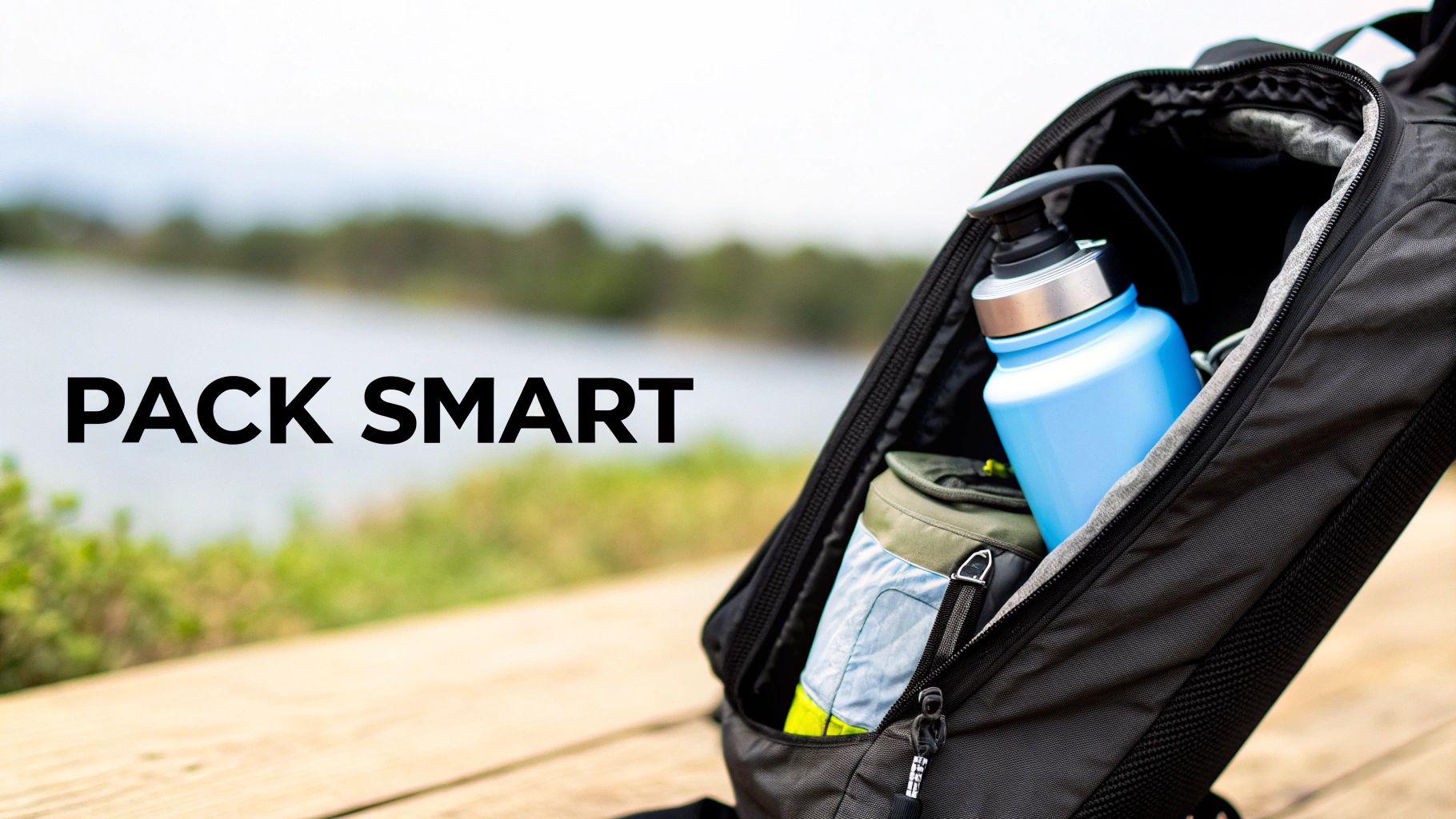
When you're out on the trail, every single inch of pack space and ounce of weight counts. A collapsible water bottle is a brilliant piece of gear that shrinks as you drink, completely changing how you manage your pack. Unlike those bulky, rigid bottles that take up the same amount of room whether they're full or empty, a collapsible one squishes down small enough to tuck into a pocket. This simple tweak means you end your hike with a lighter, quieter, and way more organized pack.
Why Smart Hikers Are Switching to Collapsible Bottles
We’ve all been there. You just crushed a tough climb, savored that last sip of water, and now you’re stuck with a big, hollow plastic bottle clanking around in your pack for the rest of the day. It’s one of those classic hiker frustrations. This is exactly why a collapsible water bottle for hiking isn't just some trendy new gadget—it's a serious upgrade to your whole hiking system.
The idea is simple but incredibly effective: your gear gets smaller as you use up your resources. Instead of hauling around empty air, you get that space back.
The Real-World Impact on the Trail
On a practical level, this translates into some major advantages on any hike, whether you're out for a few hours or a few days.
- Maximized Pack Space: Imagine you're on a popular, crowded trail. Once your bottle is empty, you can collapse it and stash it inside your pack. That frees up your side pockets for things you need to grab quickly, like snacks, your phone for a quick photo, or a rain jacket when the weather turns.
- Reduced Weight and Bulk: As you hydrate, your pack actually gets lighter and less awkward to carry on the way back down.
- A Quieter Hike: Say goodbye to that annoying sloshing and rattling from a half-empty hard bottle. The peace and quiet of the trail stays, well, peaceful and quiet.
This move toward smarter, more efficient gear is a real trend. The market for collapsible bottles was valued at $1.79 billion and is expected to jump to $2.98 billion by 2032. This isn't surprising, with more and more of us getting outdoors and looking for gear that’s both practical and sustainable. You can get more insights on this growing market over at Emergen Research.
A collapsible bottle turns a rigid liability into a pocket-sized asset. You literally finish your hike feeling lighter and more organized than when you started.
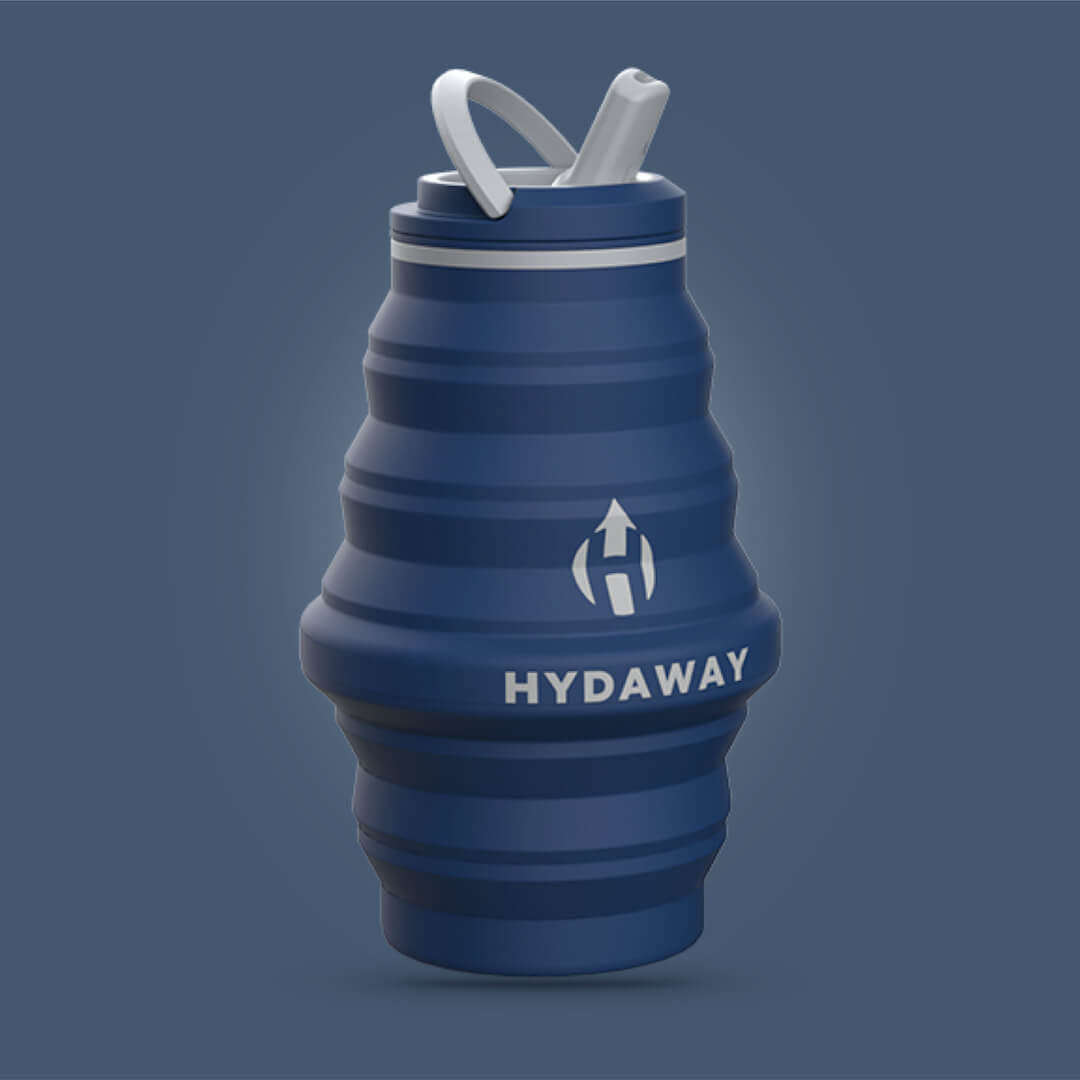
This is the exact problem we designed the HYDAWAY collapsible bottle to solve. When it’s full, the 25oz bottle gives you plenty of water for a solid day hike. But once it's empty, it squishes down to just over an inch tall. That means you can easily toss it in your hip belt pocket, keeping your main pack neat and ready for that celebratory post-hike meal without gear getting in the way.
What to Look for in Your Next Hiking Bottle
Choosing the right collapsible water bottle for hiking is a bit like picking the right hiking boots. You wouldn't wear flimsy sneakers for a rocky mountain climb, and your water bottle needs to be just as ready for the demands of the trail.
What works for a casual day hiker might not cut it for someone tackling a multi-day trek in the backcountry. It all comes down to how you hike, where you hike, and what you value most in your gear. Let's break down the essential features to look for so you can find a bottle that truly serves you on your adventures.
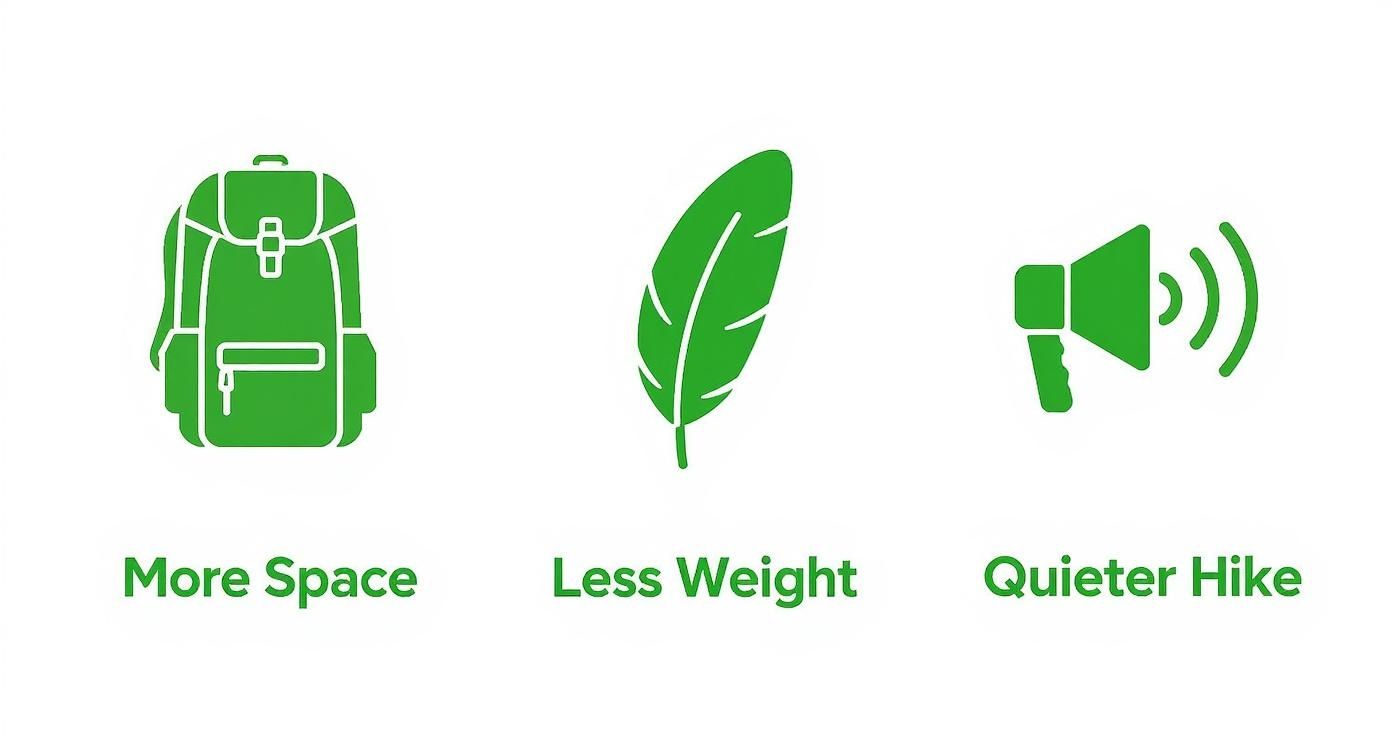
This simple breakdown shows just how much a collapsible design can improve your time on the trail. By saving space, cutting down on weight, and getting rid of that annoying water sloshing sound, it's a small change that makes a big difference.
To help you weigh your options, let's put these bottles head-to-head with the classic rigid ones many of us started with.
Comparing Collapsible vs Rigid Hiking Bottles
| Feature | Collapsible Bottle (e.g., HYDAWAY) | Rigid Bottle (e.g., Nalgene) |
|---|---|---|
| Packability | Excellent. Compresses down to a small disc, saving significant pack space when empty. | Poor. Takes up the same amount of space whether it's full or empty. |
| Weight | Very lightweight. Helps reduce overall pack weight, especially on long treks. | Heavier. Adds noticeable weight to your pack from the start. |
| Durability | Highly durable food-grade silicone is tough, flexible, and resists impacts. | Very durable. Hard plastic is famously tough but can crack from a hard fall. |
| Ease of Use | Simple to fill and drink from. Can be less stable when partially full. | Very stable and easy to handle. Functions like a standard bottle. |
| Noise | Quiet. The flexible body doesn't allow for water to slosh around noisily as you walk. | Noisy. The "slosh factor" is a well-known trail annoyance. |
| Cleaning | Easy to clean, especially with a wide-mouth opening. Most are dishwasher safe. | Easy to clean, with many models having a wide mouth. |
As you can see, while rigid bottles have their place, the advantages of a collapsible bottle—especially around space and weight—are hard to ignore for any hiker looking to lighten their load.
Material Matters: The Great Silicone vs TPU Debate
The material your bottle is made from is its foundation. Most quality collapsible bottles use either food-grade silicone or Thermoplastic Polyurethane (TPU).
- Silicone: This is the go-to material for bottles that need to be both rugged and incredibly compact. Silicone is super resilient, BPA-free, and doesn't leave a plastic taste in your water. It’s the magic behind HYDAWAY bottles, giving them a sturdy, accordion-style structure that lets them collapse to just over an inch tall without feeling flimsy when full.
- TPU: You'll often find this in softer, flask-style bottles. TPU is ridiculously lightweight and flexible. It’s a solid choice for minimalist hikers, but it can feel a bit floppy when it’s not completely full and might be more prone to punctures from sharp gear in your pack.
For most hikers, silicone hits that sweet spot, offering the perfect balance of packability and the ruggedness needed for unpredictable trail conditions.
Design and Usability on the Trail
Beyond the material, a bottle’s design determines how easy it is to use when you're tired, thirsty, and trying to keep your footing on uneven ground.
A wide-mouth opening is practically a non-negotiable feature for hikers. It makes refilling from a stream a breeze, works perfectly with water purifiers like a SteriPen, and simplifies cleaning. Plus, you can easily add ice or electrolyte powders without making a mess.
Just as important is a watertight, leak-proof seal. There’s nothing worse than reaching for a dry jacket only to discover it’s been soaked by a faulty cap. Look for caps with solid threads and a secure seal that lets you hike with peace of mind. For a deeper dive, check out our guide on the best collapsible water bottles to see how different designs compare.
A truly great hiking bottle is one you don't have to think about. It should fill easily, seal completely, and all but disappear when it's empty.
That’s the exact philosophy we built into the HYDAWAY 25oz bottle. Its food-grade silicone body is tough yet flexible, the wide mouth is filter-compatible, and the watertight cap guarantees your gear stays dry. When you’ve quenched your thirst, it collapses flat, checking every box for a reliable trail companion.
Are Collapsible Bottles Durable Enough for the Trail?
Let's get right to it and tackle the biggest hang-up most hikers have: can a flexible, collapsible water bottle for hiking really stand up to the abuse of the backcountry? It's a fair question. The word "collapsible" can easily sound like "fragile," but that's a myth that modern materials have completely busted.
These bottles aren't made from the kind of plastic you find in a disposable bottle. Not even close. The best ones are crafted from advanced materials like high-grade, food-safe silicone or tough Thermoplastic Polyurethane (TPU), chosen specifically for their incredible resilience.
They’re built to shrug off punctures, scrapes, and the kind of impacts that would send a rigid bottle to an early grave. And that's where their flexibility becomes a superpower.
Built to Flex, Not Break
Picture this: you're scrambling over some rocks, and your pack slips and drops onto a ledge. A hard plastic bottle takes that hit head-on, and the result is often a crack and a slow, disastrous leak all over your gear. But a silicone bottle? It just flexes, deforms to absorb the shock, and then bounces right back to its original shape.
This natural give makes them surprisingly tough. While an unlucky encounter with something sharp like a trekking pole tip could puncture just about anything, high-grade silicone has an impressive defense against everyday trail bumps and bruises. The material is strong enough to handle being squashed and expanded thousands of times without getting weak.
Modern collapsible bottles are engineered for impact. Their ability to bend and absorb force is a feature, not a flaw, making them incredibly resilient against the drops and scrapes that are inevitable on any trail.
HYDAWAY bottles are a perfect example of this. Made from a thick, durable silicone, they’re engineered to withstand being jammed into a full pack or taking a tumble on the trail. This means you can focus on your hike, not on worrying about your gear. You get the rugged reliability you absolutely need, plus the space-saving perks every hiker craves.
Maximizing Your Bottle’s Trail Lifespan
Even though they're built like tanks, a few smart habits will make sure your collapsible bottle is with you for countless adventures. Taking care of your gear is always a good idea, and these simple tips will give you total confidence in your hydration setup.
- Pack Mindfully: When your bottle is collapsed, keep it away from sharp objects. Try tucking it inside your cook pot or a pocket with soft gear, not rattling around with your keys or tent stakes.
- Proper Cap Handling: Before screwing the cap on, always check that the threads are clean. A good, clean seal prevents leaks and protects the threads from getting damaged over time.
- Avoid Over-Tightening: The seals are designed to be watertight without needing brute force. Cranking down on the cap can wear out the gaskets prematurely.
This trust in durable, reusable gear is catching on everywhere. North America and Europe are leading the charge for collapsible bottles, with Europe projected to see the fastest growth—a 13.9% increase from 2025 to 2032. This boom is all about hikers wanting sustainable products that they can actually rely on. (Source: Learn more about the collapsible bottle market growth)
With smart engineering and a little bit of care, a quality collapsible bottle isn't just a convenience—it's a tough, dependable piece of hiking gear that’s ready for anything you can throw at it.
Integrating a Collapsible Bottle into Your Hiking System
Owning the right gear is one thing; knowing how to weave it into your hiking routine is another. A collapsible water bottle for hiking isn't just a static piece of equipment—think of it as an active part of how you manage your pack. Once you get the hang of a few simple techniques, you’ll unlock its full potential on the trail.
This all starts at home with a little prep work. Before you head out, always give your bottle a quick leak test. Just fill it up, screw the cap on tight, and give it a solid squeeze over the sink. It takes less than a minute and buys you total peace of mind that everything in your pack will stay bone dry.
Smart Packing Strategies for the Trail
The real beauty of a collapsible bottle is how it adapts to your hike. Your packing strategy isn't static; it changes as you drink your water and free up space.
At the trailhead, you'll likely have your bottle full. Keep it somewhere you can grab it easily, like the side pocket of your pack. This lets you sip on the go without breaking stride. But once it's empty, the magic happens. Instead of lugging around a bulky, air-filled bottle, just collapse it.
A compressed HYDAWAY bottle shrinks down to just over an inch tall. At this point, you’ve got options:
- Tuck it inside your pack: Shove it in the main compartment, the lid, or even a hip belt pocket. That prime real estate in your side pocket is now free for a rain jacket or some snacks.
- Clip it to the exterior: Use a small carabiner and attach it to a gear loop. It’s completely out of the way but still handy for your next water stop.
This simple act means your pack literally gets smaller and lighter as you go. That return trip to the car feels just a little bit easier. You can dive deeper into these ideas in our complete guide to choosing a lightweight backpacking water bottle.
On-Trail Techniques and Pro Tips
Drinking from a flexible bottle takes a tiny bit of getting used to compared to a rigid one. Ever had the bottle walls suck together and cut off the flow? There’s an easy fix. Just give the cap a quarter-turn to loosen it before you take a drink. This lets a little air in and keeps the water flowing smoothly.
Refilling from a stream or lake is a breeze, too. The wide mouth on HYDAWAY bottles makes scooping water easy, and they're designed to be compatible with most popular water filters that screw onto standard bottle threads.
For a long day on the trail, here's a system I love: carry two 25oz HYDAWAY bottles. I fill one with plain water for all-day sipping, and the other with an electrolyte mix to replace all the good stuff I’m sweating out. It keeps my energy levels stable and my flavors separate.
This two-bottle approach keeps everything simple and efficient. Of course, staying hydrated is only half the battle—you need good fuel, too. For ideas on what to pack, check out resources like this guide on finding the best energy bars for running. When you put all these little practices together, your collapsible bottle becomes one of the smartest tools in your pack for a lighter and more enjoyable hike.
Keeping Your Collapsible Bottle Clean and Fresh
Just like any other piece of critical trail gear, your collapsible water bottle for hiking needs a little TLC to keep it performing trip after trip. Proper care is the secret to making sure it lasts for countless adventures without ever developing funky tastes or smells. After all, nobody wants a hint of last week's electrolyte mix in their fresh mountain spring water.
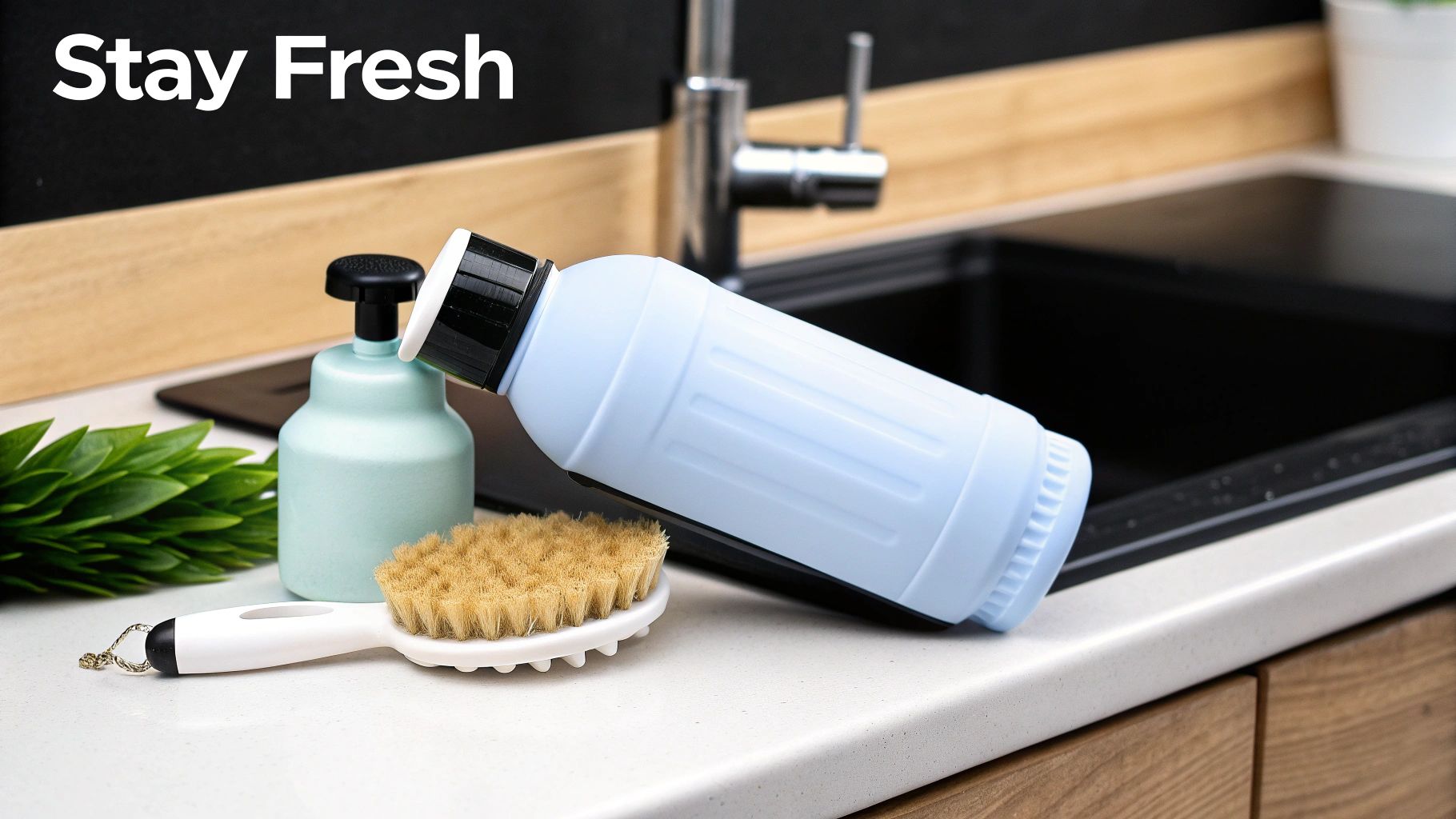
For a quick day hike, a simple rinse with warm, soapy water is usually all you need. Just fill it partway, add a drop of dish soap, give it a good shake, and rinse it out thoroughly. Easy. But after a longer trip, a deeper clean is always a good idea.
Post-Trip Deep Cleaning Methods
To really tackle any lingering flavors or just give it a full reset, you’ve got a couple of great options. These methods are perfect for getting into all the unique folds and crevices of a collapsible design where moisture can sometimes hide.
- Cleaning Tablets: Just pop in a specialized bottle-cleaning tablet and follow the directions. These fizzy tabs are designed to break down any residue without needing to scrub.
- Vinegar Solution: A mix of white vinegar and water is a classic for a reason—it’s a natural and effective disinfectant. Let it soak for about 15-20 minutes, then give it a final, thorough rinse.
This focus on easy maintenance is a huge reason these bottles have become so popular. The global collapsible water bottle market was valued at around $1.76 billion and is expected to rocket to $3.05 billion by 2035, with hikers like us driving a huge part of that demand.
Of course, modern conveniences make this whole process even simpler. HYDAWAY bottles, for example, are completely top-rack dishwasher safe. For many of our users, this is a game-changer. After a long, exhausting trip, just pop it in the dishwasher and you’re done. No hand-washing required.
By far, the most important step in cleaning is letting the bottle dry completely. Trapped moisture is the #1 enemy and the primary cause of mold and mildew.
Once it's clean, make sure every single part is fully air-dried before you put it away. Here’s a pro tip: store your bottle collapsed but with the cap off. This lets air circulate, prevents any musty smells from developing, and helps keep the silicone in perfect shape for your next adventure.
Your Collapsible Hiking Bottle Questions Answered
Even with all the benefits laid out, you might still have a few nagging questions about making a collapsible water bottle for hiking your go-to. That’s totally normal. Swapping out a critical piece of gear means trusting it to perform when you’re miles from anywhere.
So, let's tackle those practical, real-world concerns head-on. This is where we get into the nitty-gritty to give you the confidence you need to hit the trail with a bottle that really works for you.
Will My Water Taste Like Silicone or Plastic?
This is a big one, and rightly so. A weird taste can ruin your hydration experience. The good news is, with a high-quality bottle, this is pretty much a non-issue. That funky "plastic" taste you might have experienced usually comes from cheap, low-grade materials that were never meant for repeated trail use.
Premium bottles like those from HYDAWAY use 100% food-grade silicone for this very reason. It’s a stable, inert material specifically chosen because it’s taste-neutral and odor-free. You just get the pure, clean taste of your water, period.
To be extra safe with any new bottle, it’s always a good idea to give it a thorough wash with soap and water before its first outing. If you’re a fan of electrolyte powders and notice a flavor hanging around, a quick scrub with a bottle-cleaning tablet will reset it back to neutral.
How Do These Bottles Handle Freezing Winter Conditions?
You can absolutely use a collapsible bottle in the winter, but it pays to be a little strategic. Unlike rigid plastic that can get brittle and crack when frozen, silicone stays flexible even when the temperature plummets. The real challenge isn’t the bottle itself—it’s stopping your water from turning into a solid, useless block of ice.
Pro Tip for Winter Hikes: Fill your bottle only about three-quarters full with warm (not boiling) water. Then, store it upside down inside your pack, close to your back for warmth. Water freezes from the top down, so this trick keeps the cap and nozzle area liquid for longer, letting you get a drink when you need it most.
This method is a game-changer for keeping your hydration accessible on frosty mornings. The inherent flexibility of a HYDAWAY bottle gives it a massive advantage over hard bottles, which are at risk of permanent damage if the water inside freezes solid and expands.
Can I Attach My Water Filter Directly to It?
Yes, and this is a key feature for any bottle that's serious about hiking. Most modern collapsible bottles, including both the 17oz and 25oz HYDAWAY models, are designed with standard-sized threaded openings. This lets them screw right onto popular backcountry filters like the Sawyer Squeeze or the Katadyn BeFree.
A wide mouth also makes life way easier on the trail. It simplifies scooping water from a shallow stream and works perfectly with UV purifiers like a SteriPen. Plus, the non-reactive silicone is completely safe to use with water purification tablets, giving you a full deck of options for treating water in the wild.
Are They Really Tough Enough for a Thru-Hike?
When you go with a quality bottle, the answer is a resounding yes. The durability of a well-made collapsible bottle comes from its high-grade, puncture-resistant materials. For a long-haul adventure like a thru-hike, their biggest superpower is modularity.
Imagine needing to haul three liters of water for a long, dry stretch. With collapsible bottles, you can carry that capacity without being punished by bulky, empty containers afterward. As you drink, your pack literally shrinks, saving precious space and cutting down on annoyance. You can "camel up" at a river without carrying the ghost of that volume for the next 10 miles.
For thru-hikers and weekend warriors alike, the HYDAWAY bottle becomes an indispensable tool. It adapts to your needs—expanding for long water carries and vanishing when you don't need it—making it an incredibly reliable and efficient part of any long-distance hiking system.
Ready to lighten your load and streamline your hiking hydration? The HYDAWAY 25oz Collapsible Water Bottle is engineered for the trail—durable, space-saving, and ready for any adventure you can dream up. Shop now and discover a smarter way to hike.